Henry David Thoreau

Walter Inglis Anderson and the Beauty of Humanity

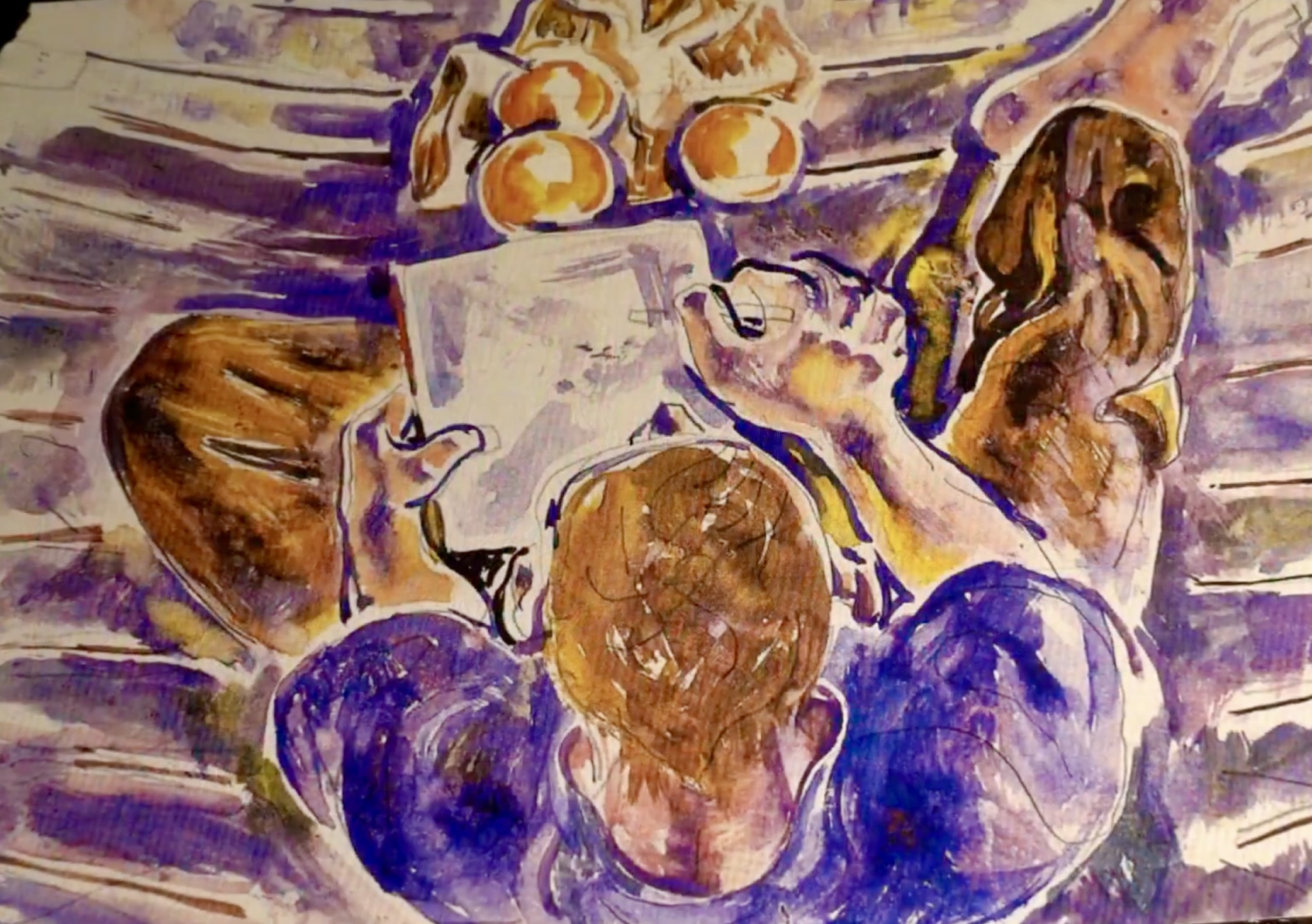
Walter Inglis Anderson, Self-Portrait from above

Perhaps like Henry David Thoreau or John Muir, a gifted painter named Walter Inglis Anderson came to discern some things of great significance within the visible beauty latent in nature. Like his venturesome forbears, he did this by seeking out an area of wilderness. It became his habit to row out the ten or so miles to Horn Island in the Mississippi Sound, where he slept on the sand using his upturned dinghy as his hermitage. Out there amidst the shifting dunes, with only the shell of his boat for cover against storms, Walter Anderson perceived more of who he was as he experienced harmony with what was around him. In time, compelling objects of his attention became for him fellow-subjects apprehending the splendor of Creation.

A shoreline inhabitant whose common name (‘hermit’ crab) was often derisively applied to Walter Anderson

Paradoxically, by his solitary coastal journeys, a man who had suffered bouts of mental illness became aware of an elusive but precious quality that he shared with those from whom he was isolated. His transient island resting places, where he spent weeks at a time over the course of twenty years, provided him with fleeting glimpses of what it might mean to be more fully human. There, away from others, he experienced moments when he felt he had become who he was meant to be.

As one writer has put it, “Anderson’s isolation from humanity convinced him, in the end, of humanity’s beauty… [He] believed that if we re-established our primal relationship with nature, we would regain our beauty.” Walter’s youngest son, John, summed it up succinctly: “Solitude was a tool that helped him to find unity with all people and all creatures.”

Anderson’s portrayal of himself rowing out to the island

Walter Anderson expressed the point compactly in one of his Horn Island logbooks: “In order to realize the beauty of man, we must realize our relation to nature.” His son, John, later explained what his father had meant by this. “I think that in those twenty years that he was living in solitude on the wilderness island, he was attempting to realize his relation to nature so that he could realize the beauty of humanity.”

Underlying these words, and the perception they express, may be a nature-mysticism of the kind often associated with Thoreau and Muir. I also find an affinity here with the spirituality we can discern in traditions as widely different as Zen Buddhism and the writings of Christian monastic solitaries.

Eugene Peterson’s rendering of Jesus’ words in John 12:25 (in context), captures a similar perception: “Listen carefully: Unless a grain of wheat is buried in the ground, dead to the world, it is never any more than a grain of wheat. But if it is buried, it sprouts and reproduces itself many times over. In the same way, anyone who holds on to life just as it is destroys that life. But if you let it go, reckless in your love, you’ll have it forever, real and eternal.”

To this mystical vision of the world I think we can also connect an insight attributable to St. Augustine of Hippo, regarding what we love, and how we love. If we love ourselves and our lives, or the world around us, for our own sake, we belong to the ‘city of the world,’ and we live turned away from God. Yet, if we love these same things for God’s sake, we belong to the City of God, and live in a God-ward way. Here it is important to remember that to love in the latter way that Augustine commended may not necessarily be an activity that we undertake with conscious awareness.
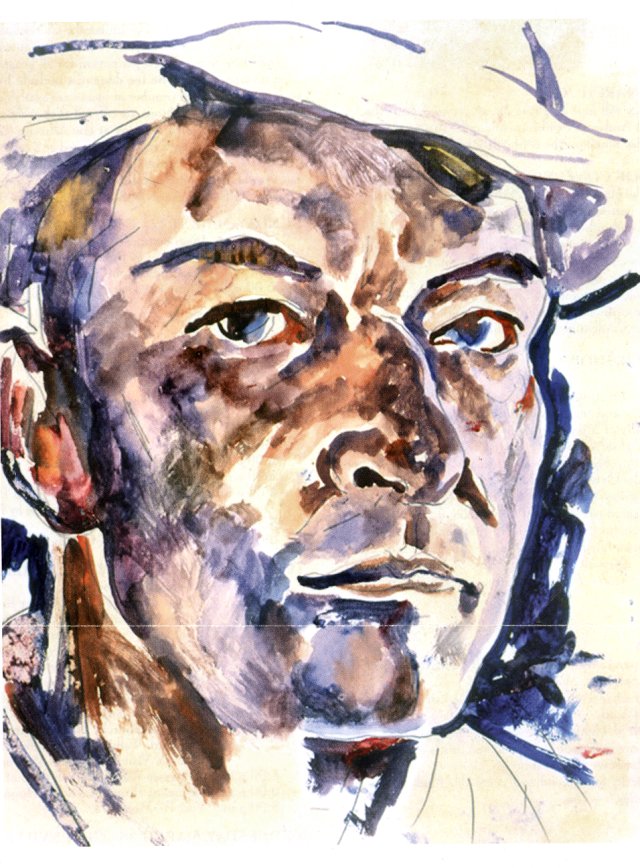
Self-Portrait by Anderson

It is actually possible to love God without ever consciously intending to do so. I believe this was the case in the adult life of Walter Anderson. It happens when we love what God dearly loves. And such true love can be expressed unconsciously, in ways that may be apparent to others while not to ourselves.

This truth connects the experience of the non-religious nature mystic with that of the religious contemplative, as both in various ways are focussed upon the Beauty inherent in Creation and within our human experience of Nature. This brings joy to the Author of Creation, who so loves the world that he has brought us into the new life that – through the Word made flesh – he now shares with us.


Emphasis has been added to the Eugene Peterson quote above. In a later post I will offer further reflection on Walter Anderson’s life and work, including his wondrous artistic creations, among which are paintings and drawings, as well as ceramics, linoleum prints and patterns for fabrics.

Reflections Inspired by Tiny Houses

A 14′ Tiny House inspired by Japanese Aesthetics (from the Baluchan website)

As earlier posts of mine attest, I have been interested for some time in the Tiny House movement, which has now become a widespread phenomenon. Whole Tiny House communities are being developed, and Tiny House construction designs have been proposed as an alternative approach to addressing homelessness. Reflecting on this movement, and the broad appeal examples of Tiny Houses seem to have, I have given some thought to what this development in small scale architecture may represent, and to what it may tell us about how we want to live.

I can see an impulse similar to the pursuit and enjoyment of living in a Tiny House in some attractive parallels, which also represent a quest for discerning a simpler way to live. Quite aside from a specific focus on contemporary examples of Tiny Houses, many people appear to have an interest in reading books like Thoreau’s Walden, or those by John Muir. I continue to meet folks who like the idea of having a small boat in which one can actually ’cruise,’ even on local lakes. And still others seem to share my fascination with living environments inspired by Japanese aesthetics.

An interior shot of the Baluchan Bonzai 14′ Tiny House

If these musings seem familiar, learning more about the Tiny House movement is worth pursuing. Here are some observations I have made in the course of my own reflections on the current popularity of this movement: 

First, the appeal of Tiny Houses has much to do with the process of rediscovering, and learning more about the beauty of living simply. And therefore, about more than managing to accept being without some things, but actually doing well with less. Marie Kondo’s videos and published writing have attracted a good deal of attention regarding the desirability of organizing our household belongings, and paring down what we have toward living with what we truly love.

Viewing and reflecting on examples of Tiny Houses can aid one’s discernment regarding needs vs wants. Most of us have probably considered this distinction from time to time, and have likely also experienced some frustration with our halting efforts to enact our reflection upon it. We know we have wants, which often masquerade as needs, while we may not sufficiently consider the potential value to us of having wants that are correlated with our needs. After all, a premise of this post rests on a paradox: the assumption that I not only want to live more simply, but that I may also need to!

The kitchen space between the bathroom and the small main living area

Here, briefly noted, are some potential benefits that may come from spending time in a Tiny House:

  • Living off the grid becomes a much more realistic goal when choosing to live in a Tiny House. Tiny Houses also allow for mobility in relation to one’s surroundings, even if it is not a frequently exercised opportunity. Changes in one’s locale can lead to learning opportunities.
  • Those who build their own or who choose to do maintenance work on a Tiny House are more likely to learn how to use, and use more ably, simple and hand-powered tools.
  • Tiny Houses are well suited as places in which we can experience solitude as a positive aspect of our lives, while also providing an excellent context for significant times spent with others. 
  • Living or spending time in a Tiny House may allow us to have increased time for personal reflection, and an opportunity further to discern our vocation, in addition to our more usual absorption with occupational concerns.
  • Tiny Houses therefore have the potential to be places in which we read more, and spend less time consuming social media or watching videos. While every living place for which we have some care requires time and attention, the theory behind choosing a Tiny House as a place to live assumes that we can devote more time to actually living, rather than preparing to live. Reading makes the world bigger and our lives richer.

For much of the above, and as a bothand rather than an either/or starting point, I commend considering adding a form of a ‘Tiny House’ to your present circumstances rather than making a radical change from them. Experimenting with what can be done with less, while also still retaining one’s present home, can be instructive. This can be accomplished by, for example, purchasing a used but well-equipped small RV. We have recently seen some interesting examples on the road, and ones that could fit in a standard home garage.

For us, it has been our 1988 24 ft trailerable sailboat that has provided this kind of learning opportunity. With its relatively small cabin (about half the length of the boat), comfortable berths (or bunks), a camping stove, cooler, portable toilet, and cockpit which serves as a small ‘back porch,’ we can meet most of our daily needs for a week or more at a time. The slip for our boat is under $200/ month, including electricity and water connections, if needed (ie, if the boat is not yet off-the-grid-ready, though our boat is now thus equipped). DAYSTAR has become our floating ‘tiny house’ or ‘cottage.’

Ably and effectively inhabiting this principle of beautiful simplicity is turning out to be a lifelong project for me, and I believe this is also true for others. I am a neophyte in the process. Perhaps my readers have some similar experience with this ongoing process!

From Dream to Reality: Michael Pollan and His Writing House

If reading this by email, please tap the title at the top to open your browser for the best experience. Then, clicking individual pictures will reveal higher resolution images.


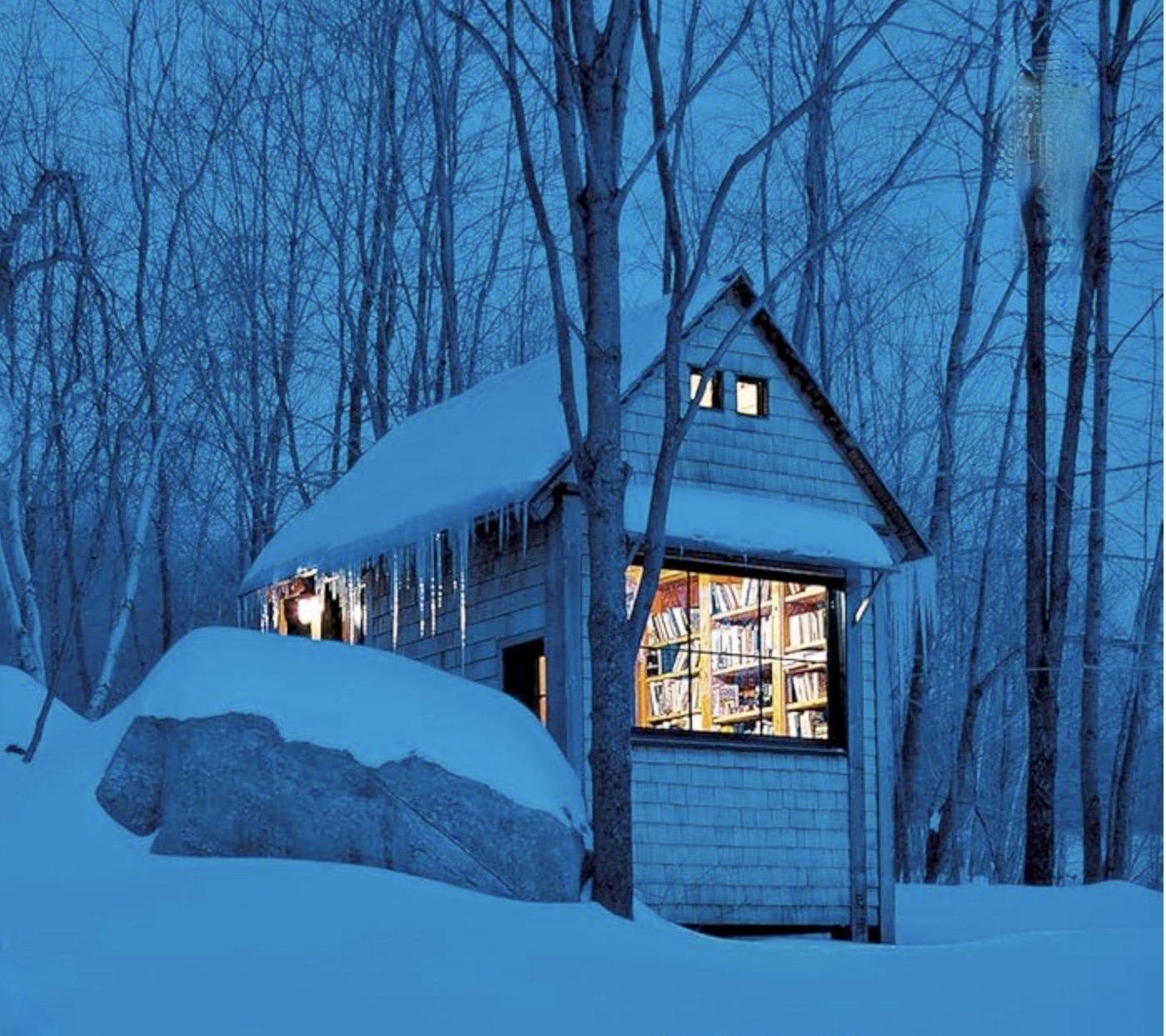
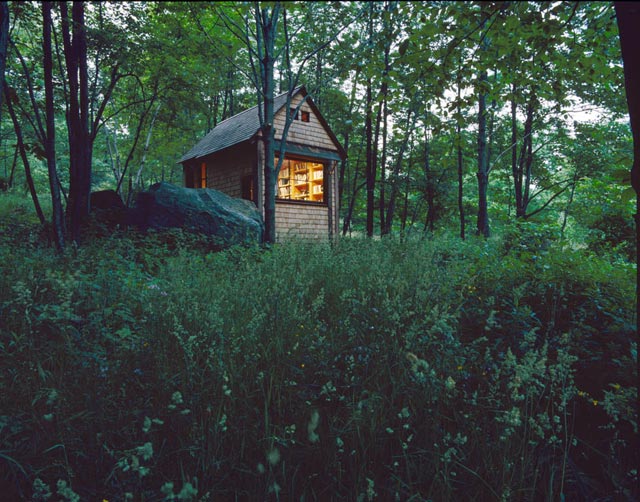
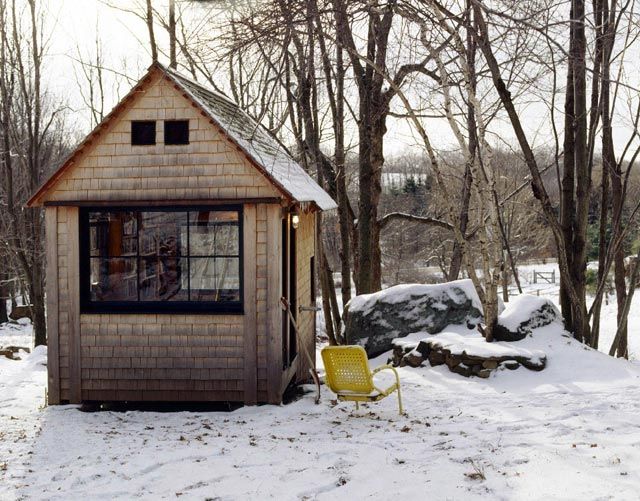
In an updated preface to his book, A Place of My Own: the Architecture of Daydreams, Michael Pollan laments how some readers approach his book expecting something like a “how to” guide to building their own writer’s hut or shack. Though he does provide a wealth of detail concerning the construction methods he used, the book’s richness lies in its thoughtful engagement with the idea of human shelter and its function in architecture. Of particular note is the attention he gives to the French writer, Gaston Bachelard, whose book, The Poetics of Space, prompts a good deal of reflection by Pollan. The author quotes Bachelard with words that obviously inspired the subtitle of A Place of My Own: “I should say: the house shelters daydreaming, the house protects the dreamer, the house allows one to dream in peace.”

Michael Pollan dreams of building and inhabiting what we might call his own writer’s studio in the woods behind his Connecticut home. As he muses about its possibilities, he considers potential designs in dialogue with his chosen site for the small building. From a book by the English geographer, Jay Appleton, he gleans the insight that ideal human shelters provide two dialectically interconnected values, ‘prospect’ and ‘refuge.’ A shelter conducive for human flourishing provides both the opportunity to view and appreciate one’s surroundings while at the same time providing a secure resting place. Achieving these twin goals becomes one of Pollan’s priorities for his little writing hut.

At the same time, while embarking upon this project to build his place for writing, he acknowledges that the endeavor also provides the occasion for him to examine the idea of architecture, and its contemporary role in Western society. He discovers – through a gift subscription to Progressive Architecture magazine – that the field has increasingly become focused on the exploration and expression of ideas, leaving behind a principal focus upon providing beautiful yet practically useful spaces and structures for human habitation and work.

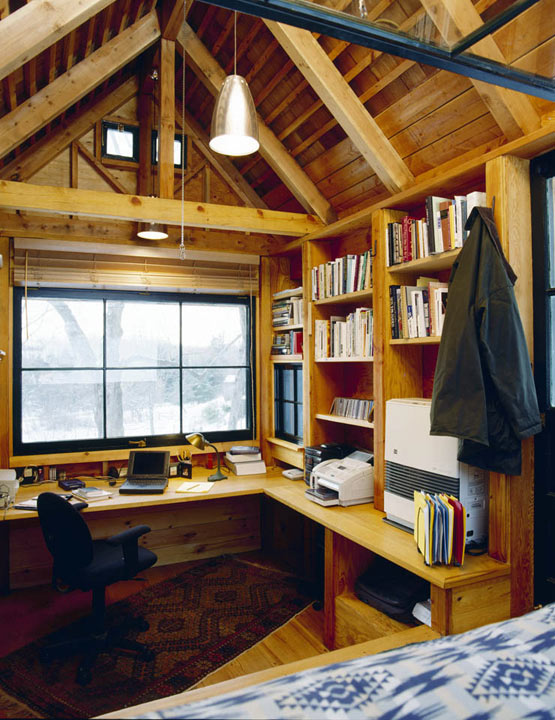
The interior of Michael Pollan’s writing house (note the daybed in the foreground)

Pollan realizes that what he wants to build is not something that points to something else, or to a set of ideas and concepts (as is the case with some contemporary practitioners in the field of design). Instead, he wants a structure that he can use for everyday work, for reading, and as a place where occasionally he can have a nap. With his aversion to the little building becoming an artistic statement rather than something truly useful, Pollan’s book reminds me of a principal theme in Tom Wolfe’s splendid little book, From Bauhaus to Our House.

Especially in the first two chapters, Michael Pollan offers a set of thought provoking and historically informed reflections on the nature and purpose of architecture, which are shaped in a writerly way. As much as I was drawn to the concrete aspects of his project – as in his account of his search for the ideal design of the window through which he would look while writing – I found his engagement with the theoretical aspects of the project to be very compelling. A good example of the latter is his reflection on our conscious experience of form and pattern in buildings, and our unconscious experience of the spaces we encounter and through which we move. Other examples include the role of feng shui in his selection of a site for his project, as well his explanation of the function of the Golden Section (or Divine Proportion, 1/1.618) in deciding the parameters of the rectangle for his floor plan.

Most of all, I appreciate Pollan’s delineation of the difference between the 20th century modernist or International Style approach to architecture, which abstractly stressed universality of form and consistent design elements regardless of a building’s context, with the architecture of someone like Frank Lloyd Wright, who focused on the connection between his buildings and their location within their chosen sites and his intentional employment of local materials. Pollan offers an insightful two-columned table to illustrate the difference between the two, with the first (stressing universality) labeled, “There,” and the second (stressing locality) labeled, “Here.”

All in all, he has given us a finely written book.


The Beauty of Asking “Why?”

If reading this by email, please tap the title at the top to open your browser for the best experience. Then, clicking individual pictures will reveal higher resolution images.

Back cover photo from Natural Sustenance: Selected Poems, by Nick Fleck


“Why?” It all started in a seemingly innocuous way. “What do you want from this course,” he asked. A brave one among us ventured the answer that some of us were thinking, but were not honest enough to say: “an ‘A’.” Our English teacher, Nick Fleck, responded to my classmate in a neutral way, with a further question, “Why?” Our fellow aspirant to higher grades began to offer pretty typical answers, unoriginal and unsurprising. “I want a high GPA. (Why?)… I want to get into a good college. (Why?)… I want to get into a ranked law school. (Why?)… I want a good job at a high powered law firm. (Why?)…”

Gradually the pauses before our classmate’s answers became longer. And while his responses still sounded plausible, they seemed less and less assured. That first class session set the tone for the rest of term, as over time Nick prodded all of us to articulate answers to questions like these. And nudged us toward answers that were more and more our own, and less dependent on our peers, our parents’ expectations, and our perceptions of the uncertain world outside our rural New England prep school.

Why? The question at first provides an invitation to share acquired knowledge, display settled opinions, and voice aspirations. But the question can also be unsettling, especially when we begin to run out of platitudes and ‘safe’ answers that don’t require self examination or being open to adopt a different perspective.

I can’t fully explain why, out of a class of some 350 or so fellow graduates, I was one of only 3 or 4 who did not go directly on to college. But Nick Fleck’s persistence in challenging us to think for ourselves played a big part in it. Temperamentally, I was and am a self-learner, which disposed me toward pursuing that risky path (“…in a blind career…,” as in a line from a poem Nick had us read). Naive self-confidence also bolstered my willingness to undertake a journey on what appeared to be a largely untested road. I wanted to be an architect and to make art, and those whom I most admired had embarked upon their careers in earlier times by this same route through apprenticeship and self-study.

Having been so consistently asked why, I made the question my own and began asking it in a self-referential way. Why did I want so strongly to embrace and try to create what was beautiful? Why was this important to me… and to others apparently walking the same path? Why was I then beginning to wonder whether this was good and, if so, to what end? And why then was I going on to ponder what was good for its own sake as compared to things of passing significance?

Within a year, after living in New York City seeking non-existent apprentice drafting positions during the ‘oil crisis,’ I returned hesitantly to formal schooling. My college art studies were interrupted by another sideline, driving a forklift in a warehouse freezer for six months as a Teamster. Then, surely to my parents’ relief, asking why led me on a more traditional path, from art history to classics and medieval studies, during which I experienced an unanticipated spiritual conversion. All the while I was living with the same question: why?

Nick Fleck was not a religious man in any sense that I could discern, though he was clearly attuned to the ethical principles exemplified in Thoreau’s writing, and latent in poems he would have us read. I think it greatly surprised him when, returning for our 25th reunion, I gave him credit for setting me on the path that led to my conversion, ordination, theological studies, seminary teaching, and parochial work – experiences not readily familiar to him. But he was the one who persistently asked why, and who invited us to own the question for ourselves.

This week I realize that Nick’s great question was at the heart of the Disciples’ questions when Jesus predicted his forthcoming suffering and death. Nick’s question is simple, and perfect for Lenten reflection.


I was happy to see an article in the Greenfield Recorder noting how Nick Fleck had founded the Northfield (Mass.) Bird Club and was still active in leading bird walks. I trust that he continues to write and share his poetry, and help open new worlds to young persons. He helped us to discover the power latent in the word, “why,” especially when posed as a question.

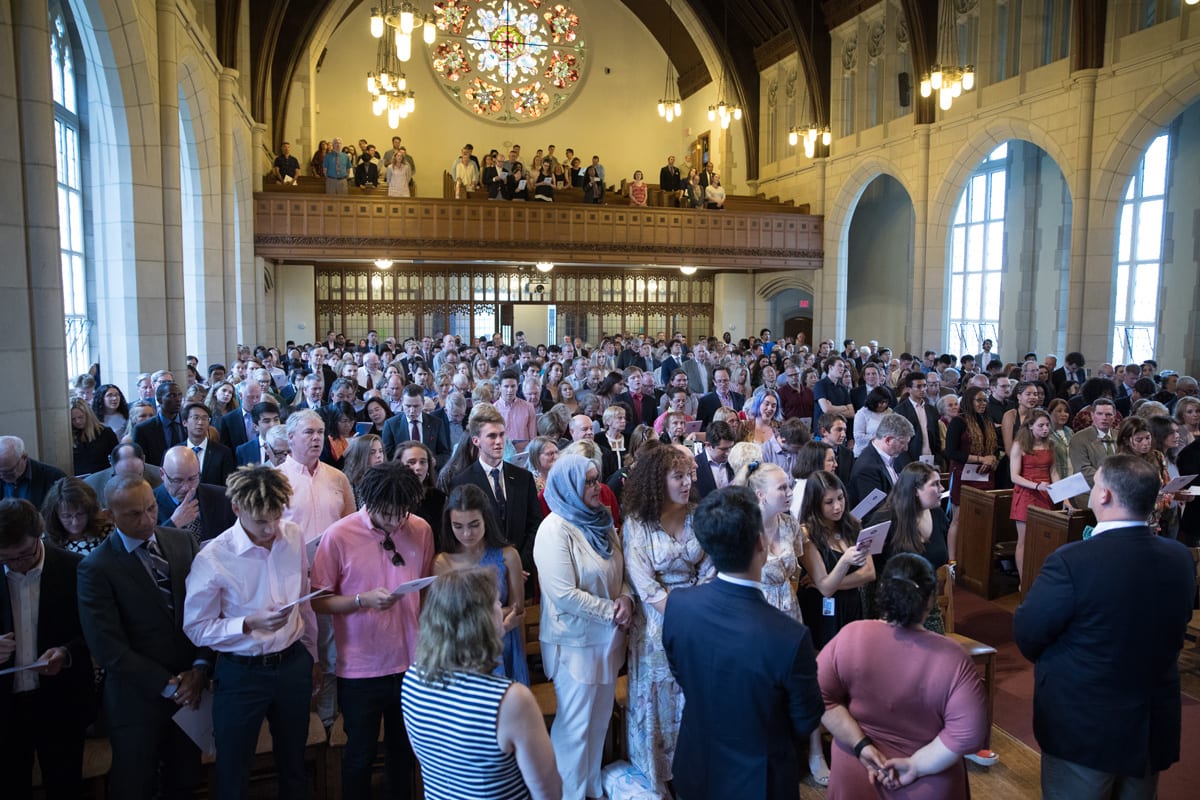
The recent movie, The Holdovers, was partly filmed at my school, Northfield Mt. Hermon, and is set in exactly the time period I was there. During those years, I was in the chapel depicted within the movie a couple of times each week for required assembly gatherings. Seeing my school again during my 50th graduation anniversary year has obviously brought back memories.

A recent gathering in Northfield Mt. Hermon’s Memorial Chapel.


Note: blog settings have been changed to provide more opportunity to offer comments, using the link below.