Earthscape and Landscape Art

Two Architects Build Houses for Themselves

Frank Lloyd Wright’s Taliesin East, entry courtyard

Frank Lloyd Wright and Philip Johnson number among the most well known American architects of the 20th century. Both are remembered for their many commissions by others, for buildings constructed both in the United States and overseas. Notably, each of these men designed a house for himself and each reflects something of the respective architect’s vision for an ideal domestic building. The results differ dramatically and beg for some explanation, especially in the case of Philip Johnson’s Glass House.
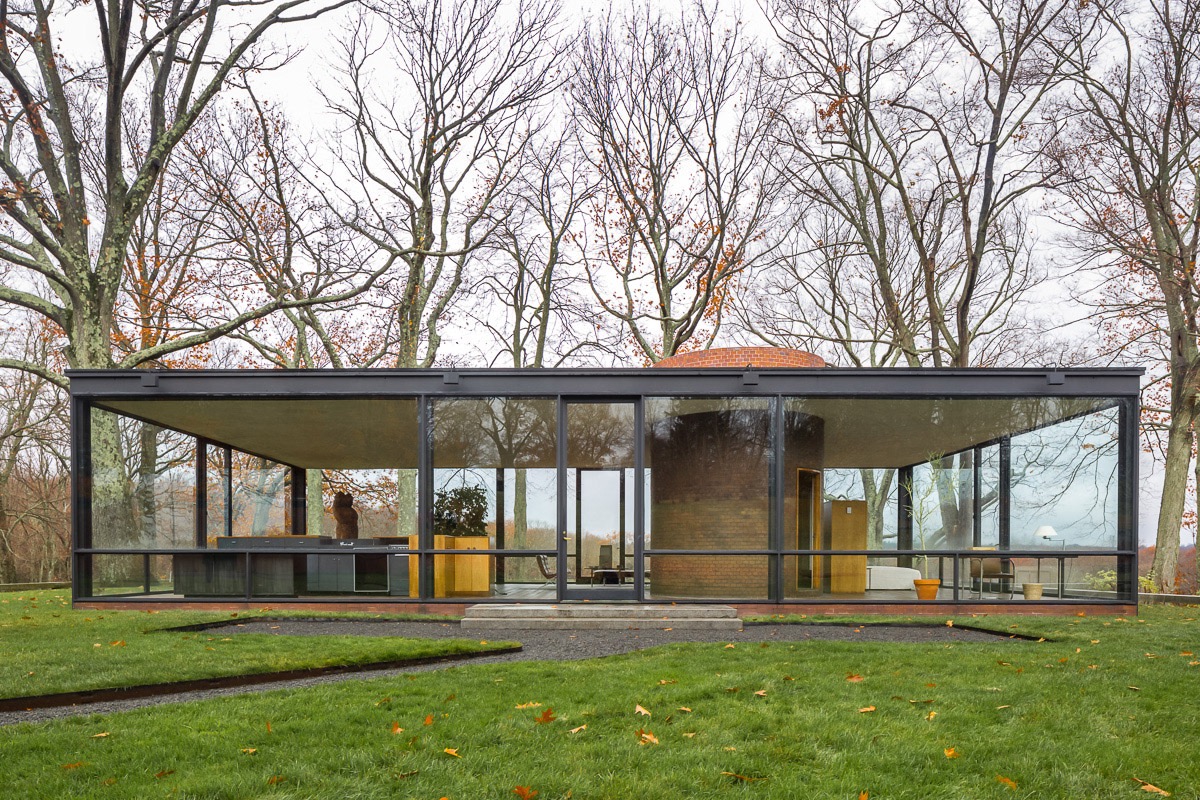
Philip Johnson, Glass House, exterior

To help appreciate the theoretical basis for these vastly differing houses, I find it helpful to draw upon a distinction made by the earthscape artist, Andres Amador (featured in a prior post). Speaking about his temporary compositions ‘sketched’ upon large stretches of beach areas at low tide, Amador refers to some of his works as “geometric” and others as “organic.” The geometric works display a quality readily suggested by the name for them, and reflect Amador’s training in math as an engineer. The organic works arise, he says, from the site, and he suggests that these pieces communicate their form to him. For me, Amador’s distinction can also be referred to as the distinction between pattern that is ‘received,’ as compared with pattern that is ‘imposed.’

Amador’s distinction between the organic patterns that arise from the site, and the geometric patterns that result from conceptual pre-planning, can assist us in perceiving some themes that are implied by the architectural designs produced by Wright and Johnson for their homes. In the case of Wright, he built Taliesin on family property in Spring Green, Wisconsin, in an area where he grew up and with which he had a deep attachment. Like much of his other work, Wright wanted Taliesin to appear as if it was an extension of the materials and features of the site in which it is placed, being an ‘organic’ development of a human habitation within a natural setting. Wright’s intent is evident in the way that the horizontal bands of stucco on the facade, as well as of the limestone in the foundation and walls of the building, parallel and mirror the layers of stone found on the site.
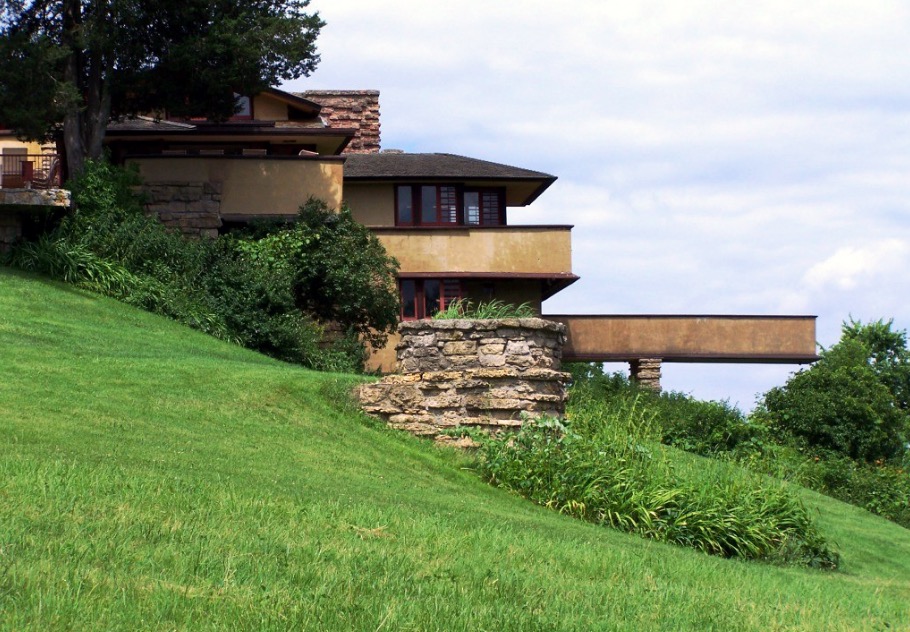
Exterior elevation of the house, as if emerging from the site (photos above and below)

While Philip Johnson’s architectural practice was located in New York City, he planned to build a house for himself and weekend guests in nearby New Canaan, Connecticut. Johnson’s Glass House clearly reflects his indebtedness to the work of Ludwig Mies van der Rohe, and the European modernist movement in architecture generally known as the International Style. Employing Andres Amador’s distinction, the Glass House clearly embodies a geometric conceptual basis, with the result that the building does not so much emerge from the site but instead sits upon it as an imposed human-made form. The carefully clipped and very flat lawn, and the linear walkways serve to emphasize the distinction between the structure and its natural surroundings. This leaves the Glass House appearing to be like a sculptural object that has been placed on a plaza, or like a vase on a smooth table-top, rather than as something arising from within its setting.

The Glass House, exterior view (above), and interior view (below)

Brief attention to the history of these two buildings provides further insight. Wright lived at Taliesin much of his life, while also retreating to Taliesin West in the Arizona desert during the winter months. Over the years, he gathered a sizable community of apprentices who lived and worked with him at both locations. To this day, the architectural fellowship that is part of his legacy maintains both homes and studios. By contrast, though Philip Johnson first lived part-time in the Glass House himself, he soon discovered how it was largely unsuitable for that purpose, other than for entertaining guests in the living and dining areas of the structure. Given the sudden notoriety of the house, the constant presence of unwelcome visitors and architecture-minded prowlers made it problematic for every exterior surface of the house to be comprised of glass. Johnson soon made it a habit to stay in the adjacent bunker-like Brick House, designed for the site as a guest house, when spending time in New Canaan.

Obviously, it is easy to stress the marked differences between these houses designed and built by Wright and Johnson for themselves. Andres Amador’s dual approach to his earthscapes may help provide a reminder of the way that both-and thinking can aid how we consider certain objects of interest. Wright’s organic home and studio, emerging within and receiving inspiration from its site, and Johnson’s temporarily lived-in Glass House, imposed as a geometric sculpture upon its site, share a common distinction. Regardless of functional considerations, each house has its own way of displaying beauty, and both remain among a small list of internationally recognized architectural achievements of historic significance.


Note: A short introductory video about Andres Amador and his work, giving examples from both of the geometric and organic categories, introduced above, has been produced by KQED of San Francisco. It can be found on YouTube ( https://youtu.be/T_tIG5mo1DM?si=0MkjxkTEK48eC-aV ).

Taliesin East has been named a UNESCO World Heritage Site, and the Glass House is a National Historic Landmark.

Andy Warhol visits the Glass House

Earl Young’s Boulder Park Charlevoix Houses

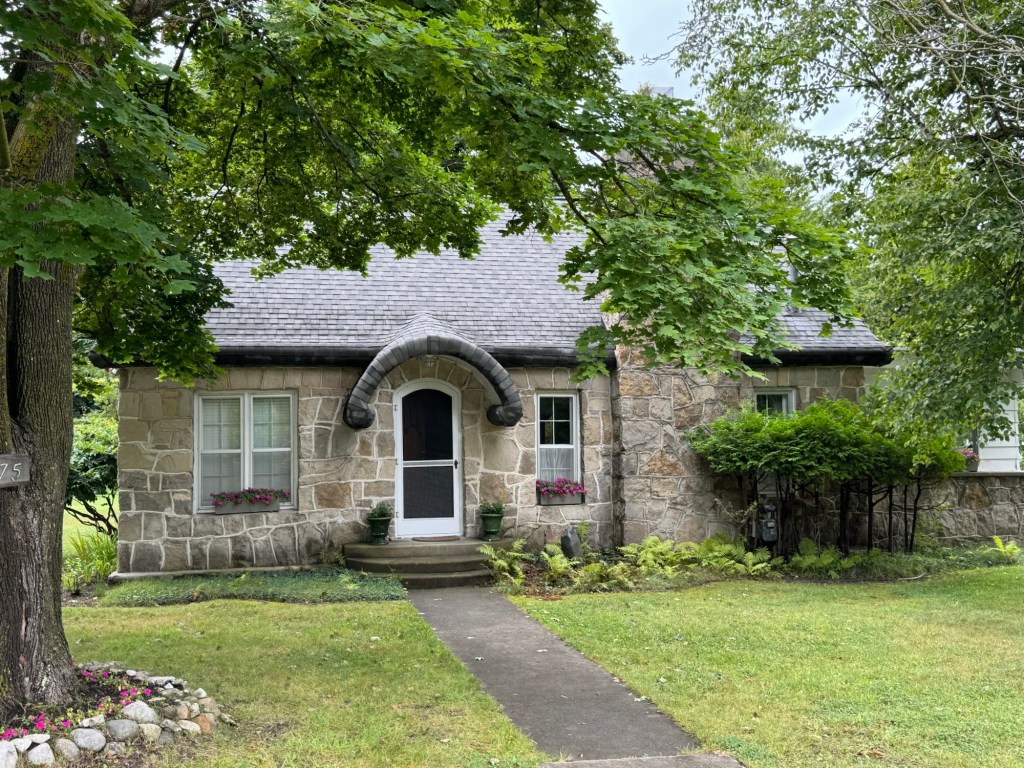
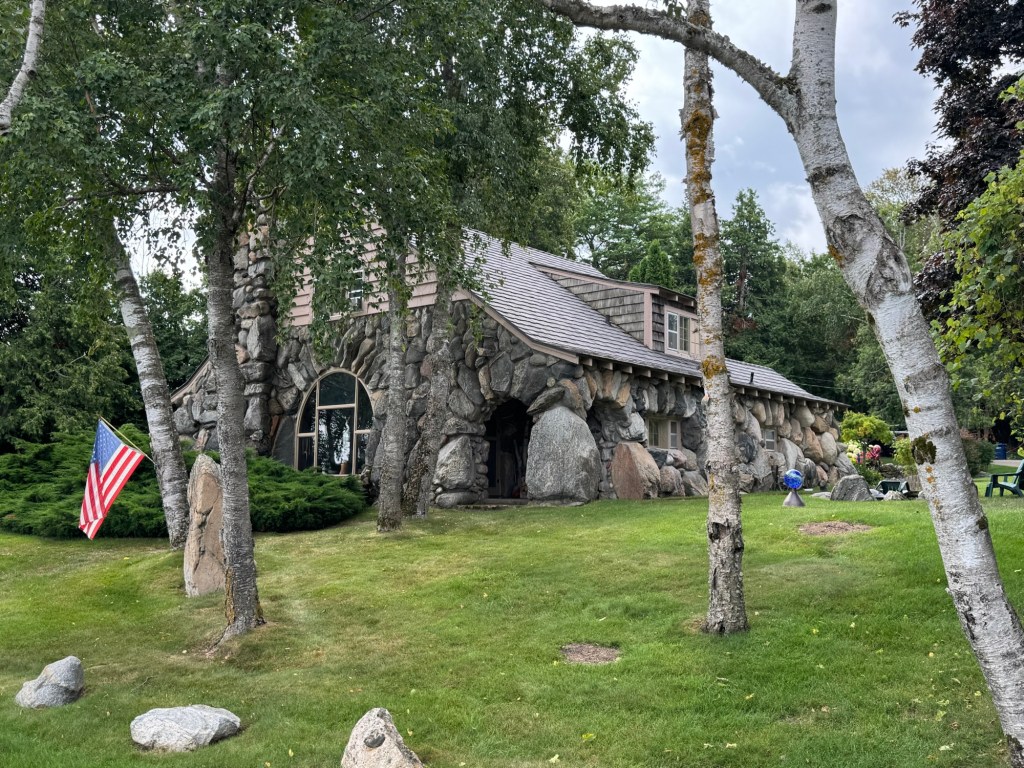
Earl Young’s Boulder Manor, built for himself, as seen on a recent day

Summer visitors to Charlevoix encounter at least two things about the area: first, that this part of Michigan is a haven for boat lovers and especially cruisers on the Great Lakes; and, second, that the city of Charlevoix is the home of Earl Young’s so-called ‘mushroom houses.’ The first observation regarding boats and the appealingly clear lake water is easily recognized. The second association with the area takes a bit of discernment, usually gained from seeing brochures or the small electric carts evident in town bearing the label, “Mushroom Houses Tours.”

A pleasant walk around Charlevoix while viewing the many houses that Earl Young designed and built in the community reveals that his approach to home design was not uniform, and that his work avoided that to which the wider community has also not succumbed – becoming a caricature of itself. For he could have approached his design work in such a way as simply to repeat and imitate prior successes, pressing forward as so many architects have done to inaugurate a particular and distinctive style in home design. Instead, Young consistently displayed his overriding commitment to his chosen materials – stone and stone-related products. Therefore, when at the age of 35 in 1924, and in buying a tract of land adjacent to the Lake Michigan shoreline, he built ten houses with enough variation among them that later homes constructed by others are frequently confused with those of his own design. Young gave the tract along with its homes the fitting label of Boulder Park.

The Owl House, named for the arched front windows

This variability in the architectural character of the Boulder Park homes helps us to begin to recognize how the common ascription to Earl Young, of being the mushroom house architect, is in some ways a misnomer for him. A few of his houses nicely justify the label, given their firm rootedness to their sites, their often low or extending rooflines with irregular surfaces, and his heavy use of large stones and boulders in a number of them. Yet, Young was equally comfortable specifying limestone cut in horizontal block slabs and even commercially available brick or block products with which to construct walls with traditional uniformly-spaced layers of mortar. We may not be enamored with the some of the results of his work, but I think most of us can identify with Young’s lifelong intention to remain true to his materials and to the sites in which he set them.

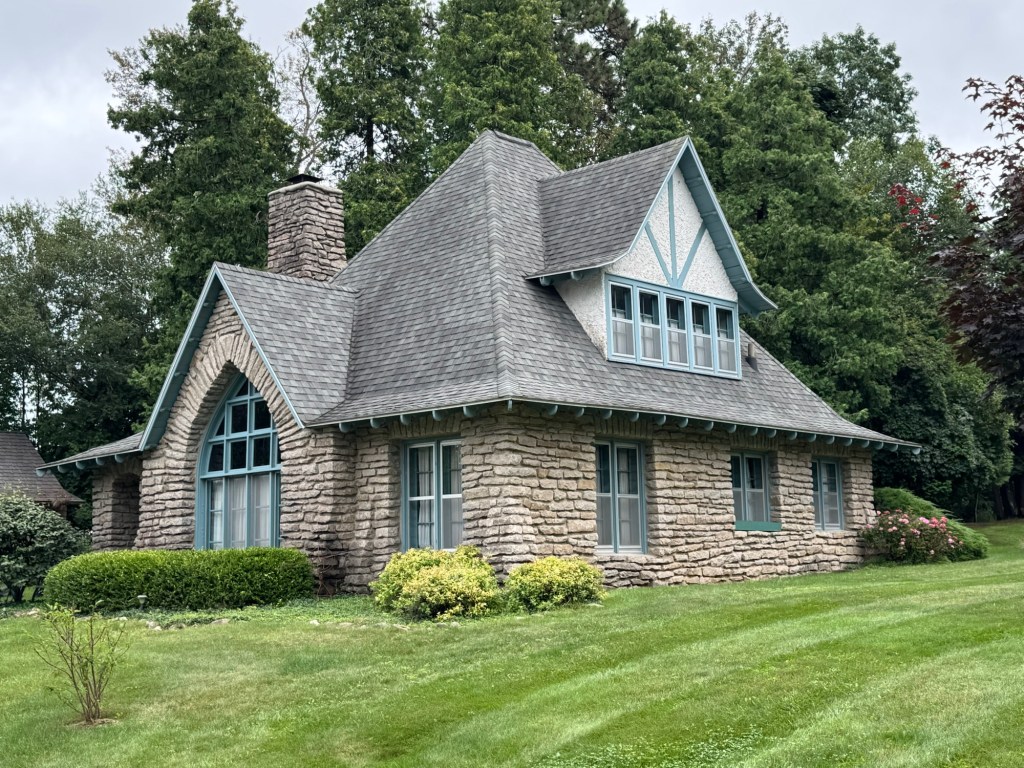
A 1929 limestone cottage in Boulder Park, known for the rolled edges of the eaves

Two neighboring homes in Boulder Park illustrate Young’s consistency of intent, and flexibility with regard to ‘style.’ Boulder Manor, built in 1928 (displayed at the top of this post), sits in close proximity to the Pagoda House, built in 1934, seen below.

The Pagoda House

My favorite among the Boulder Park houses is the home that Young built for himself, called Boulder Manor (top photo). It is constructed with massive pieces of stone and boulders from the area, and features a matching smaller playhouse for his daughters that has a working fireplace.

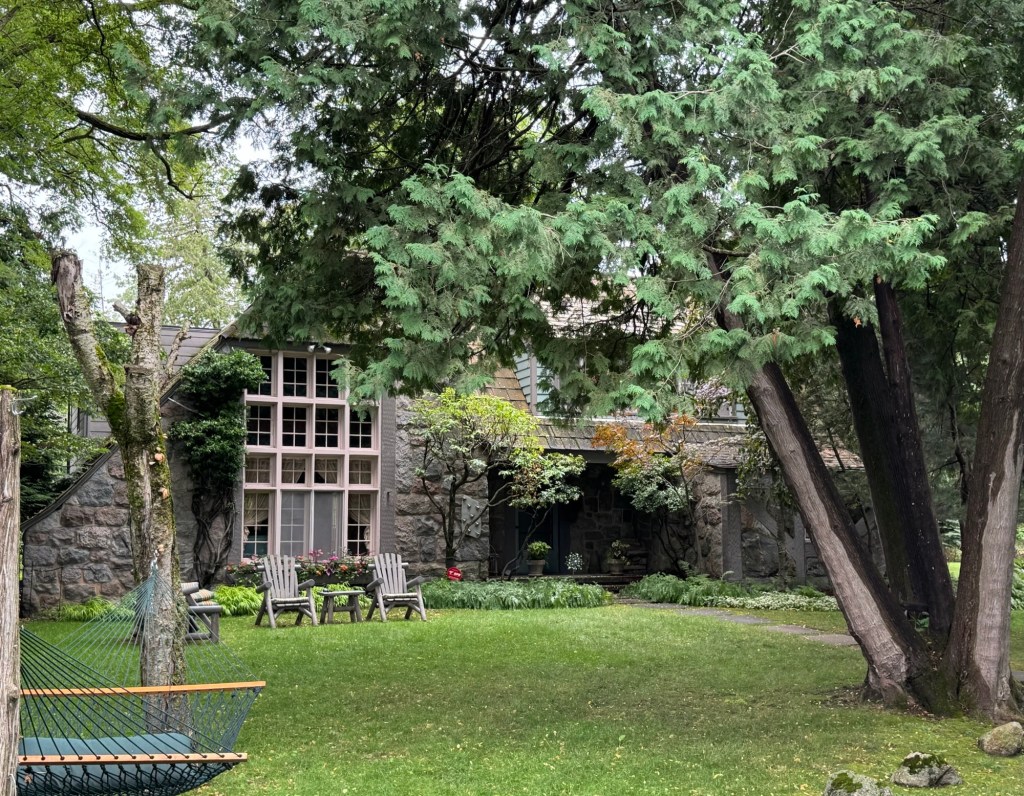
Rear view of Boulder Manor along with the playhouse for the Young’s daughters

In some ways Earl Young was a bundle of contradictions, an idiosyncratic visionary who was known to tell some clients what they needed in terms of a home, and yet also one who could reside with an out of town family for a considerable period of time so as to get to know how they lived before designing a home for them. He had a consistent love of rough, ‘undressed’ stone to be used as found, and at the same time a willingness to use stone in a very conventional way. Young was famous for wanting to do virtually everything ‘his way,’ often to the consternation of others, including town leaders. And yet, one house of his in Boulder Park was the result of a client convincing him to build a home based on a design plan found in a women’s magazine, the 1933 Enchanted Cottage with its very English-looking windows (seen below).

The Enchanted Cottage

The best introduction to Earl Young’s Charlevoix houses is a widely available book by the photographer, Mike Barton, titled, Mushroom Houses of Charlevoix. Filled with color photographs, and documenting every one of Young’s structures built in his home town, the book provides superb photographs, and better ones than I am able to provide.

Earl Young’s Imprint on Charlevoix

Exterior view of Earl Young’s Weathervane Inn

As a young man from the rural north of Michigan, Earl Young aspired to produce ‘natural houses’ in the spirit of Frank Lloyd Wright, his inspiration and model for what became his own vocation. Young never studied with Wright, but the latter’s design spirit influenced him throughout his life. Though Young’s impact as an architect was essentially local (he designed only one house outside of Charlevoix), the present-day promotion of Charlevoix as a cultural destination is much in his debt for the way this community has come to be known as the home of the “mushroom houses.”

Earl Young

Earl Young studied architecture for one year at the University of Michigan. From the beginning he was impatient with a curriculum shaped by the kind of slavishness to European precedents that FL Wright also criticized. Young then returned to his hometown of Charlevoix to build houses, practice real estate in the family business, and sell insurance. He left the university program with his independent vision and architectural vocation intact, from which he never seemed to waver.

The Weathervane Inn adjacent to the Pine River channel and lift bridge

One recent appraisal of Young’s portfolio of buildings has suggested a neologism with which to describe his work, lithotecture, based on the Greek word for stone. For Earl Young did not simply value the utility of stone; he loved stone, and especially large boulders. He is remembered for having had a remarkable memory for the exact location, size, and texture of examples he had seen, collected, or stored away for future use. His profound appreciation for these materials, and the creative possibilities toward which they might be employed, is much in evidence throughout the older portion of Charlevoix in the many houses and other buildings he built and or designed, as well as in those influenced by them.

One of Earl Young’s Boulders Park homes (more of which are to be featured in a future post)

Earl Young’s impact upon the visual character of Charlevoix might be compared to a rather different example in architecture and in community design, the near-universal adoption of ‘the adobe style’ in Santa Fe, which has become a predominant approach to restoration, renewal, and original architectural creations. In the parallel example of Young’s case, his impact was through his way of being true to context by his use of stone, especially in highly creative ways. So pervasive has become his influence upon the development of Charlevoix that many other and more recent builders have been drawn to imitate Young’s extensive and sometimes whimsical use of locally available natural geologic materials. Given my own experience of living in south Louisiana, where hardly any naturally-occurring stone is to be found, I am struck by the abiding evidence of Young’s legacy as a community-based builder.

Two long-ago initiatives by Earl Young in particular serve to distinguish Charlevoix in the eyes of visitors, the Weathervane Inn, and the waterfront park adjacent to the city marina. Young replaced an aged mill along the edge of the Pine River channel with an attractive inn of his own design and construction, and he convinced town leaders to replace obsolete warehouses along the waterfront with what has become a four acre rolling green expanse of lawn. Both locations have become popular and much used gathering places for visitors as well as for Charlevoix residents.

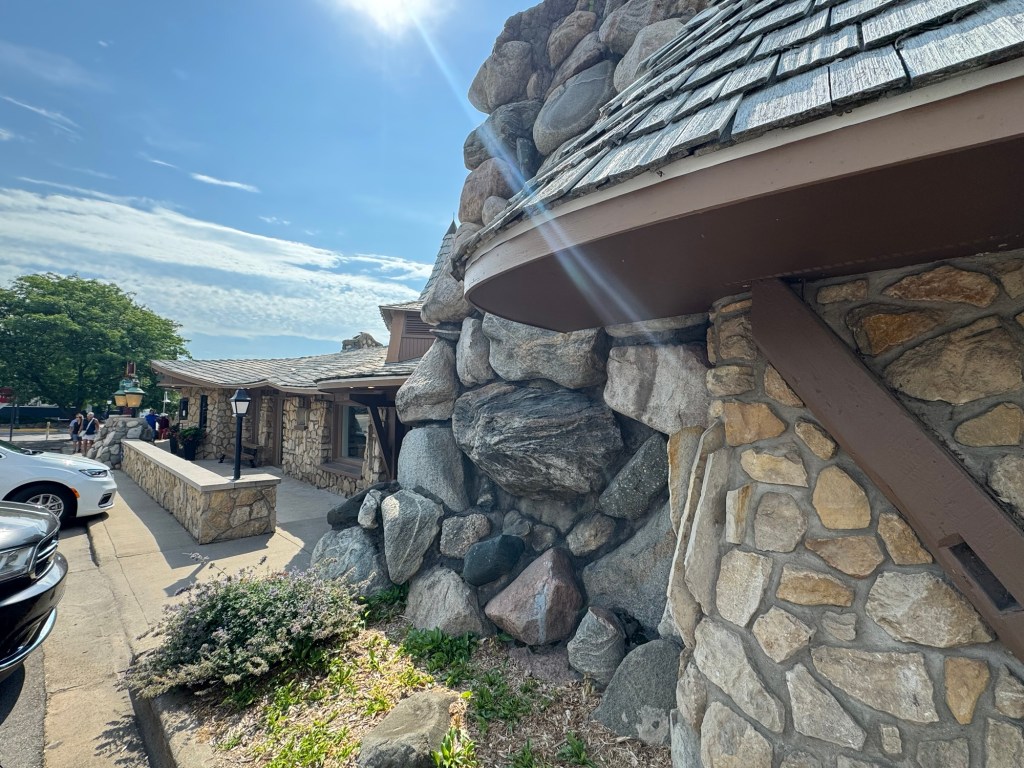
The terrace overlook above the marina office – modern stonework in the Earl Young style

The marina waterfront as it has been developed in recent years demonstrates Earl Young’s lasting influence upon Charlevoix’s economic and cultural development. Realizing some of the potential latent within Young’s prescient inspiration for the land clearing that enabled the new park, several notable new structures have been built, among them a new marina office and locker rooms, and a dancing or synchronized fountain by its door.

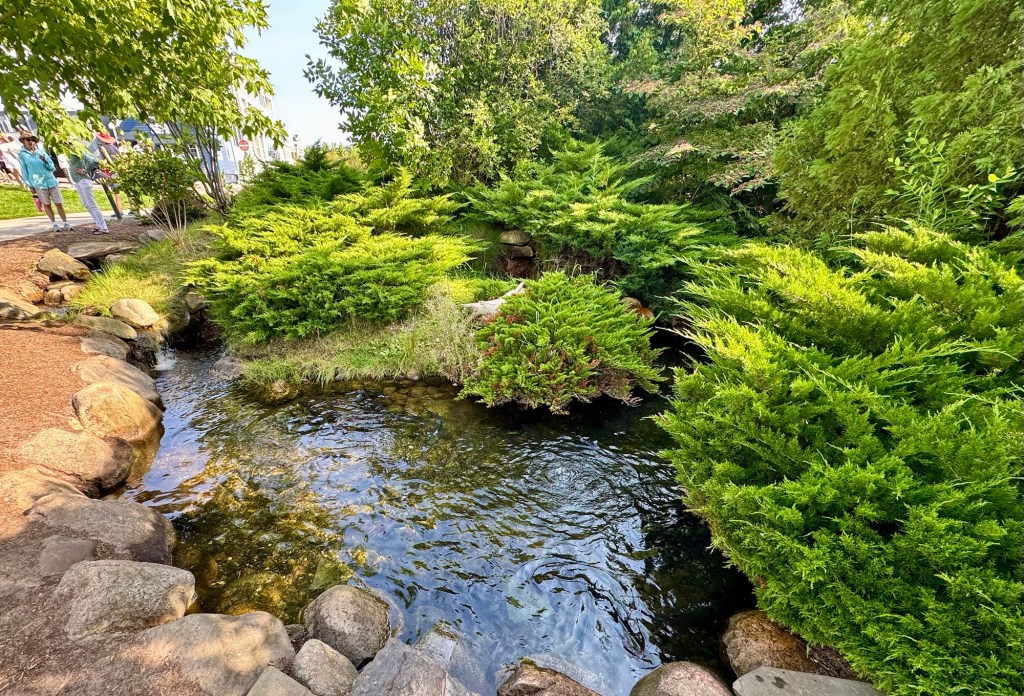
Part of the natural-look landscaping surrounding the marina office

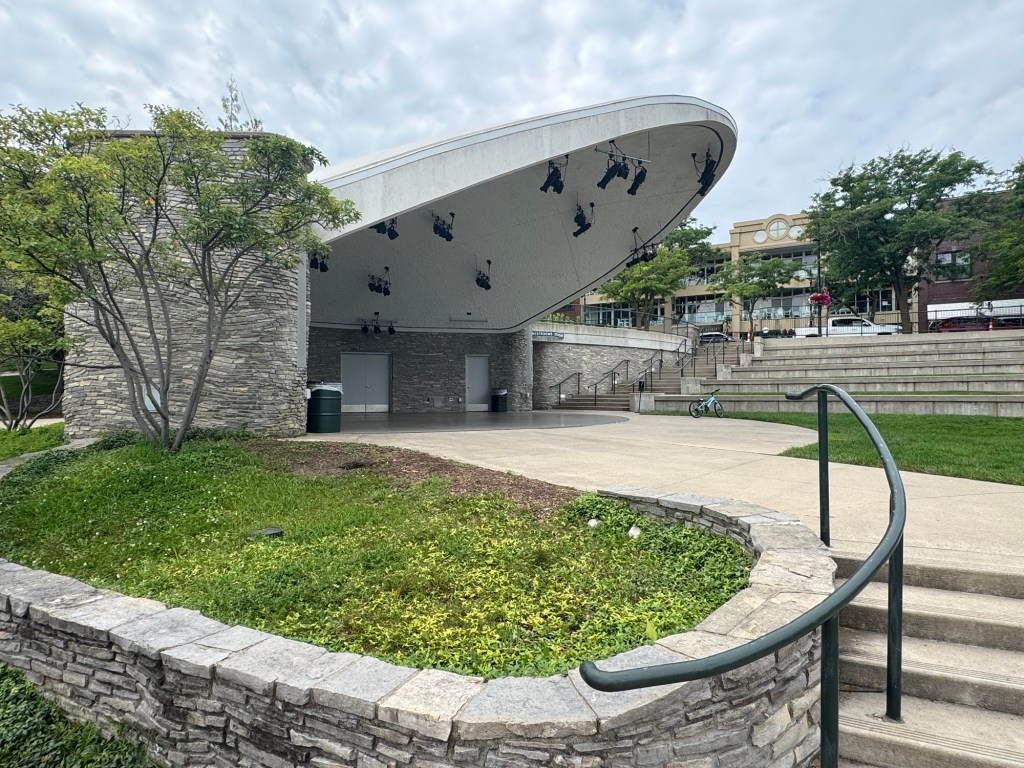
Landscaped around the marina office is a northern Michigan nature garden incorporating a human-made stream flowing between several shaded pools that contain rainbow trout. Also gracing the open green space of the park is a bandshell for weekly summer musical events, where concert-goers overlook the harbor docks and boat slips. Each of these structures, though constructed well after Young’s lifetime, reflects his vision for the beauty of stone laid up in asymmetrical curving walls.

The Earl Young influenced bandshell overlooking the marina and Round Lake harbor

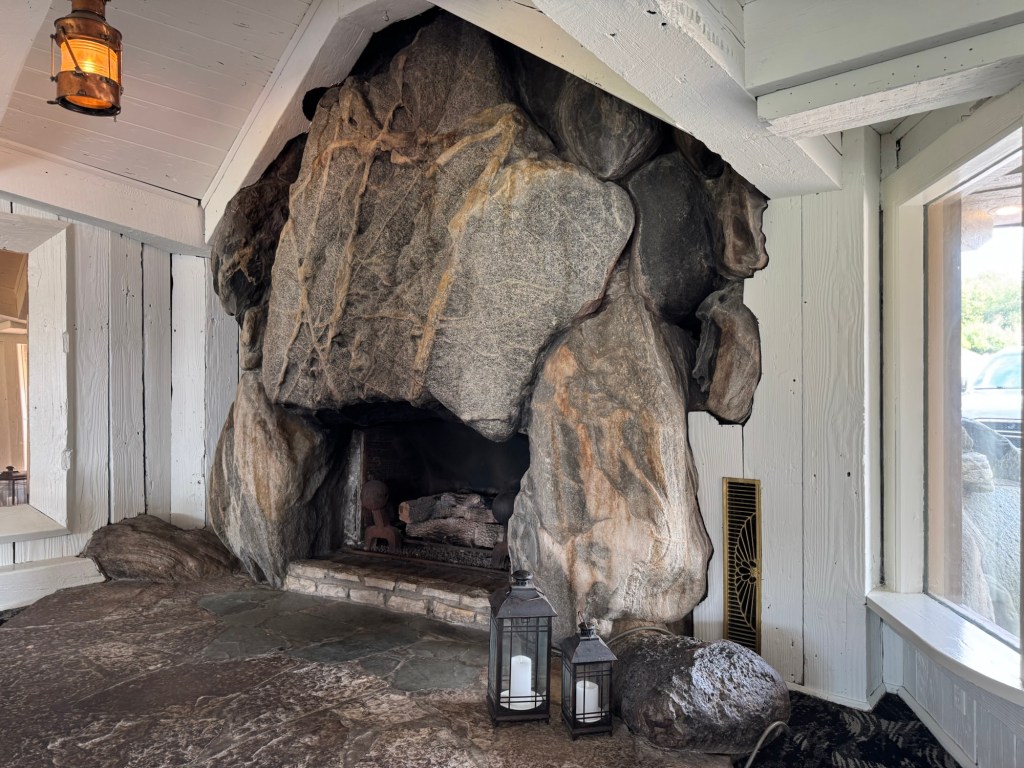
Earl Young’s profound attachment to working with local geological material evinces a lifelong devotion to what can be accomplished through building with massive boulders, each weighing multiples tons. The best place to begin to appreciate this is by a visit to the previously mentioned Weathervane Inn, the earliest of his few public buildings. The massive fireplace assembled from a seeming heap of boulders, has one large stone that weighed 9 tons, so heavy that it caused a dislocation in the foundation prepared for it.

Exterior view of Earl Young’s massive Weathervane fireplace
Interior view of the Weathervane fireplace

In a subsequent post I plan to present and offer a brief reflection upon Earl Young’s Charlevoix residential design and construction projects, most commonly known as his ‘mushroom houses.’ In all of his work, Earl Young showed himself to be something of an unforgettable local genius, whose endearing and wonder-producing legacy of unique work has transformed his community over the decades.

Denver Airport ‘s Beautiful Tensile Architecture 

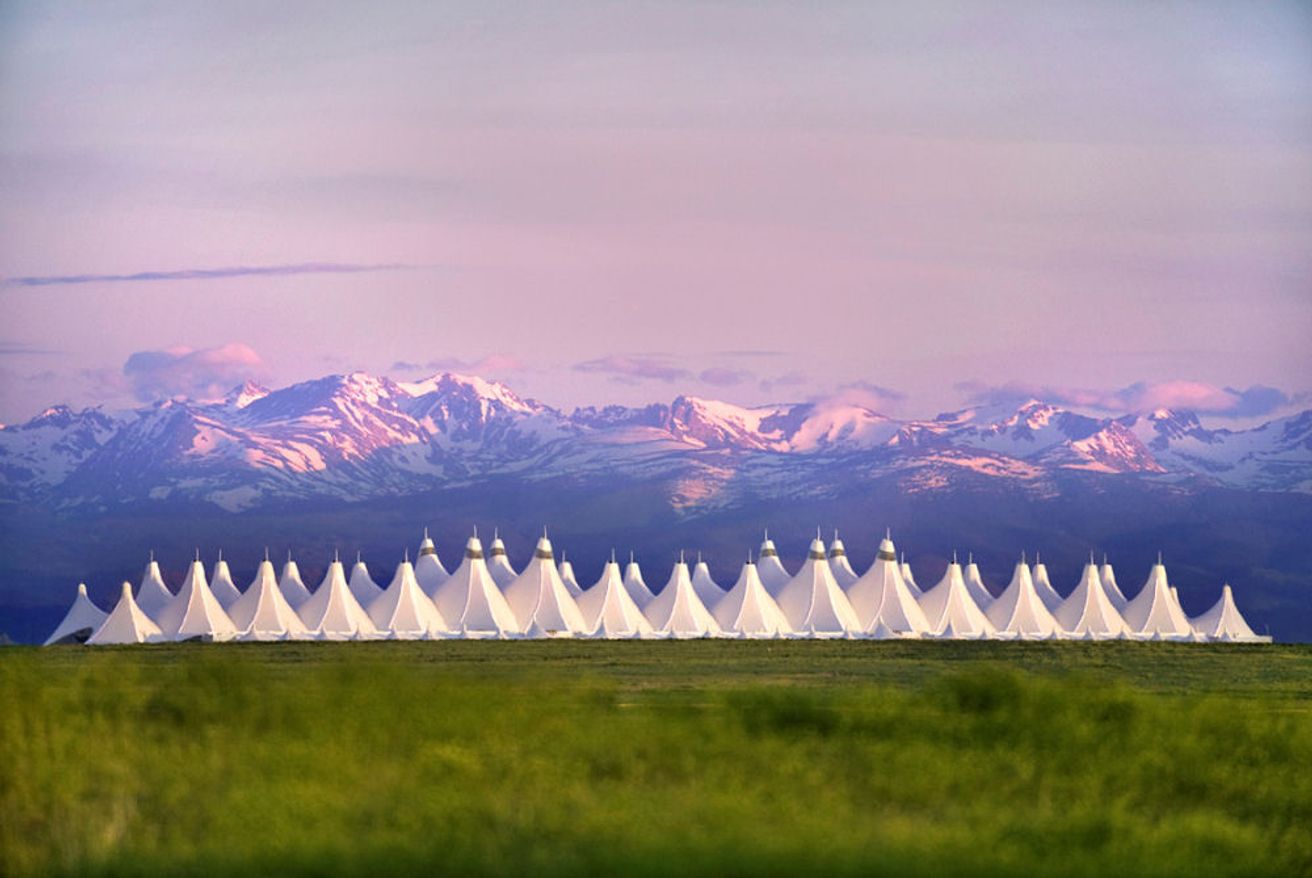
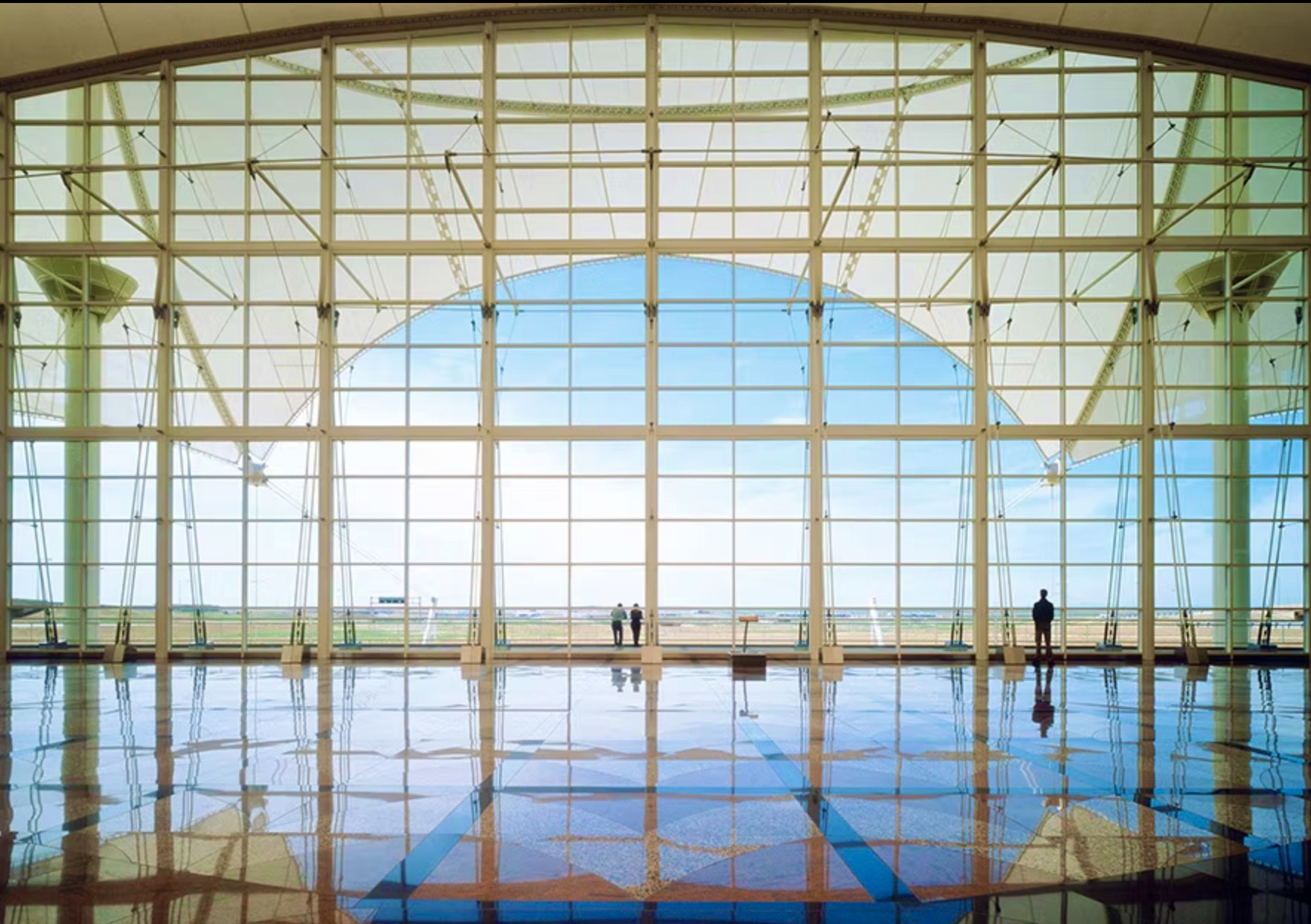
Some of the tensile structure canopies over the Denver International Airport terminal (DIA)

In order to appreciate the beauty of tensile architecture, we need to remind ourselves of how most traditional buildings, from the ancient pyramids and China’s Great Wall through to the tallest modern buildings, have been built. Familiar architectural structures rely upon compression, the stacking of weighty materials upon others in a stable way to achieve height. Whether those materials are heavy, like the massive stone blocks supporting the Temple Mount in Jerusalem, or as in the first modern reinforced steel ‘skyscrapers’ such as the former Home Insurance Building in Chicago, traditional architecture has relied upon the compression of forces created by their materials to attain successively higher elevations over the course of time.

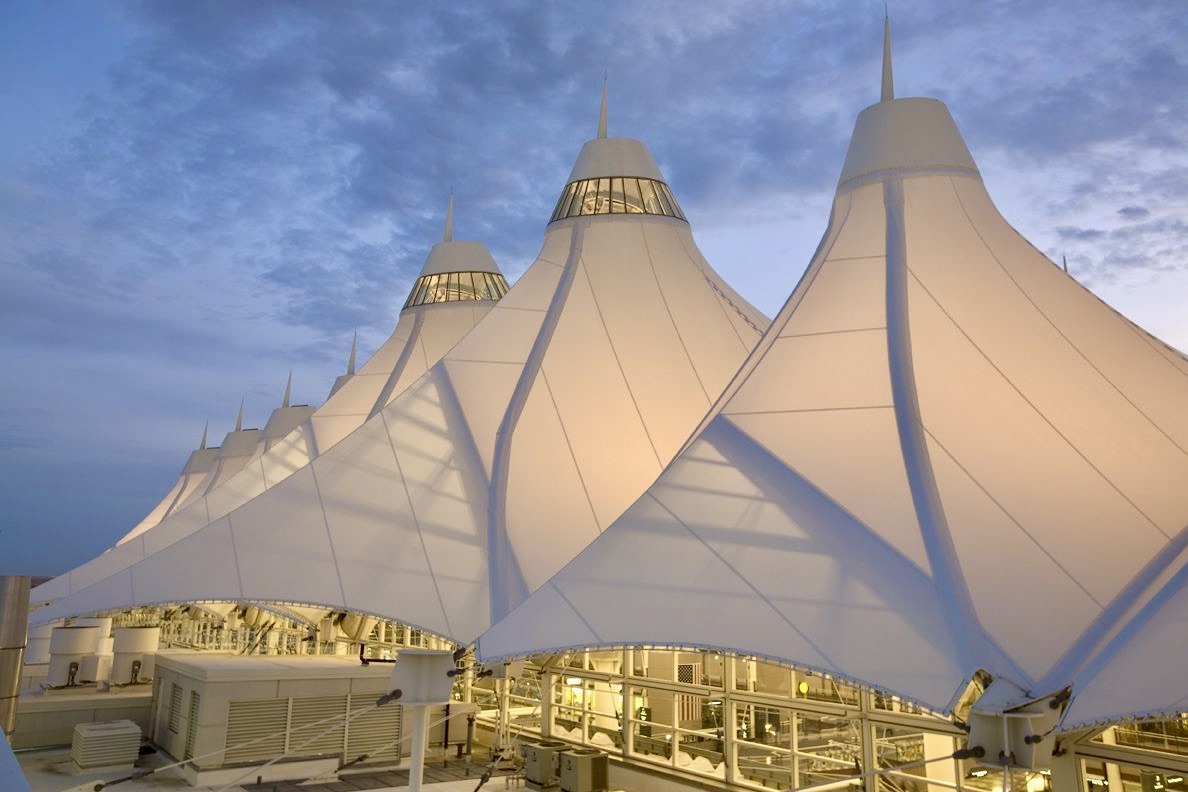
The tensile structure roofline of the Denver International Airport terminal building

Tensile architecture relies upon what its name suggests in order to attain stable and enduring structures – the dynamic of tension between the various materials and structural elements that are employed. The way that tensile structures achieve what appear to be daring results can be explained by reference to the poles and cables with which they are constructed.

Cable-supported columns, poles, and awnings, at Denver International Airport (DIA)

Though the name for this type of structure may be new to many of us, those who enjoy viewing sporting events set in large public spaces have seen and become visually familiar with tensile structures at least since the 1972 Olympics in Munich, Germany. Designed by Frei Otto and Gunther Behnisch, the imaginative canopy protecting much of the crowd seating was seen by millions on television and in news reports.

1972 Olympic Stadium designed by Frei Otto and Gunther Behnisch

Tensile architectural design continues to be used widely throughout the world to erect buildings for public purposes. Denver’s 1995 International Airport Terminal building, designed by Curtis Fentress and Fentress Architects, provides a compelling example. The architects’ achievement represents a stunning contrast to Denver’s former and very conventional Stapleton AirPort buildings.

Those who travel through DIA have an opportunity to experience firsthand what such structures can inspire. They provide occasions on which we can pass through public spaces filled with light, that feel open and uplifting, and which have the capacity to capture our attention. Buildings of this kind expand our sense of the moment in community with others, and lift us above our personal concerns by reminding us – literally- of more expansive imaginative horizons. As the venerable great dome of the US Capitol building gives convincing evidence, these are qualities to which all public architecture should aspire.

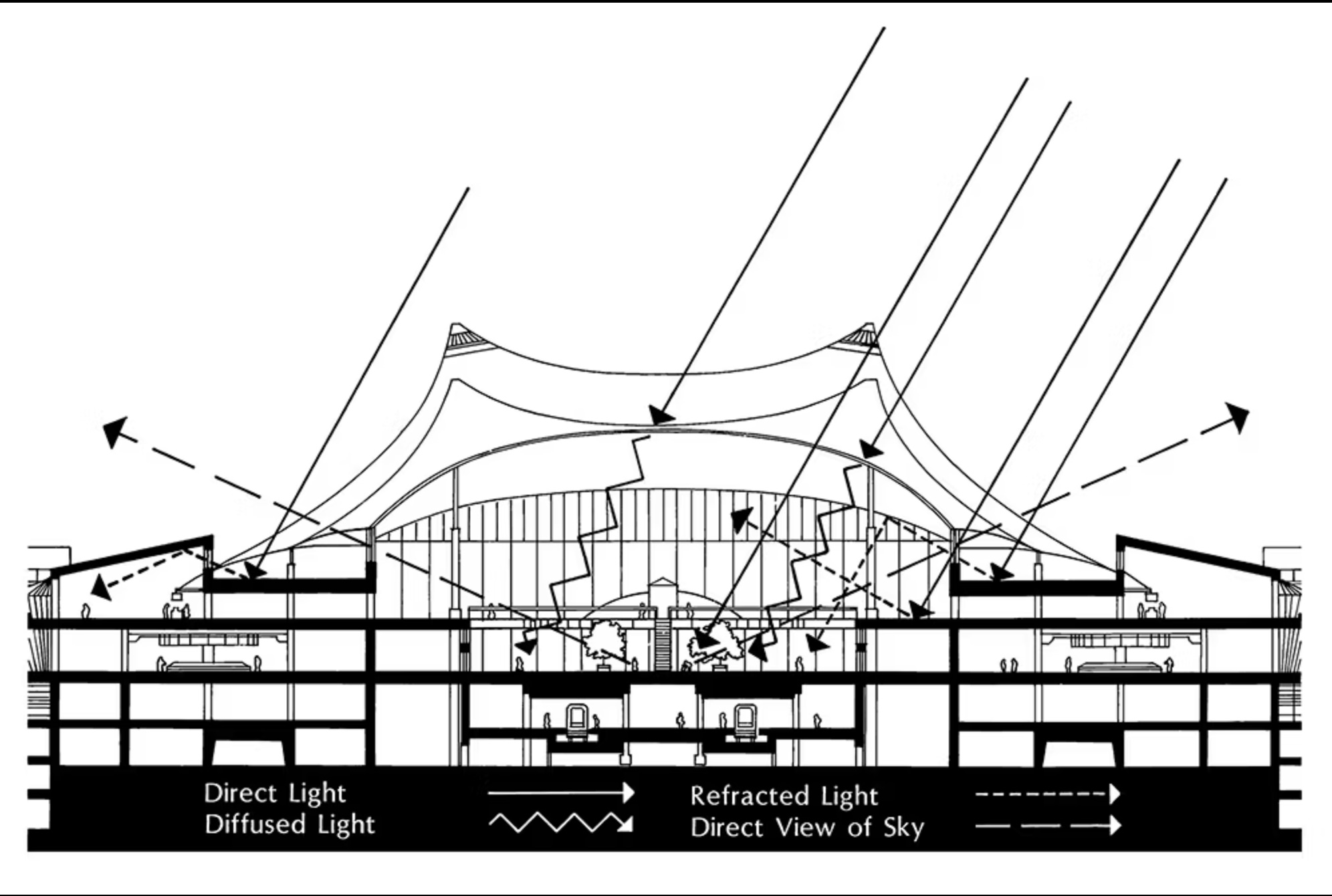
Three thematic sources of inspiration for Curtis Fentress’s design for the DIA terminal include Denver’s well-known reputation for being the ‘mile high city,’ the profile of the Rocky Mountains visible from the terminal and the city, as well as the heights to which modern aviation take us. As the images included here demonstrate, the airport’s tent-like awnings create a dramatic roofline, as well as soaring translucent interior ceilings, delighting both visitors and passengers, as well students of architecture who have never traveled to encounter these structures.

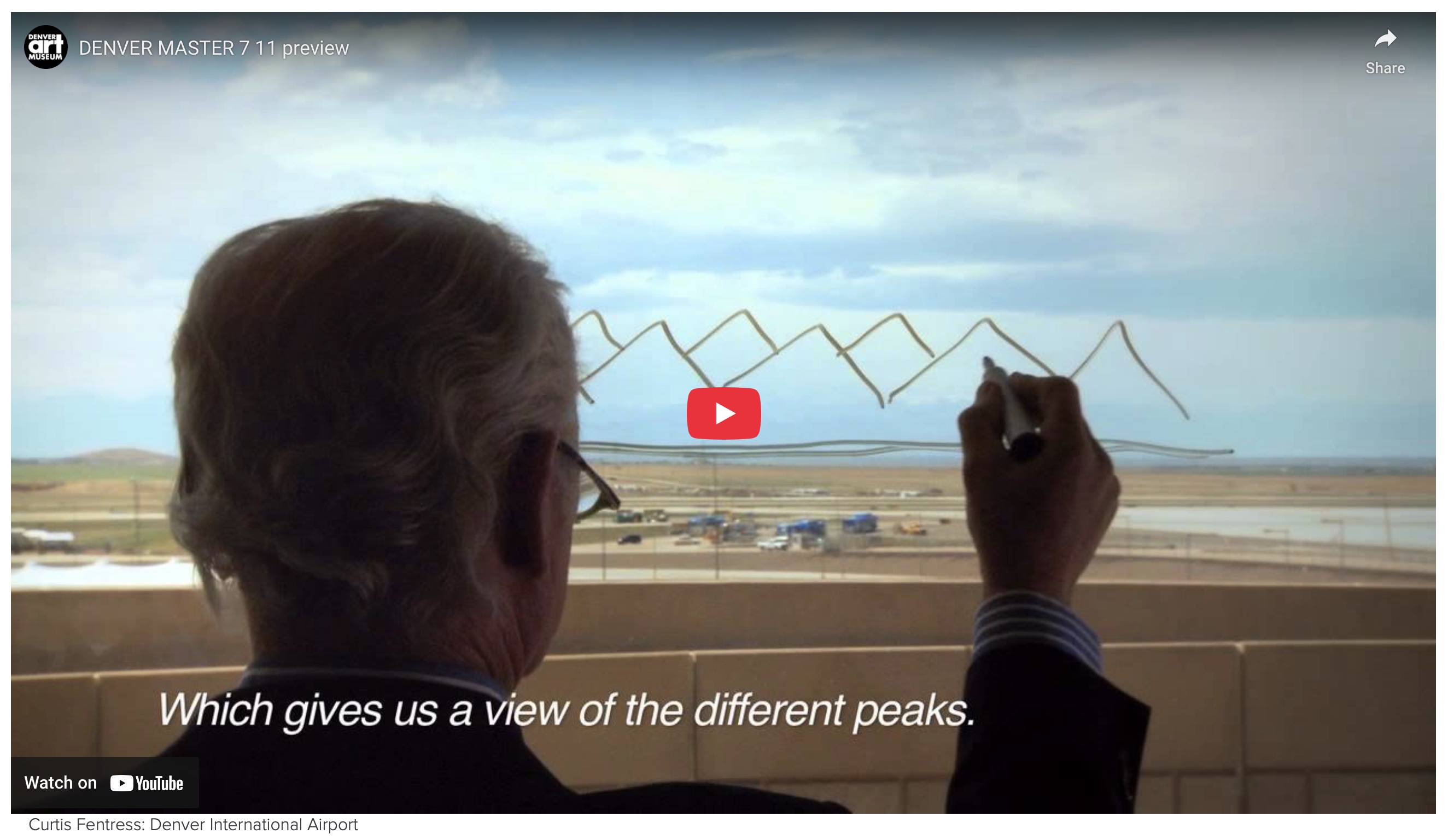
A still from a video showing the architect sketching the Rocky Mountain skyline from the vantage point of the air terminal, in a possible allusion to the terminal’s canopy structure

Since my first visit, the Denver Airport has been one of my favorite examples of modern public architecture, both because of the vision and notable aims of its principal architect, as well as because of the experientially transformative results he and his team of designers and builders were able to achieve. Like the pleasing effect of arriving at London’s St Pancras or one of the other luminous Victorian train sheds, the DIA terminal is the kind of humane environment that can ameliorate the stress of modern-day air travel.

Departure and Arrival areas at DIA

Note: I hope to feature Denver’s new (2014) canopied train platforms, perhaps inspired by the DIA terminal, in a future post.

A Tao of Seeing: Reflections Inspired by Feng Shui

Michael Pollan’s writer’s hut, intentionally situated by a boulder on the brow of a hill

Recently, I observed my middle son moving a black plastic pond module around in a small space in his New Orleans courtyard. As he moved the container that would soon have fish in it, he tried situating the vessel in various ways, in relation to a tree, a fence, some potted plants, and an existing low stone wall. He is not a student or practitioner of feng shui, but I believe I was seeing some of those principles at work in his decision-making.

Western readers may have heard of feng shui, the Asian philosophical approach to discerning the unseen forces that affect objects and their balance in nature. It gives attention to the metaphysical or non-material energies thought to be at work upon or within the world around us. We might say that this approach provides a Tao of seeing, or a natural way of perceiving within and around surface phenomena to the underlying dynamisms that are believed to affect what happens in nature.

This notion that there are unseen forces at work in the world is an idea that is receiving something of a revival in Western Christian spirituality. This is noticeable when people refer to a concept attributable to the Celtic tradition, in which it has become common to refer to “thin places. “ These are places where the veil between the material and the ethereal or the heavenly seems temporarily dissolved. Another parallel here between East and West may lie in the quest within Christian spirituality for the goal of harmony and balance between people and the created world.

However, my reflections here constitute an aesthetic rather than a philosophical or historical inquiry. I am interested in the dynamics of movement we perceive in the circumstances that we encounter, and less in the metaphysical forces or energies that may be present within them. At the outset, however, I want acknowledge how a nuanced Asian approach can be an authentic route toward a culturally-informed appreciation of the phenomena we encounter, especially from a historically Asian perspective.

As we look at paintings in the context of Western culture, one factor we discern assesses composition and attends to the way our seeing is drawn from one part of a larger image to another. This dynamic is often an artist-intended aspect of an overall composition. Sight lines in garden design and arrangement provide another example, as does the architectural arrangement of space in buildings.

Attention given by Western designers to feng shui is sometimes criticized as being a superficial application of historically and philosophically nuanced ideas. But I want to give credit to ways in which our sensitivity toward perceiving movement and direction is a genuine factor that is available for analysis and articulation. We notice this when we encounter both two dimensional compositions as well as three dimensional spaces and the objects we find in them. We can always come to know more about what we see.  Because what we see is something that is there, not simply what we believe, or are disposed or inclined to see.

An Asian garden said to be designed according to feng shui principles

Motion, balance between forces, spatial arrangement of objects, and the dynamic relationships that are visible because they exist between and among these variables, continue to grab my interest. Contrasts between colors and textures, as well as between sizes and shapes, play a significant role.  Additionally, the perceived difference between what is natural and things that are humanly fashioned is equally significant, as is our perception of the criteria for what constitutes that which we consider to be natural. These are among the factors that help account for our sensitivity towards and interest in these many observable variables, and our common quest for purpose and meaning in the contexts where we find ourselves.

Motions and balance as we find these factors in Wassily Kandinsky’s painting, Several Circles

Painters, sculptors, and architects, seriously consider these factors within visual and spatial compositions. The painter, Wassily Kandinsky, and the architect, Frank Lloyd Wright, provide two examples of those who also perceived a spiritual dimension within their creative work.

If so, we –  as caring lay observers of the world and of the things and places among which we find ourselves – should give deference to this evident fact. For we can all be thoughtful, as people often are inclined to be, about what we see, touch, and experience when we interact with visual phenomena.

I find myself increasingly sensitive to these aspects of our appreciation for Beauty, and endeavor to be more mindful about them. I am intrigued by possible parallels that may exist between Eastern metaphysical interpretations of visual phenomena and more familiar approaches to what we see that are shaped by Western aesthetics. Especially as these familiar approaches are described and developed within our artistic and architectural best practices.

The Western Art of Tom Gilleon

If reading this by email, please tap the title at the top to open your browser for the best experience. Then, clicking individual pictures will reveal higher resolution images.


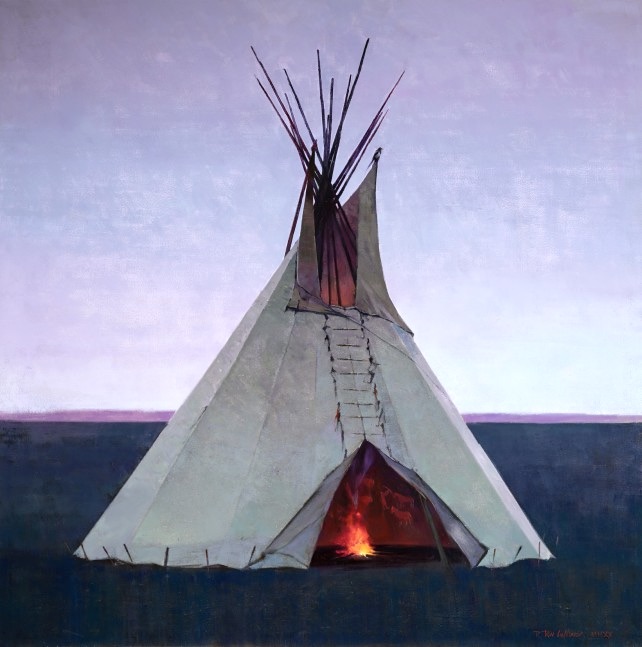
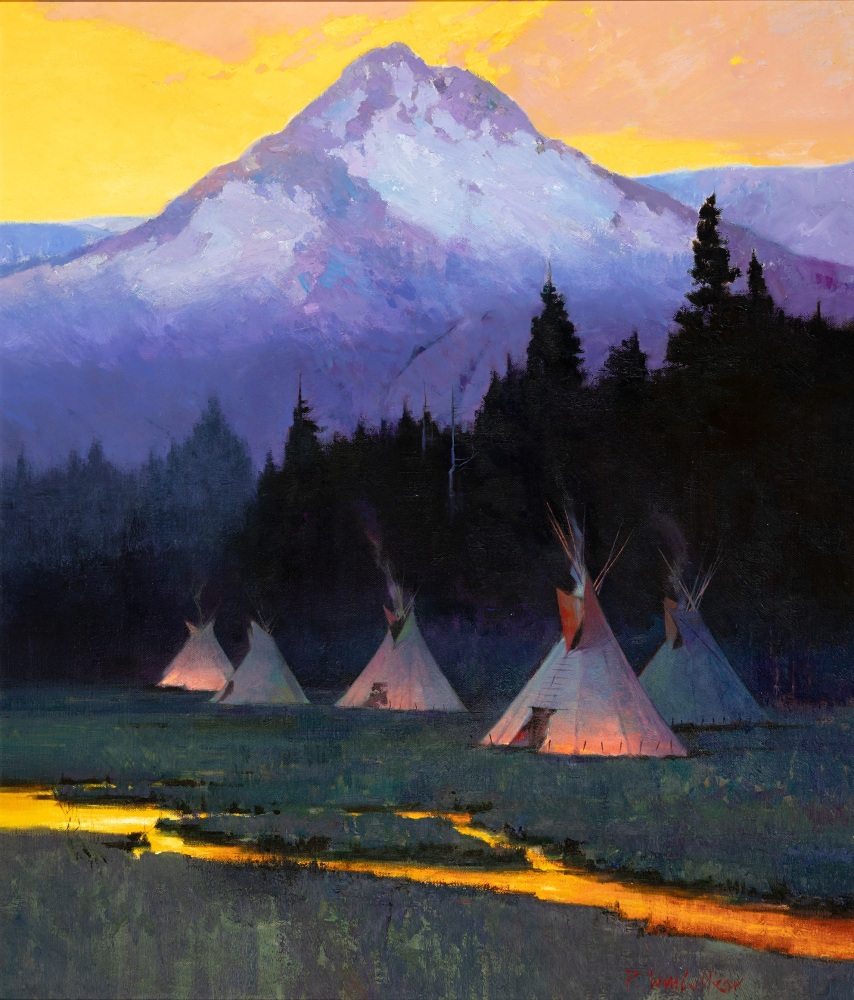
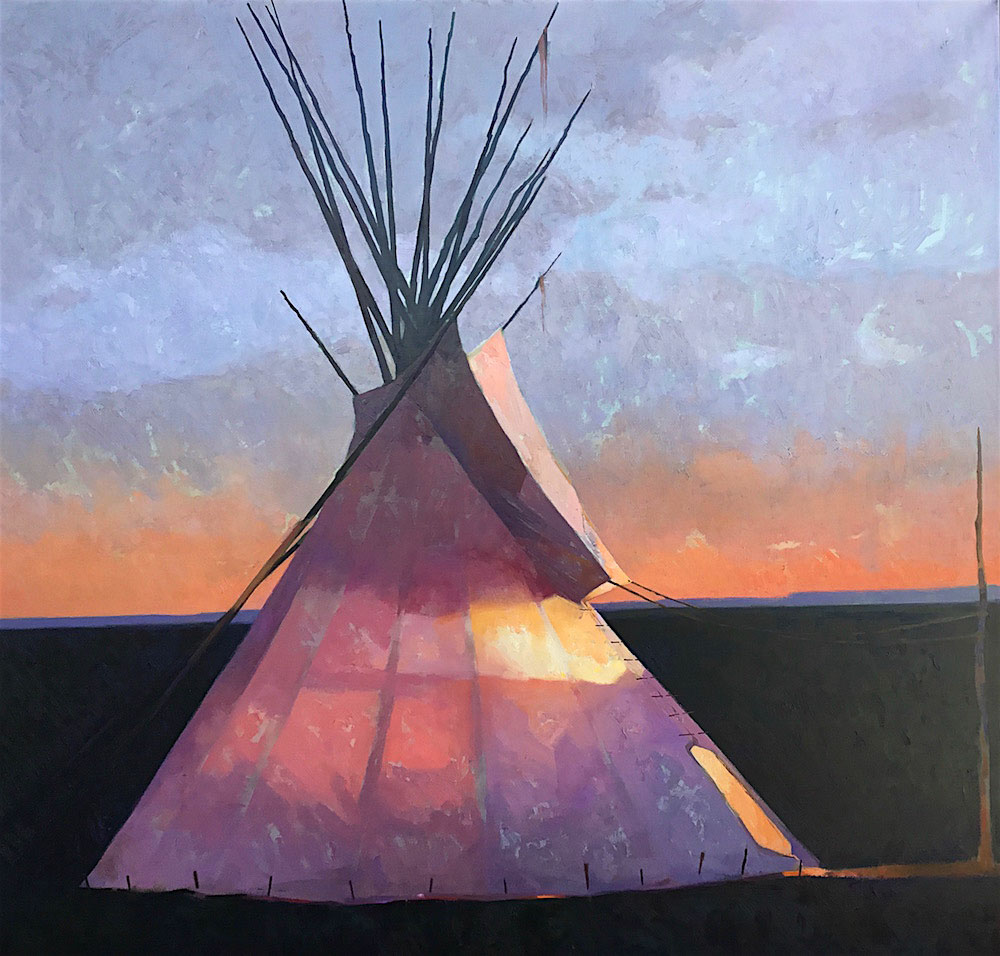
With the Western art of Tom Gilleon, we find another example of a skilled painter trained in the practice of traditional representational painting, whose work has morphed over the years to incorporate some features of Modern Art that are commonly associated with post-World War II American painting and printmaking. Viewers familiar with Gilleon’s paintings will notice his repetitive motif of portraying tipis on the prairie, rendered in multiple ways with varying color combinations. Yet, and in a way reminiscent of Andy Warhol’s numerous print series, the compositional elements of many of Gilleon’s paintings are often the same.

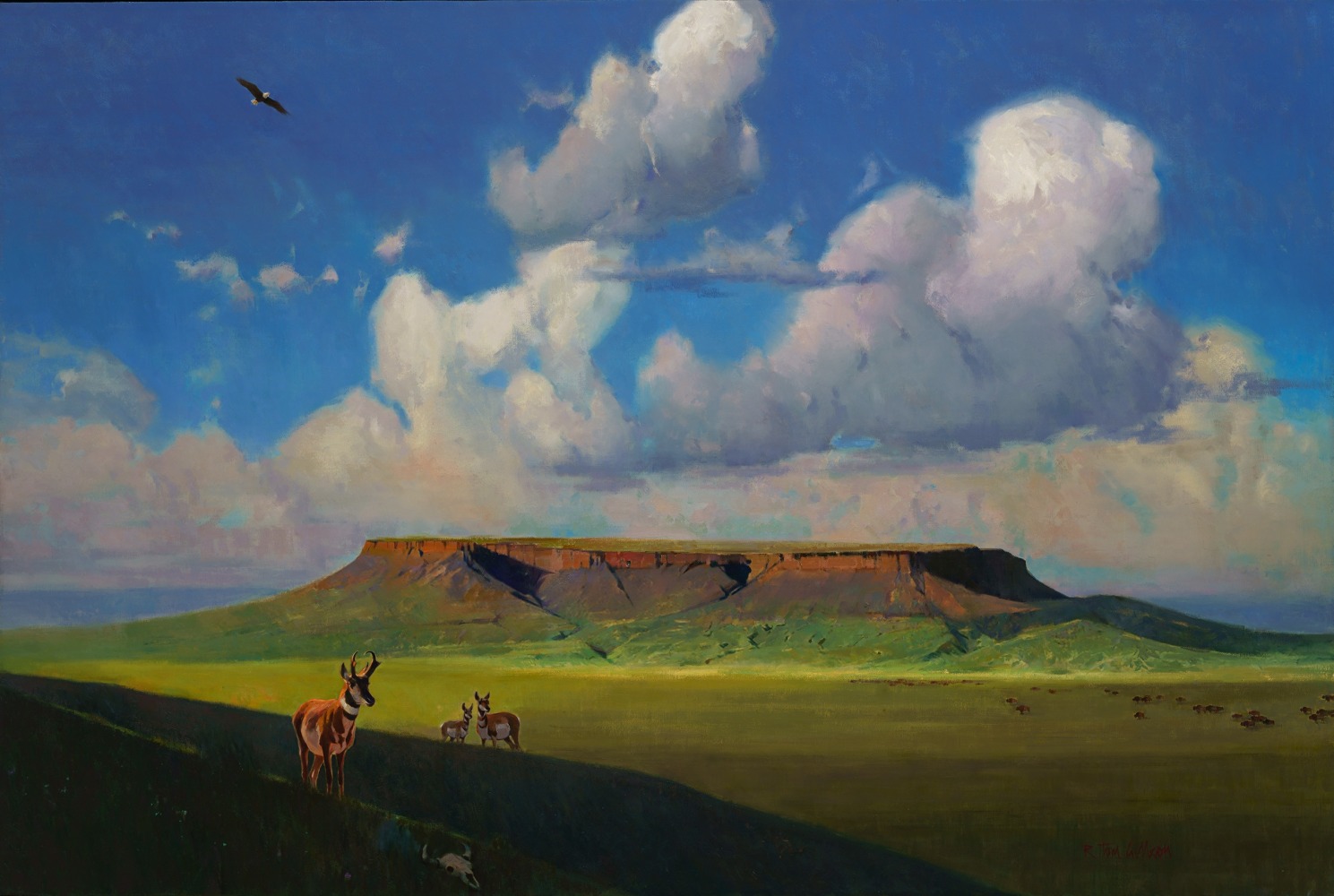
One potential criticism of so-called Modern Art, heard less frequently now, is that many viewers find examples of the genre to be simplistic, perhaps lacking in creativity, and potentially the product of less talented artists. I have addressed that observation before, especially with reference to the work of Jackson Pollock as well as James M. Whistler. In my view, elements of image composition, color choice, and the placement of the colors selected within a given work of art, as well as how color is applied, represent choices made by painters the sophistication of which is easy to overlook. In the case of Tom Gilleon, the artist’s bone fides as a skilled painter can easily be established. Note the following examples of his more traditional representational work.
The image shown immediately above, based on the mesa visible from Gilleon’s studio, provides a reference point for observing the range of his interests as a painter. The same view, featuring much less detail, can be seen in his image below.

While fully capable of portraying a Native American tipi encampment with sensitivity to its geographical and historical contexts, Gilleon over time has come to focus his work less strictly on the representation of scenes he has observed, and has moved toward an exploration of particular elements within those scenes. This has allowed him to focus more directly upon picture composition and the exploration of color. This broadening of his work as an artist can be seen in a number of images shown below. First, we observe two images that are more clearly dependent on physical observation of – or extrapolation from – specific contexts on particular occasions.

In the above two paintings, we can appreciate the artist’s skillful attention to such details as the nature of the weather, varying daylight conditions and the way they are reflected on the surface of water, and how he portrays features of the physical terrain such as a mountainside in evening light, or a mountain range obscured by a rain shower. But then, we can go on to enjoy the artist’s greater attention to the tipis themselves, and to how a common compositional element that is repeated with little variation over the course of a number of images, can give rise to a marvelous series of explorations of differing light conditions. These explorations include renderings of the effects of light both within and around the tipis that he portrays, as well as its effect upon the surfaces of those structures and the terrain in which they sit.

The latter image, so much like the ones shown above it with regard to image composition, as well as attention to color and light, is of interest because of the very subtle shift evident in the directional location of the tipi’s entrance, and the lone bare pole in the far righthand side of the painting. In this same image, the artist has felt free to move away from reproducing a historically accurate representation of various ways that particular Native American communities would apply decoration to the tipi’s surface, so as to be in a better position to attend to the abstract components of color and light in themselves.

At the outset, I alluded to Gilleon’s incorporation of aspects of painting commonly associated with the work of Abstract Expressionists as well as those whose work became associated with the label, Pop Art. The following images provide good examples of Gilleon’s willingness and ability to work beyond the parameters of more traditional landscape and portrait painting.

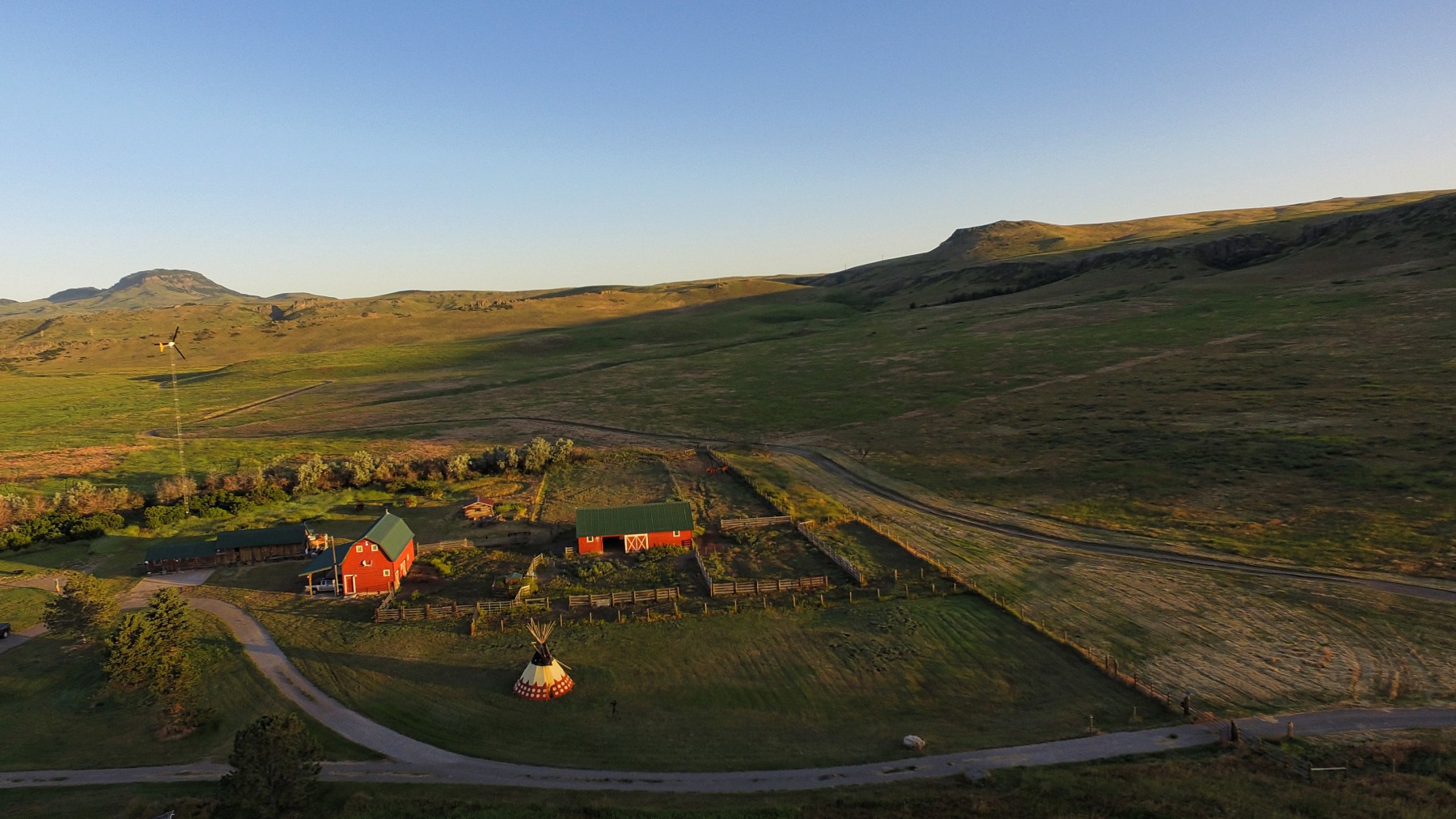
The artist (below) in his studio, with his view of the flat-topped mesa in the distance

The artist’s studio on his Montana ranch, with a tipi in the foreground

Geoffrey Jellicoe: Finding and Creating Beauty in the World

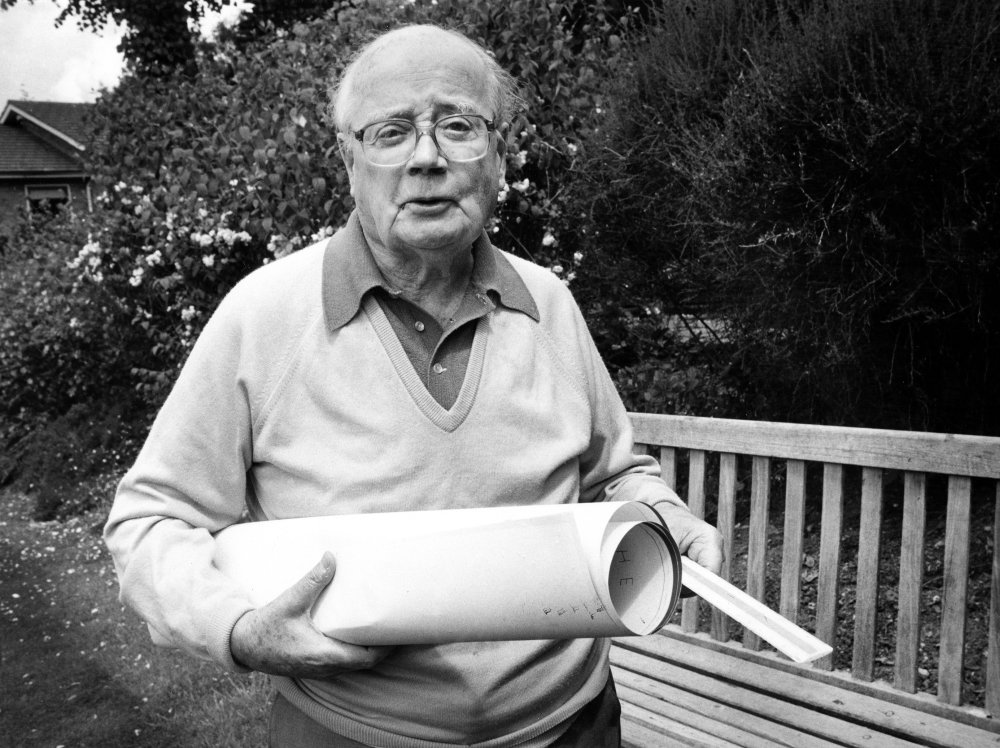
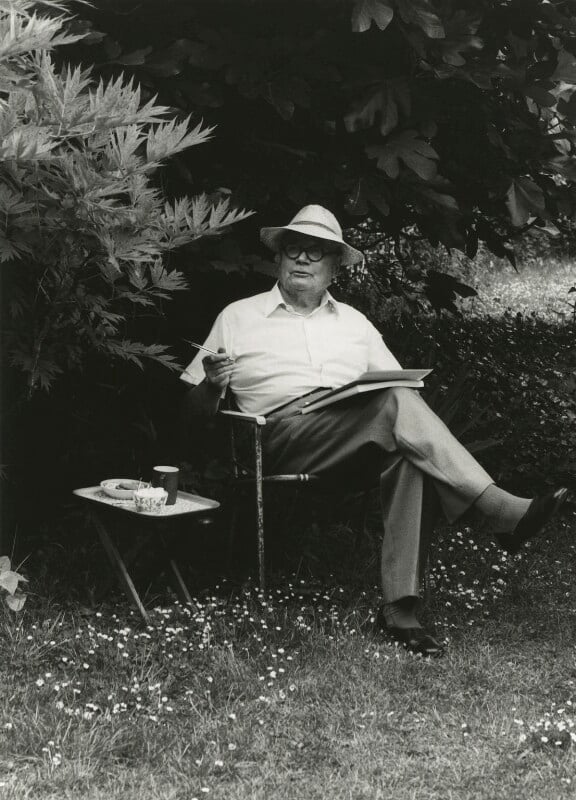
Sir Geoffrey Jellicoe at his London home shortly before his 90th birthday


Discerning beauty always presents an opportunity to experience joy. As many find, though, creating representations of beauty, as a chosen task, can be difficult.

Alive in my memory are images of areas of New York City and decaying areas of urban New England, during my high school years in the early 1970’s. I remember asking myself, as an aspiring architect and artist, how might I meet the challenge of creating examples of beauty in the world as we presently find it? Well, after some years, I discovered the life and work of Geoffrey Jellicoe, which provide an example of one way of answering questions that stay with me.

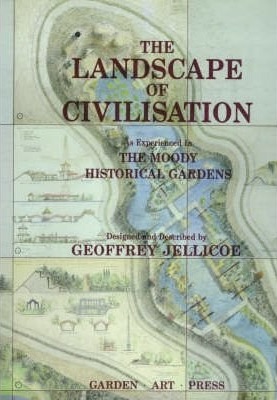
Late in his life, at a time when many seek the solace of retirement from actively pursuing such questions, Geoffrey Jellicoe took on a significant challenge. How might 150 acres of a seemingly forlorn stretch of a barrier island, adjacent to an urban area that has long surrendered to the declining effects of industrialization, be redeemed and transformed into a place for renewal by a humanistic vision of what might yet be?

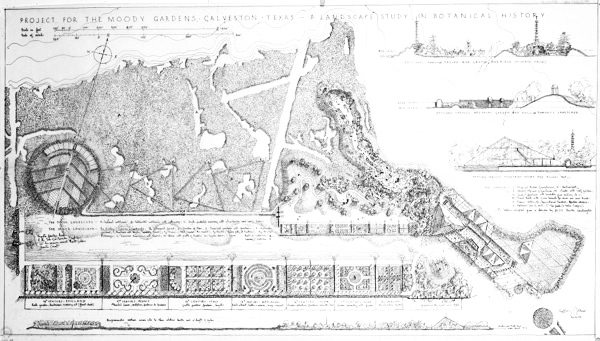
Jellicoe, at the age of 80, and to the surprise of some, accepted the opportunity to submit a proposal for what might become the Moody Gardens. In the process, he embraced the idea of working with a hundred-plus acres of neglected sea marsh and dune land on Galveston Island. This site even included a need to take into account an existing but under-used local airport. Nevertheless, the esteemed landscape architect, Jellicoe, envisioned a large facility centered on the nurture of human flourishing by designing what he hoped would become a significant botanical garden. Its plan would be dedicated to re-creating documented historic human efforts to re-shape areas of the world through the practices of horticulture and landscape architecture.

The Texas-based Moody Foundation, a philanthropic organization committed to education, health, and community development, found in Jellicoe the person they believed was best equipped to provide a master plan for what might become Moody Gardens, in the vicinity of Houston. And he brought to this challenge a lifetime of learning and accomplished work, which fitted him well to address this auspicious opportunity.

Encountering Moody Gardens as it has come to be, a vibrant, attractive, and an apparently successful facility, we may be mislead about Jellicoe’s orginal concept for the project. In presenting itself now as a tourist destination with resort-like amenities, Jellicoe’s early proposals for the Gardens seem fanciful if not also highly visionary. Yet, there may be significant things we can learn from his initial plans, and the concepts he sought to embody in his hoped-for realization of the project.

I can suggest a few of these potential learnings by posing some rhetorical questions – questions that I hope to address in future posts.

  • What is ‘our human nature,’ that we hope or believe we all share? What environments are most suited for nurturing the flourishing of our human nature?
  • What is Nature, and what humanly-created environments are most true to Nature? What things or places do we consider to be ‘natural’?
  • Why does it require human effort, financial capital, and institutional resources to facilitate, maintain, and preserve ‘natural’ environments? (Consider here the scope of the funding for the National Park Service, and the United States Forest Service.)
  • And, why is concern about the natural world- the ‘environment’ – properly a matter for serious theological reflection, and one especially related to our regard for Beauty? Why do our concerns about the natural world have theological significance?

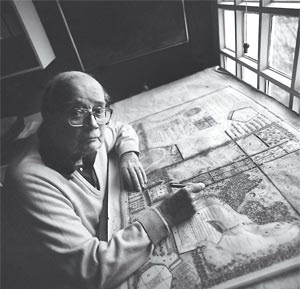
Geoffrey Jellicoe at work in his garden

A Beautiful Garden: Nitobe Memorial (Part II)

[If reading this by email, please tap the title at the top to open your browser for the best experience. Then, clicking individual pictures will reveal higher resolution images.]


In Part I, I closed with this observation: one does not visit a Japanese garden in the way one might go to a park, as a context to pursue some activity like an exercise walk, but as a place to experience simply being.

Here we encounter a paradox, perhaps one of many associated with traditional Japanese gardens. At first, for many Western visitors, the elements within such a garden, and their arrangement, catch the eye and draw one in further to an encounter with what is seen there. Yet, what is seen within a Japanese garden exists less to provide an object of attention, and more to facilitate and enhance how one sees. A journey around the garden therefore encourages a journey within. The “spirit that informs [the] spaces” found in “a garden created and maintained in the Japanese tradition,” to which the UBC website alludes, is a spirit or quality of experience to be nurtured within the viewer who encounters this intangible element of the garden.

A carefully arranged sense of space therefore forms a prominent feature of traditional Japanese gardens, where plantings and structural objects both near and further away are placed deliberately. Except for the surrounding walls, there are no straight lines in a Japanese garden, and formal symmetry is strenuously avoided. Plantings and objects are more often placed singly or in three’s, given how two points often suggest a line and three suggest a circle. The spatial interrelationship between such things as large stones, trees, and water features is not accidental, and for the Japanese has a spiritual as well as visual significance.

In Japanese garden design, each particular feature, whether alive and growing or humanly made, has a distinct significance and is purposely chosen for its location. Perception of this is enhanced when a visitor becomes aware of how the elements of a garden’s composition are selected with an appreciation for seasonal viewing, such as at the annual cherry blossom time. Throughout the year plantings in the garden draw attention to themselves through an occasional heightened display of color, or by contributing to a muted harmony of differing tones and textures. On successive visits, a familiar place somehow can seem different.

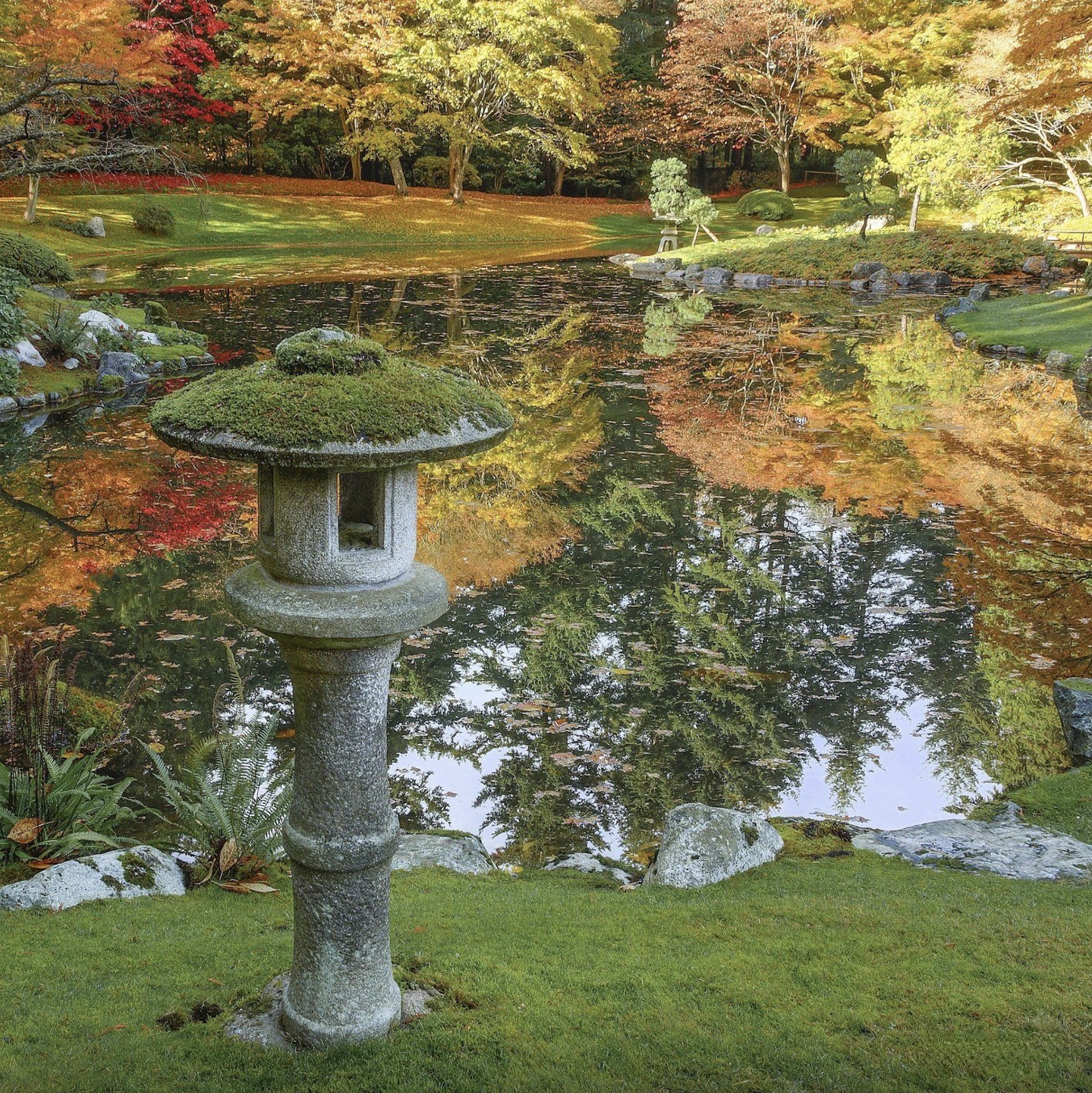
Plants, shrubs, and trees in Japanese gardens are cut and trimmed so as to appear manicured  just as European topiary is studiously tended, albeit with very different results. Whereas gardeners in the Southern U.S. might allow azaleas to grow unevenly to avoid looking like a hedge, ornamental shrubs such as holly and cedar, and the branches of evergreens, are painstakingly shaped by the Japanese-trained gardener, often into softly rounded forms. These provide contrast to the smooth sculptural shapes of tree trunks, while also standing out against the flat reflective surface of ponds.

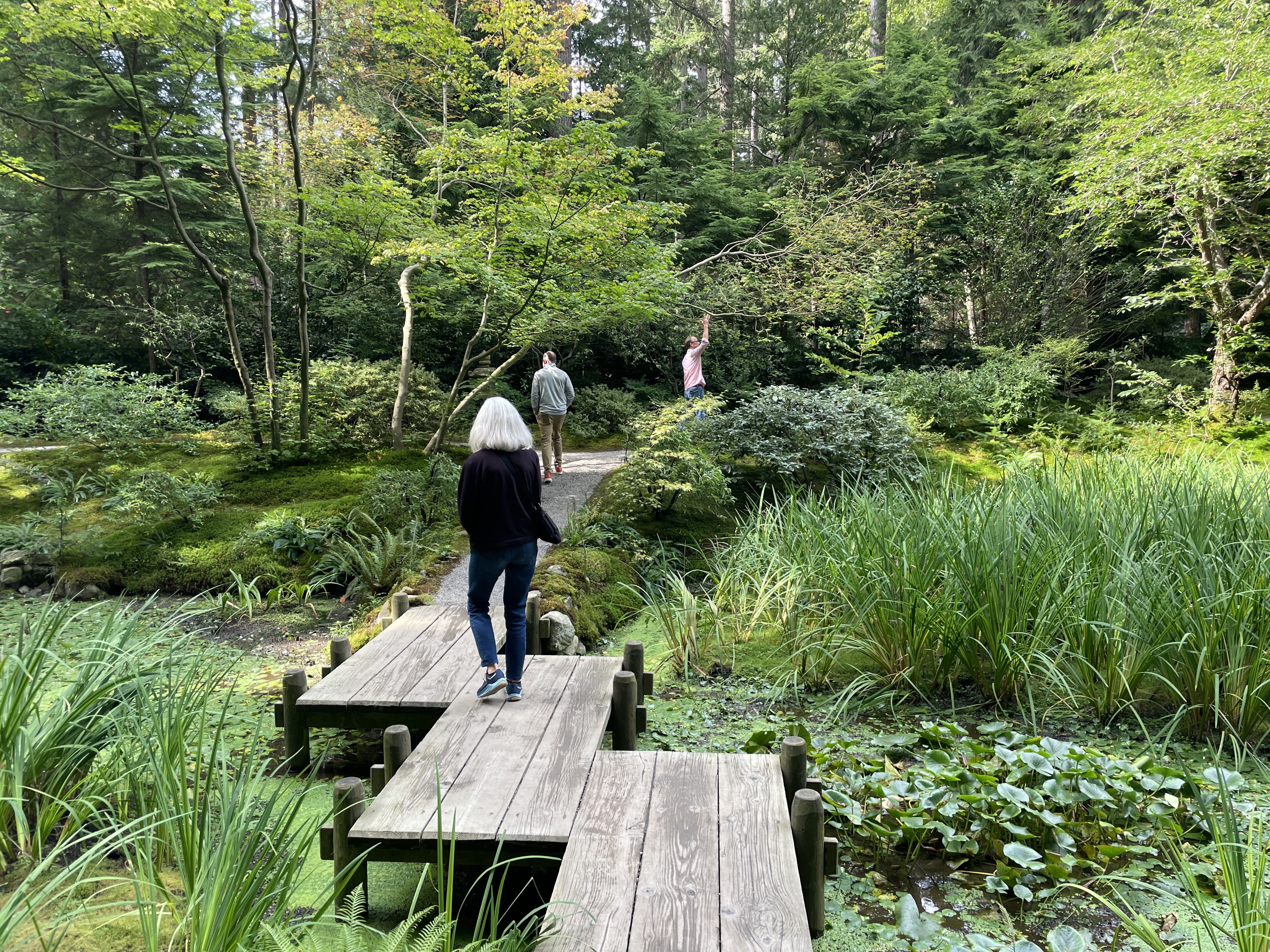
Traditional Japanese gardens usually contains a pathway, a design element not unique to such gardens, though its treatment in this context draws attention to itself. For the pathway through the garden can be just as important as what is viewed from it, so that the experience of the journey becomes in some sense its destination. Even in a relatively compact space, a consideration important in Japan, a pathway in a garden can make a small area seem much larger than it is, as the visitor is prompted to slow down and live into the present moment.

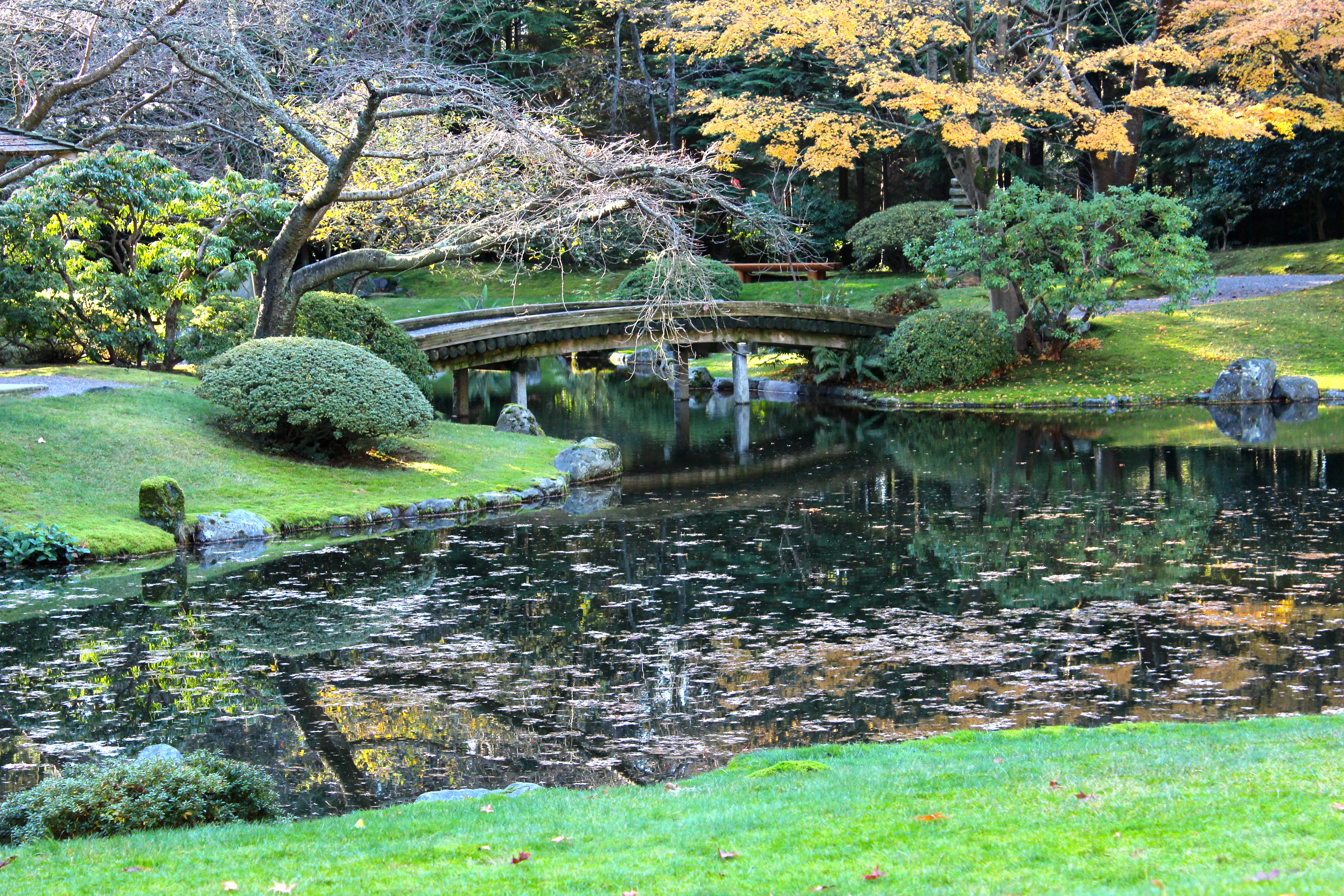
Padding along the soft pea gravel between areas of green covered by multiple textures from soft moss to tall bladed plant spikes, one gains glimpses and then temporarily loses sight of what lies ahead. Views include garden features such as a teahouse awaiting encounter, or a low-arching bridge from which Koi might be observed below the still water’s surface.

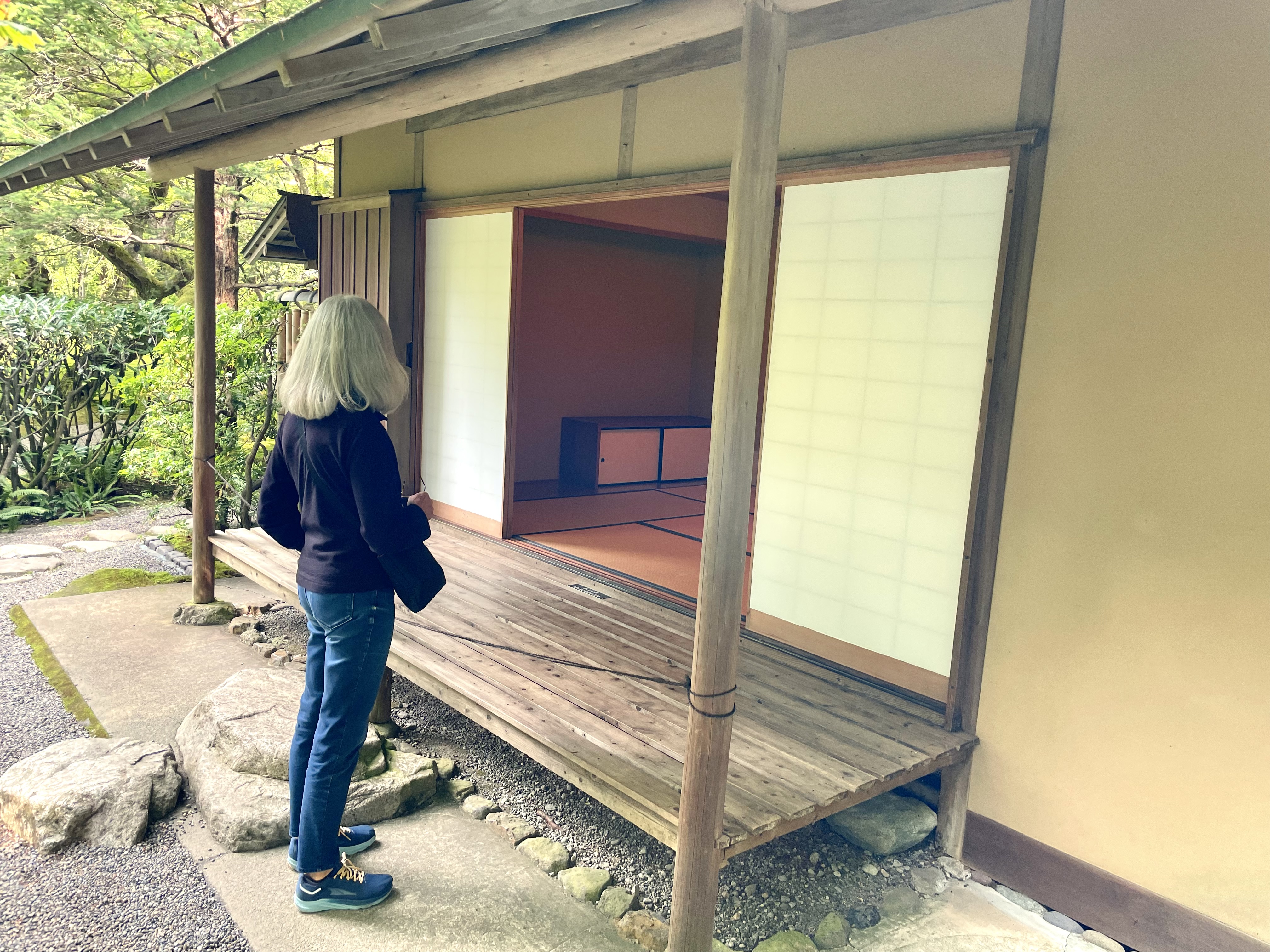
The UBC website says that “Nitobe Memorial Garden is considered one of the most authentic Japanese gardens outside of Japan.” A testament to this perception was provided by Emperor Akihito during a visit there. He said that, while in this garden, “I am in Japan.” Enhancing this sense of being in Japan is the presence of a traditional Japanese house in which opportunities to experience the ‘tea ceremony’ are seasonally available.


A Beautiful Garden: Nitobe Memorial (Part I)

[If reading this by email, please tap the title at the top to open your browser for the best experience. Then, clicking individual pictures will reveal higher resolution images.]


The Nitobe Memorial Garden on the grounds of the University of British Columbia (UBC) is readily recognizable as a traditional Japanese garden. Like other gardens of this type, it provides an experience of tranquility. Even in an urban area such as Vancouver, Nitobe Garden offers a quiet refuge from daily life concerns and tensions that visitors might carry with them.

An interpretive guide to “understanding Japanese Gardens,” found on the UBC Botanical Garden website, asserts the following:

… it is almost impossible to clearly state what defines a Japanese garden. Many Japanese resist classifying and categorizing the various features of Japanese gardens.

The website attributes this reluctance to the idea that beauty “not explained allows the viewer to remain in a state of wonder.” This worthy observation applies as much to modern abstract painting as it does to historic patterns of landscape arrangement. Yet, in this and in the next post, I will articulate characteristics that enable us to distinguish a traditional Japanese garden from, for example, a casual English cottage garden or a formal French garden.

The UBC website acknowledges how “most visitors can tell when they have entered a garden created and maintained in the Japanese tradition,” crediting this perception to people who “are sensing the Japanese spirit that informs these spaces.” This may be due to how various strands within Japan’s cultural history have coalesced to form a recognizable ‘style’ manifest in its gardens. Among the results of such a melding process, we can identify and describe several features in the Nitobe Garden that are common to other well-known Japanese gardens.

We can begin by observing how gardens and parks found in the East and in the West have a number of shared attributes. Among them, most gardens and parks around the world feature a scheme for the arrangement of their various parts even if it is not readily evident to visitors. Many such places appear to promote and preserve a ‘natural’ quality among the things growing in them, even in formal gardens. Some gardens and parks accentuate this natural element, perhaps in deliberate contrast to surrounding urban areas. This fosters an impression that the plants, shrubs, and trees have grown where they are of their own accord, and in their own way, regardless of any horticultural tending they have received. Especially in the West, ‘nature’ and that which is ‘natural’ are seen as what does not readily bear the imprint of human interaction, and as emerging more from its roots than from our planning.

Western gardens and parks may have gates, but often their entrance designs accentuate pubic access, providing a continuity of experience for visitors who may have potted plants or flowers where they live and work. In this sense, these garden and park entranceways draw people in from what is less into what is more. In the process, visitors are likely to encounter familiar though markedly larger and more extensively planted shrubs and trees, many of which do not appear to have been shaped or altered by human hands.

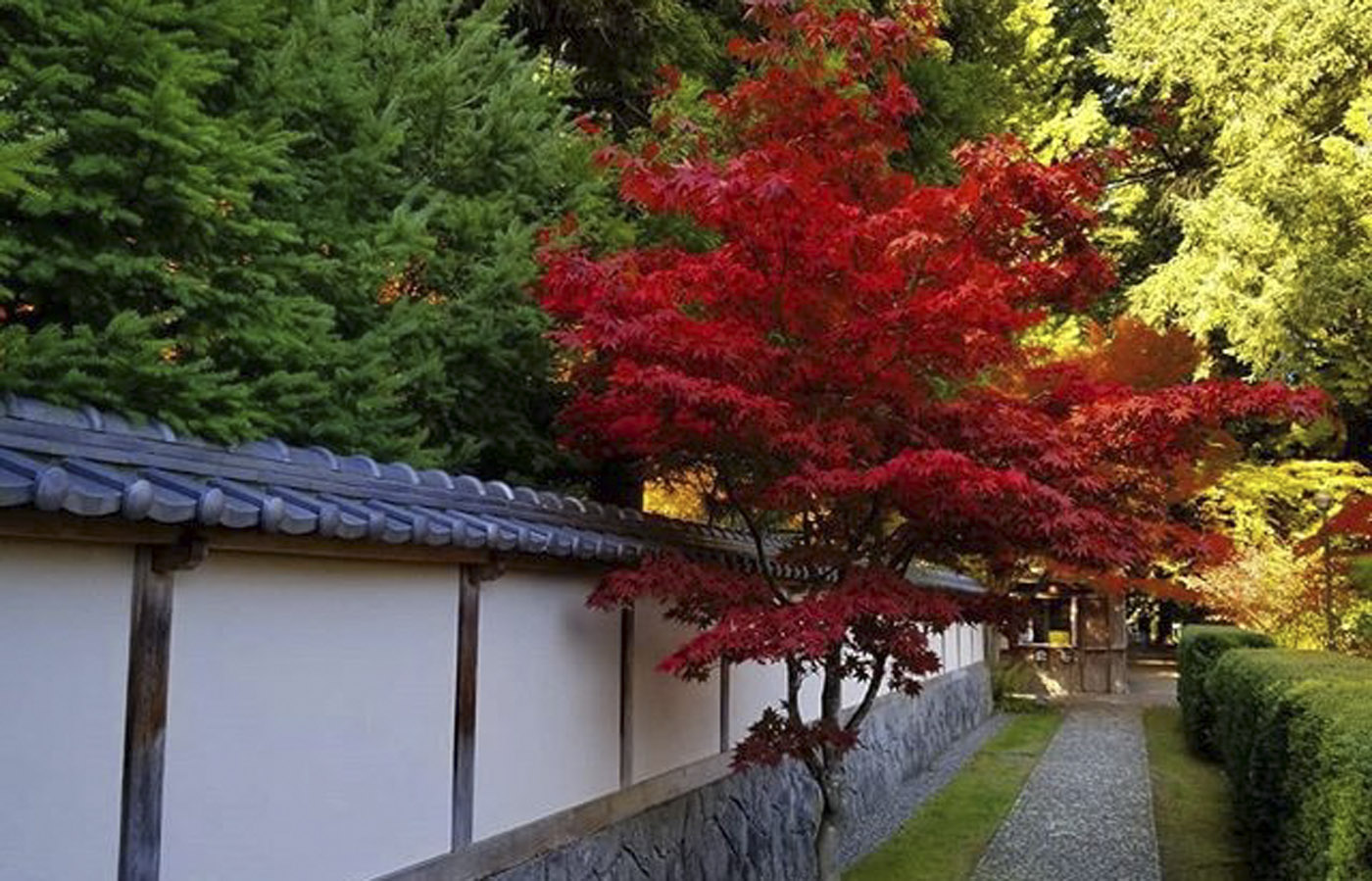
Formal gardens both East and West usually have marked boundaries and even barriers between what is within and that which is outside. Traditional Japanese gardens are typically surrounded by view-blocking walls topped by a ceramic tile parapet. These indicate a formal boundary between the transient outside world of energy-charged daily activity and the stillness available within, where visitors are subtly bidden to release their grasp upon time and their surroundings.

Imposing entrance gates mark a portal to a different realm lying beyond, as much as they appear to provide a barrier protecting what is within. Though these gates and the walls around a Japanese garden may serve to keep out intruders and foraging animals, they exist primarily for the sake of those who enter and take time there. For one does not visit a Japanese garden in the way one might go to a park, as a context to pursue some activity like an exercise walk, but as a place to experience simply being.

In the next post we will continue to explore what is identifiably distinctive about traditional Japanese gardens like the Nitobe Memorial.


Chihuly Garden & Glass ~ Seattle

[If reading this by email, please tap the title at the top to open your browser for the best experience. Then, clicking individual pictures will reveal higher resolution images.]


On a recent trip to Seattle I visited the Chihuly Garden & Glass exhibit at Seattle Center. This collection of Dale Chihuly’s glass work, which includes both large and small objects and installations, provides a splendid way to become familiar with what the artist has accomplished so far over the course of his career. The extensive exhibit gives the visitor an excellent introduction to the methods that Chihuly has employed when embarking upon various projects and insight about how he has revolutionized many aspects of contemporary glass making.

An initial large room contains a display of smaller Chihuly creations set within the context of a selection of his baskets and related objects from First Nations peoples, as well as an assemblage of his large framed photographic prints of Native American individuals by Edward Curtis.

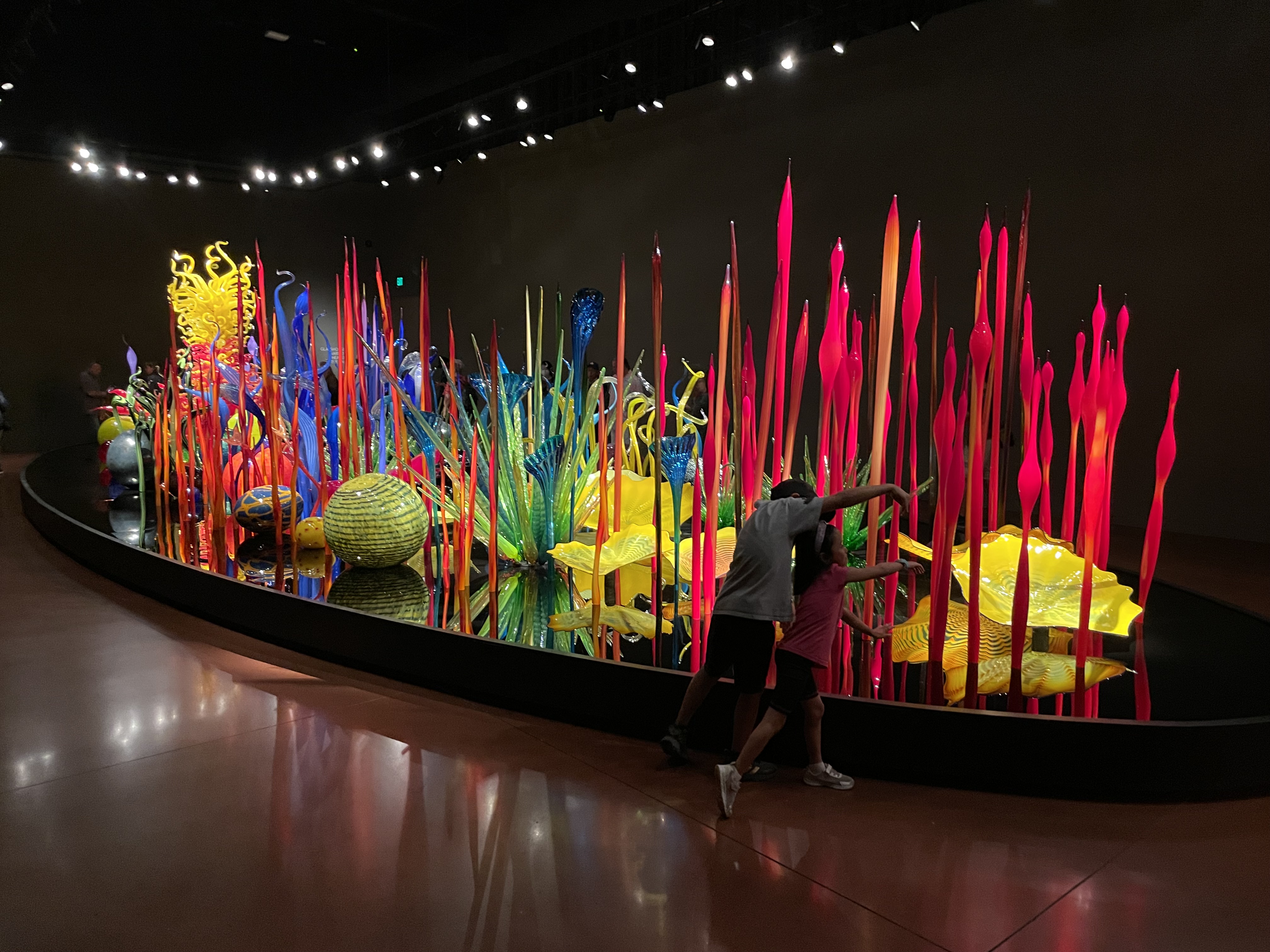
A large gallery within the exhibit features Chihuly’s Mille Fiori (a thousand flowers in Italian), inspired by memories of his mother’s garden. An information panel indicates that the pieces in this installation, gathered from several series of his prior work, “rely less on tools and more on the use of fire, gravity and centrifugal force.”

Two youngsters enjoying engagement with Mille Fiori while helping to provide us with an indication of the assemblage’s scale.

A display titled Ikebana and Float Boats is featured in a subsequent room. Having pursued glass making in Seattle and in Venice, both near significant bodies of water, Chihuly experimented with glass objects thrown into a river in Finland, where youth from the area in wooden boats helped retrieve them. Intrigued by the interaction between the objects, the light above, and the water below, the artist continued to develop these interests after traveling to the Japanese island of Niijima. There he became reacquainted with the glass globes traditionally employed by Japanese fishermen as floats for their nets, which he had first seen as a youth beach combing on Puget Sound. At the same time, Chihuly was inspired by the Japanese art of flower arranging, called Ikebana. He combined his interest in the glass globes with the inspiration provided by Ikebana and imaginatively adapted these forms within boat-shaped structures that have been displayed in galleries and upon ponds.

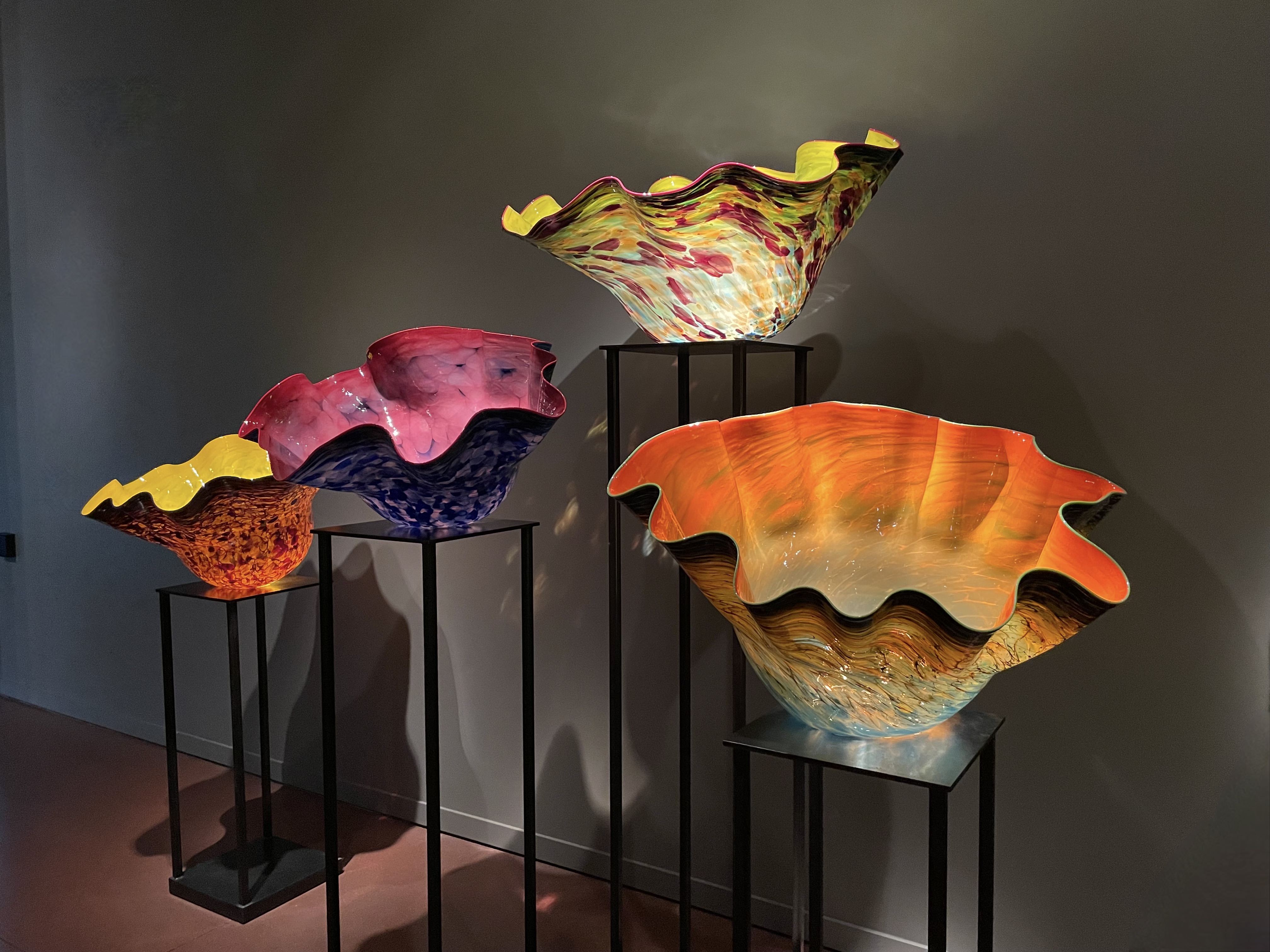
Another gallery space features large bowl-like objects from Chihuly’s Macchia series. As a guide at the Chihuly exhibit makes clear, no one has yet been able to produce a truly black form of glass. Yet, Chihuly has come close with his occasional use of very dark blue and purple. Through his Macchia series, he sought to incorporate every one of the other 300 colors that are available for glass making. Noticing that colors within stained glass windows often appear more alive when illuminated from behind by the diffused light of a bright cloudy sky, Chihuly began to experiment with including a white layer within objects between the inner and outer colored layers of glass. The presence of speckles and striations of additional colors results from when molten glass is rolled on a flat metal surface that has been sprinkled with multiple-colored bits of glass.

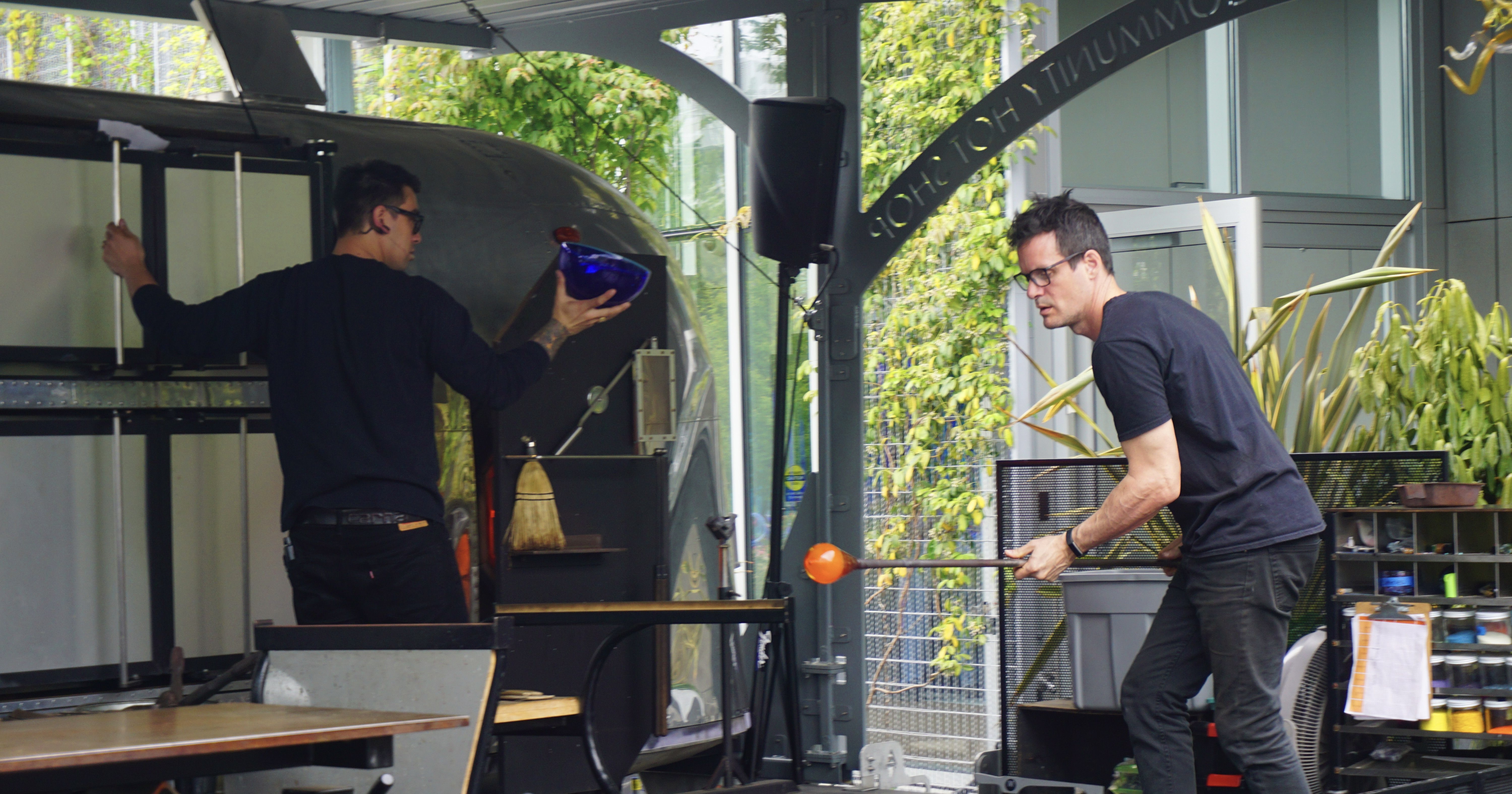
Near the end of a tour through the exhibit one finds a courtyard where an informative glassblowing demonstration is offered, which brings alive some of the challenges inherent in working with this medium.

Chihuly Garden & Glass provides a lively sense of the remarkable extent of the artist’s output, and the breadth of his highly imaginative vision for what can be done with glass as an art form. The exhibit is well worth a visit for those able to travel to the Seattle area.