writing

Nikawa’s Voyage From Coast to Coast

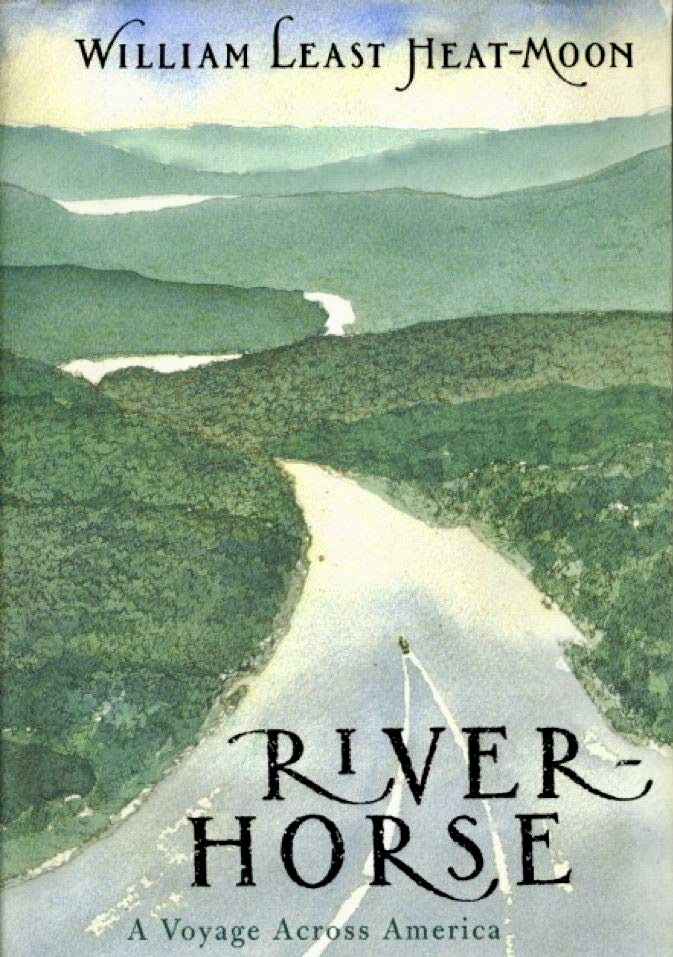
William Least Heat-Moon (the pen name for William Lewis Trogdon, hereafter WLHM), continues to impress me with his nuanced vision of the United States. He consistently offers his readers a synthesis of well-crafted writing, an appreciation for the sometimes hidden beauty of the lands and waters he explores, and a sensitivity to features of our common humanity latent within the historical events attendant to the people and places he visits. I return from time to time to his book, River Horse: A Voyage Across America, a book I love for its clear-eyed record of his water-based journey across this country. On a 26’ C-Dory motor cruiser, and accompanied by several friends whose roles are represented by symbolic monickers (e.g., Pilotis, and ‘the Photographer’), he traces a voyage from the mouth of New York Harbor to that of the Columbia River in Oregon. Readers familiar with geography but new to this book will wonder how WLHM managed to cross the Continental Divide in the C-Dory, and will discover that the author and his friends’ passage was facilitated by a vehicle trailer around some portage points, and by a canoe through and over the western mountains at their highest points.
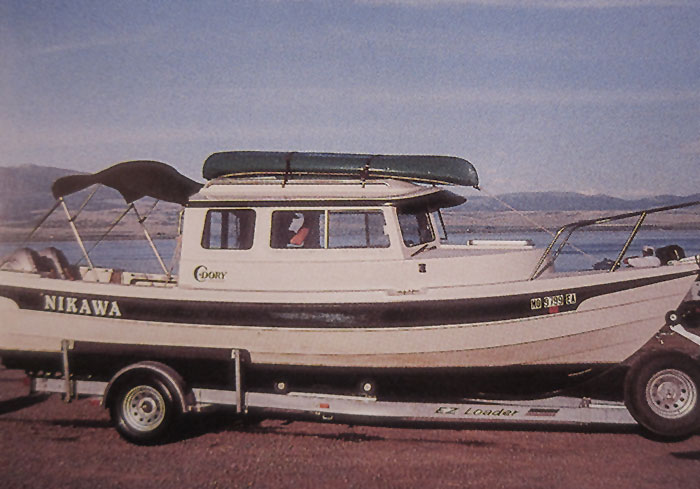
Nikawa on her trailer, with the handy canoe secured above the pilothouse

WLHM periodically uses unfamiliar vocabulary in a way that may strike some readers as pretentious, but which I generally find apt and instructive. Clearly, he savors words as much as the sights he seeks to capture through his writing. His evident identification with the sentiments expressed in quotations from earlier journals and public documents, and the care with which he treats them regarding the places he visits, tells us a lot about the author.

This is the kind of book that boaters who have a yen for nautical adventure will love. As I do for his other published work, I have a high regard for what WLHM has accomplished with this travel narrative. He has filled it with insight concerning not only geographical terrain, but also with pertinent observations about the people he meets, who interact with or are sometimes indifferent to the beauty he encounters along his passage. As an able and informed observer, the author communicates much about what he sees as well as about its potential significance for others who might come along after him. His book is shaped by his dialogue with the recorded experience of those who have traversed the same waterways and their surroundings before him, as well as by contemporaries familiar with the same areas. By this means, WLHM draws readers in to his own reflective experience. He invites us ‘to look over his shoulder’ and then journey with him through the captivating but also sometimes less than encouraging features of where he goes. To this point, in his expressed appreciation for numerous rivers negotiated by Nikawa, he does not overlook reporting on the accumulated plastic debris that by the mid 1990’s had already collected in certain pockets of at least one river. He then offers brief but also judicious comments with respect to potential remedies for public attitudes about the waters that border our towns and rural lands.
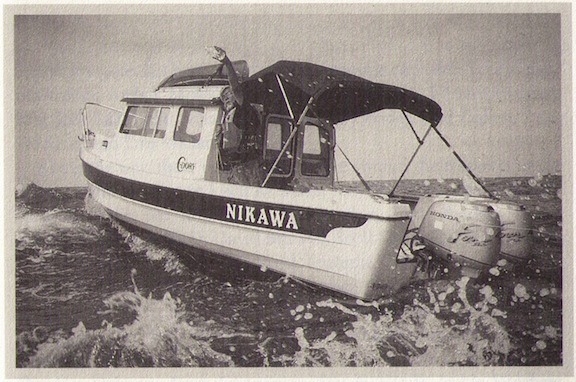
The author and his boat, observed during his voyage (evidently from a newspaper photo)

Aside from his absorbing description of the commencement of his voyage, which effectively draws the reader into his narrative, several passages in the book linger in my memory. I think of his account of Nikawa’s passage down the relatively gentle Ohio River, which is often calm due to the series of locks and dams. His reflections about the river evoked thoughts of a possible retracing of his pathway through those waters, especially given their occasionally curious personal and historical associations (as in the following vignette). 

In this part of his text, WLHM offers a brief account of an Irishman who was persuaded by Aaron Burr to join a nascent conspiracy to found a new and independent political domain lower down the Ohio and by the Mississippi, a venture later halted by authorities sent under the direction of Thomas Jefferson. This provides a good example of the numerous occasions about which WLHM interweaves observant travelogue with his study of past events. Interspersed within this same portion of the narrative focused on the area around Marietta, the author reports humorous offhand comments gleaned at a diner. After his conversation with a local woman, a beautician named “Enna-mel,” she leaves him with a parting remark that adds spice to the story. 
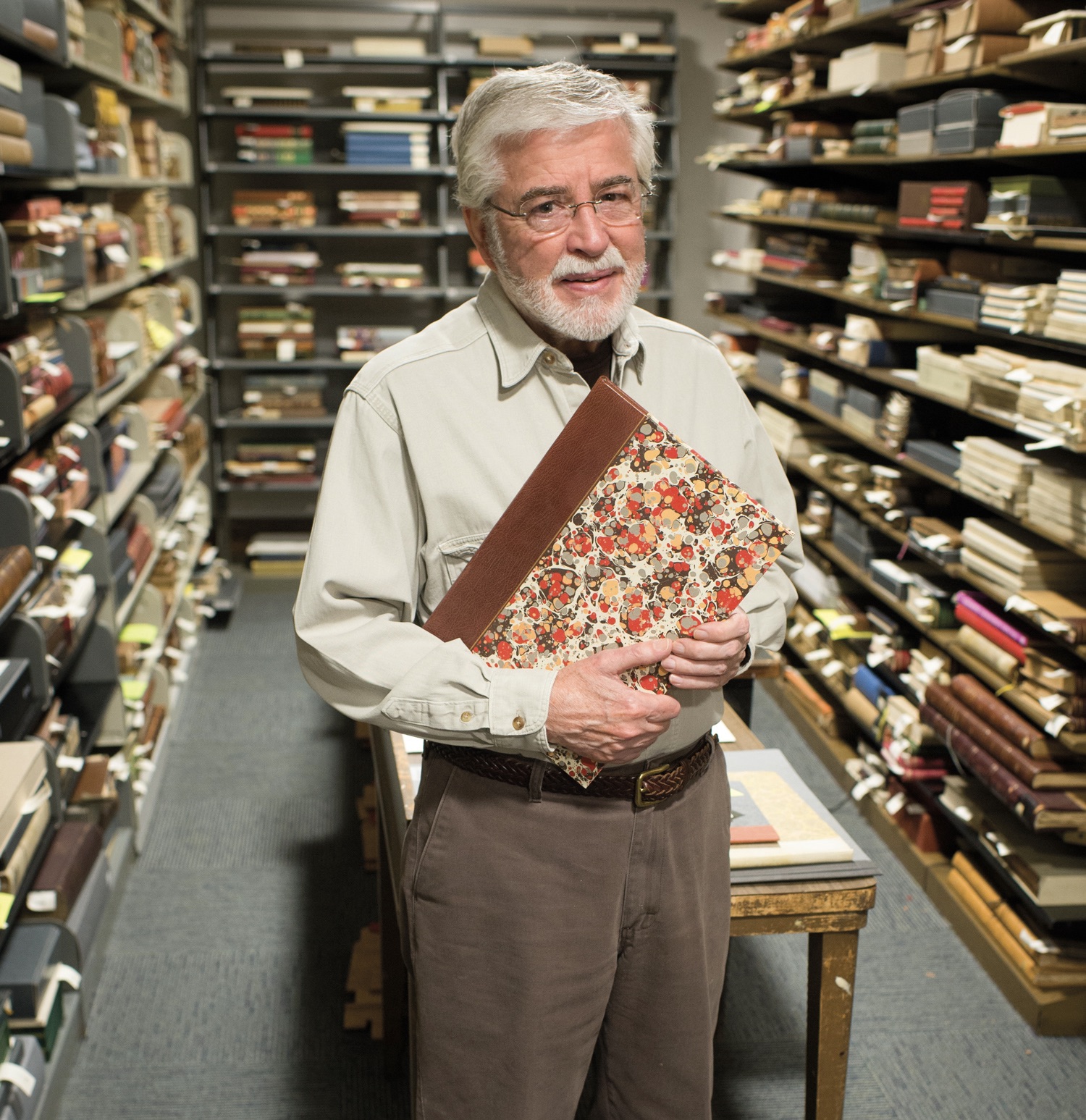
The author in what may be his second favorite place to be, an historical archives room

Shaping words about the work of an accomplished writer can be hazardous, though I am encouraged by WLHM’s quotation of a portion of William Clark’s Journal from the great 1804-6 expedition to the West. Clark’s struggle to portray the then sublime splendor of the untamed Great Falls of the Missouri River clearly were significant to WLHM. This is evident in the latter writer’s implied recognition of the challenge posed by his own desire to communicate the fullness of his experience of the same waters. 

River Horse is sprinkled with anecdotes from earlier times, along with perceptive observations from William Least Heat-Moon’s journey notes. He well-describes the many rivers through which Nikawa made her way, and almost every page of this book offers detailed insights that will reward an attentive reader, especially those who muse – as I have – about undertaking a similar adventure. 
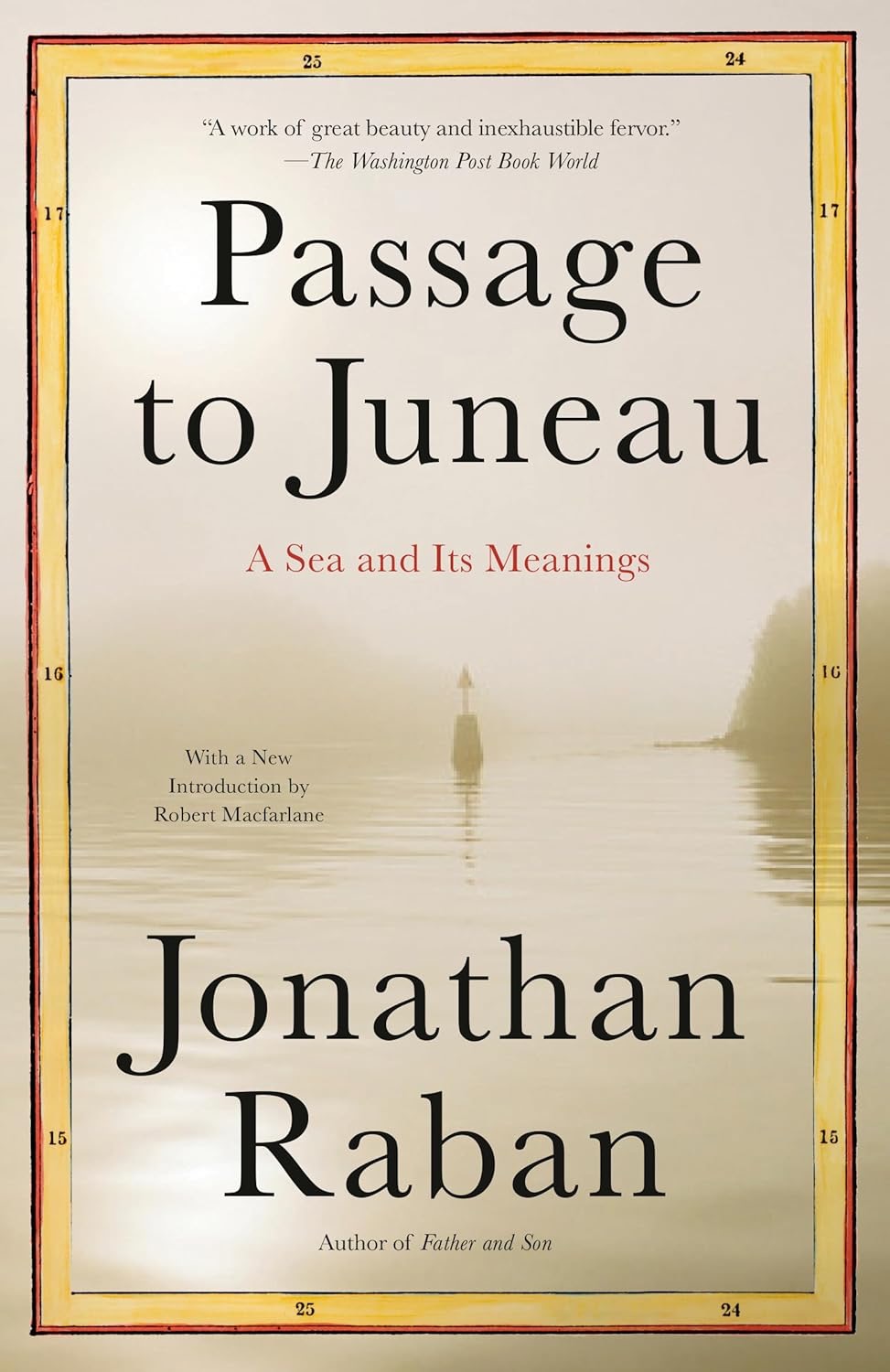
An ‘Inside’ Passage: Jonathan Raban’s Voyage to Juneau

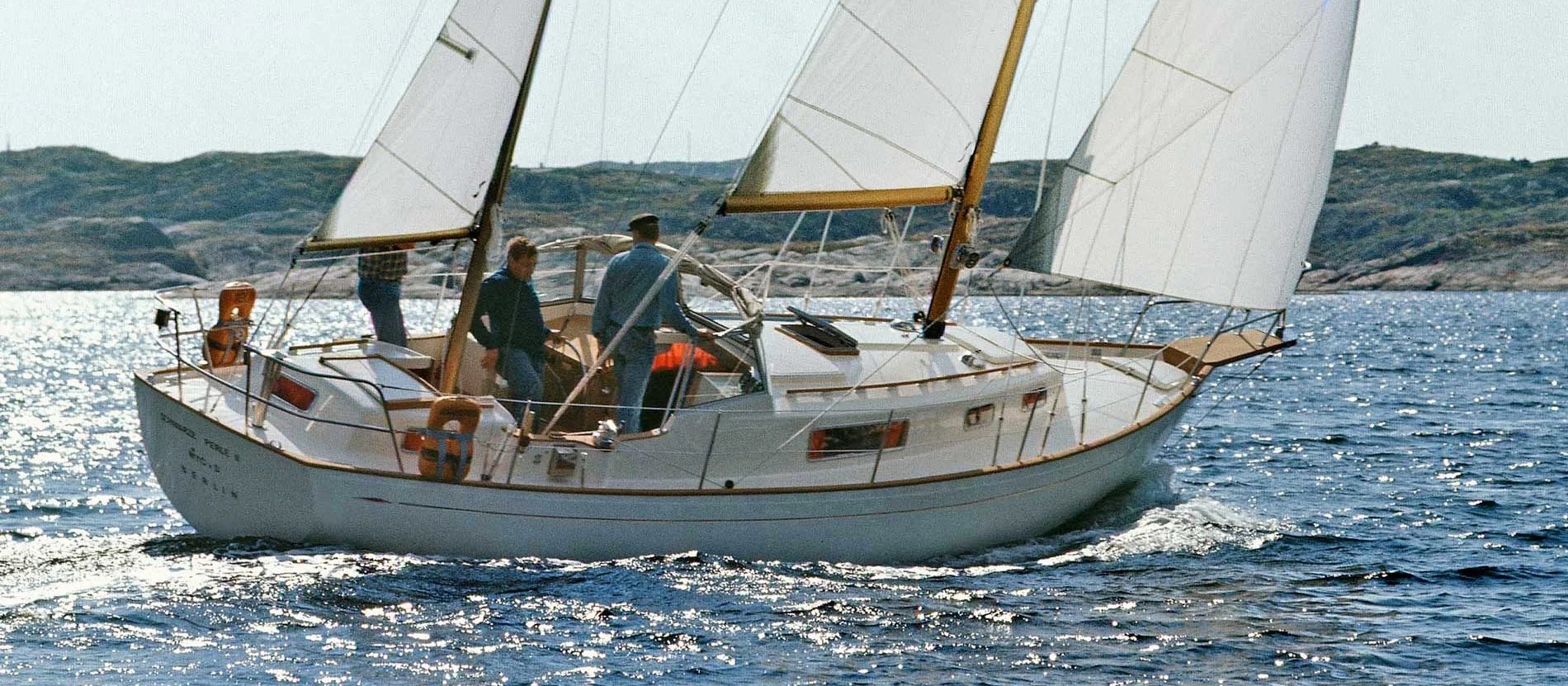
I find that authors who are effective at reading aloud their own writing offer an extra dimension of insight regarding their work. Jonathan Raban’s recording of A Passage to Juneau, is an example to which I like to return. Being a sailor myself, I find voyages, sailboat cruising, and basic navigation provide more compelling metaphors for how we think of our course through life than the often used one of journeying. Raban’s book about sailing his 35′ Swedish-built ketch from Seattle north to the capital of Alaska recounts so much more than a trip up the Inside Passage through the interior waters of British Columbia. His reflective narrative allows us to witness – through his eyes – how he faces the challenges associated with the death of his father, an English Vicar, as well as the coming apart of his marriage while he remains close to his young daughter.

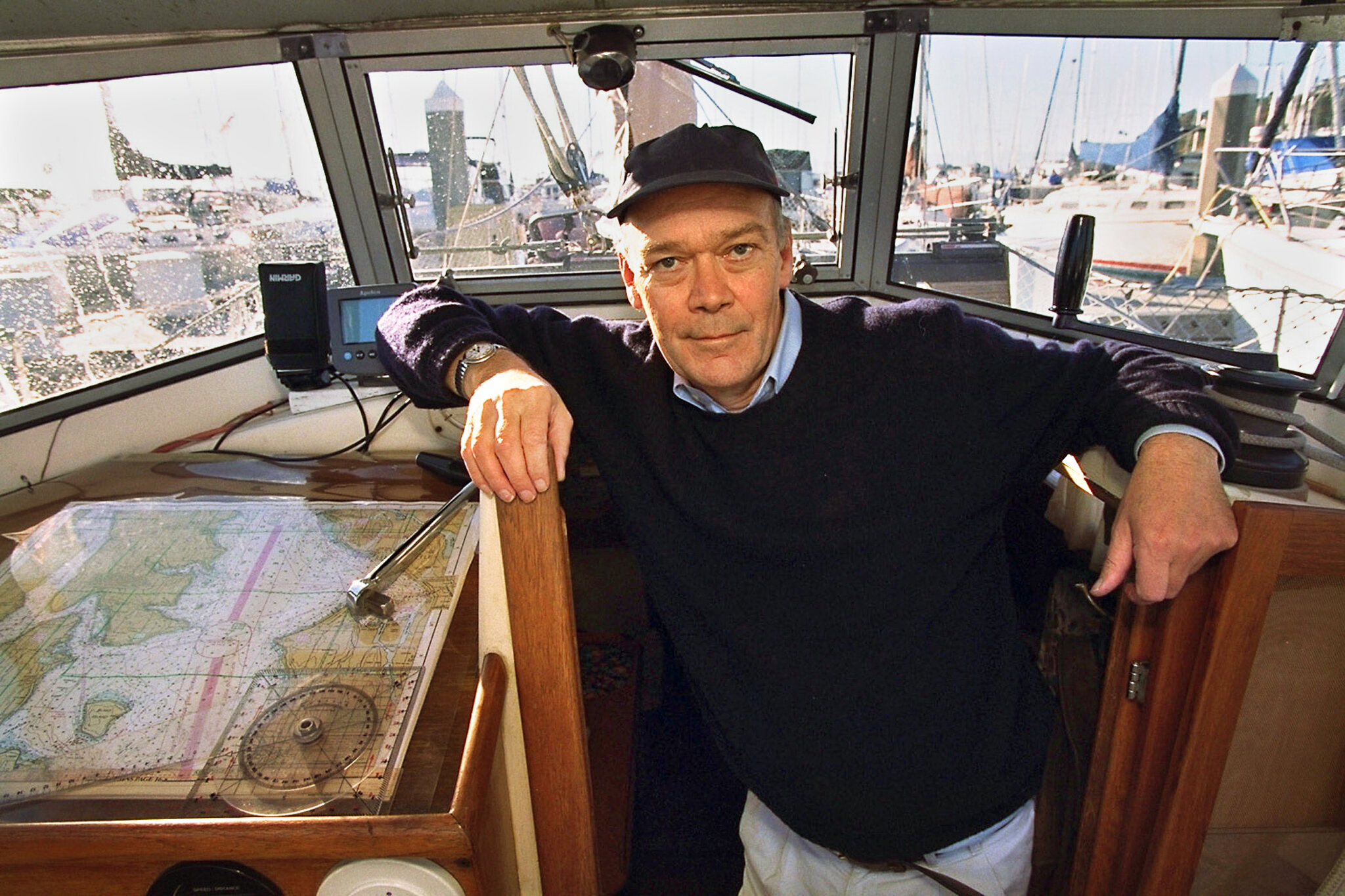
Jonathan Raban in his boat

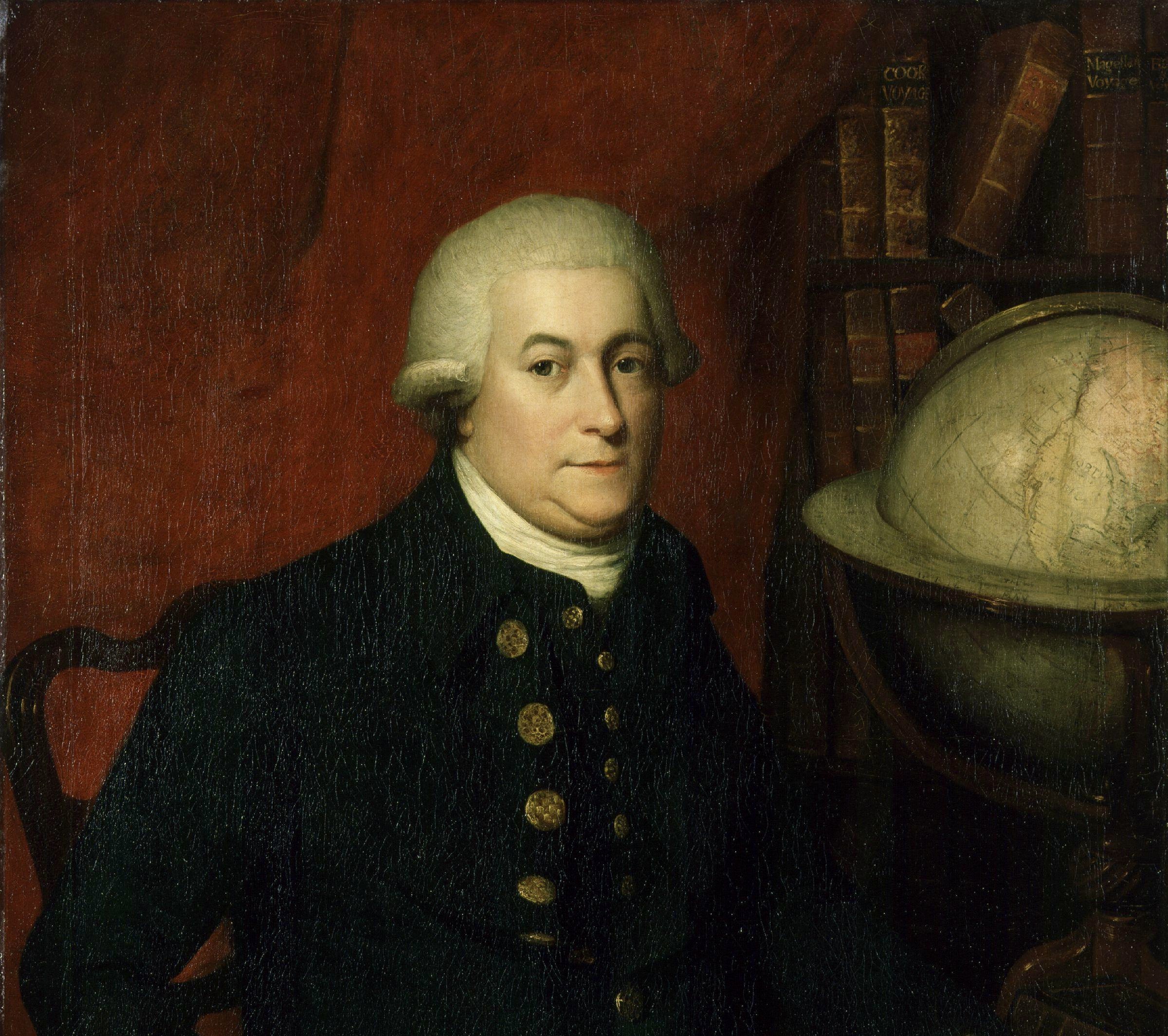
Raban includes as a literary companion, on what unfolds as an imaginatively-shared voyage, the technically gifted but personally flawed explorer, George Vancouver, through the latter’s ships logs and historical biography. Raban’s log of his passage in the Penelope is interspersed with perceptive observations about his family off in England and down in Seattle, while also sharing reflective thoughts regarding Vancouver’s own earlier exploration of the same waters. So there are three interwoven strands within the writer’s expressive narrative, Raban’s cruise, his interior journey through memories and toward an uncertain future, and a travel oriented book that shares his evocative impressions of the waters and terrain of Puget Sound and the Straight of Georgia that is mixed with those Vancouver.

The explorer and esteemed navigator, George Vancouver (1757-1798)

Having lived on Vashon Island while commuting to college on the Washington State ferries, I remain drawn to some of the same locations in Puget Sound that play an early role in the book. The immediacy of the author’s description of the area in and around Seattle’s Fishermen’s Terminal where he prepared for setting off, as well as of the beautiful San Juan Islands, provide a very good sense of what he was leaving behind on his travels, while also emotionally carrying aspects associated with those places with him as he ventured into less familiar waters.

A Hallberg-Rassy 35′ ketch much like Raban’s boat, Penelope

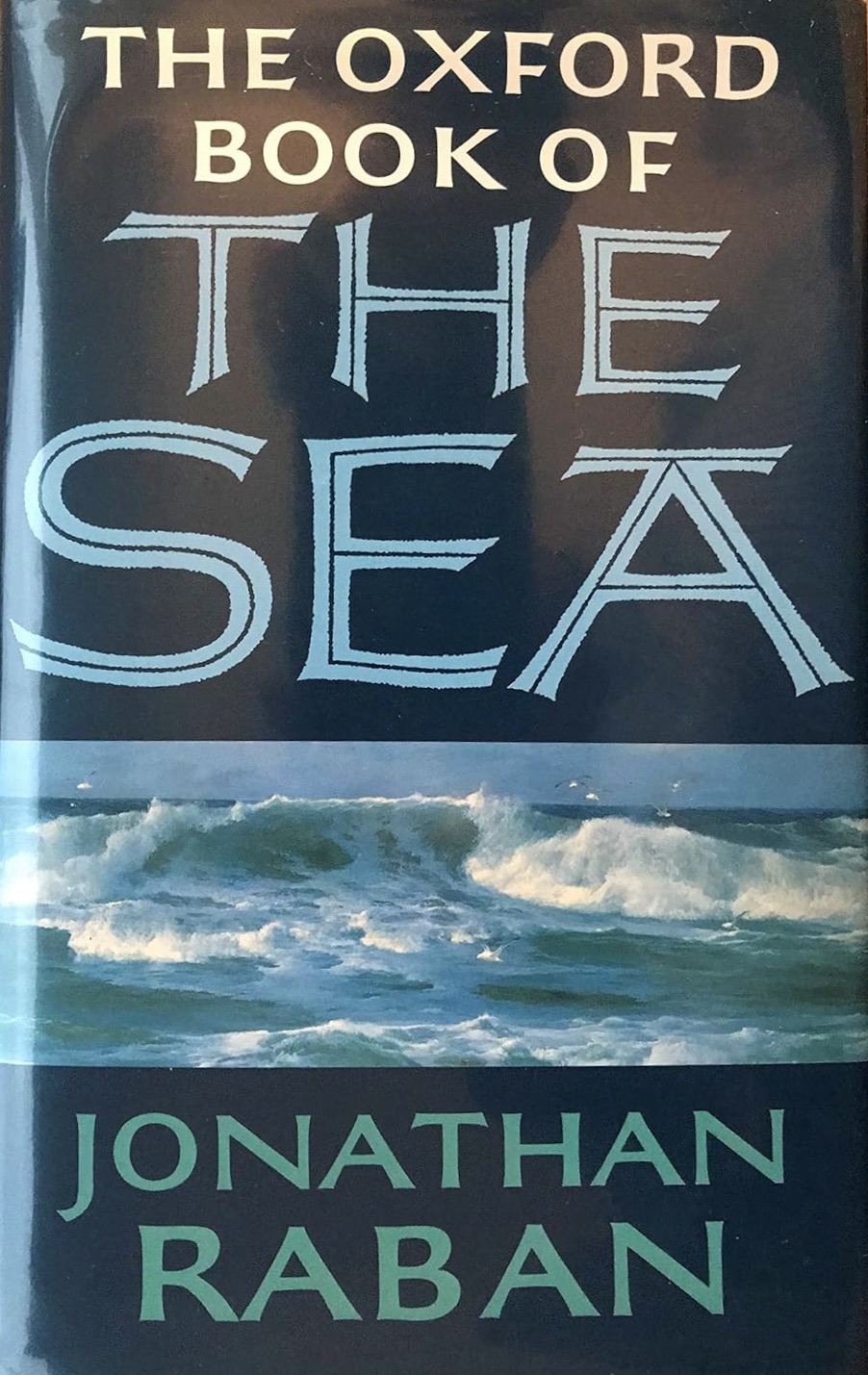
Raban was nothing like an enthusiastic newcomer to sailing when embarking upon his “Passage.” His other voyaging books, particularly his account of his circumnavigation of his native United Kingdom (Coasting), as well as his editorship of The Oxford Book of the Sea, attest to his deep knowledge of sailing and all things nautical. His attraction to such voyages is also reflected in his highly readable account of his water journey down the Mississippi (Old Glory), from St Paul to New Orleans, and was the fulfillment of a childhood fascination with the Great River and its history .

The Audible recording of a condensed version of Passage to Juneau nicely captures Raban’s resonant voice and British vocal style. Portions of his recording give a good sense of the author’s subtle humor, accentuated by his sharp eye for memorable detail. Imagining how Vancouver’s voice must have sounded to his shipmates, Raban reads passages from the explorer’s diary with a slightly exaggerated flat nasal intonation, imbuing the historical figure with a fuller sense for us of the 18th century navigator’s complicated humanity. And Raban’s description of his brief interaction with officious Canadian Customs inspectors regarding a suspect American potato, found during a search of his boat, provides a memorable anecdote. Both examples and others like them function, I think, as thoughtful counterpoints to the more difficult aspects of Raban’s ‘interior passage,’ a journey through reflections prompted by the loss of a parent and the diminishment of a marriage.

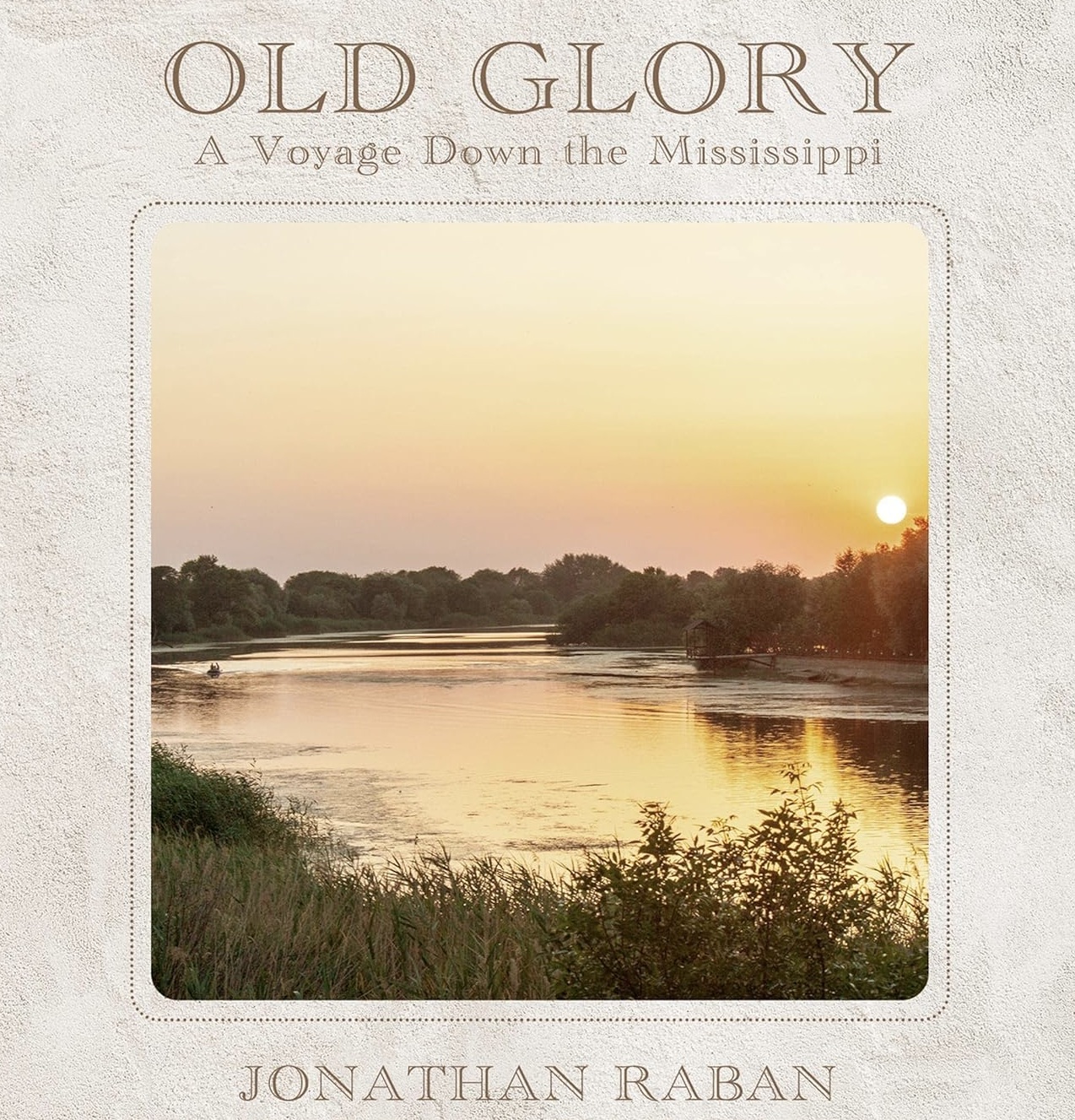
The Audible version of a cover for Raban’s book, Old Glory

One key to appreciating Jonathan Raban’s, Passage to Juneau: A Sea and its Meanings, lies in its subtitle. Clearly the author has written something more than an absorbing description of a nautical adventure, though he certainly provides that. The interest of this book for me lies in its implicit invitation to reflect on what draws some of us to the sea, to find our way on waters that may have patterns but no directional lines or unnecessary limits. For the sea is where what is called ‘human geography’ and our created pathways may diverge from the given features of the natural world.

As is broadly true with much of our life on land, a parallel to navigation over the water exists with how we make our way forward in our decisions and actions, day by day. This is the parallel we can perceive between sailing and what is formally called casuistry in moral theology. All of us, in all circumstances, are challenged to apply universal principles or rules of thumb to the ideosyncracies of everyday situations. Generic and abiding principles (with boats, it is things like Coast Guard rules and the observed behavior of tides), coupled with familiar tools (a compass, wind direction finder, charts, etc.), need to be brought into engagement with particular circumstances (the wind, waves, and tides, as we find them today). Through this process we discern with greater clarity location and direction, especially when our efforts are coupled with a grasp of purpose. Otherwise, and in more ways than one, knowing where we are and where we are headed can be difficult.

The author on the veranda overlook of his Seattle home

Reflections Inspired by Tiny Houses

A 14′ Tiny House inspired by Japanese Aesthetics (from the Baluchan website)

As earlier posts of mine attest, I have been interested for some time in the Tiny House movement, which has now become a widespread phenomenon. Whole Tiny House communities are being developed, and Tiny House construction designs have been proposed as an alternative approach to addressing homelessness. Reflecting on this movement, and the broad appeal examples of Tiny Houses seem to have, I have given some thought to what this development in small scale architecture may represent, and to what it may tell us about how we want to live.

I can see an impulse similar to the pursuit and enjoyment of living in a Tiny House in some attractive parallels, which also represent a quest for discerning a simpler way to live. Quite aside from a specific focus on contemporary examples of Tiny Houses, many people appear to have an interest in reading books like Thoreau’s Walden, or those by John Muir. I continue to meet folks who like the idea of having a small boat in which one can actually ’cruise,’ even on local lakes. And still others seem to share my fascination with living environments inspired by Japanese aesthetics.

An interior shot of the Baluchan Bonzai 14′ Tiny House

If these musings seem familiar, learning more about the Tiny House movement is worth pursuing. Here are some observations I have made in the course of my own reflections on the current popularity of this movement: 

First, the appeal of Tiny Houses has much to do with the process of rediscovering, and learning more about the beauty of living simply. And therefore, about more than managing to accept being without some things, but actually doing well with less. Marie Kondo’s videos and published writing have attracted a good deal of attention regarding the desirability of organizing our household belongings, and paring down what we have toward living with what we truly love.

Viewing and reflecting on examples of Tiny Houses can aid one’s discernment regarding needs vs wants. Most of us have probably considered this distinction from time to time, and have likely also experienced some frustration with our halting efforts to enact our reflection upon it. We know we have wants, which often masquerade as needs, while we may not sufficiently consider the potential value to us of having wants that are correlated with our needs. After all, a premise of this post rests on a paradox: the assumption that I not only want to live more simply, but that I may also need to!

The kitchen space between the bathroom and the small main living area

Here, briefly noted, are some potential benefits that may come from spending time in a Tiny House:

  • Living off the grid becomes a much more realistic goal when choosing to live in a Tiny House. Tiny Houses also allow for mobility in relation to one’s surroundings, even if it is not a frequently exercised opportunity. Changes in one’s locale can lead to learning opportunities.
  • Those who build their own or who choose to do maintenance work on a Tiny House are more likely to learn how to use, and use more ably, simple and hand-powered tools.
  • Tiny Houses are well suited as places in which we can experience solitude as a positive aspect of our lives, while also providing an excellent context for significant times spent with others. 
  • Living or spending time in a Tiny House may allow us to have increased time for personal reflection, and an opportunity further to discern our vocation, in addition to our more usual absorption with occupational concerns.
  • Tiny Houses therefore have the potential to be places in which we read more, and spend less time consuming social media or watching videos. While every living place for which we have some care requires time and attention, the theory behind choosing a Tiny House as a place to live assumes that we can devote more time to actually living, rather than preparing to live. Reading makes the world bigger and our lives richer.

For much of the above, and as a bothand rather than an either/or starting point, I commend considering adding a form of a ‘Tiny House’ to your present circumstances rather than making a radical change from them. Experimenting with what can be done with less, while also still retaining one’s present home, can be instructive. This can be accomplished by, for example, purchasing a used but well-equipped small RV. We have recently seen some interesting examples on the road, and ones that could fit in a standard home garage.

For us, it has been our 1988 24 ft trailerable sailboat that has provided this kind of learning opportunity. With its relatively small cabin (about half the length of the boat), comfortable berths (or bunks), a camping stove, cooler, portable toilet, and cockpit which serves as a small ‘back porch,’ we can meet most of our daily needs for a week or more at a time. The slip for our boat is under $200/ month, including electricity and water connections, if needed (ie, if the boat is not yet off-the-grid-ready, though our boat is now thus equipped). DAYSTAR has become our floating ‘tiny house’ or ‘cottage.’

Ably and effectively inhabiting this principle of beautiful simplicity is turning out to be a lifelong project for me, and I believe this is also true for others. I am a neophyte in the process. Perhaps my readers have some similar experience with this ongoing process!