Horn Island

Walter Inglis Anderson and the Experience of Loving What God Loves

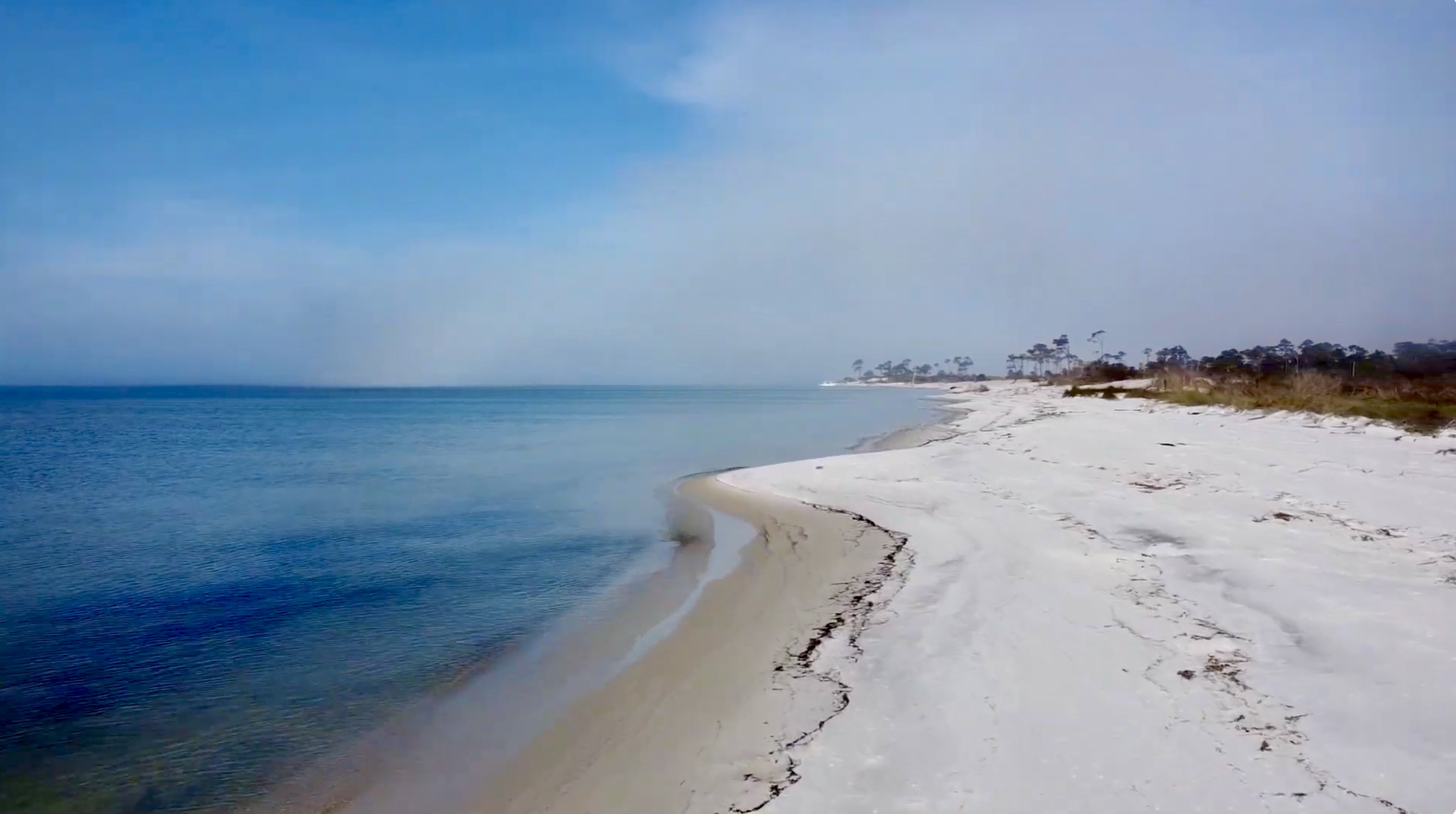
A beach on Horn Island, Mississippi Gulf Coast

We are created in God’s image and likeness. We often assume that this is reflected in the way that we think, in our capacity for reason and in our desire for wisdom. But we also reflect our creation in God’s image and likeness in our desire to love. We all want to love, and receive love. Sometimes, especially in this fallen world, we love in ways that are disordered. We love the right things in the wrong way, and we love the wrong things in what we deceive ourselves into thinking may be a good or right way.

And yet, we still love, whether it is ourselves that we love to the point of it being at the expense of loving others and the world around us, or it may be that we love others and the world at the expense of rightly loving ourselves.

The Holy Scriptures remind us that God is love. And that God first loved us before we knew it. And that God so loved the world that he gifted himself in the form of the Word made flesh, who came among us, full of the grace and truth that he has so generously shared with us. “I am who I am” (what God spoke to Moses from the burning bush) becomes the source of “we are who we are,” especially when we become aware of and live into the fullness of who we really are.

And so, to love what God loves is to share in the experience of God’s love. Awareness of this leads us to become more aware of the way we are called to share in God’s own way of loving. To do so actually comes to us naturally, even though we in our fallen state are impaired in our ability fully to live into this reality, and believe we are capable of it.

In my prior post, I reflected on how some of this capacity to love what God loves may be revealed in the life and work of Walter Inglis Anderson, who himself may not have been aware of the fact, nor may have had the conscious ability to believe it. In this respect, Anderson, followed in the spiritual footsteps of John Muir, whose earlier example may help us appreciate this dimension of the Mississippi painter’s relationship with nature. For Muir, through his childhood formation in orthodox Reformed Christian beliefs, came to believe he was loving Creation as God loves it, however much Muir’s vision expanded and broadened over the years so as to appear that he had moved beyond the bounds of traditional faith.

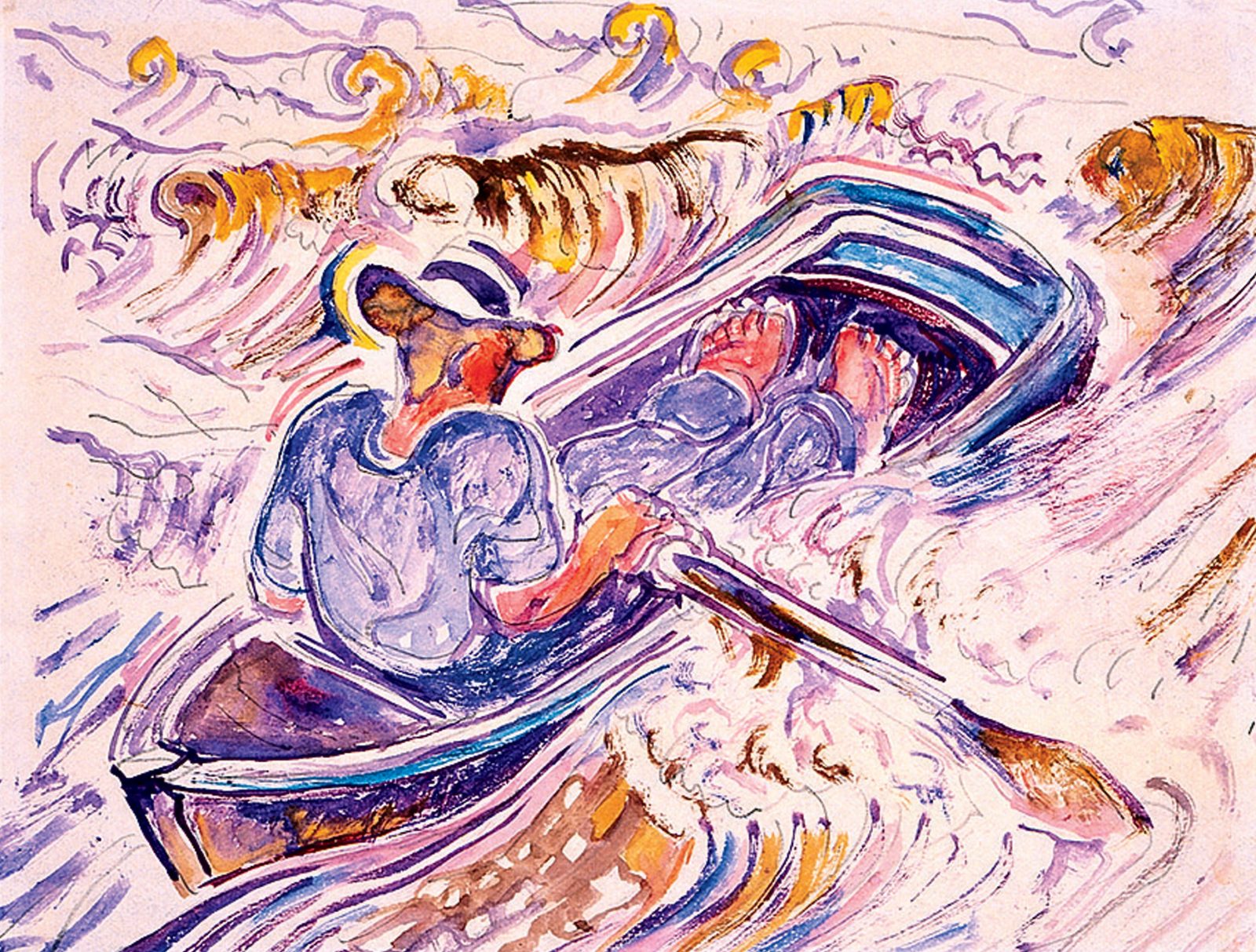
The painter and solitary, Walter Inglis Anderson, portraying himself rowing out to Horn Island

To experience joy when we encounter and perceive the beauty we find in the world – even in ourselves – is to experience God’s love for the world. Beauty in the world is a manifestation of God’s self-giving, and of a love that is self-giving, even to the point where we are capable of bringing harm to it or rejecting it. The same is true for God’s love for us, and for those with whom we have been given the opportunity for fellowship and community. For God’s love is not for us solely, as individuals, but is present in fellowship and in community, especially in communities founded upon this great gift of divine love.

Anderson’s son, John, retracing some of his father’s footsteps

Here, we can come to appreciate another insight we can gain from learning about Walter Inglis Anderson. Like the earlier Muir, Anderson came to perceive – or perhaps always intuitively knew – that to see, to really see what is in and around us, is enabled by ‘getting out of the way.’ When I, as one who sees, am conscious and then distracted by my awareness of my process of seeing and perceiving, I become absorbed with my own subjectivity, at the expense of more fully becoming focused upon the objects of my perception. In seeking to love you, or things in the world around us, my focus upon my process of loving or seeking to love impedes my actual participation in really loving you, you who are a fellow subject of loving and not simply an object of my love.
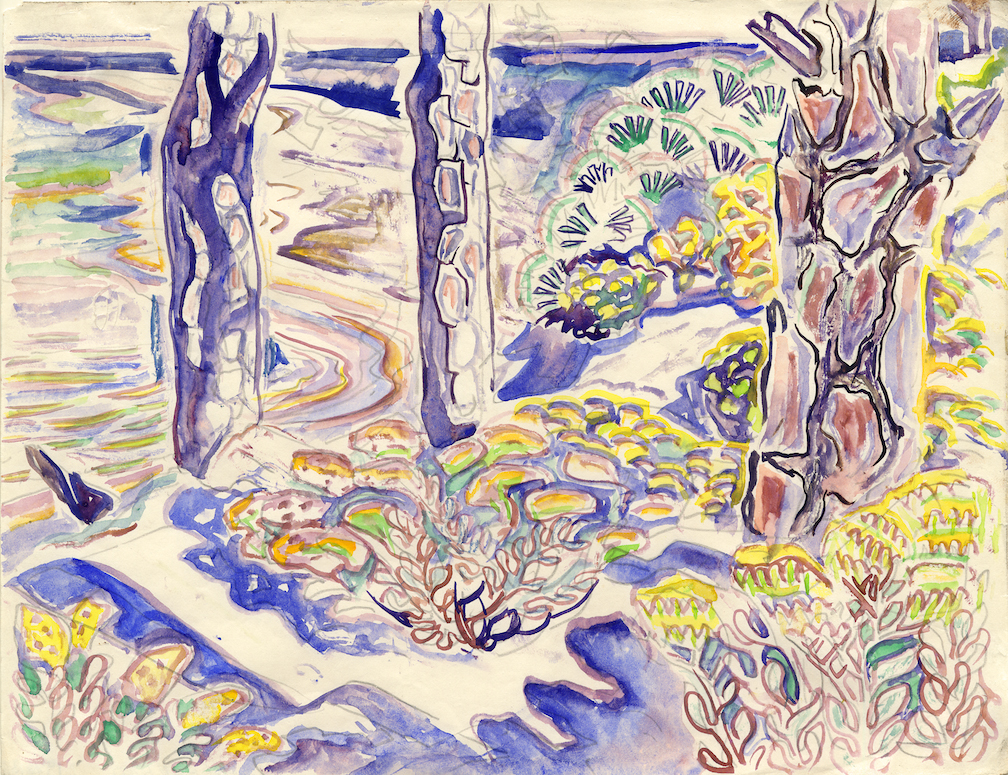
A Horn Island painting by Walter Inglis Anderson

I think that Anderson was enabled to arrive at such an awareness by enacting his desire to be among and really see the plants, birds, animals, the seashore, and the changing weather conditions, while on his solitary sojourns to Horn Island. Therein lies the paradox. God’s love for the divine beauty reflected in the world that he has made was at the heart of Anderson’s love for the beauty that we find in nature. And in sharing in that same love of beauty, he came to perceive how he was actually not alone, even in his periodic states of hermitage under the shelter of his upturned dinghy.

Awareness of this is one doorway into perceiving and then enjoying what Jesus spoke of when he said, “Wherever two or three of you are gathered, I am there.” The great “I am” is with us, now to behold and embrace, Spirit in Flesh, Word made human, not only in ourselves and in the things around us, but also between us at the heart of our fellowship.

Walter Inglis Anderson and the Beauty of Humanity

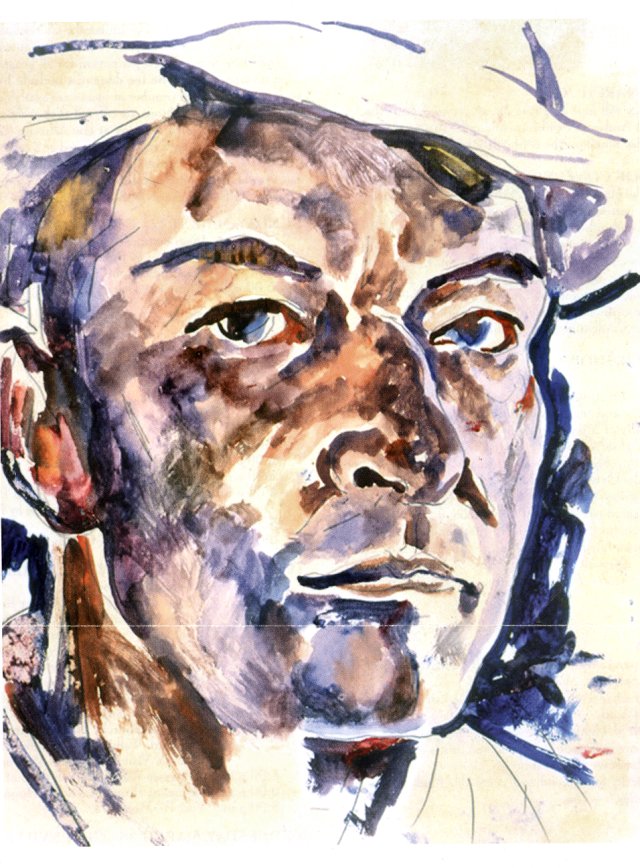
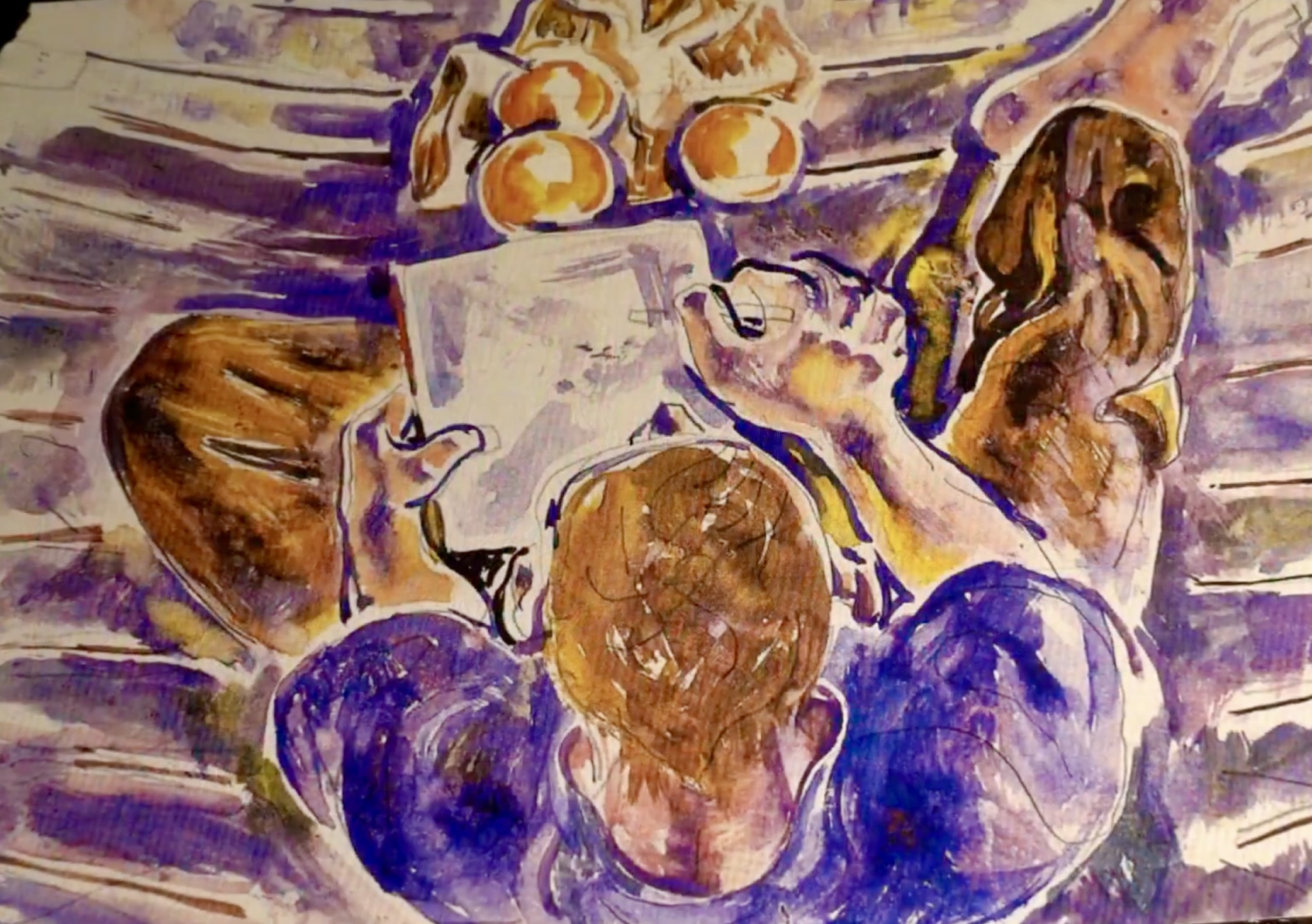
Walter Inglis Anderson, Self-Portrait from above

Perhaps like Henry David Thoreau or John Muir, a gifted painter named Walter Inglis Anderson came to discern some things of great significance within the visible beauty latent in nature. Like his venturesome forbears, he did this by seeking out an area of wilderness. It became his habit to row out the ten or so miles to Horn Island in the Mississippi Sound, where he slept on the sand using his upturned dinghy as his hermitage. Out there amidst the shifting dunes, with only the shell of his boat for cover against storms, Walter Anderson perceived more of who he was as he experienced harmony with what was around him. In time, compelling objects of his attention became for him fellow-subjects apprehending the splendor of Creation.

A shoreline inhabitant whose common name (‘hermit’ crab) was often derisively applied to Walter Anderson

Paradoxically, by his solitary coastal journeys, a man who had suffered bouts of mental illness became aware of an elusive but precious quality that he shared with those from whom he was isolated. His transient island resting places, where he spent weeks at a time over the course of twenty years, provided him with fleeting glimpses of what it might mean to be more fully human. There, away from others, he experienced moments when he felt he had become who he was meant to be.

As one writer has put it, “Anderson’s isolation from humanity convinced him, in the end, of humanity’s beauty… [He] believed that if we re-established our primal relationship with nature, we would regain our beauty.” Walter’s youngest son, John, summed it up succinctly: “Solitude was a tool that helped him to find unity with all people and all creatures.”

Anderson’s portrayal of himself rowing out to the island

Walter Anderson expressed the point compactly in one of his Horn Island logbooks: “In order to realize the beauty of man, we must realize our relation to nature.” His son, John, later explained what his father had meant by this. “I think that in those twenty years that he was living in solitude on the wilderness island, he was attempting to realize his relation to nature so that he could realize the beauty of humanity.”

Underlying these words, and the perception they express, may be a nature-mysticism of the kind often associated with Thoreau and Muir. I also find an affinity here with the spirituality we can discern in traditions as widely different as Zen Buddhism and the writings of Christian monastic solitaries.

Eugene Peterson’s rendering of Jesus’ words in John 12:25 (in context), captures a similar perception: “Listen carefully: Unless a grain of wheat is buried in the ground, dead to the world, it is never any more than a grain of wheat. But if it is buried, it sprouts and reproduces itself many times over. In the same way, anyone who holds on to life just as it is destroys that life. But if you let it go, reckless in your love, you’ll have it forever, real and eternal.”

To this mystical vision of the world I think we can also connect an insight attributable to St. Augustine of Hippo, regarding what we love, and how we love. If we love ourselves and our lives, or the world around us, for our own sake, we belong to the ‘city of the world,’ and we live turned away from God. Yet, if we love these same things for God’s sake, we belong to the City of God, and live in a God-ward way. Here it is important to remember that to love in the latter way that Augustine commended may not necessarily be an activity that we undertake with conscious awareness.

Self-Portrait by Anderson

It is actually possible to love God without ever consciously intending to do so. I believe this was the case in the adult life of Walter Anderson. It happens when we love what God dearly loves. And such true love can be expressed unconsciously, in ways that may be apparent to others while not to ourselves.

This truth connects the experience of the non-religious nature mystic with that of the religious contemplative, as both in various ways are focussed upon the Beauty inherent in Creation and within our human experience of Nature. This brings joy to the Author of Creation, who so loves the world that he has brought us into the new life that – through the Word made flesh – he now shares with us.


Emphasis has been added to the Eugene Peterson quote above. In a later post I will offer further reflection on Walter Anderson’s life and work, including his wondrous artistic creations, among which are paintings and drawings, as well as ceramics, linoleum prints and patterns for fabrics.