landscaping

Two Architects Build Houses for Themselves

Frank Lloyd Wright’s Taliesin East, entry courtyard

Frank Lloyd Wright and Philip Johnson number among the most well known American architects of the 20th century. Both are remembered for their many commissions by others, for buildings constructed both in the United States and overseas. Notably, each of these men designed a house for himself and each reflects something of the respective architect’s vision for an ideal domestic building. The results differ dramatically and beg for some explanation, especially in the case of Philip Johnson’s Glass House.
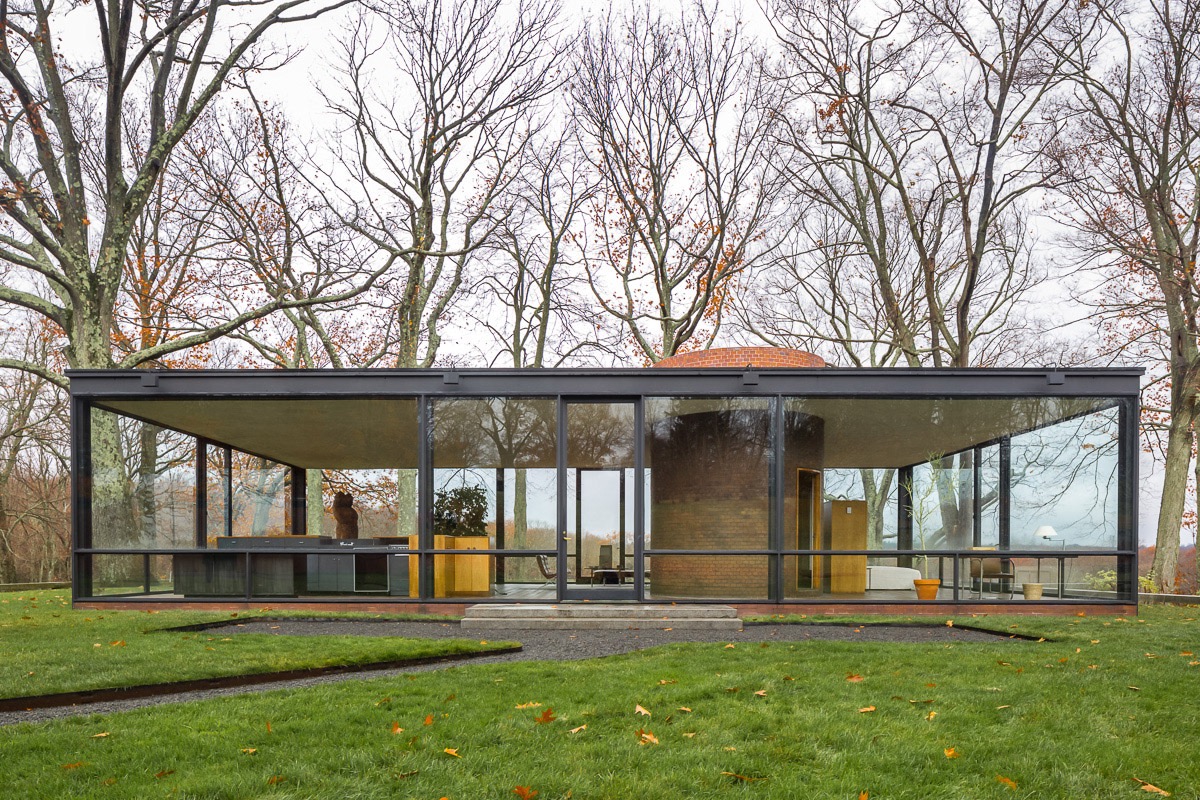
Philip Johnson, Glass House, exterior

To help appreciate the theoretical basis for these vastly differing houses, I find it helpful to draw upon a distinction made by the earthscape artist, Andres Amador (featured in a prior post). Speaking about his temporary compositions ‘sketched’ upon large stretches of beach areas at low tide, Amador refers to some of his works as “geometric” and others as “organic.” The geometric works display a quality readily suggested by the name for them, and reflect Amador’s training in math as an engineer. The organic works arise, he says, from the site, and he suggests that these pieces communicate their form to him. For me, Amador’s distinction can also be referred to as the distinction between pattern that is ‘received,’ as compared with pattern that is ‘imposed.’

Amador’s distinction between the organic patterns that arise from the site, and the geometric patterns that result from conceptual pre-planning, can assist us in perceiving some themes that are implied by the architectural designs produced by Wright and Johnson for their homes. In the case of Wright, he built Taliesin on family property in Spring Green, Wisconsin, in an area where he grew up and with which he had a deep attachment. Like much of his other work, Wright wanted Taliesin to appear as if it was an extension of the materials and features of the site in which it is placed, being an ‘organic’ development of a human habitation within a natural setting. Wright’s intent is evident in the way that the horizontal bands of stucco on the facade, as well as of the limestone in the foundation and walls of the building, parallel and mirror the layers of stone found on the site.
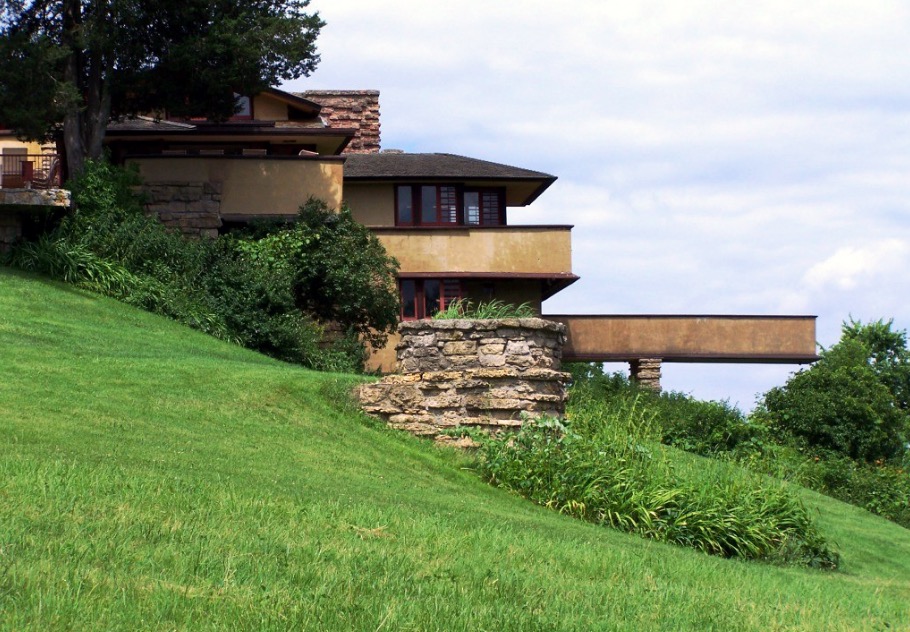
Exterior elevation of the house, as if emerging from the site (photos above and below)

While Philip Johnson’s architectural practice was located in New York City, he planned to build a house for himself and weekend guests in nearby New Canaan, Connecticut. Johnson’s Glass House clearly reflects his indebtedness to the work of Ludwig Mies van der Rohe, and the European modernist movement in architecture generally known as the International Style. Employing Andres Amador’s distinction, the Glass House clearly embodies a geometric conceptual basis, with the result that the building does not so much emerge from the site but instead sits upon it as an imposed human-made form. The carefully clipped and very flat lawn, and the linear walkways serve to emphasize the distinction between the structure and its natural surroundings. This leaves the Glass House appearing to be like a sculptural object that has been placed on a plaza, or like a vase on a smooth table-top, rather than as something arising from within its setting.

The Glass House, exterior view (above), and interior view (below)

Brief attention to the history of these two buildings provides further insight. Wright lived at Taliesin much of his life, while also retreating to Taliesin West in the Arizona desert during the winter months. Over the years, he gathered a sizable community of apprentices who lived and worked with him at both locations. To this day, the architectural fellowship that is part of his legacy maintains both homes and studios. By contrast, though Philip Johnson first lived part-time in the Glass House himself, he soon discovered how it was largely unsuitable for that purpose, other than for entertaining guests in the living and dining areas of the structure. Given the sudden notoriety of the house, the constant presence of unwelcome visitors and architecture-minded prowlers made it problematic for every exterior surface of the house to be comprised of glass. Johnson soon made it a habit to stay in the adjacent bunker-like Brick House, designed for the site as a guest house, when spending time in New Canaan.

Obviously, it is easy to stress the marked differences between these houses designed and built by Wright and Johnson for themselves. Andres Amador’s dual approach to his earthscapes may help provide a reminder of the way that both-and thinking can aid how we consider certain objects of interest. Wright’s organic home and studio, emerging within and receiving inspiration from its site, and Johnson’s temporarily lived-in Glass House, imposed as a geometric sculpture upon its site, share a common distinction. Regardless of functional considerations, each house has its own way of displaying beauty, and both remain among a small list of internationally recognized architectural achievements of historic significance.


Note: A short introductory video about Andres Amador and his work, giving examples from both of the geometric and organic categories, introduced above, has been produced by KQED of San Francisco. It can be found on YouTube ( https://youtu.be/T_tIG5mo1DM?si=0MkjxkTEK48eC-aV ).

Taliesin East has been named a UNESCO World Heritage Site, and the Glass House is a National Historic Landmark.

Andy Warhol visits the Glass House

Earl Young’s Boulder Park Charlevoix Houses

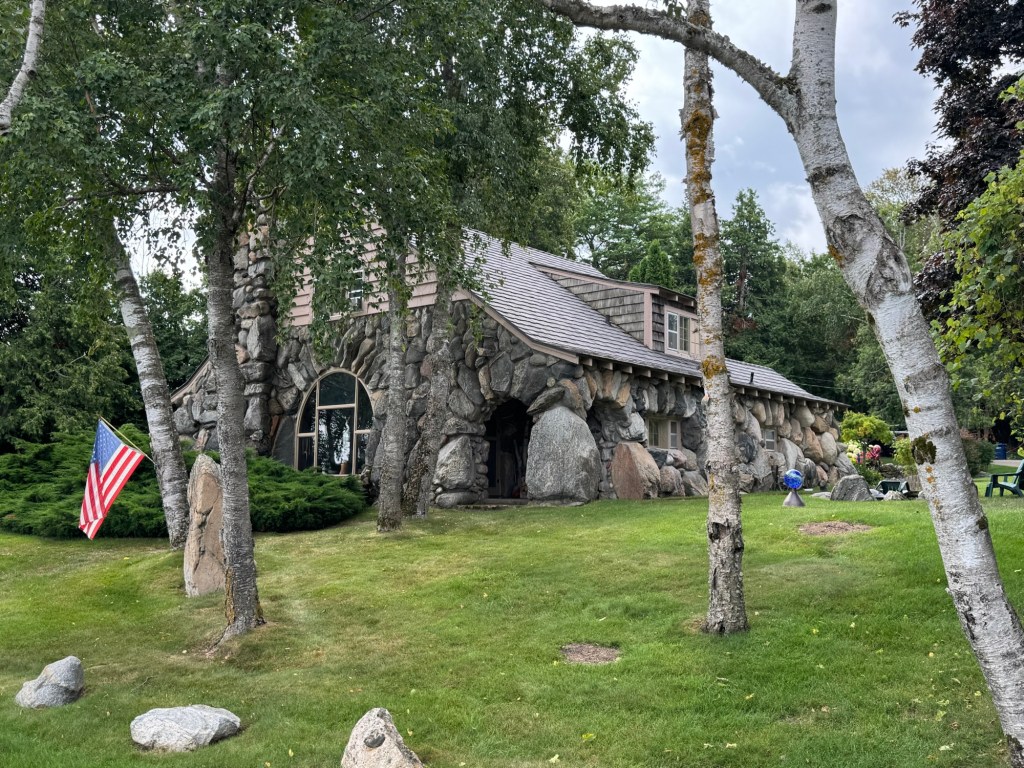
Earl Young’s Boulder Manor, built for himself, as seen on a recent day

Summer visitors to Charlevoix encounter at least two things about the area: first, that this part of Michigan is a haven for boat lovers and especially cruisers on the Great Lakes; and, second, that the city of Charlevoix is the home of Earl Young’s so-called ‘mushroom houses.’ The first observation regarding boats and the appealingly clear lake water is easily recognized. The second association with the area takes a bit of discernment, usually gained from seeing brochures or the small electric carts evident in town bearing the label, “Mushroom Houses Tours.”

A pleasant walk around Charlevoix while viewing the many houses that Earl Young designed and built in the community reveals that his approach to home design was not uniform, and that his work avoided that to which the wider community has also not succumbed – becoming a caricature of itself. For he could have approached his design work in such a way as simply to repeat and imitate prior successes, pressing forward as so many architects have done to inaugurate a particular and distinctive style in home design. Instead, Young consistently displayed his overriding commitment to his chosen materials – stone and stone-related products. Therefore, when at the age of 35 in 1924, and in buying a tract of land adjacent to the Lake Michigan shoreline, he built ten houses with enough variation among them that later homes constructed by others are frequently confused with those of his own design. Young gave the tract along with its homes the fitting label of Boulder Park.

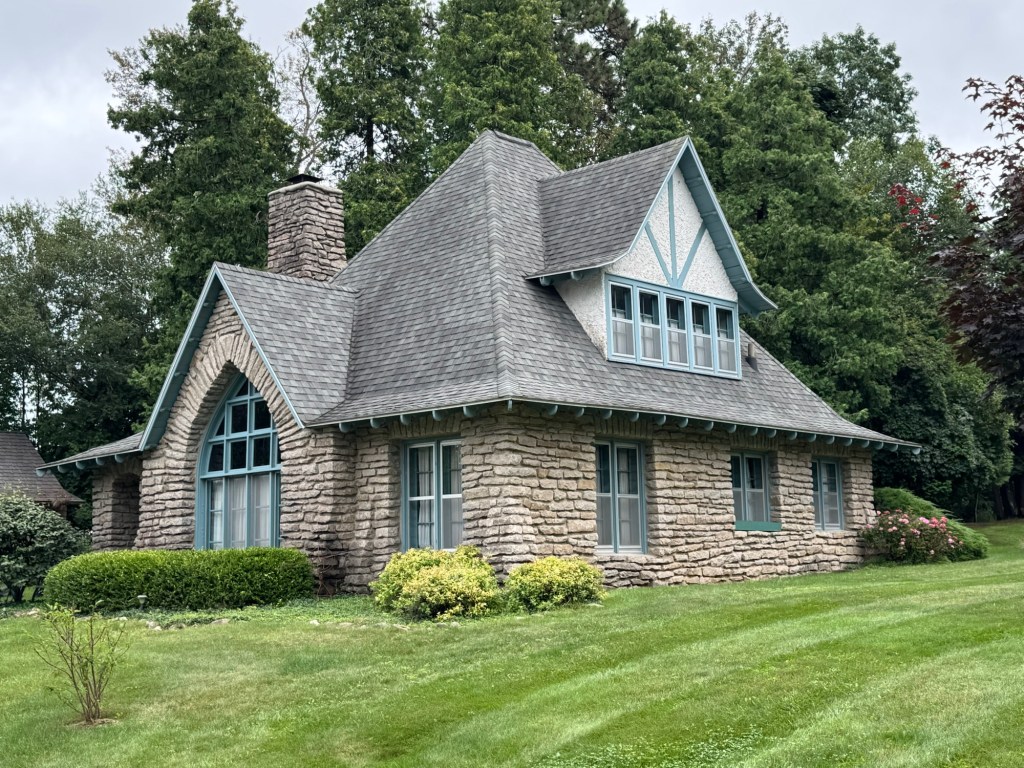
The Owl House, named for the arched front windows

This variability in the architectural character of the Boulder Park homes helps us to begin to recognize how the common ascription to Earl Young, of being the mushroom house architect, is in some ways a misnomer for him. A few of his houses nicely justify the label, given their firm rootedness to their sites, their often low or extending rooflines with irregular surfaces, and his heavy use of large stones and boulders in a number of them. Yet, Young was equally comfortable specifying limestone cut in horizontal block slabs and even commercially available brick or block products with which to construct walls with traditional uniformly-spaced layers of mortar. We may not be enamored with the some of the results of his work, but I think most of us can identify with Young’s lifelong intention to remain true to his materials and to the sites in which he set them.

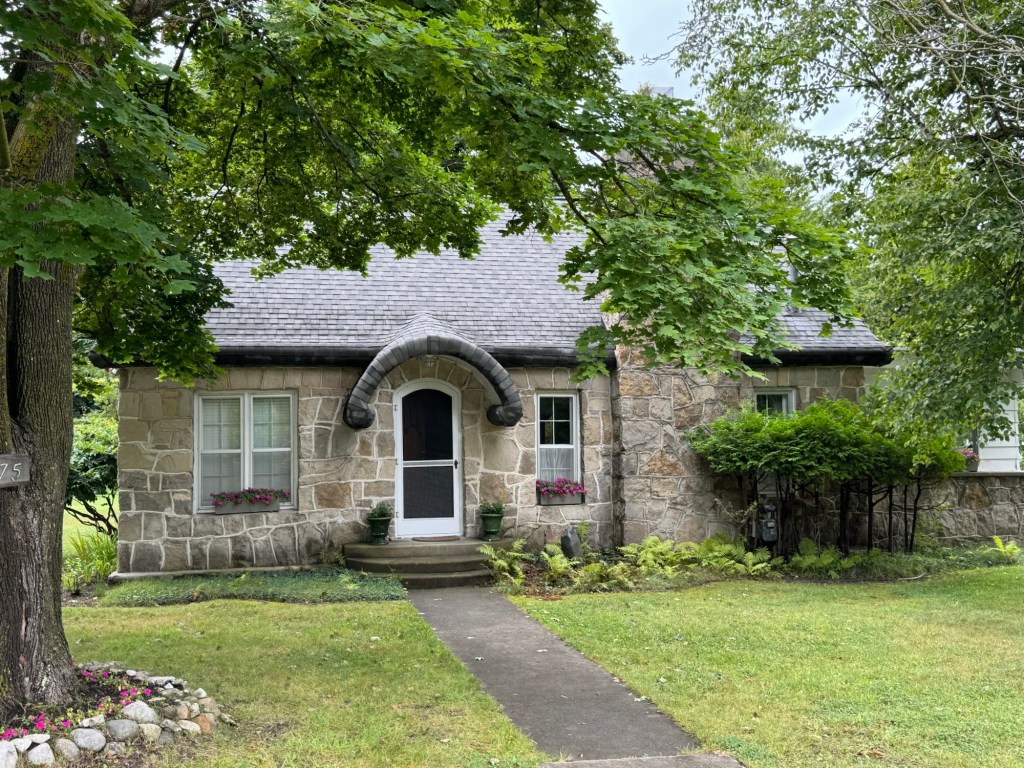
A 1929 limestone cottage in Boulder Park, known for the rolled edges of the eaves

Two neighboring homes in Boulder Park illustrate Young’s consistency of intent, and flexibility with regard to ‘style.’ Boulder Manor, built in 1928 (displayed at the top of this post), sits in close proximity to the Pagoda House, built in 1934, seen below.

The Pagoda House

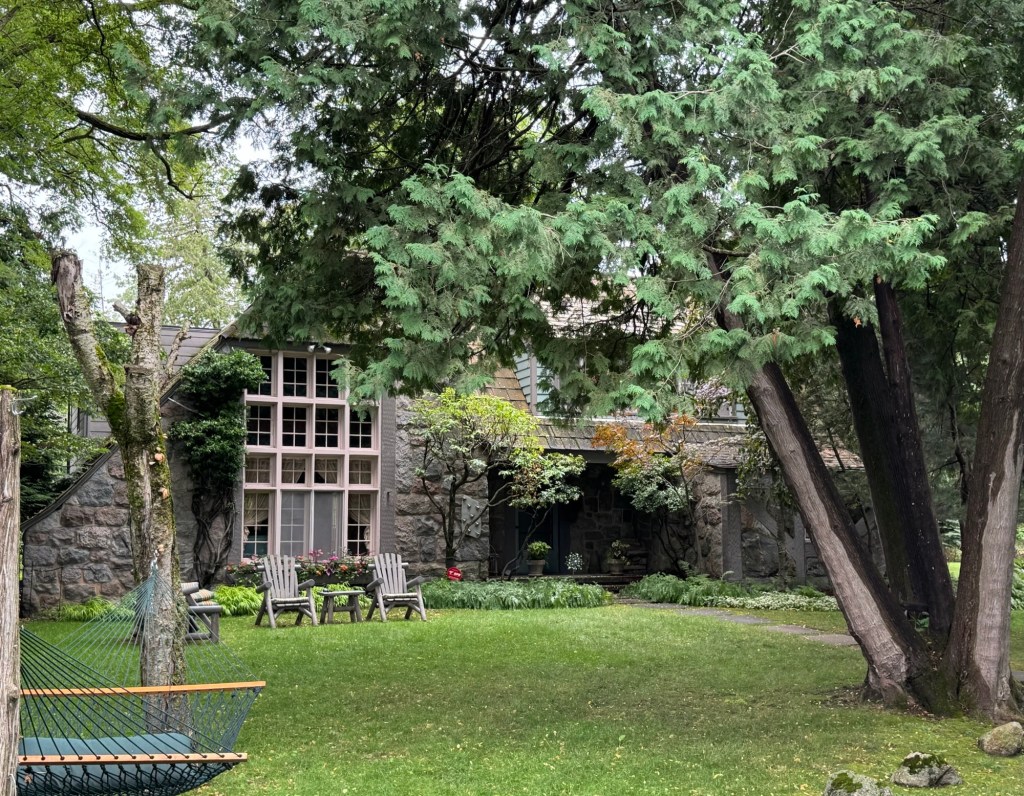
My favorite among the Boulder Park houses is the home that Young built for himself, called Boulder Manor (top photo). It is constructed with massive pieces of stone and boulders from the area, and features a matching smaller playhouse for his daughters that has a working fireplace.

Rear view of Boulder Manor along with the playhouse for the Young’s daughters

In some ways Earl Young was a bundle of contradictions, an idiosyncratic visionary who was known to tell some clients what they needed in terms of a home, and yet also one who could reside with an out of town family for a considerable period of time so as to get to know how they lived before designing a home for them. He had a consistent love of rough, ‘undressed’ stone to be used as found, and at the same time a willingness to use stone in a very conventional way. Young was famous for wanting to do virtually everything ‘his way,’ often to the consternation of others, including town leaders. And yet, one house of his in Boulder Park was the result of a client convincing him to build a home based on a design plan found in a women’s magazine, the 1933 Enchanted Cottage with its very English-looking windows (seen below).

The Enchanted Cottage

The best introduction to Earl Young’s Charlevoix houses is a widely available book by the photographer, Mike Barton, titled, Mushroom Houses of Charlevoix. Filled with color photographs, and documenting every one of Young’s structures built in his home town, the book provides superb photographs, and better ones than I am able to provide.

Earl Young’s Imprint on Charlevoix

Exterior view of Earl Young’s Weathervane Inn

As a young man from the rural north of Michigan, Earl Young aspired to produce ‘natural houses’ in the spirit of Frank Lloyd Wright, his inspiration and model for what became his own vocation. Young never studied with Wright, but the latter’s design spirit influenced him throughout his life. Though Young’s impact as an architect was essentially local (he designed only one house outside of Charlevoix), the present-day promotion of Charlevoix as a cultural destination is much in his debt for the way this community has come to be known as the home of the “mushroom houses.”

Earl Young

Earl Young studied architecture for one year at the University of Michigan. From the beginning he was impatient with a curriculum shaped by the kind of slavishness to European precedents that FL Wright also criticized. Young then returned to his hometown of Charlevoix to build houses, practice real estate in the family business, and sell insurance. He left the university program with his independent vision and architectural vocation intact, from which he never seemed to waver.

The Weathervane Inn adjacent to the Pine River channel and lift bridge

One recent appraisal of Young’s portfolio of buildings has suggested a neologism with which to describe his work, lithotecture, based on the Greek word for stone. For Earl Young did not simply value the utility of stone; he loved stone, and especially large boulders. He is remembered for having had a remarkable memory for the exact location, size, and texture of examples he had seen, collected, or stored away for future use. His profound appreciation for these materials, and the creative possibilities toward which they might be employed, is much in evidence throughout the older portion of Charlevoix in the many houses and other buildings he built and or designed, as well as in those influenced by them.

One of Earl Young’s Boulders Park homes (more of which are to be featured in a future post)

Earl Young’s impact upon the visual character of Charlevoix might be compared to a rather different example in architecture and in community design, the near-universal adoption of ‘the adobe style’ in Santa Fe, which has become a predominant approach to restoration, renewal, and original architectural creations. In the parallel example of Young’s case, his impact was through his way of being true to context by his use of stone, especially in highly creative ways. So pervasive has become his influence upon the development of Charlevoix that many other and more recent builders have been drawn to imitate Young’s extensive and sometimes whimsical use of locally available natural geologic materials. Given my own experience of living in south Louisiana, where hardly any naturally-occurring stone is to be found, I am struck by the abiding evidence of Young’s legacy as a community-based builder.

Two long-ago initiatives by Earl Young in particular serve to distinguish Charlevoix in the eyes of visitors, the Weathervane Inn, and the waterfront park adjacent to the city marina. Young replaced an aged mill along the edge of the Pine River channel with an attractive inn of his own design and construction, and he convinced town leaders to replace obsolete warehouses along the waterfront with what has become a four acre rolling green expanse of lawn. Both locations have become popular and much used gathering places for visitors as well as for Charlevoix residents.

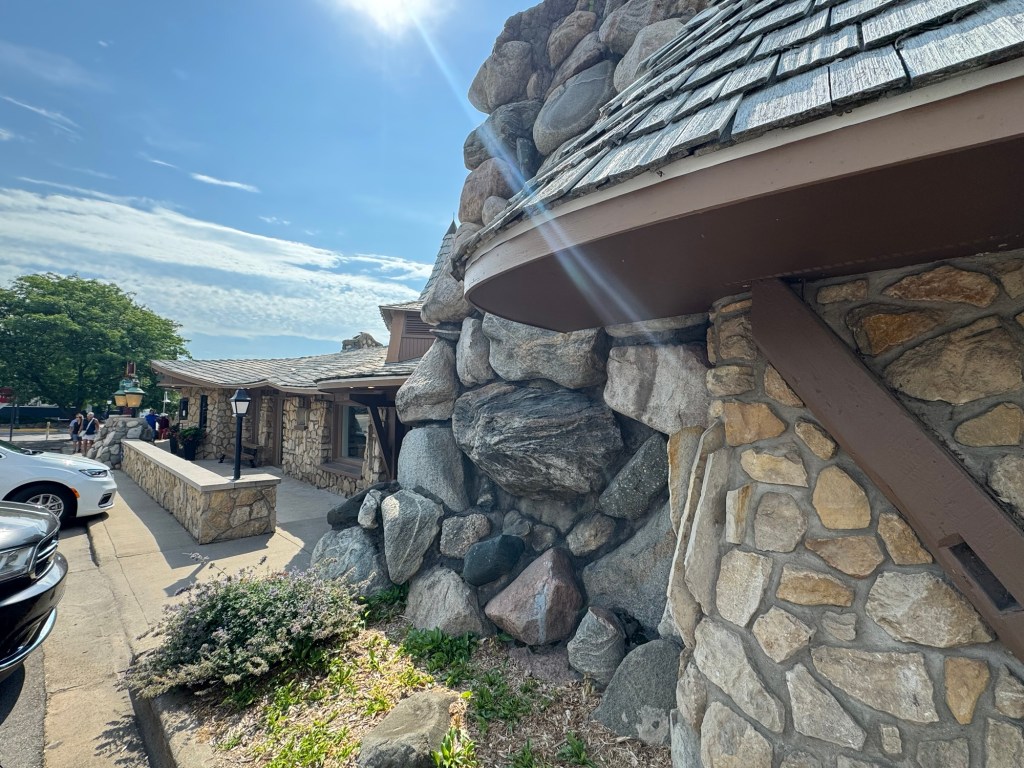
The terrace overlook above the marina office – modern stonework in the Earl Young style

The marina waterfront as it has been developed in recent years demonstrates Earl Young’s lasting influence upon Charlevoix’s economic and cultural development. Realizing some of the potential latent within Young’s prescient inspiration for the land clearing that enabled the new park, several notable new structures have been built, among them a new marina office and locker rooms, and a dancing or synchronized fountain by its door.

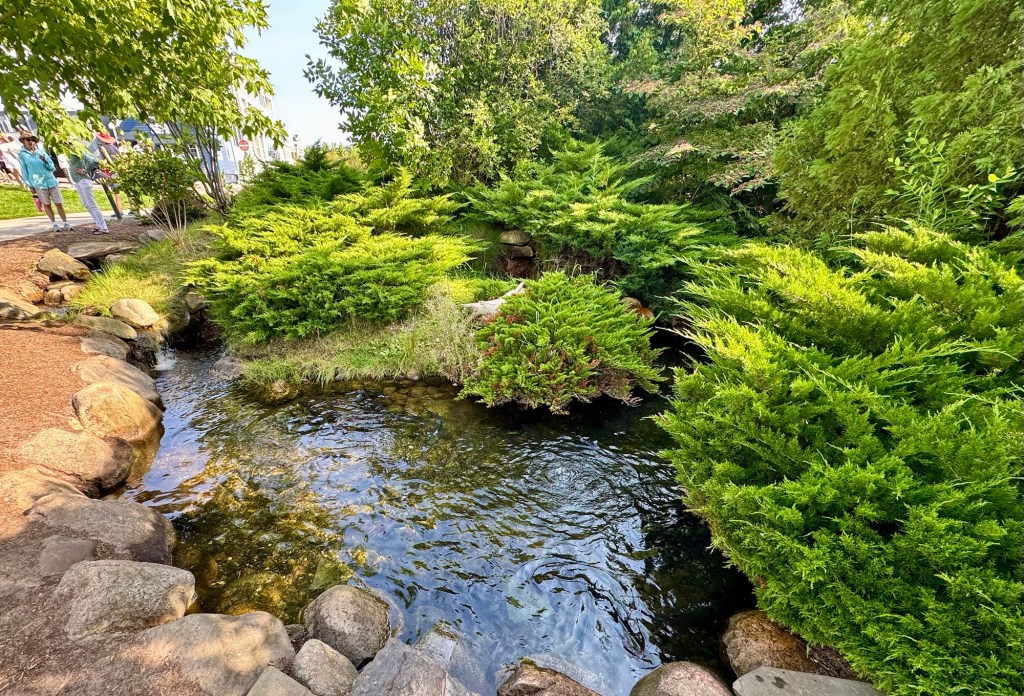
Part of the natural-look landscaping surrounding the marina office

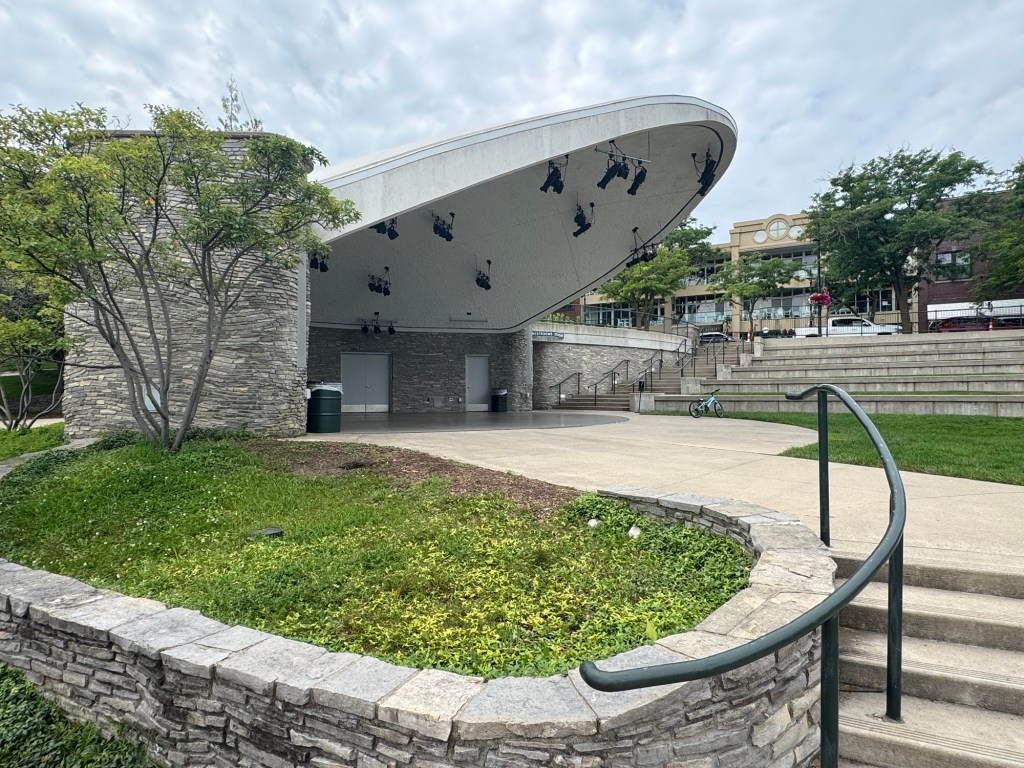
Landscaped around the marina office is a northern Michigan nature garden incorporating a human-made stream flowing between several shaded pools that contain rainbow trout. Also gracing the open green space of the park is a bandshell for weekly summer musical events, where concert-goers overlook the harbor docks and boat slips. Each of these structures, though constructed well after Young’s lifetime, reflects his vision for the beauty of stone laid up in asymmetrical curving walls.

The Earl Young influenced bandshell overlooking the marina and Round Lake harbor

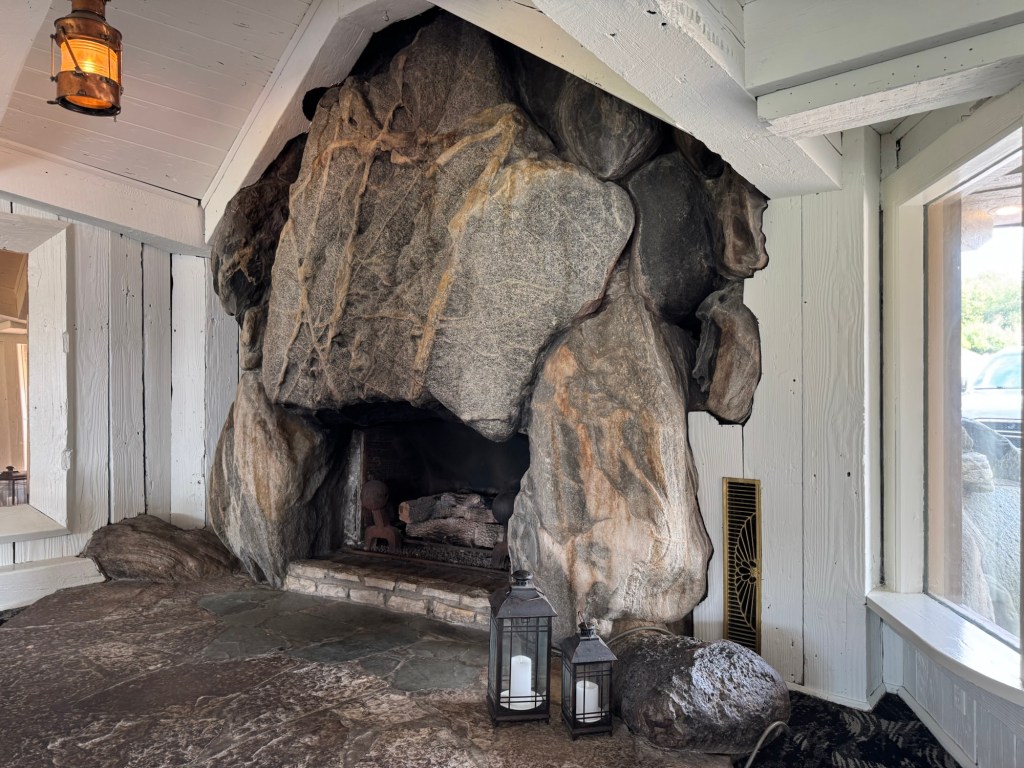
Earl Young’s profound attachment to working with local geological material evinces a lifelong devotion to what can be accomplished through building with massive boulders, each weighing multiples tons. The best place to begin to appreciate this is by a visit to the previously mentioned Weathervane Inn, the earliest of his few public buildings. The massive fireplace assembled from a seeming heap of boulders, has one large stone that weighed 9 tons, so heavy that it caused a dislocation in the foundation prepared for it.

Exterior view of Earl Young’s massive Weathervane fireplace
Interior view of the Weathervane fireplace

In a subsequent post I plan to present and offer a brief reflection upon Earl Young’s Charlevoix residential design and construction projects, most commonly known as his ‘mushroom houses.’ In all of his work, Earl Young showed himself to be something of an unforgettable local genius, whose endearing and wonder-producing legacy of unique work has transformed his community over the decades.

Denver’s New Train Platforms

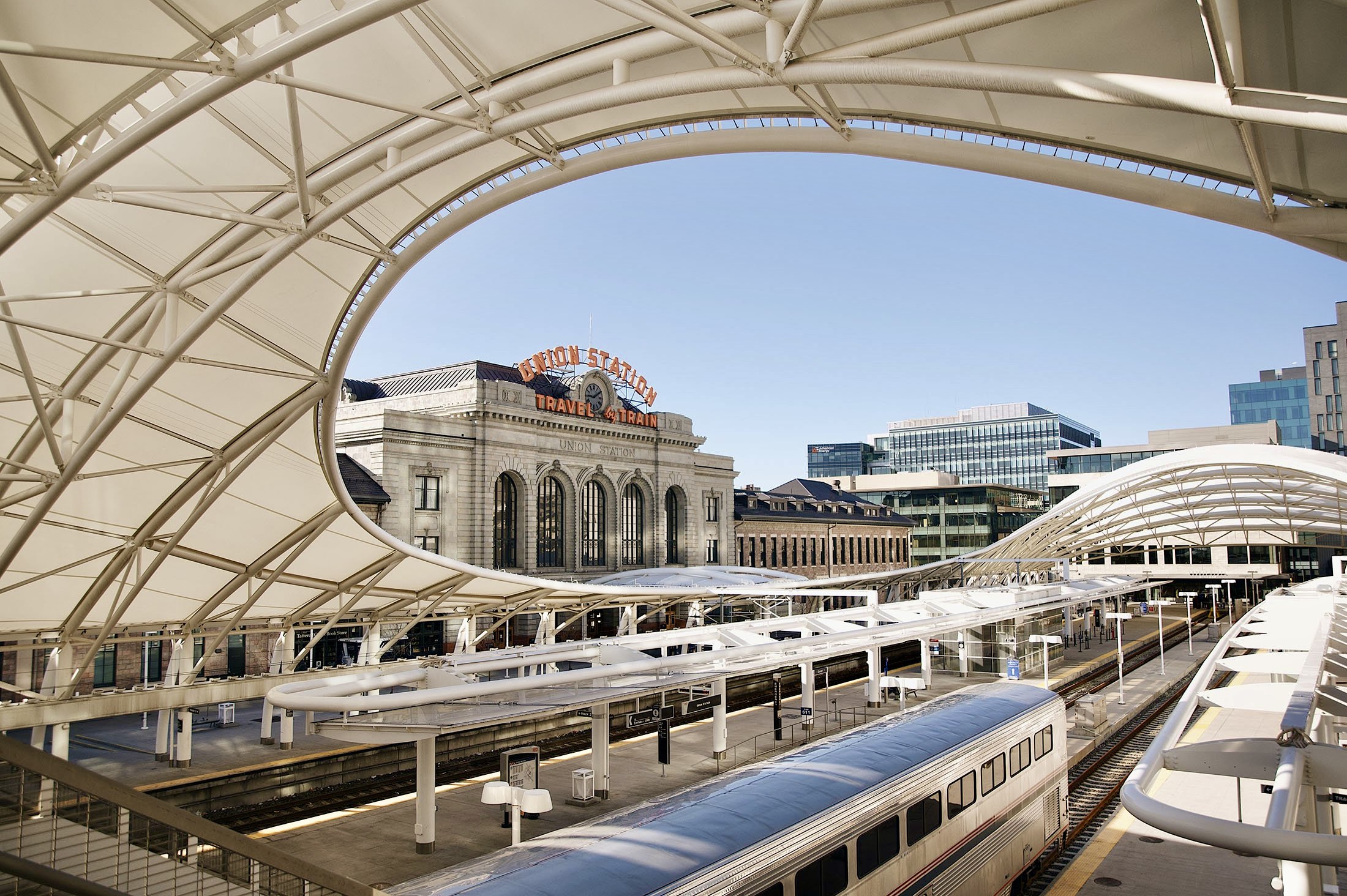
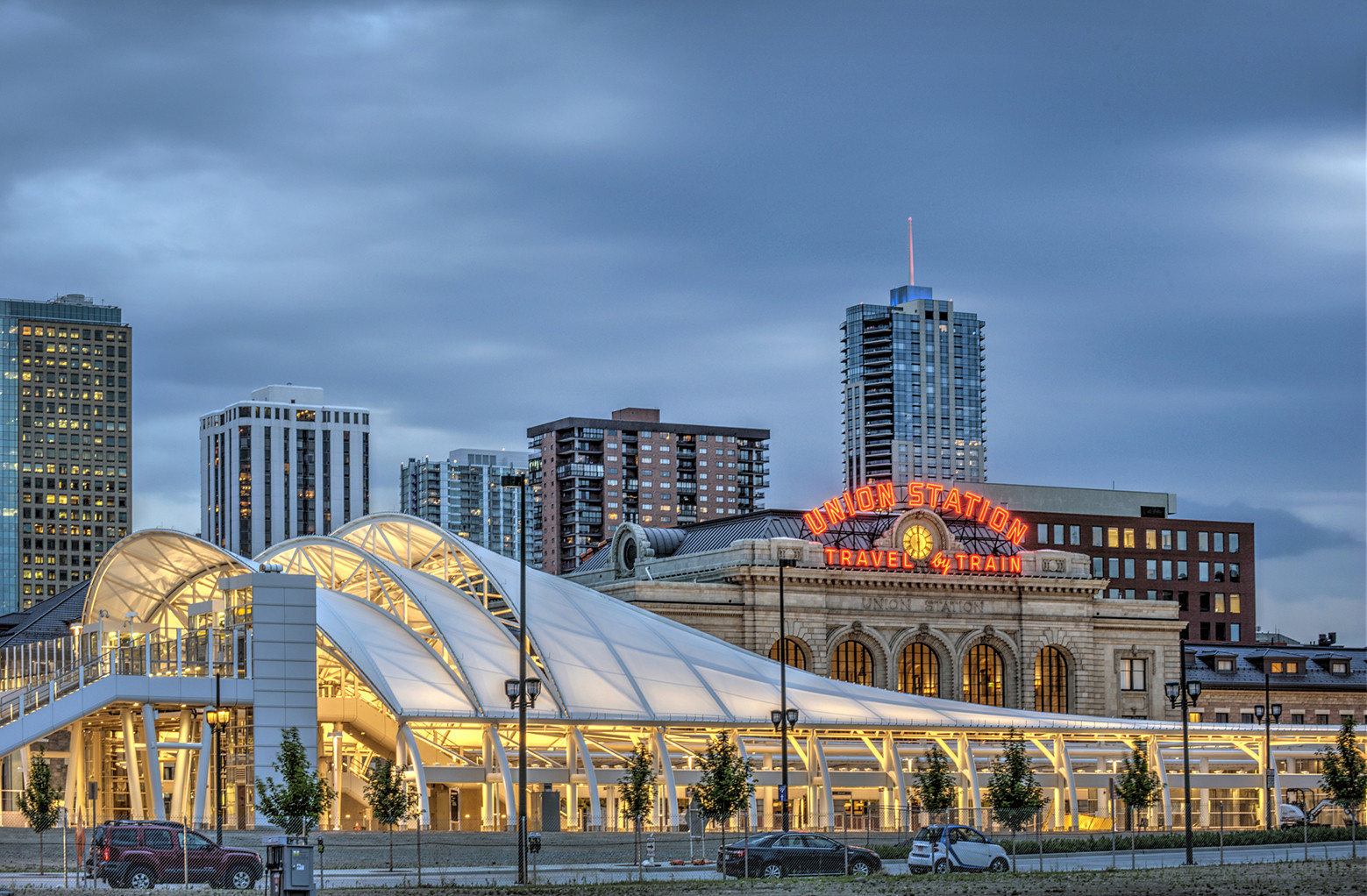
The 2012 Denver Train Station train shed, adjacent to the historic Denver Union Station

I have had a lifelong love of trains and of the stations where we board them. My love for them is partly inherited. My grandfather worked his whole career on the Soo Line RR, having retired as a Conductor on the overnight “Winnepeger,” running from his home in the Twin Cities to the city of the train’s namesake. And my father worked on the same railroad while in college. Of course, having spent my younger years in Japan, riding trains was an everyday occurrence.

And so I am delighted this week to feature the ‘new’ (2012) open-air train shed built adjacent to Denver’s historic Union Station (now beautifully repurposed as the Crawford Hotel). What especially pleases me about the new station’s addition to the opportunities available to rail travelers in the U.S. is the apparent intention for this project to reflect a harmony with Denver’s tensile-structure airport terminal (featured in my prior post).

SOM Architects Transportation Hub site plan
The new station awning structure with the historic Union Station in the background

These train station platforms and their exuberant rooflines at the heart of the city, designed as part of a new transportation hub, were the creation of the long-successful and ‘big name’ architectural firm, Skidmore, Owings, and Merrill (now generally known as SOM). The awning-like structures over the platforms recall the translucent glass and steel train platform awnings familiar to rail travelers in the U.K. A difference here from the also-white structures at Denver Airport is the predominant use of steel beams as principal supports for the awnings, rather than a primary reliance upon tensile cables and poles. A greater resemblance to bridge structures results from this design choice, while also retaining the stretched fabric layers of weather protection, which like those of the airport are translucent. A lyrical building for public use once again has been provided for travelers to and within Denver.

Interior view showing the translucent fabric awning panels and support beams

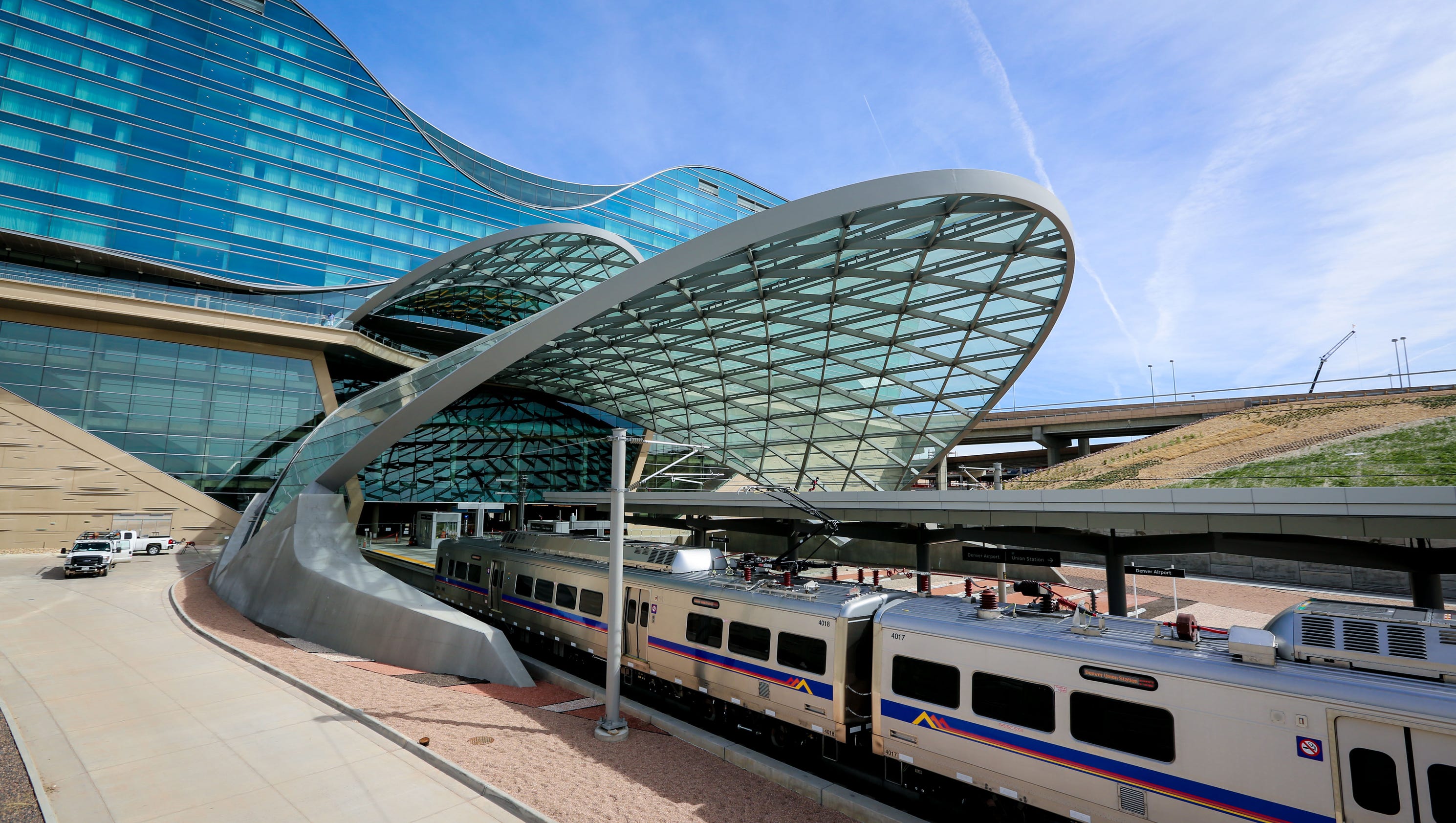
One other significant connection between Denver Airport and the city’s new transportation hub has been established by the construction of a rail line directly linking the two. Adjacent to the tracks employed by Amtrak’s cross-country trains, Denver now has a rail line dedicated to the needs of those who wish to get to the airport, saving time as well as parking and or shuttle costs.

Station interior showing the Regional Transportation District (RTD) airport train platforms (foreground)
An RTD airport train arriving at its destination

Denver’s new transportation hub serves as an attractive inner city renewal project, and provides a similar sense of uplift and visual ‘joy’ as does the airport. Along with the nearby 1995 Coors Field baseball park, the hub further enhances the visitor-appeal of the city’s downtown area, and serves as a central point for the region’s light rail network (RTD / Regional Transportation District).

The Station Complex with the Union Station Crawford Hotel and Denver downtown skyline

Increasingly we are recognizing the continuing implications of America’s significant distances between cities, the relatively low population density of areas between them, and how our reliance upon our cars and our expansive interstate highway system has reduced the financial viability of railroads as a primary resource for our passenger transportation needs. Nevertheless, it is pleasing to see that where new or revitalized rail stations and terminals are contemplated, there has been a demonstrated growth in awareness of their significance as public spaces not only through which we meet our travel needs, but as places where we meet and share meaningful time with others.

Evening at the station

SOM’s Denver Station and the design of its open-air train awnings reminds me of another building, one I have loved since childhood, Kenzo Tange’s 1964 Tokyo Olympics aquatics building, which my family passed by on many family Sunday train trips to church. Tange’s employment of catenary cables for the suspension of the sweeping curved rooflines serves in a similar way as Denver Station to lift our awareness above ourselves. Design achievements like these move us to contemplate beauty as a noble goal of architecture and in engineering, a goal just as important to us as utility and efficiency.

Kenzo Tange’s catenary cable supported roofline for his 1964 Olympics aquatic center
What the new Denver Train Station replaced

Note: My prior post featuring Tange’s Olympics aquatic center can be viewed by clicking here.

A Tao of Seeing: Reflections Inspired by Feng Shui

Michael Pollan’s writer’s hut, intentionally situated by a boulder on the brow of a hill

Recently, I observed my middle son moving a black plastic pond module around in a small space in his New Orleans courtyard. As he moved the container that would soon have fish in it, he tried situating the vessel in various ways, in relation to a tree, a fence, some potted plants, and an existing low stone wall. He is not a student or practitioner of feng shui, but I believe I was seeing some of those principles at work in his decision-making.

Western readers may have heard of feng shui, the Asian philosophical approach to discerning the unseen forces that affect objects and their balance in nature. It gives attention to the metaphysical or non-material energies thought to be at work upon or within the world around us. We might say that this approach provides a Tao of seeing, or a natural way of perceiving within and around surface phenomena to the underlying dynamisms that are believed to affect what happens in nature.

This notion that there are unseen forces at work in the world is an idea that is receiving something of a revival in Western Christian spirituality. This is noticeable when people refer to a concept attributable to the Celtic tradition, in which it has become common to refer to “thin places. “ These are places where the veil between the material and the ethereal or the heavenly seems temporarily dissolved. Another parallel here between East and West may lie in the quest within Christian spirituality for the goal of harmony and balance between people and the created world.

However, my reflections here constitute an aesthetic rather than a philosophical or historical inquiry. I am interested in the dynamics of movement we perceive in the circumstances that we encounter, and less in the metaphysical forces or energies that may be present within them. At the outset, however, I want acknowledge how a nuanced Asian approach can be an authentic route toward a culturally-informed appreciation of the phenomena we encounter, especially from a historically Asian perspective.

As we look at paintings in the context of Western culture, one factor we discern assesses composition and attends to the way our seeing is drawn from one part of a larger image to another. This dynamic is often an artist-intended aspect of an overall composition. Sight lines in garden design and arrangement provide another example, as does the architectural arrangement of space in buildings.

Attention given by Western designers to feng shui is sometimes criticized as being a superficial application of historically and philosophically nuanced ideas. But I want to give credit to ways in which our sensitivity toward perceiving movement and direction is a genuine factor that is available for analysis and articulation. We notice this when we encounter both two dimensional compositions as well as three dimensional spaces and the objects we find in them. We can always come to know more about what we see.  Because what we see is something that is there, not simply what we believe, or are disposed or inclined to see.

An Asian garden said to be designed according to feng shui principles

Motion, balance between forces, spatial arrangement of objects, and the dynamic relationships that are visible because they exist between and among these variables, continue to grab my interest. Contrasts between colors and textures, as well as between sizes and shapes, play a significant role.  Additionally, the perceived difference between what is natural and things that are humanly fashioned is equally significant, as is our perception of the criteria for what constitutes that which we consider to be natural. These are among the factors that help account for our sensitivity towards and interest in these many observable variables, and our common quest for purpose and meaning in the contexts where we find ourselves.

Motions and balance as we find these factors in Wassily Kandinsky’s painting, Several Circles

Painters, sculptors, and architects, seriously consider these factors within visual and spatial compositions. The painter, Wassily Kandinsky, and the architect, Frank Lloyd Wright, provide two examples of those who also perceived a spiritual dimension within their creative work.

If so, we –  as caring lay observers of the world and of the things and places among which we find ourselves – should give deference to this evident fact. For we can all be thoughtful, as people often are inclined to be, about what we see, touch, and experience when we interact with visual phenomena.

I find myself increasingly sensitive to these aspects of our appreciation for Beauty, and endeavor to be more mindful about them. I am intrigued by possible parallels that may exist between Eastern metaphysical interpretations of visual phenomena and more familiar approaches to what we see that are shaped by Western aesthetics. Especially as these familiar approaches are described and developed within our artistic and architectural best practices.

Le Corbusier’s Villa Savoye: A House as Sculpture?

If reading this by email, please tap the title at the top to open your browser for the best experience. Then, clicking individual pictures will reveal higher resolution images.


Le Corbusier, a pioneering contemporary of Frank Lloyd Wright, articulated part of his architectural philosophy with these words, “the house is a machine for living in.” Wright, by contrast, designed domestic buildings more easily described as desirable homes.

Despite Le Corbusier’s modernist statement regarding his approach to design, his Villa Savoye, completed in 1931, was and is once again a beautiful work of what I would call architectural sculpture. This stunning and now restored project has the distinction of having been France’s first modernist building officially designated as an historical monument.

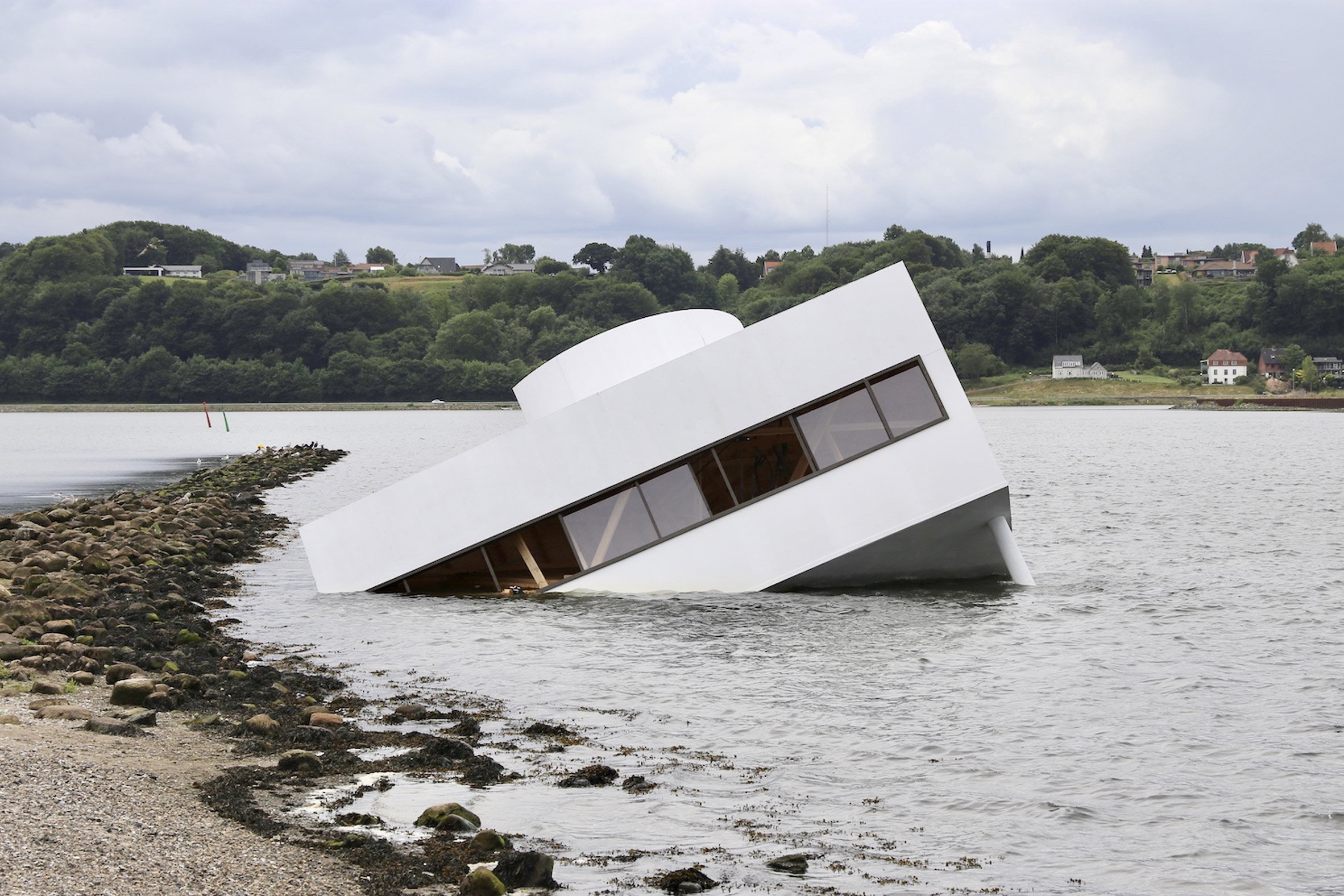
The adjective “iconic” may be overused in contemporary social culture, but the label fits Villa Savoye. So memorable are its lines, curves, and stunning white exterior, that the building has inspired both architectural model kits, as well as two notable tribute structures. The better known of the latter two was an installation by the Danish artist, Asmund Havsteen-Mikkelsen, in a fjord (below).

Another work inspired by Villa Savoye is an almost exact reproduction, but an ‘antipodean shadow’ of the original with its dramatically contrasting black facade (see below). Set in the Southern Hemisphere, it was created as an academic building, a purpose for which Corbu’s design might have been more suitable:

Ashton Ragatt McDougal’s building for the Australian Institute of Aboriginal and Torres Straight Islander Studies, Canberra, Australia

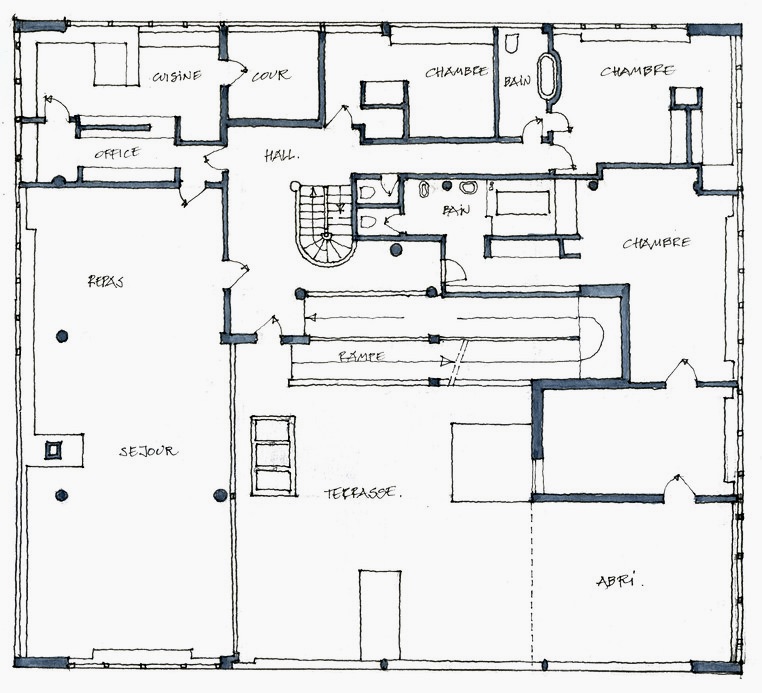
A recent rendering of the plan for the main floor of Villa Savoye

Comparison with Wright’s houses is apt in another sense, for both Le Corbusier and Wright gained well-deserved reputations for prioritizing innovative design features before relying upon time-tested construction methods. One result was that Villa Savoye, like Wright’s famous Wingspread in Wisconsin, suffered from leaks. Leaks throughout the house bedeviled the Villa’s first occupants. While I join others in admiring the formal and visual beauty of Villa Savoye, its practical suitability for a home is questionable.

For me, Villa Savoye’s kitchen focuses the ‘livability’ concern (see photo below). Imagine using this room to prepare aesthetically pleasing meals. This kitchen is not likely to inspire cooking a festive Christmas dinner, looking as it does like an industrial food preparation area. Instead, with the kitchen’s inadequate lighting, I think the expansive windows looking out and away from this part of the building are more likely to attract a cook’s interest.

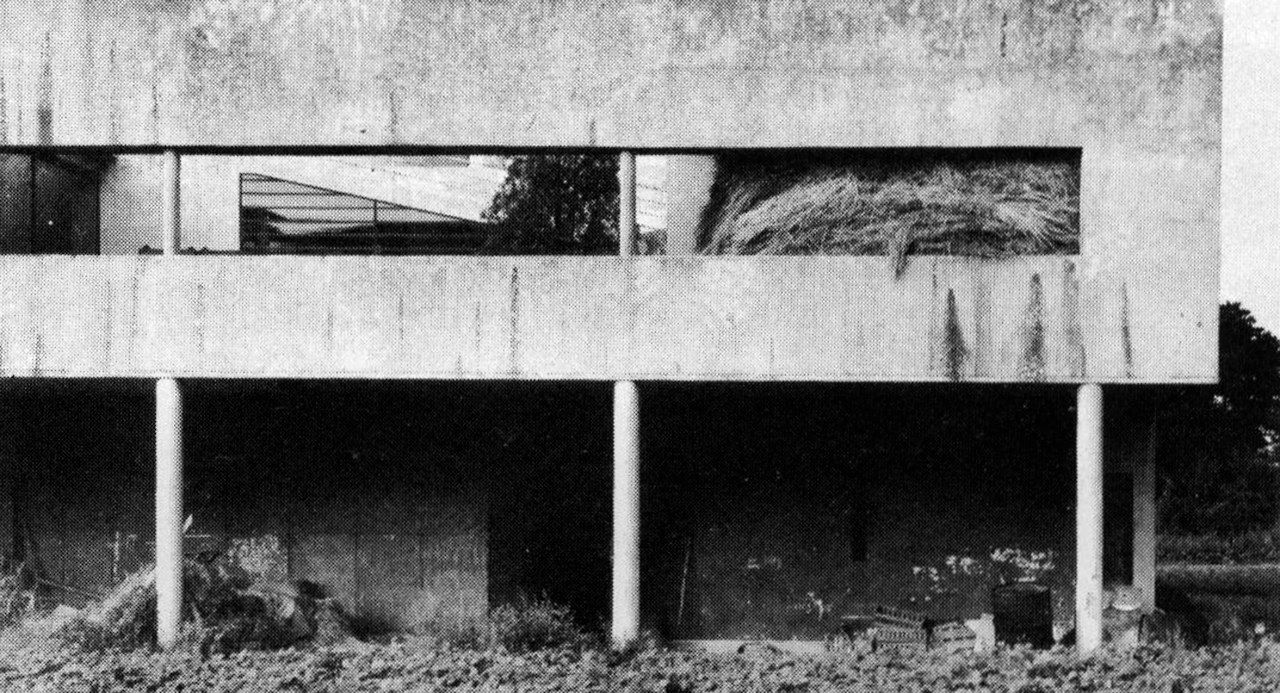
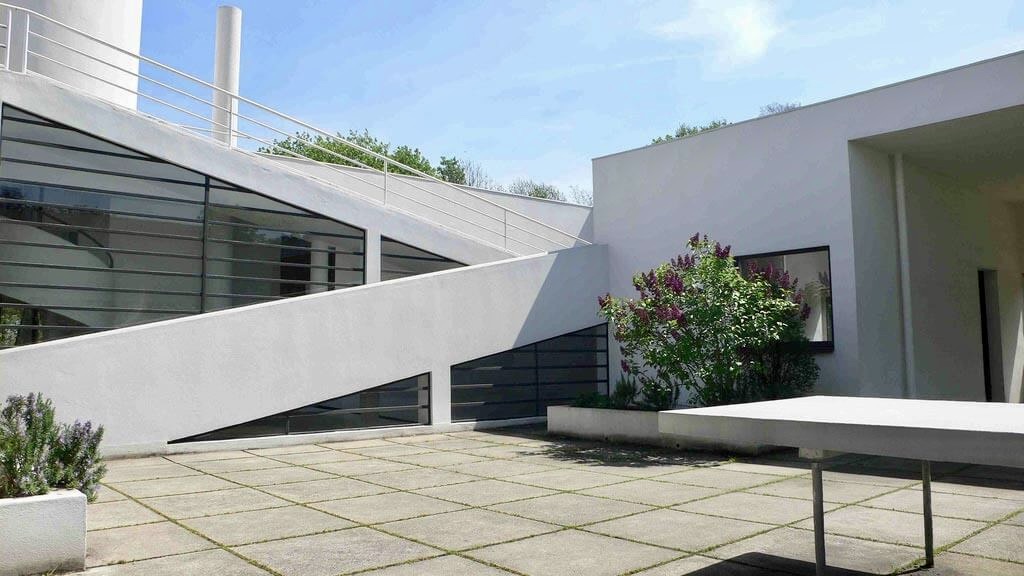
Yet, Villa Savoye has long been an object of fascination for many architects and members of the public, especially with its marvelous facade where the structure appears to float above the site. In sharp contrast to F.L. Wright’s consistent effort to situate his houses within their locations, employing local materials and integrating the structures with their settings, Le Corbusier set Villa Savoye on the site, just as a classical statue might be set up on a pedestal in the context of a formal garden. All natural landscaping has been cleared well back from the structure, which stands upon the billiard table-like surface of a trimmed lawn.

This deliberate juxtaposition of the building and its setting, where the structure’s design elements contrast so deliberately with the surrounding environment, visually marks the Villa as functioning more like a sculpture rather than as a practical dwelling place. The most successful parts of this house, and perhaps the most beautiful aspects of its design, may actually be those least suited to enhancing actual domesticity. These include the curving walled stairwells and ramped walkways, attractive transition zones through which the residents simply pass.

The main floor’s atrium-like terrace, as well as the curving wall elements on the ground and roof levels are immensely appealing to look at. They draw attention to themselves as objects of visual interest as much as they function as places in which to spend time. Yet, it may be ironic that these are primarily exterior parts of the building.

What I have characterized as the sculptural quality of this building is also evident from the vantage point of the principal living area (see below). This living room strikes me as austere rather than as compelling. Despite its modest fireplace, the room might be better imagined as a gallery space – especially for small scale sculptures – than as a room in which to relax with family or friends. As designed, it and the rest of the house may have been theoretically suitable for its location in north central France, but it is hard to imagine the large room, with its original pre-modern windows, being comfortable on a hot day or during the winter without a modern and adequate HVAC system installed (steam radiators are still evident).

Le Corbusier clearly loved and felt at home on the southern rim of France, in the Cote D’azure, and may have seriously misjudged the suitability of this building for the north central region of his country. But there it sits, no longer a home, and now once again an object for all to admire.

Though I have indicated the likely reasons why I would not want to live in Villa Savoye, I am delighted that the building has been preserved as a focal point for our appreciation of modernist architecture and the International Style. The photos below indicate how near this beautiful place came to demolition after abandonment by its frustrated owners, and its subsequent abuse during the Second World War.


Additional note: Readers who are intrigued by this stunning building may wish to become familiar with some of Le Corbusier’s other notable projects, including his chapel at Ronchamp (featured in a prior blog post), his Marseilles block building, and his theoretical Modular system intended to facilitate human-scale architectural design. The latter may have been inspired by Da Vinci’s Vitruvian Man, reimagined in a metric system of measurement. The following image demonstrates the way in which Le Corbusier’s modernism was in part based on mathematical theory, and how it played a role in his design for Villa Savoye.


Special thanks to my daughter in law, Laure Le Coq Holmgren, for helping me with the French terms for aspects of Villa Savoye’s plan, and for the correct pronunciation of the building’s name.

Appreciating Chrysanthemums in Japan

If reading this by email, please tap the title at the top to open your browser for the best experience. Then, clicking individual pictures will reveal higher resolution images.

Ichimonji Kiku variety chrysanthemum – the basis for the Japanese Imperial Crest

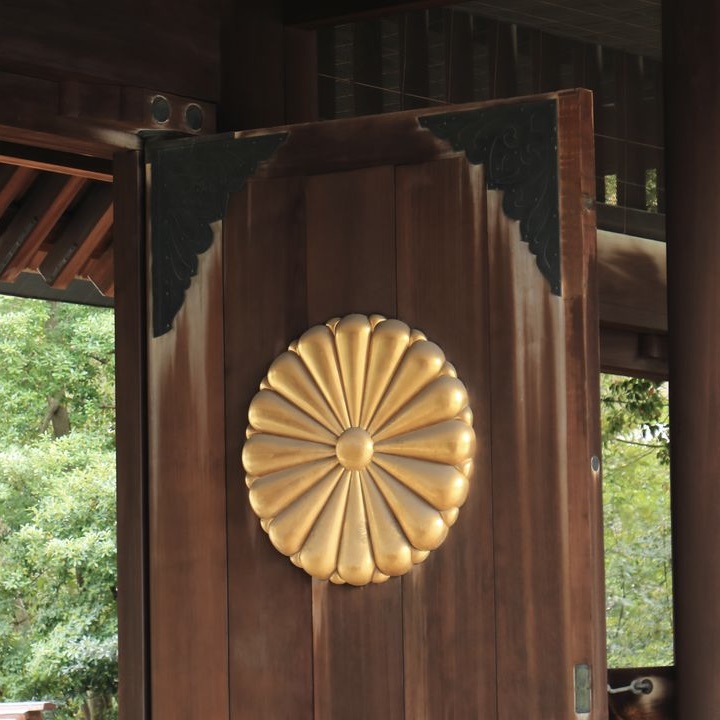
The chrysanthemum-based Japanese Imperial Crest, Yasukini Shrine, Tokyo, and on Japanese passports


Every year, in November, the residents of Tokyo are treated to the Kiku MatSuri flower show, the annual chrysanthemum exhibition featuring a most stunning display of flowering plants propagated by some of Japan’s most skilled gardeners and horticulturalists. Kiku is the Japanese common name for chrysanthemum (originally native to China), and matsuri is the Japanese word for festival. Geographically about 30 degrees north of the equator, Japan’s climate has some affinity with that of Louisiana, with hot humid summers, and occasional frosts and even a rare snow shower in Tokyo. Chrysanthemums appear to grow well in both regions.

A photo of the 1914 Kiku Matsuri (note how the gentleman wears a western hat with Japanese clothing and wooden sandals {geta})

In our country at this relatively same time of the year, we are used to seeing large containers of chrysanthemums, covered with abundant blossoms, offered for sale in displays outside large box stores and nurseries. Yet, they tend to be small blossomed plants, differing from one another usually only in terms of color. At the Kiku Matsuri festivals, many varieties of mums, some of them exotic-looking, are beautifully arranged for viewing in a very formal and traditional setting. Yushima Shrine in Tokyo often serves as a location for these displays.

Kiku Matsuri displays of mums outside Yushima Shrine, Tokyo (above and below)

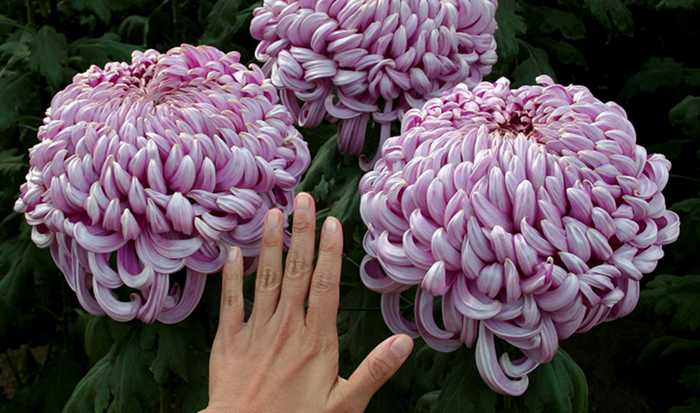
I have strong and clear memories of walking around these remarkable chrysanthemum arrangements with my parents and brothers, and being astonished at the multi-blossomed plants with a wide spread of blooms, extending upwards from a single or a few stems.  One version of this practice is known as Sanbon-Jitate, which features three large blossoms grown from a single stem. Each of the blossoms is symbolic, and represent the heavens, the earth, and humankind (as in the image below). Yet, clearly, all of the chrysanthemums on display at these annual festivals are in one way or another carefully and labor-intensively grown.

Atsumoto Kiku variety of mums (above), grown and featured in Sanbon-Jitate arrangements

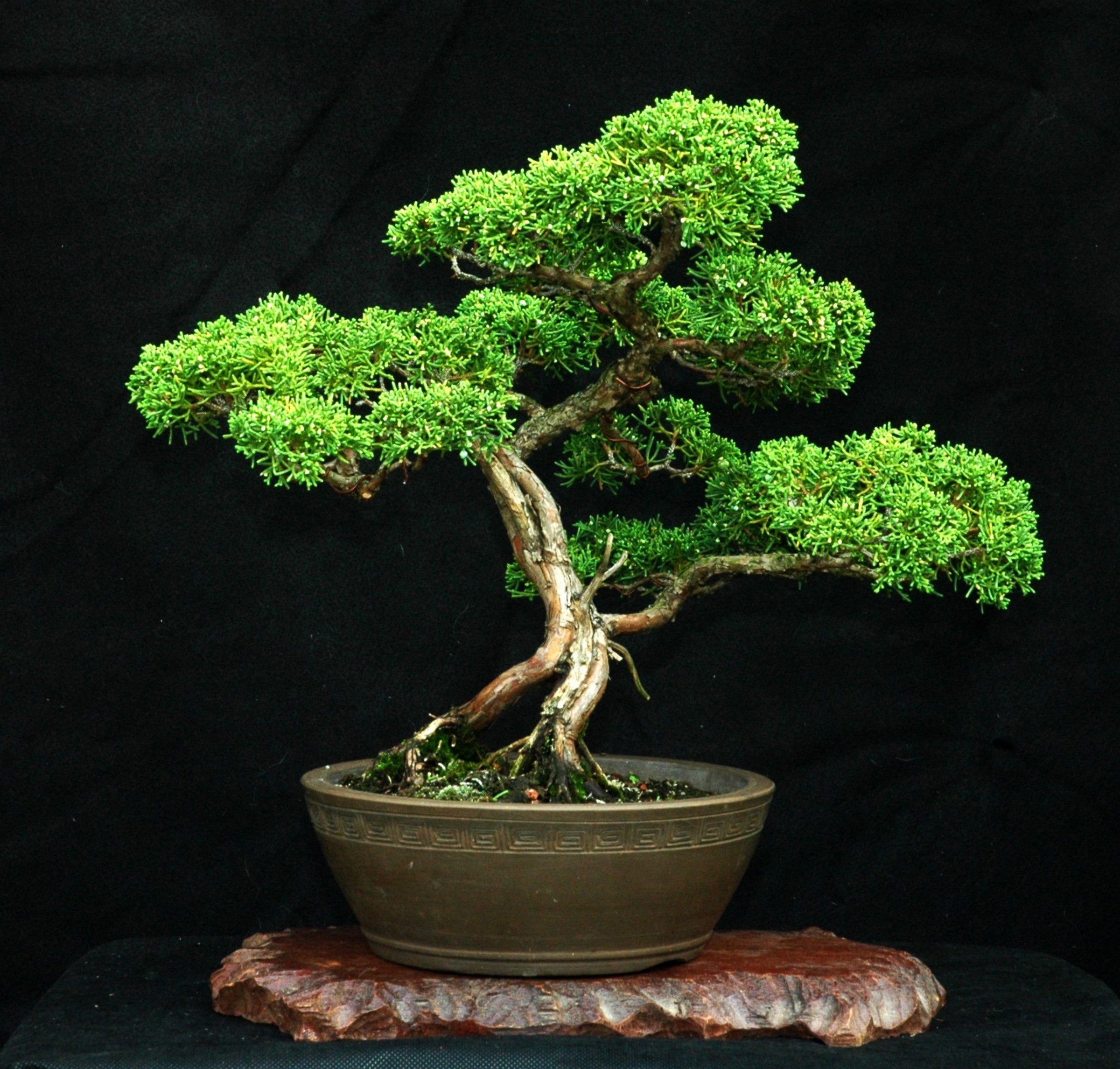
The above bonsai, featuring miniature blossoms, provides another example of labor-intensively grown chrysanthemums

The Atsumoto Kiku variety of chrysanthemum (featured further above, and in the photos below) is a classic Japanese form of the plant, with its dense and thick blooms. This variety is propagated in many colors, among which the most beautiful may be the two colored Tomoenishiki variety.

Other examples of the Astumoto Kiku variety are shown below.

Another very attractive variety of Japanese kiku (or mums) is the Kudamono Kiku, known in English by the common name, spider mum, shown in the images seen below.

The propagation and cultivation of chrysanthemums in Japan by skilled gardeners reflects the highly refined aesthetic vision possessed and valued by many of the nations artisans, and by the wider society in which they live and practice their craft. The delicacy and exquisite beauty of many of these flowers, and yet the transitory nature of their flowering, speak to a cultural appreciation for what can be apprehended and enjoyed in the present moment, much like the way in which Japanese people (and foreign visitors) will in great numbers visit shrines, temples, and castle parks in the springtime to view the cherry blossoms.

Seeing these photos reminds me of the diligent care with which many Japanese gardeners, artists, and craftsmen engage in a lifelong pursuit of aesthetic perfection in a single area of practice, whether it is in propagating new forms and elaborate displays of chrysanthemums, throwing clay pots, writing in caligraphy, or seeking to make the most beautiful and durable sword. Though in each case individuals pursue the practice, it always seems to be in the context of a guild or society of fellow practitioners, and always with a significant degree of community awareness of the importance of this or that art for the wider society in which the practice of it is engaged.

Small and edible chrysanthemum blossoms added as a garnish to sashimi (traditional Japanese raw fish)


The Beauty of Bonsai

If reading this by email, please tap the title at the top to open your browser for the best experience. Then, clicking individual pictures will reveal higher resolution images.


A local plant and garden center recently offered an introductory workshop on Bonsai, the Japanese and originally Chinese art of propagating and arranging miniature versions of living plants and trees. Upon registration for this workshop (and for a relatively modest fee), participants would be provided with a starter plant, a container for the project, and the basic tools and materials with which to begin their own Bonsai arrangement. With my childhood in Japan, and my interest in the arts, I jumped at the opportunity to learn some basic principles of Bonsai, an art which I have admired for many years. Nevertheless, I have been largely ignorant of the mechanics of this aesthetically-pleasing horticultural practice. Attending the workshop, I was not disappointed by the learning opportunity offered.

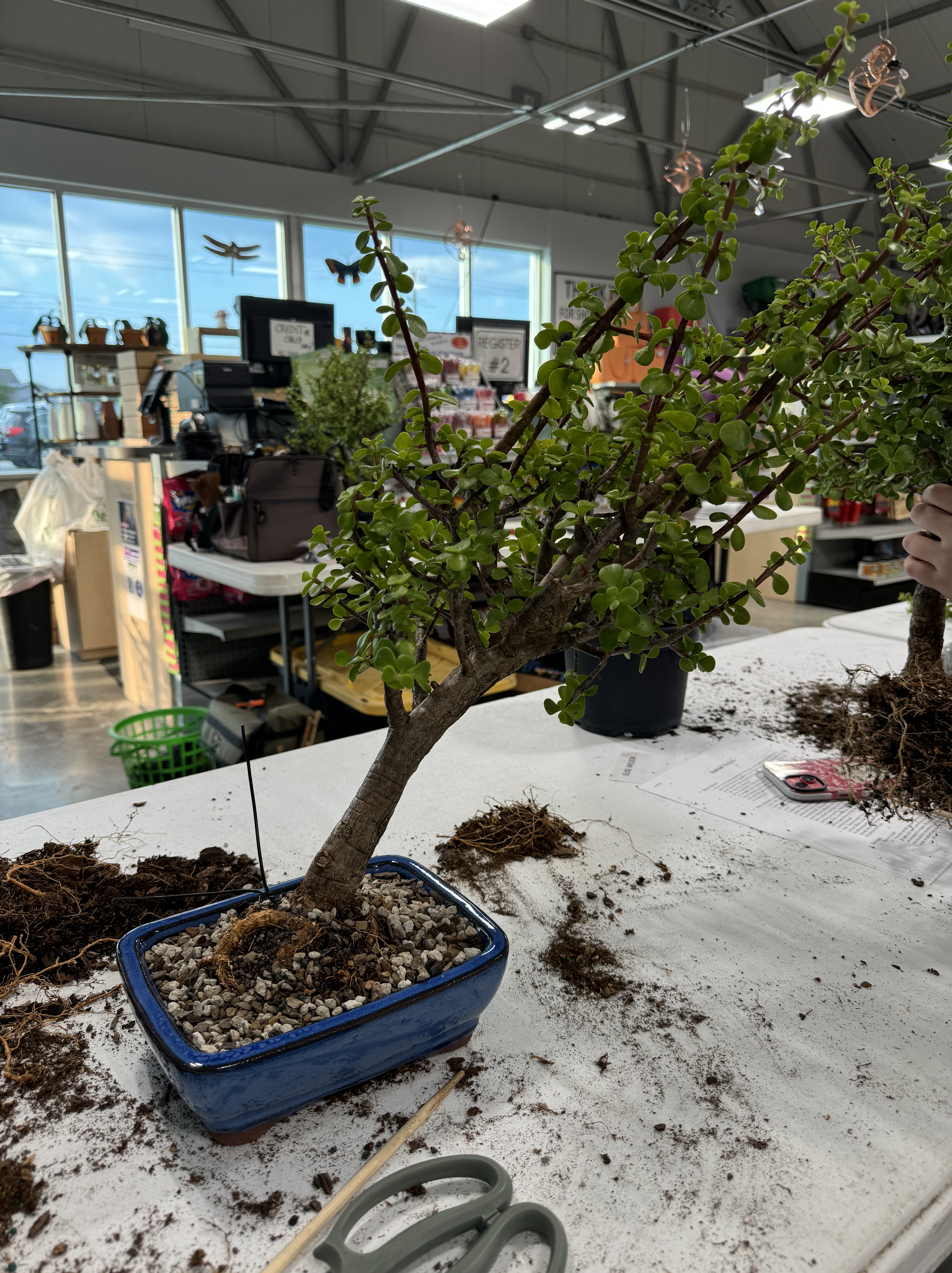
Upon going to our assigned places after arriving, each of us found a potted portulacaria afra, a succulent commonly called dwarf jade plant or elephant bush (photo below). We also found a glazed ceramic container, plant medium, and basic tools with which to create our first attempt at a genuine Bonsai arrangement. My potted starter plant was in a 6” plastic pot, about 18” – 24” in height, and root-bound in its container.

An example of portulacaria afra

Our first step in the process was to prepare the pot or container to receive the plant. I learned that the most useful plant containers have two drain holes, as well as two very small holes for upright wires. The photo below shows my pot after attaching the wires and screens.

Wires secure small mesh screens over drain holes, while a longer U-shaped wire emerges from below, to help secure the plant

Our next step was to remove the plant from its plastic pot, and determine where the upper primary roots lay. We were then asked to remove almost all of the former potting soil material (identified as pine bark mulch), and then to anticipate trimming the roots. Here, I found my first challenge. As an amateur gardener, disturbing the roots of a plant – much less removing the planting medium in which it has been nurtured – hit me as strongly counter-intuitive. Yet, this was actively encouraged.

A participant’s plant after removal of most of the original planting medium, before cutting extraneous roots

After initial preparation of the plant, we had our third challenge. This was to cut and shape the remaining exposed roots in such a way that the plant might sit well in the provided pot. The overall natural shape of the plant provided a starting point. But an aesthetic judgment was also needed for how this particular plant would best sit in this particular container. Here, I was beginning to discern how at first seemingly mysterious Bonsai practices become compelling to so many people. There appeared to be at least thirty or more participants in this workshop, on a Tuesday evening before the 4th of July!

So, how might my particular plant best fit in my provided pot?

How I situated my plant in the pot, secured by the upright wires

My plant before I trimmed the upper stems

Then came the most challenging aspect of Bonsai for me as a beginner. How should I trim the top of the plant, and to what extent should I prune back the stems and leaves? The main lesson I received here was this: do not be afraid of pruning!

Indeed, with the art of Bonsai, and apparently according to recognized horticultural principles, the more we prune our Bonsai plants, we will find a real diminishment in the size of the leaves as the organism grows!

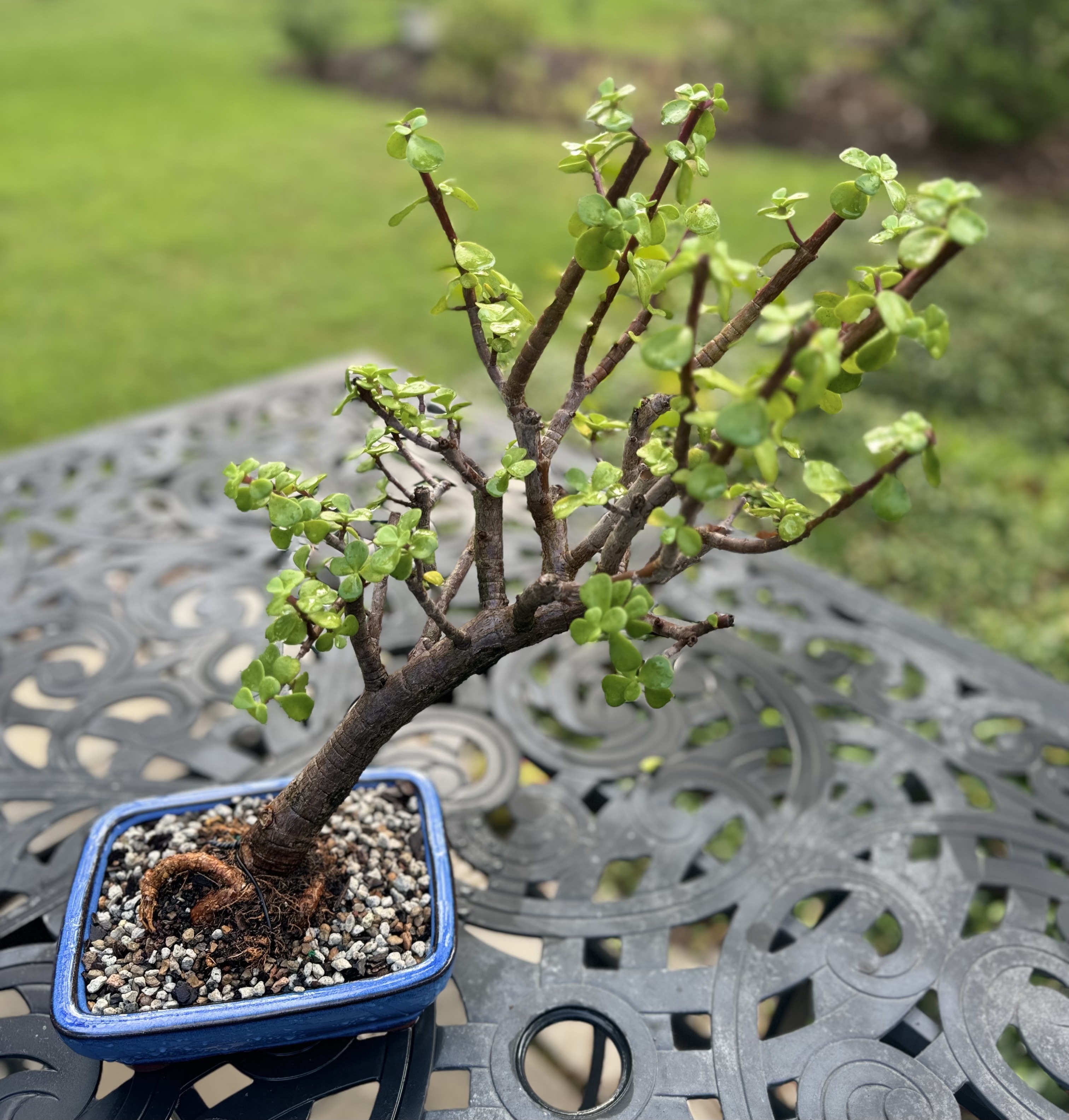
Here, below, is a photo of my Bonsai plant project at home, after some significant pruning.

The ‘windswept’ natural posture of the potted plant appealed to me, and I want to accentuate this by continuing to allow for the lean of the plant (to the right, in this photo), while counter-balancing this lean by promoting growth toward the opposite direction. As my recent mentors stressed, pruning will be everything!

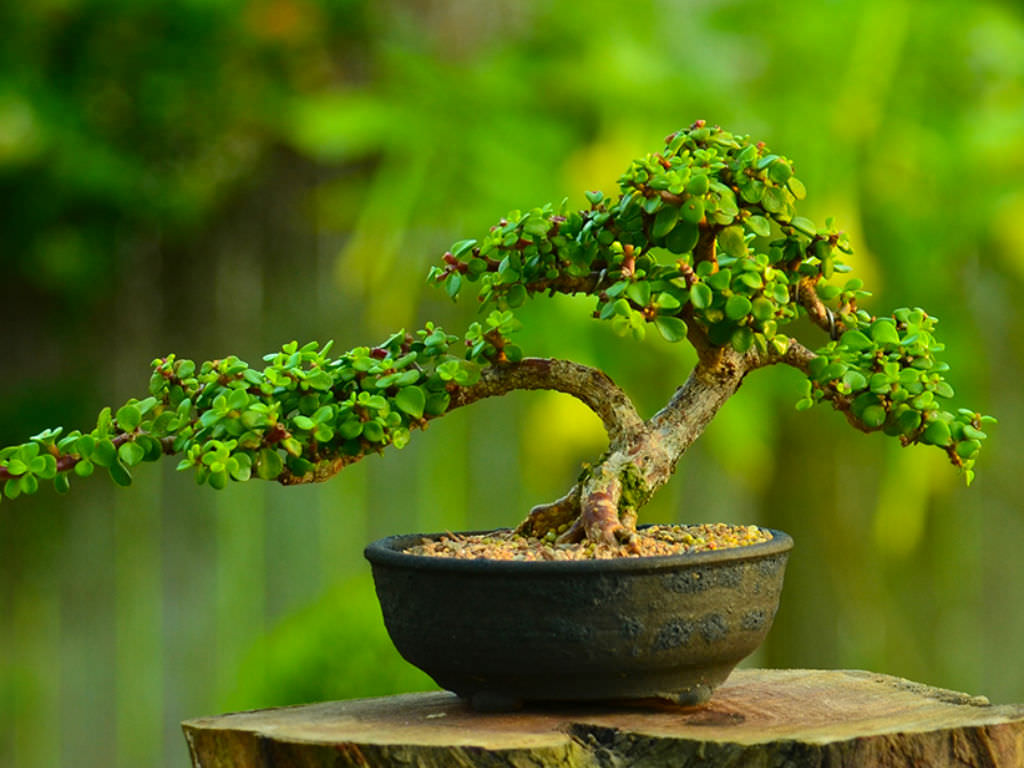
What my portulacaria afra might look like some day


Note: as mysterious as this art-form may seem to Westerners, it is accessible to beginners in terms of method, materials, and technique. Ask your local plant and garden store about it!

Helen Nearing and Beautiful Stone Walls

If reading this by email, please tap the title at the top to open your browser for the best experience. Then, clicking individual pictures will reveal higher resolution images.


With the visionary but also impractical exuberance of youth, I graduated from high school imagining I would build my own house somewhere in New England. My design ideas were shaped by Frank Lloyd Wright while my notion of ‘responsible living’ was largely influenced by Henry David Thoreau as well as Helen and Scott Nearing. While already loving Wright’s architecture, my high school English teacher, Nick Fleck, opened a compelling new world for me through reading and learning about Thoreau and the Nearings. I identified with these mentors and the values they shared regarding building homes for themselves, and of living in harmony with the land.

Through books and articles, I then discovered an unexpected complementarity between the Nearings’ approach to home building in Vermont and Maine, and Frank Lloyd Wright’s method of construction at Taliesin West in Arizona. In what some call slipform masonary construction, builders first erect wooden forms. Between them, stones and cement are poured and allowed to set, creating walls and support pillars for the resulting structures. This method allows for considerable design flexibility while also being very economical, especially when field stone is readily available.

The Nearing’s stone house in Vermont

With the Nearings, the results reflected European and early American traditional influences in their desire to achieve an economical simplicity that was harmonious with the terrain upon which it was situated. For Wright, the plasticity of the method allowed for the creation of non-traditional walls and roof supports of varying angles and sizes. Just as concerned as the Nearings with what he called “an organic architecture” accessible to the common person, FLW – like them – sought to create a home and work environment rooted within a site while employing locally or regionally found materials when feasible. Whether or not the Nearings ever met Wright, they were clearly kindred spirits. In their most well-known book, Living the Good Life, they quote Wright in the chapter relating their stated “principles of architecture.”

Helen Nearing (facing viewer) in the gardens outside the later ‘home made of stone’ in Maine

Drawing from FLW’s writing, the Nearings articulated four general rules that should bear upon the design of domestic architecture. “Form and function should unite in the structure…; buildings should be adapted to their environments…; local materials are better adapted than any other…; {and} the style of a domestic establishment should express the {residents} and be an expression of themselves…” Clearly, the Nearings were more successful honoring that fourth principle than Wright generally was with respect to the wishes and temperament of his clients!

Helen and Scott Nearing identified several reasons for their choice to build their homes and outbuildings with stone. Stone buildings look natural in their setting; these found materials provide a variety of muted but attractive colors; sturctures made of stone are durable, practical, and economical to maintain; and buildings of this kind are less vulnerable to fire, while retaining coolness in the summer and warmth during the winter. For the Nearings, a decision to benefit from all these advantages of working with local stone was made more easy by their desire and willingness to build the structures themselves, thereby saving the financial cost of labor along with a reduction in the cost of materials.

Scott and Helen Nearing at work on a wall

Given their preference for this building material, the Nearings shared an advantage also enjoyed by Wright in Arizona – plentiful local stone with which to work. Many New England fields and forests are strewn with pieces of rock. People in Louisiana who enjoy landscaping, wish they could take for granted finding stone in such abundance. By contrast, the Vermont homesteader wishing to put up some simple but immensely practical buildings, from tool sheds to houses, can begin with a wheel barrow and a pair of gloves. Two other items are needed: cement mix in adequate quantities, and wooden forms within which the walls are to be fashioned. Happy to work without mechanized tools, the Nearings used a wheelbarrow to gather the stone, mix the cement, and transport both to where they were needed.
Two photos of Taliesin apprentices at work building slipform walls

Another point of continuity between the Nearings’ and Wright in their approach to how we might best live was the way in which they attracted large numbers of young visitors and students. With both FLW and the Nearings, those who came and stayed sought to learn about the life and work of their mentors not merely in a intellectual way, but share in it holistically. The Nearings and Wright, in their different spheres of concern, nurtured communities of fellowship and learning. This helped them influence generations of young people who, led by the example of their teachers, lived into a deepened appreciation for significant principles to which one might commit a life.

The finished result of slipform construction at Taliesin West

Helen Nearing in front of a wall she built with Scott


For more about Nick Fleck and his influence upon me and many others, please see my prior post, “The Beauty of Asking ‘Why?’” Helen and Scott Nearing’s farm in Maine is preserved as a living legacy, and is maintained as The Good Life Center (https://goodlife.org/about/).

Here is a link to my earlier post featuring some house design ideas I imagined building for myself, “The Beauty of FL Wright’s Influence” (https://towardbeauty.org/2023/02/15/the-beauty-of-fl-wrights-influence/).

Note: blog settings have been changed to provide more opportunity to offer comments, using the link below.

A Beautiful Garden: Nitobe Memorial (Part II)

[If reading this by email, please tap the title at the top to open your browser for the best experience. Then, clicking individual pictures will reveal higher resolution images.]


In Part I, I closed with this observation: one does not visit a Japanese garden in the way one might go to a park, as a context to pursue some activity like an exercise walk, but as a place to experience simply being.

Here we encounter a paradox, perhaps one of many associated with traditional Japanese gardens. At first, for many Western visitors, the elements within such a garden, and their arrangement, catch the eye and draw one in further to an encounter with what is seen there. Yet, what is seen within a Japanese garden exists less to provide an object of attention, and more to facilitate and enhance how one sees. A journey around the garden therefore encourages a journey within. The “spirit that informs [the] spaces” found in “a garden created and maintained in the Japanese tradition,” to which the UBC website alludes, is a spirit or quality of experience to be nurtured within the viewer who encounters this intangible element of the garden.

A carefully arranged sense of space therefore forms a prominent feature of traditional Japanese gardens, where plantings and structural objects both near and further away are placed deliberately. Except for the surrounding walls, there are no straight lines in a Japanese garden, and formal symmetry is strenuously avoided. Plantings and objects are more often placed singly or in three’s, given how two points often suggest a line and three suggest a circle. The spatial interrelationship between such things as large stones, trees, and water features is not accidental, and for the Japanese has a spiritual as well as visual significance.

In Japanese garden design, each particular feature, whether alive and growing or humanly made, has a distinct significance and is purposely chosen for its location. Perception of this is enhanced when a visitor becomes aware of how the elements of a garden’s composition are selected with an appreciation for seasonal viewing, such as at the annual cherry blossom time. Throughout the year plantings in the garden draw attention to themselves through an occasional heightened display of color, or by contributing to a muted harmony of differing tones and textures. On successive visits, a familiar place somehow can seem different.

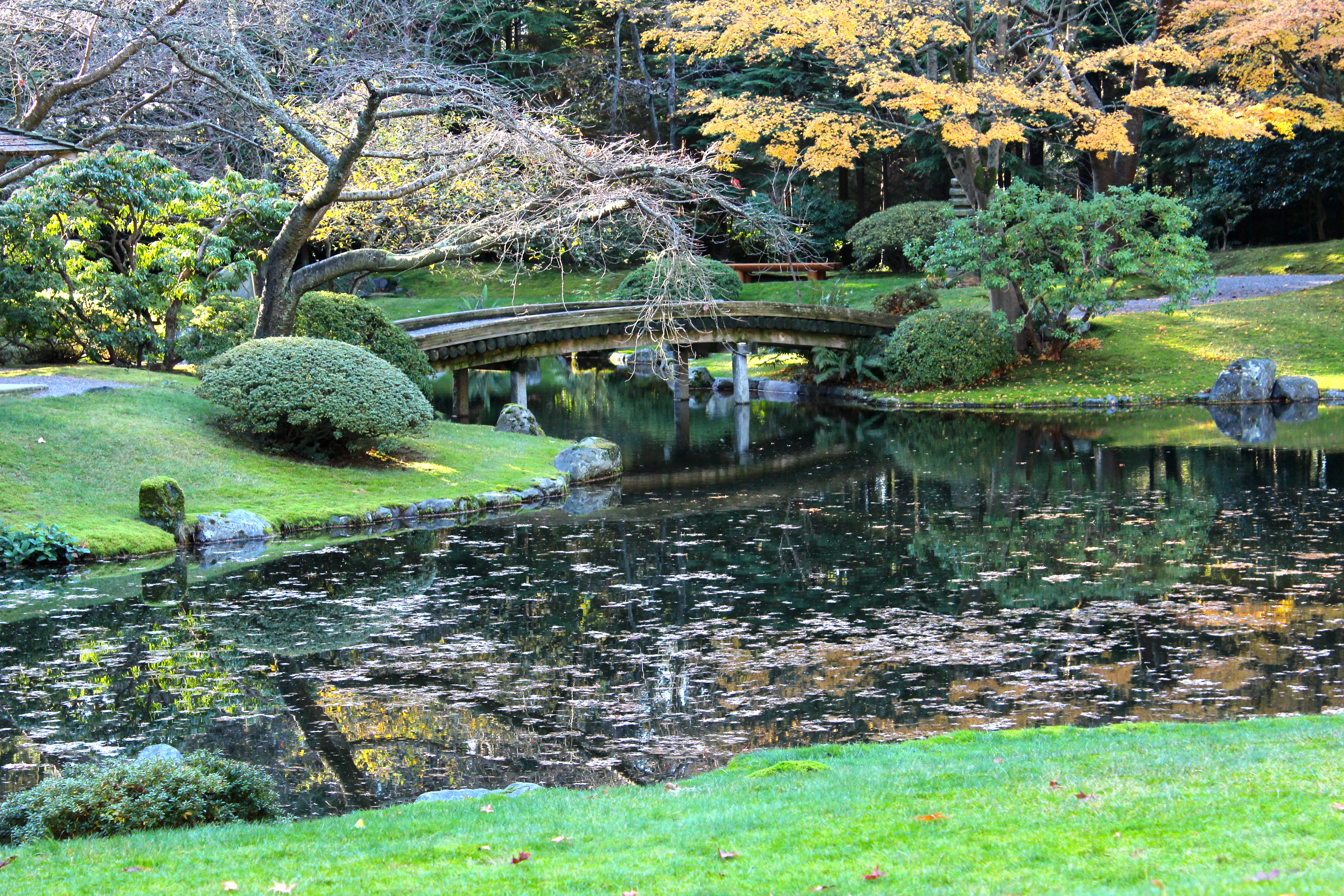
Plants, shrubs, and trees in Japanese gardens are cut and trimmed so as to appear manicured  just as European topiary is studiously tended, albeit with very different results. Whereas gardeners in the Southern U.S. might allow azaleas to grow unevenly to avoid looking like a hedge, ornamental shrubs such as holly and cedar, and the branches of evergreens, are painstakingly shaped by the Japanese-trained gardener, often into softly rounded forms. These provide contrast to the smooth sculptural shapes of tree trunks, while also standing out against the flat reflective surface of ponds.

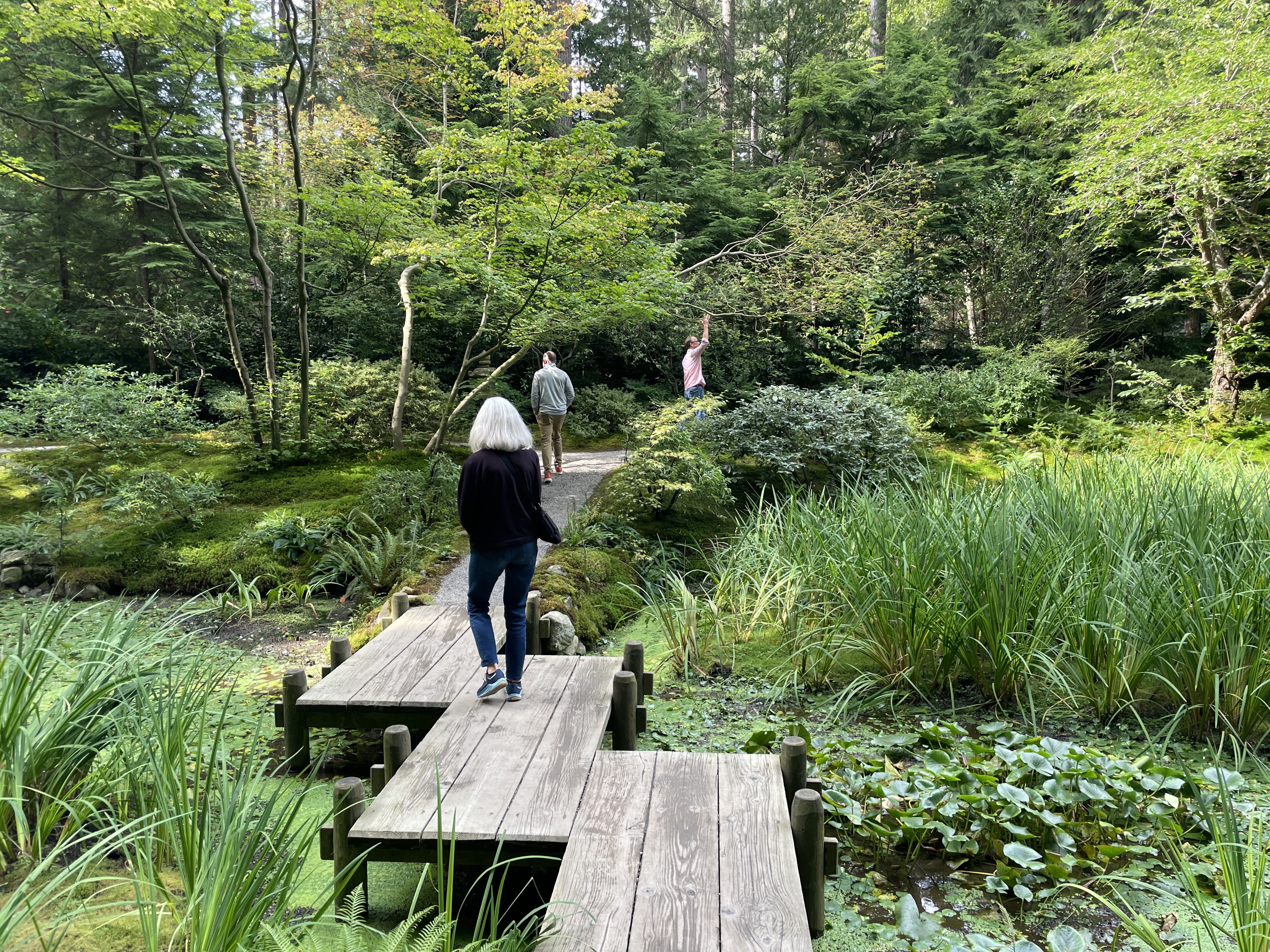
Traditional Japanese gardens usually contains a pathway, a design element not unique to such gardens, though its treatment in this context draws attention to itself. For the pathway through the garden can be just as important as what is viewed from it, so that the experience of the journey becomes in some sense its destination. Even in a relatively compact space, a consideration important in Japan, a pathway in a garden can make a small area seem much larger than it is, as the visitor is prompted to slow down and live into the present moment.

Padding along the soft pea gravel between areas of green covered by multiple textures from soft moss to tall bladed plant spikes, one gains glimpses and then temporarily loses sight of what lies ahead. Views include garden features such as a teahouse awaiting encounter, or a low-arching bridge from which Koi might be observed below the still water’s surface.

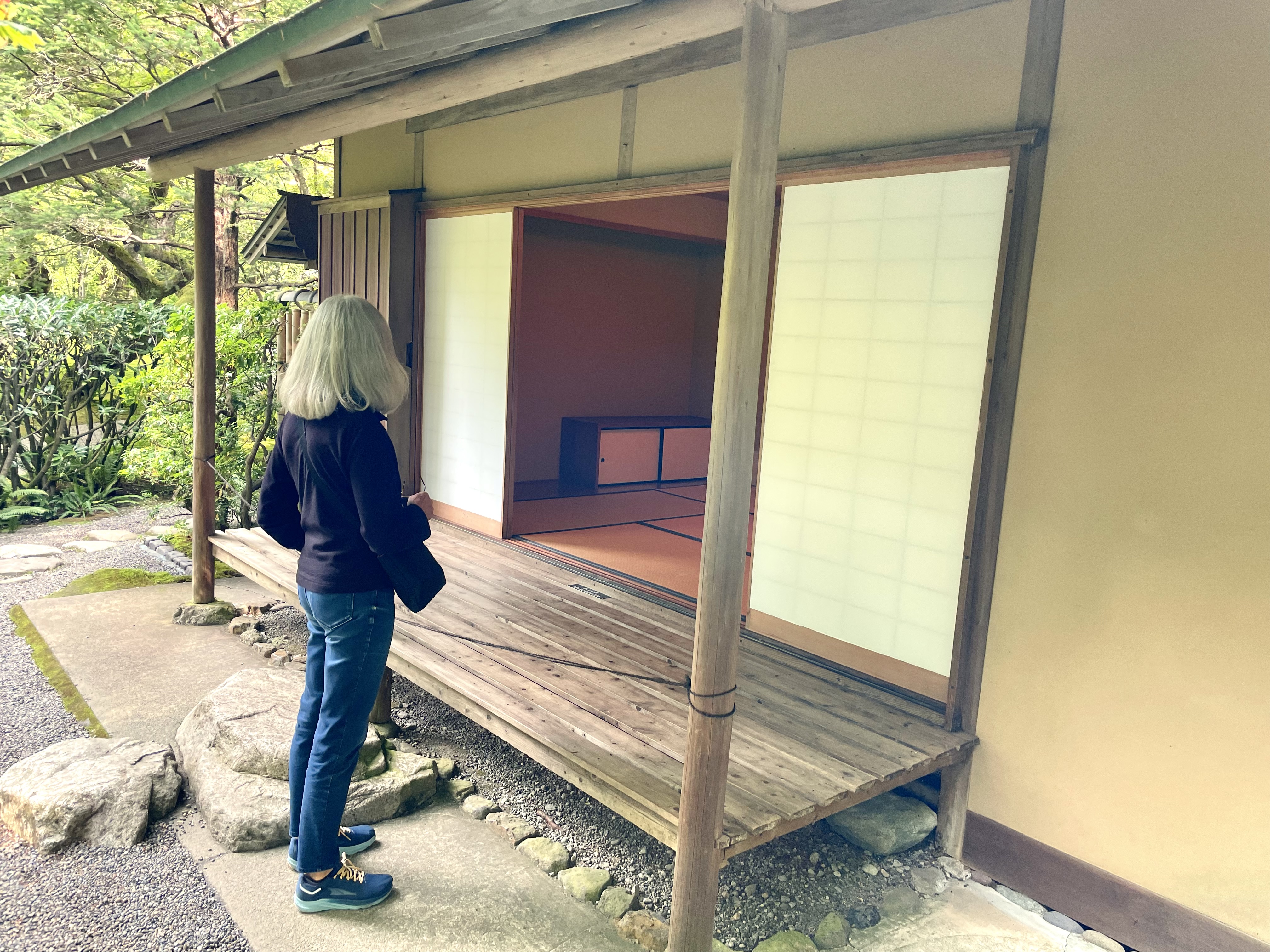
The UBC website says that “Nitobe Memorial Garden is considered one of the most authentic Japanese gardens outside of Japan.” A testament to this perception was provided by Emperor Akihito during a visit there. He said that, while in this garden, “I am in Japan.” Enhancing this sense of being in Japan is the presence of a traditional Japanese house in which opportunities to experience the ‘tea ceremony’ are seasonally available.