Japan related

A Tao of Seeing: Reflections Inspired by Feng Shui

Michael Pollan’s writer’s hut, intentionally situated by a boulder on the brow of a hill

Recently, I observed my middle son moving a black plastic pond module around in a small space in his New Orleans courtyard. As he moved the container that would soon have fish in it, he tried situating the vessel in various ways, in relation to a tree, a fence, some potted plants, and an existing low stone wall. He is not a student or practitioner of feng shui, but I believe I was seeing some of those principles at work in his decision-making.

Western readers may have heard of feng shui, the Asian philosophical approach to discerning the unseen forces that affect objects and their balance in nature. It gives attention to the metaphysical or non-material energies thought to be at work upon or within the world around us. We might say that this approach provides a Tao of seeing, or a natural way of perceiving within and around surface phenomena to the underlying dynamisms that are believed to affect what happens in nature.

This notion that there are unseen forces at work in the world is an idea that is receiving something of a revival in Western Christian spirituality. This is noticeable when people refer to a concept attributable to the Celtic tradition, in which it has become common to refer to “thin places. “ These are places where the veil between the material and the ethereal or the heavenly seems temporarily dissolved. Another parallel here between East and West may lie in the quest within Christian spirituality for the goal of harmony and balance between people and the created world.

However, my reflections here constitute an aesthetic rather than a philosophical or historical inquiry. I am interested in the dynamics of movement we perceive in the circumstances that we encounter, and less in the metaphysical forces or energies that may be present within them. At the outset, however, I want acknowledge how a nuanced Asian approach can be an authentic route toward a culturally-informed appreciation of the phenomena we encounter, especially from a historically Asian perspective.

As we look at paintings in the context of Western culture, one factor we discern assesses composition and attends to the way our seeing is drawn from one part of a larger image to another. This dynamic is often an artist-intended aspect of an overall composition. Sight lines in garden design and arrangement provide another example, as does the architectural arrangement of space in buildings.

Attention given by Western designers to feng shui is sometimes criticized as being a superficial application of historically and philosophically nuanced ideas. But I want to give credit to ways in which our sensitivity toward perceiving movement and direction is a genuine factor that is available for analysis and articulation. We notice this when we encounter both two dimensional compositions as well as three dimensional spaces and the objects we find in them. We can always come to know more about what we see.  Because what we see is something that is there, not simply what we believe, or are disposed or inclined to see.

An Asian garden said to be designed according to feng shui principles

Motion, balance between forces, spatial arrangement of objects, and the dynamic relationships that are visible because they exist between and among these variables, continue to grab my interest. Contrasts between colors and textures, as well as between sizes and shapes, play a significant role.  Additionally, the perceived difference between what is natural and things that are humanly fashioned is equally significant, as is our perception of the criteria for what constitutes that which we consider to be natural. These are among the factors that help account for our sensitivity towards and interest in these many observable variables, and our common quest for purpose and meaning in the contexts where we find ourselves.

Motions and balance as we find these factors in Wassily Kandinsky’s painting, Several Circles

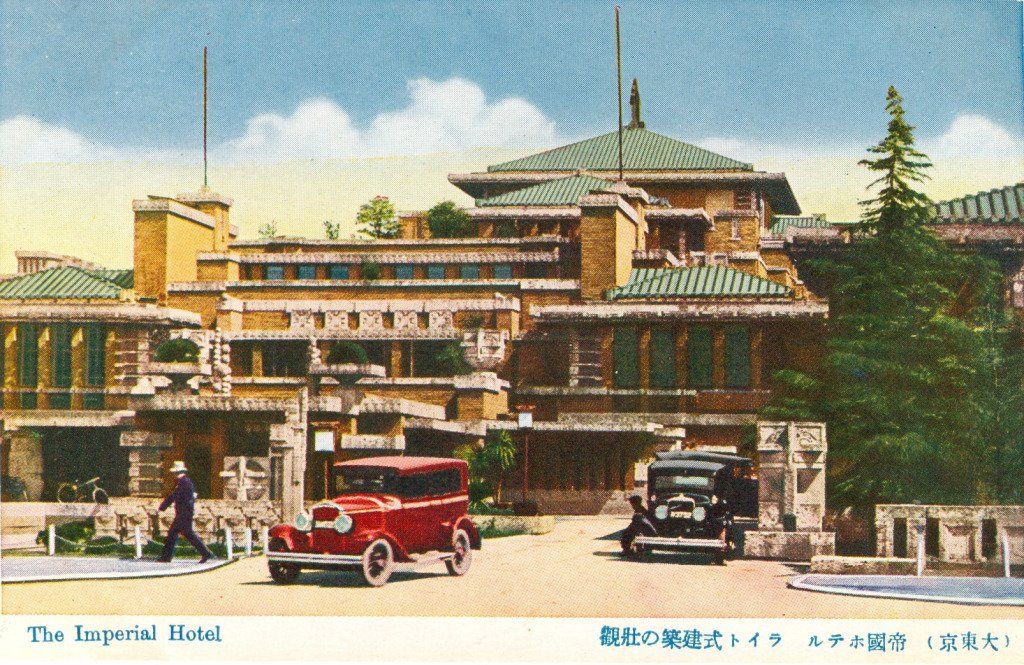
Painters, sculptors, and architects, seriously consider these factors within visual and spatial compositions. The painter, Wassily Kandinsky, and the architect, Frank Lloyd Wright, provide two examples of those who also perceived a spiritual dimension within their creative work.

If so, we –  as caring lay observers of the world and of the things and places among which we find ourselves – should give deference to this evident fact. For we can all be thoughtful, as people often are inclined to be, about what we see, touch, and experience when we interact with visual phenomena.

I find myself increasingly sensitive to these aspects of our appreciation for Beauty, and endeavor to be more mindful about them. I am intrigued by possible parallels that may exist between Eastern metaphysical interpretations of visual phenomena and more familiar approaches to what we see that are shaped by Western aesthetics. Especially as these familiar approaches are described and developed within our artistic and architectural best practices.

Appreciating Chrysanthemums in Japan

If reading this by email, please tap the title at the top to open your browser for the best experience. Then, clicking individual pictures will reveal higher resolution images.

Ichimonji Kiku variety chrysanthemum – the basis for the Japanese Imperial Crest

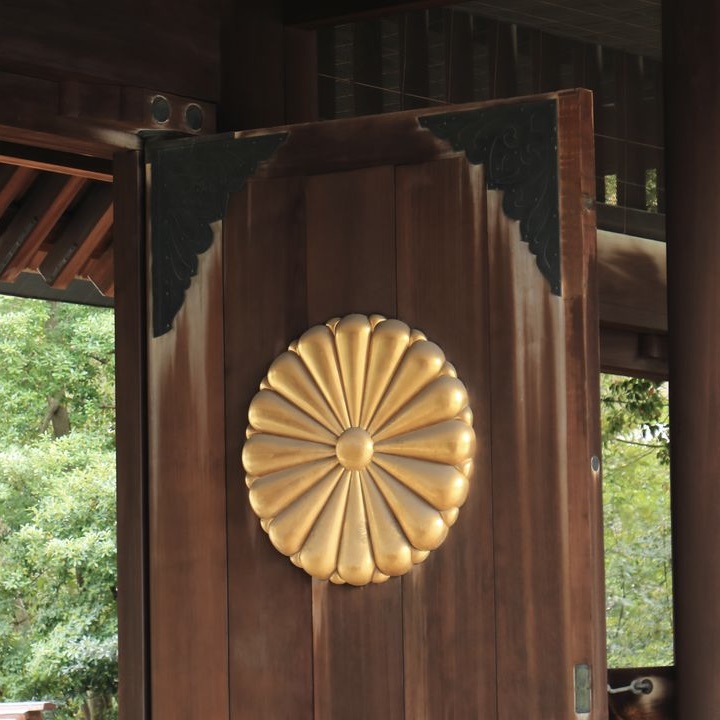
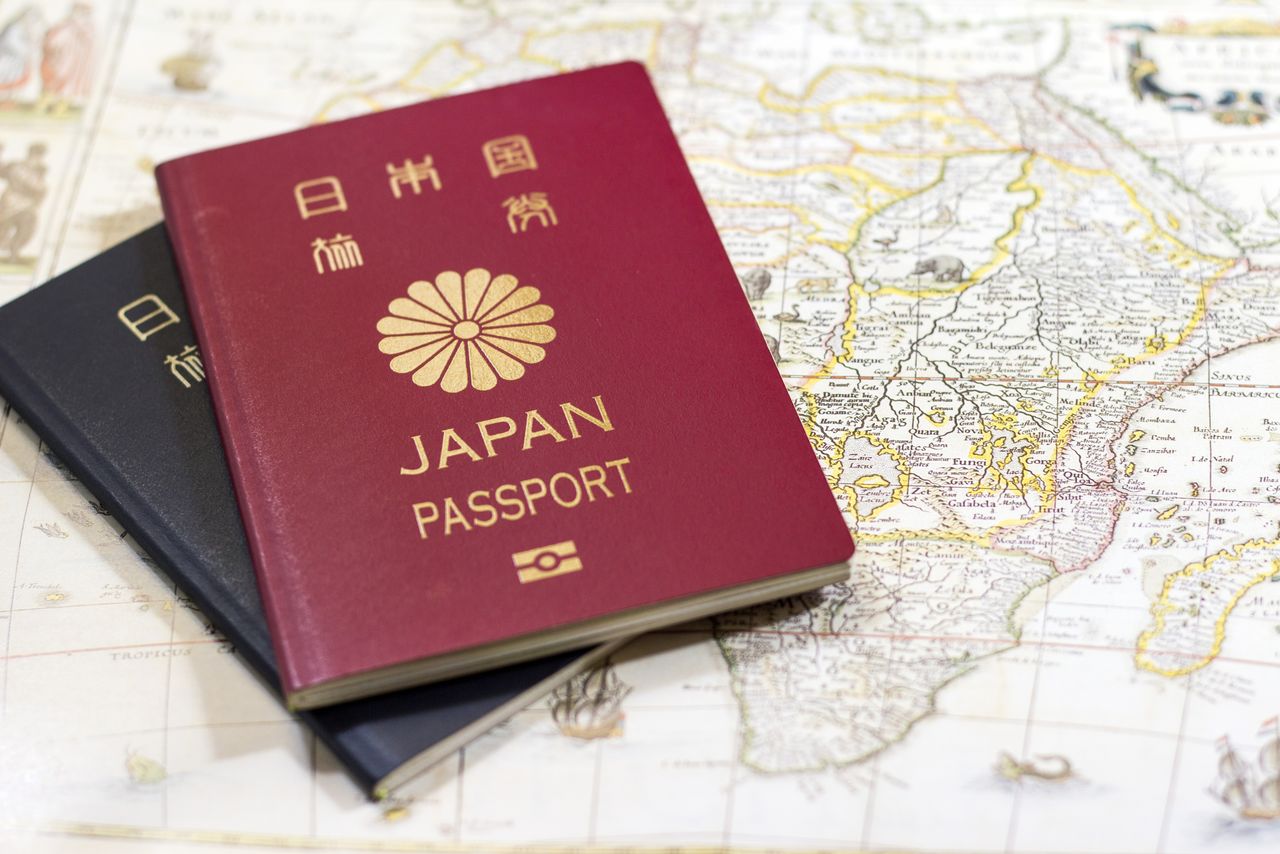
The chrysanthemum-based Japanese Imperial Crest, Yasukini Shrine, Tokyo, and on Japanese passports


Every year, in November, the residents of Tokyo are treated to the Kiku MatSuri flower show, the annual chrysanthemum exhibition featuring a most stunning display of flowering plants propagated by some of Japan’s most skilled gardeners and horticulturalists. Kiku is the Japanese common name for chrysanthemum (originally native to China), and matsuri is the Japanese word for festival. Geographically about 30 degrees north of the equator, Japan’s climate has some affinity with that of Louisiana, with hot humid summers, and occasional frosts and even a rare snow shower in Tokyo. Chrysanthemums appear to grow well in both regions.

A photo of the 1914 Kiku Matsuri (note how the gentleman wears a western hat with Japanese clothing and wooden sandals {geta})

In our country at this relatively same time of the year, we are used to seeing large containers of chrysanthemums, covered with abundant blossoms, offered for sale in displays outside large box stores and nurseries. Yet, they tend to be small blossomed plants, differing from one another usually only in terms of color. At the Kiku Matsuri festivals, many varieties of mums, some of them exotic-looking, are beautifully arranged for viewing in a very formal and traditional setting. Yushima Shrine in Tokyo often serves as a location for these displays.

Kiku Matsuri displays of mums outside Yushima Shrine, Tokyo (above and below)

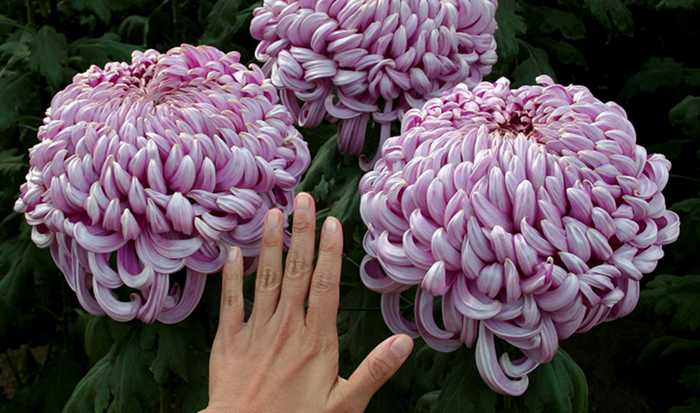
I have strong and clear memories of walking around these remarkable chrysanthemum arrangements with my parents and brothers, and being astonished at the multi-blossomed plants with a wide spread of blooms, extending upwards from a single or a few stems.  One version of this practice is known as Sanbon-Jitate, which features three large blossoms grown from a single stem. Each of the blossoms is symbolic, and represent the heavens, the earth, and humankind (as in the image below). Yet, clearly, all of the chrysanthemums on display at these annual festivals are in one way or another carefully and labor-intensively grown.

Atsumoto Kiku variety of mums (above), grown and featured in Sanbon-Jitate arrangements

The above bonsai, featuring miniature blossoms, provides another example of labor-intensively grown chrysanthemums

The Atsumoto Kiku variety of chrysanthemum (featured further above, and in the photos below) is a classic Japanese form of the plant, with its dense and thick blooms. This variety is propagated in many colors, among which the most beautiful may be the two colored Tomoenishiki variety.

Other examples of the Astumoto Kiku variety are shown below.

Another very attractive variety of Japanese kiku (or mums) is the Kudamono Kiku, known in English by the common name, spider mum, shown in the images seen below.

The propagation and cultivation of chrysanthemums in Japan by skilled gardeners reflects the highly refined aesthetic vision possessed and valued by many of the nations artisans, and by the wider society in which they live and practice their craft. The delicacy and exquisite beauty of many of these flowers, and yet the transitory nature of their flowering, speak to a cultural appreciation for what can be apprehended and enjoyed in the present moment, much like the way in which Japanese people (and foreign visitors) will in great numbers visit shrines, temples, and castle parks in the springtime to view the cherry blossoms.

Seeing these photos reminds me of the diligent care with which many Japanese gardeners, artists, and craftsmen engage in a lifelong pursuit of aesthetic perfection in a single area of practice, whether it is in propagating new forms and elaborate displays of chrysanthemums, throwing clay pots, writing in caligraphy, or seeking to make the most beautiful and durable sword. Though in each case individuals pursue the practice, it always seems to be in the context of a guild or society of fellow practitioners, and always with a significant degree of community awareness of the importance of this or that art for the wider society in which the practice of it is engaged.

Small and edible chrysanthemum blossoms added as a garnish to sashimi (traditional Japanese raw fish)


The Beauty of a Homing Pigeon

A stunning Belgian racing pigeon, sold for $1.9 million


My title for this post may appear ironic or implausible. Yet, there is a long history of careful stewardship of homing pigeons by pigeon fliers and ‘fanciers.’ They breed beautiful, graceful, and powerful birds. Some racing birds are capable of flying a thousand miles, mysteriously finding their way back to their nests at speeds between 60 and 100 miles an hour! Most homing pigeons are not quite in that league.

I first became intrigued with the idea of having a small flock of homing pigeons when I was a Boy Scout in middle school, in Japan. A fellow troop member had a flock of some 20 to 30 birds. I went over to his house after school and watched him release them from his roof-edge loft. Then he would scatter bird seed on the roof and enter the loft, a signal to the birds that ‘dinner time’ had arrived.

Multicolored homing or racing pigeons in a Texas loft

His loft, as my later and smaller ground-level pigeon coop would be, was constructed of parts of old wooden shipping crates, then quite common in port cities like Yokohama. Those crates provided solid structural starting points, generally weather resistant, and adaptable to various pigeon loft configurations. What was left to be found was some mesh screen, some wood with which to fashion a simple door, and a set of dangling vertical rods (the formal name for which I have forgotten) which, resting against a wooden ledge, would allow the pigeons to return to the coop while passing through them, but not able to exit again.

A homing pigeon resembling one of the first in my small flock (note the leg band)

My first two birds, received from my friend, had distinct colorings different from common city pigeons. The female had a tan color and the male’s feathers were an overall charcoal gray and black. With them, I raised several more pigeons having beautiful darker brown feathers with white stripes. This was while the adult birds acclimated themselves to their new circumstances, and gained a new homing point for their flights. If I recall correctly, it takes at least a few months for this to happen.

It seems significant that the Gospels record the Holy Spirit descending upon Jesus at his baptism, as being like a dove (a pigeon relative) rather than – as some might have imagined or hoped – like a falcon or an eagle. Doves and pigeons, the latter offered on the occasion of the infant Jesus’ presentation in the Temple, are symbols of peace, while avian raptors more often figure in war and or civil power-related imagery.

Over the couple of years I kept pigeons, I may have had as many as 8 or 10 in my small coop, some of which I purchased from local Japanese fanciers. I particularly prized the white birds, and saved up paper-route money to buy them. Once, I bought a beautiful one without having a proper transport case with me, and carried it home through the Yokohama streets. After my journey of a mile or two, almost near home, the pigeon in my hands and held in the proper way, suddenly startled me and flew off to its former home!

I never raced my pigeons, though that is a common hobby for those who raise homing pigeons. Transporting the pigeons by vehicle (in vented carry boxes) to an assigned location, they are then released at a particular time, and clocked regarding the speed of their return to their home lofts. How homing pigeons are able to do this is not yet fully understood, though it is thought to involve magnetoreception, a sensitivity to the Earth’s magnetic field.

My time with my pigeons came to both a happy and a sad end. I was examined and proud to receive the pigeon raising merit badge from the Boy Scouts.

And then one morning, some months after this, I went to check on my pigeons before school. I was devastated to find that a cat had gotten in during the night, and I had lost my beloved birds.

As you might imagine, from time to time I muse about having a small flock of these amazing and faithful birds once again.