Author: Stephen Holmgren

I have been an Episcopal priest for thirty eight years, having served in parishes and in academia. My interests include art and theology, liturgy and spirituality, and I love to go sailing whenever I can.

The Beauty of Alex Katz’s Realism

[If reading this by email, please tap the title at the top to open your browser for the best experience.]

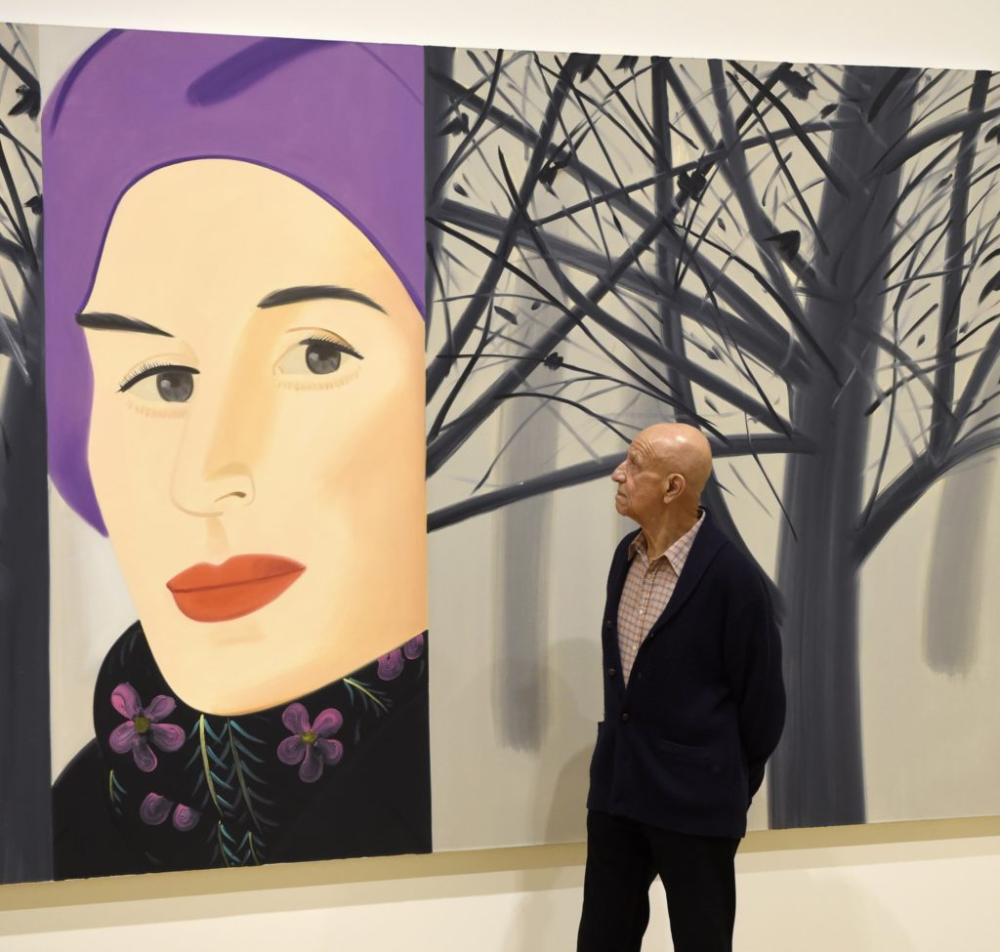
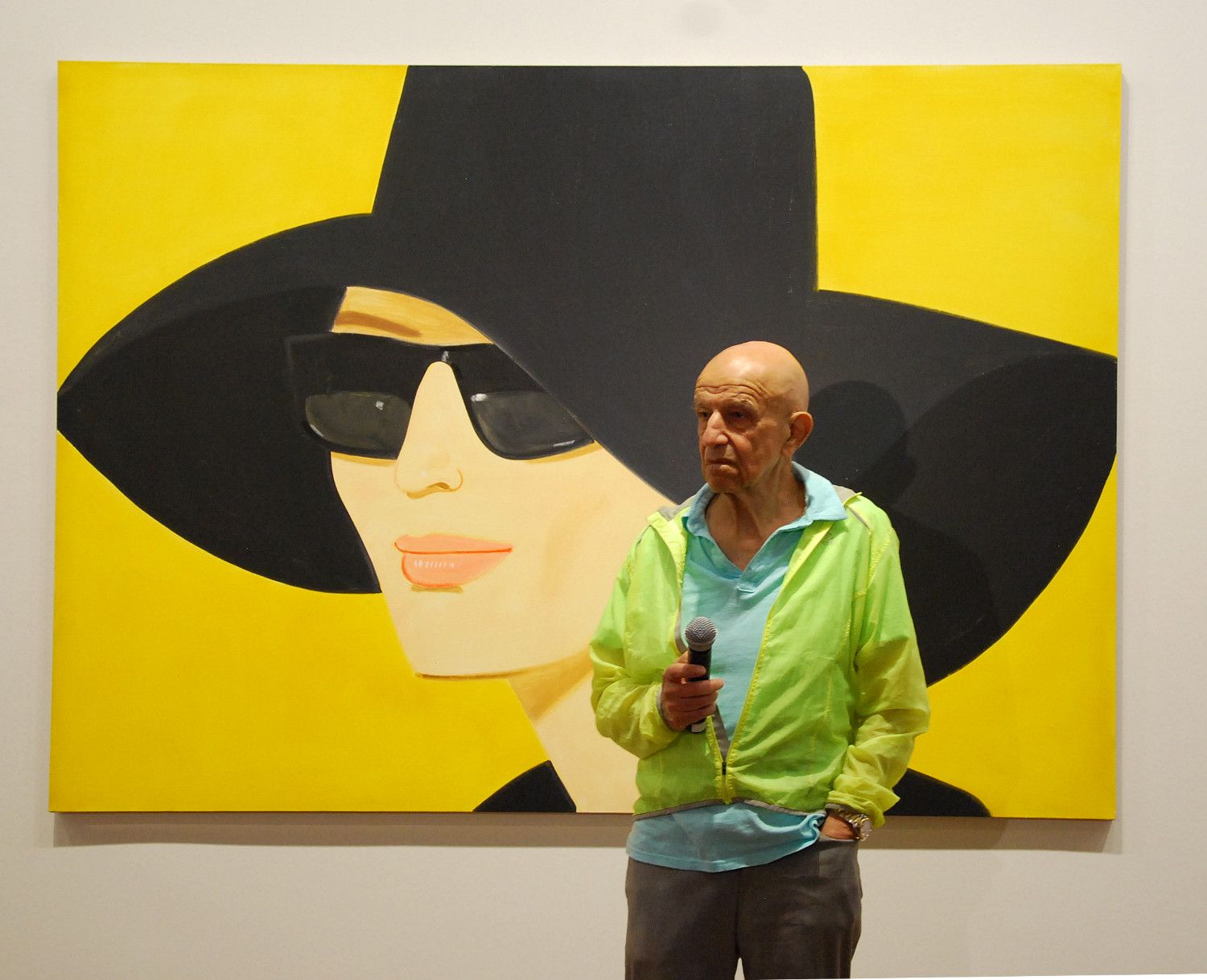
Alex Katz and his portraits of Ada, January 3, above, and of Vivien, in Black Hat, below.


At the age of 95, Alex Katz is still painting! Having created a huge portfolio over decades of work he continues to explore the visual possibilities inherent in capturing a three dimensional world in the two dimensions on large surfaces. He has consistently demonstrated his gifts as a painter by his focus on representational art, and succeeded at this when many of his contemporaries succumbed to the widespread public appeal of abstract art, while others then began to mimic public and commercial print media in what we now commonly refer to as ‘Pop Art.’

Underlying the power of much of Katz’s work is his undeniable ability as a draftsman, the technical term for one who can draw and, in his case, draw well. Yet Katz has said that drawing is not a natural gift, but that it is a skill acquired through practice. “You learn how to draw, you are not born with it, the techniques you have to learn. So it’s a repetitive thing to keep doing it but you finally get good at it, and better.”

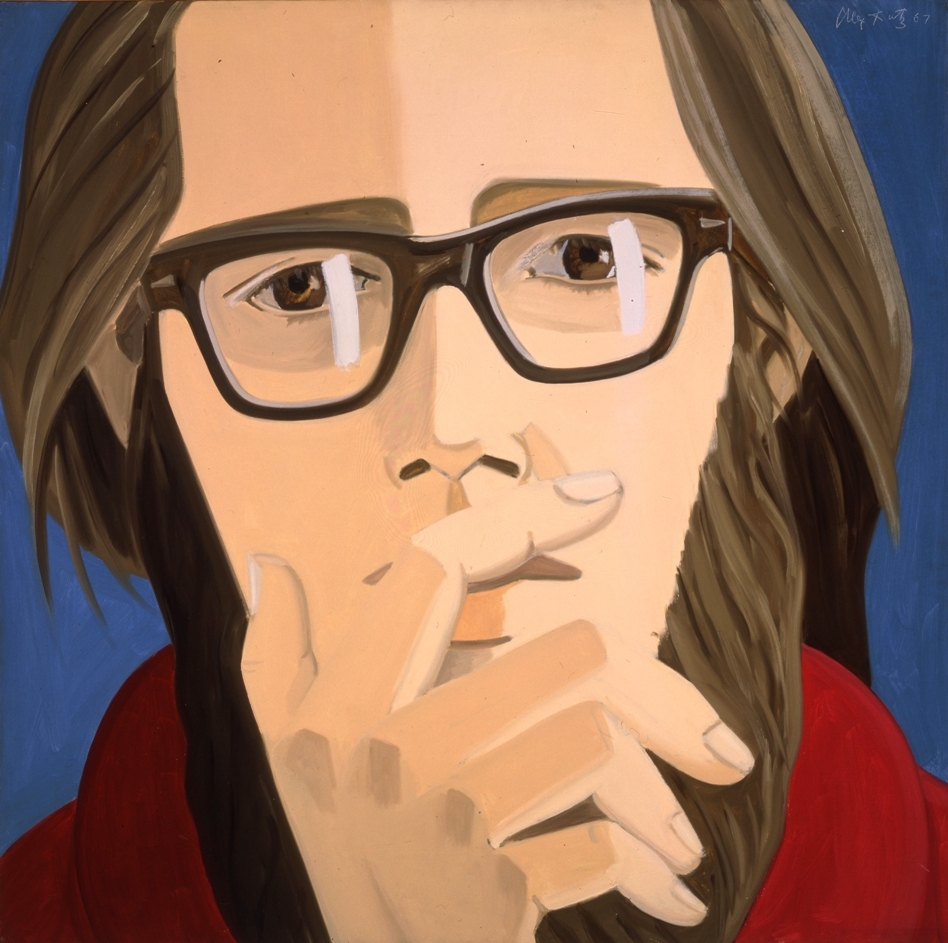
These observations are worth bearing in mind when Katz’ work is considered alongside that of his contemporaries, some of whom employed photography and graphic printing techniques with which to reproduce images that may remind viewers of commercial art such as we find in glossy magazines. Katz’ attainment of proficiency in drawing is demonstrated in his many portraits, not only of his wife, Ada, but also of his relatives and friends.

Blue Umbrella 2, with another portrait of Ada


Alex Katz, Portraits of the artist Philip Pearlstein (above), and the poet, Ted Berrigan

The visual composition of his paintings and prints, as well as the compelling quality of his representation of people and places within them, is evident. Critics commend Katz’ work for his use of color and the relatively ‘flat’ appearance of the way he tends to depict his subject matter. This may account for the apparent affinity between this artist’s paintings and his work as a print maker.

Yet, Katz’ attention to the play of light and shadow upon what he chooses to represent adds a surprising element of three dimensionality to his images. Further, though at a distance many of his paintings seem to employ strong linear demarkation to define the edges between fields of color, the artist is also adept at suggesting texture and depth in a painterly way by using subtle brush strokes that have a shading effect. The following two images help illustrate these points.

Good Afternoon, depicting a favorite summer place to visit

Blue Umbrella 2, detail

In addition to the many solo portraits of Ada and others, Katz enjoyed portraying groups of others in various situations.

Thursday Night 2

Summer Triptych

Alex Katz’s many works of art, and particularly his paintings, have grown on me. At first I tended to undervalue his representational approach to portraying people and places, not taking sufficient account of his attained gifts for drawing in his compositions as well as his sometimes arresting attention to contrasts between light and dark areas. His astonishing longevity coupled with his abiding creativity lead me to return to his work with growing appreciation. His book, Looking at Art with Alex Katz, featuring reflections on many of his favorite artists, poets and architects, reflects the wide range of his artistic awareness and sensitivity. Yet, I also admire his almost single-minded willingness to pursue his own vision for his art despite the challenging influence and popularity of many of his contemporaries’ artwork, which often headed in very different directions.

Alex Katz at work on what may be another portrait of Ada

The Beauty of Making Replicas

[If reading this by email, please tap the title at the top to open your browser for the best experience.]

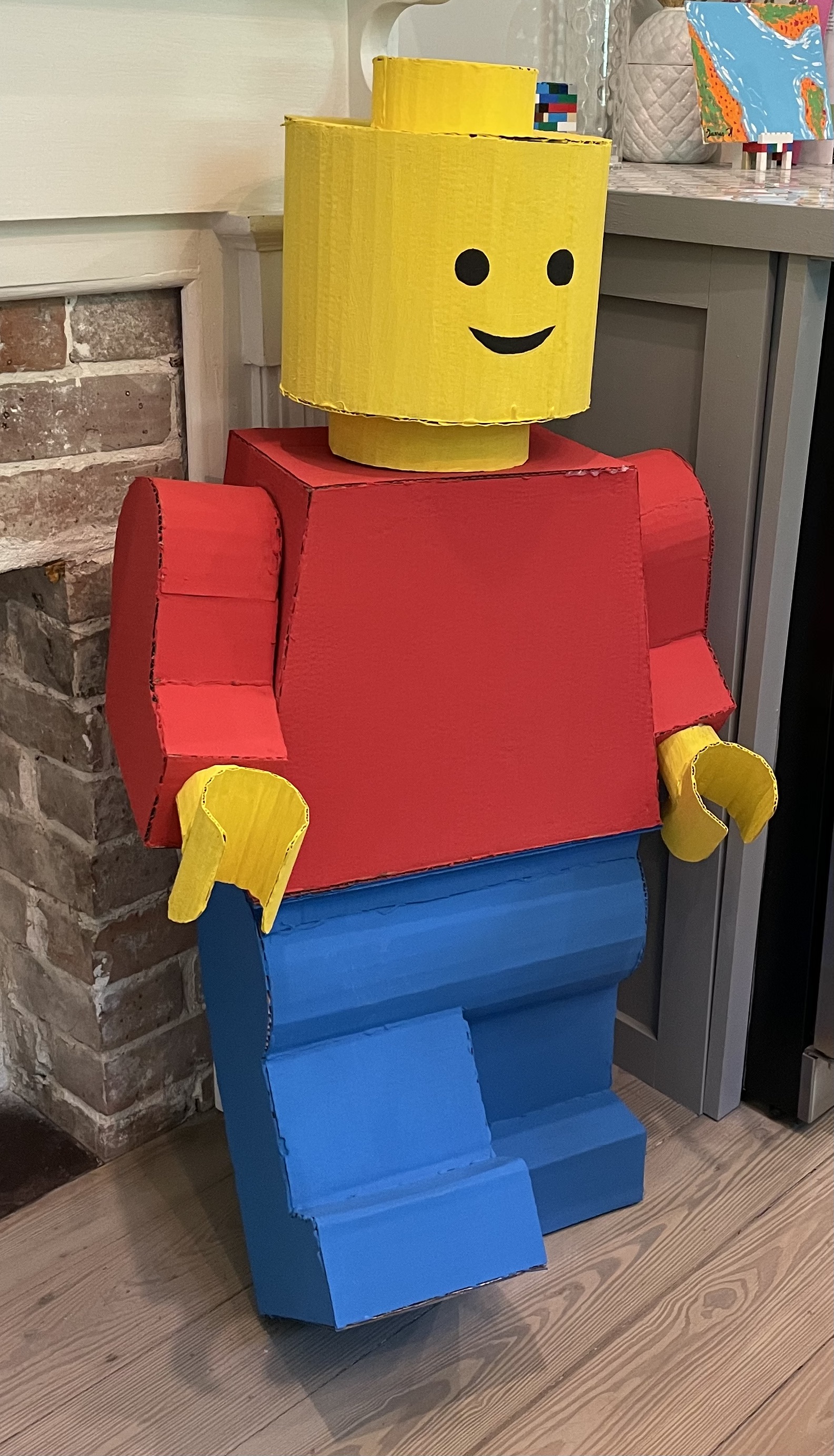
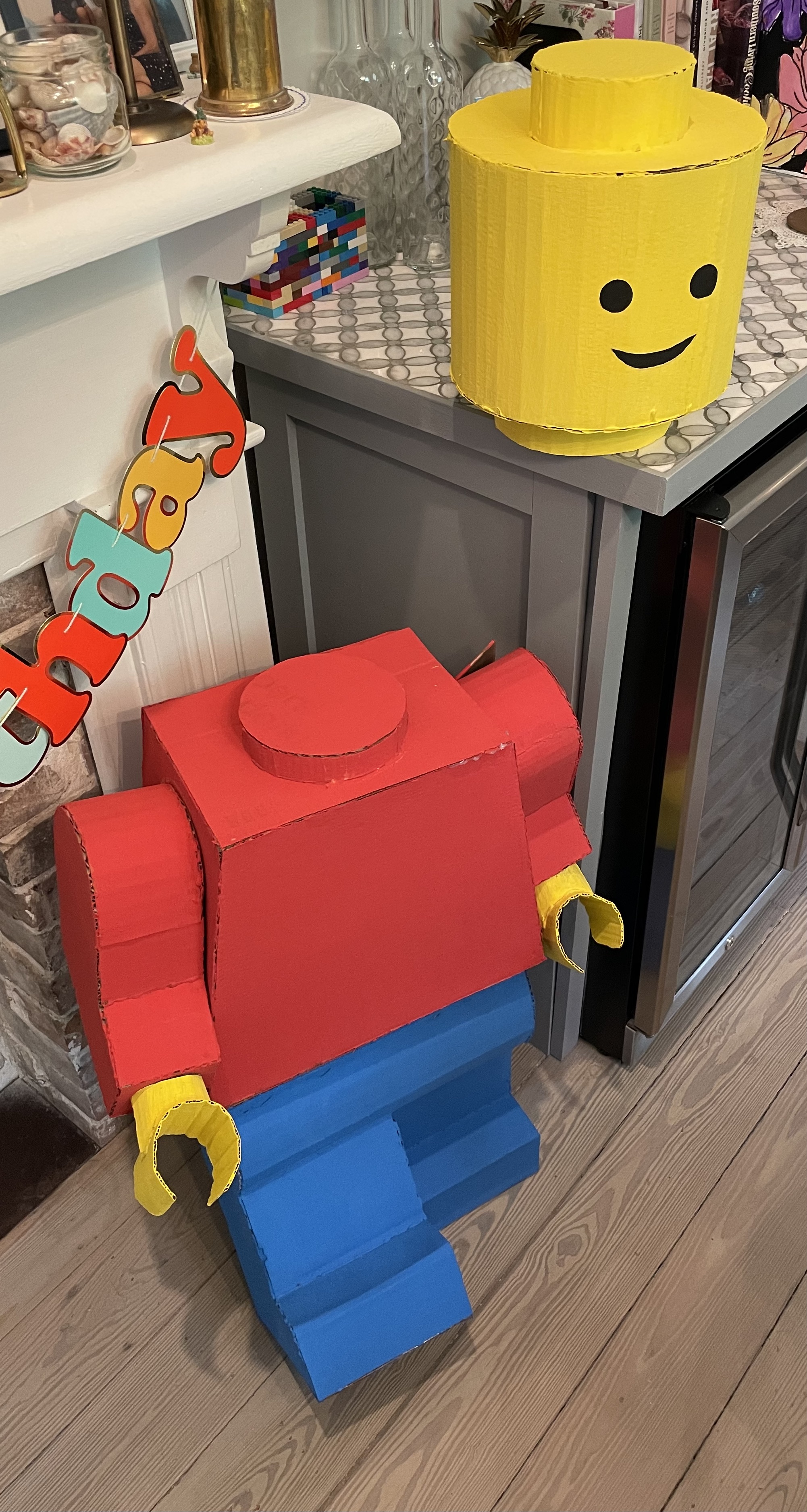
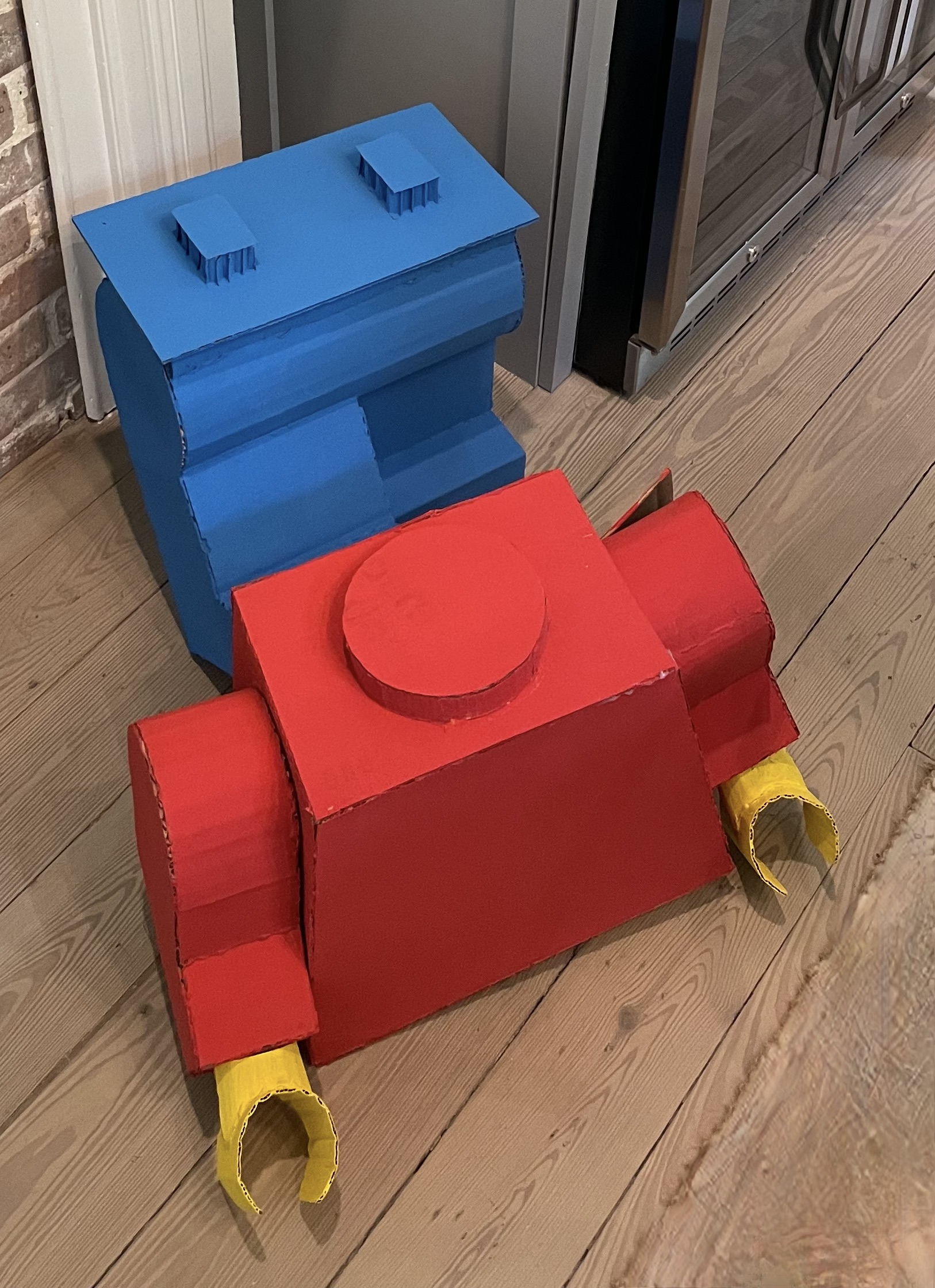
‘Lego Man’ by Anders

Lego Man comes apart…

… just like the original


We have long recognized our son, Anders’, abilities in arts and with woodworking. His gifts have blessed our family in years past. But since becoming a dad, he has offered the same gifts to his children. This year he and our grandson, James, chose the theme, Lego Party, for James’ upcoming birthday. Anders set to work with cardboard, paint, and glue. The result speaks for itself.

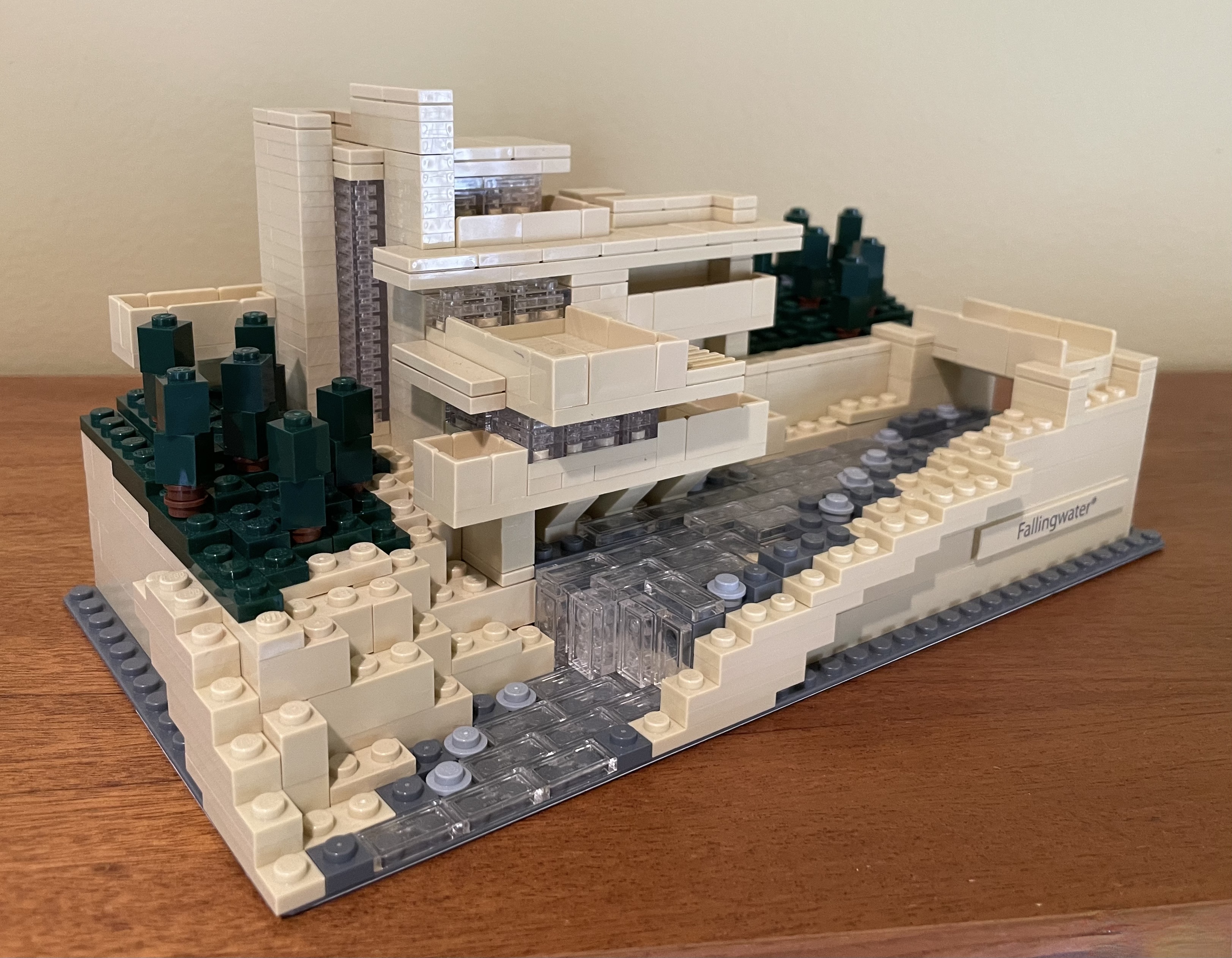
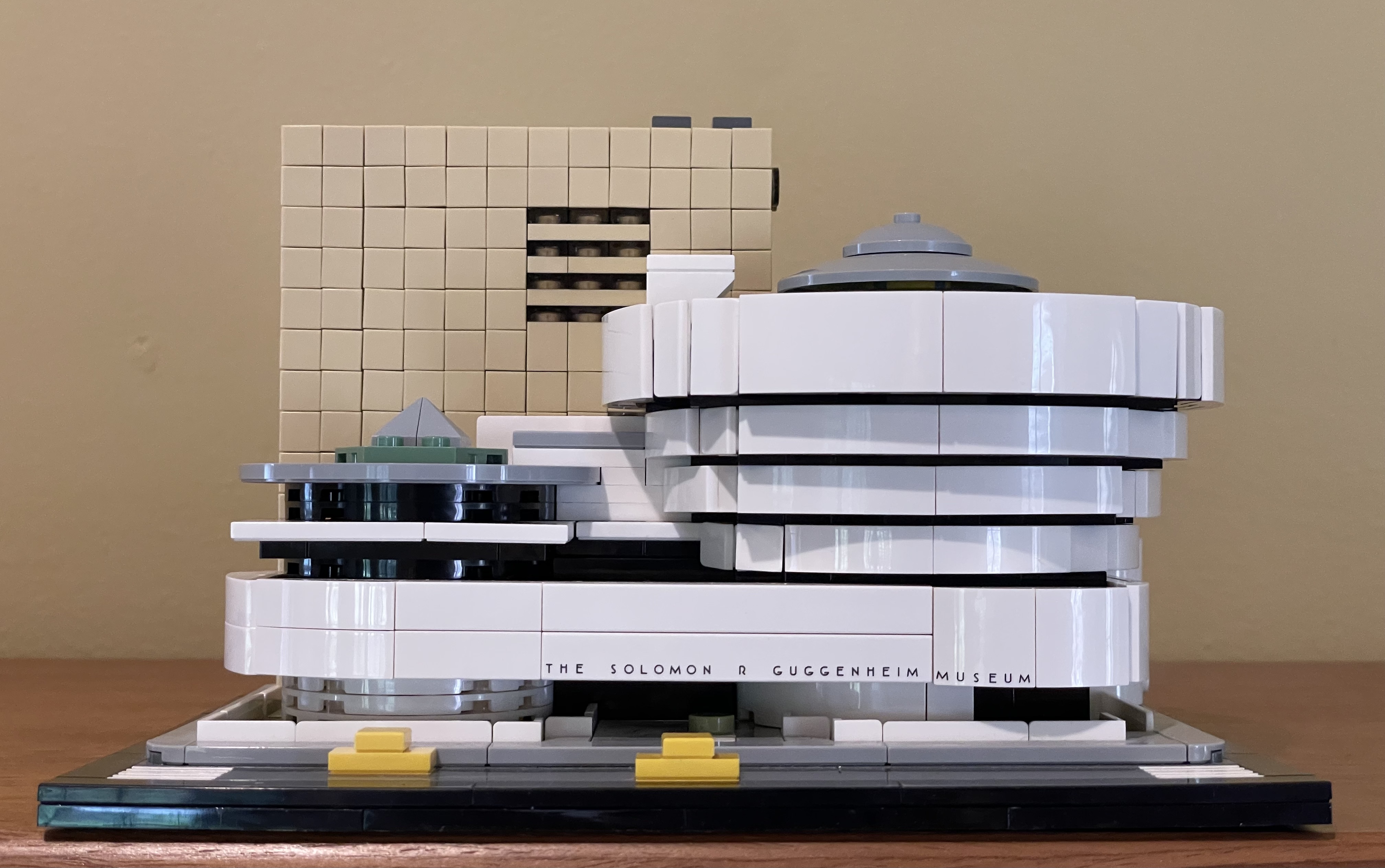
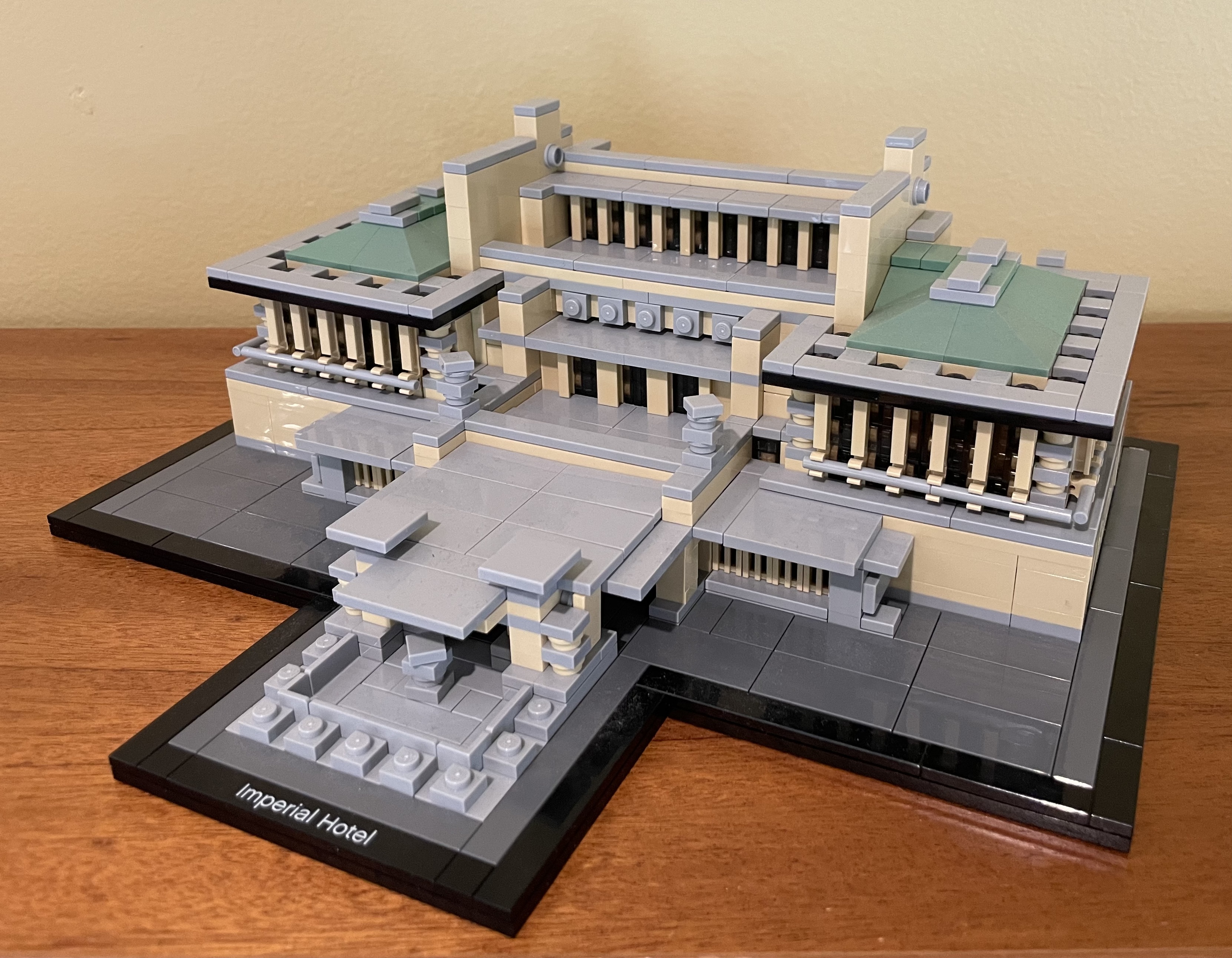
There is something about replicas that help us better see the things after which they are modeled. Lego kits provide an excellent example. Somewhat like the work of artists who draw caricatures, Lego models when completed have the capacity to alert us to distinctive visual features of the originals that have inspired them. I find this to be especially true with the Lego kits of several Frank Lloyd Wright buildings that James expertly helped me to assemble. In particular, carefully putting together these kits has helped me to appreciate the interior spacial organization of these buildings in a way that floor plans and elevation drawings can only begin to suggest.

Assembled Lego model of Frank Lloyd Wright’s Falling Water house

The Guggenheim Museum model

The Imperial Hotel model

Having recently encountered Anders’ Lego Man project, we came away impressed with his ability to scale up accurately a very small original into a centerpiece for a birthday celebration. We are looking forward to the party!


And He Sent Out the Twelve

[If reading this by email, please tap the title at the top to open your browser for the best experience.]

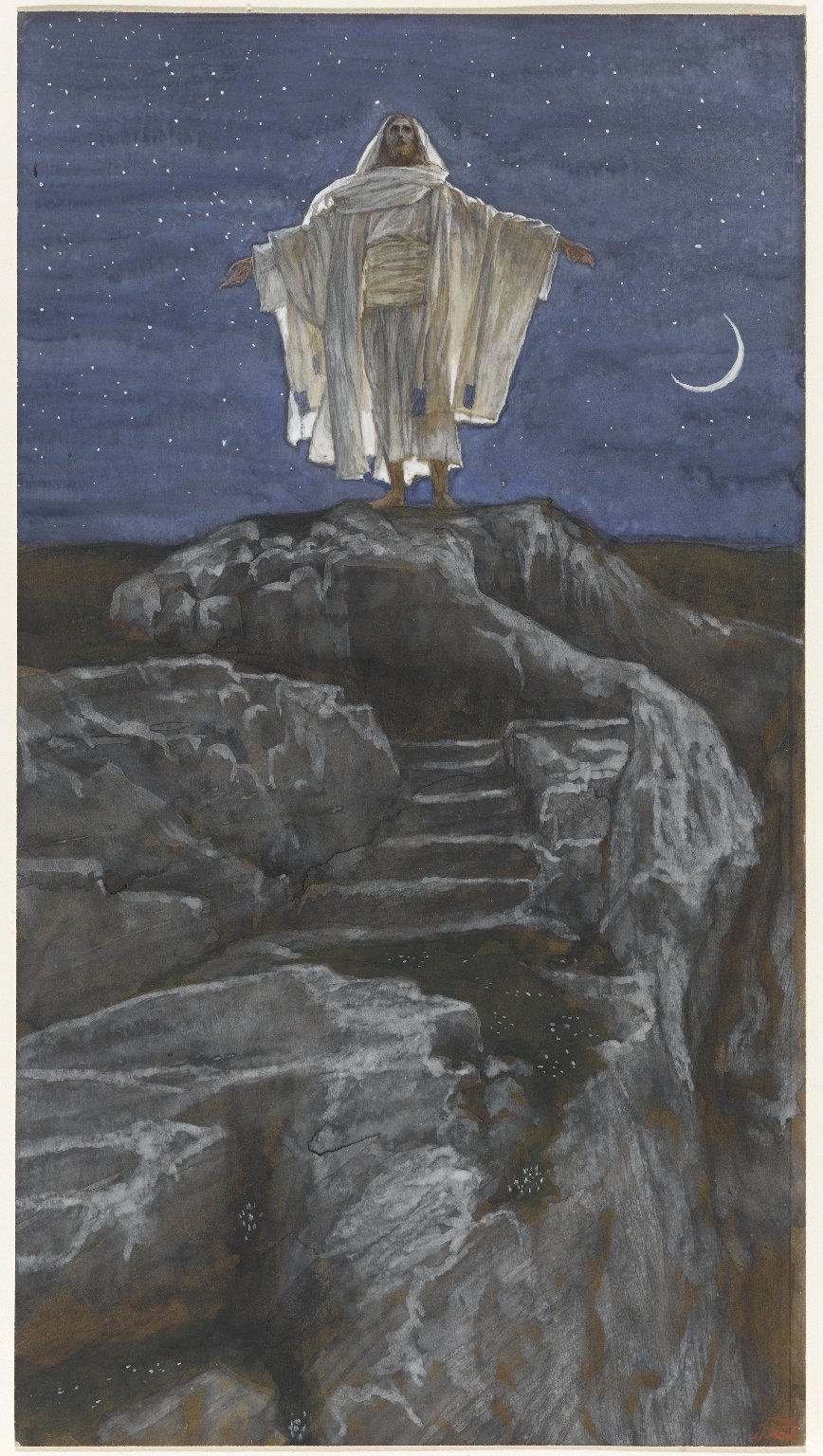
James Tissot, The Ordaining of the Twelve Disciples


As Matthew tells the story, those who are called to follow Jesus are then sent out. Before they go, they are not only commissioned to represent him and his message; he shares with them portion of his remarkable power. According to Matthew, “… Jesus summoned his twelve disciples and gave them authority over unclean spirits, to cast them out, and to cure every disease and every sickness.” They have witnessed his teaching in what we know of as the Sermon on the Mount, which in the first Gospel runs over several chapters. Yet this moment is relatively early in the Gospel narrative, and it should surprise us that Jesus is so willing to let them go out on his behalf, and apart from him.

It is sometimes observed that with certain vocations one never really ‘retires” even if one ceases to be engaged in remunerated employment. This bears witness to the fact that through the calling that underlies all other callings, our baptismal vocation never has a terminus though it may come to greater fulfillment in life. Yet as we go through successive stages in our lives, we may be more open to being ‘sent out’ when we are younger even if we continue to be open to being ‘called’ – and, indeed, called anew – through our later years. My parents were relatively young when they were sent out as missionaries to Japan, living into a pattern that we can recognize in many spheres of our human communities such as in the Peace Corps and in Teach for America. Having myself been more recently retired, I find that I am now less inclined toward the opportunity of being sent out in and for the mission of the Kingdom though I still experience being called.

For reasons like these I tend to think that the twelve whom Jesus first called to be his disciples were  more likely to have been young rather than middle-aged. In that they may have had a greater openness to discipleship formation; they may have had a greater degree of idealism and more energy for a new kind of work; and they may simply have had the prospect of more years ahead with which to share with others what they would perceive and learn about God’s mission in and to his Creation.

It is a subtle point, but this may be why Tissot – following Matthew – portrays what is titled The Ordaining of the Twelve Disciples separately from a depiction of their initial experiences of being called. For this moment in their lives and in their time with him became the occasion of their formal participation in Jesus’ mission, even when they were not in proximity to him and his work. Jesus, as Matthew tells us,  had already gone “about all the cities and villages, teaching in their synagogues and proclaiming the good news of the kingdom, and curing every disease and every sickness.” And having commissioned the twelve, and given them his own authority, Jesus sent them “out with the following instructions: ‘… go to the lost sheep of the house of Israel. As you go, proclaim the good news, The Kingdom of heaven has come near. Cure the sick, raise the dead, cleanse the lepers, cast out demons’.”

When doing this, Jesus not only equips them for the mission upon which they are sent. He also forewarns them of the adversity they are likely to face, adversity which might involve betrayal, trials and flogging, being hated, and even being put to death. This is yet another reason why I tend to think of the disciples, at this point in their lives, as generally younger than older, just as we saw with Caravaggio’s likely portray of Matthew’s calling, last week.

As we get older, some but not all of us may be less open to being sent out, and less inclined to seek such an opportunity. But we should never cease to be open to ‘the call,’ and the varying ways it may be ever-renewed in our lives.


This posting is offered in relation to the readings appointed for Proper 6, Year A, in the Revised Common Lectionary for Sunday, June 18, 2023.

The Call of Matthew

[If reading this by email, please tap the title at the top to open your browser for the best experience.]

Caravaggio, The Call of St. Matthew (1619-1620)


Artists who portray biblical figures and events – particularly those who approach their work in a self-consciously Christian way – often feel free to explore the dynamics of Gospel scenes in a personal and imaginative manner. Some Gospel stories lend themselves to such an explorative approach. Other stories seem to prompt a portrayal of biblical persons and their circumstances in a more literal, text-dependent way.

The call of the tax collector in Matthew 9 provides a good basis for both, especially at the hands of the great early 17th century Italian painter, Caravaggio. Above, we see his painting of The Call of St Matthew, based on what may be a brief narrative self-portrait provided by the Gospel writer about his decision to respond to Jesus’ summons to follow him. Here, Caravaggio displays a fidelity to the biblical story even though the artist depicts the event with figures clothed in garments characteristic of his own time and place.

Several aspects of the painting should attract our attention. For they have the power to draw us into the scene and its place in the broader sweep of what some have called ‘the great story.’ The figure on the right side of the picture is obviously that of Jesus, who with bare feet has entered the place where the tax collector Matthew may be both entertaining himself as well as conducting his business. The room where the group of men are sitting is darkened, a detail that is surely symbolic given how light enters the room from the direction of Christ’s arrival. As Matthew’s Gospel quotes Isaiah (in chapter 5), “the people who sat in darkness have seen a great light, and for those who sat in the region and shadows of death light has dawned.”

Notice also Caravaggio’s sensitive rendering of Jesus’ outstretched hand. It is highly reminiscent of Michelangelo’s nearby Sistine Chapel ceiling panel depicting God’s act of creation and gift of life to Adam through a similarly depicted outstretched arm.

But which of the sitting men portrays Matthew? The answer is by no means obvious, and may be intentionally ambiguous. A ready candidate is the gentleman facing us, seated in the middle of the group, who appears to point to himself. By his gesture, he seems to ask in response to Christ’s summons, “Do you mean me?” His pointing hand, a visual echo of the pointing hand of Jesus, and the look on his face call attention to himself. Further, this bearded man bears a resemblance to the older-looking Matthew depicted in Caravaggio’s, The Inspiration of St Matthew (shown below).

Yet, another possible candidate for an identification with Matthew in this picture is the young man portrayed on the left side of the painting, whose head is bowed over and who is focused on some coins before him. In support of this identification is the presence of two other young men sitting at the opposite end of the table, whose gaze is fixed upon the unexpected visitor. By contrast with all three, Caravaggio may instead have intended to portray the mature Matthew in his accompanying The Inspiration of St Matthew painting, as well as in his The Martyrdom of St Matthew, both of which are located in the same church in Rome as The Call painting. For in the ‘call’ image, a young man is invited to leave his dubious present occupation and circumstances in order to follow Jesus, which seems most fitting. This invitation leads to a subsequent application of the maturing man’s talents in support of God’s mission, centered on the One whom he would come to recognize as the Messiah. As Caravaggio may have depicted in this scene, the potential consequences of accepting Jesus’ summons may just be dawning upon the young man.

Caravaggio’s paintings display a remarkable skill in rendering people and places in a most realistic way. His paintings are also highly regarded in recognition of his flair for dramatic pictorial compositions that feature a strong contrast between light and dark. He might have applied these skills primarily in the pursuit of fame and material wealth. Such intentions are likely to have numbered among his goals. Yet, Caravaggio’s work exhibits an undeniable spiritual sensitivity. This makes it most appropriate that we can view and appreciate his three St Matthew paintings together in a church in Rome rather than in a museum.

The Beauty of Trinitarian Life

[If reading this by email, please tap the title at the top to open your browser for the best experience.]

Brother Robert Lentz, Holy Trinity


Here is a Robert Lentz icon-styled painting that blends an historic approach to portraying the Holy Trinity with an inclusion of modern astronomical imagery. The facial depiction of the first two members of the Holy Trinity are presented in a very traditional way, while the images of the galaxies very obviously depend upon telescopic photography.

The most significant truth expressed within this composition by Lentz is that all three members of the Holy Trinity were and are involved in Creation, both in terms of the primal event, as well as in an ongoing divine presence within the whole of the cosmos, a theme found in John’s Gospel as well as in Paul’s letter to the Colossians among other biblical texts.

If there is any drawback to Lentz’s composition it is one shared with just about every Trinity-themed painting of which I am aware. To put it plainly, Lentz depicts the members of the Holy Trinity as ‘them,’ as objects of our subjectivity, as divine persons we contemplate, hold in regard, and with whom we contemplate or entertain relational involvement.

What this approach lacks, perhaps of necessity in a two dimensional medium, is an expression of the equally important and sometimes non-experiential truth that we are also the objects of the divine subjectivity, and how – after Baptism – we are inseparable from involvement with and in the Trinitarian life of God.

The simplest way to help make this evident can be found in all six of the Eucharistic Prayers in The Book of Common Prayer, as well as in many of the Collects. We pray to the Father, through the Son, in the Holy Spirit. And so, whether we are conscious of it or not, we are to live as we pray, to the Father, through the Son, in the Holy Spirit.

We should no longer try to depict the Holy Trinity through two dimensional imagery, much less with diagrams, or with objects like a three-leaf clover. For in each of these cases, we render the grace-filled context of our new and relational, post-Baptismal, life as if the grounding source for our being, and our life in Christ, was somehow external to us, and something which we might still have a need to approach.

Yet, through Christ and in the Holy Spirit, the Father is now in us, and we are in him. He is closer to us than we are to ourselves. This is the great mystery, the paradox, and the beauty of Trinitarian life in Christ after Baptism.

The Mystery of Pentecost

[If reading this by email, please tap the title at the top to open your browser for the best experience.]

Giotto, Pentecost (Scrovegni (or Arena) Chapel, Padua)


Once again we turn to Giotto, who helps put a ‘human face’ on a supernaturally-charged event. As we observed with his fresco depicting the Ascension of Jesus, Giotto’s Pentecost painting evidences the influence of medieval and Eastern Orthodox iconography (e.g., the gold-leaf halos). Yet, his work distinctively moved away from a primary absorption with portraying aspects of the eternal so as to display an appreciation for daily human life and activity. One mark of this is his employment of architectural perspective in his composition of the scene. In addition, each of the faces in this Scrovegni Chapel fresco are recognizably distinct from one another, with some of them reflecting a genuine regard for individual personality and temperament.

Here we can also notice Giotto’s attention to the biblical text. This scene portraying the gift of the Holy Spirit follow’s Luke rather than John. In John’s Gospel, on the evening of the day of the discovery of his Resurrection – the Risen Jesus enters the private room where the disciples are hiding fearfully behind a locked door. He breathes on them his Holy Spirit and implies that his Ascension has already occurred.

Luke, as Giotto faithfully portrays, describes the disciples being gathered together 50 days after the Resurrection on the Jewish feast of Pentecost. As Luke reports in the last two verses of his Gospel, after witnessing Jesus’ Ascension the disciples “worshiped him and returned to Jerusalem with great joy, and were continually in the temple blessing God.” Luke then commences his second book, Acts, with a parallel account of Jesus’ Ascension, and the selection process of Matthias as a replacement for the traitor, Judas. Having returned joyfully to Jerusalem, the disciples have been visiting the Temple daily, where they blessed and worshipped God in a public setting.
Luke’s Pentecost assembly differs markedly from John’s account of the fearful disciples on the afternoon of the first day of the new week, forty nine days before. For on Pentecost, into their midst and visibly upon their heads, came the Holy Spirit filling each of them with its power and presence.

Many visitors to Jerusalem for the great feast became aware of what had occurred, and were perplexed, marveling at the unexpected spectacle of how each of them heard the men from the north country speak in their own separate and distinct languages. The legacy of the tower of Babel had been overcome.

Peter quickly helped account for what was happening in light of Scriptures familiar to those gathered, which were fulfilled in and through Jesus’ death and resurrection. God was now doing a new thing, yet something promised long before.

How contrary to the spirit of Jesus’ ‘high priestly prayer, in John 17, and to the witness to the power and presence of the Holy Spirit at Pentecost, is our frequent experience of the Church throughout the world in our present day. Despite moving words centered on unity and a commonality of mission that we hear and recite in the baptismal rite, we are more often confronted with evidence of difference and division among Christians of varying denominations and cultural backgrounds. Perhaps it is because we let our own concepts of our mission and ministries take precedence over our awareness of and belief in the primacy of Christ’s continuing mission and ministry.

And so, we forget to marvel at what came about through the embodied presence of God. A divinely appointed and inspired country rabbi, who had recruited 12 unlikely followers, met persecution and a tragic death at the hands of a corrupt earthly empire. Yet, in the power of the Holy Spirit, over the course of a few centuries he transformed a sizable portion of the known world into the New Israel, his beloved community and family.


The Beauty of the Ascension

[If reading this by email, please tap the title at the top to open your browser for the best experience.]

Giotto, The Ascension of Jesus


The way that we envision the Ascension of Jesus is largely shaped by Luke’s Gospel, as well as by his book of Acts. As the Church’s liturgy observes and celebrates Luke’s presentation of this event, it occurs on the fortieth day after Easter Sunday, which always falls on a Thursday. With diminished weekday worship attendance in most churches, the feast of the Ascension is often observed on the following Sunday, on the Seventh Sunday of Easter. As Luke’s Gospel records the event,

[Jesus] led [the disciples] out as far as Bethany, and lifting up his hands he blessed them. While he blessed them, he parted from them and was carried up into heaven. And they worshiped him and returned to Jerusalem with great joy, and were continually in the temple blessing God.

In Acts, Luke presents a fuller account of

… the day when he was taken up…, [when] he presented himself alive to them… [H]e said to them, “… you will receive power when the Holy Spirit has come upon you, and you will be my witnesses in Jerusalem and in all Judea and Samaria, and to the end of the earth.” And when he had said these things, as they were looking on, he was lifted up, and a cloud took him out of their sight. And while they were gazing into heaven as he went, behold, two men stood by them in white robes, and said, “Men of Galilee, why do you stand looking into heaven? This Jesus, who was taken up from you into heaven, will come in the same way as you saw him go into heaven.”

Giotto beautifully portrays Jesus’ Ascension in a fresco found within the Scrovegni Chapel (also known as the Arena Chapel) in Padua, Italy. Giotto’s approach to painting proved pivotal in the transition within Western art from dependence upon Eastern Christian iconographic imagery toward a greater realism and sensitivity to ‘ordinary’ human life in this world. Unlike medieval and eastern Christian icons, which tend to be absorbed with expressing dimensions of the eternal, Giotto portrays a real event in the temporal lives of real people. Nevertheless, Giotto’s Ascension is clearly also attentive and faithful to the supernatural elements of the Luke-Acts descriptions of Jesus’ Ascension.


It has been observed that in these modern times, among the most neglected aspects of traditional Christian doctrine is a proper understanding of Jesus’ Ascension. This may be due to a contemporary proclivity to read the New Testament as if its significance is primarily ethical, while shying away from engagement with the metaphysical and the miraculous elements of the Gospel narratives.

A collect from The Book of Common Prayer helps us appreciate why the Ascension of Jesus continues to be a major feast of Our Lord on the Church’s calendar:

Almighty God, whose blessed Son our Savior Jesus Christ ascended far above all heavens that he might fill all things: Mercifully give us faith to perceive that, according to his promise, he abides with his Church on earth, even to the end of the ages; through Jesus Christ our Lord, who lives and reigns with you and the Holy Spirit, one God, in glory everlasting. (BCP:226)

Jesus ascended not so that he might withdraw from the world, making room as it were for the mission of the Holy Spirit. Instead, his Ascension marked his transition from being present at one time and in one place, to becoming present in all places all the time. Before his death, there were countless places where he was not. After his Ascension, there is no place where he is not. From being with only some of those who lived during his earthly years, he is with all of us now. And from having a particular presence and context for his ministry, Jesus in his Ascension transitioned to a universal presence for his continuing mission, so “that he might fill all things.”

Alleluia. Christ is Risen and Ascended! And in the Holy Spirit he is present everywhere and to all who might welcome him into our lives.


Resurrection Finds Us

[If reading this by email, please tap the title at the top to open your browser for the best experience.]

Stanley Spencer, Resurrection, Tidying (1945)


Stanley Spencer’s church cemetery visitors find themselves surprised by being found! They experience being found through a resurrection encounter with those who have gone before.

The resurrection of Jesus is not usually something we go looking for. The risen Jesus comes and finds us. This is the pattern we see in so many of the stories of Jesus’s first resurrection appearances to his friends and followers. The disciples and others don’t go looking for him except at first, when they go to the tomb. And even then, they are seeking Jesus’ mortal remains rather than his risen presence. He comes and finds them, just as he finds us, often in the context of fellowship. And like them, we are always surprised.

We don’t find the resurrection just as we don’t find God. Neither God nor the risen Jesus are lost, even if we may be. And so, we are found by both, and then we find ourselves as persons who have been found. This is instructive, for it corresponds with our apprehension of and encounter with beauty, which we also misleadingly credit ourselves with ‘finding.’ Really, beauty finds us. For our perception and recognition of beauty depends not on a ‘power’ that we possess to pursue and attain it, but rather on our ability to receive and recognize what is, and what is given. The same is true in our apprehension of and encounter with the grace of the resurrection.

Motivated by our sense of need, we seek to find something or someone to fill the hole at the center of our lives. Though it is a challenge for many of us, being open to being found by the Risen Lord not only meets our need, but can fill us with great joy.

Alleluia. Christ is Risen!


Stanley Spencer’s, Resurrection, Tidying, is one of a large series of paintings based on the theme of Resurrection, which span the years of his mature work.

Through Death Into New Life

Peter Koenig, Christ as Second Moses


A perennial theme in the New Testament and in Christian reflection concerns how we are called to live through death into new life. When we die to our worldly attachments, and their hold upon us, we open ourselves to a greater life beyond. As the Christ our Passover canticle from The Book of Common Prayer puts it,

Christ being raised from the dead will never die again; *
death no longer has dominion over him.
The death that he died, he died to sin, once for all; *
but the life he lives, he lives to God.
So also consider yourselves dead to sin, *
and alive to God in Jesus Christ our Lord.

Peter Koenig’s painting, centered on themes within this Easter season, expresses this motif in a particularly evocative way. Just as Moses led the people of Israel through the waters of death into a new covenant life with God, so Christ leads us through and to the same. This happens for us liturgically in the rite of Baptism. As Koenig explores this idea, he not only depicts Christ parting the waters but also shows the water emerging from the Lord’s side. This reflects John’s account of how blood and water came forth from Jesus’ side on the cross, but also suggests how water from the rock in the wilderness brought life to God’s people during Israel’s wandering toward the Promised Land. The “Thanksgiving over the Water,” in The Prayer Book Baptismal Rite articulates these ideas in a compact way:

We thank you, Almighty God, for the gift of water. Over it the Holy Spirit moved in the beginning of creation. Through it you led the children of Israel out of their bondage in Egypt into the land of promise. In it your Son Jesus received the baptism of John and was anointed by the Holy Spirit as the Messiah, the Christ, to lead us, through his death and resurrection, from the bondage of sin into everlasting life.

We thank you, Father, for the water of Baptism. In it we are buried with Christ in his death. By it we share in his resurrection. Through it we are reborn by the Holy Spirit.

Notice how, in the painting at the top, Peter Koenig portrays the crucified and risen Christ before what appears to be a darkened tomb filled with people. As we hear Isaiah quoted in Advent, “The people who walked in darkness have seen a great light; those who dwelt in a land of deep darkness, on them has light shone.” Christ leads the way, and makes possible our journey from the darkness of death into our new covenant life with God.

The two side paintings that accompany Koenig’s Christ as Second Moses artfully yet powerfully suggest the drama within the Exodus account of Israel’s Red Sea Crossing. The chariots of Pharaoh succumb to the waters of death while Israel is safely delivered on dry ground to their Covenant encounter with God at Sinai. Another canticle from The Prayer Book puts it well:

I will sing to the Lord, for he is lofty and uplifted; *
the horse and its rider has he hurled into the sea.
The Lord is my strength and my refuge; *
the Lord has become my Savior.
This is my God and I will praise him, *
the God of my people and I will exalt him.
The Lord is a mighty warrior; *
Yahweh is his Name.
The chariots of Pharaoh and his army has he hurled into the sea; *
the finest of those who bear armor have been drowned in the Red Sea.
The fathomless deep has overwhelmed them; *
they sank into the depths like a stone.
Your right hand, O Lord, is glorious in might; *
your right hand, O Lord, has overthrown the enemy.

Most of us have the blessing of not facing the equivalent of Pharaoh’s army. But we do have an enemy. And our enemy is the darkness and death of loving self and this world, even to the contempt of God, when God bids us to love him, even to the contempt of self and this world. When we live as we pray, to the Father, through the Son, and in the Spirit, we experience new life.


The above painting is Peter Koenig’s, Christ as the Second Moses, also known as The Rainbow Resurrection (used by permission of the artist). The final paragraph contains a paraphrase of St. Augustine concerning how we love God, from The City of God (Book 14, chapter 28).

What does it mean to touch – and be touched?

[If reading this by email, please tap the title at the top to open your browser for the best experience.]

An image provided by the Jesuits of Ireland


Many of us are sacramental Christians. For us, what is tangible —that is, what we can touch— is often our doorway to the intangible. And so, practical material things having spiritual meaning can become our doorway to immaterial things that are spiritual and mystical.This is especially true in the Eucharist, but also in Baptism. In these rites, we touch, and are touched.

This is one reason why Jesus was so influential in the lives of the original 12 disciples. To see him, to touch him, and to hear him speak ~ these had been critically important experiences for them. Even before his death, they began to sense that knowing Jesus was in some way an entrance into deeper truth and greater life. But this also made it harder for them to deal with his empty tomb, when they had to face his apparent disappearance and absence. With their loss of immediacy with Jesus, fear was added to their sadness. Then, they hid behind locked doors in the crowded Holy City. What should we to make of their experience in that room, especially as we hear about it in John’s Gospel?

Visitors to this blog know I like to find images from art to help us hear the Gospel. This is because artists can help us see and notice things that might otherwise escape our attention. And yet, works of art can also sometimes lead us to mishear what a Gospel reading actually says. This is especially true of the annual day when we hear about Thomas and the other 10 disciples who are hiding after Jesus’ death. As always, we need to engage this Gospel with discernment. For it is really about all of the doubting disciples, as well as about how they all came to believe. Unfortunately, most paintings of this event mis-portray what John actually says, and what he doesn’t say. The classic picture is the one by the famous painter, Caravaggio. He portrays Thomas not only peering closely at Jesus’ side; but also shows him with his fingers poked into Jesus’ spear-wound. (Note also the one above.)

Why are such images misleading? It’s because paintings and labels like these lead us to overlook or misperceive some very important details within the story. For though Thomas has been invited to touch Jesus, John does actually describe him as doing so. (Also, note how Bible editors sometimes steer readers toward certain conclusions by editorial headings before paragraphs.)

First, we find ten of the disciples hiding behind locked doors out of fear. Consider how Jesus had more than once told them to fear not! And at the Last Supper, he had already given them ‘his peace.’ Rather than remember what Jesus had shared with them, as well as his miracles, the remaining disciples have succumbed to fear. Even though Mary Magdalene had already told them she had seen the Lord. How can these facts be squared with any other description than that the ten behind locked doors are doubting, as well?

Second, observe how John describes Jesus’ initial appearance to the ten, when he finds them fearful and doubting. At first, they do not recognize Jesus. It is only after he shows them his hands and his side that they then recognize him, and rejoice at his presence. When they see him, then they believe, and not before. And so, once again, Jesus leaves them with his peace, and now gives them his Spirit.

Notice what the others say to Thomas when he then arrives: “We have seen the Lord” ~ the very same witness Mary had earlier given to them, but without having had much prior effect. Thomas naturally replies to them by saying something like this: ‘Look, I haven’t see him, like you guys have. And so, just like you, I won’t likely believe until I see him, as well.” Thomas’ statement to them therefore does not need to be heard as him setting the conditions for his belief. It may simply be a practical prediction of fact, opening a doorway to his and their later way of experiencing Jesus sacramentally. And, as N.T. “Tom” Wright observes, in John’s Gospel Thomas was the first to call Jesus “God.”


See John’s Gospel, chapter 20, for this story in its wider context. To see the homily/sermon on which this text is based, please click here.