If reading this by email, please tap the title at the top to open your browser for the best experience. Then, clicking individual pictures will reveal higher resolution images.
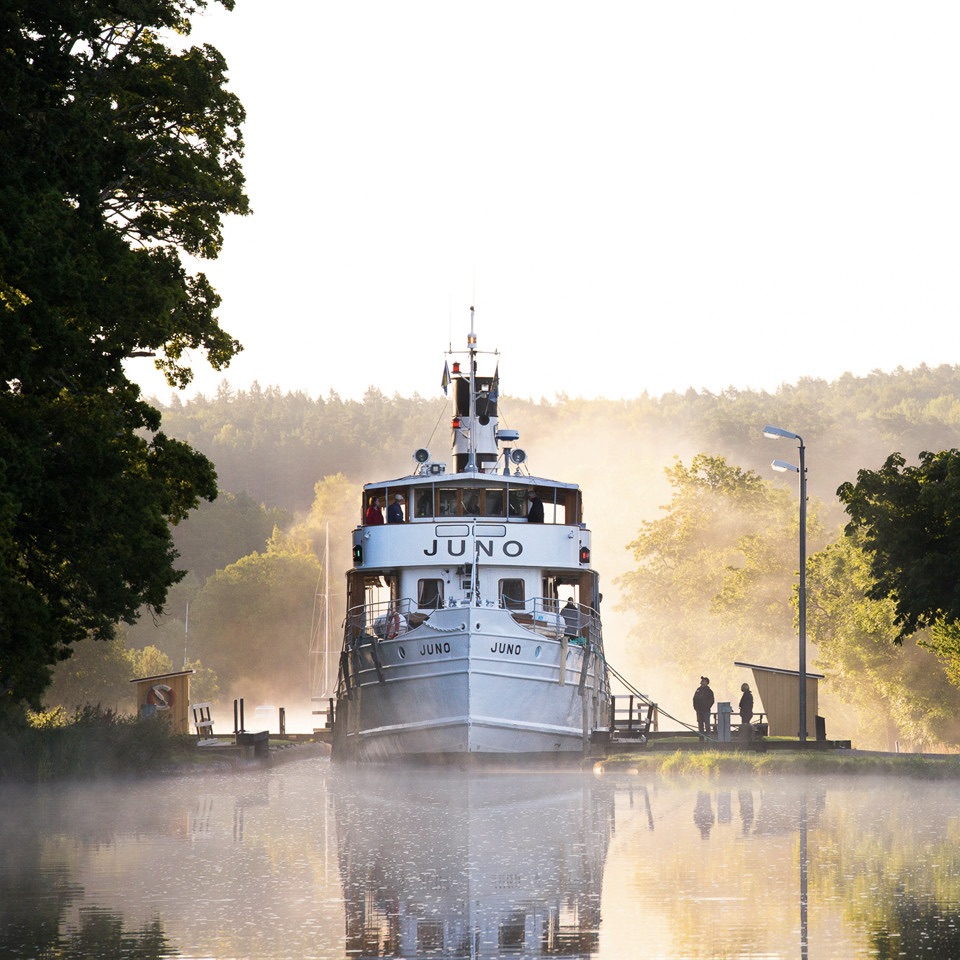
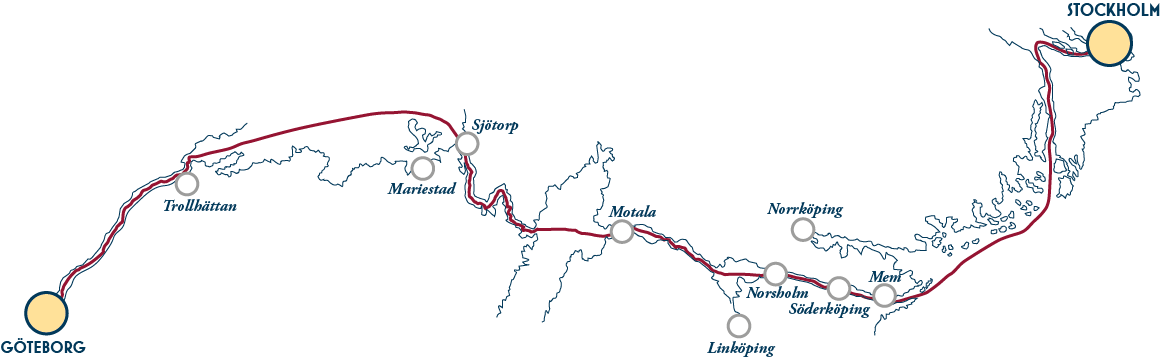
Did you know that it’s possible to book a safe and enjoyable overnight passage on a small ship that was launched over 150 years ago, in 1874? The M/S Juno, built for and still ‘sailing’ on largely inland waters in Sweden, is the oldest registered passenger-accommodating ship in the world. At about 100 feet in length, and with only 24 cabins, she is tiny compared to the grand vessels now being launched for the cruise industry. Not well-suited for ocean crossings, the Juno is perfect for her comparatively short runs between the Swedish ports of Gothenburg and Stockholm. Her usual route takes her from salt water through inland canals and lakes, and then through salt water again to the Stockholm archipeligo of islands and the Baltic Sea.
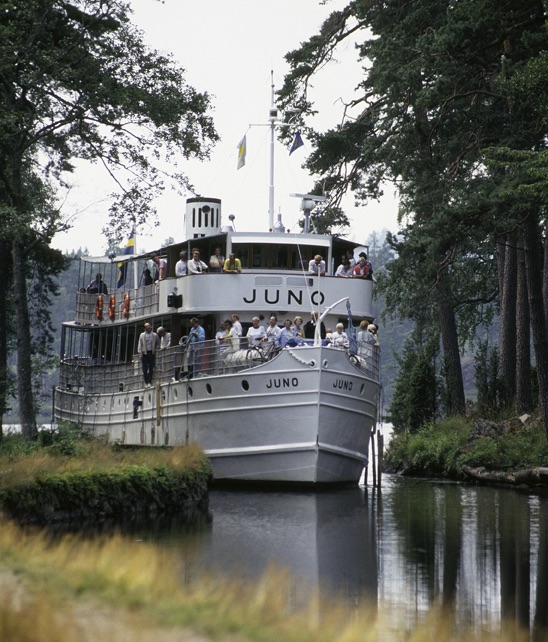
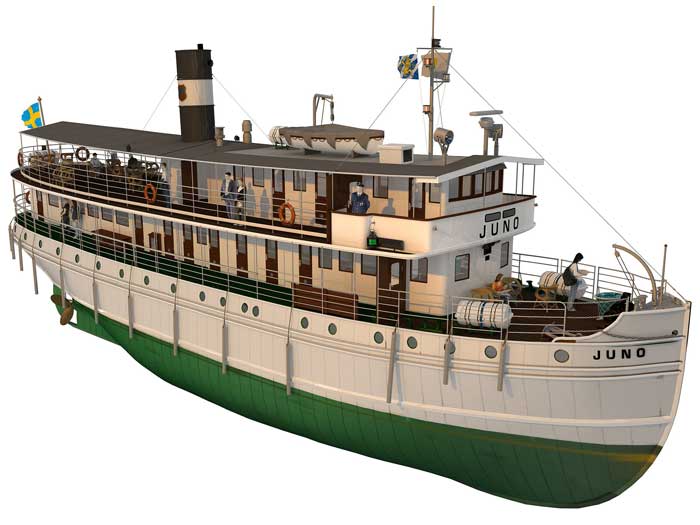
Originally, the Juno’s superstructure containing her bridge, lounge and dining room, as well as some cabins, was significantly smaller when the little ship served to convey freight as well as travelers. But these days, after a century and a half of service, her mission continues as a passenger vessel. Her age and small size, as well as her historic purpose, account for the fact that modern day voyagers need to be prepared for limited amenities such as shared restrooms.

Her principal route takes her through canals and locks, as well as inland lakes, up and over the lower Swedish peninsula, with the highest point on the journey reaching a remarkable 300 feet above sea level.


I love Juno’s diminutive size and her classic lines that feature an upturned stern. Her bow line, with a vertical sheer that is now being rediscovered in boat design, is particularly appealing to me, being the skipper of a vintage 24 foot sailboat displaying a similar profile. I would enjoy a berth in one of Juno’s small cabins, resembling as they do old time railway carriage compartments. I think that Martha and I would appreciate the intimacy of sailing with a relatively small number of fellow passengers as well as the proximity of the up-country scenery along the route.


My great-grandfather, August Anders Holmgren, hailed from the northern seaside city of Sunsvall on the Baltic coast of Sweden. He emigrated to America in 1893, sailing most likely from Gothenburg, via Liverpool, to Montreal, and then by train to the Midwest just as many other Swedes had done before him. Perhaps my great-grandfather reached his ocean-going ship in Gothenburg via the Juno or one of her sister ships, sleeping on the floor of the dining room as many deck passengers did in the era when the Juno was still in freight service.
Given this personal history, I am sure that a short voyage on the Juno would prove to be a particularly nostalgic experience for me. My family connections with coastal Sweden, and my own experience of having crossed the Pacific Ocean five times by ship, help me to appreciate why I am so drawn to the Juno and the opportunity – some day, I hope – to sail on her.
Background note: I remember my surprise at encountering Cracker Bay, a 150 foot long private yacht (50% longer than Juno) with three decks above her water line, which one summer cruised into Round Harbor, Charlevoix, MI, from the Great Lakes. That year, as a vessel registered in the Cayman Islands, Cracker Bay was ‘manned’ by a family with young children and a crew of four or five. She took on $20,000 worth of gasoline supplied by a tanker truck parked near the fuel dock at which small craft like mine received a comparatively few gallons at a time. One of the children on Cracker Bay rode a bike over to the dock where my 15′ West Wight Potter was berthed, on which I was cruising for a couple of weeks. He marveled at the diminutive size of my boat, saying he wished he had one just like her!

 Toward Beauty