[If reading this by email, please tap the title at the top to open your browser for the best experience. Then, clicking individual pictures will reveal higher resolution images.]
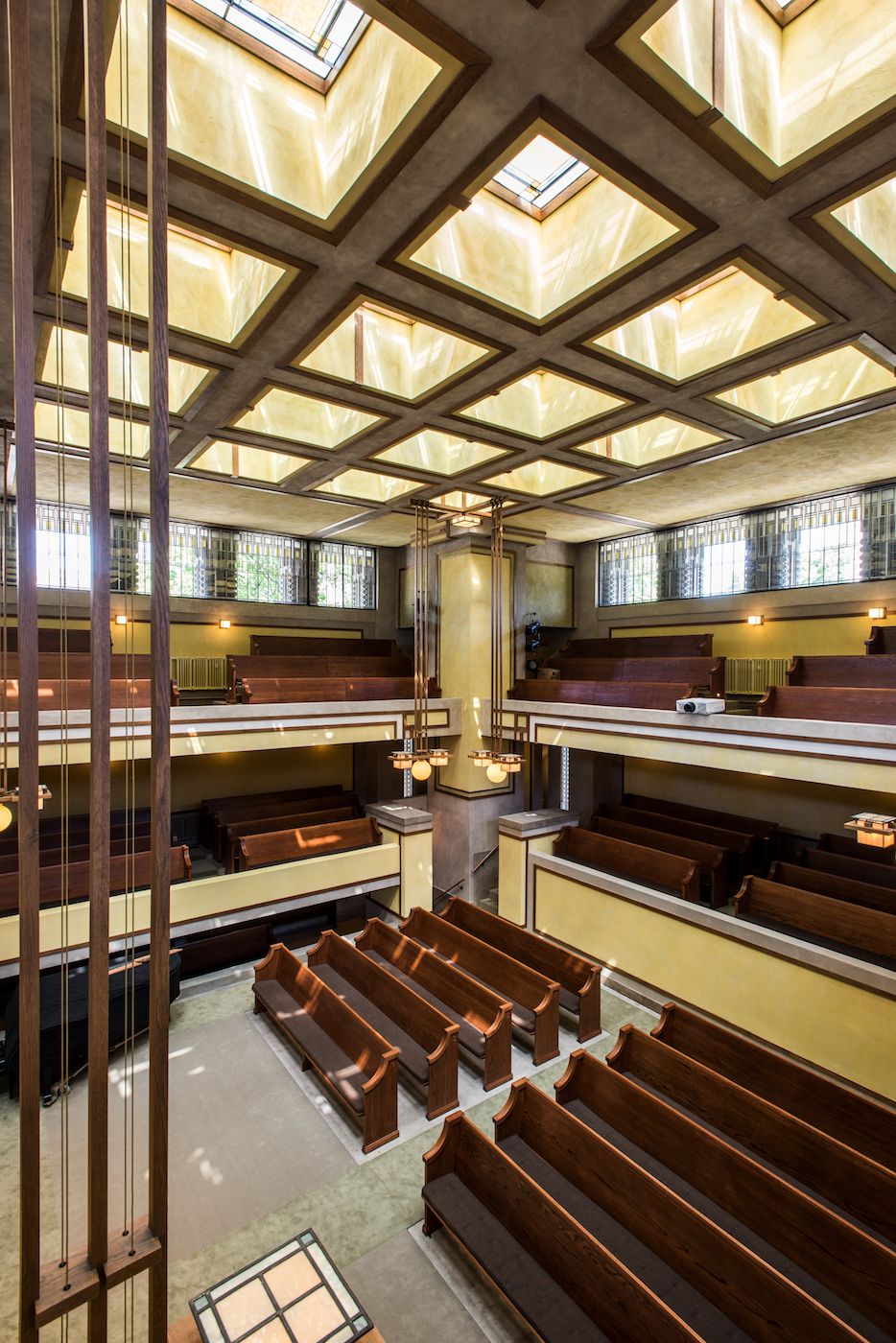
Chicago’s Unity Temple, by Frank Lloyd Wright (1908)
In a time of darkness, we seek light from above.
A couple of days after offering my reflection on “A Desecrated Beauty,” I heard the terrible news from the Holy Land with its many troubling details.
The desecration of beauty can rightly be seen as a violation of what is sacred. If we can associate this idea of violation with the greedy despoliation of an old-growth forest, or the thoughtless pollution of a tranquil waterway, what greater offense against the wisdom and love of the Creator exists than atrocious barbarity unleashed upon human persons made in the image of God?
Human warfare, whether justified on occasion through acts of reasoning that seek some form of the good, or abhorred as an absolutely unconscionable choice, always involves some evil. Hate does not reflect our better nature, unless perhaps it is hate for the ultimate source of all that is not of God. Yet, paradoxically, we so often embody evil through violent acts against people whose views and behavior we refuse to recognize, not only by damaging things that other people value, but by hurting them, even fatally, as well.
In spite of this, following Augustine and Aquinas, I accept the premise that acts of violence can in some circumstances and on some occasions be justified as acts in the service of justice and even of love. The view that the defense of other human beings can be a justifiable expression of our love for our neighbor, even if that defense may involve the use of force and acts of violence, is and has been a formative strand of biblically informed Christian moral reasoning. Therefore, I offer no judgment upon Israel and its leaders who are presently involved in responding militarily to the large-scale acts of terrorism against their nation and people.
Whether for decisions made in haste, or acts undertaken after due deliberation, Israel’s leaders and people will have occasion to judge themselves, their reasoning, and what they have done or not done. History, and others not directly involved, will certainly call them to account.
People impacted by the present conflict may find it difficult or even impossible to seek ‘light from above.’ Yet, in the midst of darkness, those who seek beauty, goodness, and truth, will best be prepared to receive that light, and the healing that comes with it. For the divine light is not absent and can be found.
Whether the divine presence is known and named as revealed, or unknown, or even secretly sought, Christ is the center of all that exists, the one in whom all things hold together, and through him God’s Providence is enacted. Evil will be vanquished, and all that is good or open to God’s redeeming guidance will be brought by him to its intended fulfillment and bliss (see Colossians 1:9-20).
For “the people dwelling in darkness have seen a great light, and for those dwelling in the region and shadow of death, on them a light has dawned” (Isaiah 9:2 & Matthew 4:16).


 Toward Beauty