Worship

Annunciation to Mary

Luc-Olivier Merson, Annunciation (1908)


Having begun this series with a painting of the Annunciation to Joseph by Alexander Ivanov, and having featured Luc-Olivier Merson’s painting of the Flight into Egypt, I would like to offer Merson’s less-well known but equally memorable depiction of the Annunciation to Mary.

Unlike many Annunciation paintings, Merson does not focus on the encounter between two personal beings. His Annunciation is not colored by the dynamics of male-female interaction, a theme that so absorbs our present culture, and implicit in some historical treatments of the moment. Here we have a feminine or an androgynous angel, who instead of being face-to-face with Mary, hovers above another building.

I think Merson depicts the moment just after the angel shares the news with Mary, and before she sings her magnificat. Mary is wrapped in white, suggesting her purity, but also prefiguring the burial shrouds with which her son will be wrapped. Her gaze is focused on the unlikely stem of lilies she finds on the ground, outside a dark open doorway through which she emerges. Both symbolize resurrection. Doves grace the air in the foreground, a traditional way to suggest the presence and activity of the Holy Spirit.

Rather than gesturing toward Mary, the angel points to the heavens! Here we find a spiritual sign in accord with the Gospel. It depicts a call. The scene symbolizes what God is doing, and what God wants to accomplish.

May our Lord, who was and is, and is to come, bless us and our loved ones during this holy time.


For a more extended reflection on Merson’s Annunciation painting, some comparison with the rather different Annunciation image on the Santana Abraxas album cover, and in relation to the Gospel for the 4th Sunday of Advent, click this link: Advent 4 B 14 copy_for 2022 blog_PDF

[If reading this by email, please tap the title at the top to open your browser for the best experience.]

Celebrating the 12 Days

Brother Martin Erspamer, OSB


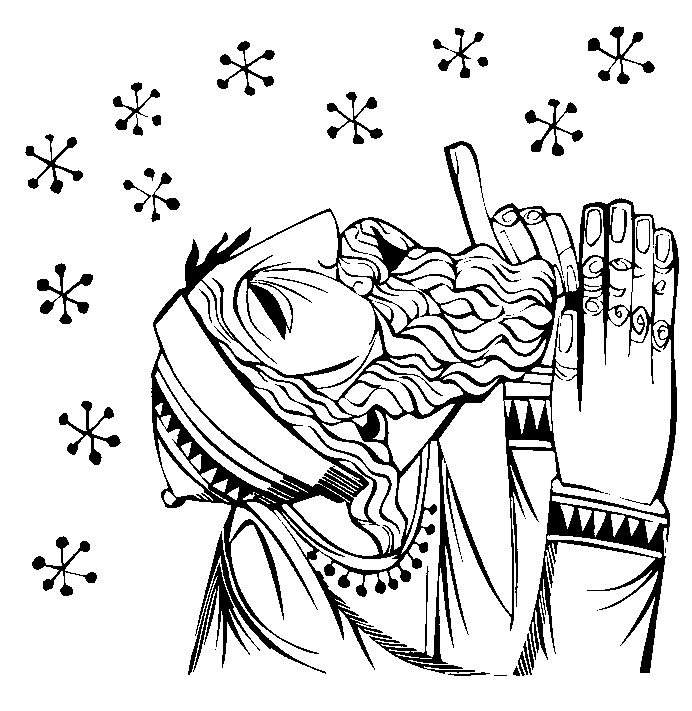
Having driven through my neighborhood yesterday and seeing two Christmas trees already put out onto the road edge, I am once again mindful of how the traditional Church calendar observes the Feast of the Incarnation of our Lord, or Christmas, for a full 12 days. I am therefore especially appreciative of the above image by Brother Martin Erspamer.

Martin Erspamer is a member of the Benedictine community at St. Meinrad’s Abbey in Indiana. His evocative black and white prints, sometimes referred to as ‘clip art,’ have been widely used on worship bulletins and in Sunday school materials.

The popularity of his images, and their widespread use in media such as Sunday bulletins, should not lead us to devalue the beauty of his handiwork, which evidences a studied sensitivity to medieval imagery as much as it does to the possession of a modern graphic artist’s temperament.

I especially like his image of Abram counting the stars, based on Genesis 15 (below). The image and its theme arises from God’s challenge to Abram to go out into the dark of the night and count the stars in the heavens – if he can. For one of God’s promises is that, while Abram is despairing of being without an heir, he will eventually have as many descendants as he can count the stars in the night sky.

Genesis presents three covenants between God and Abram, in chapters 12, 15, and 17, each of which is relevant to our celebration of these 12 Days of Christmas. In various ways, God promises Abram many descendants, a new land for him and those that would follow, and that through him a blessing would come to all the people of the world. This third promise, fulfilled for us in the child born in Bethlehem, is the most relevant to our observance of this holy time of the year.

From Psalm 147:

1 Hallelujah! How good it is to sing praises to our God! * how pleasant it is to honor him with praise!

2 The LORD rebuilds Jerusalem; * he gathers the exiles of Israel.

3 He heals the brokenhearted * and binds up their wounds.

4 He counts the number of the stars * and calls them all by their names.

5 Great is our LORD and mighty in power; * there is no limit to his wisdom.

6 The LORD lifts up the lowly, * but casts the wicked to the ground.


For those able to visit the Abbey, St. Meinrad’s has an exhibit of art by Brother Erspamer in the Archabbey Library Gallery until January 15:

Flight to Egypt

Luc-Olivier Merson, Rest on the Flight to Egypt, 1880


“Now when [the wise men] had departed, behold, an angel of the Lord appeared to Joseph in a dream and said, “Rise, take the child and his mother, and flee to Egypt, and remain there until I tell you, for Herod is about to search for the child, to destroy him.” And he rose and took the child and his mother by night and departed to Egypt and remained there until the death of Herod. This was to fulfill what the Lord had spoken by the prophet, ‘Out of Egypt I called my son.’” (Matthew 2:13-15)

With the threat of the impending massacre of the Holy Innocents, the feast day for whom we commemorated yesterday, the Holy Family of Mary, Joseph, and Jesus, fled to Egypt. Matthew’s Gospel briefly refers to this event. Their journey to Egypt, and eventual return, recapitulated Israel’s historic sojourn to and escape from that land and the tyranny of Pharaoh.

Luc-Olivier Merson’s painting, above, depicts in a romantic 19th century way a moment on the family’s journey.


Here is a link to a prior blog posting with a more extended reflection upon Merson’s painting: https://towardbeauty.org/2020/01/13/light-in-the-darkness/


The Holy Innocents


Peter Bruegel the Younger, The Massacre of the Innocents, late 1500’s


During these twelve days commemorating biblical events that we associate with Christmas, we return to another winter image from Peter Bruegel, in this case probably by Peter the Younger. Like the Bruegel painting of the Census at Bethlehem, shared with you previously, this is another favorite of mine.

Today, December 28, is the day on which the western Church remembers the event recorded by Matthew in his Gospel (2:13-18), wherein the wicked King Herod turned his fearful wrath upon the children of Bethlehem in Judea.

Herod was rightfully insecure about his throne and reign, having been propped up in the role by the Romans and others, and apprehensive about potential rivals. Imagine his anxiety when apparently wealthy astrologers arrived from a foreign land bearing reports regarding one who would be born “King of the Jews,” especially when these visitors expressed a desire to worship this anticipated newborn.

Once again we marvel that in our calendar for the 12 Days of Christmas the Church should commemorate those, like St. Stephen and the Holy Innocents, whose death gave tribute to the Lord of Life and the King of kings.

From the Book of Common Prayer:

“We remember today, O God, the slaughter of the holy innocents of Bethlehem by King Herod. Receive, we pray, into the arms of your mercy all innocent victims; and by your great might frustrate the designs of evil tyrants and establish your rule of justice, love, and peace; through Jesus Christ our Lord, who lives and reigns with you, in the unity of the Holy Spirit, one God, for ever and ever. Amen.”


[If reading this by email, please tap the title at the top to open your browser for the best experience.]

Glory to God in the Highest

James B. Janknegt, Glory to God in the Highest


Luke’s Gospel portrays the birth of Jesus in the context of literal good news for the poor and those who are outcast. In Luke’s telling, angels announce the arrival of the Messiah to shepherds sleeping out in the fields or in caves with their flocks. As we shall note soon, Matthew casts these events in a more worldly and political context, with visiting Magi from the East, and Herod’s anxiety about a challenge to his propped-up throne.

Jim Janknegt is a painter whose thoughtful and creative engagement with the Scriptures I have admired for years. He paints in a style that some might describe as ‘primitive.’ Yet, in my view, he is an artist whose work often displays a highly sophisticated engagement with multiple dimensions of the biblical texts that shape our worship in both this and in other liturgical seasons. As the above image suggests, he also demonstrates a sensitive and wide-ranging color palette.

On this third day of Christmas, which is also the feast of St. John, the Apostle and Evangelist, I am grateful for Janknegt’s portrayal of the shepherds receiving and rejoicing over the witness of the holy angels.

As we sing in a favorite hymn:

Angels we have heard on high,
singing sweetly through the night,
and the mountains in reply
echoing their brave delight.

Gloria in excelsis Deo.

Shepherds why this jubilee?
Why these songs of happy cheer?
What great brightness did you see?
What glad tidings did you hear?

[repeat chorus]

Come to Bethlehem and see
him whose birth the angels sing;
come, adore on bended knee
Christ the Lord, the newborn King.

The Hymnal 1982, #96

To learn more about the artist, James B. Janknegt, and his work, click this link: http://bcartfarm.com/index.html

[If reading this by email, please tap the title at the top to open your browser for the best experience.]

… On the Feast of Stephen

Music and Illustration related to the Christmas Carol, Good King Wenceslas, from 1913


For our brothers and sisters ‘across the pond’ in the U.K., today is Boxing Day. The name comes from the tradition of giving boxes or baskets of Christmas gifts to family, friends, and employees, on December 26. Today is also the feast of St. Stephen, my patron saint. We have a familiar Christmas carol associated with this day.

From Wikipedia:

“Good King Wenceslas” is a Christmas carol that tells a story of a Bohemian king who goes on a journey, braving harsh winter weather, to give alms to a poor peasant on the Feast of St Stephen. During the journey, his page (or helper) is about to give up the struggle against the cold weather, but is enabled to continue by following the king’s footprints, step for step, through the deep snow. The legend is based on the life of the historical Saint Wenceslaus I, Duke of Bohemia (907–935).

The fact that the Church, in its historical liturgical calendar, would remember the first of the martyrs on the second of the 12 Days of Christmas bears some reflection. Here, below, is a panel of a compelling contemporary triptych painting by the gifted British painter, Peter Koenig, depicting the martyrdom by stoning of Stephen (see Acts, Chapters 6 – 7). Against the backdrop of the spires and walls of an image of the new Jerusalem come down from heaven (in the upper left), we find Stephen holding a chalice of the ‘the blood of the new covenant’ outside the walls of the ‘old city,’ the world in which we presently live.


Annunciation to Joseph

Alexander Ivanov, Joseph’s Dream


Here I begin sharing a series of images for the 12 days of Christmas, including two prior events as well as some that follow the Nativity. Christmas Day, Dec. 25, is officially the first of the 12 days. Yet, as we anticipate the holy season ahead, it is appropriate to remember and consider what prepared the way for the miracle we are soon to celebrate.

In this new Revised Common Lectionary year, which focuses on Matthew’s Gospel we hear of an Annunciation to Joseph (Matthew 1:18-25), less familiar to most of us than the Annunciation to Mary as recorded by Luke. Joseph was as attentive to his Annunciation as Mary was to hers. And like her, he was equally trusting and obedient.

May our Lord, who was and is, and is to come, bless us and our loved ones during this holy time.

The Beauty of Mosie Burks


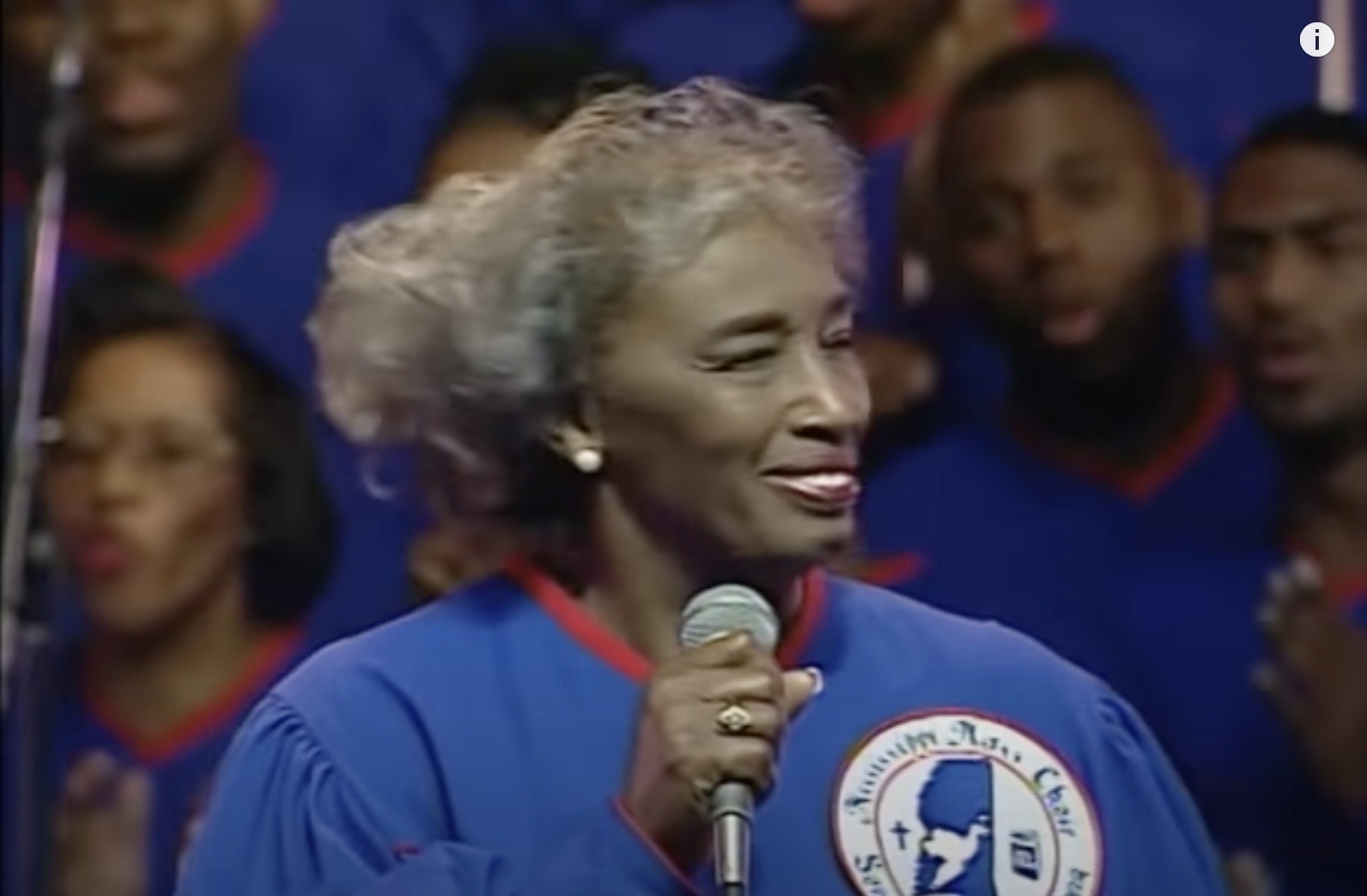
One of the most beautiful women in America is someone you may never have heard of. By saying this, I am referring to a concept of beauty that transcends the contemporary, much too usual, sense of beauty that is shaped by outward appearance. What I have in mind here is a deeper sense of that word, one that is anchored in goodness and truth, and in a personal and vibrant faith.

Mosie Burkes reminds me of my Swedish-descended grandmother. On the face of it, that seems like a ridiculous statement. Yet, to my knowledge both women have shared the same deep faith, while having very different cultural ways of expressing that truth. For sure, there is a world of difference between Mosie, an African-American Church of Christ woman born of sharecropping parents in pre-Civil Rights rural Mississippi, and my own forbear, Lydia, who grew up in an 1890’s immigrant family in Minneapolis in a Swedish Baptist church. Yet, both women are faith-shaping for me, but in varying ways. There is a truism that can help me and others parse this: if we have grown up as persons of faith, a grandmother often has been a significant part of the picture. And, for many, Mosie Burks may be that substitute grandmother.

Paradoxically, it may be my Swedish great-grandfather who perhaps also accounts for my appreciation for Mosie Burks. He left Sweden in the 1890’s to come to America as a dissident Baptist – not only from the Anglican Communion-friendly Church of Sweden, but from his own fellow Baptists. Why? Because, as best as we can discern, his proclivity toward Pentecostal experience. After founding a Swedish language newspaper in Minneapolis, and in pursuing local ministry, he then engaged in missions to South America.

As much as my own spiritual and liturgical instincts run in an old-fashioned Anglican direction (“Let all mortal flesh keep silence…”), preferring reflective and mystical forms of worship, I am stopped in my tracks by Mosie Burks and her singing with the Mississippi Mass Choir. When I watch her sing, along with that magnificent choir, I have the sense that the spirit of my great grandfather rises up within me. Yet, I do not want to deny the universal appeal of her talent and that of the ministry of her choir. YouTube even has a comment, in French, from a self-identifying Muslim, who adores Mosie’s singing.

I think that the power of Mosie Burks’ singing with the Mississippi Mass Choir has a lot to do with her unrestrained and unselfconscious authenticity. In several of her videos we see moments where, ‘slain by the Spirit,’ Bernini’s Baroque sculpture, ‘St Theresa in Ecstasy,’ becomes transposed through a music video into contemporary Jackson, MS.

As she gives herself to her music – and this is a key point – Mosie unconsciously embodies in her voice and movement the heartfelt significance of the words she shares with us.

Wouldn’t we – self-restrained as we usually are – want to give ourselves to Jesus in such a self-revealing way? Well, as a descendent of far-northern European immigrants to America, I know my usual answer to that question! And this is why – for me – Mosie’s approach to singing the Gospel and in demonstrating her faith is so compelling. Watching her sing, with such power, finds me saying to myself, I want to go to her church!

God bless you, Mosie Burks!


Look for Mosie Burks and the Mississippi Mass Choir on YouTube. The images above are stills taken from music videos available through that medium.  I especially recommend among her repertoire these: “When I Rose this Morning;” “I’m Not Tired Yet;” and “They Got the Word.” Some of her videos were recorded when she was in her 80’s!

Lo! He Comes with Clouds Descending (The Beauty of His Return)

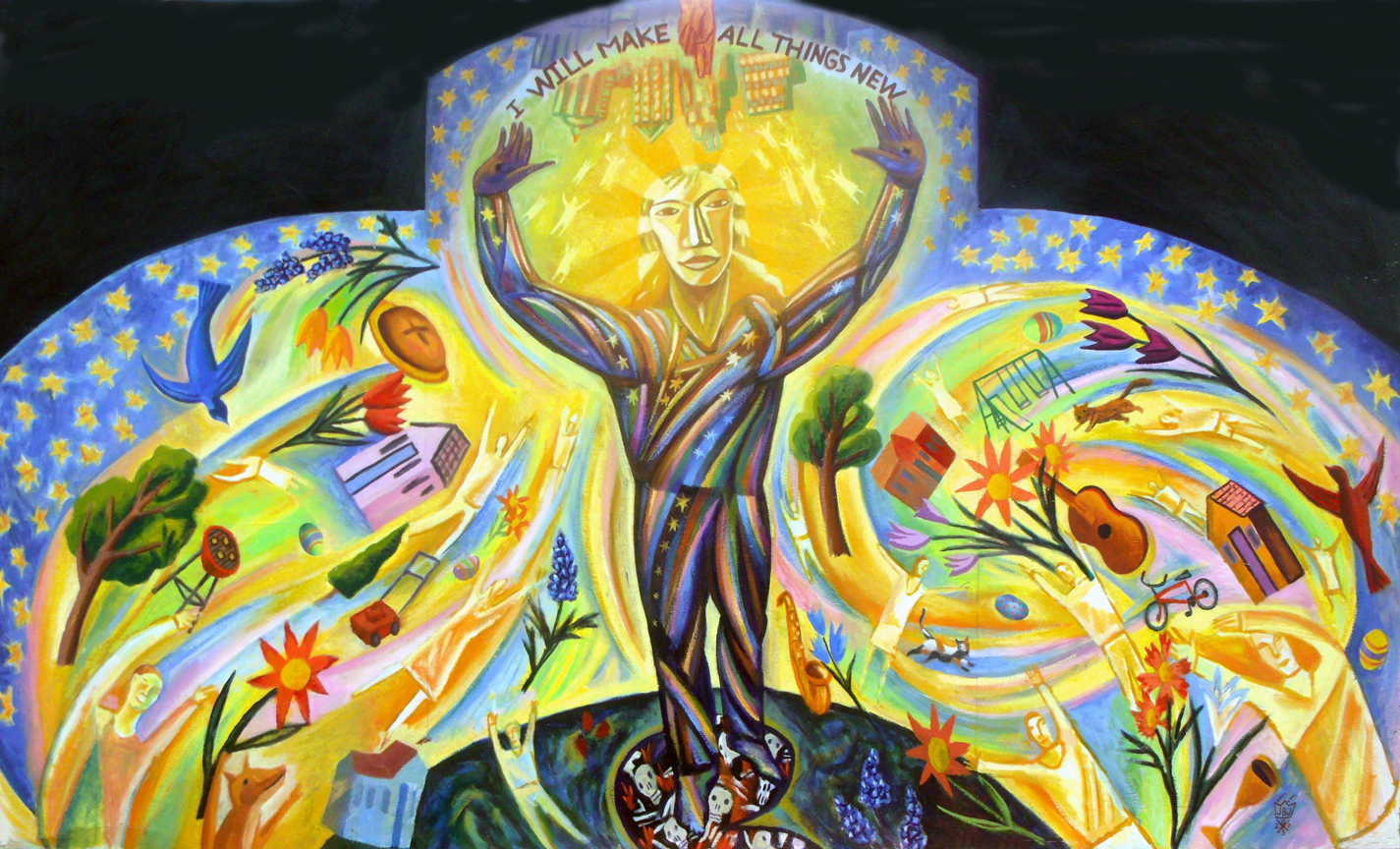
Jim Janknegt: I will make all things new (2005)


The title of this post comes from Charles Wesley’s hymn-text adaptation of words from Revelation that refer to the Second Coming of Christ in glory: “Behold, he is coming with the clouds, and every eye will see him, even those who pierced him, and all tribes of the earth will wail on account of him” (Rev 1:7). In this first week of Advent, and perhaps having sung Wesley’s hymn on Sunday, we need to explore what this ‘wailing’ may involve.

Many people today regard the Second Coming as something prompting fear about a Final Judgment. This may be one cause for the wailing that Wesley anticipates. Though texts in Revelation, as well as in the Gospels, certainly involve this theme, Revelation’s author is also very clear in expressing a faith that Christ’s return will involve restoration, the fulfillment of promises, and the beauty of shared glory. Hence, the wailing may also reflect holy sorrow stemming from a deepened awareness of personal sin, accompanied by ‘tears of joy’ over being forgiven.

Wesley’s verse 2 of his hymn predicts the first dimension of wailing: “Every eye shall now behold him, robed in dreadful majesty; those who set at nought and sold him, pierced, and nailed him to the tree, deeply wailing, … shall the true Messiah see.” Verse 3 describes the second dimension: “Those dear tokens of his passion still his dazzling body bears, cause of endless exultation to his ransomed worshipers; with what rapture, … gaze we on those glorious scars!”

Words in Revelation, preceding and following its prediction about how “all tribes of the earth will wail,” provide a foundation for hope. The author says at the beginning of this last book of the Bible (1:4-5), “Grace to you and peace from him who is and who was and who is to come, and from … Jesus Christ the faithful witness, the firstborn of the dead…” And then (in 1:8) we find, “‘I am the Alpha and the Omega,’ says the Lord God, ‘who is and who was and who is to come…’”

These words are echoed near the end of Revelation, where we find a description of the New Jerusalem and a renewed Creation. Among them are these: “And he who was seated on the throne said, ‘Behold, I am making all things new'” (21:5).

Jim Jaknegt’s painting, I will make all things new, expressively captures the positive dimension of these themes and the ground for hope that lies in the beauty of the Lord’s return. All things! That is a phrase worth exploring in terms of quite a number of biblical texts, especially Paul’s letter to the Colossians.

In the first chapter, Paul writes, “For by him all things were created, in heaven and on earth, visible and invisible, whether thrones or dominions or rulers or authorities—all things were created through him and for him. And he is before all things, and in him all things hold together” (1:16-17). Paul then indicates (1:19-20) the ground for hope regarding “all things,” which Janknect suggestively depicts: “For in him all the fullness of God was pleased to dwell, and through him to reconcile to himself all things, whether on earth or in heaven…”  God’s ultimate goal in all this is reconciliation rather than condemnation, even though people who dismiss God’s ongoing work of reconciliation may find themselves brought to sadness.

Notice the pronounced swirling motion in Janknegt’s painting, as all things are caught up into the returned Lord’s orbit. But all people? For unlike flora and fauna, as well as inanimate objects, human beings made in God’s image and likeness possess the freedom of will either to accept or to refuse God’s initiatives to reconcile us into divine intimacy. This is why there may be at least two dimensions to the wailing that the Lord’s return is likely to initiate. For grief over sin may bear fruit in repentance.

We should therefore note the words of invitation at the end of Revelation: “‘Surely I am coming soon.’ Amen. Come, Lord Jesus!” (Rev 22:20)


Jim Janknegt is a painter who is based in the Austin, Texas, area, who has produced a remarkably large body of work based on biblical themes and imagery. The website featuring his work can be found at http://bcartfarm.com/ I have admired, and with his permission have featured, his images for many years. Lo! He comes with clouds descending appears as Hymn 57 in The Episcopal Church’s The Hymnal 1982.


Being Within God’s Loving Regard


Today, Nov. 2, is commemorated by many as All Soul’s Day, or All Faithful Departed. I am reminded of how some years ago a friend suggested that I watch the Disney Pixar film, Coco. He commended it because the movie connects directly with the celebration of the great feast of All Saints on Nov. 1. Coco also bears upon our observance of All Soul’s Day and All Hallow’s Eve (or Halloween). The movie is set in a traditional Mexican village on the eve of All Saints. In Latin America, and especially in Mexican culture, this feast is traditionally called Día de Muertos, or the Day of the Dead. At the heart of the film and at the center of All Saints is a reality, the reality – through Baptism – of our continuing fellowship and communion with those who have died and gone before us. This is why, in the revised Lectionary, the Scripture readings for All Saints are among those also designated for funerals.

Coco draws us into recognizing how myths, whether ancient or modern, powerfully present truths we already know. We find this, of course, in the opening chapters of Genesis. But we also find how myths play a role in our secular culture. We are enchanted by narrative, and charmed by stunning visual imagery. And we are touched when we are reminded by how family and community relationships shape us. Yet, to refer to biblical and other stories as involving myth, we need to be very clear that the power of myth depends upon the power of truth. {In effect, not all myths are ‘real;’ not all news conveys ‘truth‘}. And so, because human connections are real in our life experience, we are moved by representations of them in ancient Scriptures, as well as in modern literature and the visual arts. What is true, has always been true.

And what surely has always been true for the peoples of the world is this: we do not want to be alone. We do not want to be separated from our families and our friends. And if either family or friends, or both, have been hurtful to us, we still yearn for ideal examples of them —especially when hopeful images of these relationships give us strength to hold our current experience to account.

So, if we don’t want to be separated from our families and friends, we also yearn for a connection with our heritage. We value the history of our family and our many forebears, as well as of our communities. Coco, the movie, plays upon this wonderful aspect of our human experience.

And yet, while commending Coco, I do not think we should accept uncritically every aspect of this delightful film’s story. For Coco contains a notable divergence from traditional Judaism and Christianity. The movie portrays —as being central to the observance of the Day of the Dead— a particular belief. It is this ~ that, if we are not remembered by others, we cease to exist. Yet, as faithful Christians and Jews believe, we are always known and remembered by God, even if our family or our community forgets us! Even if we cease to exist for them, we never cease to exist in God’s loving regard for us.

This day, All Souls or All Faithful Departed, is particularly focused on the idea that, even if we should be forgotten by others, we are never forgotten by God.


An earlier form of this post was first published in November, 2018. The image above was an image found on the internet related to promotion of the movie, Coco.