Mosque and Mosque-related

David Macaulay and Mosque Architecture

If reading this by email, please tap the title at the top to open your browser for the best experience. Then, clicking individual pictures will reveal higher resolution images.


Recently I became reacquainted with a book I discovered some years ago, by an author whose work I greatly admire – David Macaulay. It is his book on Islamic mosque architecture, based on a historically informed but fictional mosque erected in Istanbul in the 16th century. Macaulay’s great skill lies in his ability to provide the reader with insights gained from his use of drawing with pen and ink, frequently with color overlaid, in such a way as to unfold the often complex inner structure of the buildings he wishes to explore and explain. For a primer on traditional mosque design and construction, complete with a glossary of terms, the book is invaluable.

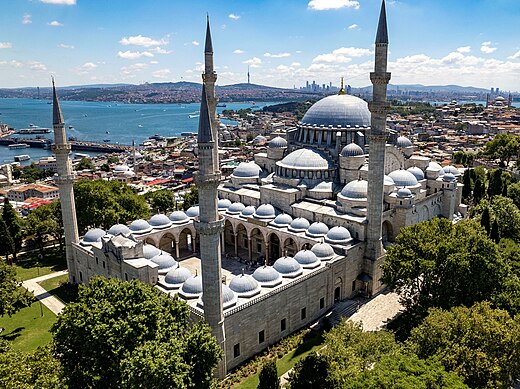
The project featured in this book is a mosque commissioned by Suha Mehmet Pasa, a fictitious high official in the early Ottoman period who engages in a charitable act inspired by his Islamic faith and the five pillars of Islam (faith, prayer, charity, fasting, and pilgrimage). He funds the design and construction of a complex of buildings that includes both a grand mosque and its accompanying courtyard and related structures, as well as a mausoleum for himself upon his death. The influence of the historical architect, Mirmar Sinan, as well as Sinan’s breathtaking Süleymaniye Mosque in Istanbul (depicted below), are plainly evident in Macaulay’s composition of the book.
Because of my own fascination with domes incorporated within mosque architecture, I will focus here on that aspect of Macaulay’s book, though he provides a comprehensive account of the construction of almost every feature of a traditional mosque from the early Ottoman period. I find most helpful the following diagrammatic illustration of the basic building components which together support the dome on such a mosque as the Süleymaniye Mosque, featured in a prior post.

The above illustration corresponds to the following floor plan for the same hypothetical structure.

Now, how did that imaginary 16th century architect, his masons and carpenters, manage to build the magnificent dome featured in this project, and as we find in the actual Süleymaniye Mosque? Macaulay unfolds the mystery with a series of instructive drawings that give us insight into the process. Once the proper height of the walls and support piers was attained, a semi-circular structure of wood was constructed to provide the proper curvature of the intended dome (as seen below).

This structure was then lifted up and placed upon a kind of spindle, so that it could revolve horizontally around the perimeter of what would become the brick structure of the dome.

With the rotation of this semi-circular wooden form, the builders could stack up the bricks according to the intended proper curvature of the inside of the dome, while allowing the exterior of the dome to be wider at its base, for greater strength and stability.

A final step in the construction of the main and other domes was the preparation of sheets of lead, cut in precise patterns so that they would sheath the dome with a series of overlapping panels, to avoid water intrusion:

The smaller domes covering areas of the courtyard and entrance portico were constructed in a similar fashion, but on a smaller scale, as seen in the following illustrations. A simple swinging pendulum-like wooden arm was employed rather than the more elaborate semi-circular structure used for the large main dome.

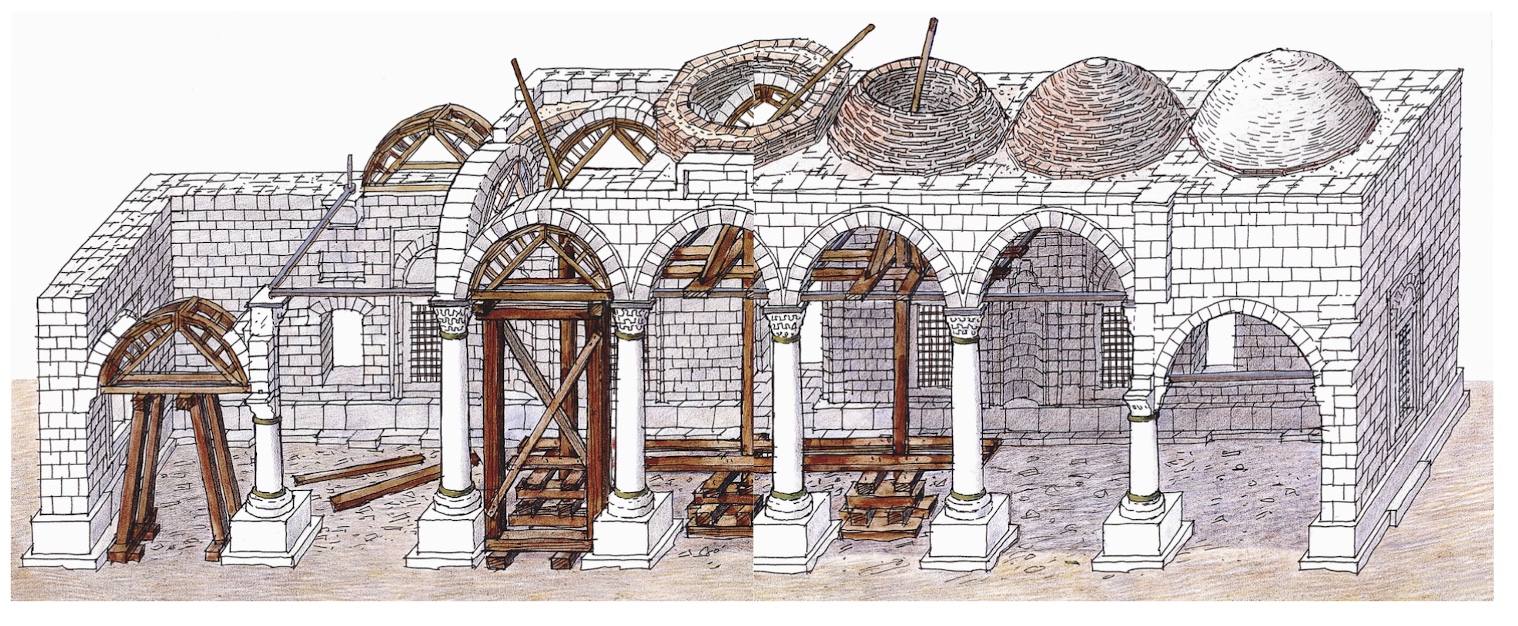
Completion of the construction of the main dome was followed by the finishing of the interior surfaces with plaster, and then with elaborate paint work, which of course involved the need for scaffolding and platforms.
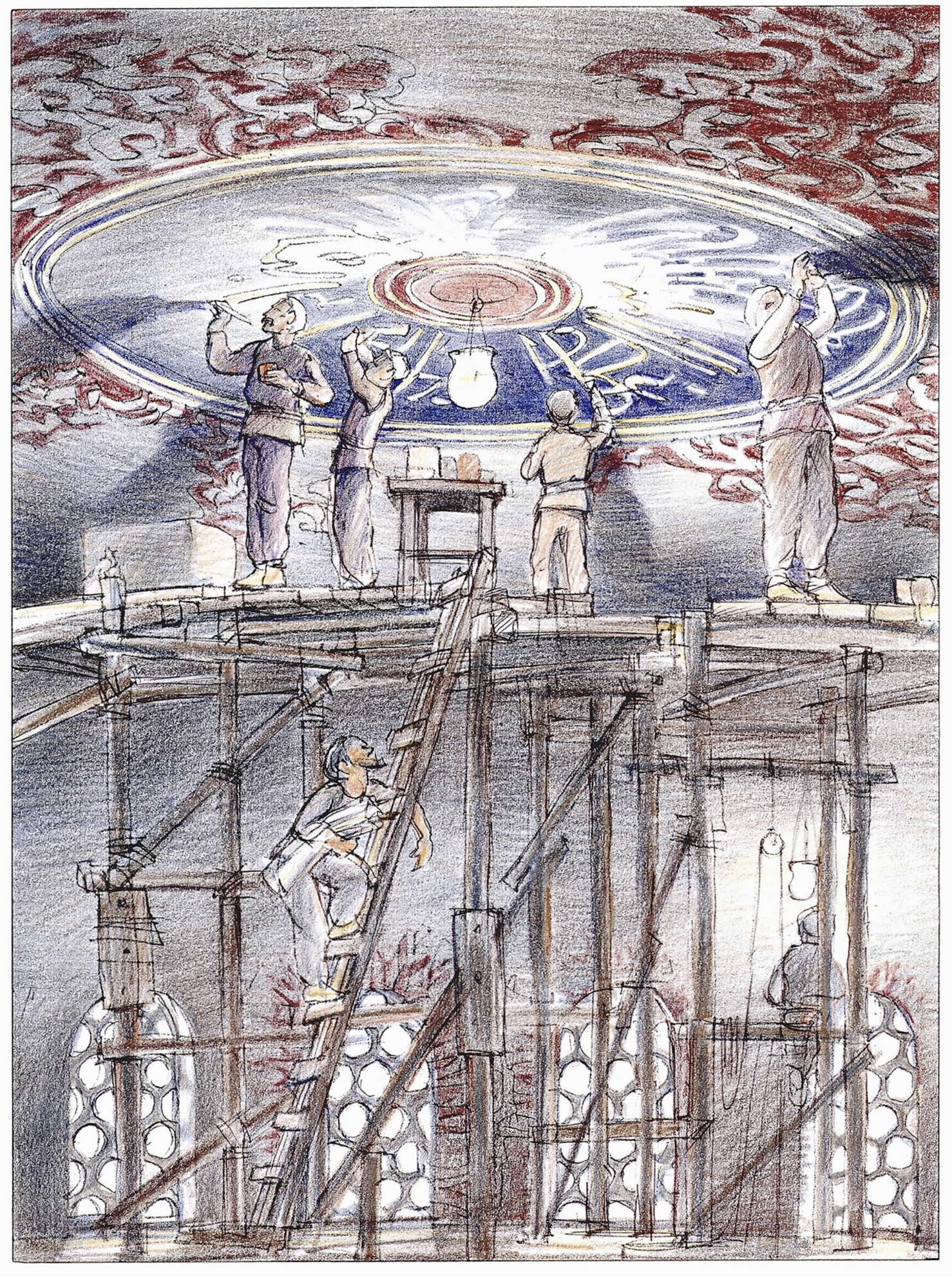
Macaulay then provides two evocative interior views of the finished interior of the mosque, and from two unique perspectives.

These drawings and my primary focus upon the dome aspect of this hypothetical mosque project provide just a hint of the richness to be found in this evocative book. Though it may appear to be a ‘picture book’ intended for middle school students, it is actually a rich source of information for adults who wish to become familiar with the basic elements of historical mosque architecture, and the construction methods used to produce such buildings in the early Ottoman period. In addition to the highly instructive drawings, the glossary at the back of the book is also of significant value.

As readers might guess, I highly commend this book.
 

The Architecture of Sacre Coeur in Paris

If reading this by email, please tap the title at the top to open your browser for the best experience. Then, clicking individual pictures will reveal higher resolution images.


This past weekend, we had the opportunity to watch the men’s and women’s Olympic long distance cycling events, involving 80-90 riders. After multiple hours, these races took them from outside of Paris back into the city. The telecasts of the races highlighted the latter segments, which included the challenging ascents to Montmartre, as the participants sped their way through and past the large crowds gathered on the hillside surrounding the church of Sacre Coeur. As they did, race commentators noted that the church is said to be Paris’s second-most visited tourist site after the Eiffel Tower.

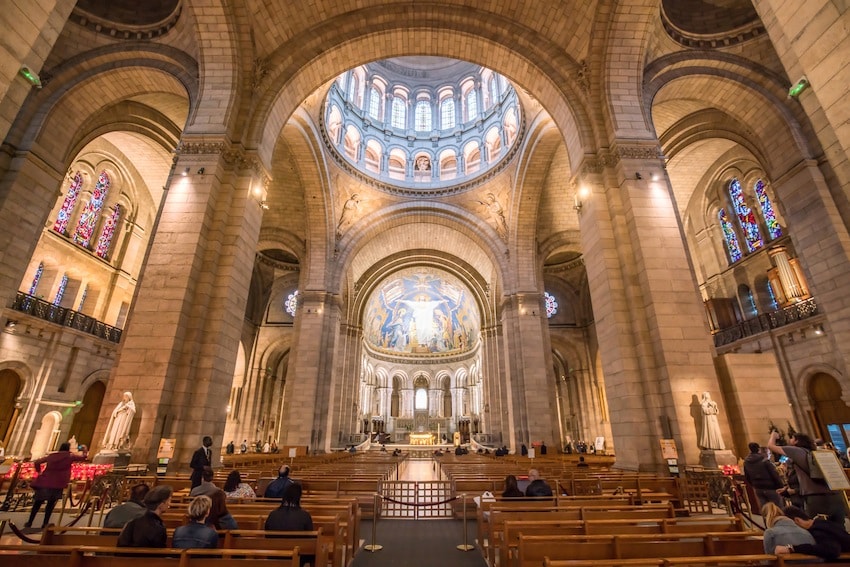
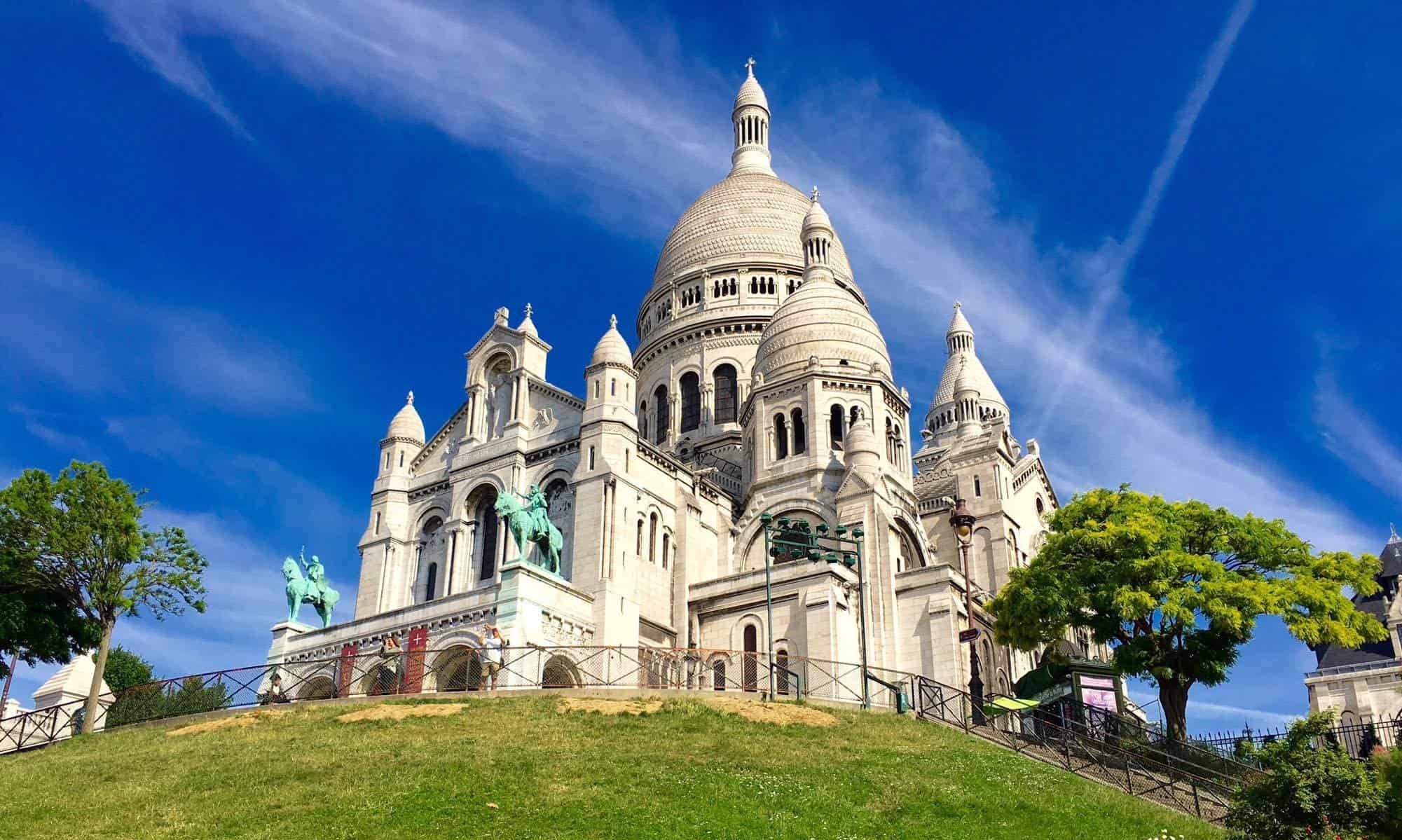
With its soaring lines and its location on one of the tallest elevations in Paris, along with its stone surfaces, Sacre Coeur may remind us of some medieval European cathedrals. Despite its historic appearance it is a relatively modern building. Construction began in 1875, and concluded in 1914. What first strikes many viewers is the building’s structural emphasis upon height, reminiscent of Gothic predecessors, which is accentuated by its notably elongated or stretched rather than hemispherical domes (as is evident in the drawing above).

What is unique about this building is its homage to the Greek Cross plan, including its Romanesque arches. These features recall the general design of Constantinople’s great church, Hagia Sophia, and the common pattern for Islamic mosque architecture subsequently derived from it. Sacre Coeur’s Greek Cross plan is also reminiscent of Venice’s medieval basilica of San Marco. Roughly contemporary with Sacre Coeur, is H.H. Richardson’s evocative Trinity Church in Boston (1872). Like Trinity Church, Sacre Coeur’s design has been described as neo-Byzantine (as well as Romanesque), and the label fits specifically in connection with the historical precedents of Christian and Islamic origin just mentioned. Sacre Coeur’s design-dependence upon this history is most evident by studying the drawing provided below.

The above rendering of the floor plan of Sacre Coeur is vital for appreciating how this church building is as characteristic of the Christian East as it is of the West. The key point to observe involves the inner four columns that support the large central dome, and the four smaller domes on the peripheral corners that encompass the central square. These smaller domes as well as the huge principal one are suggested in the floor plan by the patterns of concentric circles adjacent to the four columns.

Between the domed spaces we find four rectangular areas of space that parallel one another in size, forming the arms of the Greek Cross. Like mosques geographically oriented along an axis directed toward Mecca, Christian churches traditionally are oriented with the altar on the eastern or sunrise side of the building, in honor of the Resurrection. Yet, due to the chosen site for a new church, the structure might have its chancel and altar on the north side of the building, as is the case with Sacre Coeur.

The apse, or altar area of Sacre Coeur is indicated in the above drawing by the Latin cross-shaped floor pattern. It is mirrored in length by the entrance portico, shown in the lower portion of the drawing. The semi-circular chapels surrounding the apse and its altar reflect an homage to Western and Latin medieval Gothic precedents. In Western, Gothic-inspired church architecture, the placement of these chapels is thought to represent the thorn of crowns placed on Christ’s head.

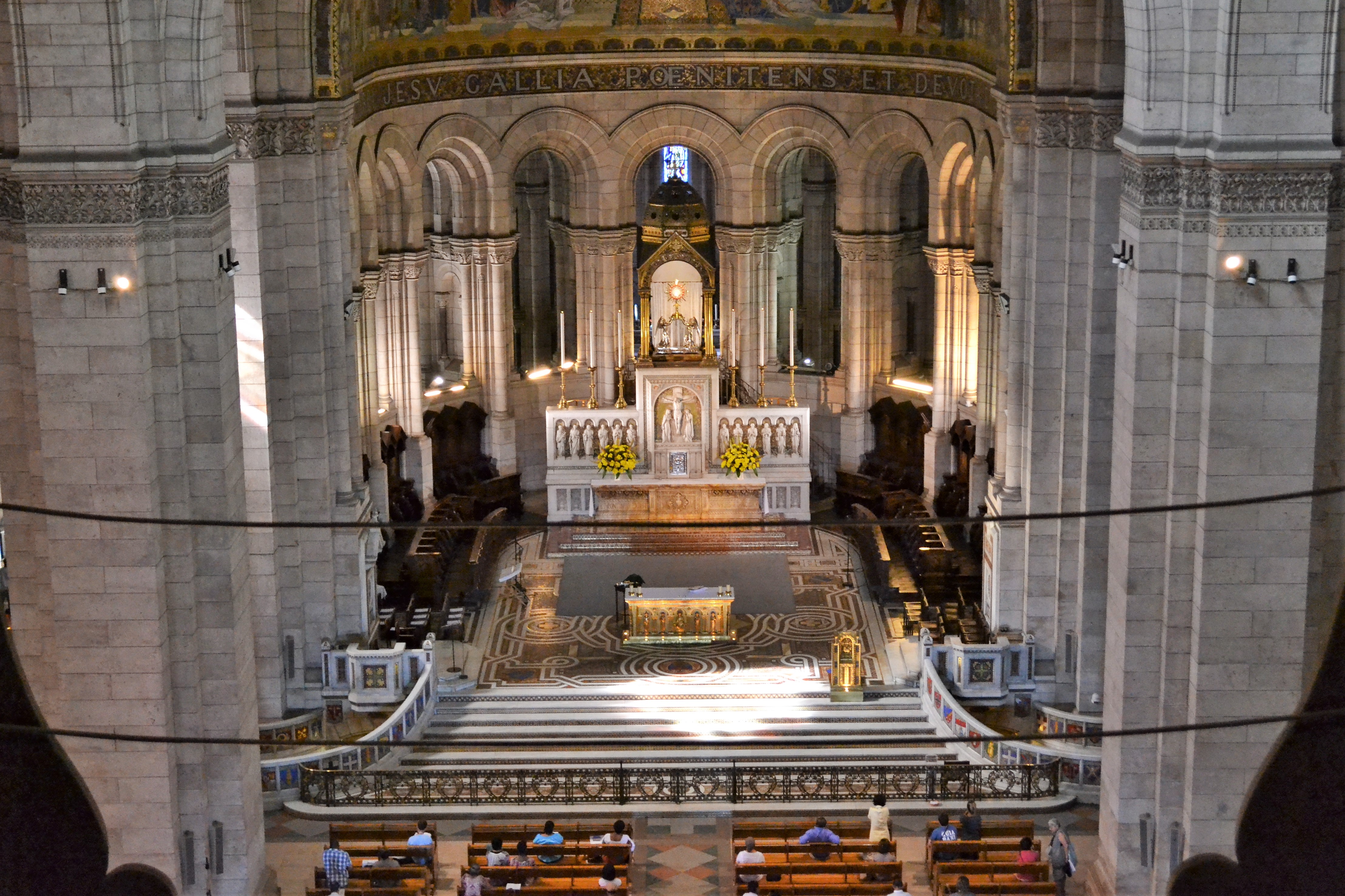
The choir or chancel at the liturgical ‘east’ side of the church

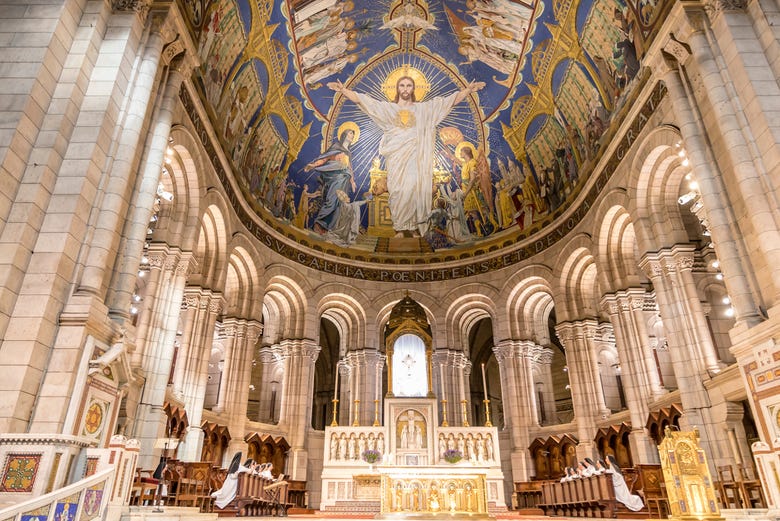
The remarkable ceiling mosaic over the choir

Another distinctively ‘Eastern’ feature of this building is its adornment with mosaics, and principally by the vast mosaic covering the ceiling over the chancel and choir, above the main altar. Designed by the noted painter, Luc-Olivier Merson, whose Annunciation painting I have previously featured, the mosaic is composed of some 25,000 ceramic tiles, many of which are gilded. With this church dedicated to the Sacred Heart of Jesus, it is not surprising to see the Lord depicted with outstretched arms and the golden namesake of the building emblazoned on his chest. Yet, even with this distinctively Western motif, the mosaic recalls the frequent choice in the East to portray Christ the Pantocrator, or the Almighty, in a mosaic or painting on the surface of a principal dome or semi-dome in a church.

I admit to this. Sacre Coeur in Paris has in the past looked to me like a Disney park caricature of a grand, historically classic, stone church. Having studied the plan and its design with more attention, as well as learning more about the original architect and about many of its details, I have a heightened appreciation for this remarkable and liturgically conducive building.


Chora Church: A Byzantine Treasure

If reading this by email, please tap the title at the top to open your browser for the best experience. Then, clicking individual pictures will reveal higher resolution images.

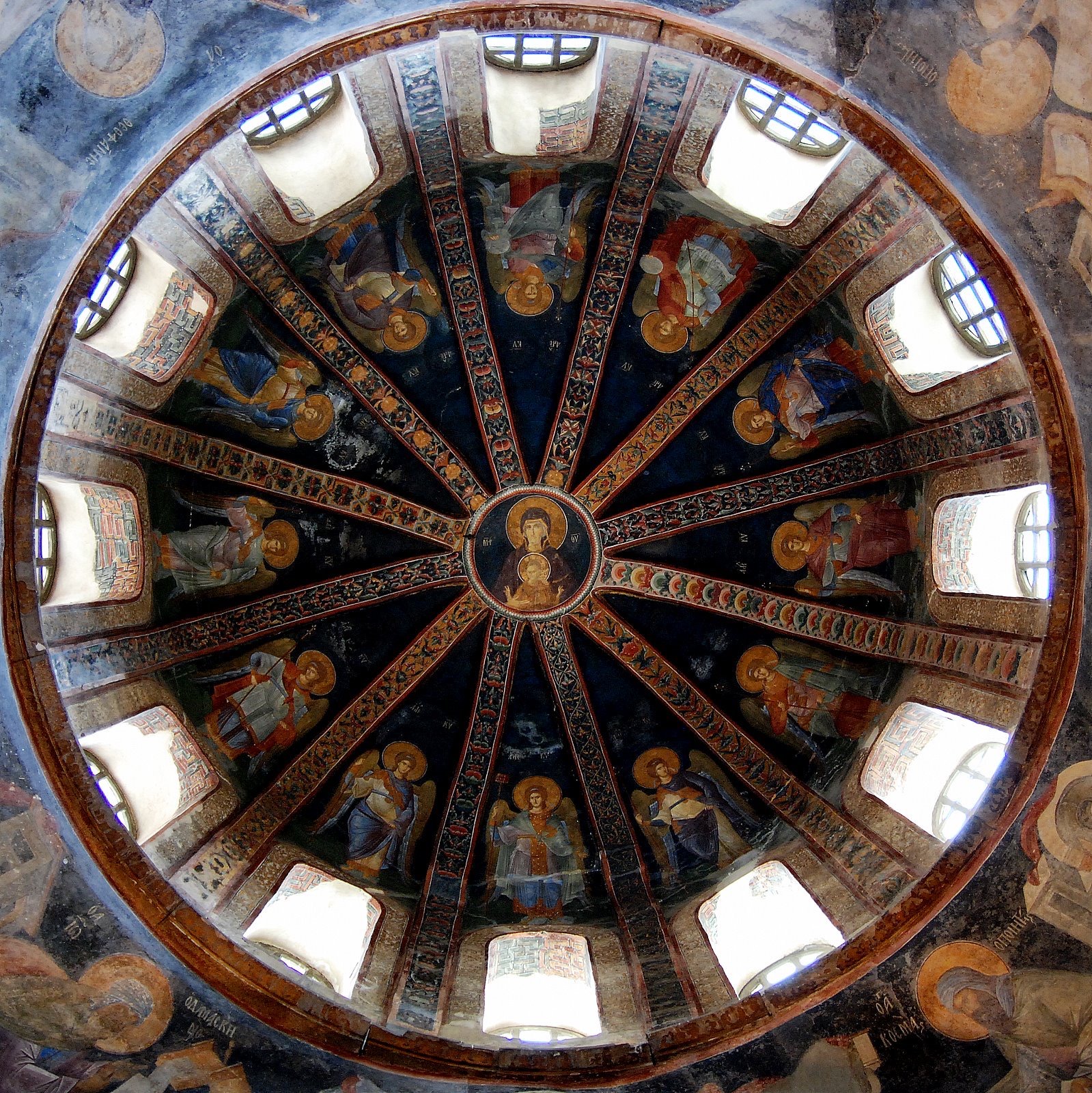
Dome over the Side Church (or parecclesion), Chora Church


We missed being able to visit this remarkable place by a day! Sadly, after staying in Istanbul for four nights, the historic Chora Church that had undergone four years of renovation would not reopen until the day after our departure.

Dating back to the time of Constantine in the early fourth-century, the Chora Church was built as part of a monastary outside the walls that were constructed when Constantinople became the new capitol of the Roman Empire in 330 A.D. Its rural location led to its formal title, Church of the Holy Savior in the Country (or Chorai, in Greek).

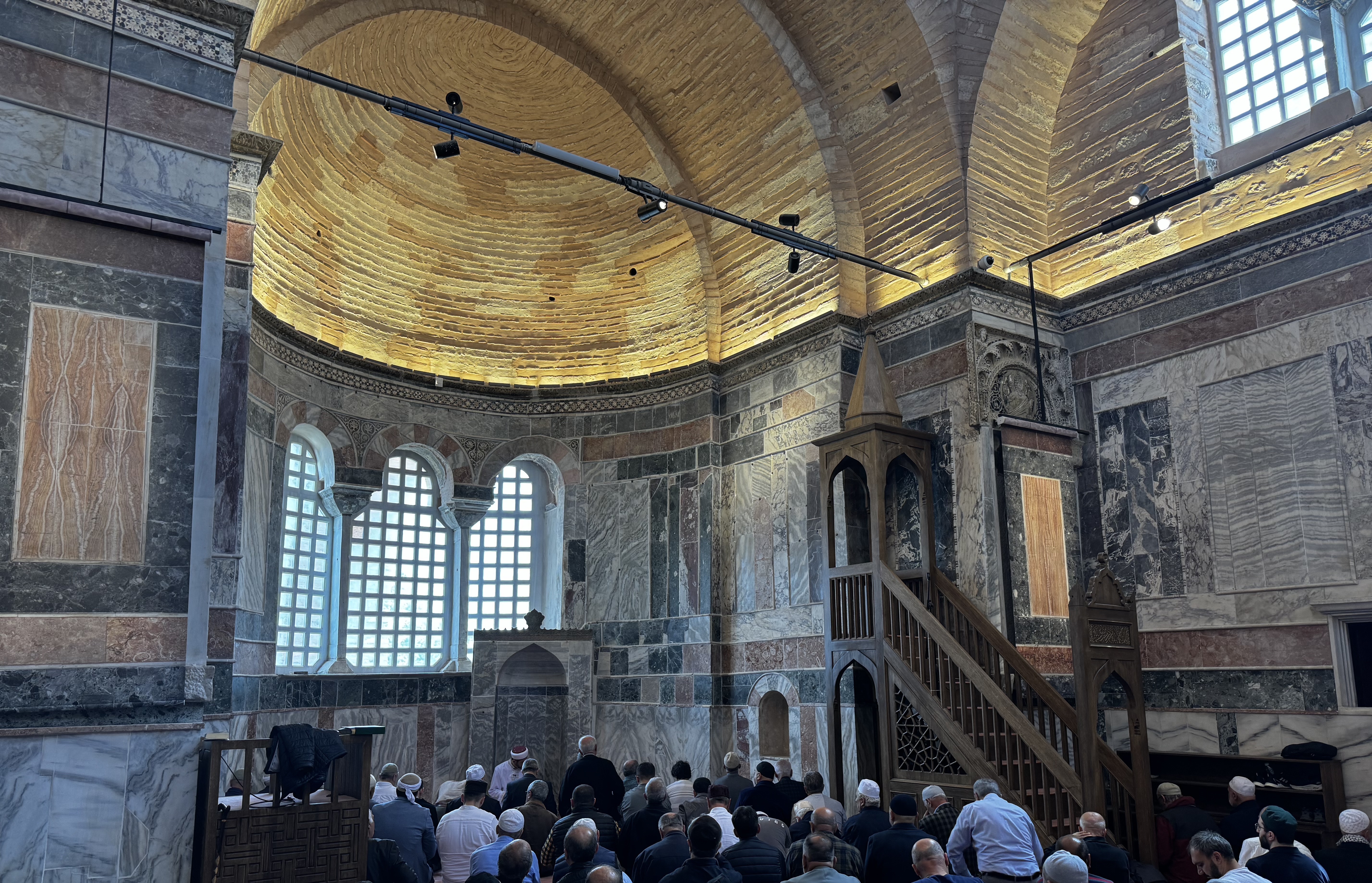
Interior of the original central nave (naos) in use as a mosque, with Christian mosaics and frescoes covered over

Chora, like the later Hagia Sophia, has over its history served as a church, a mosque, a museum, and now once again as a mosque. As I have noted in prior posts, the fact that buildings like Hagia Sophia and Chora have been able to transition from church to mosque without significant structural change helps us perceive how what became normative in mosque architecture had its origins in churches from the early Christian, pre-Islamic era. As a precursor to Hagia Sophia, the original walls of Chora may provide one of the earliest examples of what would develop into the cruciform plan for churches, a design pattern that became predominant in the Christian East. This approach to design for worship spaces is centered on a square, covered by a dome, a departure from the early rectangular basilica plan favored in the western Roman region.

Floor plan of the Chora Church

In the floor plan above, note the subtle Greek Cross pattern of the central nave (or naos) below the large dome. As this plan indicates, the original, late Classical period Chora was significantly expanded during the Byzantine period, between the 11th century and the 14th century.

Section drawings of Chora Church showing the location of some murals and frescoes

In addition to its cruciform plan, and the church’s great antiquity, another feature that distinguishes Chora is its impressive collection of well-preserved Byzantine mosaics and frescoes, largely from the early fourteenth-century.

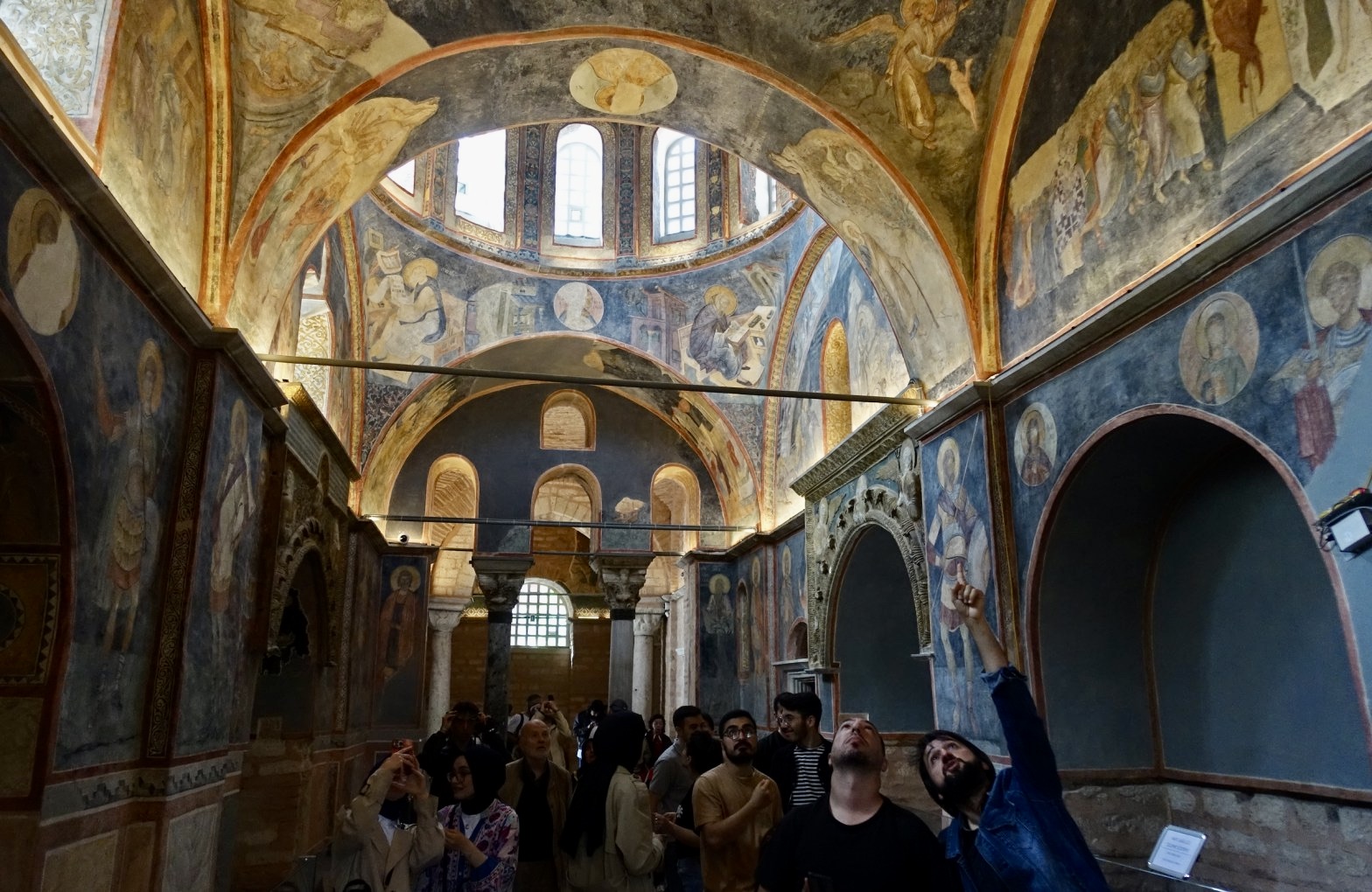
Visitors to Chora admiring the murals in the Byzantine-added “side church”

The bulk of the surviving mosaics and frescoes are located primarily in the side church (or parecclesion). This may be due to the central nave or naos having been used for Islamic worship during a significant portion of the building’s history. One of the many beautiful frescoes depicts a common theme found in works of art from the Christian East, that of the Harrowing of Hell. Images based on this theme depict the Christian belief concerning the first saving actions of the Risen Christ: pulling Adam and Eve out of their tombs and the clutches of the underworld (image below).

A fresco in the Side Church – Anastasis (or Resurrection): The Harrowing of Hell

A beautiful example of the Chora mosaics depicting Joseph and Mary’s enrollment for taxation in Bethlehem

Interior view of the side church

Like the later Hagia Sophia, Chora Church – for a time as a museum and now a mosque – still serves as an edifying spiritual place for Christians and people of other faiths to visit. For Orthodox Christians in the East, Chora’s numerous mosaics and frescoes provide multiple opportunities to (re)engage with biblical stories and with articles of faith in a way that the contemporaneous art in the much larger Arena (or Scrovegni) Chapel in Padua, Italy, provides enrichment for Western, Latin, Christians.

Exterior view of the southeast corner of Chora Church (note the later addition of a ‘flying buttress’)

A 1903 photograph of the west entrance to Chora in the late Ottoman period


Hagia Sophia’s Wondrous Dome

If reading this by email, please tap the title at the top to open your browser for the best experience. Then, clicking individual pictures will reveal higher resolution images.
Note the triangular semi-spherical panels (with angel images) on either side of the central arch


The dome over the center of Hagia Sophia has since its construction been an object of fascination, as much for its design as for its size. To stand within the space it covers is awe-inspiring. Though not unprecedented in form, the support structure for this massive dome sets the building apart. The architectural challenge the church’s designers overcame arose from a desire to set a circular dome over a square structure, especially if and when the walls of that structure would feature sizable arches.

In a traditional four-cornered room, and one in which arches (spanning the side walls) converge at the corners, a vertical line from floor to ceiling defines the juncture point of any two walls. A circular dome set on top of such a four-cornered structure would rest upon the walls, but upon the walls’ center points, above the arches. Most likely resting, therefore, upon the weakest points of those arched walls. Yet, the dome would not receive direct support at the building’s corners, usually the building’s strongest points, because the perimeter of the dome’s base would sit away from the square corners.

The genius of Hagia Sophia’s immense dome was the incorporation of what are formally termed “pendentives.” This architectural feature can be seen in the photo at the top, in the triangle-shaped, semi-spherical corner panels that allow the four corner columns to support the essential load-bearing portions of the dome’s base. It is illustrated in the diagram below (with the letter “a” representing the pendentives).

An illustration of a dome resting above pedentives

Readers of my prior post, upon the Greek Cross plan for Hagia Sophia, will observe how this mosque-cathedral has a basilica or rectangular shape at the upper level, while yet featuring a Greek Cross-shaped floor plan (see below). This is due the absence of half or semi-domes extending from the north and south sides of the building as they observably do on both the west and east ends.

Hagia Sophia floor plan, showing semi-domes (indicated by dotted lines) over the east and west ends of the Greek Cross floor plan, on either side of the central dome
Instead of the presence of half or semi-domes below the great arches on the upper level of the north and south sides of Hagia Sophia we find what are called “tympanaum.” These are wall screens that are punctuated by windows (see below).
A view of the tympanaum (or wall screen) below the dome on the south side of Hagia Sophia’s prayer space
Subsequent mosque designs, such as the breathtaking Süleymaniye Mosque in Istanbul (see below), took the same design concept forward while emphasizing the overall square shape of the Greek Cross.

These are some of the ways in which Hagia Sophia’s design set the stage for later mosque architecture. Later mosque plans tended to incorporate half or semi-domes on all four sides of the central, full-dome covered portion of the prayer space. In turn, these plans, as well as those of their predecessors, continue to influence the design of Christian churches in ways that can enhance the whole congregation’s participation in liturgy. (For more on this point, please see my prior post, “The Beauty of Hagia Sophia, and the Greek Cross”).