landscaping

A Beautiful Garden: Nitobe Memorial (Part I)

[If reading this by email, please tap the title at the top to open your browser for the best experience. Then, clicking individual pictures will reveal higher resolution images.]
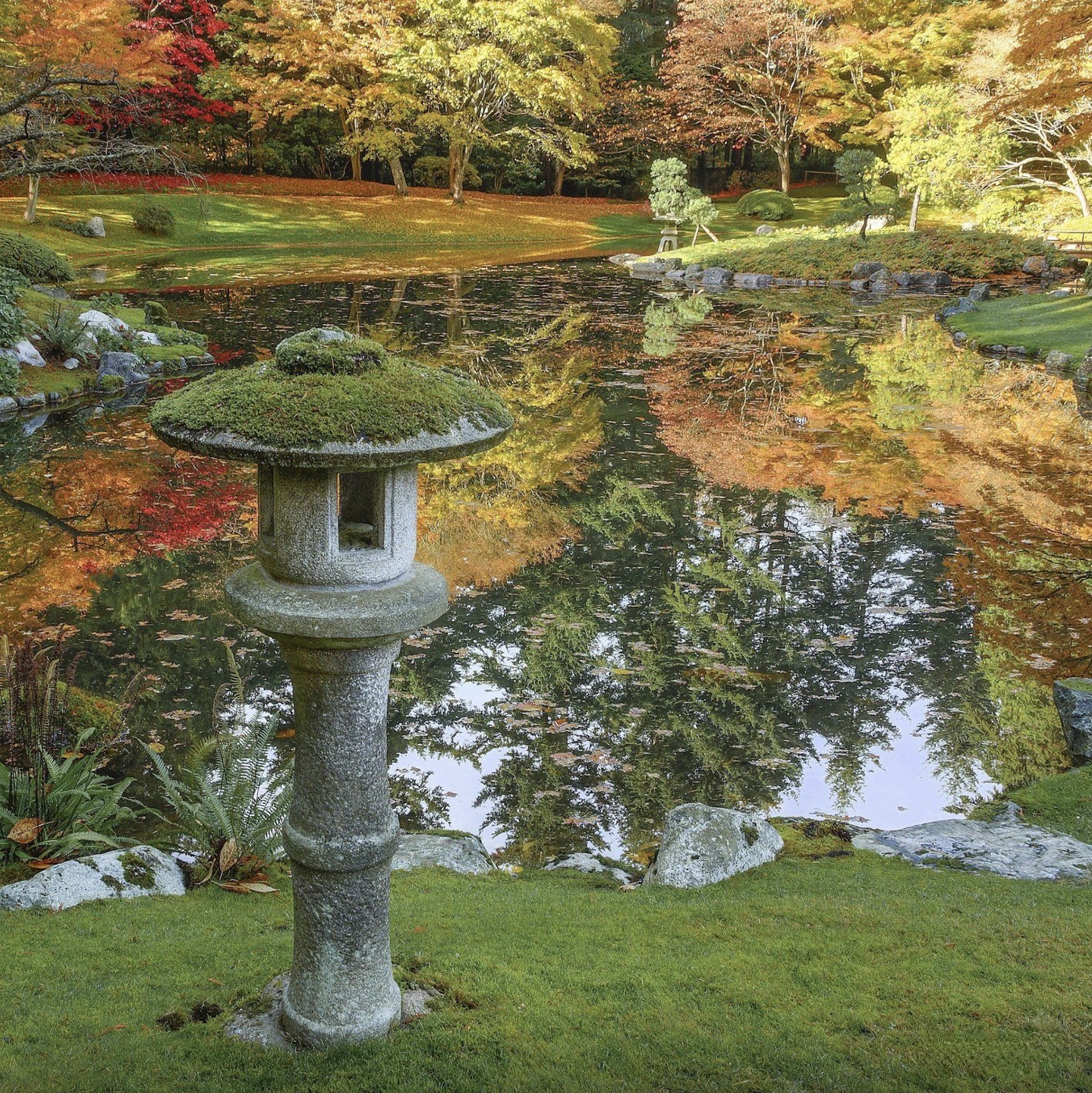
 

The Nitobe Memorial Garden on the grounds of the University of British Columbia (UBC) is readily recognizable as a traditional Japanese garden. Like other gardens of this type, it provides an experience of tranquility. Even in an urban area such as Vancouver, Nitobe Garden offers a quiet refuge from daily life concerns and tensions that visitors might carry with them.

An interpretive guide to “understanding Japanese Gardens,” found on the UBC Botanical Garden website, asserts the following:

… it is almost impossible to clearly state what defines a Japanese garden. Many Japanese resist classifying and categorizing the various features of Japanese gardens.

The website attributes this reluctance to the idea that beauty “not explained allows the viewer to remain in a state of wonder.” This worthy observation applies as much to modern abstract painting as it does to historic patterns of landscape arrangement. Yet, in this and in the next post, I will articulate characteristics that enable us to distinguish a traditional Japanese garden from, for example, a casual English cottage garden or a formal French garden.

The UBC website acknowledges how “most visitors can tell when they have entered a garden created and maintained in the Japanese tradition,” crediting this perception to people who “are sensing the Japanese spirit that informs these spaces.” This may be due to how various strands within Japan’s cultural history have coalesced to form a recognizable ‘style’ manifest in its gardens. Among the results of such a melding process, we can identify and describe several features in the Nitobe Garden that are common to other well-known Japanese gardens.

We can begin by observing how gardens and parks found in the East and in the West have a number of shared attributes. Among them, most gardens and parks around the world feature a scheme for the arrangement of their various parts even if it is not readily evident to visitors. Many such places appear to promote and preserve a ‘natural’ quality among the things growing in them, even in formal gardens. Some gardens and parks accentuate this natural element, perhaps in deliberate contrast to surrounding urban areas. This fosters an impression that the plants, shrubs, and trees have grown where they are of their own accord, and in their own way, regardless of any horticultural tending they have received. Especially in the West, ‘nature’ and that which is ‘natural’ are seen as what does not readily bear the imprint of human interaction, and as emerging more from its roots than from our planning.

Western gardens and parks may have gates, but often their entrance designs accentuate pubic access, providing a continuity of experience for visitors who may have potted plants or flowers where they live and work. In this sense, these garden and park entranceways draw people in from what is less into what is more. In the process, visitors are likely to encounter familiar though markedly larger and more extensively planted shrubs and trees, many of which do not appear to have been shaped or altered by human hands.
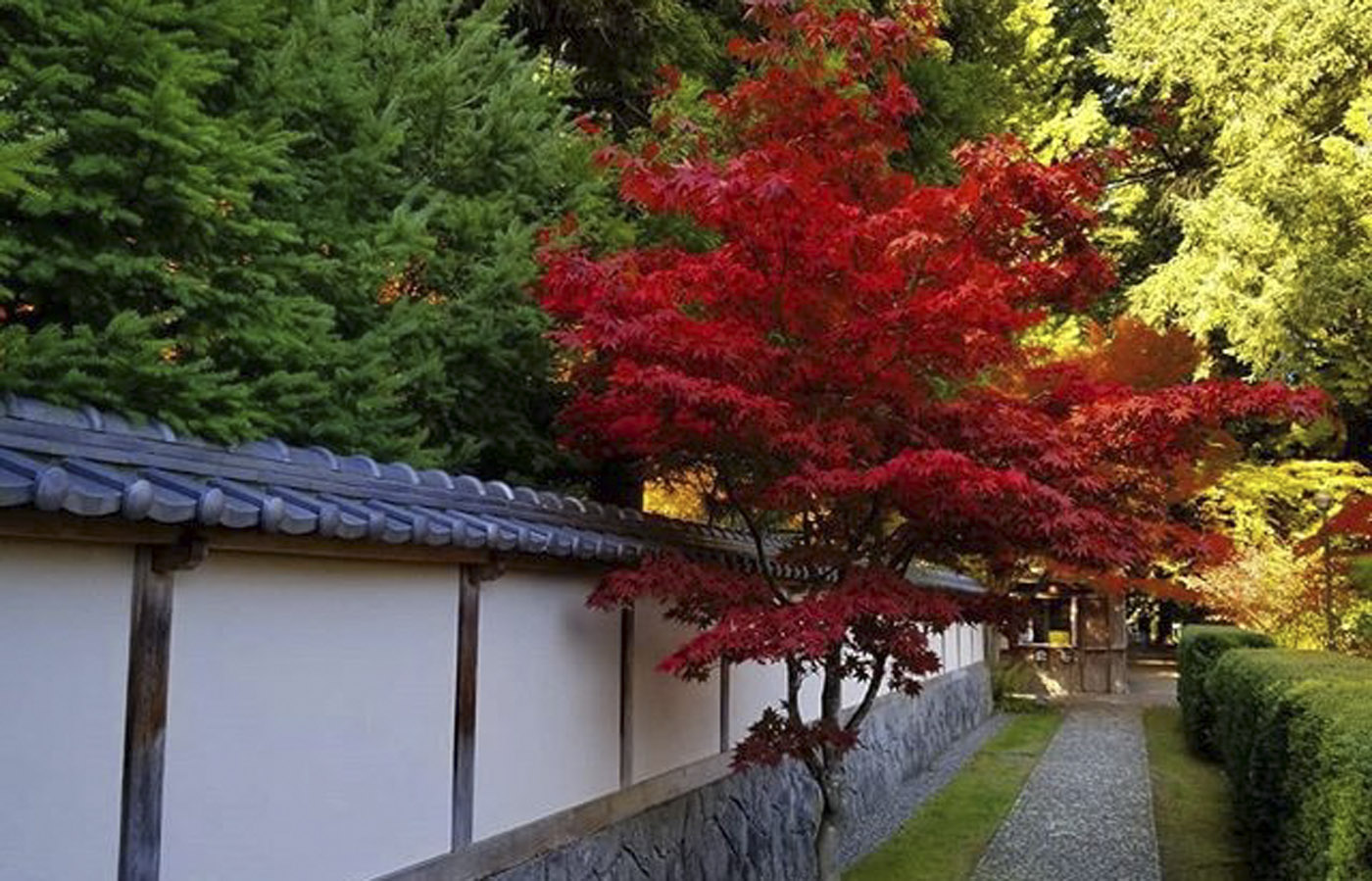
Formal gardens both East and West usually have marked boundaries and even barriers between what is within and that which is outside. Traditional Japanese gardens are typically surrounded by view-blocking walls topped by a ceramic tile parapet. These indicate a formal boundary between the transient outside world of energy-charged daily activity and the stillness available within, where visitors are subtly bidden to release their grasp upon time and their surroundings.

Imposing entrance gates mark a portal to a different realm lying beyond, as much as they appear to provide a barrier protecting what is within. Though these gates and the walls around a Japanese garden may serve to keep out intruders and foraging animals, they exist primarily for the sake of those who enter and take time there. For one does not visit a Japanese garden in the way one might go to a park, as a context to pursue some activity like an exercise walk, but as a place to experience simply being.

In the next post we will continue to explore what is identifiably distinctive about traditional Japanese gardens like the Nitobe Memorial.


Yamasaki’s Graceful Architecture

[If reading this by email, please tap the title at the top to open your browser for the best experience. Then, clicking individual pictures will reveal higher resolution images.]

Minoru Yamasaki behind models of the proposed World Trade Center towers


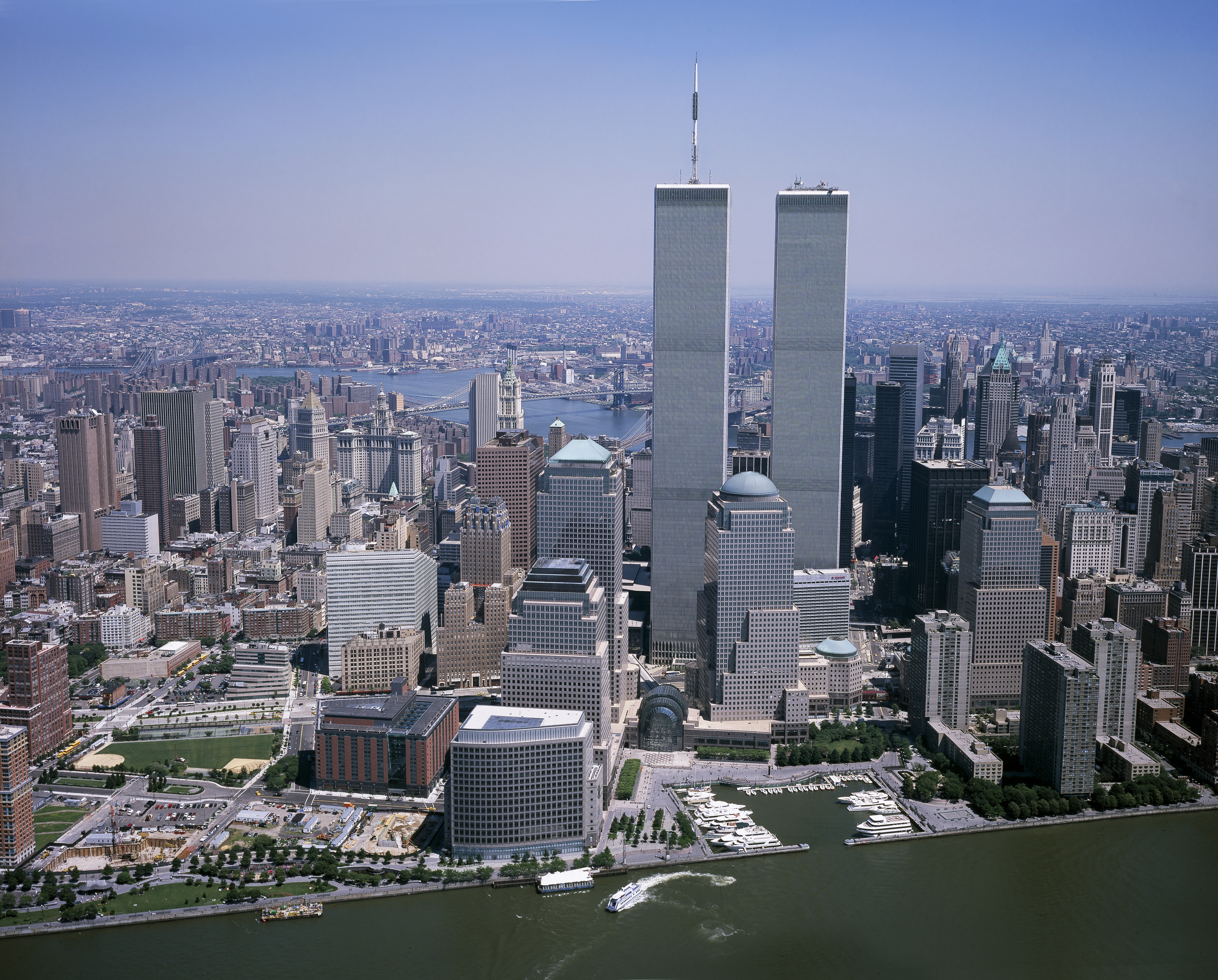
Minoru Yamasaki was one of the most significant American architects of the mid-twentieth century while also one of the least known. Since 9/11, almost everyone has seen images of his now lost World Trade Center towers that formerly crowned the southern tip of Manhattan. Yet many are unfamiliar with the man who designed and gave them their attractive and delicate facades. I first encountered Yamasaki’s distinctly modern yet historically informed approach to architecture as a child while my parents were on furlough from mission work in Japan. It was likely because of Yamasaki’s Japanese heritage that they became interested in his Northwestern National Life building in Minneapolis, opened in 1965, which he had designed for that company’s new headquarters (images below).

The Northwestern National Life building has design elements recognizable in a number of other structures designed by Yamasaki. His career-long approach to architecture consistently incorporated a classically inspired modernism that features a verticality and gracefulness of design, an approach which appears to owe as much to the great European gothic cathedrals as it does to Greco-Roman antecedents. This quality of his work is particularly evident in the decorative plaza towers and buildings he designed for the 1962 World’s Fair U.S. Science Exhibit in Seattle (now the Pacific Science Center, below).

U.S. Science Exhibit towers and buildings, 1962 World’s Fair, in a vintage photo

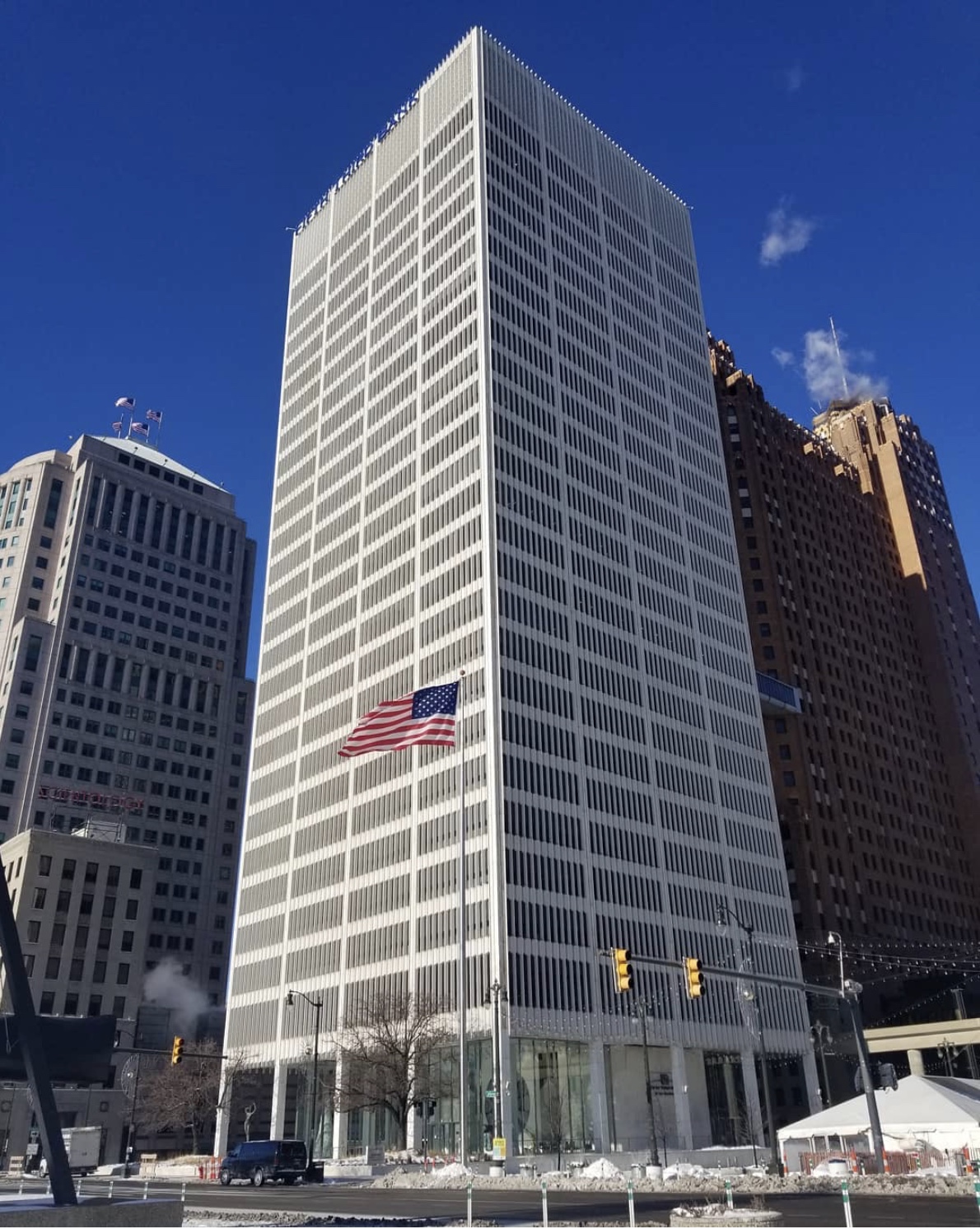
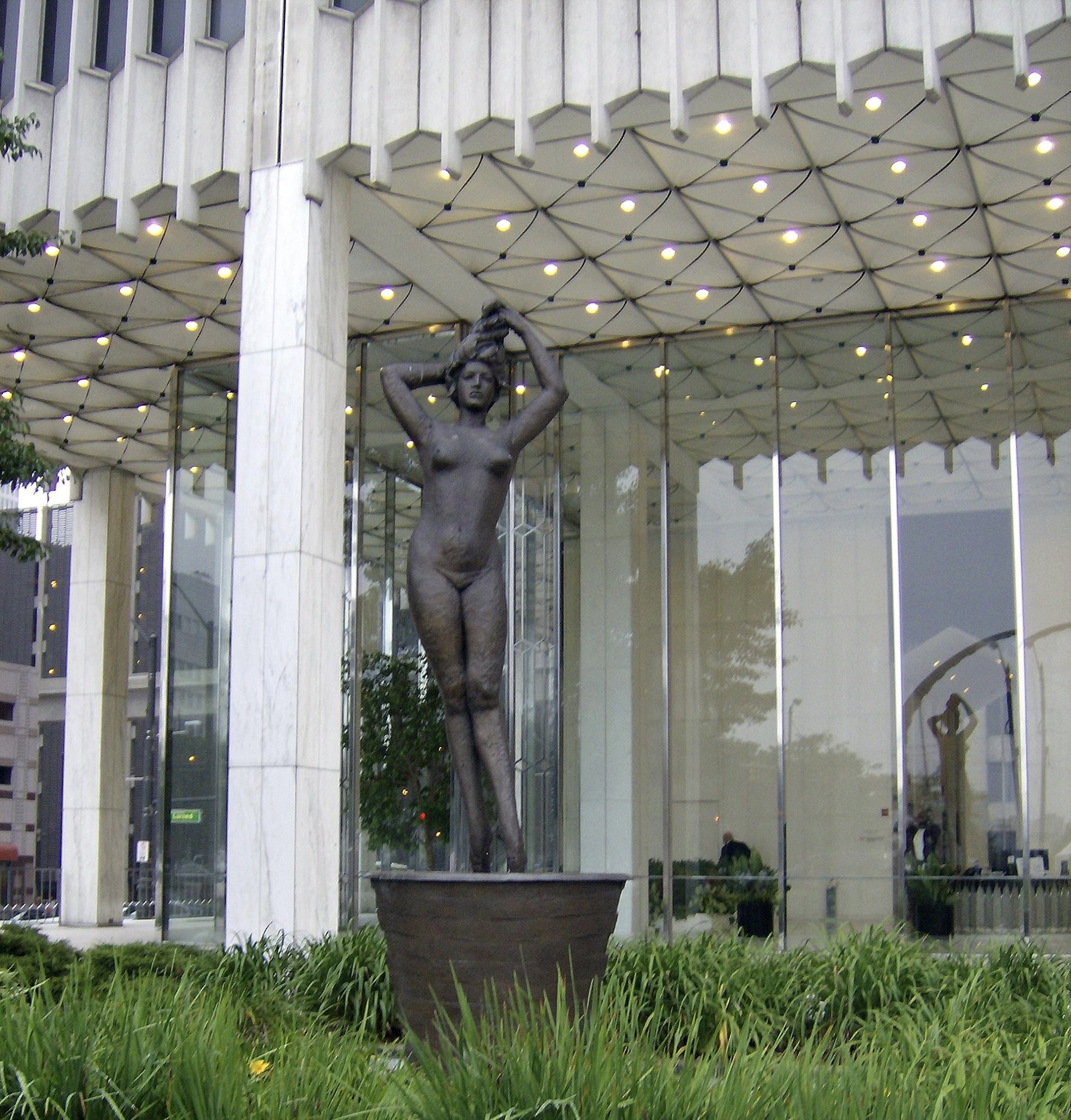
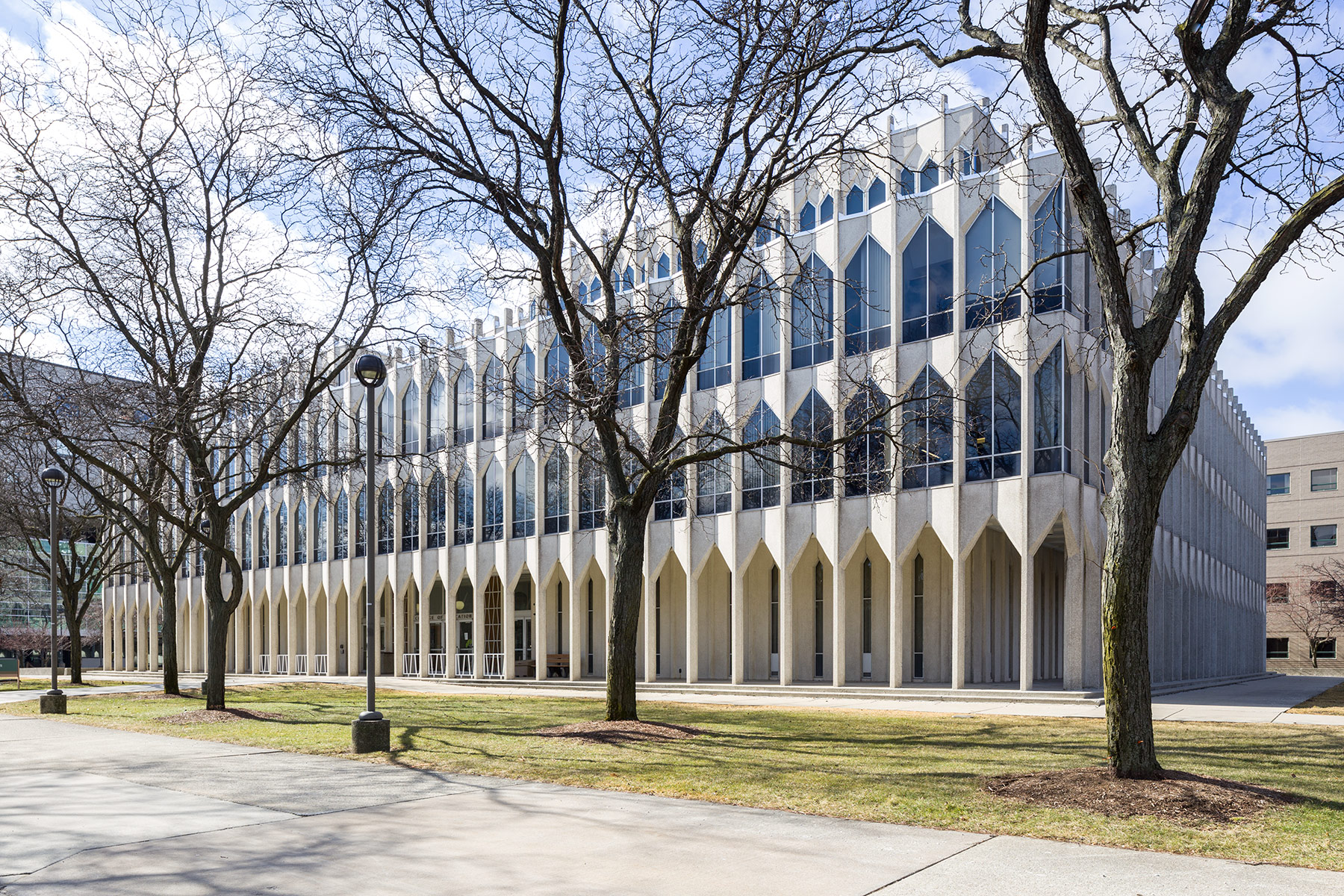
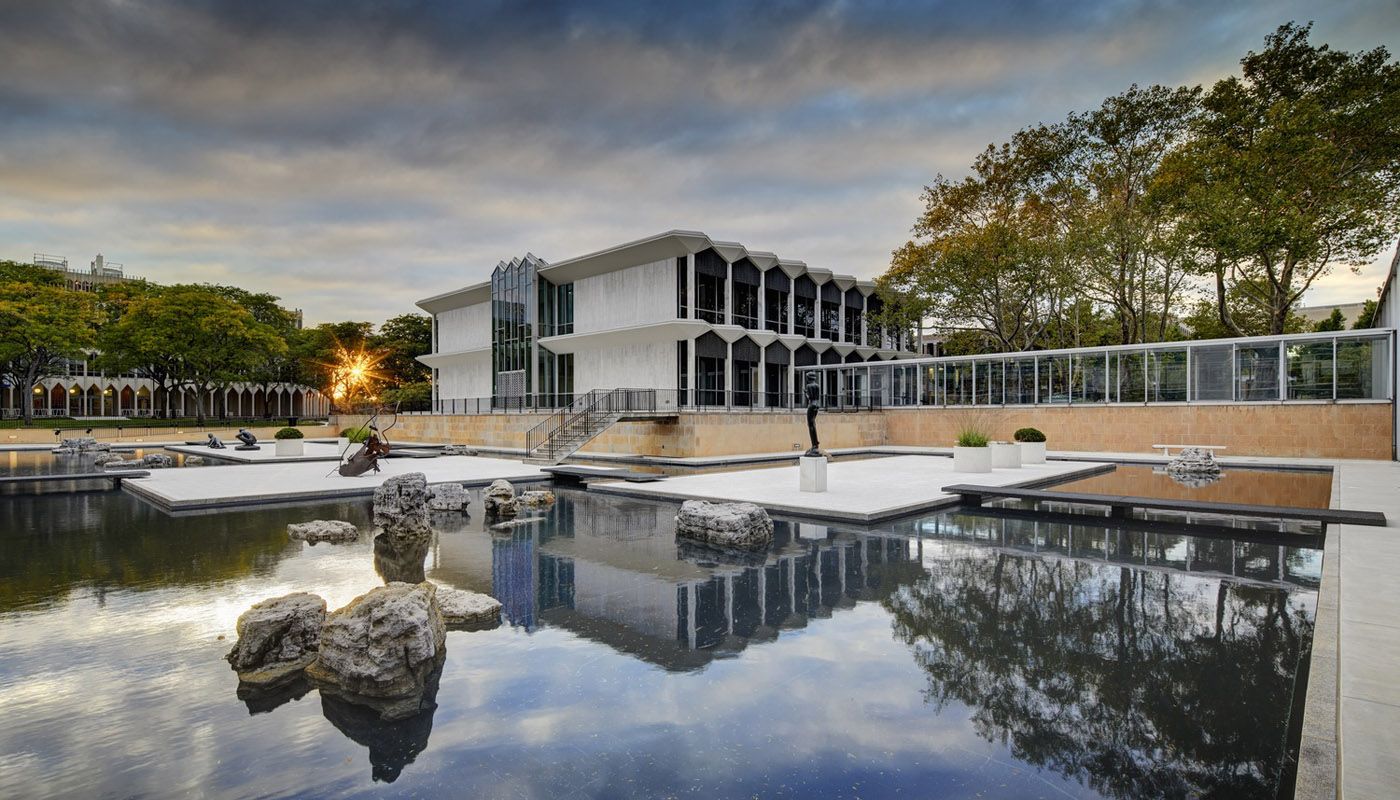
The 1962 Michigan Consolidated Gas Company building in Detroit (below) was Yamasaki’s first ‘skyscraper.’ The stonework tracery and narrow windows on the facade of this building, as well as the arcade of columns surrounding the glass-walled atrium on the entrance terrace level, are recurring motifs in his architectural designs. Some of these elements can also be found on Yamasaki’s 1960 College of Education building for Wayne State University (further below), as well as Olin Hall and other buildings he designed for Carleton College in Northfield, Minnesota.


The Michigan Consolidated Gas Company building, Detroit. Plaza Sculpture by Giacomo Manzu.

The College of Education building for Wayne State University (Detroit, 1960)

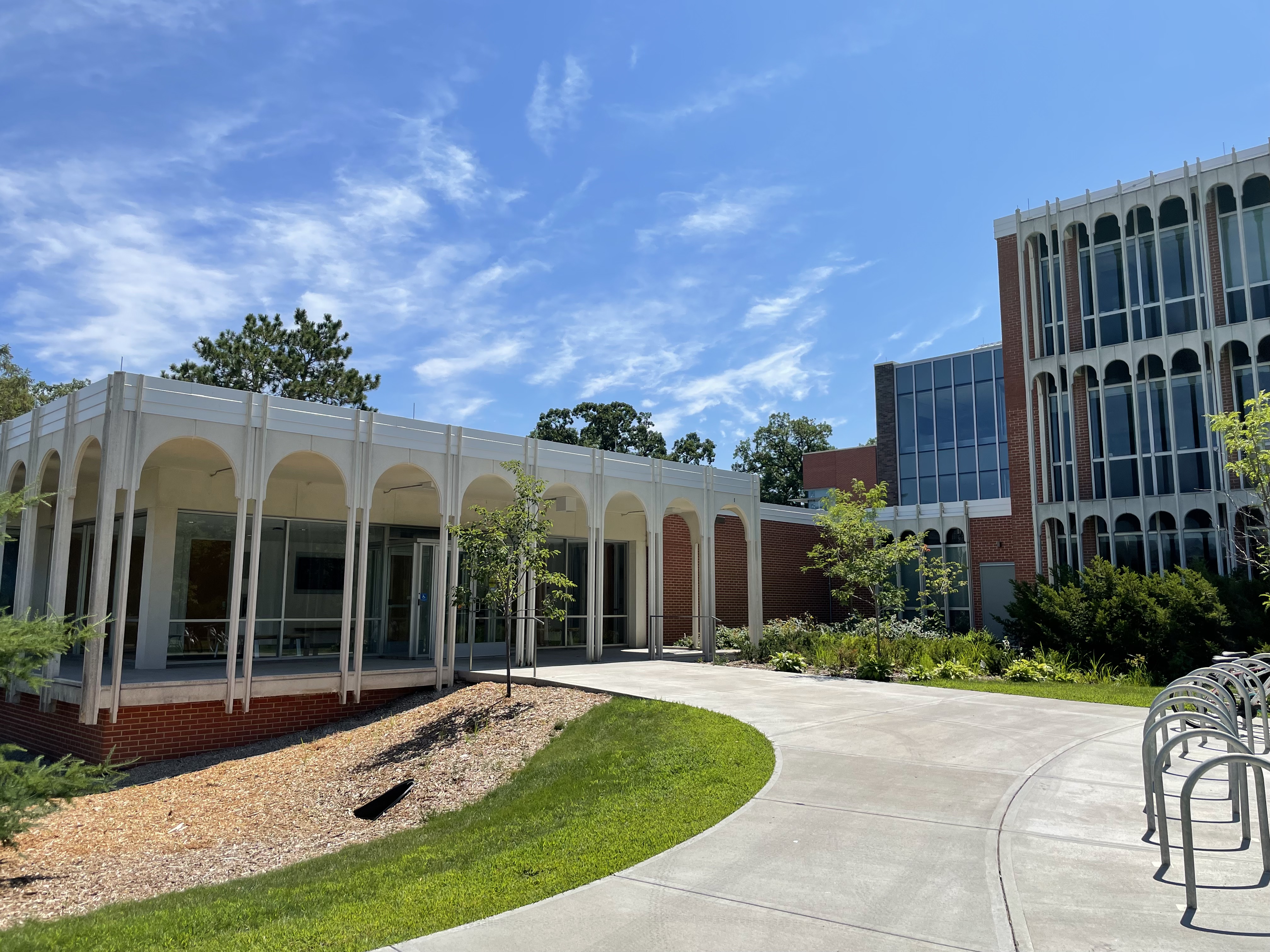
Above: Olin Hall (Science Building) and lecture theater for Carleton College (Northfield, MN, 1961)

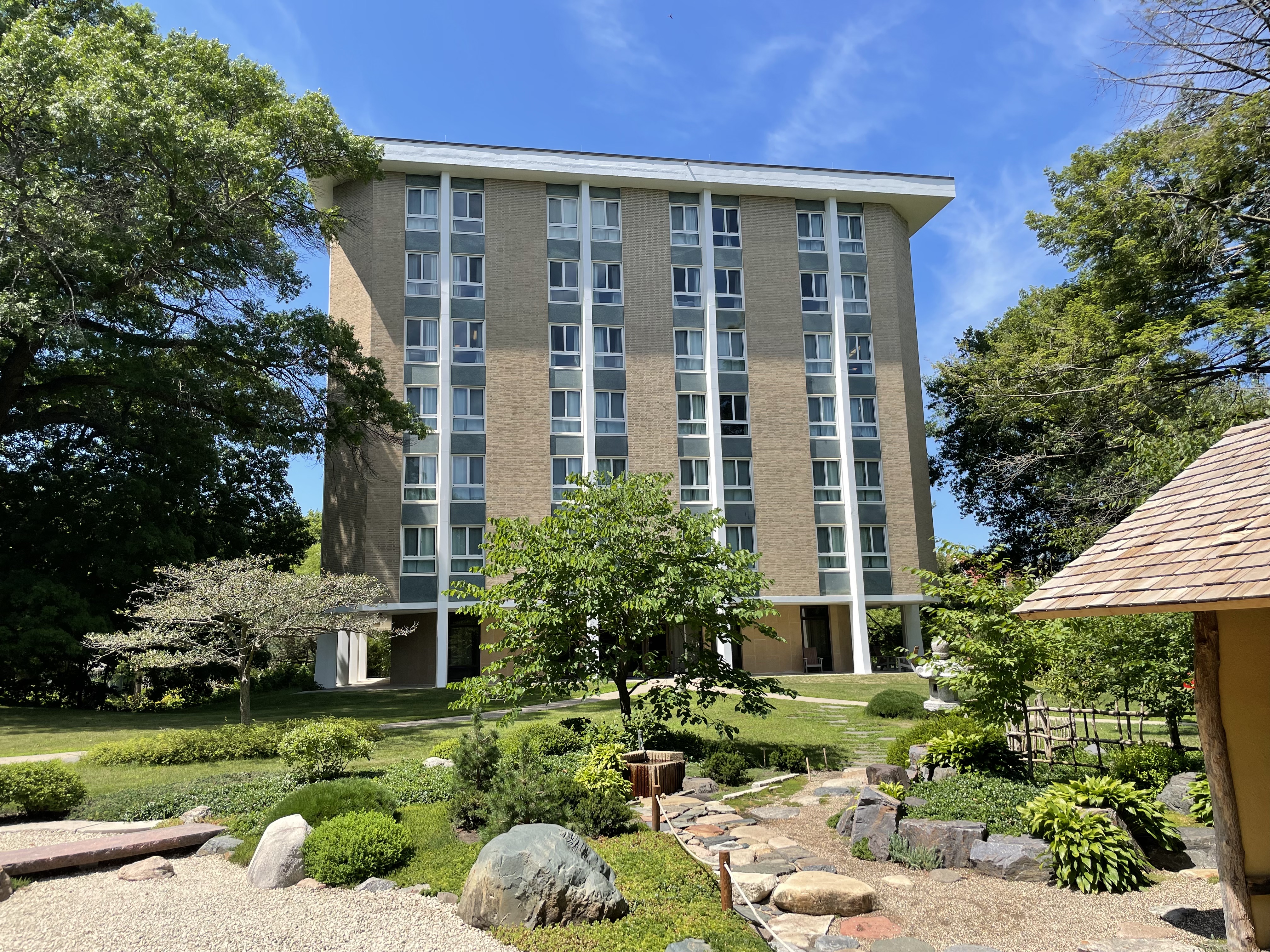
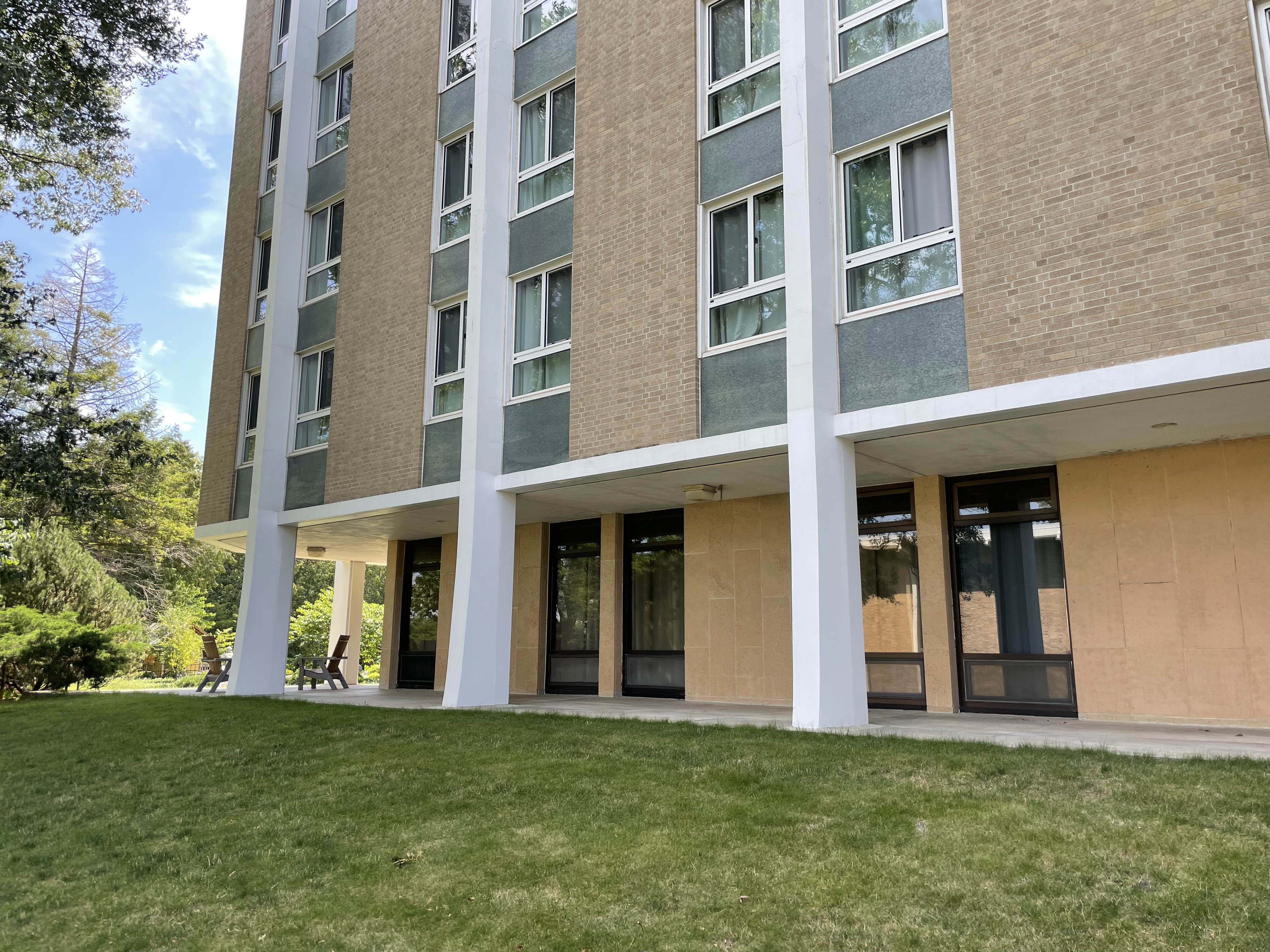
Watson Hall dormitory (1966) adjacent to a Japanese Garden at Carleton College (note how the exterior columns subtly curve outward at the base)

Above: McGregor Conference Center, Wayne State University (Detroit, 1957), exterior and interior

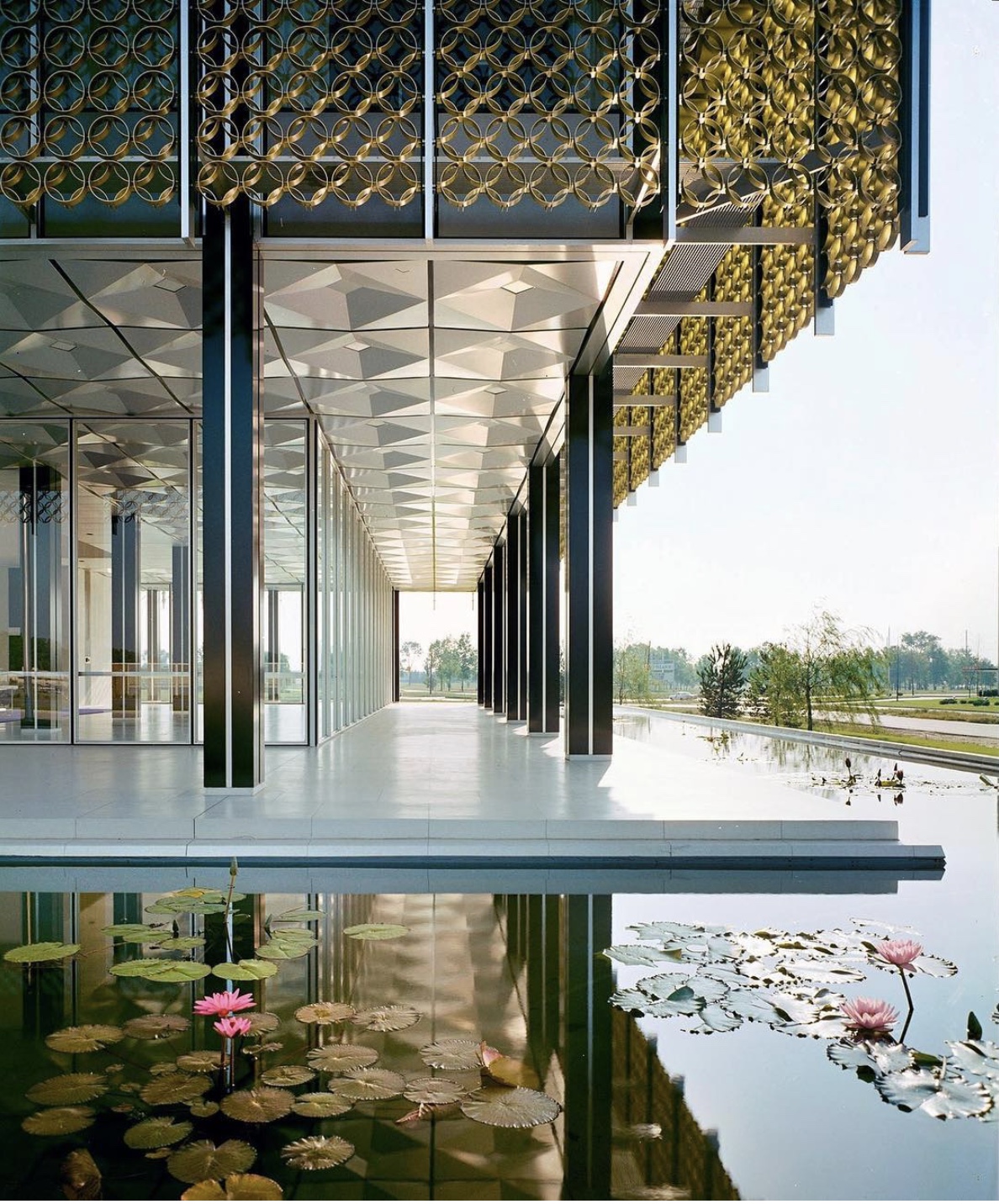
Yamasaki’s design for the Reynolds Metals Regional Sales Office (below, 1959) incorporates elements found in the buildings featured above while also architecturally acknowledging the business of the company that commissioned it. Evident is the architect’s use of ornament clad to the facade of the building, but here in the form of a metallic visual screen attached to the building’s exterior. These elements, as well as the open terrace, and the glass-walled atrium surrounded by columns, are design features that we find over a decade later in his plan for the World Trade Center.

Some aspects of Yamasaki’s architectural work such as the terrace and reflecting pool adjacent to his McGregor Conference Center, as well as to his Reynolds building, may appear to embody an aesthetic sensitivity characteristic of Japanese culture. Raised by a Japanese family in America, Yamasaki – while recovering from serious illness and surgery – traveled to Japan, Italy, and India, in 1953, on an extended sojourn that provided not only recuperation but also inspiration.

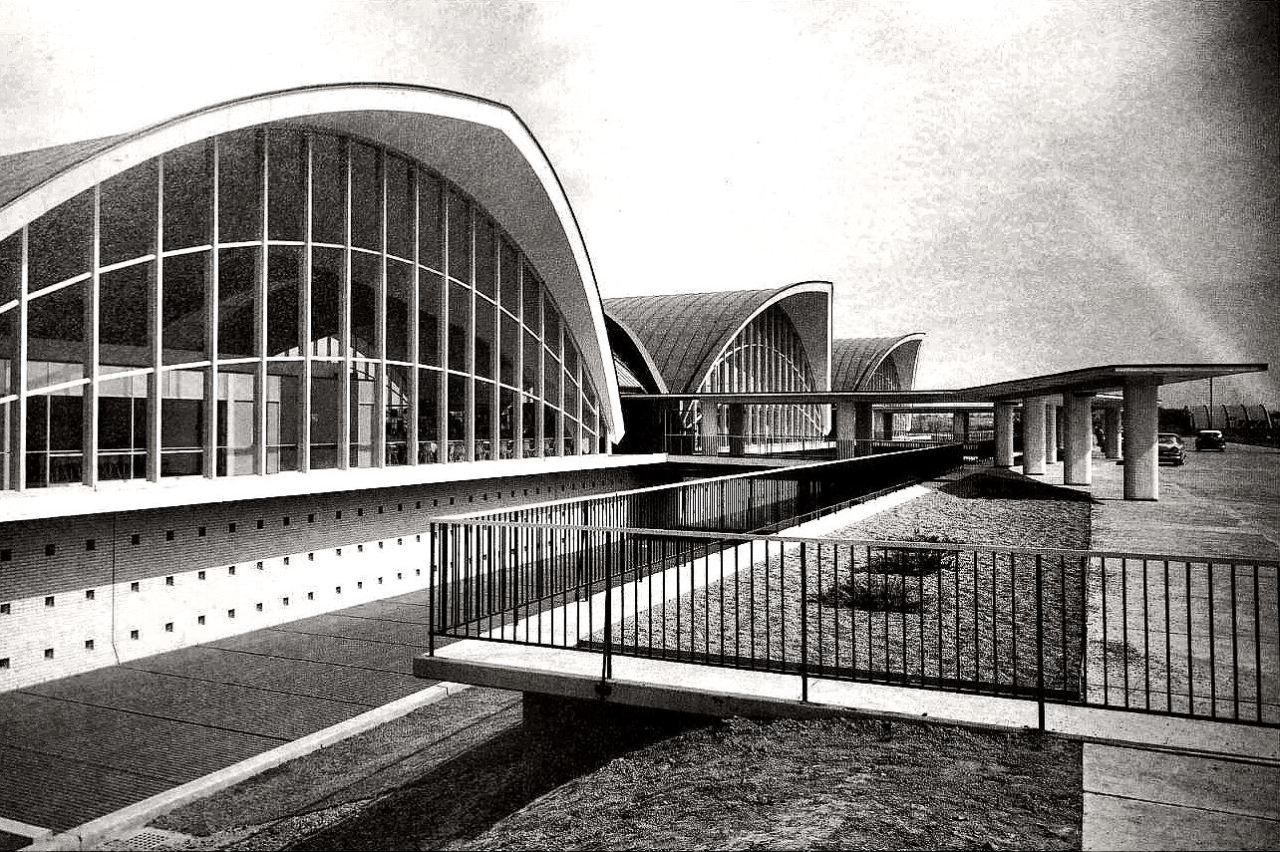
Not all of Yamasaki’s designs are characterized by strong vertical lines and distinct angles, as well as by detailed surface ornament. Two notable exceptions are his 1956 St. Louis Lambert Airport terminal building, and his 1964 West Gym for Carleton College (both below).

Despite the passage of years, Yamasaki’s architectural designs continue to have a fresh and winsome appearance. His buildings stand apart from many examples of urban modernism, where reflective glass-clad buildings often appear indistinguishable from one another and where attention to human scale seems overlooked, especially in the experience of those who approach such structures. By contrast, Yamasaki’s buildings remain attractive and inviting.

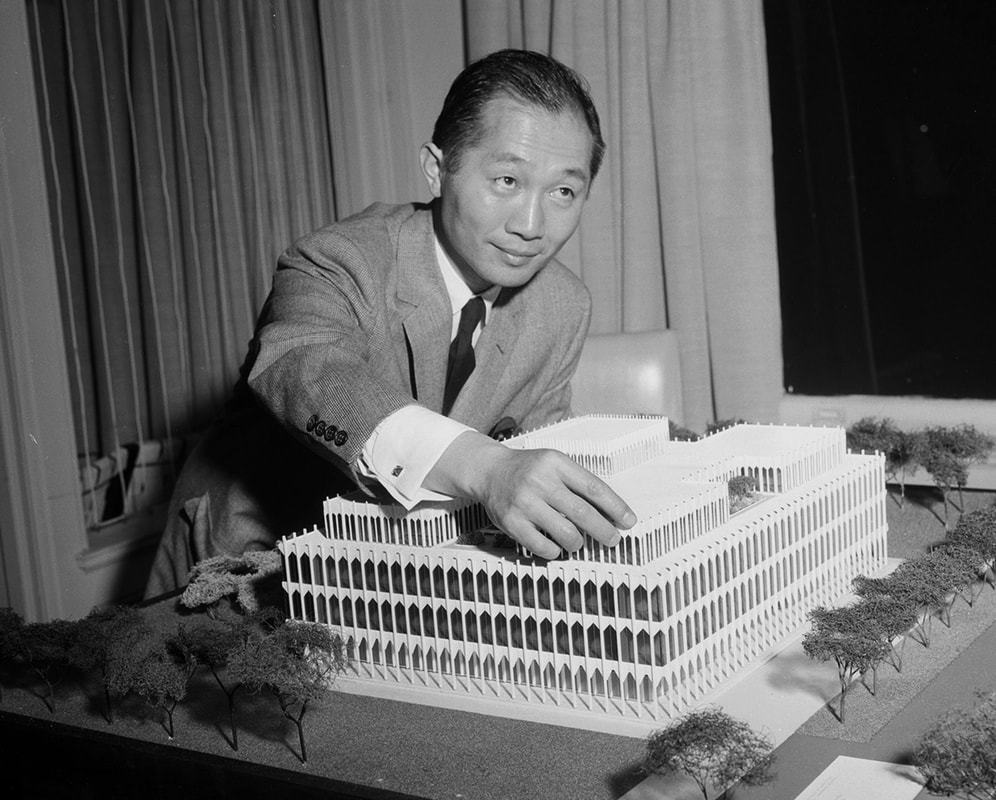
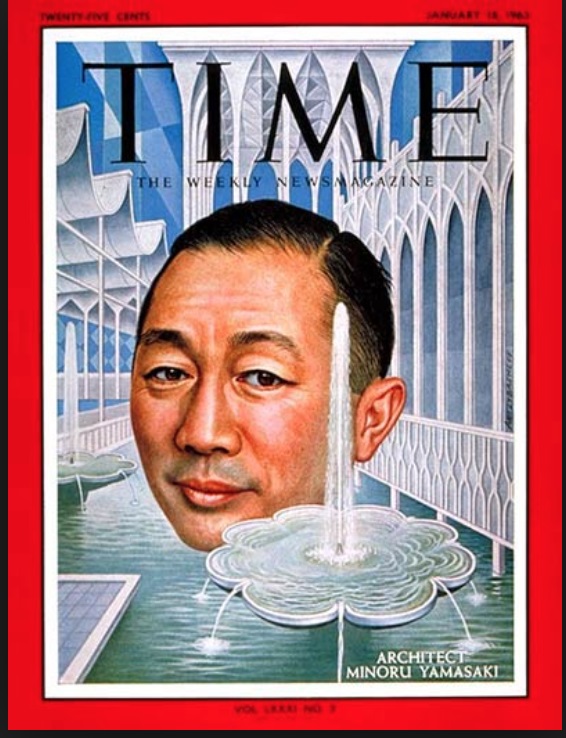
Yamasaki displaying a scale model of his Wayne State College of Education building (above), and as featured on the cover of TIME magazine (1963).

The completed twin towers of the World Trade Center prior to 9/11

The Beauty of the Seth Peterson Cottage

[If reading this by email, please tap the title at the top to open your browser for the best experience.]

Frank Lloyd Wright, Cottage for Seth Peterson, 1958

The last commission completed by Frank Lloyd Wright before his death was a small cottage for Seth Peterson. While diminutive in scale, this architectural gem incorporates many of the design features we associate with the Wright’s visionary work. A native of the region near Taliesin, Wright’s home and studio, Peterson had once sought to become one of the student-apprentices there. He later sought to commission Wright to design a personal cottage, sending a check in advance. After declining Peterson’s request more than once, Wright, having already spent the fee, was obliged to fulfill the request to provide the plans. Admirers of FLW’s architecture can be glad for Peterson’s persistence and that this small project was completed with impressive results.

Sadly, Peterson did not live to inhabit the cottage. Yet subsequent owners and devotees of Wright’s legacy helped preserve this small treasure. The fully restored cottage sits on land that is now part of a state park, and it became the first Wright home later available for guest rental (and remains so).

Attention to the relatively simple floor plan of the cottage helps orient those newly acquainted with it to identify some of the principal characteristics of Wright’s many home designs.

The entryway on the upper left side of the plan is in many ways typical of Wright’s preferences in that the structure is approached from the rear and then from the side. Slender double doors open into the compact interior which at the same time appears expansive due to the raised roof and ascending ceiling, which provide shelter over a wall of glass punctuated by warm cedar or redwood uprights. Complementing the beckoning view to the left, over a valley and lake, straight ahead the visitor sees more windows and double doors that open onto a side terrace. This prompts an initial sense that the primary orientation of this small home is toward the natural beauty of the landscape just beyond.

Passing beyond the dining table and chairs (Wright designed, of course) and into the main part of the living space, a second principal point of orientation for the cottage emerges. This is as it is with most FLW-designed homes, where one finds a massive fireplace featuring the same stone work evident throughout the structure and its surrounding terraces. While fireplaces of this kind and scale provide a central anchor point for so many of these domiciles, the plan helps us perceive something more. Wright typically grouped the kitchen (what he termed the workspace), utility room, and bathroom(s) together with the central fireplace in a practical way. Yet, visually and experientially, the fireplace always took pride of place and tended to obscure attention to those other spaces and their functions.

The relatively diminutive scale of the bedroom and bathroom in this cottage befit that of the cottage as a whole, and yet a study of many of Wright’s other house plans reveals a similar result. Just like his designs for kitchens, Wright’s apportionment of space for nighttime rest and personal hygiene was at best modest. It is as if he strongly believed that the greatest amount of waking time for a home’s residents should be in its common areas, where – beyond personal needs – one might pursue learning, social interaction and an experiential connection with the natural world.

In my view, the following photographs show the cottage at its best.

The terrace, which provides a lovely place to enjoy a summer evening.

The Seth Peterson cottage continues to receive guests through all seasons of the year.

Christo and Jeanne-Claude: Landscape Artists with Vision

Surrounded Islands in Biscayne Bay, ‘wrapped,’ 1983


Having in prior posts featured an introduction to three landscape artists beginning with Andres Amador, today I would like to focus on the earlier work by a couple who gained recognition through the unexpected character of their joint projects.

“Christo and Jeanne-Claude described the myriad elements that brought the projects to fruition as integral to the artwork itself, and said their projects contained no deeper meaning than their immediate aesthetic impact; their purpose being simply for joy, beauty, and new ways of seeing the familiar.” [Wikipedia]

I am grateful for Wikipedia’s succinct summary of Christo and Jeanne-Claude’s shared-aim for their joint work, and especially for that phrase, “their projects contained no deeper meaning than their immediate aesthetic impact…” Modern art in its many forms has been subject to much misunderstanding, as viewers have often looked within it for ‘meaning’ and ‘a higher purpose’ where none has been intended. I have previously featured the work of Alexander Calder and look forward to presenting the work of other 20th century (and later) artists, who have offered us the sheer beauty of non-representative paintings and sculptures.

Christo and Jeanne-Claude’s collaborative work has long struck me as epitomizing this approach to the exploration of beauty. They risked appearing to have trivialized their engagement with the natural world as well as with well-known works of architecture. But they also helped us see familiar and unfamiliar things in different ways, and with new appreciation.

Most significant was their consistent effort to make their projects not only self-funded, but as ecologically sensitive as possible, with their subsequent donation or recycled use of art installation materials. In my view, they did not seek to alter the landscapes or structures with which they worked in more than a very temporary way. And certainly not in any way that would compromise those beautiful places, but instead to enhance our regard for them.

I offer the photos below with appreciation for the simple joy that these prior installations may have brought to those who were able to be present at them, and for the beauty of the preserved digital images we still have of them. I wish I could have seen one myself, in context!

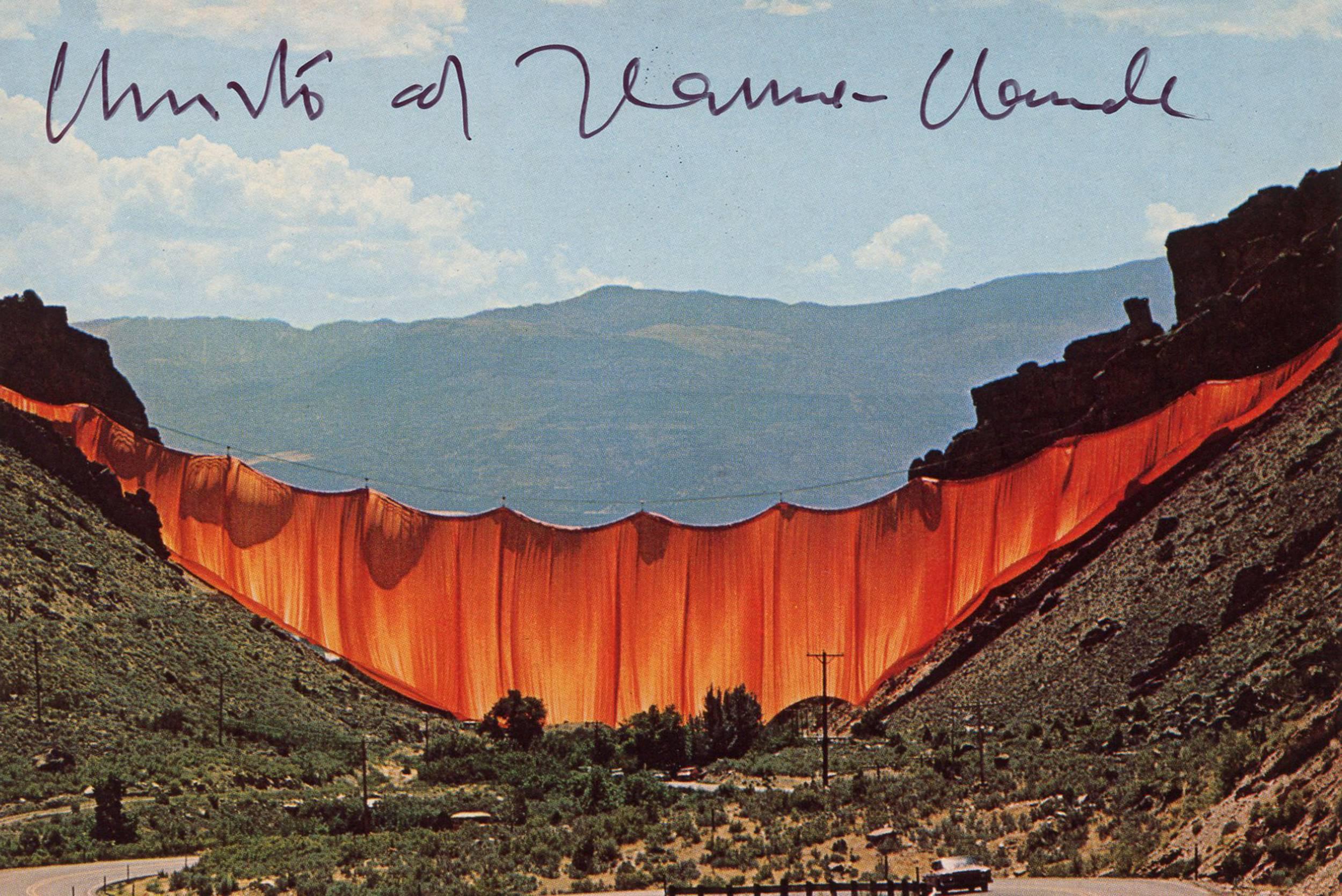
Valley Curtain, Colorado, 1972

Running Fence, Sonoma and Marin Counties, CA, reported as 24 miles long, 1976

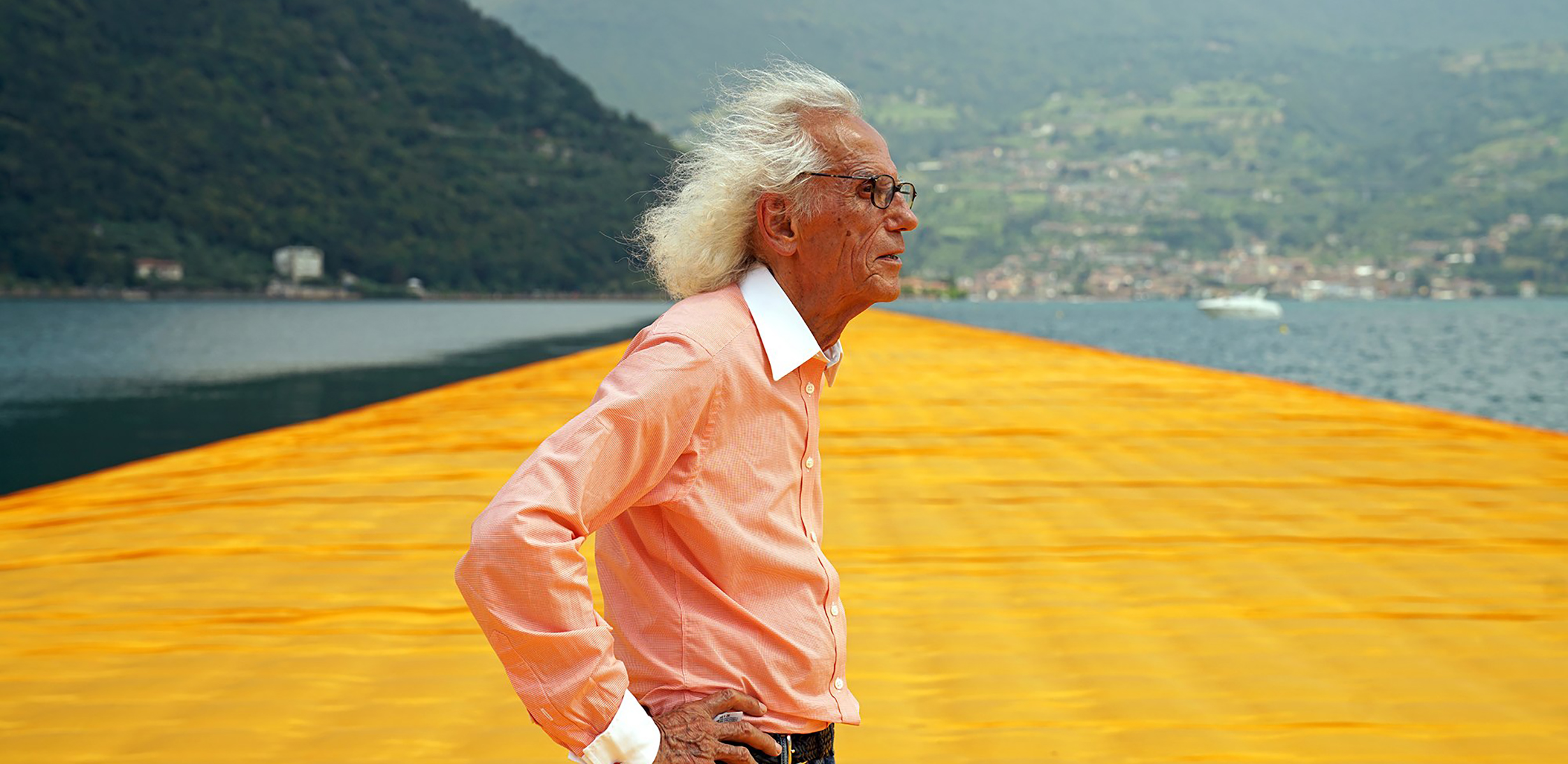
Christo on Floating Piers, Lake Iseo, Italy, 2016, after Jeanne-Claude’s death in 2009

Hundreds if not thousands walked on the floating causeway to the island

Pont-Neuf bridge in Paris, ‘wrapped,’ 1985

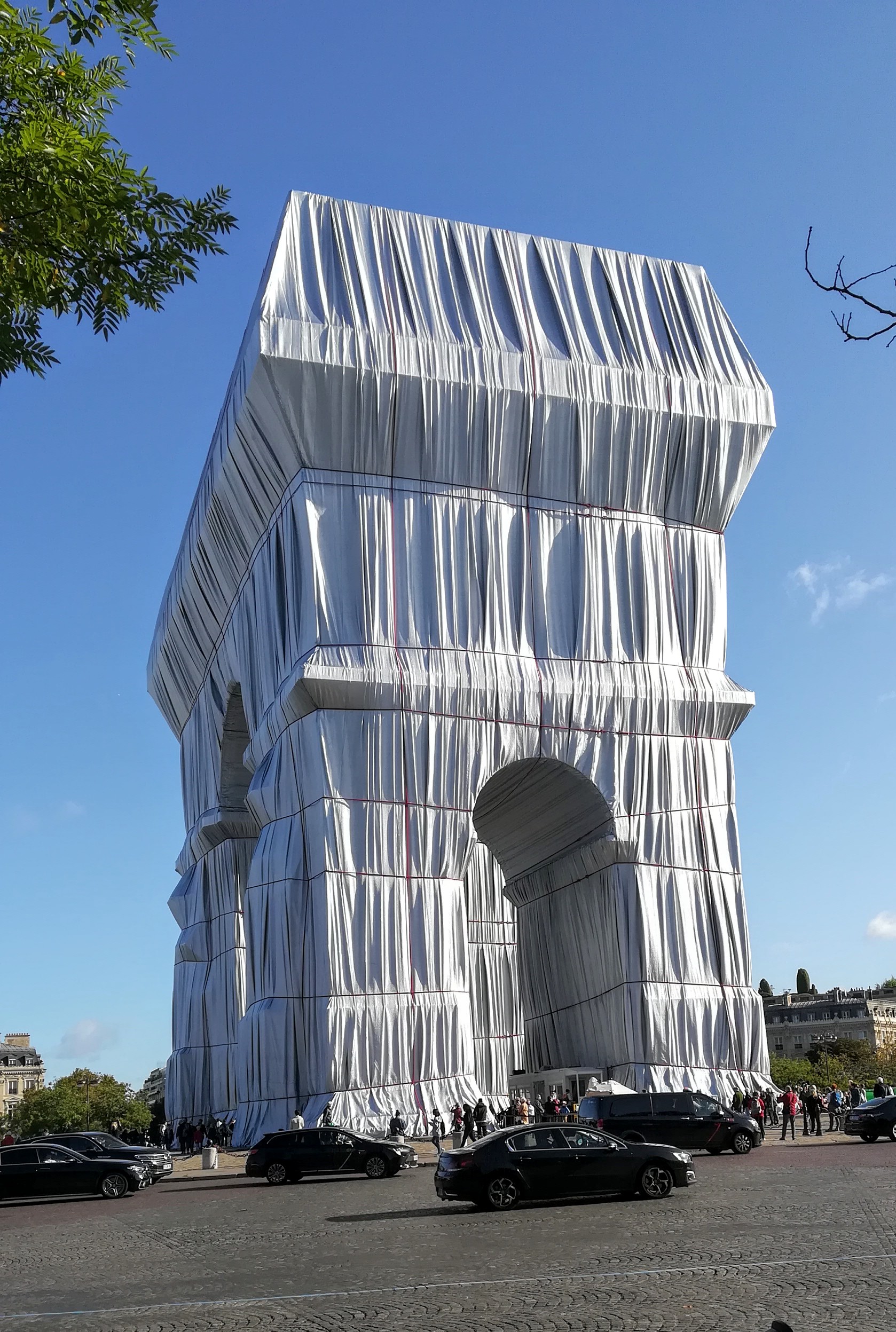
The Arc-de-Triomphe in Paris, ‘wrapped,’ 2021

Andres Amador: Earthscape Artist

[If reading this by email, please tap the title at the top to open your browser for the best experience.]


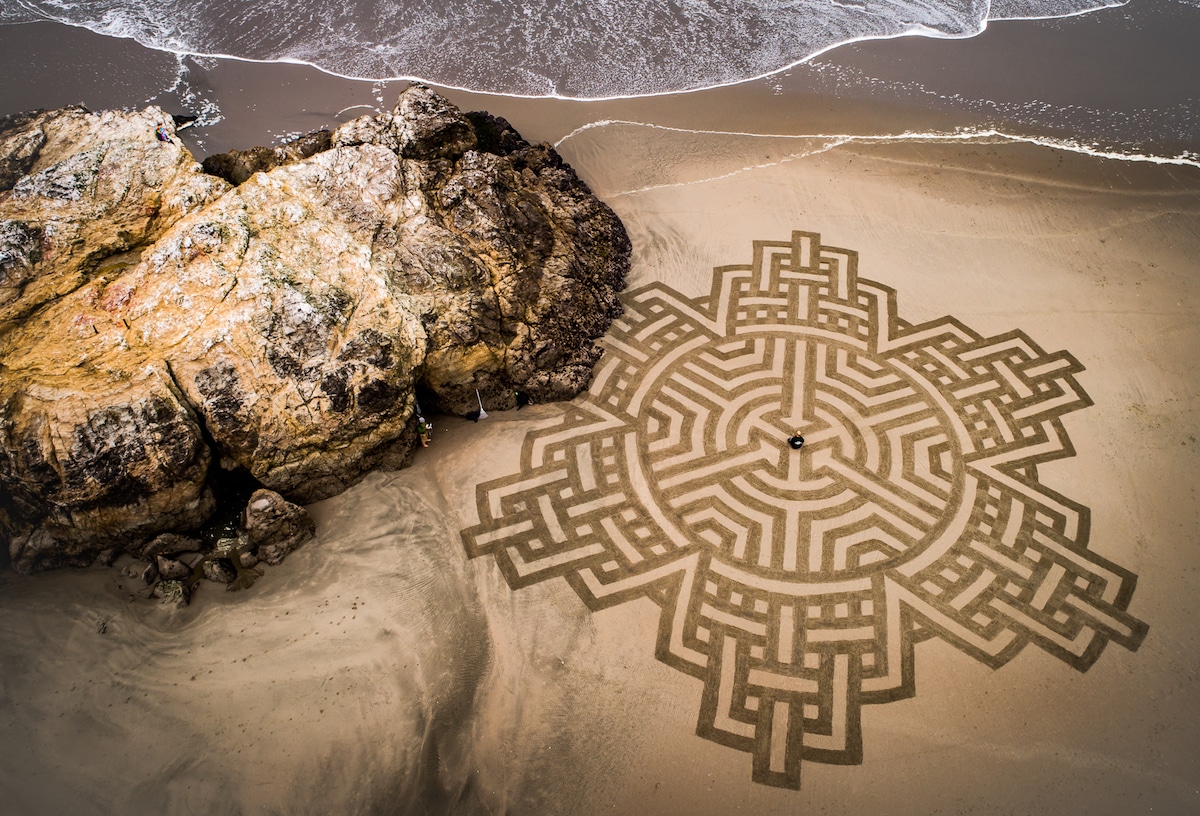
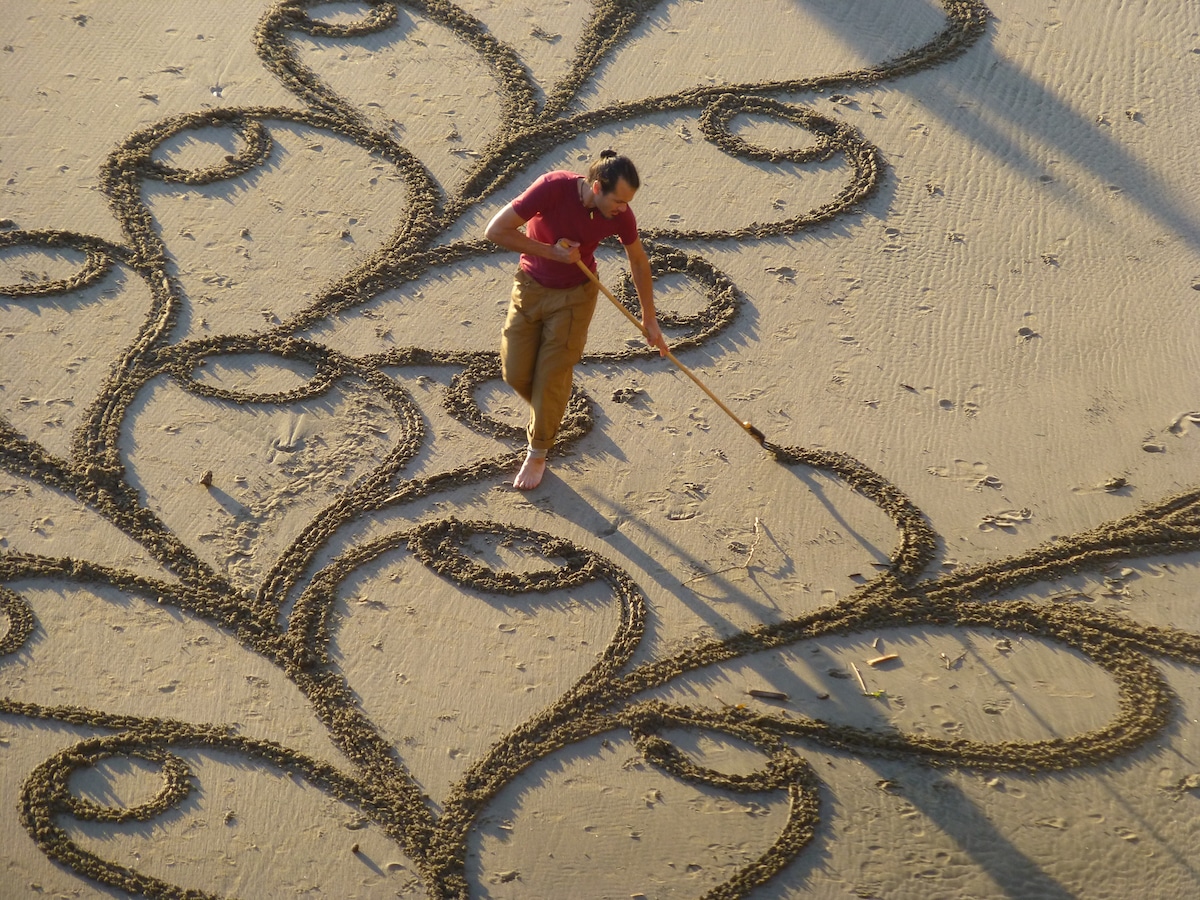
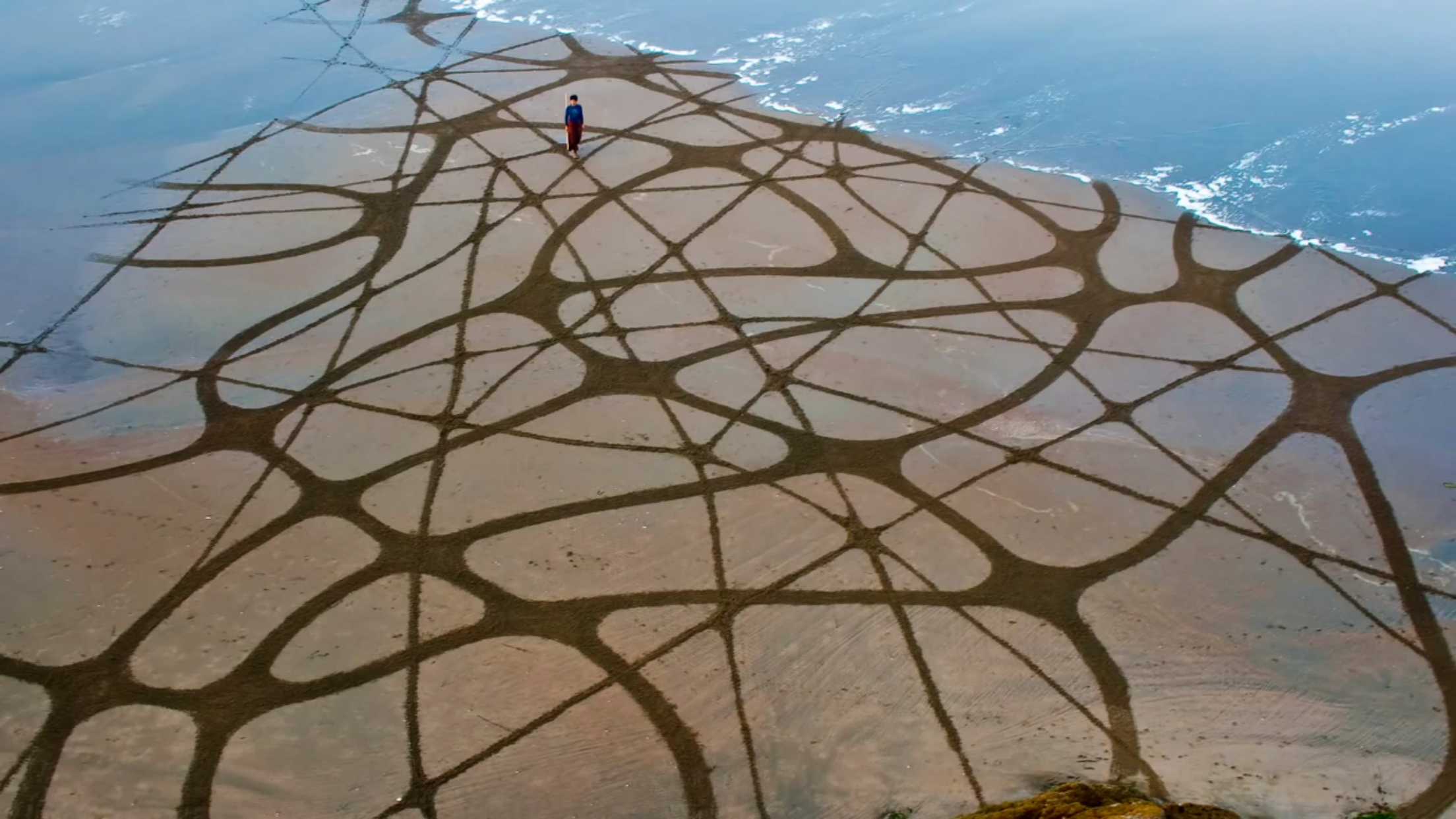
Above we see a drone-based digital image of a pattern that a contemporary artist has inscribed upon the sand of a beach. He is also an academically trained scientist, who has employed his gifts in a particularly sensitive way.

Now, why are some or all of those details important? Because we see here the abilities of Andres Amador, someone whose public art work may lead us to wonder about how this artist could have accomplished all this. Not only in the image above, those presented below, as well as those widely available now on the internet.

Well, what would it take for you or me physically to be able to produce such an image upon the sand on a seaside beach? To my surprise, it is only geological timing (the tides); an appropriate location in relation to that matter of the tides; and then only a couple of simple tools. These would include some common and small garden rakes, and perhaps also – in relation to the circular-based patterns – a metal or wooden spike, a long rope, and some kind of carving or scraping tool at the end of that rope. The invention of the small drone with a camera has also been of help.

But, clearly, it takes more than physical circumstances, geography, and available tools. It also takes a scientifically trained sensibility as well as a developed intuitive creativity. What Andres Amador has accomplished and still produces is not in any way simple. And yet, he provides frequent teaching sessions, open to all, inviting others to do what he does. Insight about this is provided by a short but compelling video produced some years ago by KQED San Francisco (see link below). I think that one way to summarize a principal theme in his work is that he seeks to see things “whole,” which for some folks is related to seeing what is “holy.”

In that video, Amador describes two reference points, or two sorts of impulses within him, as sources for his earthscape art. “The two main directions that I go with, in the art, are {first} the geometric, which is very precise… So, it’s all about perfection.” Pattern can be imposed upon the ‘blank canvas’ of nature.

“The other {or second} side of it,” he says, “is the organic art, the art the feels like it is emerging from the location… the art that is telling me what to do next.” Pattern may therefore be in some sense received.

I find these two insights to be spiritually and theologically significant. We are able to impose pattern upon our lives, and often attempt to do this within the social world around us. At the same time, we may discern and receive pattern for our lives from within, whether from a divine or from a natural source, or through the gifts of others. Impose, and receive; both are important for our search to become whole.

God bless your continuing work, Andres, and especially for helping us perceive beauty in a fuller way.


Here is a link to the compelling KQED Andres Amador short video : https://www.kqed.org/arts/10134941/andres-amadors-earthscapes-art-that-goes-out-with-the-tide


The Beauty of Stone

Beautiful stones imported to south Louisiana


Here in southeastern Louisiana there is virtually no natural local stone. Geologists may differ about when and how it occurred, but generally agree that the original Gulf coast lay somewhere north of where I now live, between Baton Rouge and Memphis. What we do have here, as a setting for verdant plant and tree growth, is a lot of red clay and or sand, as well as the significant contribution of alluvial (river borne) soil. On this, our eastern and only slightly elevated side of the Mississippi River, they tell us we also have ‘loess’ soil, wind-blown from the west. In other words, where I live rests upon a legacy of materials brought here over the course of millennia – by mud-flow from the north, and dust storms from west.

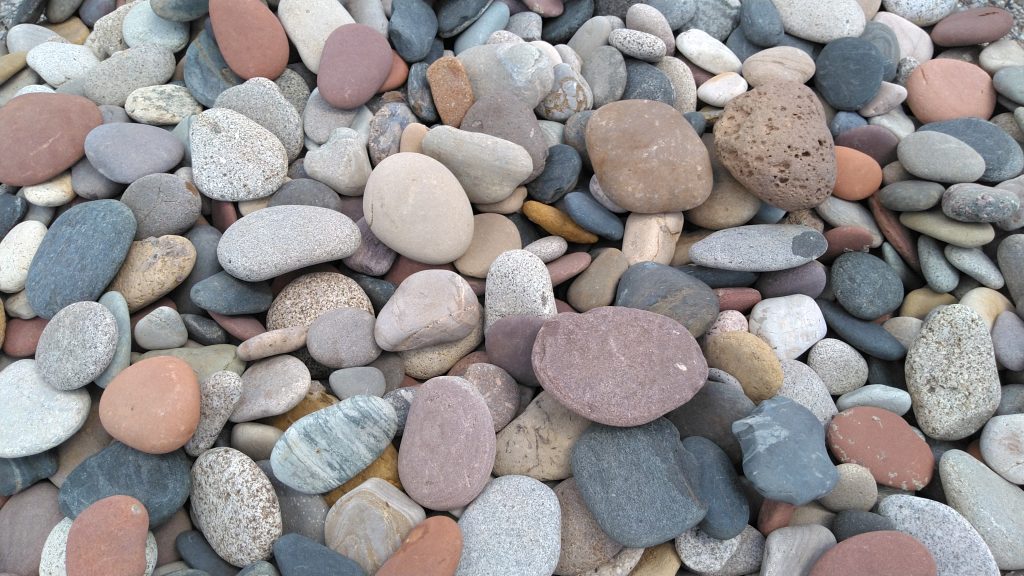
Stone, as my earlier posts about our patio project suggested, therefore comes here from elsewhere, mostly I suspect by river barge. When visiting a local landscape stone vendor recently I was reminded of something I used to take for granted when living in the midwest or traveling in the far west. It is the beauty of natural stone, whether found on a Great Lakes seashore or on the banks of a Colorado river. What on childhood visits I appreciated seeing in abundance upon the north shore of Lake Superior, I now find to be an almost exotic discovery at a commercial location in Baton Rouge.

And, among the wonders of the handiwork of our Creator is the splendor of variously colored and multi-shaped stones

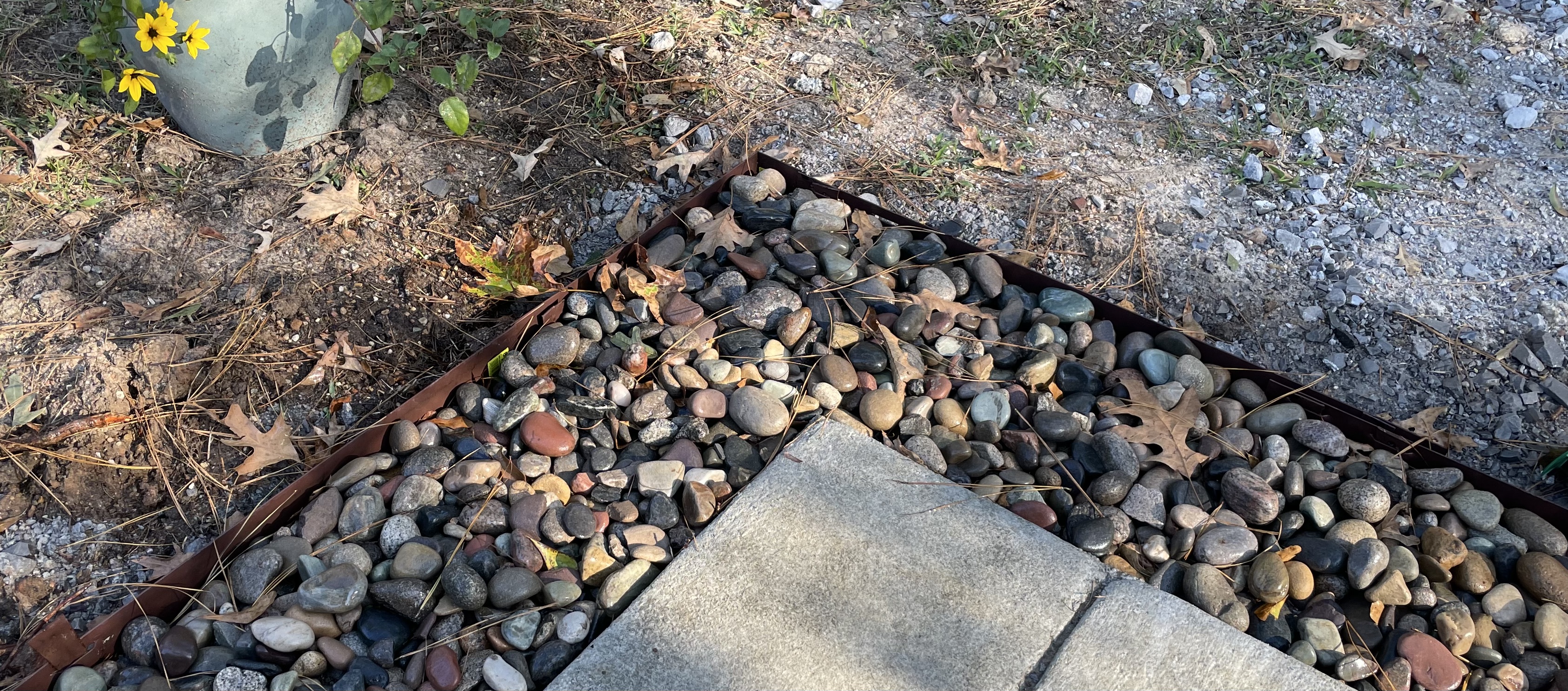
An unfinished stone border featuring ‘river rock’ from Colorado

Some years ago a teaching colleague shared a story from his work assignment in Saudi Arabia. On a free day, a local guide drove him for several hours through the desert toward the sea. Upon viewing the welcome sight of the water, he noted a large cargo ship discharging material into barges. He asked his guide what they were unloading, to which the response was, sand! “You’re kidding me,” he said. And then my friend learned to his surprise that the sand that has been blowing back and forth forever across the Saudi desert is apparently reckoned by many as worthless for construction, having rounded particles. Sand essential for concrete foundations and buildings needs to have edges, and come from Europe and elsewhere, to provide a proper binding material while the cement cures.

I am mindful of this story when I view the beautifully rounded and smooth rock that comes to us from far away rivers and lakeshores, after perhaps long eons of geological friction. I also rejoice in the variety of color in a material that might otherwise be as uniform as the sand in an Arabian desert, or on the banks of the great river just a few miles from our home.

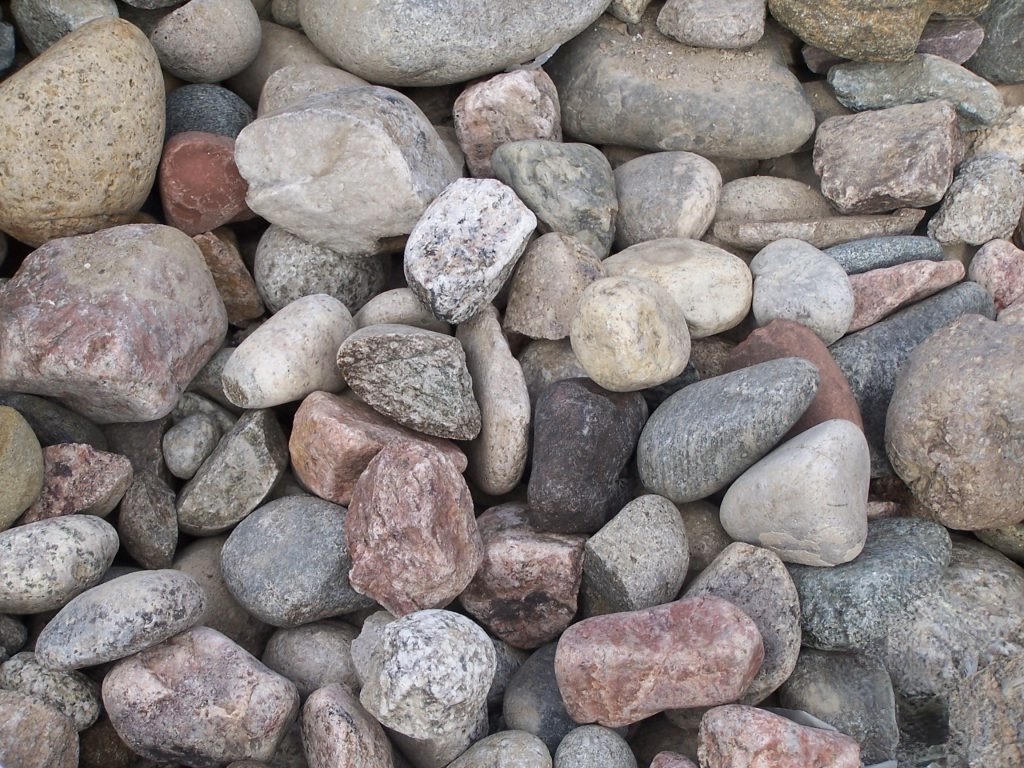
Random Colorado river stone pieces

I am therefore thankful for the shaping and molding effect of God’s Providence upon me – even after what may seem like an unimaginably long time. Our experience through the rough and tumble of life can sometimes leave us feeling awkward and with uncomfortable or raw ‘edges.’ At other times, we may feel we have been smoothed and shaped in ways more attractive to others and to ourselves. The beauty here may lie in the wisdom latent in one of my favorite, but still-not-fully understood, verses from the Psalms: “You have showed me great troubles and adversities, but you will restore my life… (Ps 71:20)” For why would God show me adversity other than as an act of positive love? And, why would God not to seek to bring us together into a beautiful fellowship within God’s own being? Especially when it may be ambiguous as to whether we have jagged and or smooth edges!


One big ‘stone’ in my life has been Robert (Bob) Hansel, my former CREDO Institute colleague, to whom I owe much. When I first encountered him, he played a decisive role in helping me to discern that I was being called away from a tenured seminary teaching position back to parish ministry. His prior CREDO faculty role as a team leader changed many of our lives – not by persuasion, but by encouraging our personal discernment. Here, I want to acknowledge his wonderful story about his experience in Saudi Arabia (that he tells so much better than I can).

The Beauty of Koi and of Goldfish


One day as a boy in Japan I looked up and marveled at the fish-shaped fabric streamers, flowing in the wind like kites. The fish were Koi. Traditional Japanese households fly Koinobori from poles or lines in honor of Children’s Day, a national holiday observed on May 5. Whether in the kite form or not, Koi are special to the Japanese, who first bred the new fish varieties and cultivated their colorful iterations in the early 19th century.

As beautiful as some of the fabric examples of Koinobori can be, they are not nearly as evocative as the real thing. Koi are a form of carp, which to our ears makes them sound like something unpleasant. They are not a variant of goldfish, and though Koi can be interbred with the latter, the offspring are sterile, just as are mules (the offspring of horses and donkeys). Unlike common carp, Koi have been bred to feature bright colors and a fluidity of movement that graces many ponds in formal Japanese gardens. Curiously, if released into the wild and allowed to propagate, researchers find that within a limited number of generations, Koi offspring revert to the more common form and dull brown-gray color of river and lake carp.

A goldfish above a Koi

One notable difference between common carp that are found in many rivers and lakes, and Koi found in Japanese style garden ponds, has to do with the quality of the water in which they are typically located. As bottom feeders, carp tend to swim and eat in the lower levels of murky waters. And so – by contrast – Koi are usually cultivated in clear and relatively shallow pools where their bright colors can be better appreciated.

Koi can be quite expensive, especially the fancier varieties, but they can also live as long as, if not longer, than humans. For these reasons, those who are new to keeping fish in smaller outdoor ponds may do well to start with multi-colored goldfish, the outdoor care of which can be easier and a good preparation for caring for Koi.

Some years ago when we previously lived in south Louisiana, I purchased a black plastic pond basin from a big box home supply store, along with an inexpensive pump. Having half-buried the basin, we found some decorative stone and an aquatic plant or two. We then filled the basin and let the water sit for a few days to allow any chlorine or other potentially noxious elements within treated water to dissipate, and to ‘season’ the pond’s content. Some landscaping needed to follow, as you can see below.

For a surprisingly limited number of dollars, a trip to WalMart provided a number of long-shaped, rather than plump-shaped, multi-colored goldfish, which survived and even thrived over many years while growing to an 8 or 9 inch length (photo below). The pond pump helped aerate the water, and a natural bacteria and enzyme product made a huge difference in helping keep the pond clear.

Many people find even a small water feature like a miniature fountain near a patio to be calming and restful. Adding a small gurgling pond, such as ours, with a few fish can enhance the interest, providing the subsequent pleasure of helping care for the aquatic residents within it. Someday, I hope to have Koi. But I may be starting once again with goldfish, which on a smaller scale can often be just as beautiful!


A special thanks to former and now neighbors, Jeanne and Tom Morris, for adopting our goldfish and pond, and giving new life to the ensemble.

Patio Project Near Completion


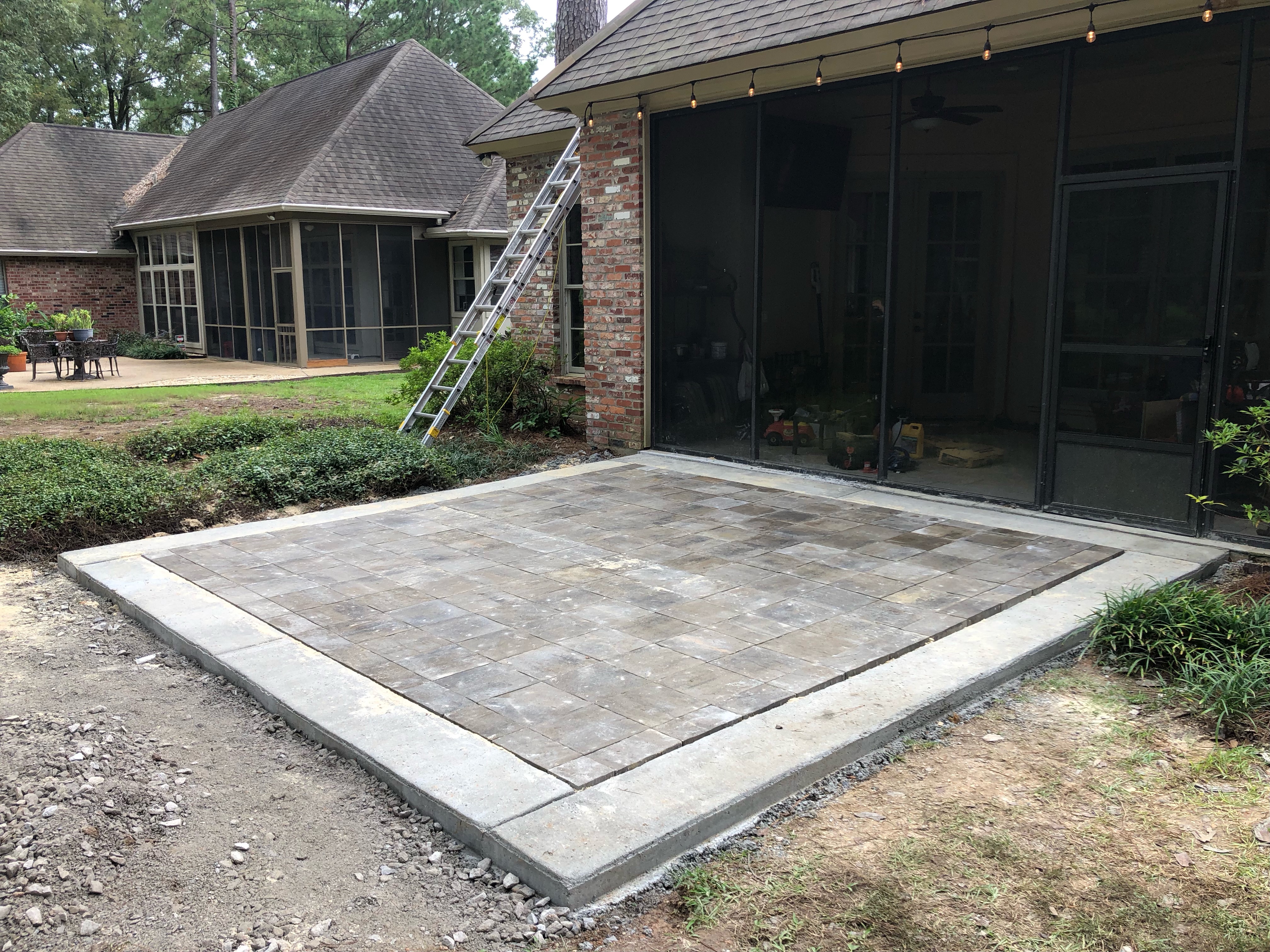
And just in time. My brother’s return flight to Seattle has loomed on the calendar, along with the daily weather forecasts. We have been most fortunate, keeping on track with the former while dealing with the latter. The photo above shows the basic work done: poured concrete edging well set; foundation for pavers put in; and the pavers themselves set in place. Two further photos may help show how this was far from a simple process.

Here we see the packed gravel foundation for the patio, with sand above it, between the concrete edge surround on the left, and a wooden frame on the right. Below is a photo of an ingenious wooden framing-tool my brother created, which first helped us level the gravel, and then assisted us to achieve a level, packed sand surface for the pavers.

Careful attention to two things at this point made a huge difference. The first was to attending to old fashioned geometry – making sure everything was square. Because if we were not attentive to this point from the placing of the first square, all else would have been difficult and possibly compromised.

Also critical at this stage was leveling the sand, assisted by hand-holds of sand, a shovel, and a very handy 6″ spackle blade. With my brother’s home-made framing tool (depicted above), laying the pavers on a flat but slightly sloped surface was (as some might say, perhaps wrongly) ‘a piece of cake!’

Here we are after the first few rows. We did all of them in about 5-6 hours. Though we have some edging work left to do, and putting some very fine sand between the pavers, as well as between them and the concrete edging, we have essentially achieved our goal.

Here is how it looked before we started!


A Patio Project by My Brother, with a Good Neighbor’s Help

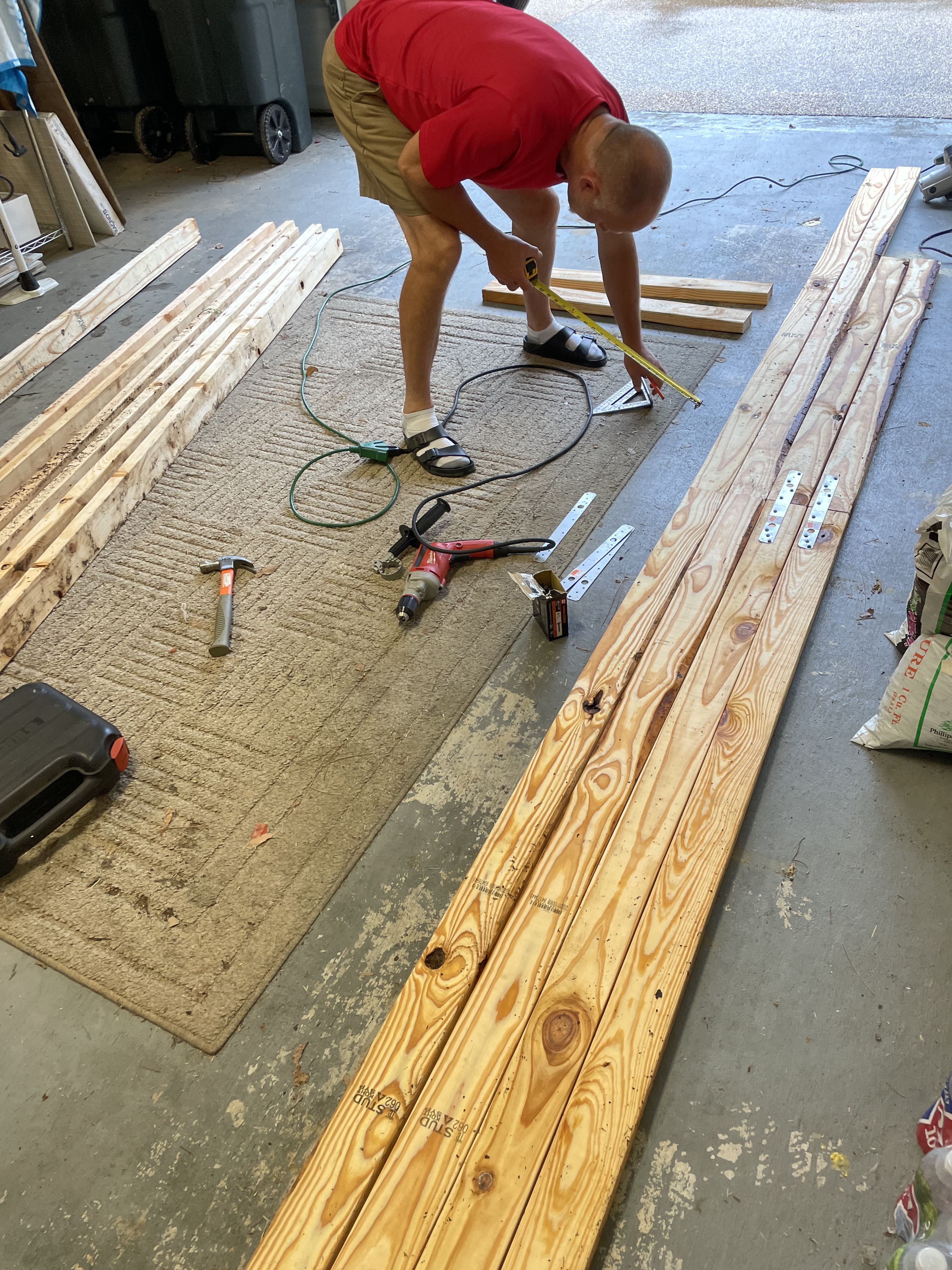
Building the frames for the concrete edging


The project continues, as does the seemingly ceaseless rain! Living near the Gulf of Mexico in the summer brings the possibility of lingering low pressure cells, sometimes dropping inch-an-hour rain. We have entered that middle stage of a project where we have done enough so far to prevent turning back, and yet not far enough along to have confidence about the intended result.

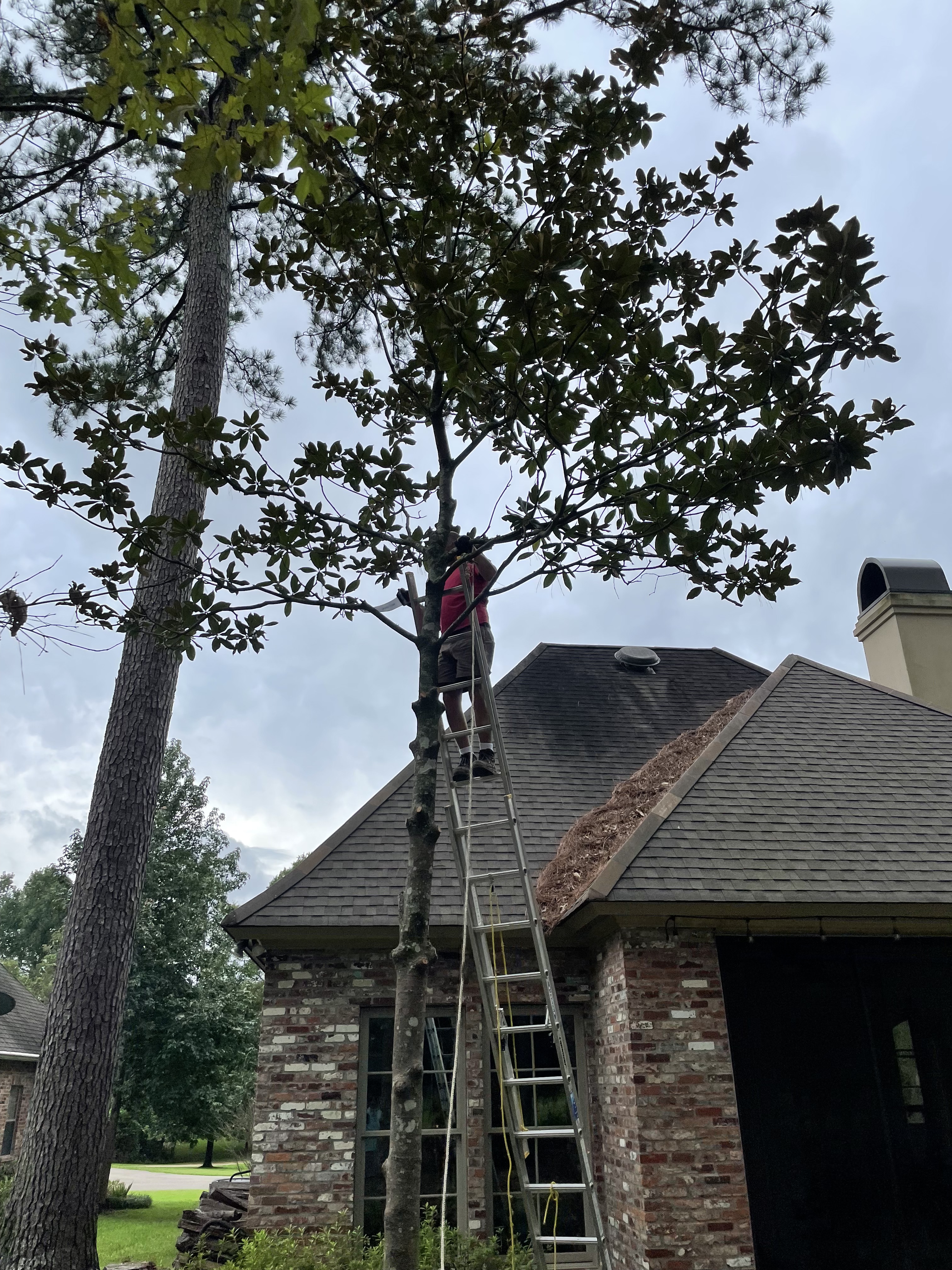
80 pound bags of Quikrete are not easy to lift and move around, and are far more challenging to handle than individual stone pavers. And three cubic yards of ‘gravels and fines’ (perhaps about 5 tons!), brought here to south Louisiana by barge, must be moved from the driveway out front to the new patio out back. In the midst of these considerations, a 9″diameter trunk magnolia had to come down because its roots had already compromised the prior patio. We accomplished that mostly by using a handsaw, but the providential appearance of a neighbor with a chainsaw helped us take care of the hardest and last part of that task.

The magnolia on its way down! (the debris in the roof valley is coming down, as well)

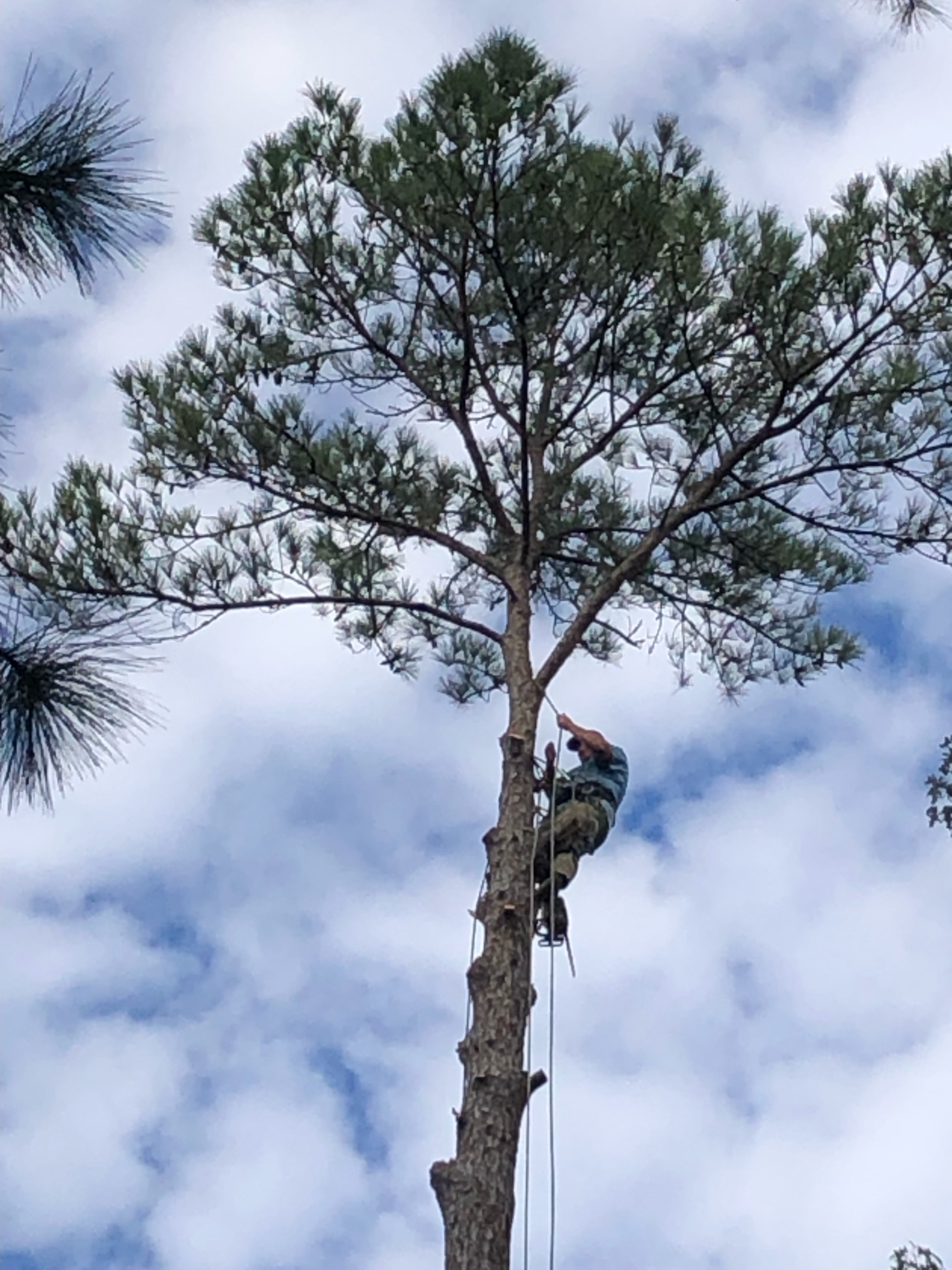
Another confidence-building point has been the kind help provided by our thoughtful next door neighbor, who volunteered to drive his Bobcat small tractor to assist us. In the process of helping clear the area for the new patio, as well as to move the gravel around to the back, we made a discovery. A very large, 80-100′ ancient pine tree had also intruded roots under the whole area of the old patio, and needed to be removed. Below is a photo of the guy who climbed that tall old tree to achieve its removal.
Having cleared the trees and roots, we have continued to deal with the challenge of almost daily heavy rains. Though my brother very carefully provided a packed gravel base for the new patio, heavy rain flooded the area. His good work enabled him to put in a wooden framework for the concrete edge of our intended project, and has allowed us to begin pouring new cement into it.

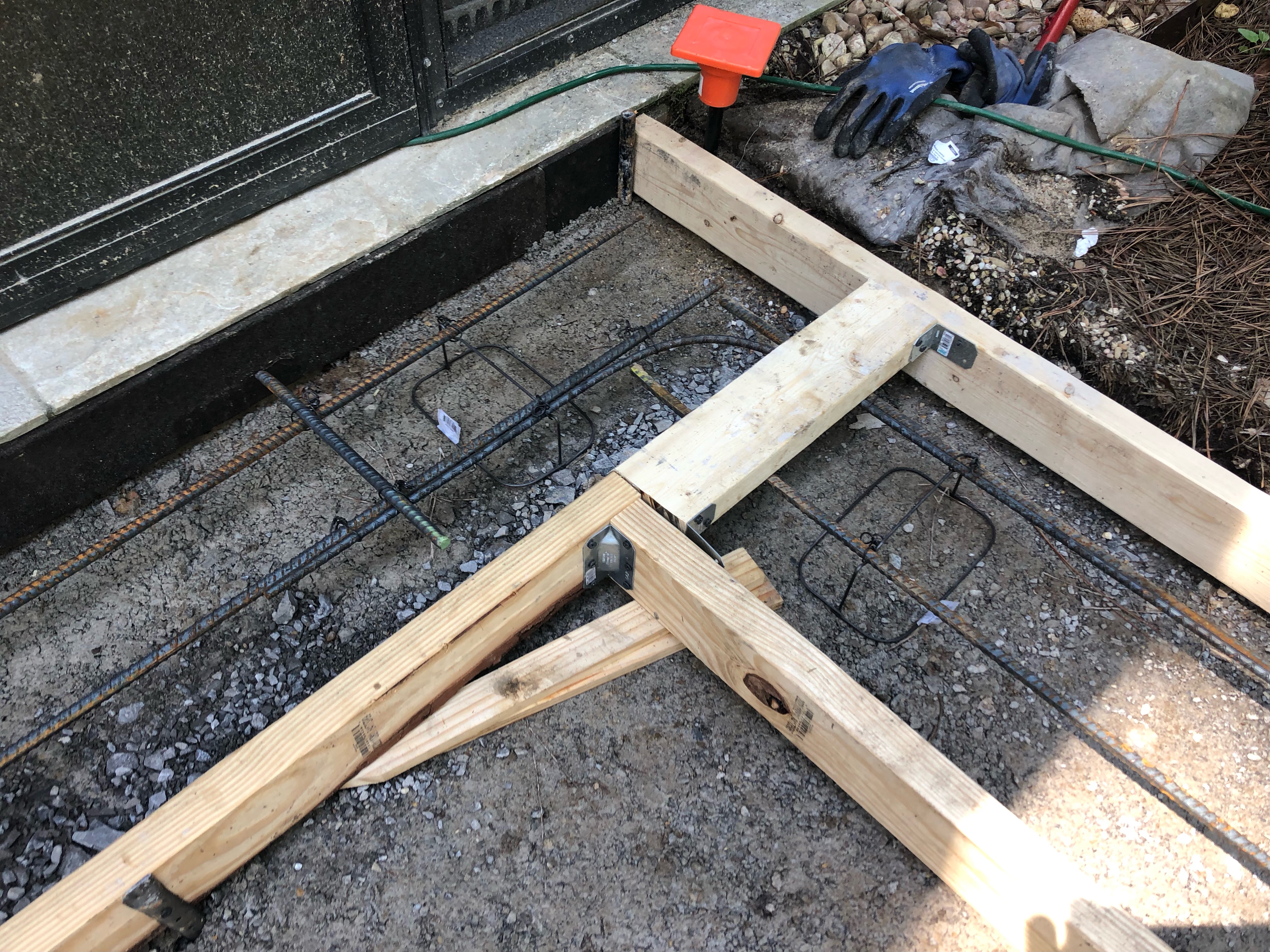
My brother’s self-taught knowledge of landscaping has helped him know how to prepare a proper foundation for pouring cement in this way, including how to handle rebar. The photo below shows how he has carefully anticipated a pour that we intended to make this afternoon.

As we began to pour fresh cement, the rain (of course) began again:

More to follow!