Japan

Finding Beauty in Adversity

[If reading this by email, please tap the title at the top to open your browser for the best experience. Then, clicking individual pictures will reveal higher resolution images.

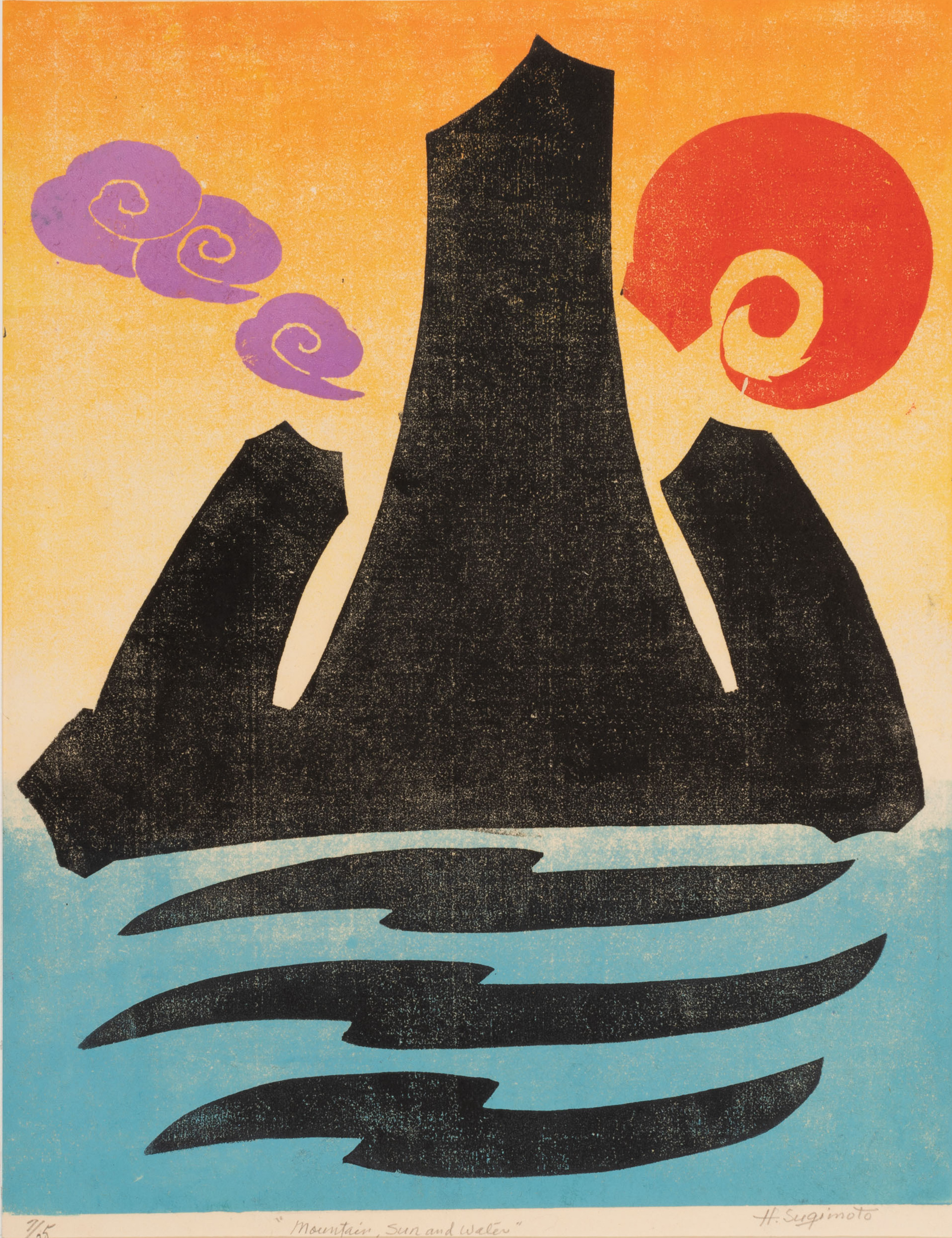
Henry Sugimoto, Untitled (Sun, Mountain and Clouds, Reflection on the Sea), ca 1965


I was delighted recently to discover the Japanese American National Museum (JANM), and their collection of artwork by Henry Sugimoto. Henry Sugimoto was born in Japan in 1900, the grandson of a samurai (Japanese military nobility) who most likely was alive at the time of the opening of Japan to commerce with the West by Commodore Perry in 1854. This fact, coupled with that of Sugimoto’s national heritage, would have made him – along with many others – suspect in American government eyes after Pearl Harbor.

Henry Sugimoto with his parents, before their immigration to the United States

Despite his father’s immigration to the United States before World War I, and their willingness to assimilate into American society and receive citizenship, the Sugimotos, like so many Japanese, found themselves rounded up in by our government in 1942. Henry’s family was sent away with one suitcase each from California to a detention camp in Arkansas. Such forced moves in many cases led to the unexpected forfeiture of family property and possessions. Henry Sugimoto lost a large collection of his artwork, auctioned off without his permission or knowledge while he – as an American citizen – was forcibly detained.

Self-Portrait in Camp, 1943

In JANM’s Sugimoto collection, we find several categories among his artwork. The largest is comprised of his oil paintings, many of which are skillfully rendered. I find some of them stylistically indebted to paintings that he studied in Paris by well-known late 19th and early 20th century Europeans.

Fresno Assembly Camp – Peaches, 1942

Others works, exhibiting a freer style he employed in his drawings and paintings of his fellow camp detainees, seem to reflect more of Sugimoto’s own painterly sensibility. Perhaps this was a visual artist’s equivalent of a writer coming to find his or her own voice.

The Mess Hall, 1942

Another significant body of work in the Sugimoto collection is composed of block prints. They include a few that reflect his travels to Europe and his life in New York City. Notable among his prints are his later black and white depictions of detainee life in the crudely appointed Japanese American ‘relocation centers.’ Gradually freed up from the constraints imposed by other employment, Sugimoto shows himself in his mature work to be an accomplished graphic artist, expressing an authentic personal vision.

Riverside Drive and Church (New York City), ca 1965

Back of WRA Truck, 1960’s

Thinking of Him, 1960’s

Other prints include some beautiful, and to my eyes, very Japanese-looking images with a modernist bent, characterized by an elegant simplicity of composition and color palette. The Sugimoto print shown at the top of a mountain set against the sea shadowed by a setting sun is suggestive of the famed Mt Fuji, visible from the Japanese coast. These later pieces by Sugimoto are my favorites among his artwork, and seem most reflective of an aesthetic sensibility associated with his native Japanese background.

Dawn (undated)

Gate of Yashiro (what may be the oldest Shinto shrine in Japan), undated

Untitled (color block print), undated

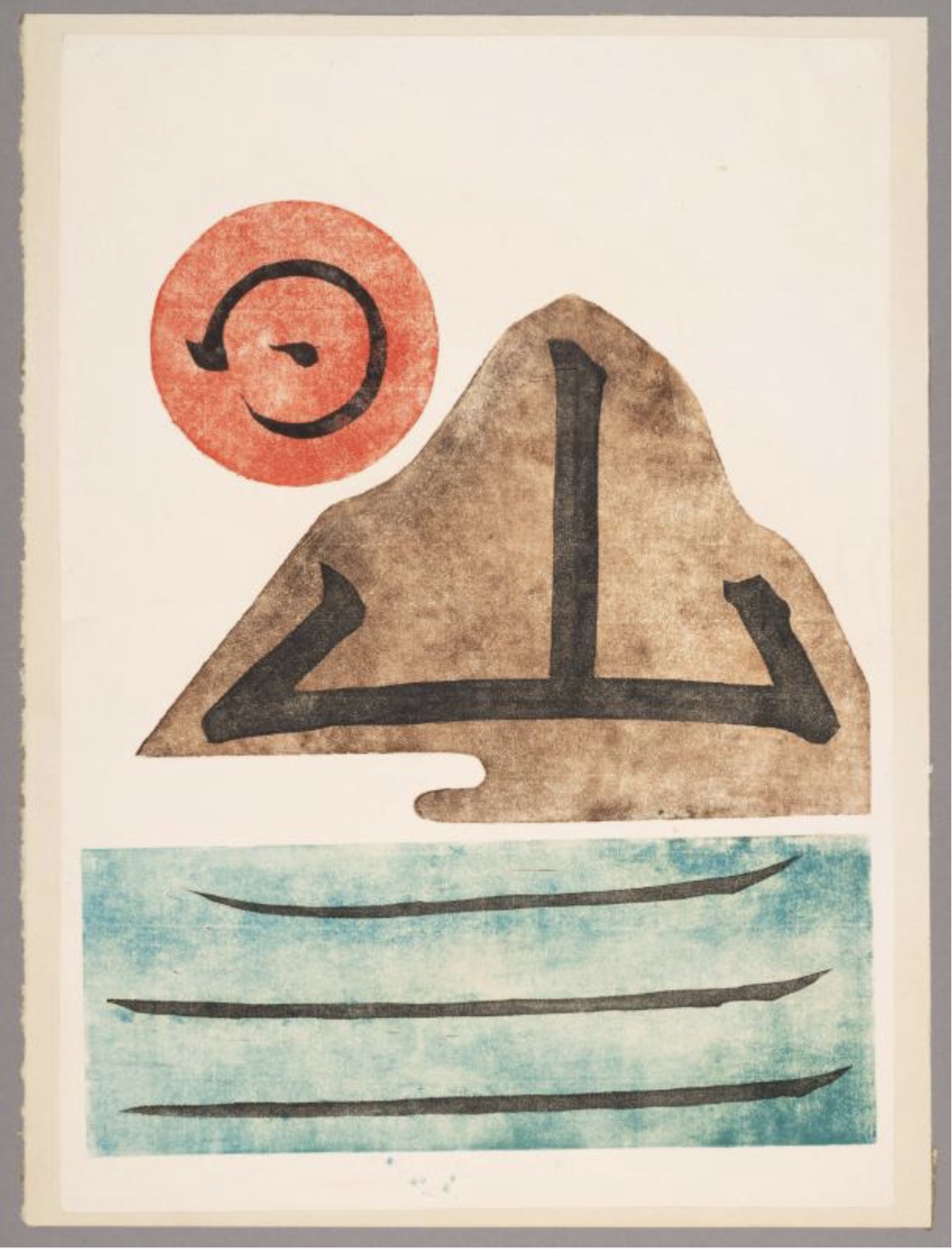
Though fully Americanized following his own immigration to America at the age of 18, Henry Sugimoto retained a deep sensitivity to the language, culture, and traditions of the land of his birth. One example of this can be found in another print featuring the setting sun and a mountain, like the image at the top of this page. The print below demonstrates how the Japanese Kanji character, Yama (for mountain, as in Fuji Yama), inspired his portrayal of a peak set against the evening sun, and reflected off the surface of the sea. Sugimoto’s interest in this word and its written form is surely no coincidence given that he was born and lived until he was 18 in Wakayama, Japan. Wakayama is the conjunction of the Japanese words for ‘mountain’ and ‘youthful.’

Untitled (featuring the Japanese pictographic Kanji character for Yama, or mountain), undated


These and other works by Sugimoto, along with biographical information, can be found on the website for the Japanese American National Museum (www.janm.org). The museum has an informative documentary video, Harsh Canvas: The Art & Life of Henry Sugimoto, which features his artistic work and introduces viewers to some of his family and to places where he lived and worked. It can be found on YouTube.

A Beautiful Garden: Nitobe Memorial (Part II)

[If reading this by email, please tap the title at the top to open your browser for the best experience. Then, clicking individual pictures will reveal higher resolution images.]


In Part I, I closed with this observation: one does not visit a Japanese garden in the way one might go to a park, as a context to pursue some activity like an exercise walk, but as a place to experience simply being.

Here we encounter a paradox, perhaps one of many associated with traditional Japanese gardens. At first, for many Western visitors, the elements within such a garden, and their arrangement, catch the eye and draw one in further to an encounter with what is seen there. Yet, what is seen within a Japanese garden exists less to provide an object of attention, and more to facilitate and enhance how one sees. A journey around the garden therefore encourages a journey within. The “spirit that informs [the] spaces” found in “a garden created and maintained in the Japanese tradition,” to which the UBC website alludes, is a spirit or quality of experience to be nurtured within the viewer who encounters this intangible element of the garden.
A carefully arranged sense of space therefore forms a prominent feature of traditional Japanese gardens, where plantings and structural objects both near and further away are placed deliberately. Except for the surrounding walls, there are no straight lines in a Japanese garden, and formal symmetry is strenuously avoided. Plantings and objects are more often placed singly or in three’s, given how two points often suggest a line and three suggest a circle. The spatial interrelationship between such things as large stones, trees, and water features is not accidental, and for the Japanese has a spiritual as well as visual significance.

In Japanese garden design, each particular feature, whether alive and growing or humanly made, has a distinct significance and is purposely chosen for its location. Perception of this is enhanced when a visitor becomes aware of how the elements of a garden’s composition are selected with an appreciation for seasonal viewing, such as at the annual cherry blossom time. Throughout the year plantings in the garden draw attention to themselves through an occasional heightened display of color, or by contributing to a muted harmony of differing tones and textures. On successive visits, a familiar place somehow can seem different.
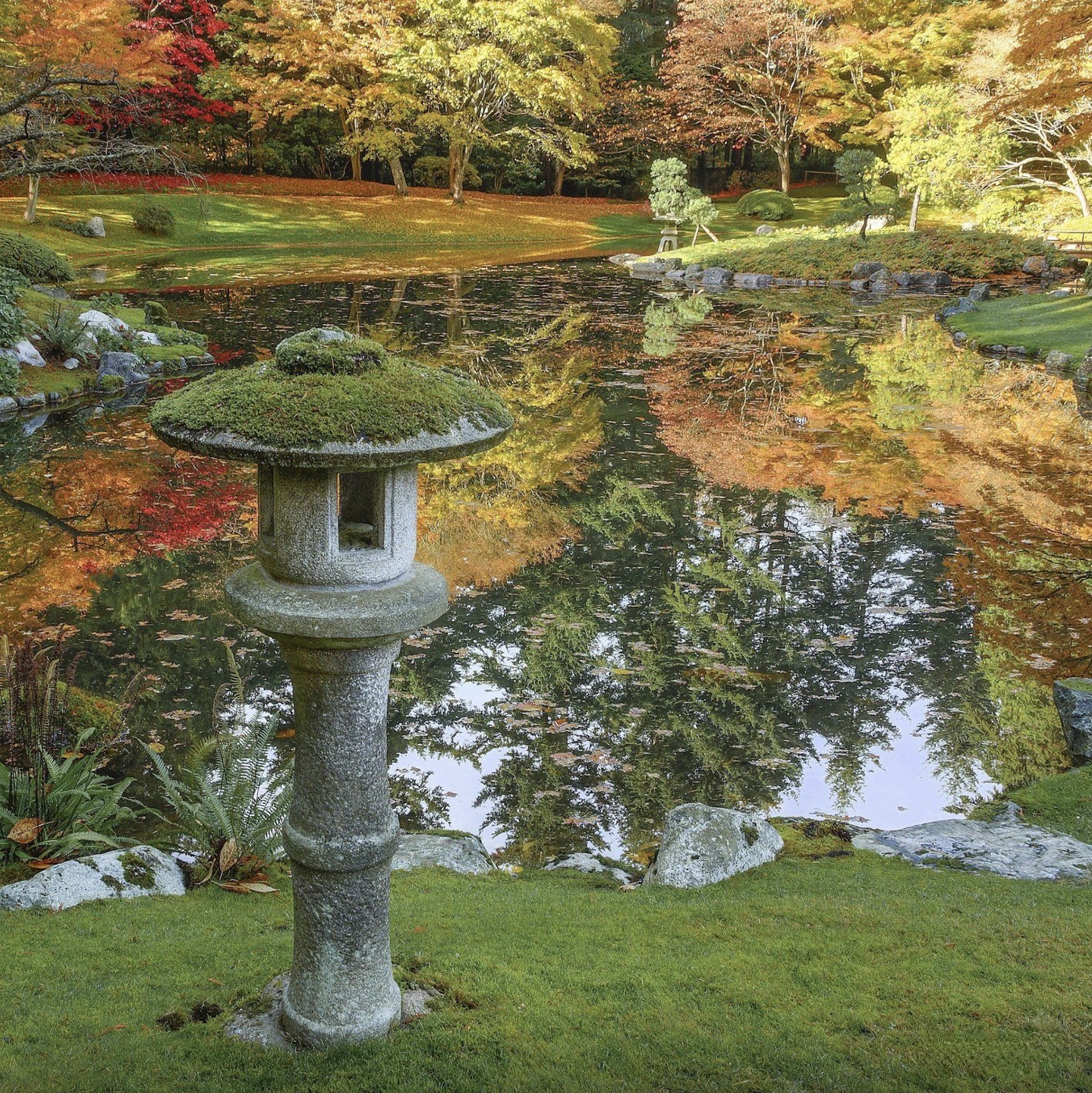
Plants, shrubs, and trees in Japanese gardens are cut and trimmed so as to appear manicured  just as European topiary is studiously tended, albeit with very different results. Whereas gardeners in the Southern U.S. might allow azaleas to grow unevenly to avoid looking like a hedge, ornamental shrubs such as holly and cedar, and the branches of evergreens, are painstakingly shaped by the Japanese-trained gardener, often into softly rounded forms. These provide contrast to the smooth sculptural shapes of tree trunks, while also standing out against the flat reflective surface of ponds.

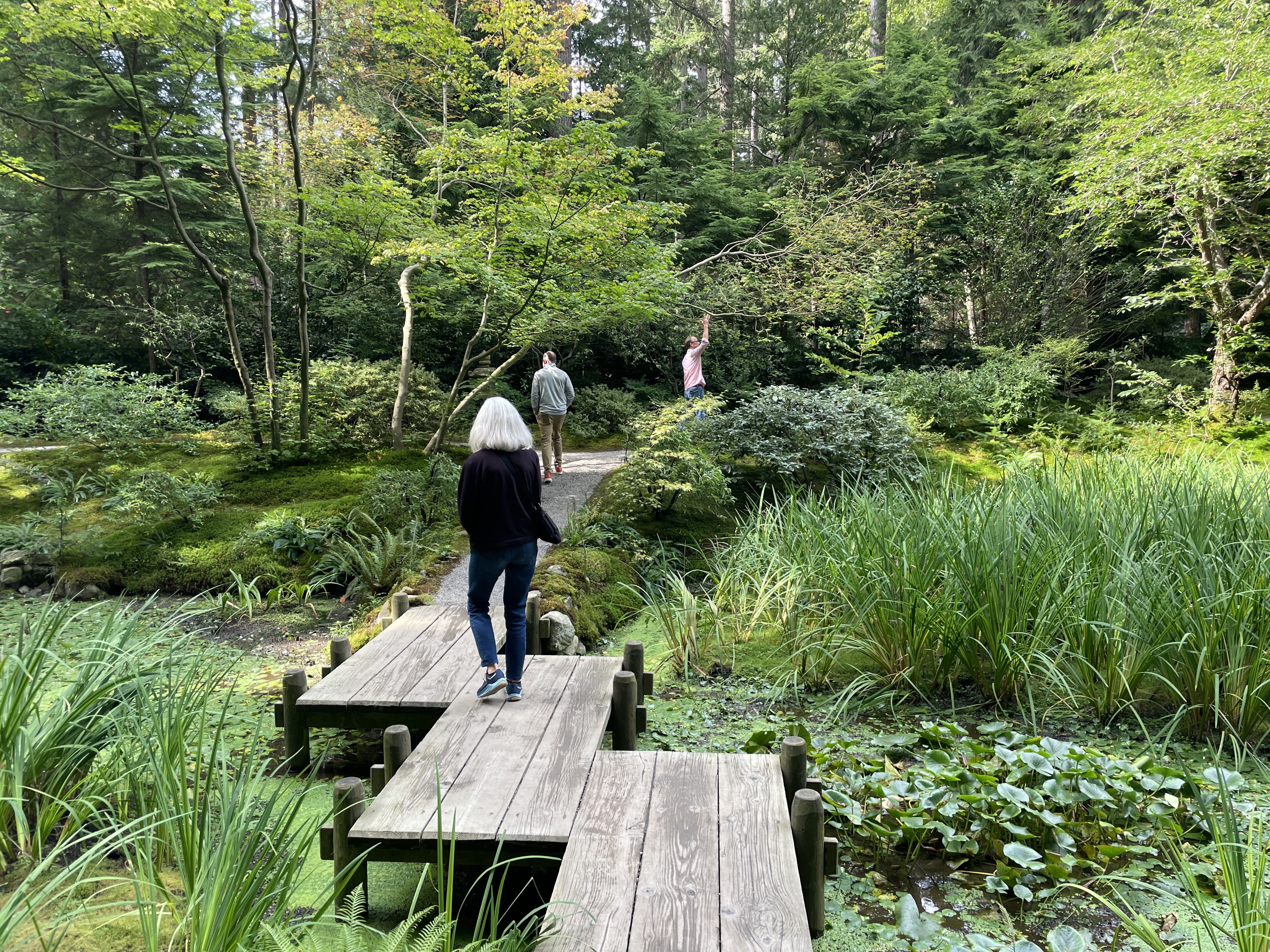
Traditional Japanese gardens usually contains a pathway, a design element not unique to such gardens, though its treatment in this context draws attention to itself. For the pathway through the garden can be just as important as what is viewed from it, so that the experience of the journey becomes in some sense its destination. Even in a relatively compact space, a consideration important in Japan, a pathway in a garden can make a small area seem much larger than it is, as the visitor is prompted to slow down and live into the present moment.

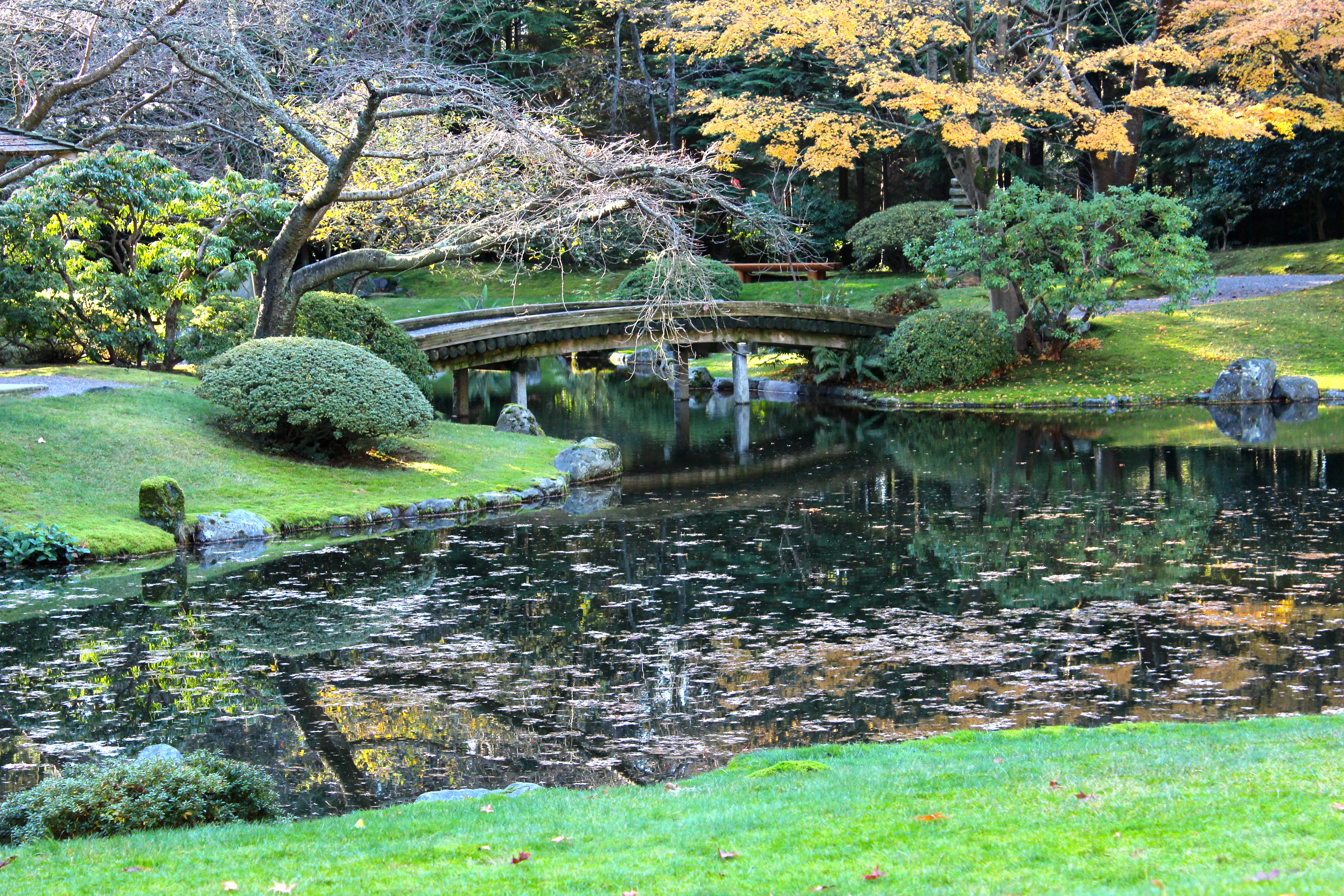
Padding along the soft pea gravel between areas of green covered by multiple textures from soft moss to tall bladed plant spikes, one gains glimpses and then temporarily loses sight of what lies ahead. Views include garden features such as a teahouse awaiting encounter, or a low-arching bridge from which Koi might be observed below the still water’s surface.

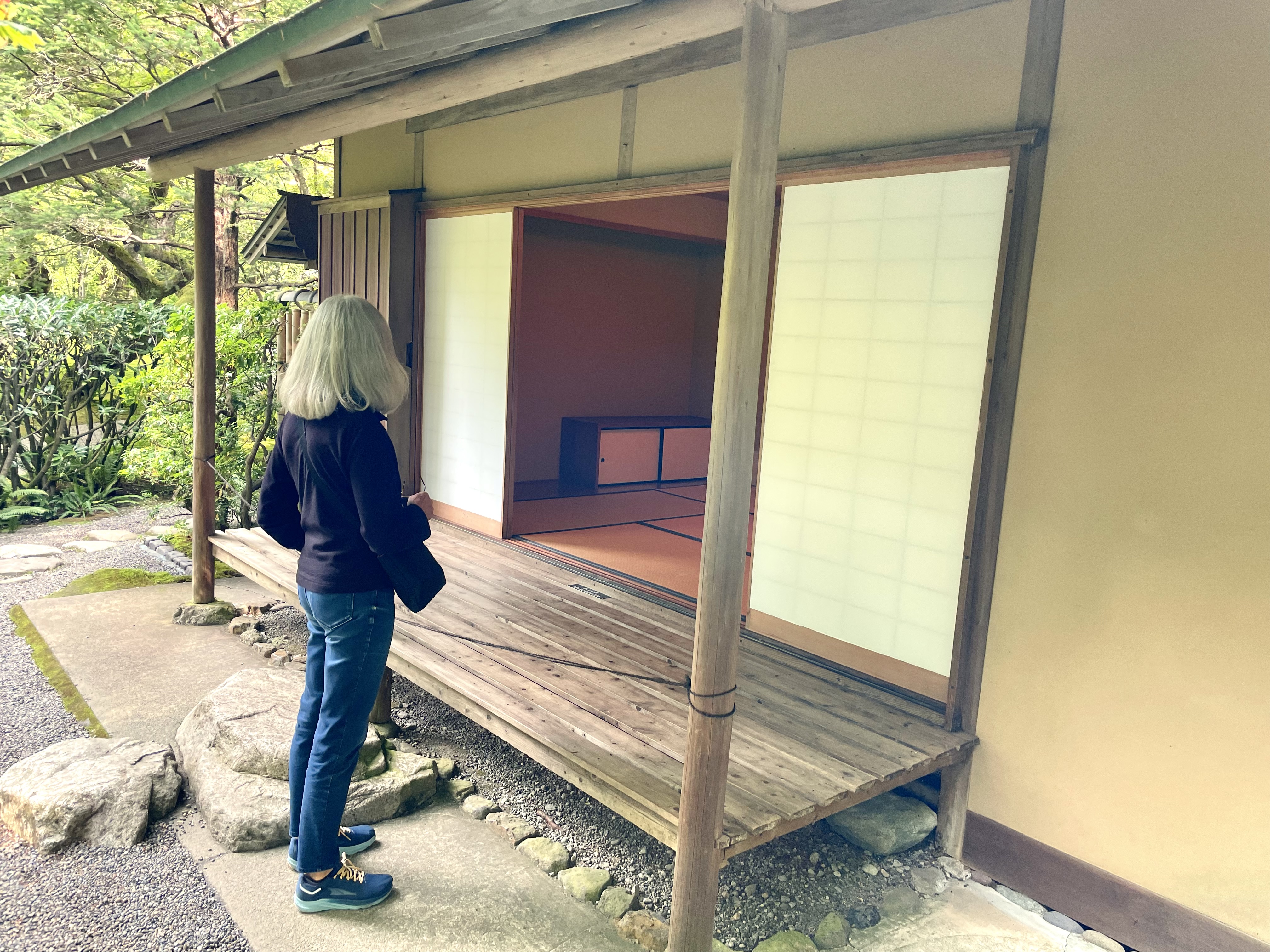
The UBC website says that “Nitobe Memorial Garden is considered one of the most authentic Japanese gardens outside of Japan.” A testament to this perception was provided by Emperor Akihito during a visit there. He said that, while in this garden, “I am in Japan.” Enhancing this sense of being in Japan is the presence of a traditional Japanese house in which opportunities to experience the ‘tea ceremony’ are seasonally available.


A Beautiful Garden: Nitobe Memorial (Part I)

[If reading this by email, please tap the title at the top to open your browser for the best experience. Then, clicking individual pictures will reveal higher resolution images.]


The Nitobe Memorial Garden on the grounds of the University of British Columbia (UBC) is readily recognizable as a traditional Japanese garden. Like other gardens of this type, it provides an experience of tranquility. Even in an urban area such as Vancouver, Nitobe Garden offers a quiet refuge from daily life concerns and tensions that visitors might carry with them.

An interpretive guide to “understanding Japanese Gardens,” found on the UBC Botanical Garden website, asserts the following:

… it is almost impossible to clearly state what defines a Japanese garden. Many Japanese resist classifying and categorizing the various features of Japanese gardens.

The website attributes this reluctance to the idea that beauty “not explained allows the viewer to remain in a state of wonder.” This worthy observation applies as much to modern abstract painting as it does to historic patterns of landscape arrangement. Yet, in this and in the next post, I will articulate characteristics that enable us to distinguish a traditional Japanese garden from, for example, a casual English cottage garden or a formal French garden.

The UBC website acknowledges how “most visitors can tell when they have entered a garden created and maintained in the Japanese tradition,” crediting this perception to people who “are sensing the Japanese spirit that informs these spaces.” This may be due to how various strands within Japan’s cultural history have coalesced to form a recognizable ‘style’ manifest in its gardens. Among the results of such a melding process, we can identify and describe several features in the Nitobe Garden that are common to other well-known Japanese gardens.

We can begin by observing how gardens and parks found in the East and in the West have a number of shared attributes. Among them, most gardens and parks around the world feature a scheme for the arrangement of their various parts even if it is not readily evident to visitors. Many such places appear to promote and preserve a ‘natural’ quality among the things growing in them, even in formal gardens. Some gardens and parks accentuate this natural element, perhaps in deliberate contrast to surrounding urban areas. This fosters an impression that the plants, shrubs, and trees have grown where they are of their own accord, and in their own way, regardless of any horticultural tending they have received. Especially in the West, ‘nature’ and that which is ‘natural’ are seen as what does not readily bear the imprint of human interaction, and as emerging more from its roots than from our planning.

Western gardens and parks may have gates, but often their entrance designs accentuate pubic access, providing a continuity of experience for visitors who may have potted plants or flowers where they live and work. In this sense, these garden and park entranceways draw people in from what is less into what is more. In the process, visitors are likely to encounter familiar though markedly larger and more extensively planted shrubs and trees, many of which do not appear to have been shaped or altered by human hands.

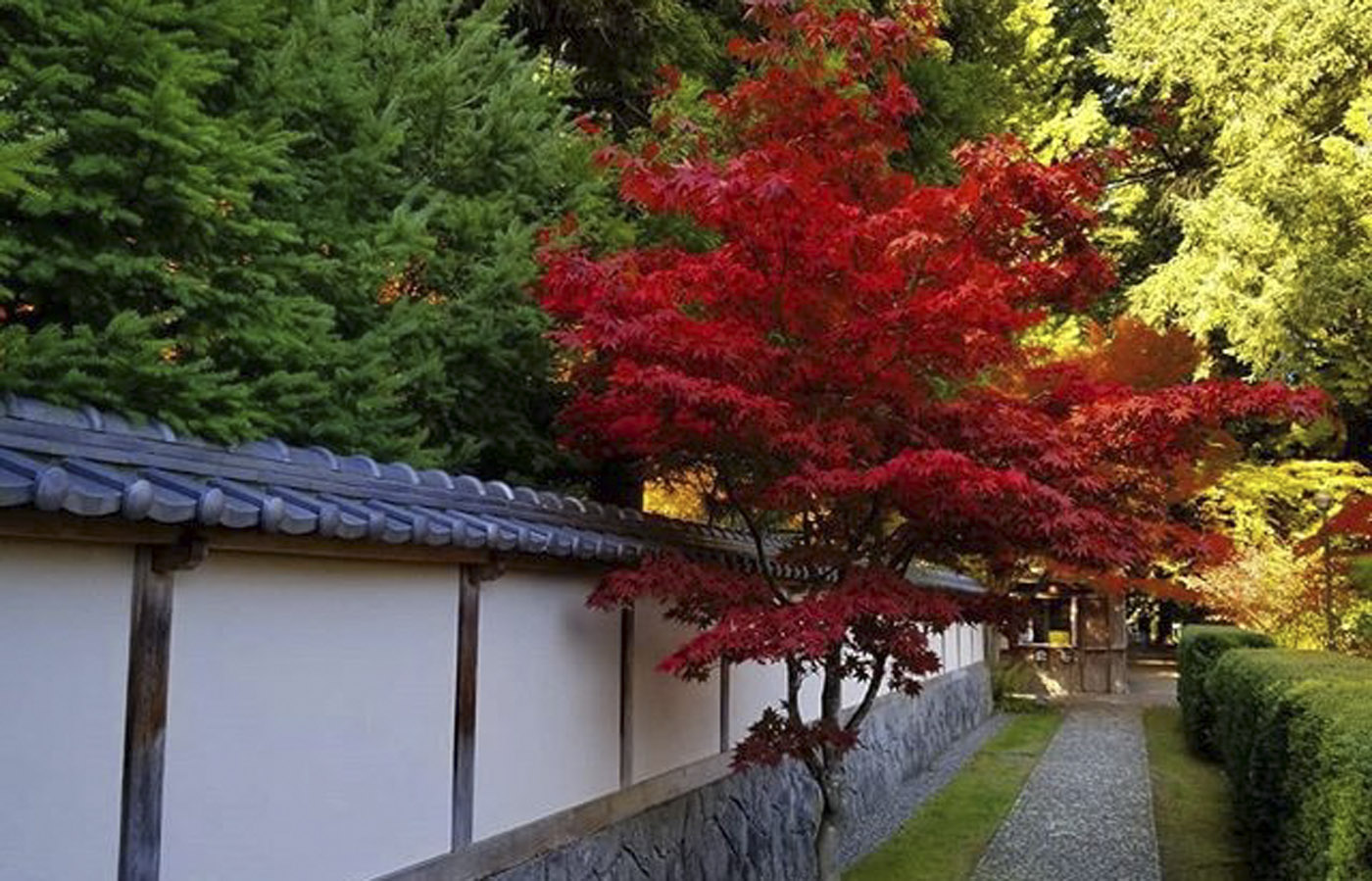
Formal gardens both East and West usually have marked boundaries and even barriers between what is within and that which is outside. Traditional Japanese gardens are typically surrounded by view-blocking walls topped by a ceramic tile parapet. These indicate a formal boundary between the transient outside world of energy-charged daily activity and the stillness available within, where visitors are subtly bidden to release their grasp upon time and their surroundings.

Imposing entrance gates mark a portal to a different realm lying beyond, as much as they appear to provide a barrier protecting what is within. Though these gates and the walls around a Japanese garden may serve to keep out intruders and foraging animals, they exist primarily for the sake of those who enter and take time there. For one does not visit a Japanese garden in the way one might go to a park, as a context to pursue some activity like an exercise walk, but as a place to experience simply being.

In the next post we will continue to explore what is identifiably distinctive about traditional Japanese gardens like the Nitobe Memorial.


Yamasaki’s Graceful Architecture

[If reading this by email, please tap the title at the top to open your browser for the best experience. Then, clicking individual pictures will reveal higher resolution images.]

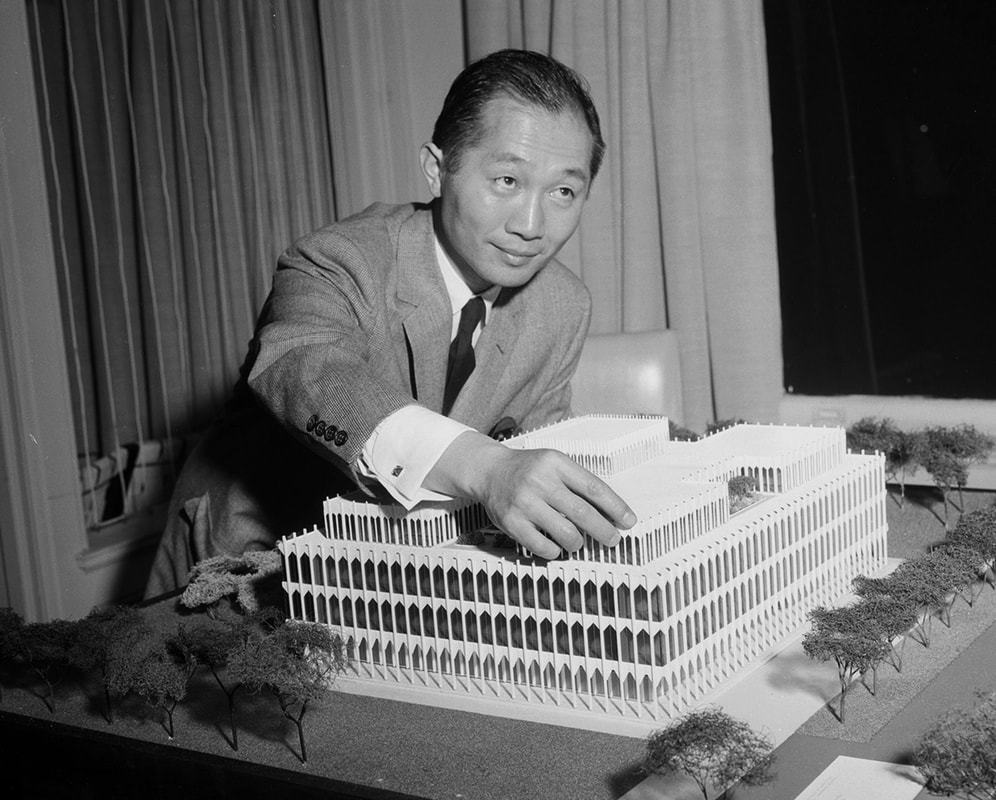
Minoru Yamasaki behind models of the proposed World Trade Center towers


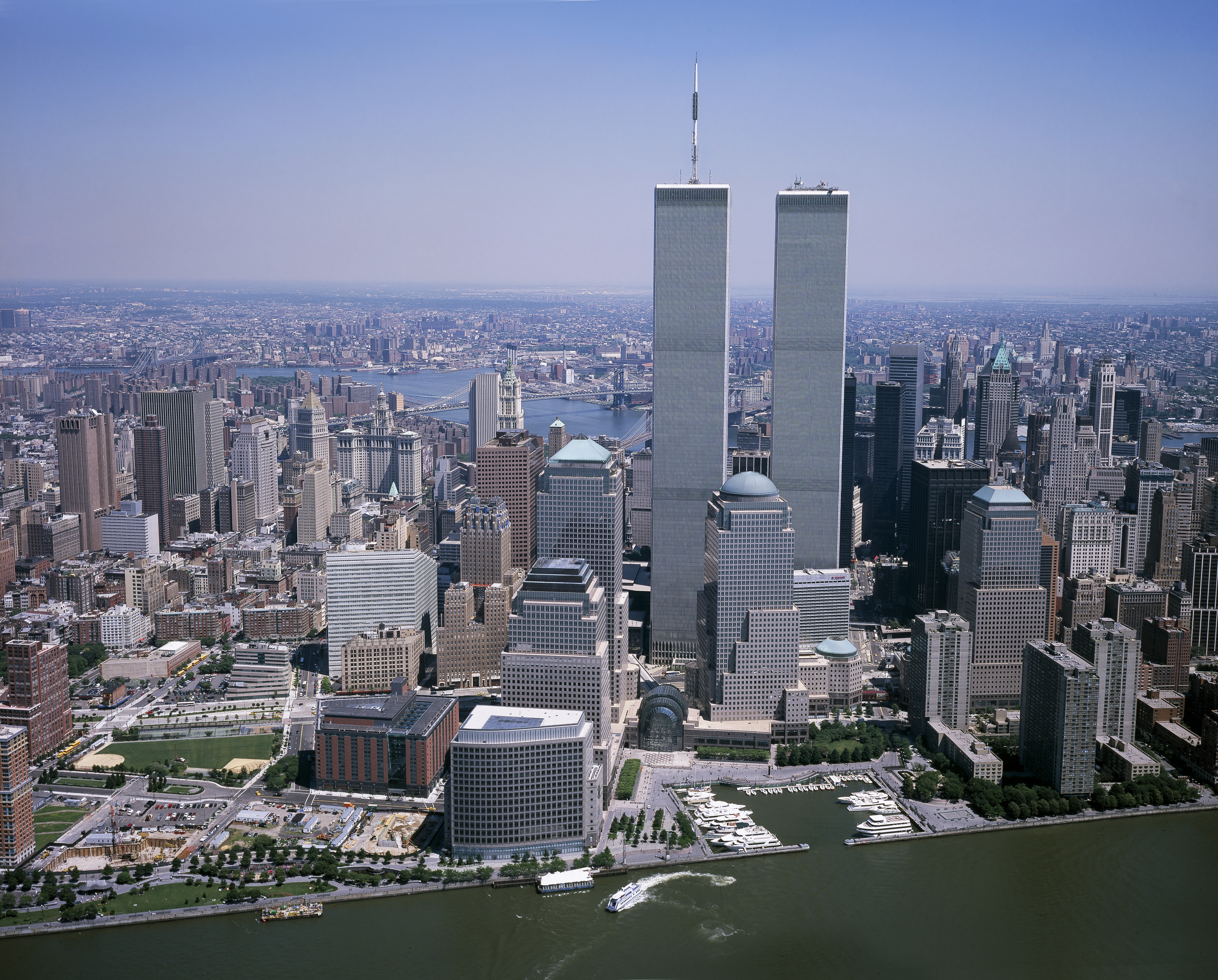
Minoru Yamasaki was one of the most significant American architects of the mid-twentieth century while also one of the least known. Since 9/11, almost everyone has seen images of his now lost World Trade Center towers that formerly crowned the southern tip of Manhattan. Yet many are unfamiliar with the man who designed and gave them their attractive and delicate facades. I first encountered Yamasaki’s distinctly modern yet historically informed approach to architecture as a child while my parents were on furlough from mission work in Japan. It was likely because of Yamasaki’s Japanese heritage that they became interested in his Northwestern National Life building in Minneapolis, opened in 1965, which he had designed for that company’s new headquarters (images below).

The Northwestern National Life building has design elements recognizable in a number of other structures designed by Yamasaki. His career-long approach to architecture consistently incorporated a classically inspired modernism that features a verticality and gracefulness of design, an approach which appears to owe as much to the great European gothic cathedrals as it does to Greco-Roman antecedents. This quality of his work is particularly evident in the decorative plaza towers and buildings he designed for the 1962 World’s Fair U.S. Science Exhibit in Seattle (now the Pacific Science Center, below).

U.S. Science Exhibit towers and buildings, 1962 World’s Fair, in a vintage photo

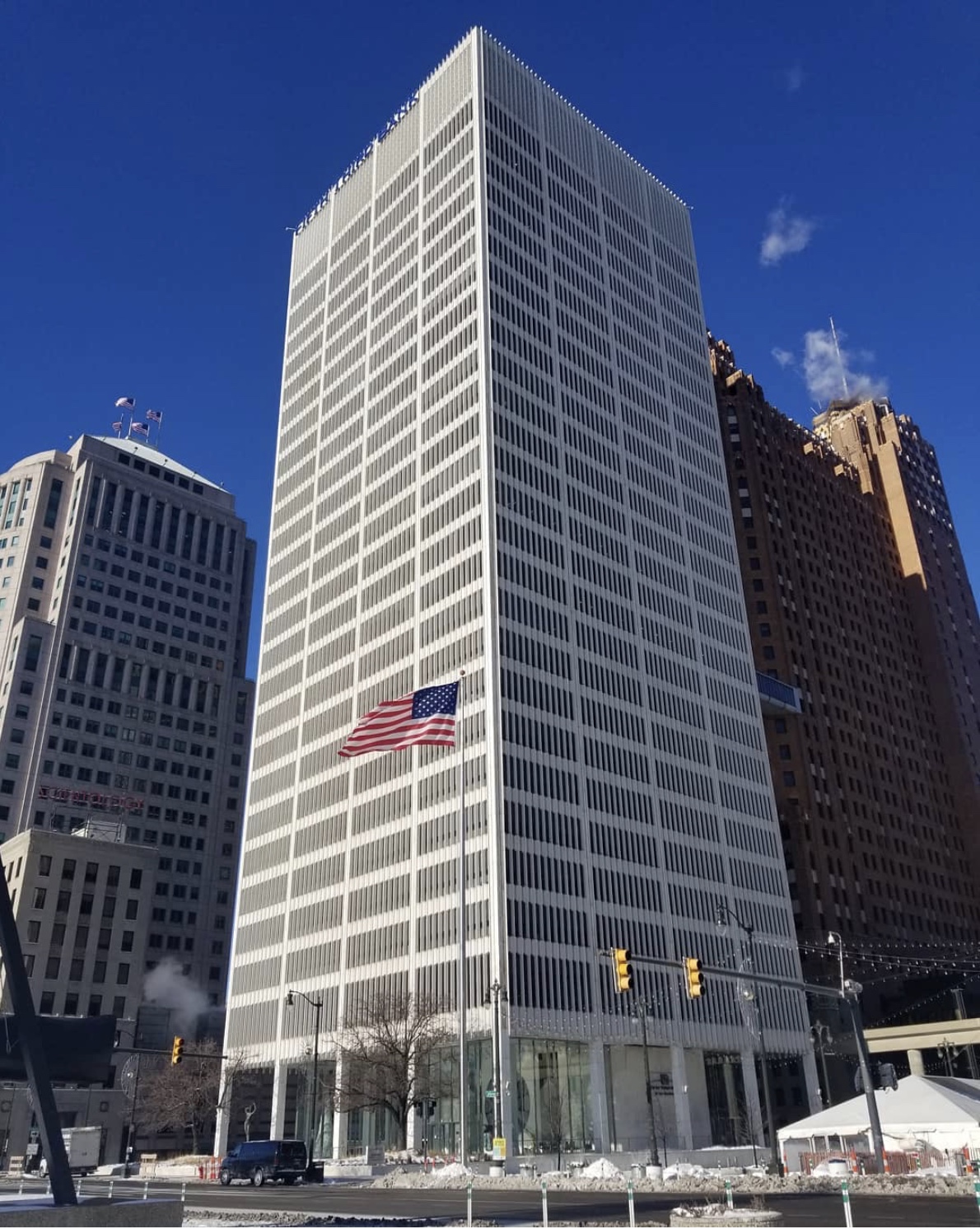
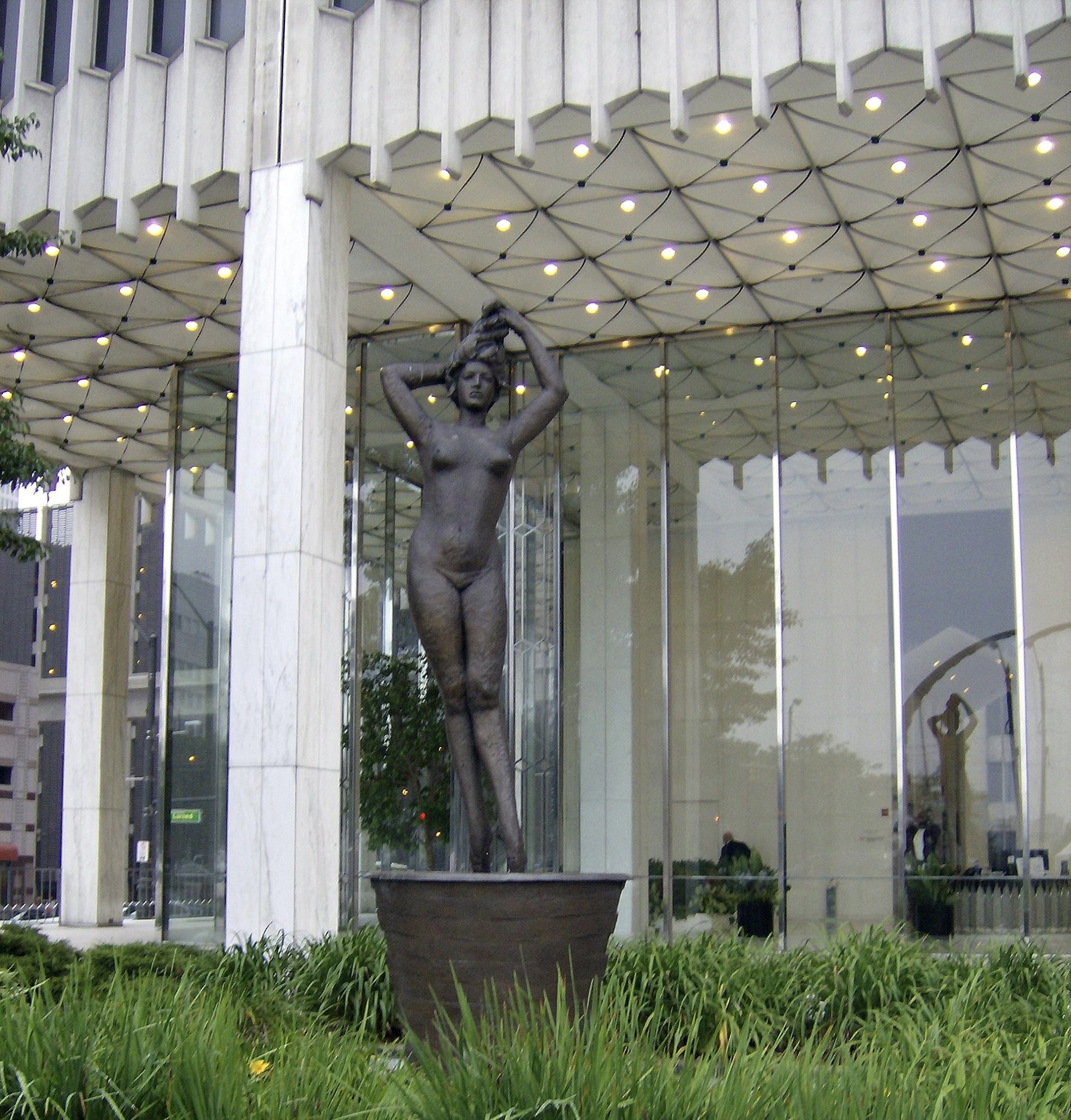
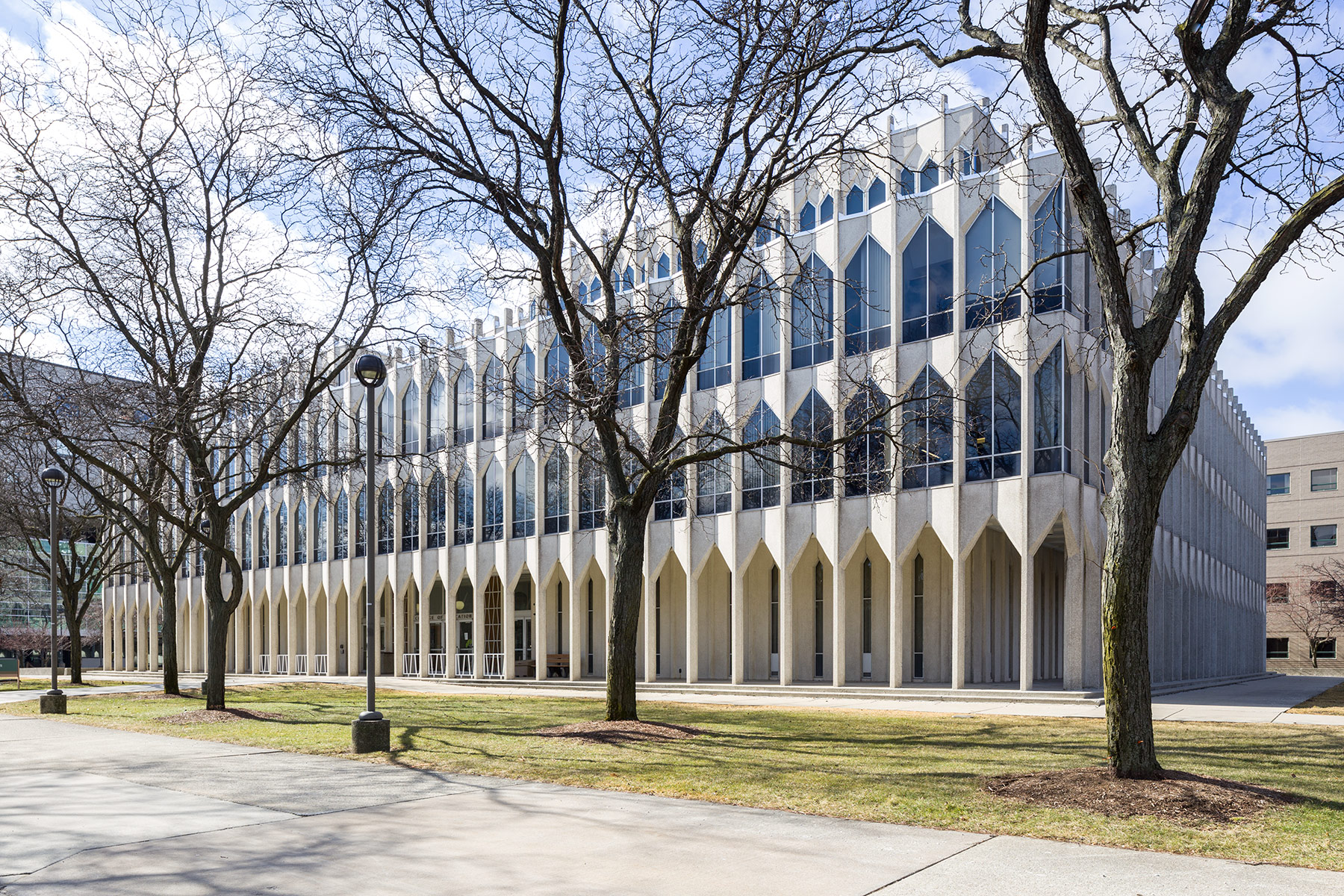
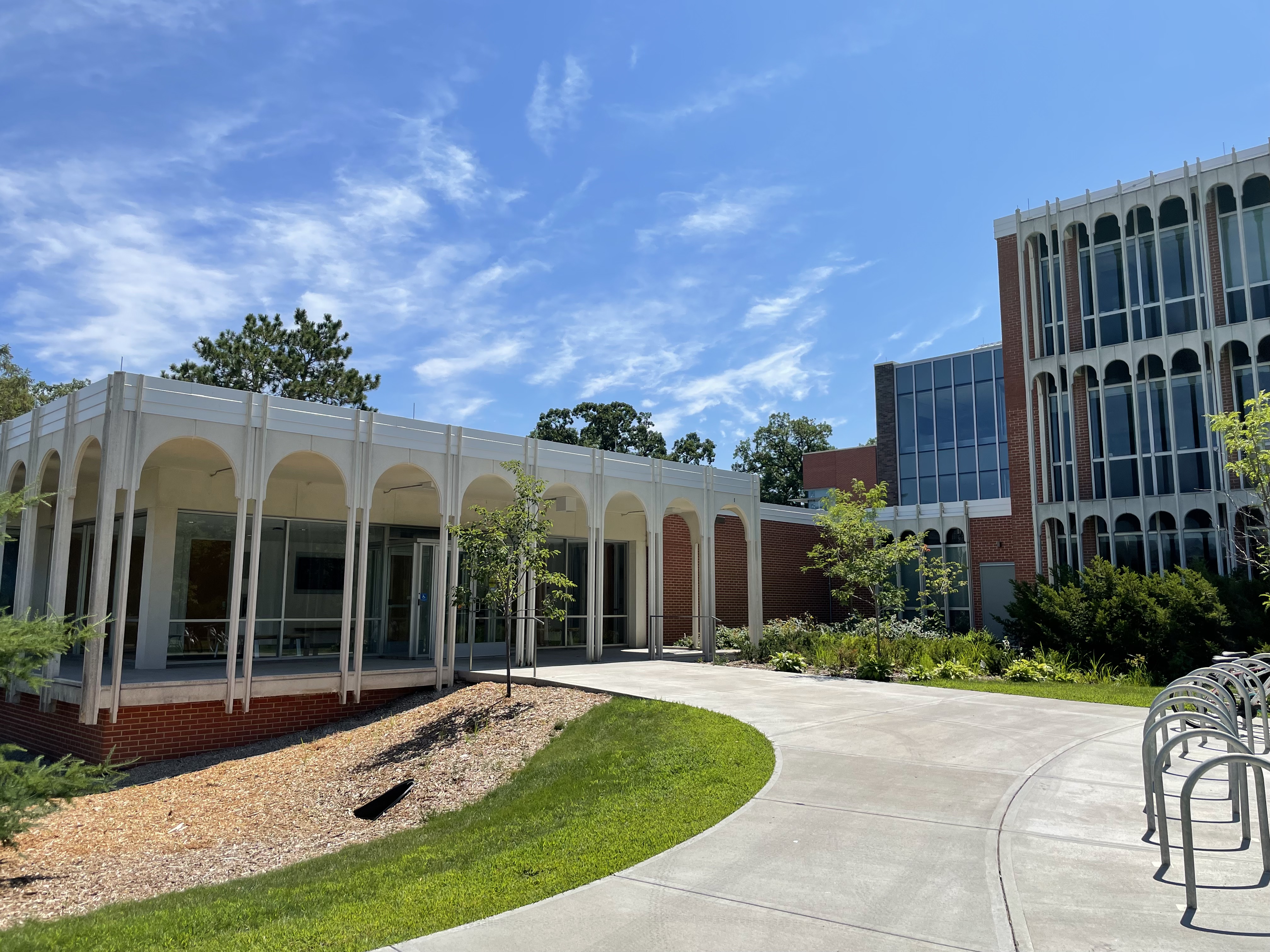
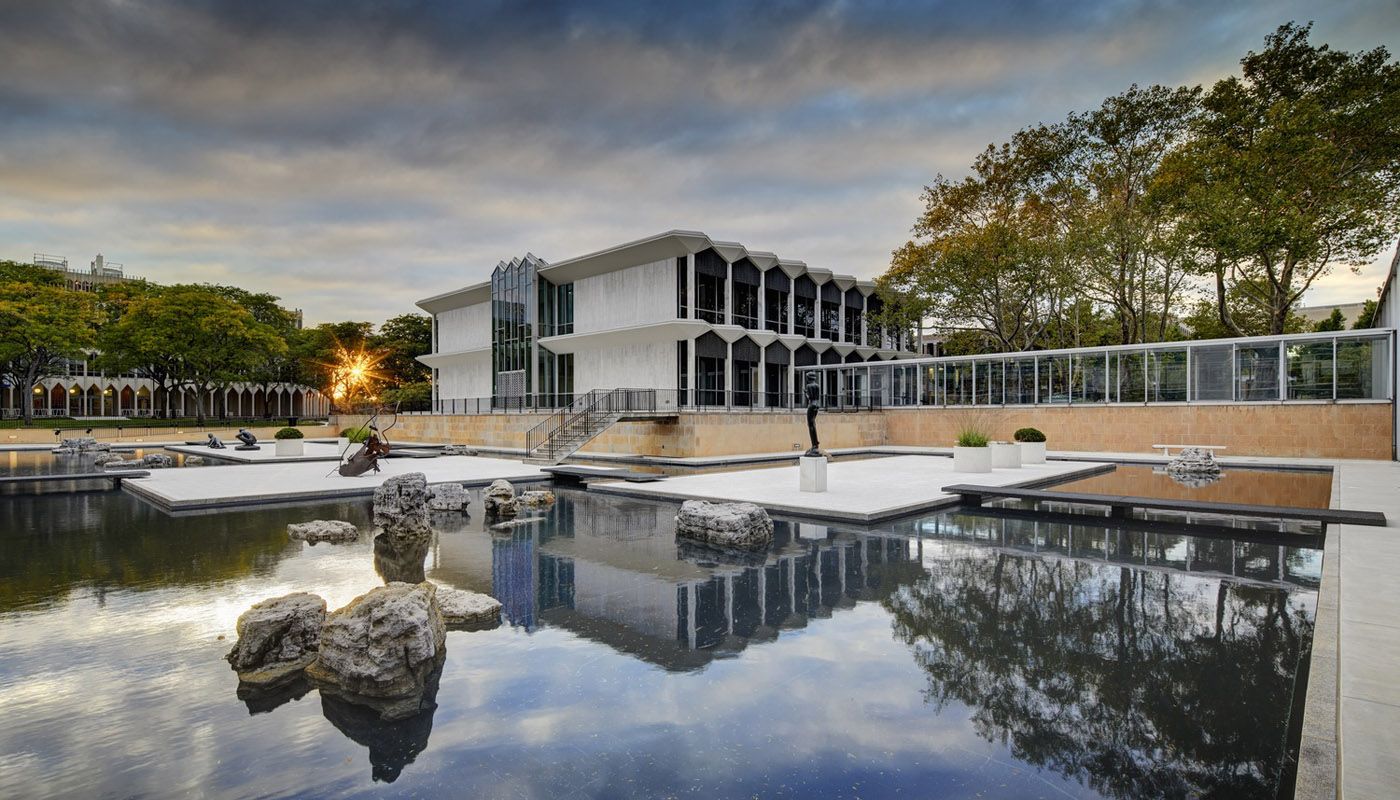
The 1962 Michigan Consolidated Gas Company building in Detroit (below) was Yamasaki’s first ‘skyscraper.’ The stonework tracery and narrow windows on the facade of this building, as well as the arcade of columns surrounding the glass-walled atrium on the entrance terrace level, are recurring motifs in his architectural designs. Some of these elements can also be found on Yamasaki’s 1960 College of Education building for Wayne State University (further below), as well as Olin Hall and other buildings he designed for Carleton College in Northfield, Minnesota.


The Michigan Consolidated Gas Company building, Detroit. Plaza Sculpture by Giacomo Manzu.

The College of Education building for Wayne State University (Detroit, 1960)

Above: Olin Hall (Science Building) and lecture theater for Carleton College (Northfield, MN, 1961)

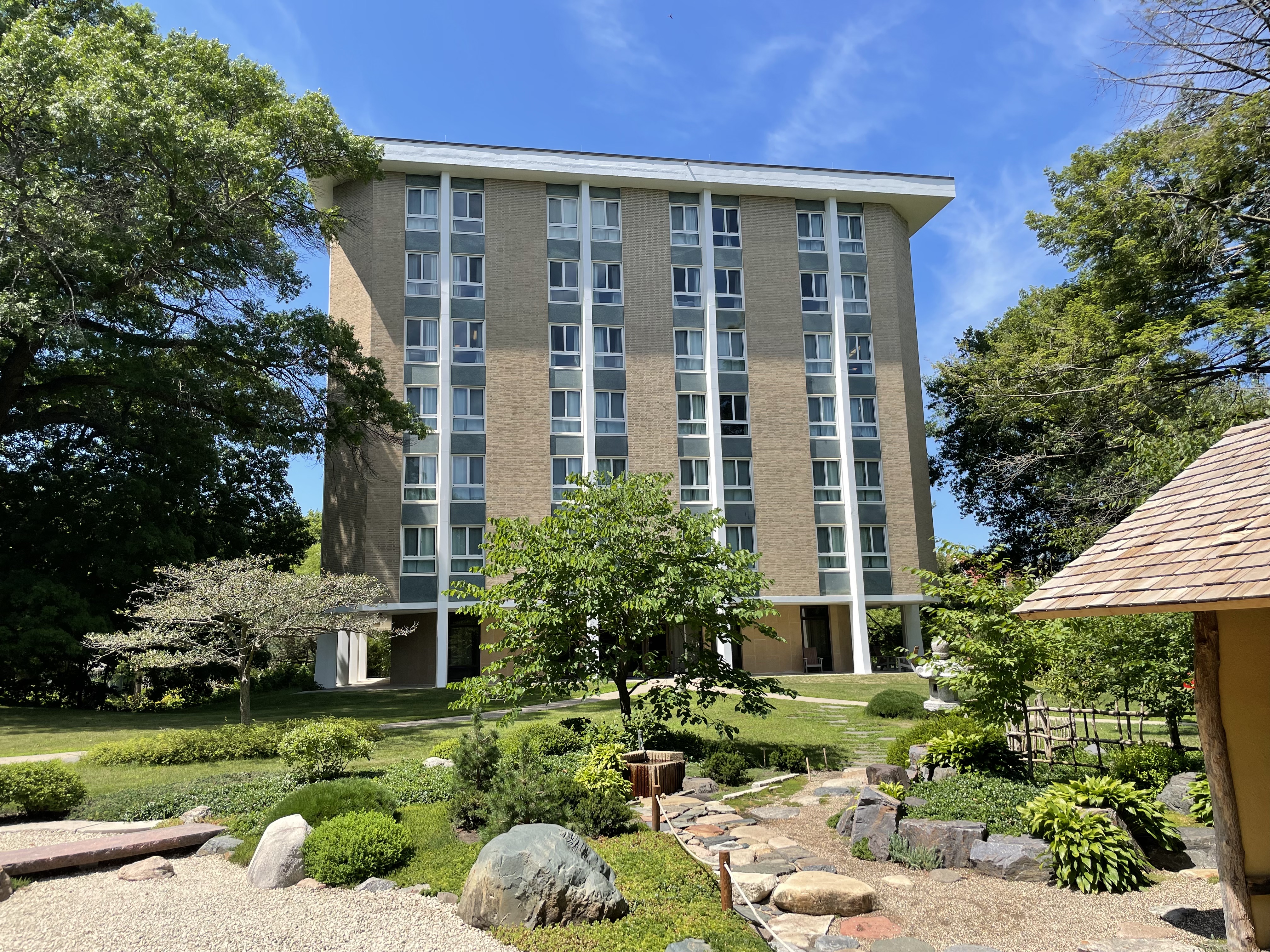
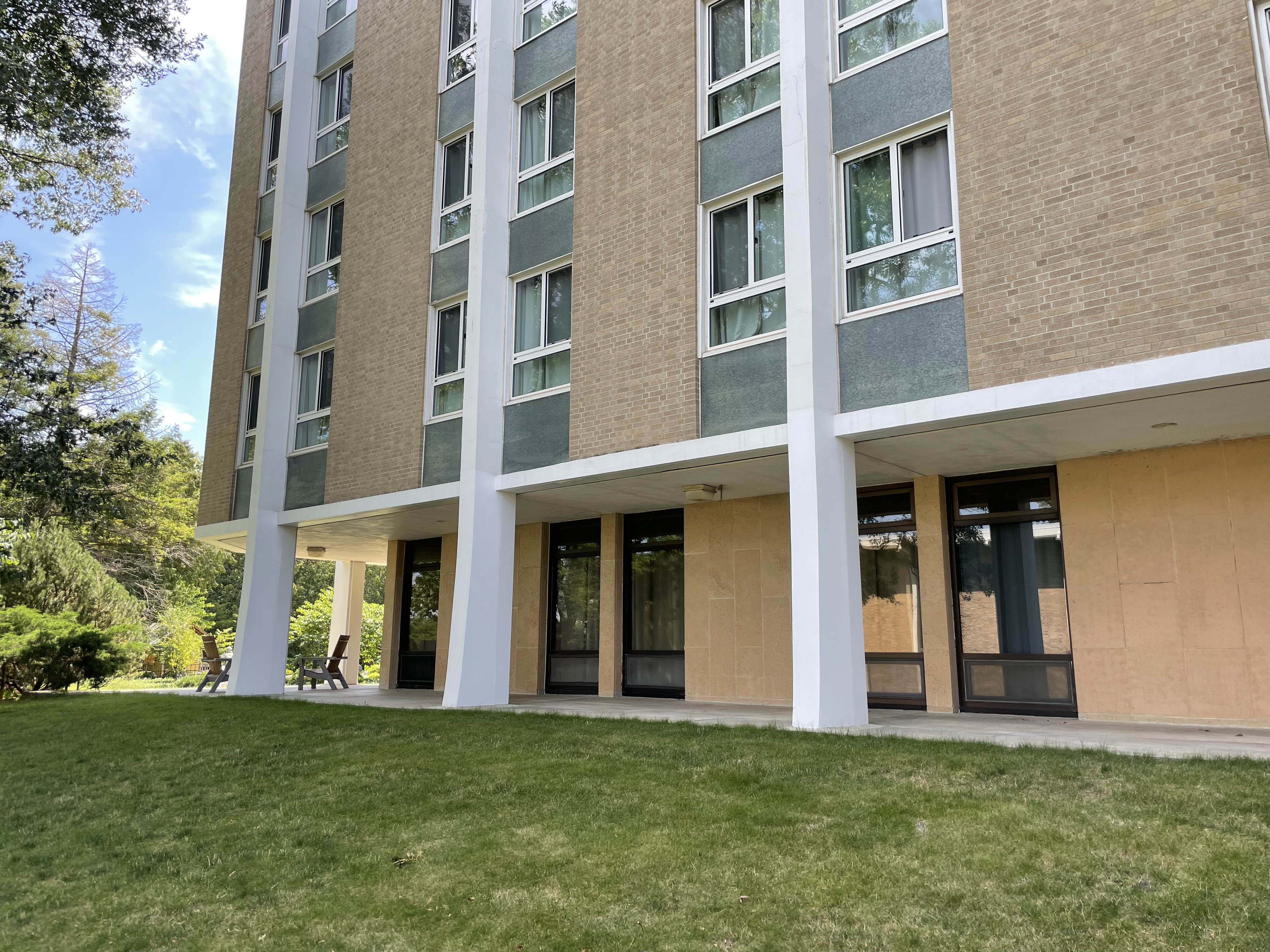
Watson Hall dormitory (1966) adjacent to a Japanese Garden at Carleton College (note how the exterior columns subtly curve outward at the base)

Above: McGregor Conference Center, Wayne State University (Detroit, 1957), exterior and interior

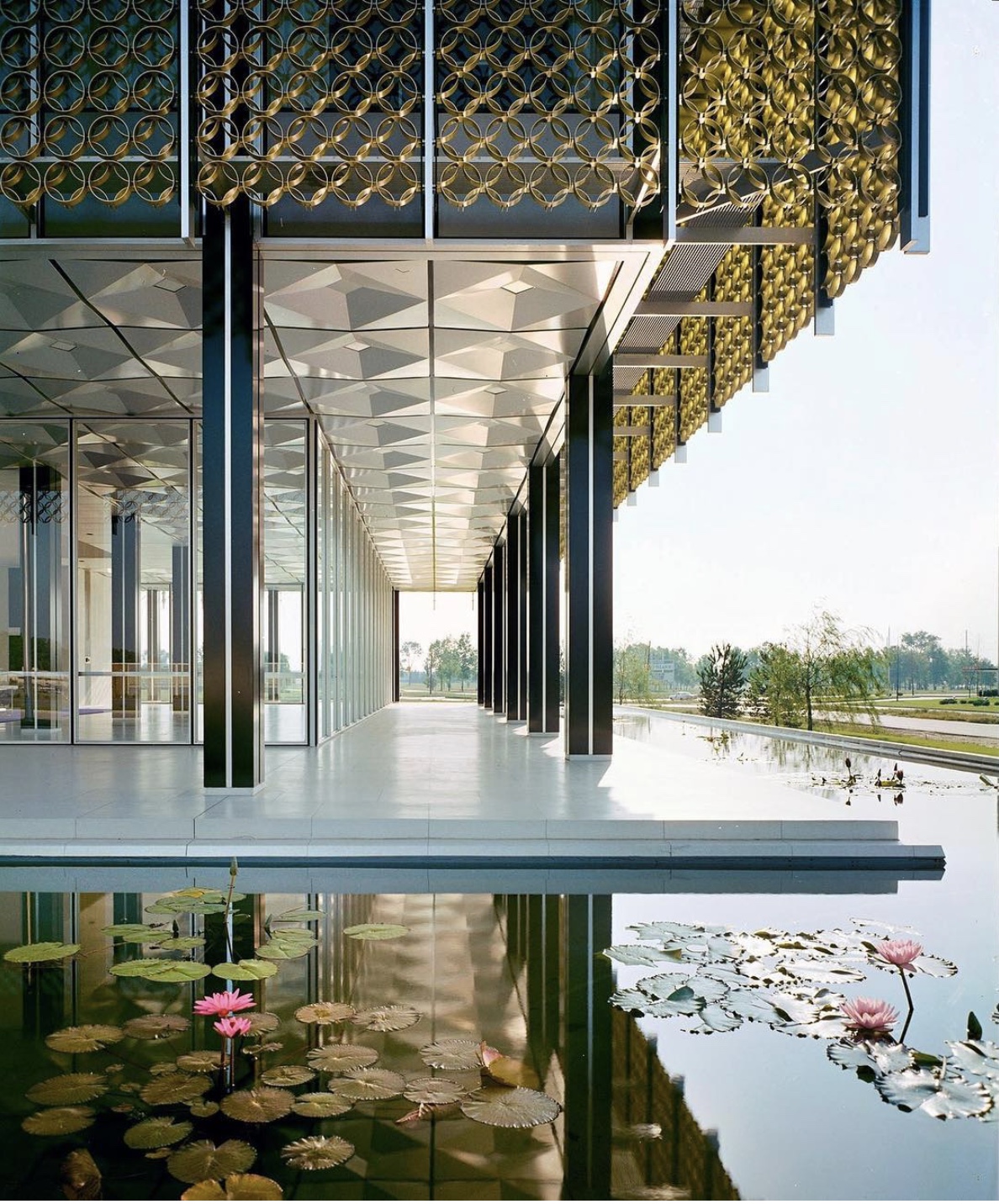
Yamasaki’s design for the Reynolds Metals Regional Sales Office (below, 1959) incorporates elements found in the buildings featured above while also architecturally acknowledging the business of the company that commissioned it. Evident is the architect’s use of ornament clad to the facade of the building, but here in the form of a metallic visual screen attached to the building’s exterior. These elements, as well as the open terrace, and the glass-walled atrium surrounded by columns, are design features that we find over a decade later in his plan for the World Trade Center.

Some aspects of Yamasaki’s architectural work such as the terrace and reflecting pool adjacent to his McGregor Conference Center, as well as to his Reynolds building, may appear to embody an aesthetic sensitivity characteristic of Japanese culture. Raised by a Japanese family in America, Yamasaki – while recovering from serious illness and surgery – traveled to Japan, Italy, and India, in 1953, on an extended sojourn that provided not only recuperation but also inspiration.

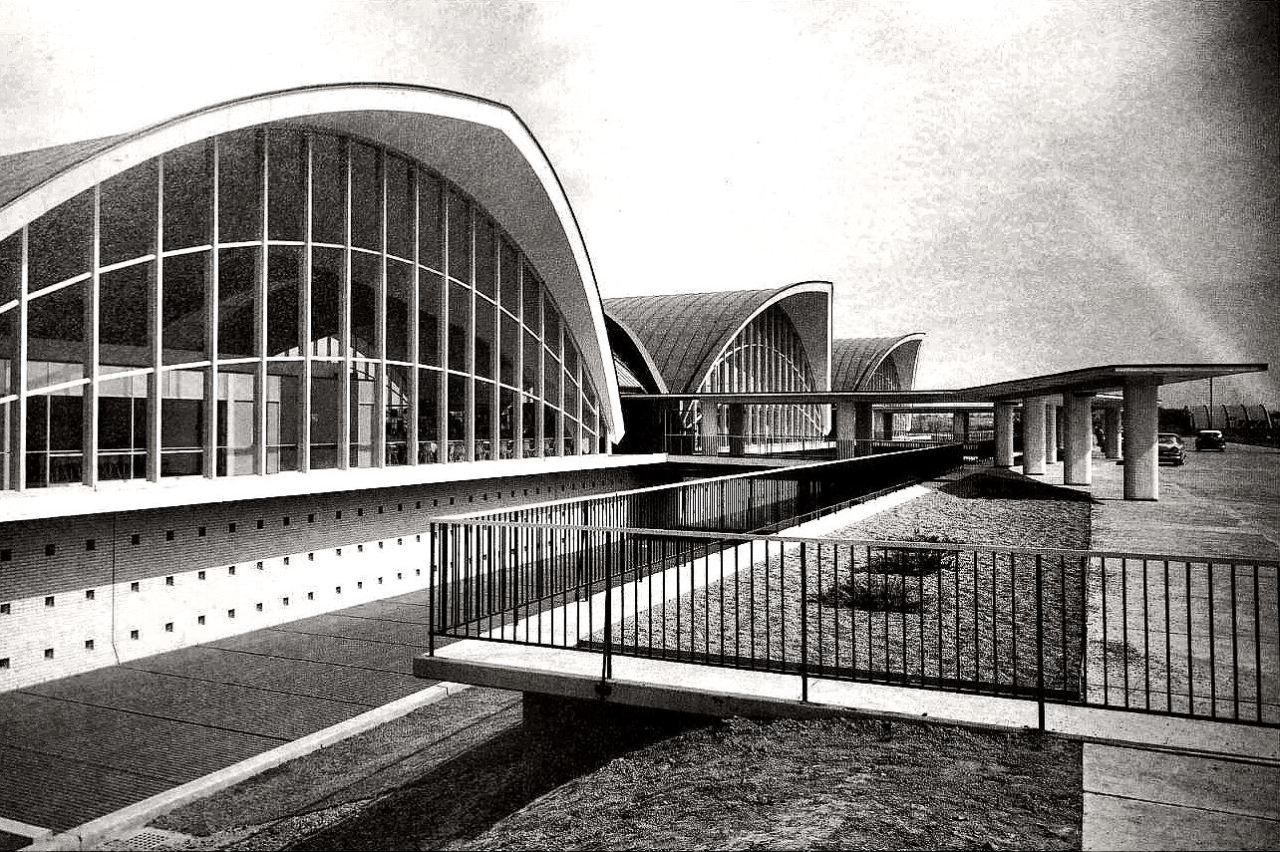
Not all of Yamasaki’s designs are characterized by strong vertical lines and distinct angles, as well as by detailed surface ornament. Two notable exceptions are his 1956 St. Louis Lambert Airport terminal building, and his 1964 West Gym for Carleton College (both below).

Despite the passage of years, Yamasaki’s architectural designs continue to have a fresh and winsome appearance. His buildings stand apart from many examples of urban modernism, where reflective glass-clad buildings often appear indistinguishable from one another and where attention to human scale seems overlooked, especially in the experience of those who approach such structures. By contrast, Yamasaki’s buildings remain attractive and inviting.

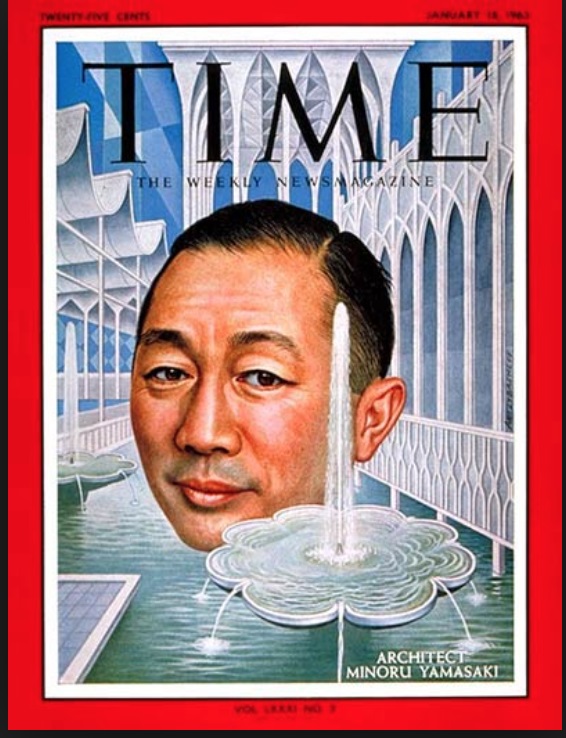
Yamasaki displaying a scale model of his Wayne State College of Education building (above), and as featured on the cover of TIME magazine (1963).

The completed twin towers of the World Trade Center prior to 9/11

David Shaner’s Beautiful Ceramics

[If reading this by email, please tap the title at the top to open your browser for the best experience. Then, clicking individual pictures will reveal higher resolution images.]

An intriguing sculptural pot by David Shaner, with an unglazed exterior


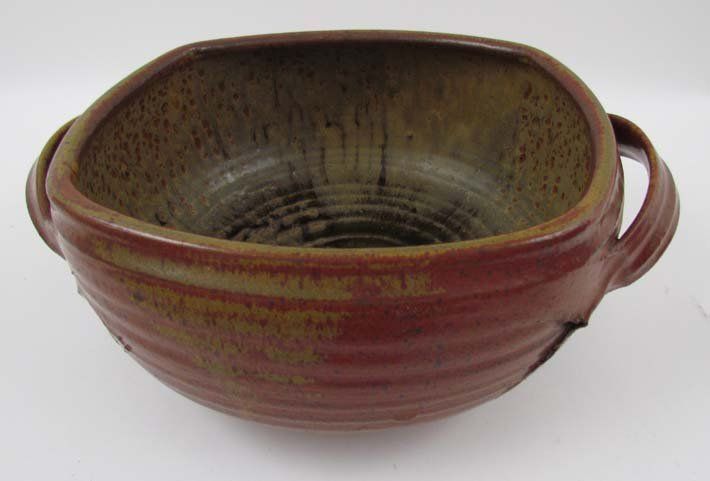
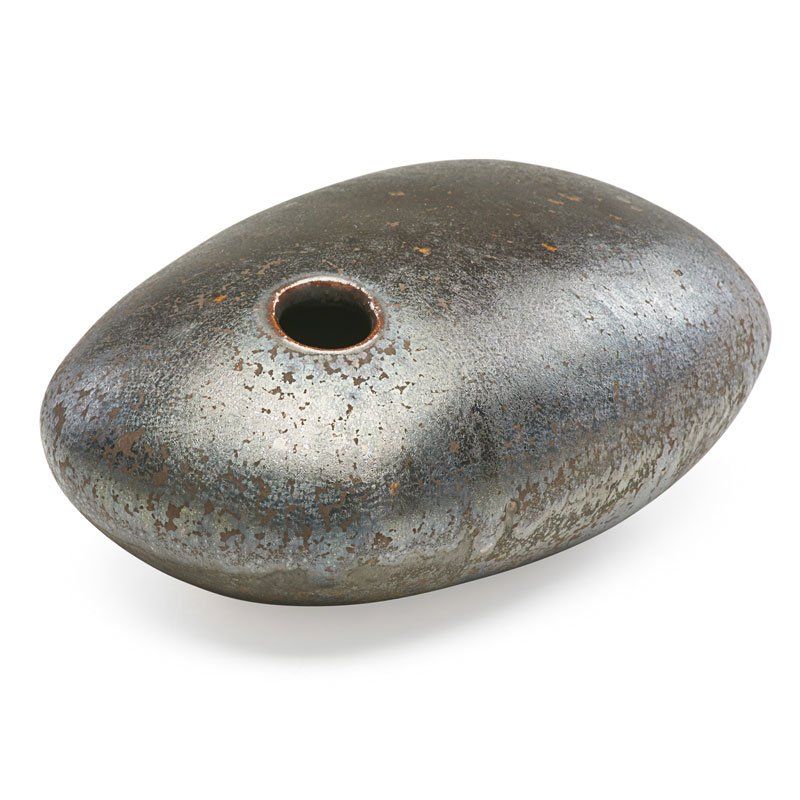
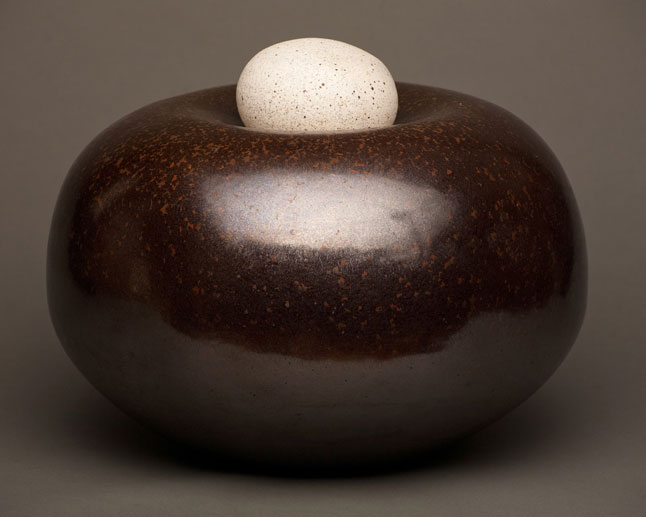
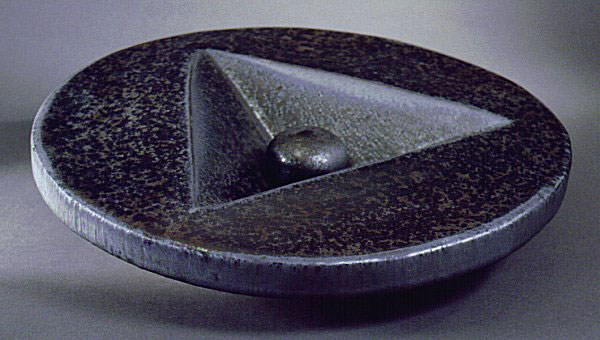
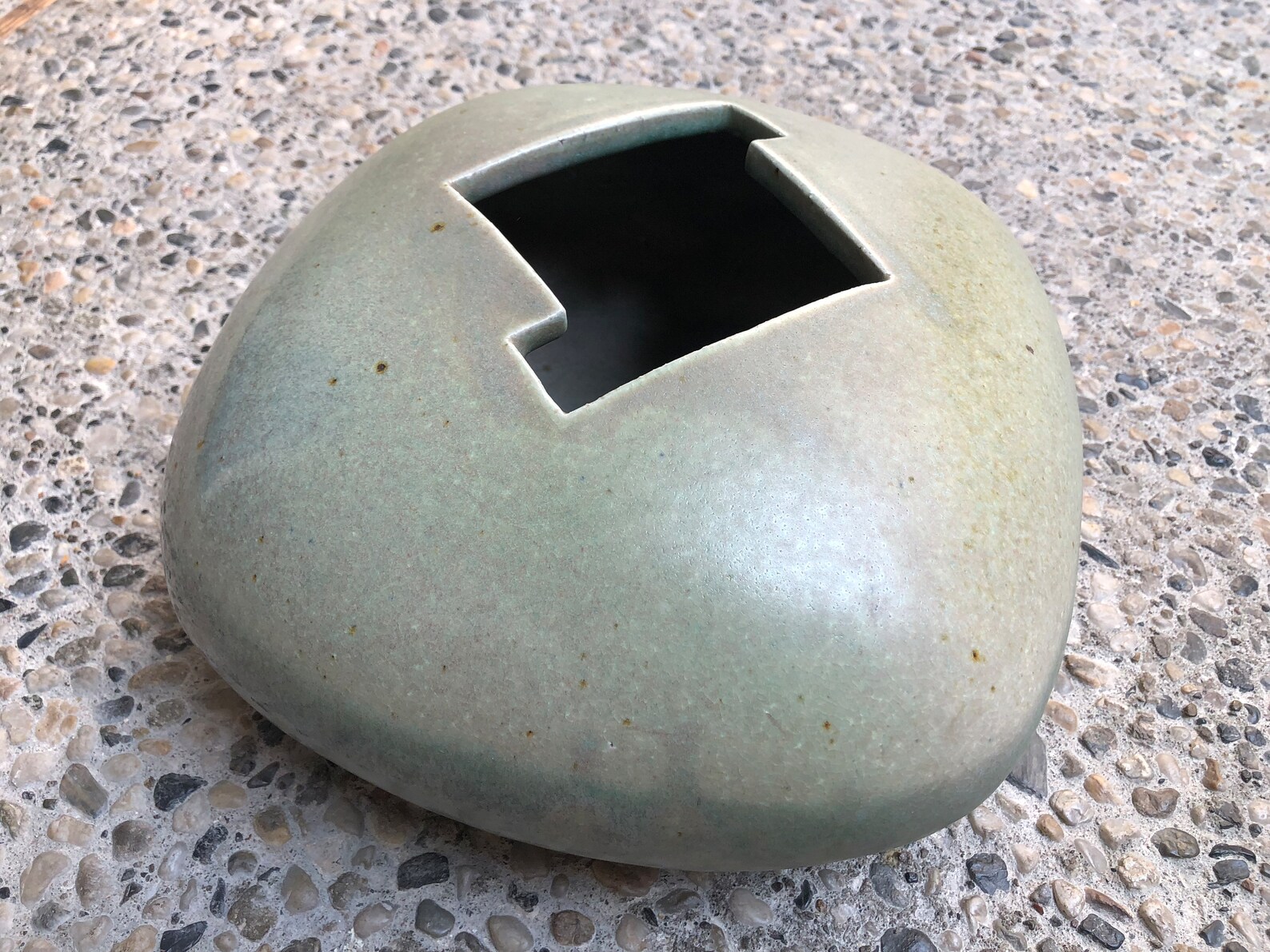
Through his love for ceramics, David Shaner became an accomplished artist whose work was and is widely known for his mastery of traditional pottery techniques as well as for the red glaze that bears his name. The influence of Japanese potters as well as those who studied their work is evident in Shaner’s own earlier pottery. Over the years his interest in non-traditional pot-making grew into a developed pursuit of what we might call ceramic sculpture. Here (below) are three Shaner pots that show his willingness to explore forms that move beyond the circular shape we usually associate with clay that has been molded on a rotating wheel and bat (or platter on which a pot is shaped). Notice the manipulation of the rims of the second and third pots, as well as the presence of the Shaner’s Red glaze on all three.


In Shaner’s work, these explorations of the plasticity associated with raw clay then progress to more dramatic departures from traditional pot making. Such pot making is largely focused on forms where the subsequent utility of the result is at least suggested if not also intended (as with Shaner’s teapot displayed in a prior post). In addition to the pot depicted at the top of this post, I share below a number of my favorite examples of what I have referred to as his ceramic sculptures.

A number of these examples of Shaner’s explorative work with fired and glazed clay are termed his series of ‘pillow’ pots, suggested by their rounded ‘puffed-looking’ forms. In addition to his regard for the work of fellow potters, Shaner admired the sculpture of the modern Japanese artist Isamu Noguchi, as well as that of the British sculptor Henry Moore, with whose work he felt an affinity. Below are some more examples of Shaner’s ceramic art.

David Shaner’s traditional-looking pots represent well his skills and lifelong dedication to mastering the medium for his chosen work. His sculptural art is more immediately identifiable as representing a vision expressed in ceramics that was uniquely his own, and which continues to be widely admired.


David Shaner taking a break, and another example of his work as a ceramic artist.

The Beauty of Shaner’s Red

[If reading this by email, please tap the title at the top to open your browser for the best experience. Then, clicking individual pictures will reveal higher resolution images.]

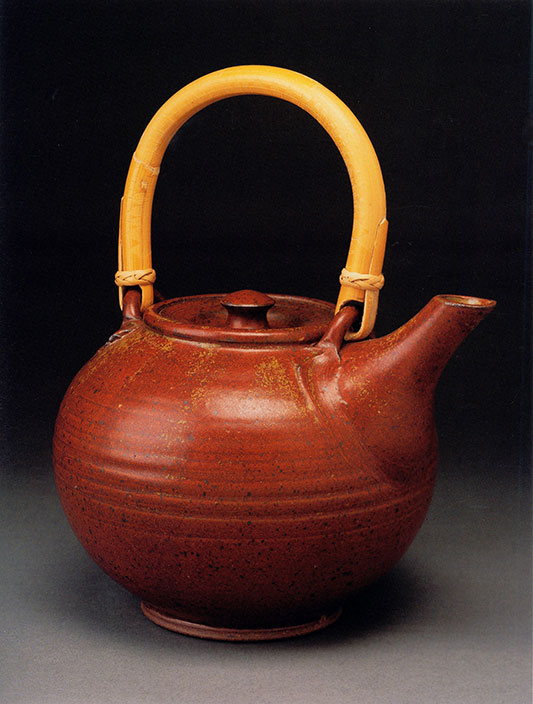
David Shaner, Tea Pot {Japanese style, 1977), with Shaner’s Red Glaze


Shaner’s Red is a polychromatic glaze named after the potter who first applied it to many of his pots. I became familiar with Shaner’s Red on extended visits to family friends who had a pottery studio and a kiln for firing clay at their ranch in Montana. My parents had met them on a ship returning from Japan, where our friends had pursued their interest in traditional ceramics. In addition to throwing pots, they collected a range of examples of ceramic artwork including Asian and Native American, as well as contemporary work by David Shaner and others associated with the Archie Bray Foundation, in Helena, MT. As a youth, I found the color of Shaner’s red and sometimes green and gold glaze alluring, in part because of its variability during firing. In addition to buying assorted mineral and other glaze components, Shaner also gathered found ingredients for his glazes much like weavers often gather natural materials for dying wool.

One brief biographical statement offers this tribute to David Shaner: “His exquisitely formed vessels with their understated glazes are a reflection of the man himself, a man in harmony with his environment and at peace in himself. Shaner was also noted as a teacher, a collector, and a generous contributor to the world of ceramic art and the field of environmental protection; his gardens which he called his ‘spiritual work’ included notable specialized collections.”

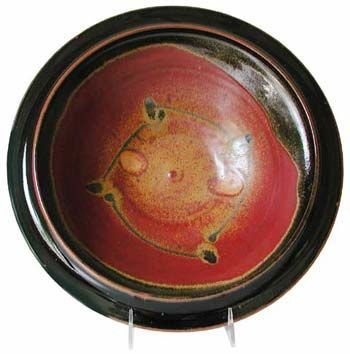
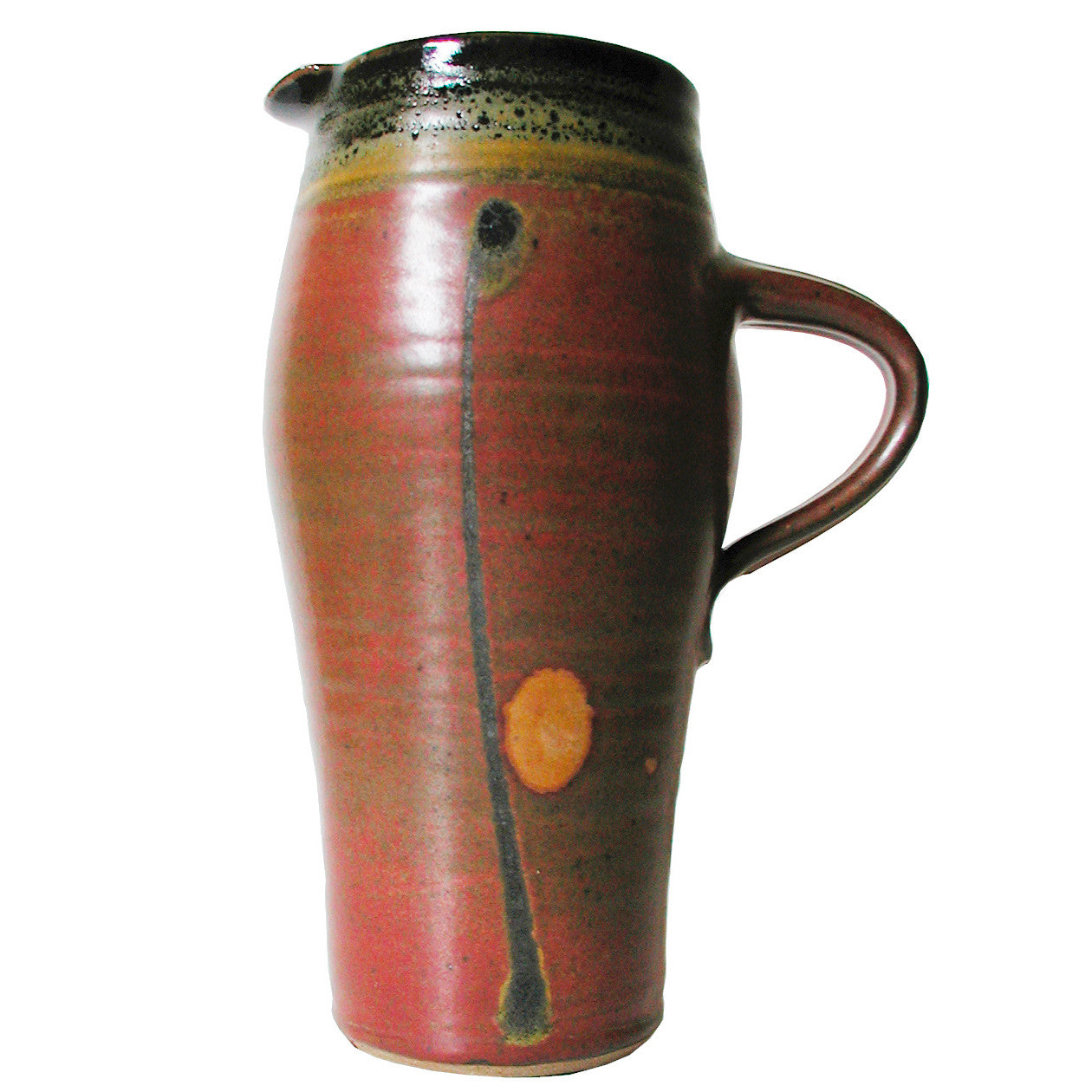
Among those who pursue the art of pottery, the color known as Shaner’s Red is a familiar reference point for glazes applied after a first firing of shaped raw clay. Though the red coloring is largely due to iron oxide being in the mix, this glaze by David Shaner is well known for the way it often morphs into other colors during the firing process, with beautiful results. A canister style pot by Shaner (below, 1988) displays this color variability, which is to some extent within a ceramicist’s ability to manipulate while yet retaining an unpredictability that is often a feature of this art form.

Some examples, below, of pots by other artists displaying something of the range of colors yielded by the application of Shaner’s Red.


Here is one ‘recipe’ for Shaner’s Red: 527 Potash Feldspar; 40 Talc; 250 Kaolin; 40 Bone Ash; 213 Whiting; 60 Red Iron Oxide; 2% Bentonite. The significance of the numbers and the nature of these elements are foreign to me. But they are doubtless meaningful to ceramicists who mix their own glazes. The point in sharing these details is to illustrate how, regardless of the precision involved in finding, measuring, and mixing these elements, the exact outcome of their combination and application cannot be foretold in advance.

Shaner was once asked about this at a workshop he had given. A participant later reported that “his reply was something to the effect that to make it look right, you had to be in the right phase of the moon, hold your tongue just right, call on the correct kiln gods, etc. He was obviously kidding but what he was saying is that this is a tough glaze to work with.” Another potter who has applied the same glaze offers this observation: “… the cooling schedule most affects Shaner’s (and other) iron reds. Shaner’s needs a long slow cool, or firing down, for the red color to resurface…”

Having introduced what is perhaps Shaner’s most widely-known contribution to contemporary American ceramics, his eponymous glaze, I plan in a subsequent post to share further about him and provide additional examples of his pottery, especially in light of his later transition from traditional pot making to what is more properly termed ceramic sculpture.

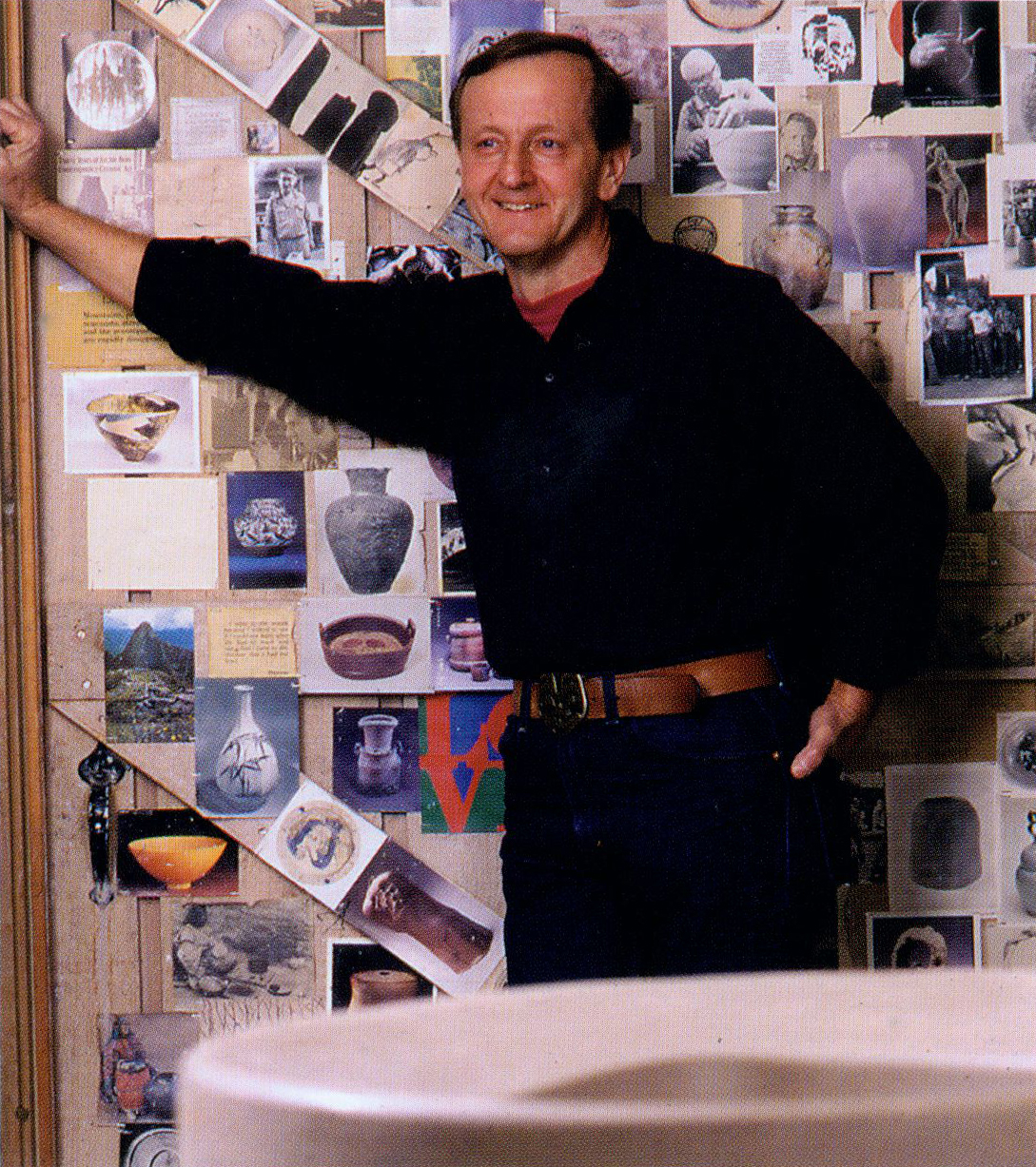
David Shaner in his studio (1989)

The photos behind him appear to include one of the esteemed Japanese potter, Shoji Hamada, at work on a pot (upper right). Another photo (top right) features an example of Shaner’s own work that is clearly influenced by the Japanese folk art tradition (the tea pot illustrated above).

The Beauty of an Ocean Liner


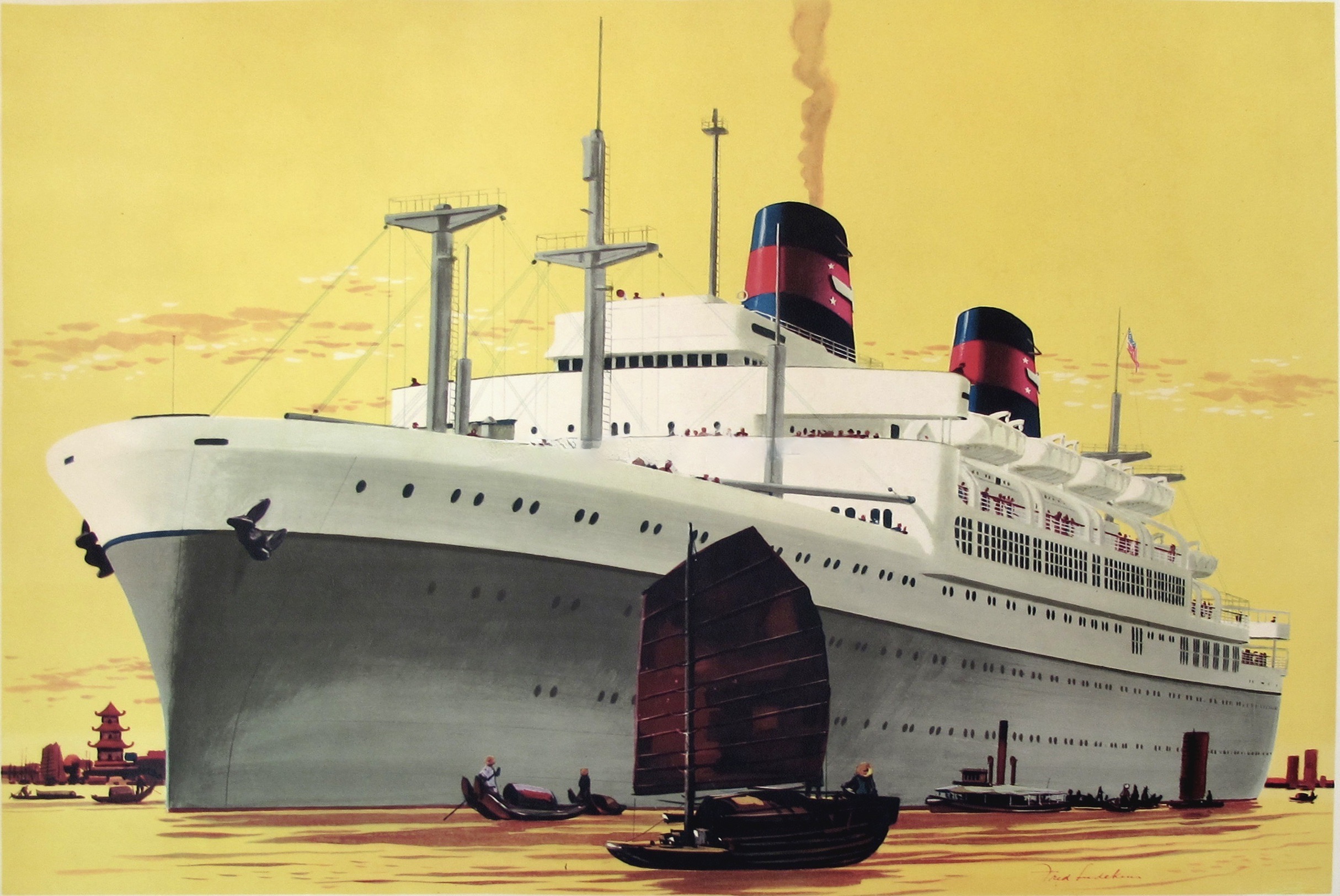
The American President Lines USS Wilson, depicted at Shanghai Harbor


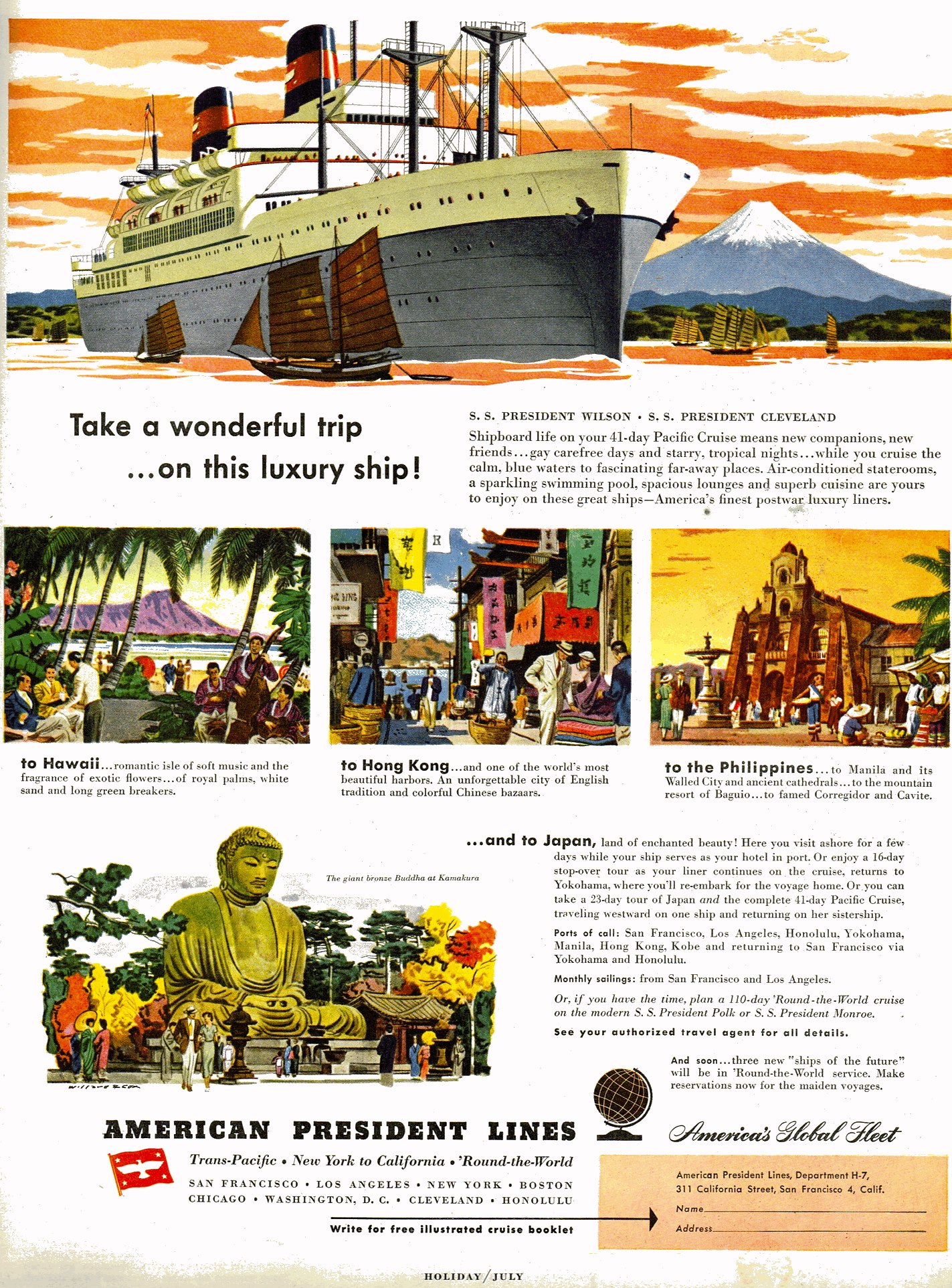
In the mid 1950’s through the 1960’s most American civilians and non-military government officials moving to Southeast Asia traveled with their families and belongings by ship. My family traveled between San Francisco and Yokohama, Japan, five times between 1959 and 1969. Each voyage took 14 days, with a morning to evening stop in Honolulu each way. As a result, I spent ten weeks on the ocean on either the USS President Wilson or the USS President Cleveland, sister ships that alternately plied that route. A most vivid memory is of passing under the Golden Gate Bridge, looking up from the deck.

In addition, my parents were engaged as faculty on a university study-voyage on the South China Sea for about a month in the spring of 1969, on an old chartered Russian ship that formerly was a WWII era German liner. My brothers and I got to go along. We stopped at Cambodia’s first port (Kom Pong Song / at the time just one short and lonely pier), and then at Bangkok, Singapore, and Hong Kong.  ‘Complicated politics’ at that time kept us from docking in South Vietnam, as originally intended.

My younger brothers and me, with our parents, about to depart in 1966

This could have been me and my brother, arriving by ship in Japan, in 1959

Before the era of single class and entertainment-oriented ‘cruise ships,’ ocean liners primarily served the needs of individuals and families relocating to multi-year assignments overseas. Like numerous government officials and their families, and unlike business travelers, my missionary parents were booked in the lowest price range cabins in the first class category of the ships. This was in markedly different circumstances from those who traveled in the aft, more crowded and yet rather limited economy section. Though we had smaller and more sparse cabins compared with those in the top tier, we had meals in the same dining room and enjoyed the same public areas and entertainment options as all others in first class, as well as by the Captain and his senior staff. And in the course of a two-week long voyage, people from very different backgrounds and circumstances became unanticipated acquaintances and in some cases lifelong friends – an unexpected and beautiful thing.

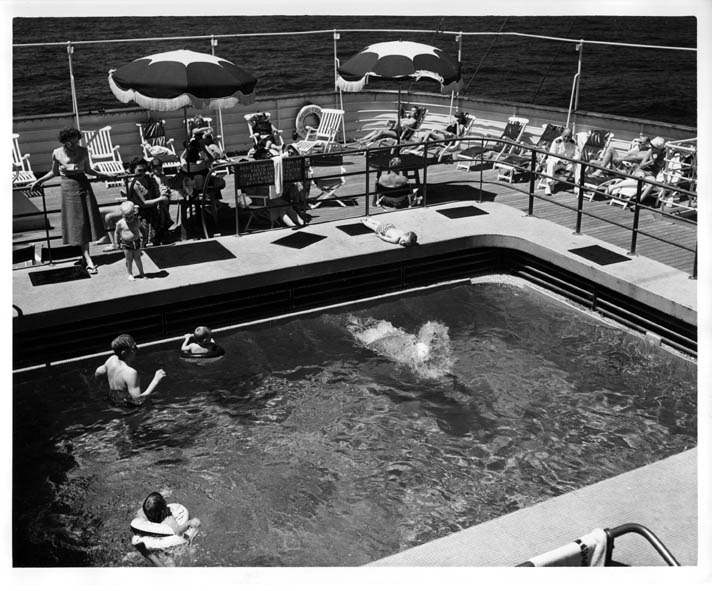
An upper-deck photo of the Wilson en route

Each voyage departure in that era was a real event. The docks were crowded with well-wishers, and folks onboard were given multiple reels of colored paper streamers. We were then encouraged to hang on to one end, and throw the streamer reel toward those on the pier below. Soon, the links between the ship and those on shore were heavily laden with these colorful streamers. And slowly they were broken, one by one, as the ship moved away from the dock area toward the open sea beyond, all the while blasting one of the loudest sounds I have ever heard. Our connection with one world symbolically was broken as we were pulled back, and towards another. This once again brought people from remarkably different backgrounds together.

I remain most grateful for our ocean voyages, which allowed a graceful transition between progressively differing time zones, in addition to all the fun we had on the way. At that time, traveling by jet between the continents seemed like the luxury way to transit the oceans. Now, in retrospect, though the two ships were comparatively modest in relation to modern cruise ships, voyaging on the Wilson and Cleveland was clearly the preferred way to go! For we were all pampered by the ship’s crew, from the uniformed waiters in the dining room and lounges, to the attendants who brought refreshments like ice cream to the inside and poolside teak deck chairs.

Children were especially cared for, in the day-long Marco Polo room, where activities and snacks were provided without interruption. Amazing to me and my brothers were the plastic model car kits simply given to us to help occupy our time, when we were not swimming.

An American President Lines magazine ad from that era

Among my childhood recollections, some of my most significant memories of beauty, in so many forms, are attached to those voyages on what seemed to be the most remarkable ships.

The Beauty of a Homing Pigeon

A stunning Belgian racing pigeon, sold for $1.9 million


My title for this post may appear ironic or implausible. Yet, there is a long history of careful stewardship of homing pigeons by pigeon fliers and ‘fanciers.’ They breed beautiful, graceful, and powerful birds. Some racing birds are capable of flying a thousand miles, mysteriously finding their way back to their nests at speeds between 60 and 100 miles an hour! Most homing pigeons are not quite in that league.

I first became intrigued with the idea of having a small flock of homing pigeons when I was a Boy Scout in middle school, in Japan. A fellow troop member had a flock of some 20 to 30 birds. I went over to his house after school and watched him release them from his roof-edge loft. Then he would scatter bird seed on the roof and enter the loft, a signal to the birds that ‘dinner time’ had arrived.

Multicolored homing or racing pigeons in a Texas loft

His loft, as my later and smaller ground-level pigeon coop would be, was constructed of parts of old wooden shipping crates, then quite common in port cities like Yokohama. Those crates provided solid structural starting points, generally weather resistant, and adaptable to various pigeon loft configurations. What was left to be found was some mesh screen, some wood with which to fashion a simple door, and a set of dangling vertical rods (the formal name for which I have forgotten) which, resting against a wooden ledge, would allow the pigeons to return to the coop while passing through them, but not able to exit again.

A homing pigeon resembling one of the first in my small flock (note the leg band)

My first two birds, received from my friend, had distinct colorings different from common city pigeons. The female had a tan color and the male’s feathers were an overall charcoal gray and black. With them, I raised several more pigeons having beautiful darker brown feathers with white stripes. This was while the adult birds acclimated themselves to their new circumstances, and gained a new homing point for their flights. If I recall correctly, it takes at least a few months for this to happen.

It seems significant that the Gospels record the Holy Spirit descending upon Jesus at his baptism, as being like a dove (a pigeon relative) rather than – as some might have imagined or hoped – like a falcon or an eagle. Doves and pigeons, the latter offered on the occasion of the infant Jesus’ presentation in the Temple, are symbols of peace, while avian raptors more often figure in war and or civil power-related imagery.

Over the couple of years I kept pigeons, I may have had as many as 8 or 10 in my small coop, some of which I purchased from local Japanese fanciers. I particularly prized the white birds, and saved up paper-route money to buy them. Once, I bought a beautiful one without having a proper transport case with me, and carried it home through the Yokohama streets. After my journey of a mile or two, almost near home, the pigeon in my hands and held in the proper way, suddenly startled me and flew off to its former home!

I never raced my pigeons, though that is a common hobby for those who raise homing pigeons. Transporting the pigeons by vehicle (in vented carry boxes) to an assigned location, they are then released at a particular time, and clocked regarding the speed of their return to their home lofts. How homing pigeons are able to do this is not yet fully understood, though it is thought to involve magnetoreception, a sensitivity to the Earth’s magnetic field.

My time with my pigeons came to both a happy and a sad end. I was examined and proud to receive the pigeon raising merit badge from the Boy Scouts.

And then one morning, some months after this, I went to check on my pigeons before school. I was devastated to find that a cat had gotten in during the night, and I had lost my beloved birds.

As you might imagine, from time to time I muse about having a small flock of these amazing and faithful birds once again.

The Beauty of Koi and of Goldfish


One day as a boy in Japan I looked up and marveled at the fish-shaped fabric streamers, flowing in the wind like kites. The fish were Koi. Traditional Japanese households fly Koinobori from poles or lines in honor of Children’s Day, a national holiday observed on May 5. Whether in the kite form or not, Koi are special to the Japanese, who first bred the new fish varieties and cultivated their colorful iterations in the early 19th century.

As beautiful as some of the fabric examples of Koinobori can be, they are not nearly as evocative as the real thing. Koi are a form of carp, which to our ears makes them sound like something unpleasant. They are not a variant of goldfish, and though Koi can be interbred with the latter, the offspring are sterile, just as are mules (the offspring of horses and donkeys). Unlike common carp, Koi have been bred to feature bright colors and a fluidity of movement that graces many ponds in formal Japanese gardens. Curiously, if released into the wild and allowed to propagate, researchers find that within a limited number of generations, Koi offspring revert to the more common form and dull brown-gray color of river and lake carp.

A goldfish above a Koi

One notable difference between common carp that are found in many rivers and lakes, and Koi found in Japanese style garden ponds, has to do with the quality of the water in which they are typically located. As bottom feeders, carp tend to swim and eat in the lower levels of murky waters. And so – by contrast – Koi are usually cultivated in clear and relatively shallow pools where their bright colors can be better appreciated.

Koi can be quite expensive, especially the fancier varieties, but they can also live as long as, if not longer, than humans. For these reasons, those who are new to keeping fish in smaller outdoor ponds may do well to start with multi-colored goldfish, the outdoor care of which can be easier and a good preparation for caring for Koi.

Some years ago when we previously lived in south Louisiana, I purchased a black plastic pond basin from a big box home supply store, along with an inexpensive pump. Having half-buried the basin, we found some decorative stone and an aquatic plant or two. We then filled the basin and let the water sit for a few days to allow any chlorine or other potentially noxious elements within treated water to dissipate, and to ‘season’ the pond’s content. Some landscaping needed to follow, as you can see below.

For a surprisingly limited number of dollars, a trip to WalMart provided a number of long-shaped, rather than plump-shaped, multi-colored goldfish, which survived and even thrived over many years while growing to an 8 or 9 inch length (photo below). The pond pump helped aerate the water, and a natural bacteria and enzyme product made a huge difference in helping keep the pond clear.

Many people find even a small water feature like a miniature fountain near a patio to be calming and restful. Adding a small gurgling pond, such as ours, with a few fish can enhance the interest, providing the subsequent pleasure of helping care for the aquatic residents within it. Someday, I hope to have Koi. But I may be starting once again with goldfish, which on a smaller scale can often be just as beautiful!


A special thanks to former and now neighbors, Jeanne and Tom Morris, for adopting our goldfish and pond, and giving new life to the ensemble.