Ironwork

The Beauty of Witness

Memorial sculpture commemorating the Martyrs of Memphis

This week, on September 9, we observed a significant date on our personal calendar by celebrating the birthday of one of our sons. September 9 was already a notable date for us beginning some years before his birth, after our move to Memphis in the summer of 1983. During those years, the date became associated with an addition to the Episcopal Church Calendar that has readings appointed for it in our Lectionary. September 9 is designated as the feast of The Martyrs of Memphis: Constance, Thecla, Ruth, Frances, Charles Parsons, and Louis Schuyler.

To those unfamiliar with its history, the official title for this feast day may suggest dramatic images of early Christian saints contending with ferocious animals and or human adversaries in the name of the Faith. Which then raises questions about whether, perhaps, the Memphis in question was the one in ancient Egypt. Yet, the name designation for this day can be instructive for all of us because it may remind us of something we once learned – that the etymological root of the word martyr lies in the ancient Greek word meaning ‘witness.’ Hence, those persons we commemorate on the Church’s Calendar because of their examples of Faith are remembered for being especially compelling witnesses to God’s redemptive mission in Christ, regardless of whether they faced circumstances that might have led to a heroic death.

The Martyrs of Memphis provides an occasion for us to remember the men and women who remained in Memphis to minister to those with whom they faced together the ravages of a severe Yellow Fever epidemic, from which they could have fled to safer places elsewhere. Unknown to them was the fact that this horrible plague was a mosquito-borne infectious virus, and not something arising from ‘swamp vapors’ or bad city air. Among the faithful persons who succumbed to the fever, and who are remembered on the feast day of September 9, are the four women named in the feast’s title who were community members of the Sisters of St. Mary, Father Charles Parsons, the last remaining Episcopal priest in the city, and Father Louis Schuyler, who came as a volunteer from New Jersey to take Parsons’ place and join the Sisters in ministry.
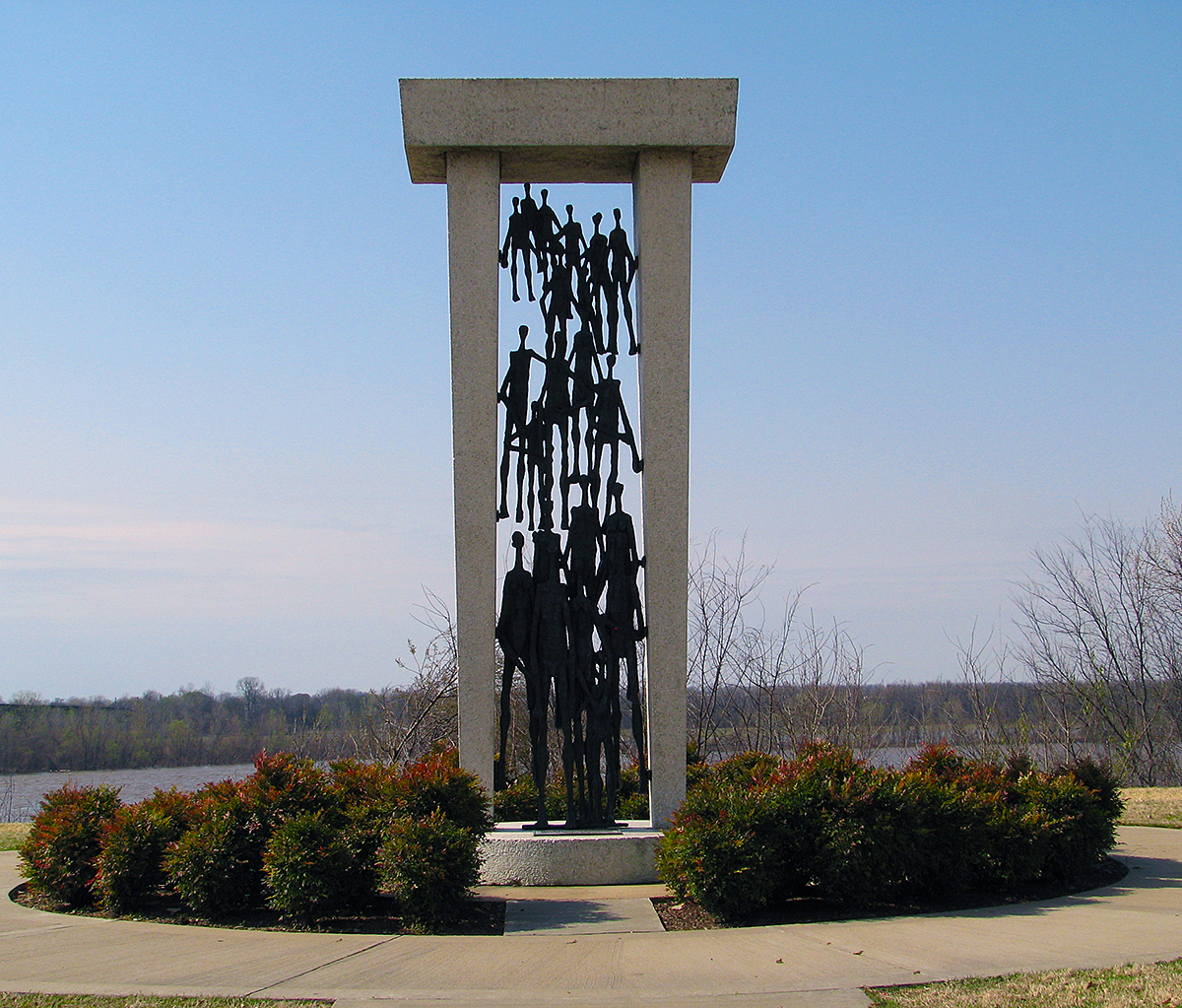
Monument by Harris Sorrelle, in the Memphis Martyrs Park, overlooking the Mississippi River

Words from the collect (or principal prayer) for the feast day of the Martyrs of Memphis capture well why these particular individuals are named among so many others – known and unknown – who shared their faith as well as fate: “We give you thanks and praise, O God of compassion, for the heroic witness of the Martyrs of Memphis, who, in a time of plague and pestilence, were steadfast in their care for the sick and dying, and loved not their own lives, even unto death…”

The generic character of the title for this significant feast day was chosen to help us also remember that the number of those who died in the epidemic, not only in Memphis, but up and down the Mississippi River and beyond, numbered in the thousands. Memphis’s historic Elmwood Cemetery, its oldest, has a particularly moving monument that complements the contemporary riverside sculptural composition by Harris Sorrelle (displayed above). At Elmwood, instead of having an impact upon the use of anonymous and aptly dark-colored figurative silhouettes, as Sorrelle’s sculpture does, the cemetery monument provides just paragraphs of words, stating in plain but moving terms the reality that lies below where cemetery visitors walk (as the following image attests). As the Elmwood monument notes, at least 1,400 Yellow Fever victims are buried in nearby unmarked mass graves.

Martyrs monument in Elmwood Cemetery (clicking the photo will provide an expanded view of it)

The faithful witness of those who died ministering to and with others among the Yellow Fever victims in Memphis in the 1870’s can have the effect of prompting us to reflect on the very different circumstances in which we live, with our advances in medicine, healthcare, and social services. Nevertheless, the COVID crisis of 2020, and its lingering legacy, can also remind us of our mortality, our higher calling to seek godly life in its fulness, and to be faithful companions with and to those less fortunate than ourselves.
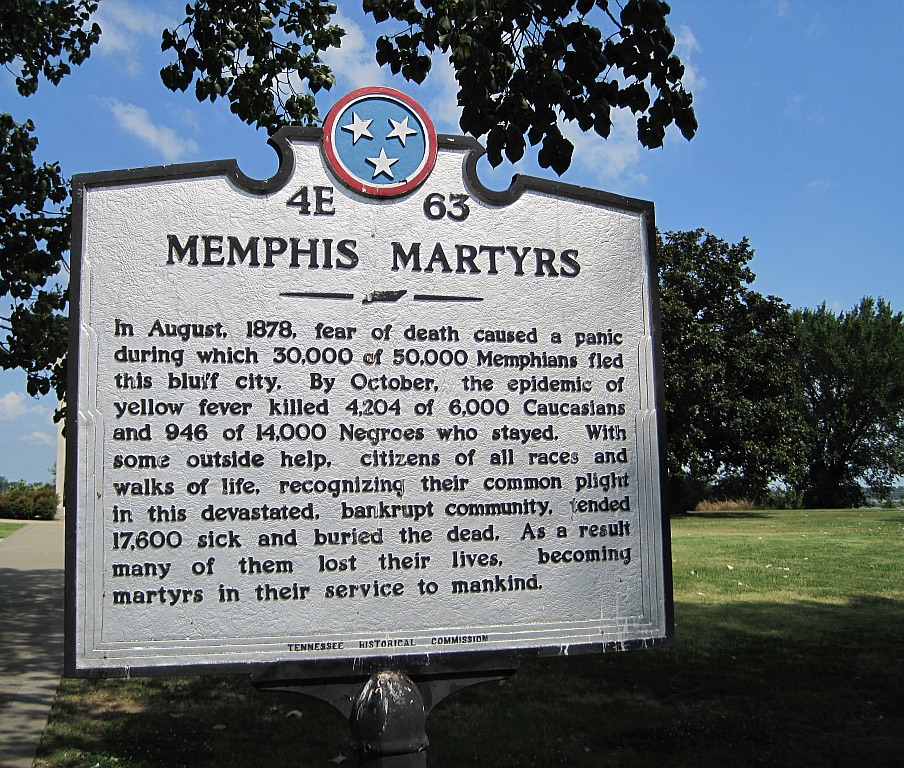
A state-provided historical marker that includes use of the word ‘martyr’

Additional note: a tragic-comic aspect of the Yellow Fever’s impact upon Memphis was another pre-scientific belief (in addition to the ‘swamp vapors’ theory regarding its origin) amongst those who remained in the city. It is said that those who seemed to have the lowest mortality rate were corpulent men who smoked cigars, the smoke from which may have warded off the mosquitos responsible for the plague’s transmission.
The Beauty of Philip Simmons’ Charleston Ironwork

If reading this by email, please tap the title at the top to open your browser for the best experience. Then, clicking individual pictures will reveal higher resolution images.

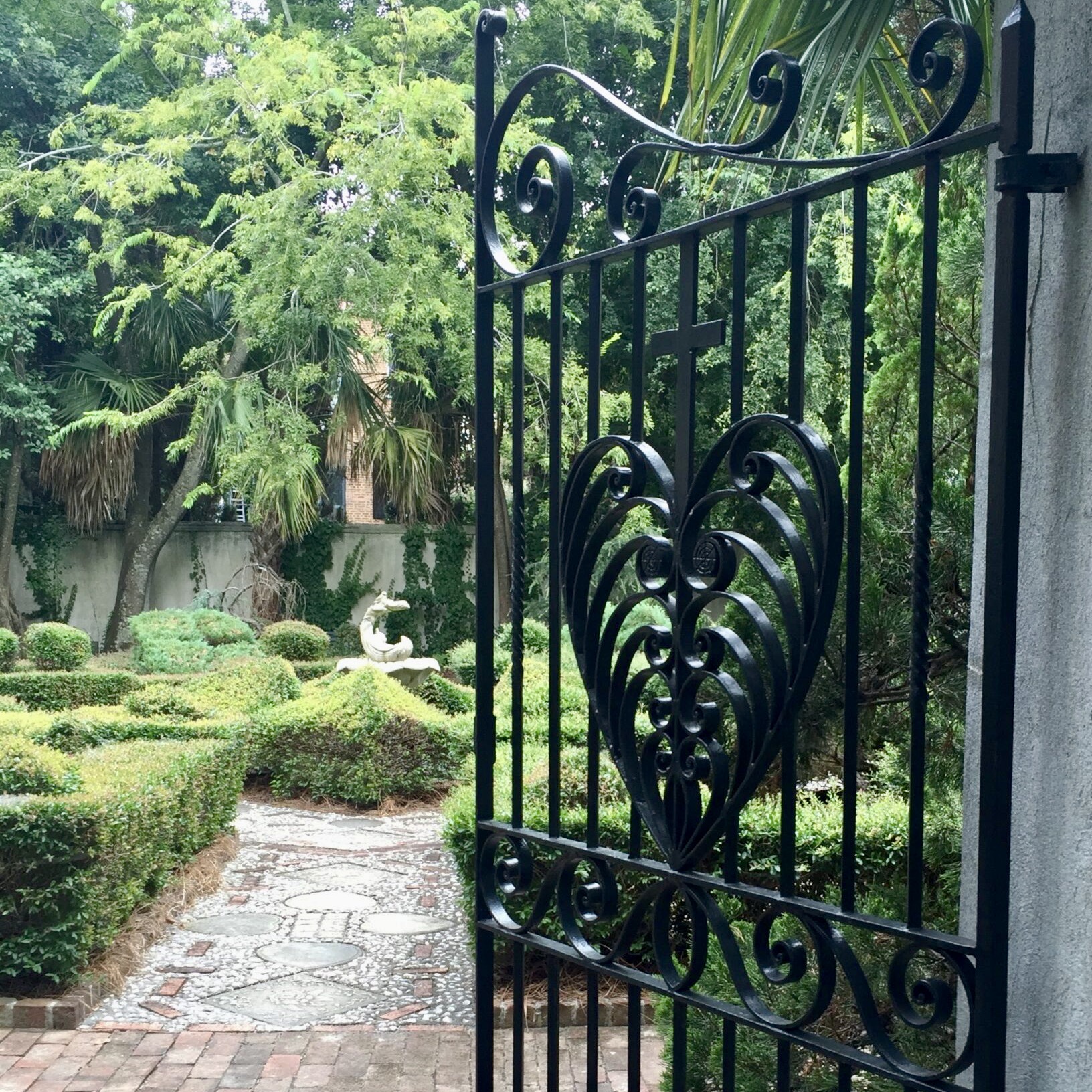
Gate to the Philip Simmons Memorial Garden, Anson Street, Charleston (featuring a Simmons design)


Philip Simmons, was a blacksmith who spent his life and working career in Charleston, SC, where much of his work is preserved by homeowners, collectors, and a foundation dedicated to honoring his legacy. Along with his lifelong body of ironwork, he has been described as a national treasure. Born in 1912 in the Old South, he received a very limited education and apprenticed himself at an early age to blacksmiths he saw in his Charleston neighborhood. Eight decades of work in a blacksmith’s shop followed as he pursued what some might call a trade craft, and which in his hands was truly an art.

Mary E. Lyons has written a book about Simmons for young persons, which includes some compelling photos of his work. She offers this introduction to the artist: “Philip Simmons began his career as an untrained boy. Now he is called the Dean of Blacksmiths by professional smiths across the country. His memories show that skill and patience take years of work. They also prove that everyone can achieve both. An honored artist, teacher, and businessman, Philip Simmons is the working person’s hero.”

Though the circumstances in which he lived and worked were modest, he is warmly remembered by his home city, and he has been commemorated by a marker at the Fort Sumter and Fort Moultrie National Historical Park (shown above), by the preservation of his home and studio, as well as by a high school named in his honor. Numerous examples of Simmons’ ironwork can be seen on walking tours in Charleston, in the course of which one can enter, through a gate fashioned by Simmons, a memorial garden for named for him maintained by the Garden Club of Charleston.

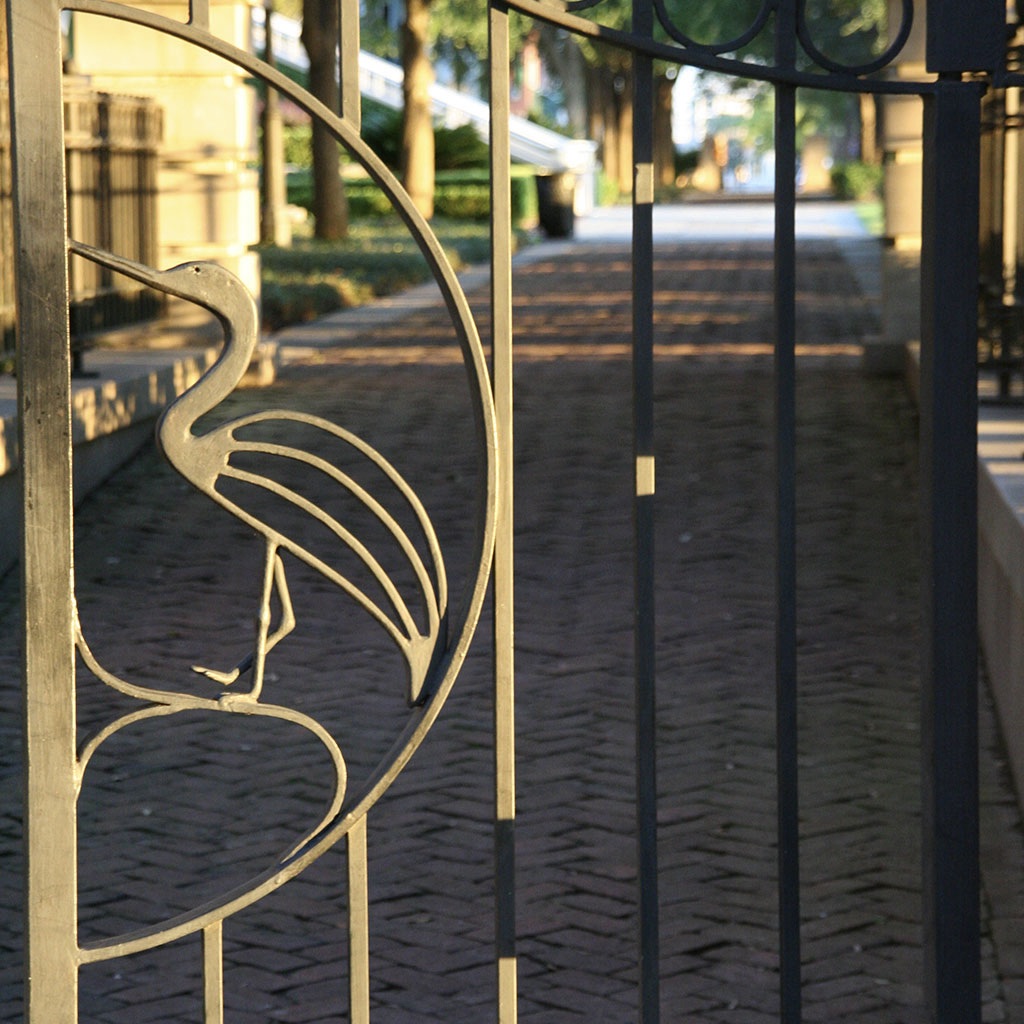
An egret, one of Simmons’ favorite motifs in his ironwork

In addition to representations of egrets, other images such as palmetto fronds, hearts, fish and serpents, number among those images often featured in Simmons’ ironwork. The artist’s choice of these images reflected his sensitivity to the locale in which he was raised, both Daniel Island where he was born, and then Charleston and its low country and aquatic surroundings.

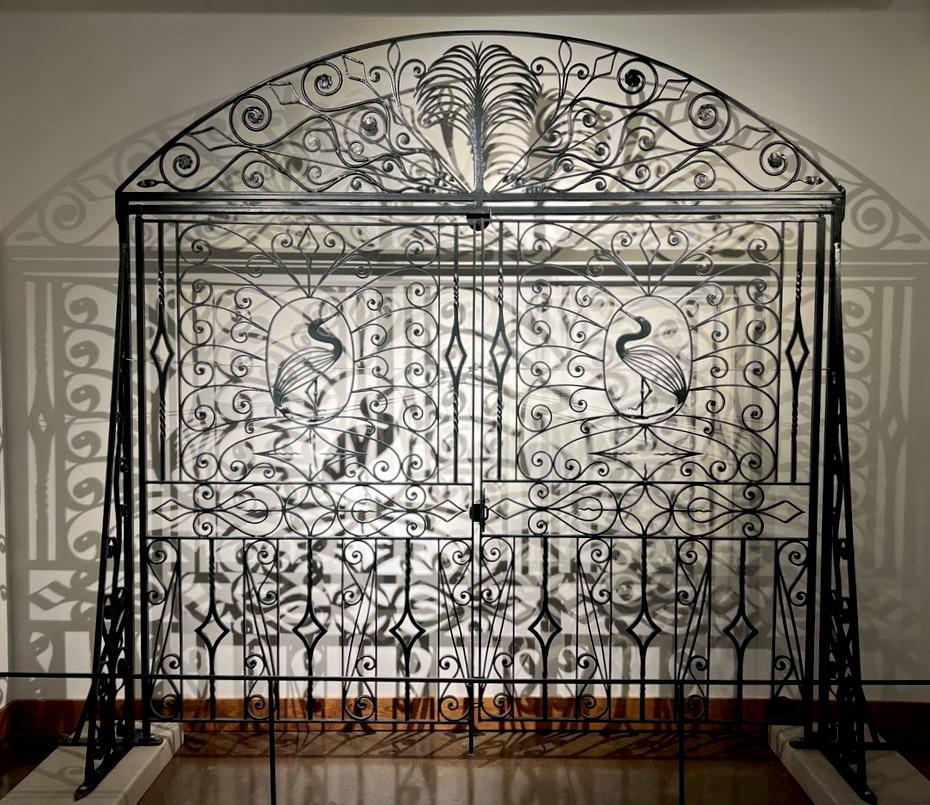
A major turning point in Simmon’s life’s work came with an unexpected opportunity brought to him when he was 64, an age when many contemplate retirement. He was invited to participate in the 1976 Bicentennial commemorative Festival of American Folklife to take place on the Mall by the Lincoln Memorial in Washington, D.C. Asked to craft a gate onsite during the event, Simmons wondered about the imagery that he might select for the project. Thinking about images that would reflect where he was from, he settled on the moon, stars in the sky, the rolling surface of water, and fish. This combination of images reflected, in his mind, the night sky sparkling upon the waters of the two rivers that form Charleston Harbor. The resulting gate, which has come to be known as the Star and Fish Gate, was purchased by the Smithsonian Institution (image below).

Philip Simmons’ crafting of the Star and Fish Gate in a temporary workshop set up on the Washington Mall, complete with a portable foundry and anvil, attracted a great deal of attention during the festival, and resulted in the artist gaining national attention. Among those taking an interest in Simmons’ work, and then helping bring it to a wider audience, was John Michael Vlach, a professor at George Washington University. Vlach published a biography of Simmons in 1981, which may have helped those at the National Endowment for the Arts to take note of Simmons’ lifetime of achievement in the field of blacksmithing. In 1982, the NEA awarded Simmons with a National Heritage Fellowship, the United States government’s highest honor in the folk and traditional arts. Other honors followed, including the Order of the Palmetto, his home state’s highest honor, as well as induction into the South Carolina Hall of Fame. During his lifetime, he was referred to as “a living national treasure.”

Simmons’ iron work incorporating the medical symbol of a caduceus, and a fish representing an aspect of his home region as well as the Christian faith

In spite of all of the accolades and honors he received later in life, Philip Simmons continued with humility to devote himself to his art, and to teaching younger aspirants and apprentices who wished to become proficient themselves in creating beautiful yet also functional ironwork. Despite the very significant cultural differences between his approach and those of Japanese craftspeople, I find Simmons’ approach to his life’s work characteristic of the best of what is often described as folk art, work that is appreciated for its beauty without necessarily calling attention to the artisan who made it.

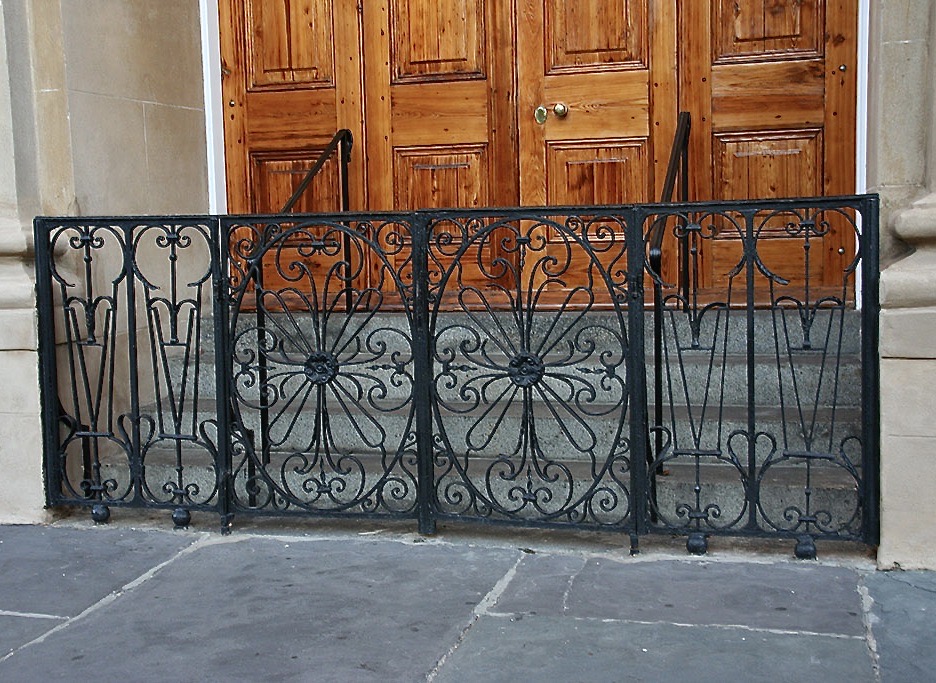
Displayed below are images of a number of Simmons’ creations as a blacksmith.

A Simmons gate for St. Philip Episcopal Church, Charleston

The cover of Mary Lyons’ book for young persons, featuring Philip Simmons at work on a piece of scrolled iron


The full title of John Michael Vlach’s book, mentioned above, is: Charleston Blacksmith: The Work of Philip Simmons. The book includes a map of Charleston showing the location of Simmons’ works, as well as brief descriptions of them.