Boats

M/S Juno: A Floating Beauty

If reading this by email, please tap the title at the top to open your browser for the best experience. Then, clicking individual pictures will reveal higher resolution images.

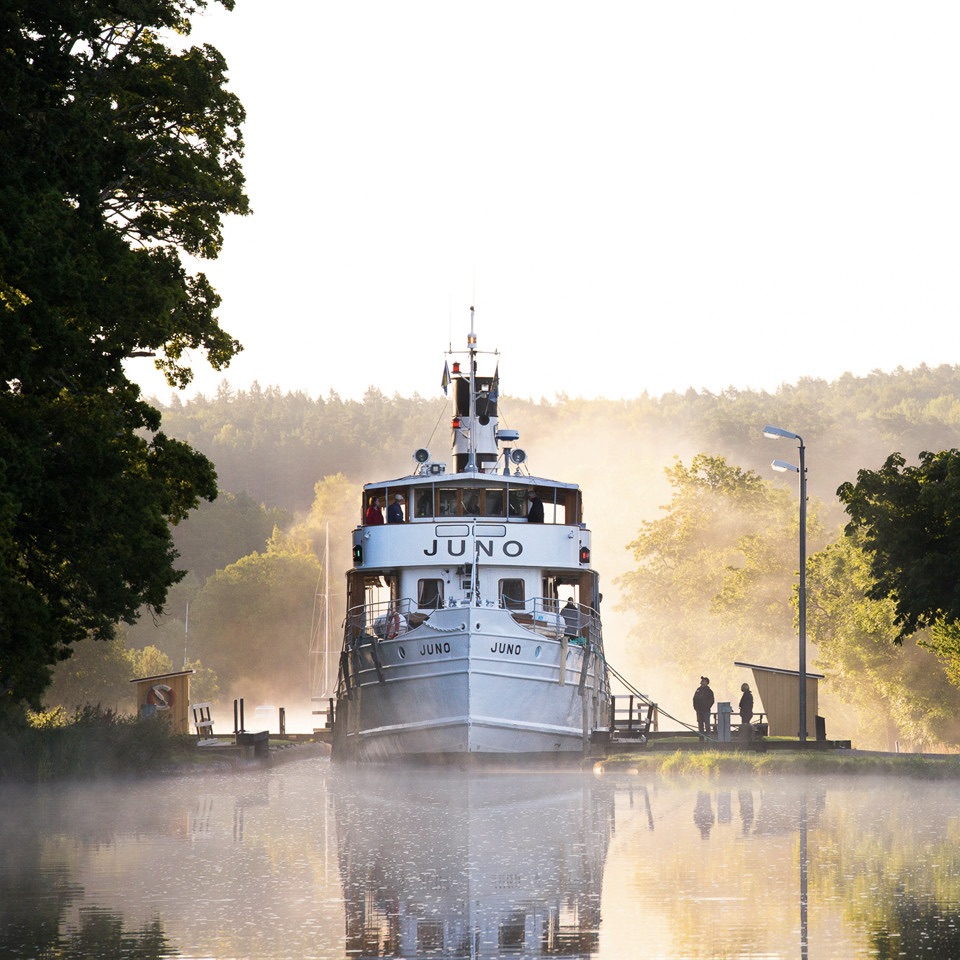
The M/S Juno on her inland voyage


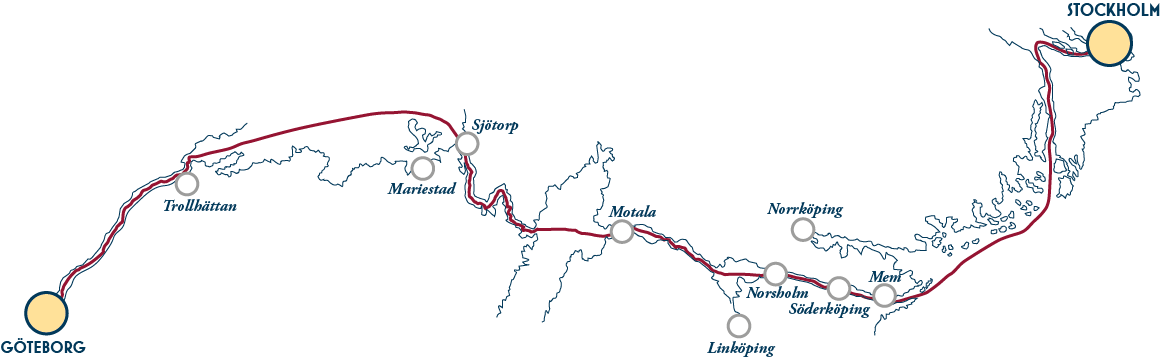
Did you know that it’s possible to book a safe and enjoyable overnight passage on a small ship that was launched over 150 years ago, in 1874? The M/S Juno, built for and still ‘sailing’ on largely inland waters in Sweden, is the oldest registered passenger-accommodating ship in the world. At about 100 feet in length, and with only 24 cabins, she is tiny compared to the grand vessels now being launched for the cruise industry. Not well-suited for ocean crossings, the Juno is perfect for her comparatively short runs between the Swedish ports of Gothenburg and Stockholm. Her usual route takes her from salt water through inland canals and lakes, and then through salt water again to the Stockholm archipeligo of islands and the Baltic Sea.

Originally, the Juno’s superstructure containing her bridge, lounge and dining room, as well as some cabins, was significantly smaller when the little ship served to convey freight as well as travelers. But these days, after a century and a half of service, her mission continues as a passenger vessel. Her age and small size, as well as her historic purpose, account for the fact that modern day voyagers need to be prepared for limited amenities such as shared restrooms.

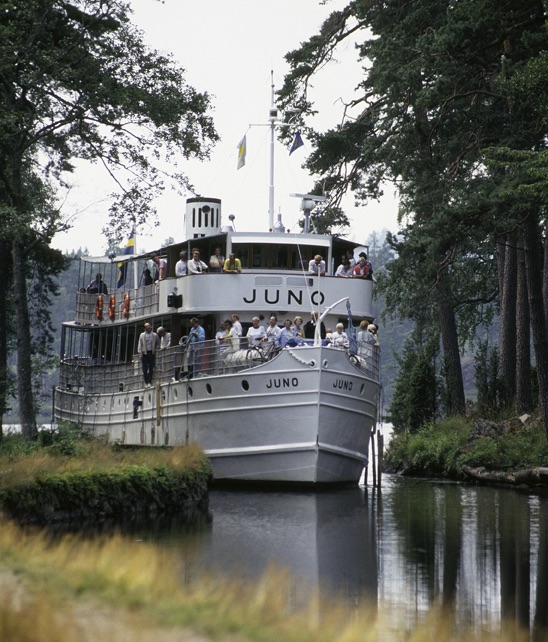
Juno transits one of many locks along her route

Her principal route takes her through canals and locks, as well as inland lakes, up and over the lower Swedish peninsula, with the highest point on the journey reaching a remarkable 300 feet above sea level.

An upper level cabin on the Juno
Juno’s dining salon

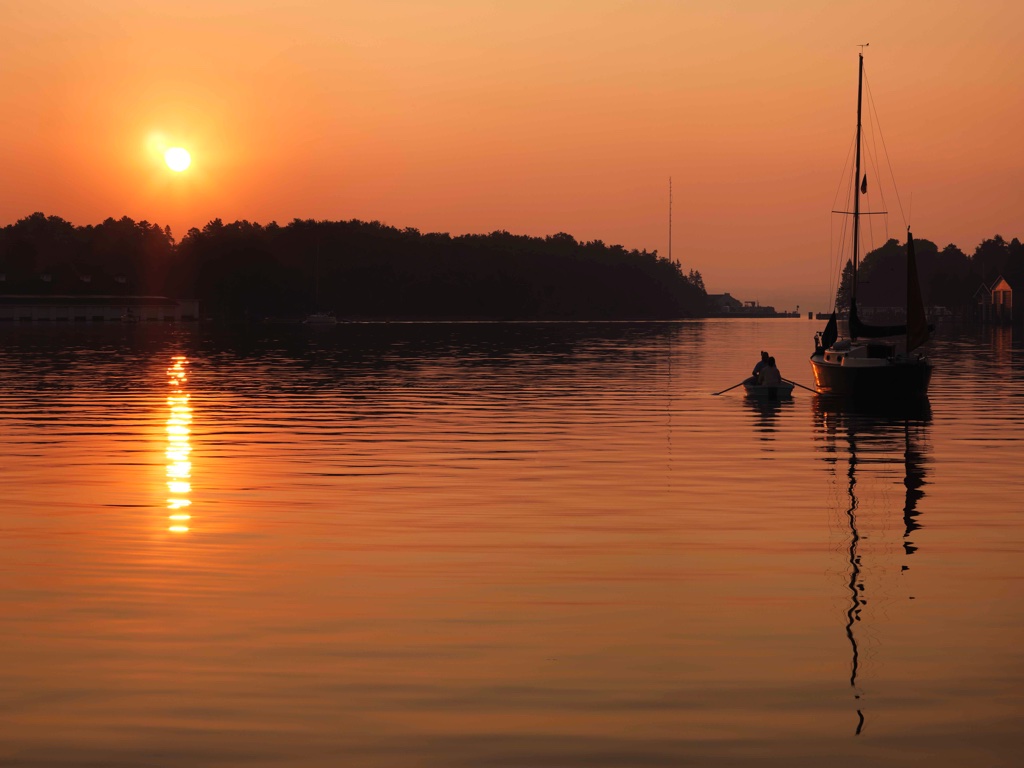
I love Juno’s diminutive size and her classic lines that feature an upturned stern. Her bow line, with a vertical sheer that is now being rediscovered in boat design, is particularly appealing to me, being the skipper of a vintage 24 foot sailboat displaying a similar profile. I would enjoy a berth in one of Juno’s small cabins, resembling as they do old time railway carriage compartments. I think that Martha and I would appreciate the intimacy of sailing with a relatively small number of fellow passengers as well as the proximity of the up-country scenery along the route.

Juno’s upper level stern deck
A vintage photo of Juno taken before the lengthening of her superstructure

My great-grandfather, August Anders Holmgren, hailed from the northern seaside city of Sunsvall on the Baltic coast of Sweden. He emigrated to America in 1893, sailing most likely from Gothenburg, via Liverpool, to Montreal, and then by train to the Midwest just as many other Swedes had done before him. Perhaps my great-grandfather reached his ocean-going ship in Gothenburg via the Juno or one of her sister ships, sleeping on the floor of the dining room as many deck passengers did in the era when the Juno was still in freight service.

Juno’s route through Sweden

Given this personal history, I am sure that a short voyage on the Juno would prove to be a particularly nostalgic experience for me. My family connections with coastal Sweden, and my own experience of having crossed the Pacific Ocean five times by ship, help me to appreciate why I am so drawn to the Juno and the opportunity – some day, I hope – to sail on her.

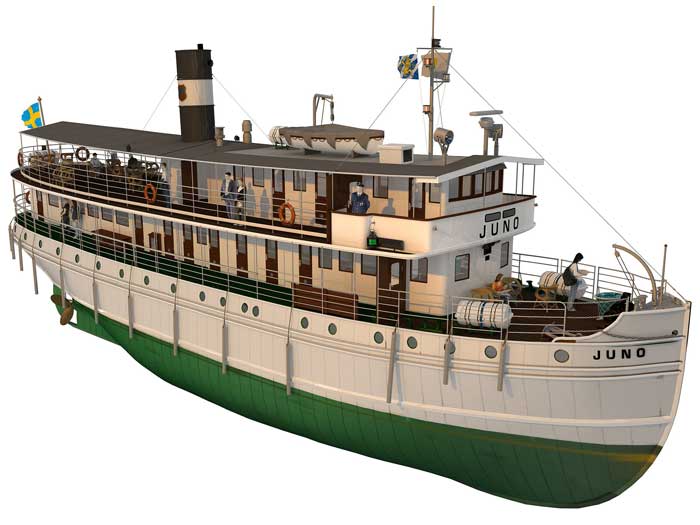
A replica of Juno displaying her hull

Background note: I remember my surprise at encountering Cracker Bay, a 150 foot long private yacht (50% longer than Juno) with three decks above her water line, which one summer cruised into Round Harbor, Charlevoix, MI, from the Great Lakes. That year, as a vessel registered in the Cayman Islands, Cracker Bay was ‘manned’ by a family with young children and a crew of four or five. She took on $20,000 worth of gasoline supplied by a tanker truck parked near the fuel dock at which small craft like mine received a comparatively few gallons at a time. One of the children on Cracker Bay rode a bike over to the dock where my 15′ West Wight Potter was berthed, on which I was cruising for a couple of weeks. He marveled at the diminutive size of my boat, saying he wished he had one just like her!

Cracker Bay, with accommodations for up to 12 passengers, at Charlevoix, MI, in 2010

The Beauty of a Small Boat

If reading this by email, please tap the title at the top to open your browser for the best experience. Then, clicking individual pictures will reveal higher resolution images.

A West Wight Potter 15 rigged with a second jib sail


Having recently featured a ‘tiny house’ on wheels, I find myself thinking about the beauty of small boats. Among examples, I love the West Wight Potter 15 (or P15). Originally designed and built in 1960 by Stanley Smith on the Isle of Wight, P15’s are found all over the world. Though not designed for ‘blue water’ navigating, some have been sailed across the ocean. In 1972, John Van Ruth sailed an early version of the boat from Mexico to Hawaii!

In a prior post, I shared how I discovered this venerable boat design through an article by Anne Westlund, in Small Craft Advisor, documenting her cruise on Lake Powell.

Anne Westlund’s Pea Pod, along with a friend’s P15, on Lake Powell

I was captivated by Westlund’s account of how someone could enjoy a week or more on and in the confines of a 15’ boat. Remarkably, Anne has spent whole summers on Pea Pod, her P15. The West Wight Potter has been described as having the buoyancy of a cork and the roominess of a pup tent. Undaunted by its potential size limitations, many value them, perhaps inspired by the famed ocean sailors, Lin and Larry Pardey, who said, “Go Small, Go Simple, but Go Now.” Though no longer manufactured, used P15’s easily can be found because so many have been built and remain in good condition due to their sound design and construction. Should replacement parts be needed, they are readily available and economical compared to components of larger and more elaborate boats.

Stanley Smith with his brother, with an early West Wight Potter like the one he bravely sailed from England to Sweden

A P15 fits in a garage and can be towed behind just about any vehicle. Two adults can sleep comfortably in the boat, and many P15’s are equipped with a battery, navigation and cabin lights, and other amenities including limited stowage space. Approached as if preparing for a backpacking trip (and with some of the same supplies), a weeklong cruise on a Potter is realistic, especially if going solo. The experience may be of a minimalist kind, but small boat sailing can provide for more time on the water with less maintenance. Sailing one may call for greater agility and balance (small boats can be ’tippy’), and calmer sea conditions. Small boat sailing may also be more physically tiring due to confined quarters and a more frequent need for sail and tiller adjustment.

My P15, Zoe, at the end of a glorious day of small boat sailing

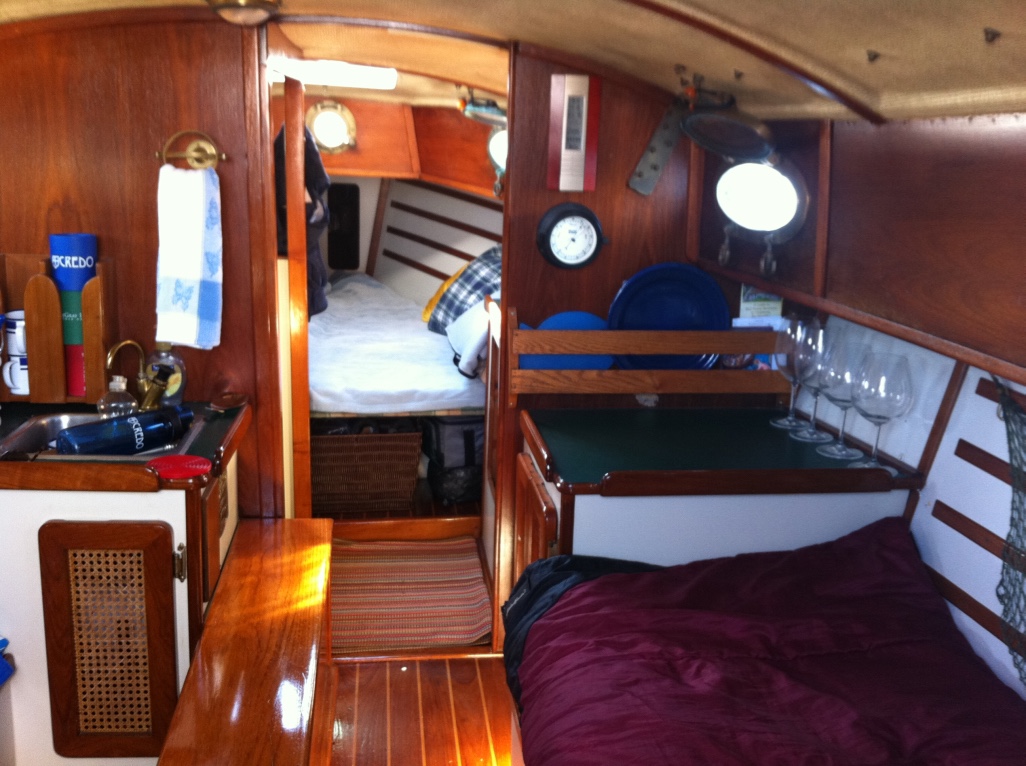
For those who don’t mind getting dressed while sitting down, a safe and dry boat like a P15 is a great choice for sheltered waters and coastal sailing. I have cruised on Lake Charlevoix in northern Michigan for two weeks on Zoe, and 4-5 day trips on her in Arkansas. Water-tight dry bags for clothing and gear, and a cooler – on deck – expand the possibilities for longer cruises. During spells of bad weather and for leisurely evenings, I set up an awning over the cockpit with a large tarp and bungee cords. It’s good to have shore facilities nearby for restrooms and other necessities. Yet, a porta-potty (for use under the awning-cover) can be stowed aft in the cockpit. An occasional onshore meal and visits to a public library have also enhanced my times away on a small boat.

Sailing provides a good metaphor for our spiritual lives, as many have noted. When sailing, we don’t have any choice about the weather, but we can choose how we engage it. A motor is helpful getting into a marina in the evening, or out of trouble if a storm comes up. Yet, the beauty of sailing – especially in a small boat – lies in creatively engaging the wind to maintain a course and get somewhere. Small boat sailing is more susceptible to sudden changes in wind and wave conditions, as well as varying water currents. But this kind of sailing may be more energizing because of a greater need for the sailor to interact with these conditions, especially when they are challenging.

If we find peace in being close to the water and feeling the wind, a small boat is a wonderful thing to sail. For beauty can be found almost anywhere in God’s good Creation. Especially if we are open to it.


Additional note: My earlier post featuring the WWP15 can be found by clicking here. If you become enamored with the WWP15 as I have been, I recommend Dave Bacon’s book, The Gentle Art of Pottering: Sailing the P15.  A quote from Jack London: “Barring captains and mates of big ships, the small-boat sailor is the real sailor. He knows – he must know – how to make the wind carry his craft from one given point to another… it is by means of small-boat sailing that the real sailor is best schooled.”

Especially in a small boat, never go out without proper safety equipment. As Captain Ron said, “if it’s going to happen, it’s going to happen out there!”


Blog note: settings have been changed to provide more opportunity to offer comments, using the link below.

The Curve of Time: A Beautiful Book

[If reading this by email, please tap the title at the top to open your browser for the best experience. Then, clicking individual pictures will reveal higher resolution images.]


I discovered M. Wylie Blanchet’s cruising memoir, The Curve of Time, at Village Books in Fairhaven, Washington, not far from the Canadian border. Evidently considered a classic by readers in Canada, I had not known about her book despite having long been an active boater and avid reader about seafaring. With an evocative water color painting as a cover image, a forward by the Seattle-based writer Timothy Egan, and with the copy in my hand being the 50th Anniversary Edition in hard cover, I was intrigued and bought it.

As the dust jacket blurb indicates, Wylie Blanchet set off on numerous summer cruises with her five children on the same boat from which her husband had earlier been lost in 1926, and presumed to have drowned. 25 feet in length, 6.5 feet in width, and with a relatively small enclosed interior, Blanchet along with her children bravely explored the sometimes forbidding but always mysterious waters along the coast of British Columbia and its adjoining and deep inland sea.

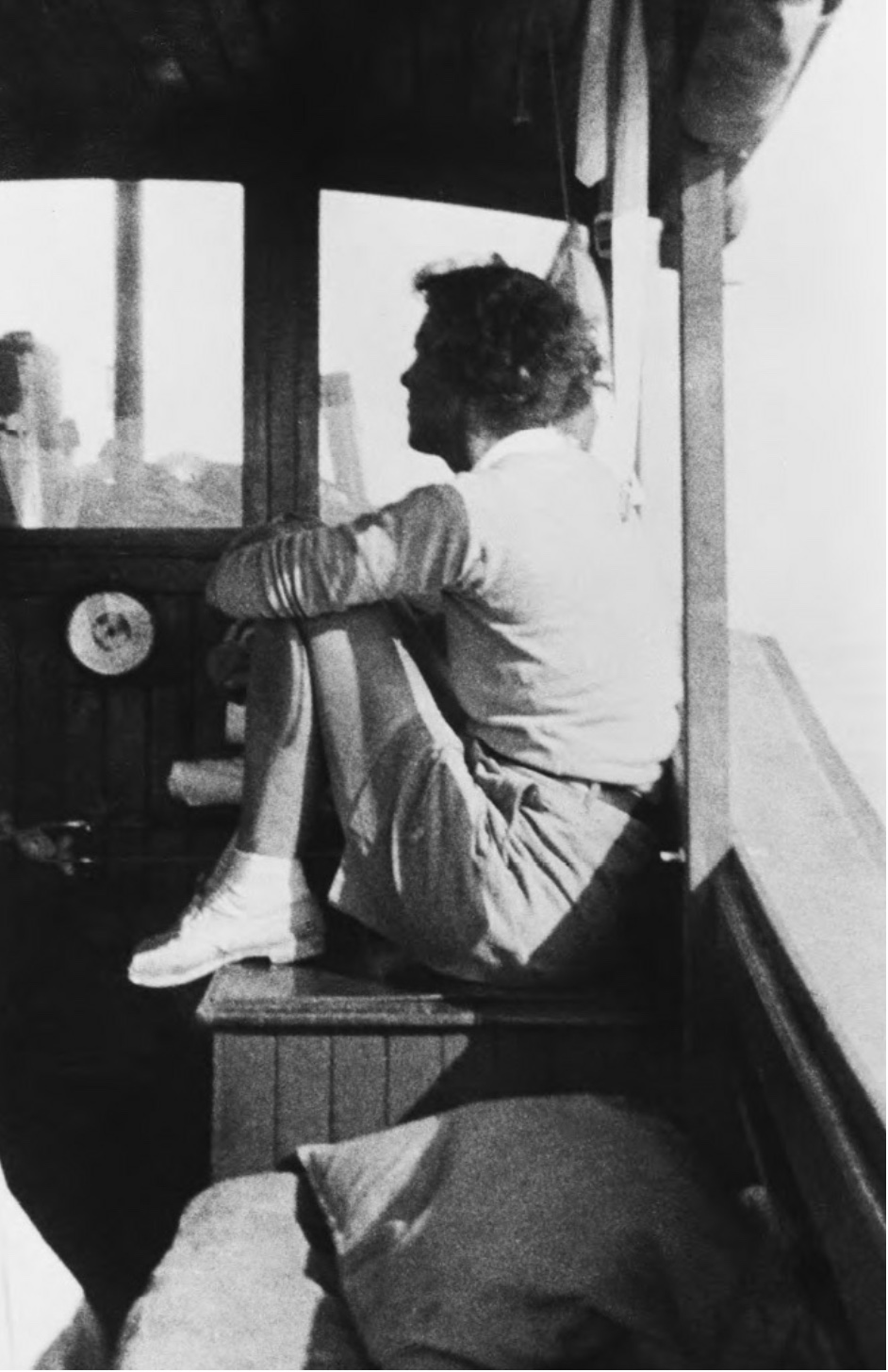
Wylie (a.k.a., Capi) in the wheelhouse of Caprice, and with her family one summer

Those British Columbia waters are famous for the very strong tides running in and out of narrow fiord-like inlets bordered by tall trees and sheer rocky walls that rise up several thousand feet. The walls above the water’s surface are generally paralleled far down below by their unseen foundations. ‘Capi’ Blanchet notes how often her marine charts indicated depths exceeding 100 fathoms in these waters  (600 feet), with the final distance downward marked as unknown. Among other challenges, such depths make anchoring nearly impossible except when a boat is secured to the shore.

Caprice, against a rocky shoreline

With one set of clothes per family member along with a bathing suit, spare but adequate cooking equipment and tableware, minimal sleeping accommodations both within and on deck, and the crew possessing a seemingly boundless sense of curiosity and desire to learn, the Blanchet’s explored hundreds of miles of what at the time were largely unpopulated and untamed seascapes and surrounding terrain. Capi Blanchet’s well-told stories about her family’s adventures during their summer cruises provide the material for her fetching book.

For those who have traveled to or lived in the Pacific Northwest, the author’s prose brings alive the look and feel, and even the smell of the moist coastal air found in that region. It may bring to mind books like I Heard the Owl Call My Name, and Snow Falling on Cedars, novels that also effectively describe aspects of that alluring part of the world. Yet, like those others, Blanchet’s book hardly prompts a romantic longing to explore waters and lands that, as she presents them, are full of potential danger because of their wildness (bears, a cougar) and unpredictable weather.

Readers interested in doing some ‘voyaging’ with Capi Blanchet through reading A Curve in Time will observe how she records experiences from the late 1920’s and 1930’s, and published her memories of them in 1961. She demonstrates sensitivity and concern about our encroachment upon the communities of people who originally inhabited the land, and upon areas of great natural beauty. Her perspective and writing may perhaps best be seen as helping – along with many others – to lay an early foundation for our contemporary approach to ‘the environment’ (a term whose present use would have been unfamiliar to her), and our raised sensitivity about the cultures of First Nations peoples.

Having read Blanchet’s compelling book, I am now curious to read Following the Curve of Time: The Legendary M. Wylie Blanchet, a biography by Cathy Converse. Though often demurring from drawing attention to herself in The Curve of Time, Blanchet clearly was a formidable woman possessed of great practical intelligence and a captivating sense of adventure. Retracing her voyaging would be challenging enough for many experienced boaters, but exploring those same waters in a boat the size of her’s, with its dependent large crew and minimal accoutrements, may suggest caution to other equally capable navigators.

M. Wylie (‘Capi’) Blanchet around the time of her marriage

For first time visitors to the Seattle area who are not embarking upon an Alaskan cruise, I heartily recommend even a short round trip on one of the Washington State Ferries. Having commuted daily to college for a year on the ferry between Vashon Island and Tacoma, and having regularly taken the ferry to Seattle on weekends, I remember how a 20-30 minute ‘voyage’ across parts of Puget Sound can help one experience in an economical and time-sensitive way a genuine bit of the maritime Pacific Northwest – the kind of waters that Capi Blanchet explored nearly 100 years ago.


The Beauty of a Mini Canal Boat

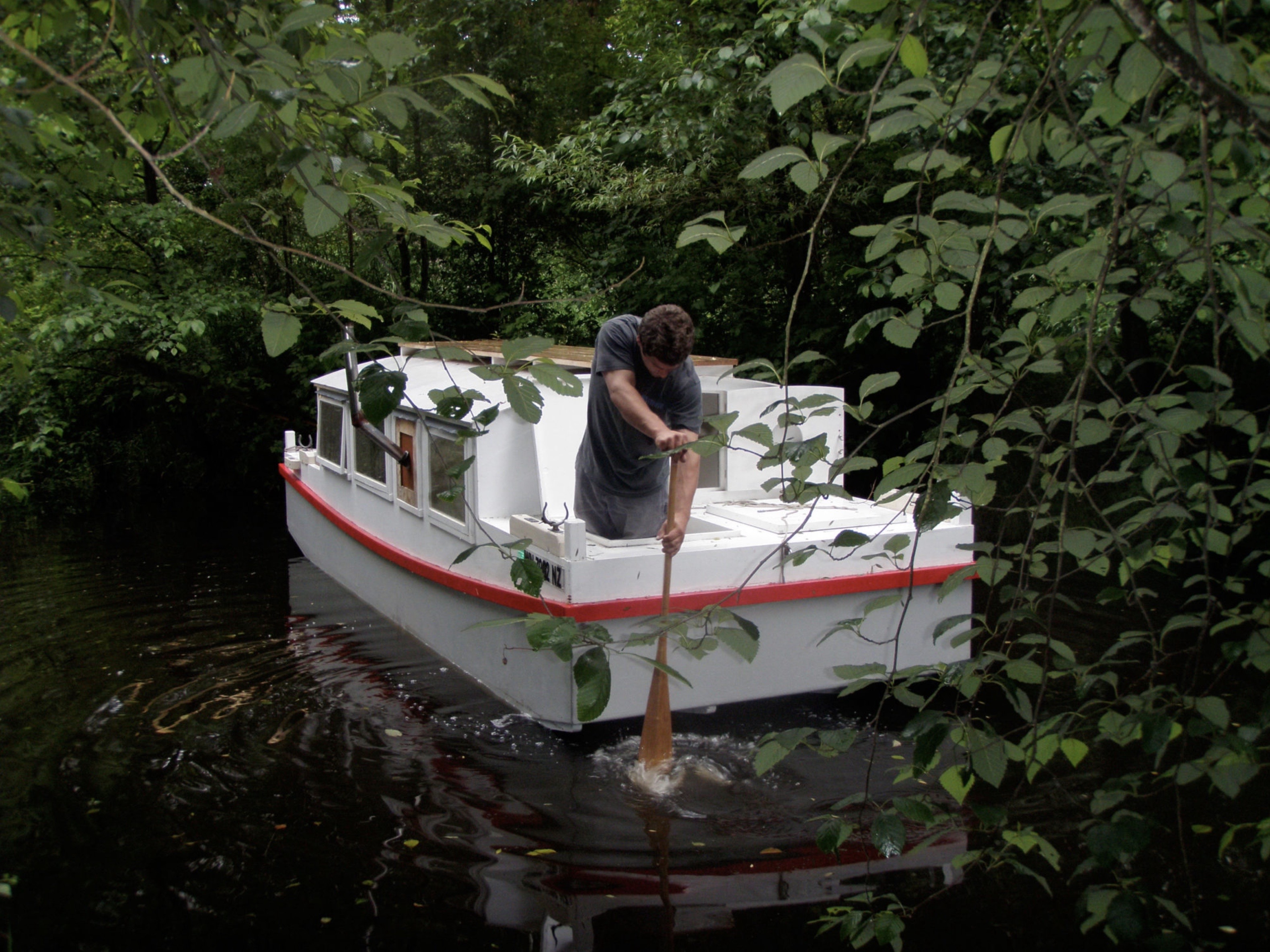
Beulah, based on Philip Thiel’s design, Escargot


For many of us the words “beauty” and “boats” naturally go together. A compelling example comes from the work of former Seattle-based architect and boat designer, Philip Thiel. He produced an elegantly simple and shortened canal boat design called Escargot that can be built in a standard garage by a person with average carpentry skills. Just over 18′ long, and 6′ wide, the resulting boat is trailerable, and reasonably economical to build. Multiple versions with unique variations have been constructed, as the photos here display.

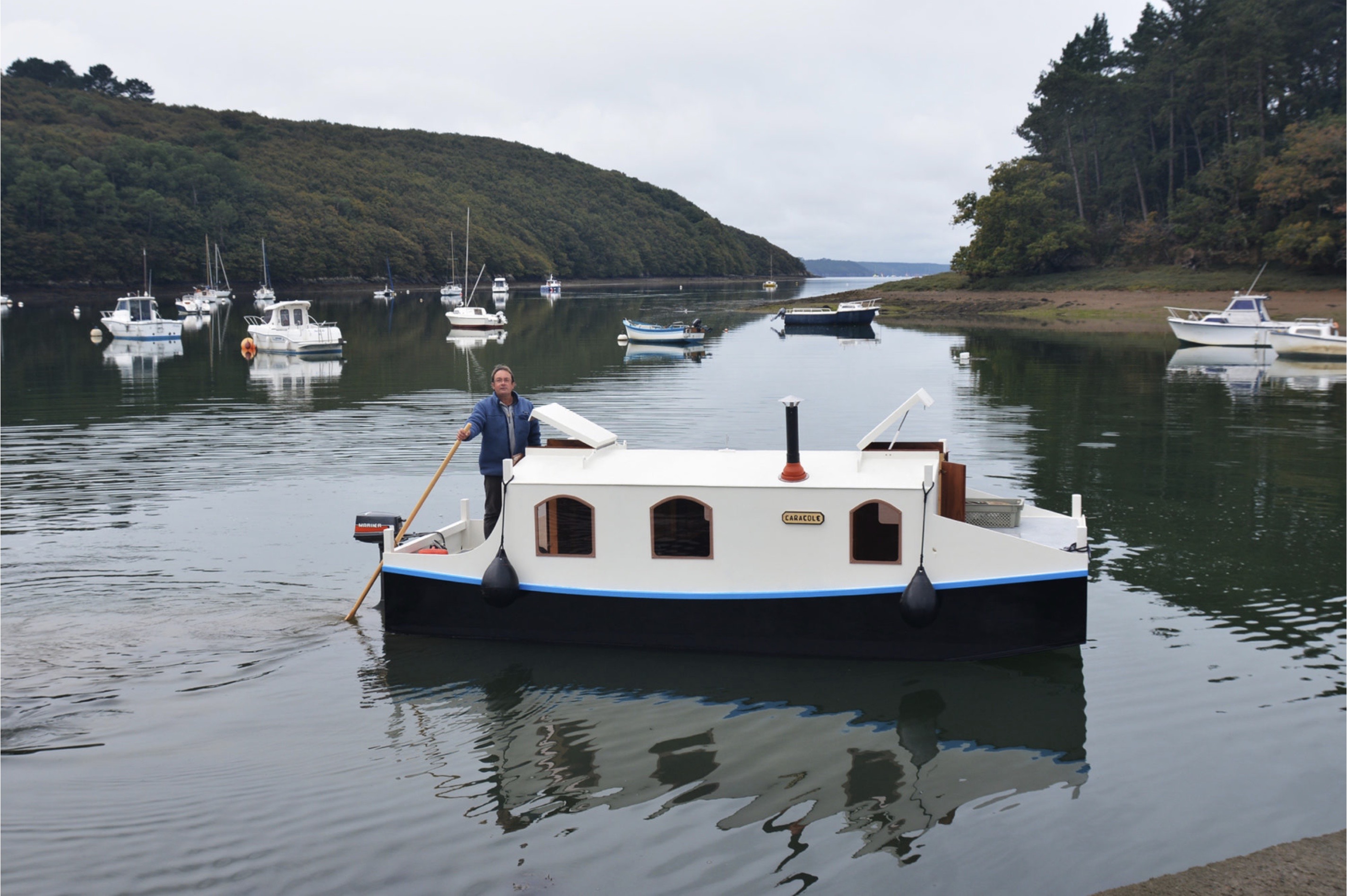
I have long admired the simplicity of Escargot’s design as well as its evident functionality. I am equally appreciative of Escargot’s sister designs, in particular the larger Joli Boat. Below is a French adaptation of Escargot, named Caracole. She is shown under propulsion by a sculling oar.

Above are the basic plan details for Escargot, built with sheets of 4′ x 8′ plywood and standard lumber such as 2 x 4’s.

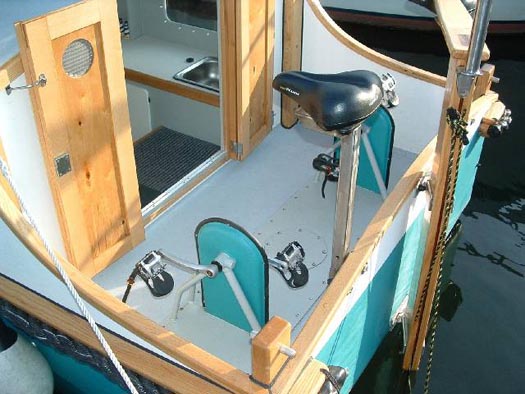
It is the shallow draft and relative compactness of the Escargot design that permits boaters manually to propel her, whether by oars and paddles, and or by pedal-powered propellers, and into more intimate waters. The cockpit of a European pedal-propelled Escargot is pictured below.

Beulah (above) features an elegant modification of the interior plan with a raised roof to create greater headroom. As compared with that unique approach to the interior, below are two more traditional interpretations of Thiel’s plan for living arrangements.


Study plans for Escargot, as well as full working drawings, can be obtained from The Wooden Boat Store website ( https://www.woodenboatstore.com/products/phil-thiels-escargot-study-plan-digital).