Architecture

What can we learn from the Mosque-Cathedral?

[If reading this by email, please tap the title at the top to open your browser for the best experience. Then, clicking individual pictures will reveal higher resolution images.]

Interior view of the Mosque-Cathedral


In my prior post on the Mosque-Cathedral of Cordoba, Spain, I reflected on the shaping effect of both Christianity and Islam on this building over the centuries, and how – side by side – the influence of both religious traditions are still evident today. In this second post, I offer further reflection on the way we might think about the points of contact between these two traditions as we find them in this place of significance to adherents of each.

In the well cared-for beauty of this Mosque-Cathedral of Cordoba, we discern interwoven architectural forms that reflect overlapping historical periods, which were shaped by differing cultures and faiths. I think inspiration can be found here as we – like so many others – face a challenge. This is the challenge of seeking to retain an appropriate confidence and peace about our own faith and traditions while genuinely respecting and appreciating those of others. Obviously, what this building first represents to the people of at least two traditions is prayer. Sensitive to that fact, we may be moved by the beauty of this place to pray that a greater openness to what is positive and of enduring significance in the world-views of other peoples and cultures – wherever we and they live – might be more evident across nations today.

Though relying on communication with the divine presence may appear passive to some, it is no small thing to entrust such prayers to God’s Providence. But we can also act toward this end in other ways. If circumstances permit, we can try to engage with one another in conversation. We could do this, perhaps most successfully, based on things that may be universal rather than upon what might be particular to individuals and their communities. Among things generally considered as universal are the three primary so-called “transcendentals:” beauty, goodness, and truth. For even as we have divergent notions about what constitutes compelling examples of them, in principle we can still agree about the value that these three abstract but also foundational concepts have for all people.

Of course, achieving in practice a consensus regarding truth (religious or otherwise) may be impossible, and agreement regarding goodness nearly as difficult. In seeking a greater harmony between differing viewpoints, we might therefore explore with one another what we find to be beautiful, in nature, in the arts, and in each others’ cultures and traditions.

Conversation based on the realm of beauty is more likely to be open-ended and less likely to be personally judgmental. Such conversations might even help us see glimpses of this transcendental within one another, if only briefly. For we have all been made in the image and likeness of the Creator, who has made of one blood all the peoples of the earth.

For Jews and Christians, Genesis 1:26-28 provides us with the source of our concept of the imago dei, our theological understanding that all human beings are made in the image of God. Christians go further in believing that God made all things through Christ, in their original state of goodness (John 1 & Colossians 1). These beliefs undergird our confident faith statement that God has made of one blood all people regardless of how much or how little we seem to have in common. These beliefs also provide the ground for what can become a shared source of hope.


A Mosque-Cathedral?

[If reading this by email, please tap the title at the top to open your browser for the best experience. Then, clicking individual pictures will reveal higher resolution images.]

Interior view of the Mosque-Cathedral of Cordoba, Spain


In order to appreciate this UNESCO World Heritage Site in Cordoba, Spain, which has a history of having served as both a church and as a mosque, it is helpful first to consider the better-known example of the Hagia Sophia in Istanbul. Its architecture and interior are widely appreciated, as is its history of once having been the largest Christian church in the world (built ca 537). Through the Ottoman period, from 1453 until 1931, it served as a mosque during which time Christian symbols and imagery were either removed or hidden. In 1935, under the official secular government of Turkey, the building was converted into a museum. Recently, the Hagia Sophia was officially re-established as a mosque for Islamic prayer.

Less familiar to many is another building created for prayer and worship with a similarly varied history, known officially as the Cathedral of Our Lady of the Assumption in Cordoba, Spain. Its origin as a Christian basilica also dates back to the 6th century, and its subsequent long history of having been a place for Muslims to pray helps explain the hyphenated descriptive label of ‘mosque-cathedral’ that is commonly applied to it.

Only portions of the foundation of the original Christian building remain, which are visible on the site below the present structure. Most evident to contemporary pilgrims and visitors are the architectural elements related to its 500 year history as a mosque. These are associated with the Spanish Islamic period and its successive caliphates that dominated the Iberian Peninsula from the 8th century until the 15th. History remembers this part of the Islamic world for being a cultural center and a significant place of exchange between Muslims and Christians involving advances in fields such as agronomy, astronomy, mathematics, and pharmacology.

In 1236, Christian worship was restored to Cordoba, and to this building that had been markedly expanded for use as a mosque over many hundreds of years. Yet, the overall character of the structure did not receive substantial alteration until the 15th and 16th centuries, when architectural elements more readily associated with Christian churches were added.

This time gap of several centuries represents a remarkable fact. Religious stewards of the building resisted an impulse evident in certain strands of Christian missionary theology, an impulse that – for example – sometimes has had the tragic effect of providing hospitality to antisemitism. This impulse rests on the view that the introduction of the Christian faith to the spiritual lives of people and to pagan places of worship necessarily involves a thorough process of eradication and replacement rather than an openness to seeing aspects of what came before as being compatible with the new. The originally pagan Pantheon in Rome, now known as the church of St. Mary and the Martyrs, provides what may be the best known example of this type of openness.
Like its sister structure of the Hagia Sophia in previous times, the Mosque-Cathedral of Cordoba serves as compelling place for pilgrims from within many traditions, Christian, Islamic, and others, to visit with an appreciation for history and the arts, and to find time for prayer and an opportunity for fellowship.

Entrance to the ‘mihrab‘ within the Mosque-Cathedral building, situated so as to indicate the direction of Mecca, and previously used by the imam in Islamic worship

The ceilings of the Renaissance nave and transept of the same building, completed in 1607

The theme of potential compatibility between differing religious and cultural traditions, introduced in this post, will be developed in the following one.


In a Time of Darkness

[If reading this by email, please tap the title at the top to open your browser for the best experience. Then, clicking individual pictures will reveal higher resolution images.]

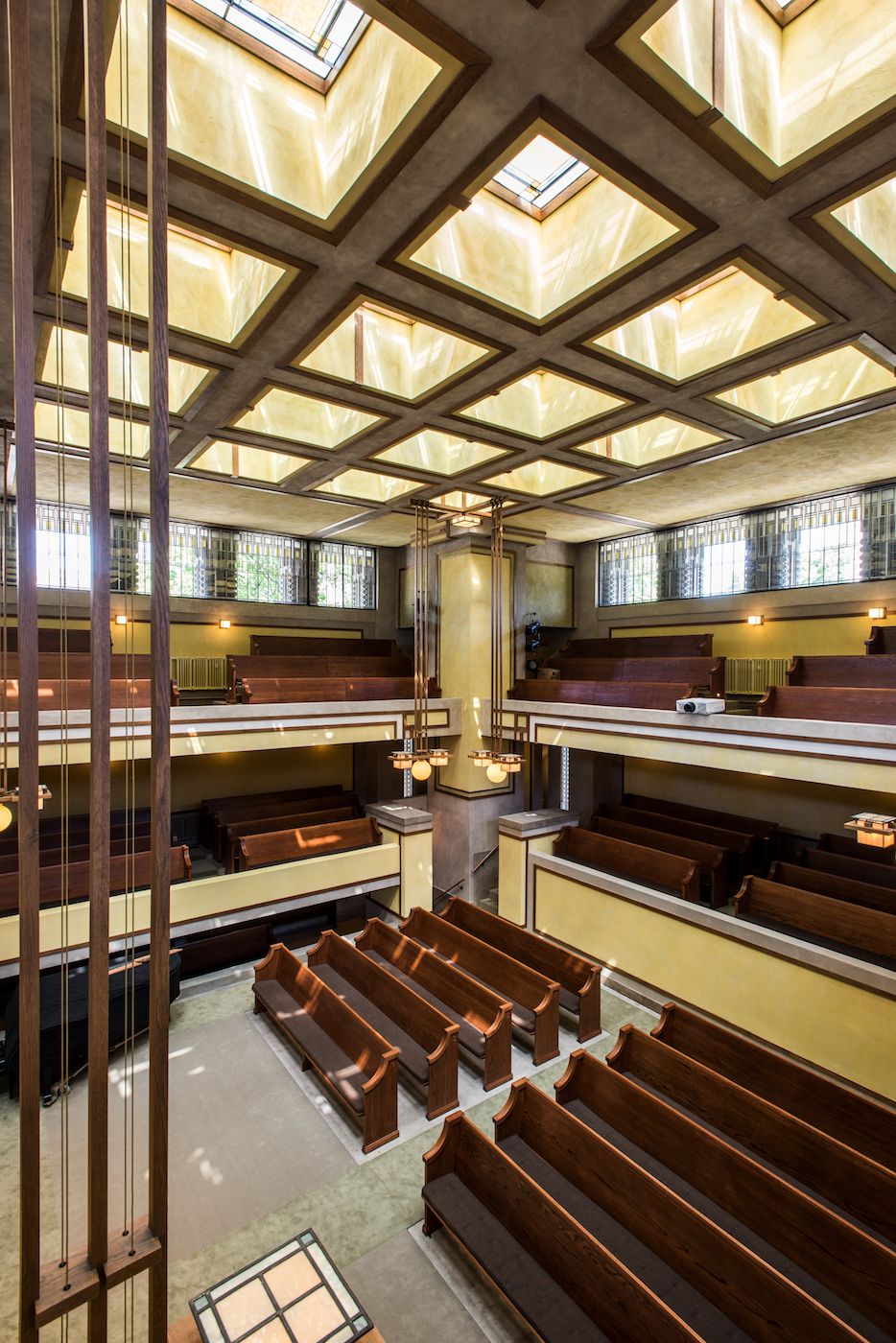
Chicago’s Unity Temple, by Frank Lloyd Wright (1908)


In a time of darkness, we seek light from above.

A couple of days after offering my reflection on “A Desecrated Beauty,” I heard the terrible news from the Holy Land with its many troubling details.

The desecration of beauty can rightly be seen as a violation of what is sacred. If we can associate this idea of violation with the greedy despoliation of an old-growth forest, or the thoughtless pollution of a tranquil waterway, what greater offense against the wisdom and love of the Creator exists than atrocious barbarity unleashed upon human persons made in the image of God?

Human warfare, whether justified on occasion through acts of reasoning that seek some form of the good, or abhorred as an absolutely unconscionable choice, always involves some evil. Hate does not reflect our better nature, unless perhaps it is hate for the ultimate source of all that is not of God. Yet, paradoxically, we so often embody evil through violent acts against people whose views and behavior we refuse to recognize, not only by damaging things that other people value, but by hurting them, even fatally, as well.

In spite of this, following Augustine and Aquinas, I accept the premise that acts of violence can in some circumstances and on some occasions be justified as acts in the service of justice and even of love. The view that the defense of other human beings can be a justifiable expression of our love for our neighbor, even if that defense may involve the use of force and acts of violence, is and has been a formative strand of biblically informed Christian moral reasoning. Therefore, I offer no judgment upon Israel and its leaders who are presently involved in responding militarily to the large-scale acts of terrorism against their nation and people.

Whether for decisions made in haste, or acts undertaken after due deliberation, Israel’s leaders and people will have occasion to judge themselves, their reasoning, and what they have done or not done. History, and others not directly involved, will certainly call them to account.

People impacted by the present conflict may find it difficult or even impossible to seek ‘light from above.’ Yet, in the midst of darkness, those who seek beauty, goodness, and truth, will best be prepared to receive that light, and the healing that comes with it. For the divine light is not absent and can be found.

Whether the divine presence is known and named as revealed, or unknown, or even secretly sought, Christ is the center of all that exists, the one in whom all things hold together, and through him God’s Providence is enacted. Evil will be vanquished, and all that is good or open to God’s redeeming guidance will be brought by him to its intended fulfillment and bliss (see Colossians 1:9-20).

For “the people dwelling in darkness have seen a great light, and for those dwelling in the region and shadow of death, on them a light has dawned” (Isaiah 9:2 & Matthew 4:16).


Chihuly Garden & Glass ~ Seattle

[If reading this by email, please tap the title at the top to open your browser for the best experience. Then, clicking individual pictures will reveal higher resolution images.]


On a recent trip to Seattle I visited the Chihuly Garden & Glass exhibit at Seattle Center. This collection of Dale Chihuly’s glass work, which includes both large and small objects and installations, provides a splendid way to become familiar with what the artist has accomplished so far over the course of his career. The extensive exhibit gives the visitor an excellent introduction to the methods that Chihuly has employed when embarking upon various projects and insight about how he has revolutionized many aspects of contemporary glass making.

An initial large room contains a display of smaller Chihuly creations set within the context of a selection of his baskets and related objects from First Nations peoples, as well as an assemblage of his large framed photographic prints of Native American individuals by Edward Curtis.

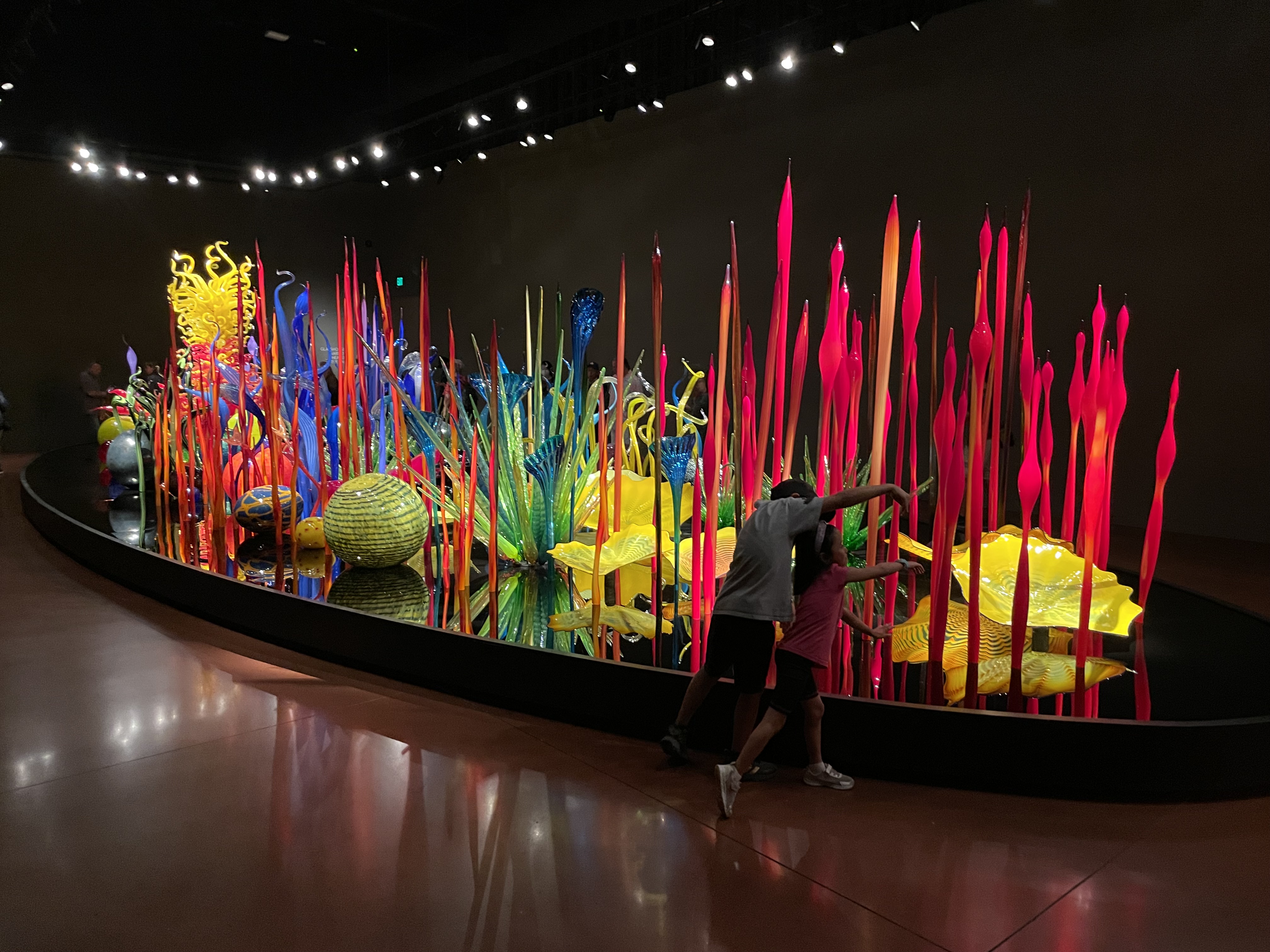
A large gallery within the exhibit features Chihuly’s Mille Fiori (a thousand flowers in Italian), inspired by memories of his mother’s garden. An information panel indicates that the pieces in this installation, gathered from several series of his prior work, “rely less on tools and more on the use of fire, gravity and centrifugal force.”

Two youngsters enjoying engagement with Mille Fiori while helping to provide us with an indication of the assemblage’s scale.

A display titled Ikebana and Float Boats is featured in a subsequent room. Having pursued glass making in Seattle and in Venice, both near significant bodies of water, Chihuly experimented with glass objects thrown into a river in Finland, where youth from the area in wooden boats helped retrieve them. Intrigued by the interaction between the objects, the light above, and the water below, the artist continued to develop these interests after traveling to the Japanese island of Niijima. There he became reacquainted with the glass globes traditionally employed by Japanese fishermen as floats for their nets, which he had first seen as a youth beach combing on Puget Sound. At the same time, Chihuly was inspired by the Japanese art of flower arranging, called Ikebana. He combined his interest in the glass globes with the inspiration provided by Ikebana and imaginatively adapted these forms within boat-shaped structures that have been displayed in galleries and upon ponds.

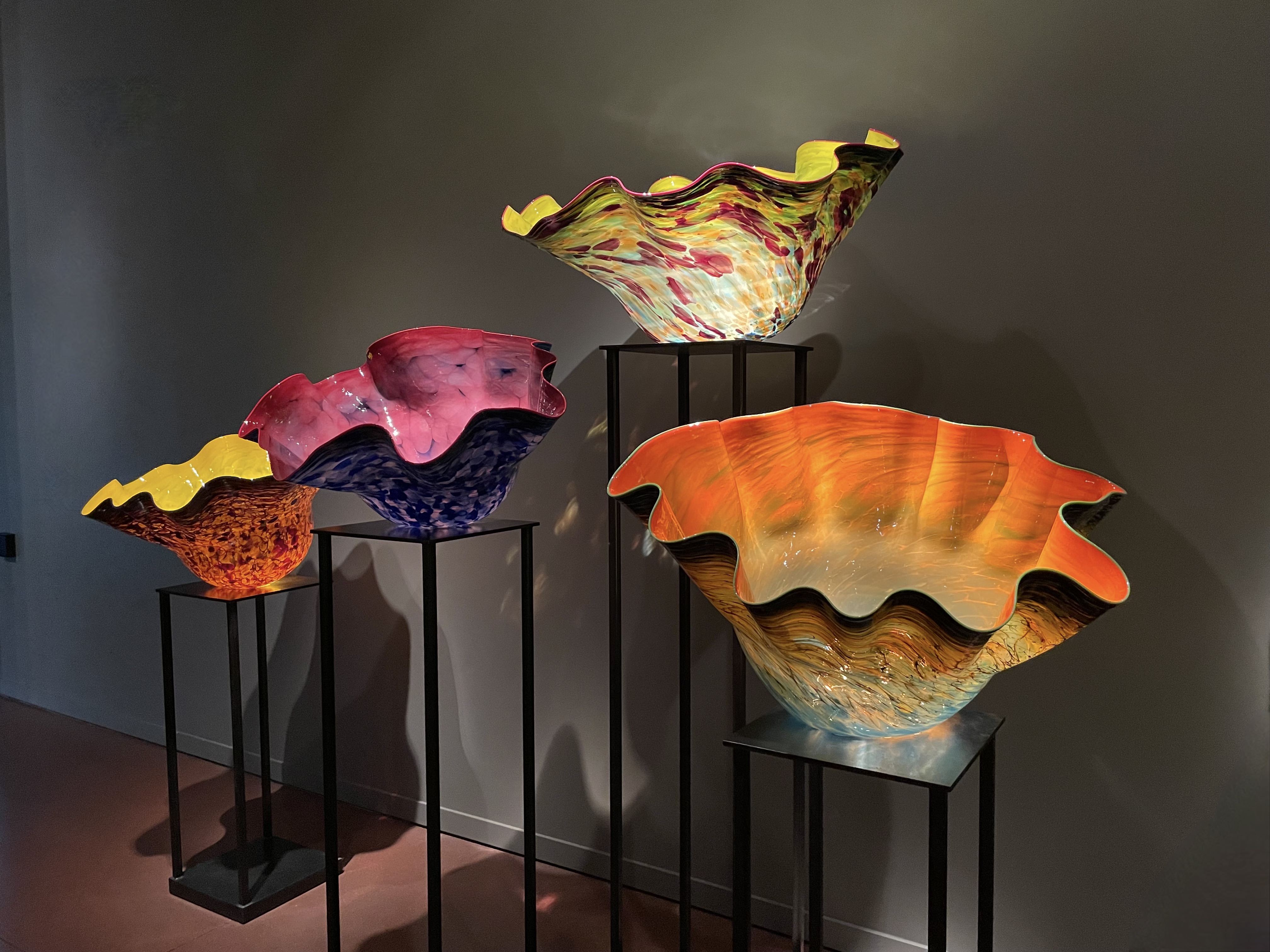
Another gallery space features large bowl-like objects from Chihuly’s Macchia series. As a guide at the Chihuly exhibit makes clear, no one has yet been able to produce a truly black form of glass. Yet, Chihuly has come close with his occasional use of very dark blue and purple. Through his Macchia series, he sought to incorporate every one of the other 300 colors that are available for glass making. Noticing that colors within stained glass windows often appear more alive when illuminated from behind by the diffused light of a bright cloudy sky, Chihuly began to experiment with including a white layer within objects between the inner and outer colored layers of glass. The presence of speckles and striations of additional colors results from when molten glass is rolled on a flat metal surface that has been sprinkled with multiple-colored bits of glass.

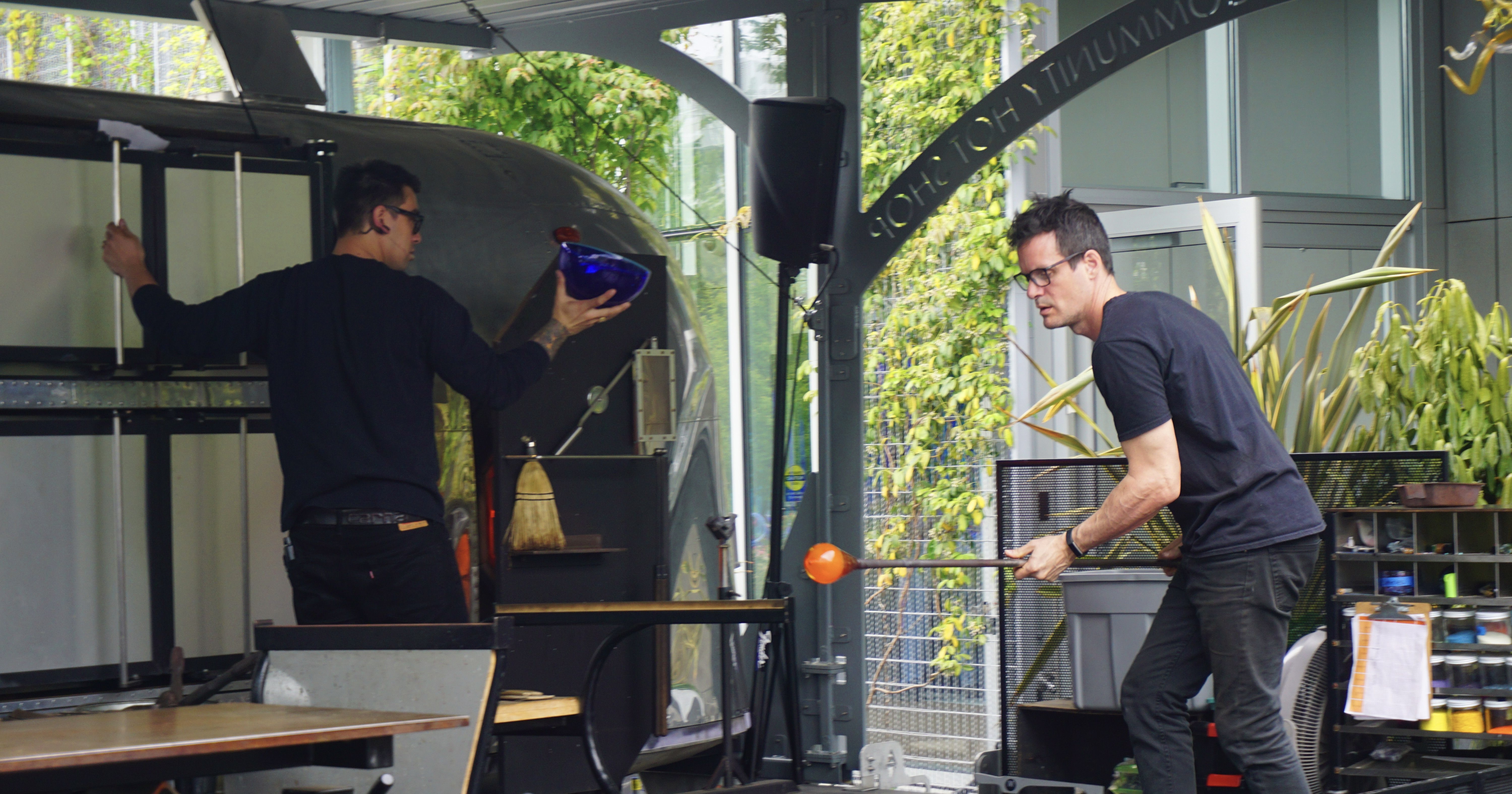
Near the end of a tour through the exhibit one finds a courtyard where an informative glassblowing demonstration is offered, which brings alive some of the challenges inherent in working with this medium.

Chihuly Garden & Glass provides a lively sense of the remarkable extent of the artist’s output, and the breadth of his highly imaginative vision for what can be done with glass as an art form. The exhibit is well worth a visit for those able to travel to the Seattle area.

Yamasaki’s Graceful Architecture

[If reading this by email, please tap the title at the top to open your browser for the best experience. Then, clicking individual pictures will reveal higher resolution images.]

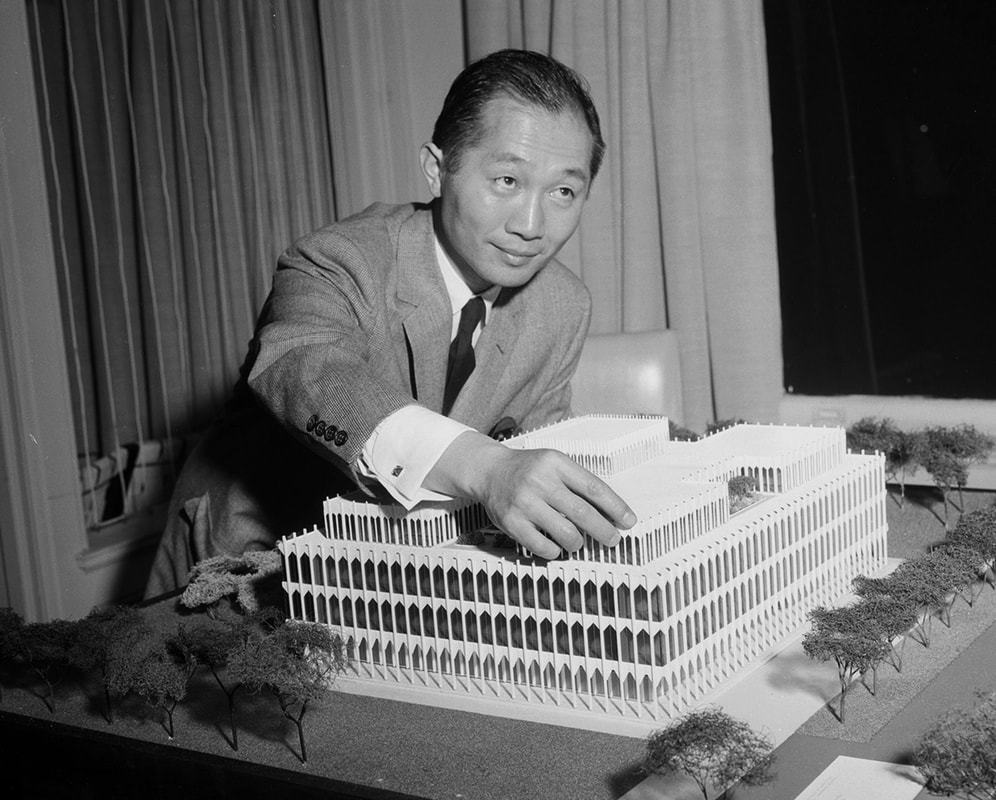
Minoru Yamasaki behind models of the proposed World Trade Center towers


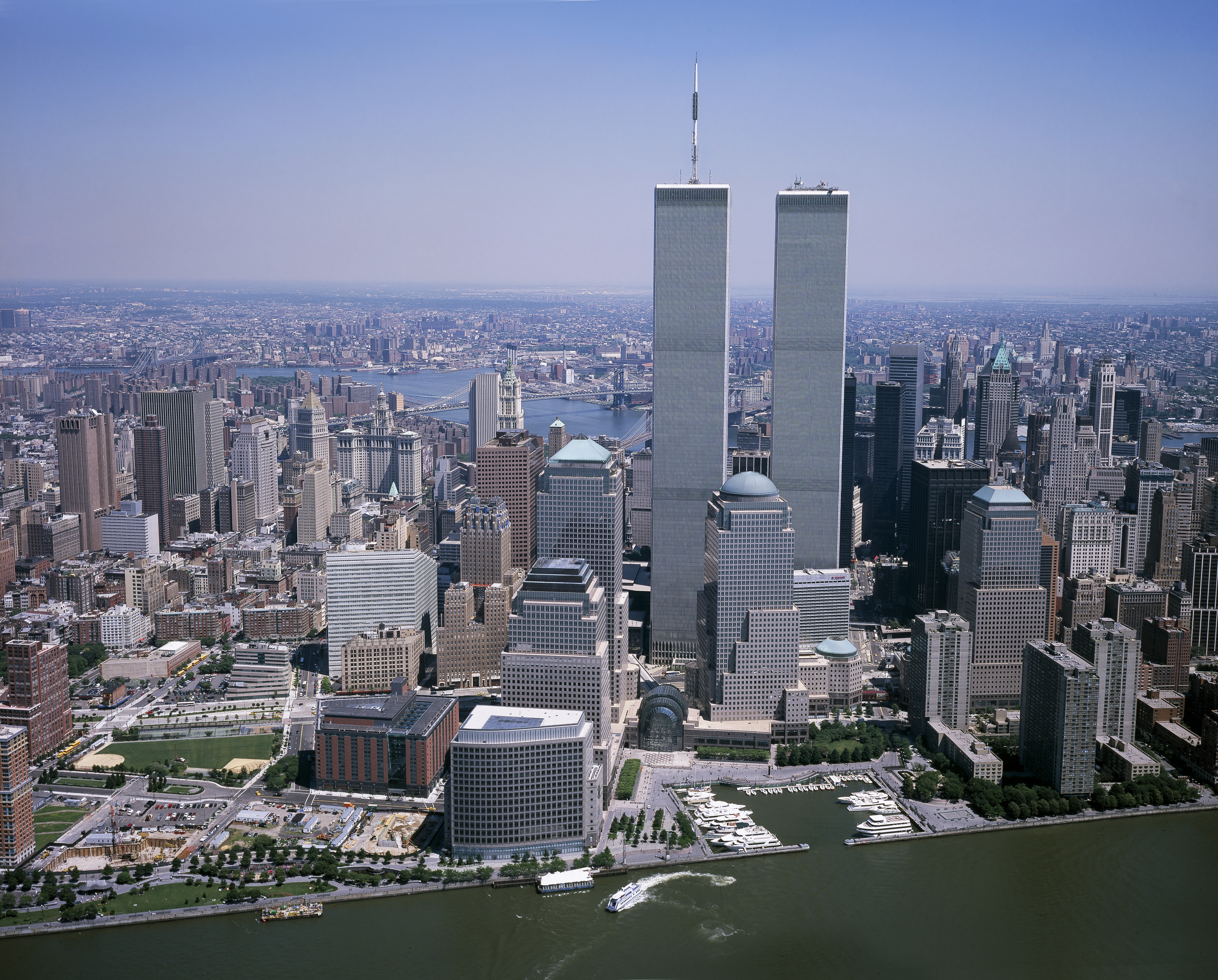
Minoru Yamasaki was one of the most significant American architects of the mid-twentieth century while also one of the least known. Since 9/11, almost everyone has seen images of his now lost World Trade Center towers that formerly crowned the southern tip of Manhattan. Yet many are unfamiliar with the man who designed and gave them their attractive and delicate facades. I first encountered Yamasaki’s distinctly modern yet historically informed approach to architecture as a child while my parents were on furlough from mission work in Japan. It was likely because of Yamasaki’s Japanese heritage that they became interested in his Northwestern National Life building in Minneapolis, opened in 1965, which he had designed for that company’s new headquarters (images below).

The Northwestern National Life building has design elements recognizable in a number of other structures designed by Yamasaki. His career-long approach to architecture consistently incorporated a classically inspired modernism that features a verticality and gracefulness of design, an approach which appears to owe as much to the great European gothic cathedrals as it does to Greco-Roman antecedents. This quality of his work is particularly evident in the decorative plaza towers and buildings he designed for the 1962 World’s Fair U.S. Science Exhibit in Seattle (now the Pacific Science Center, below).

U.S. Science Exhibit towers and buildings, 1962 World’s Fair, in a vintage photo

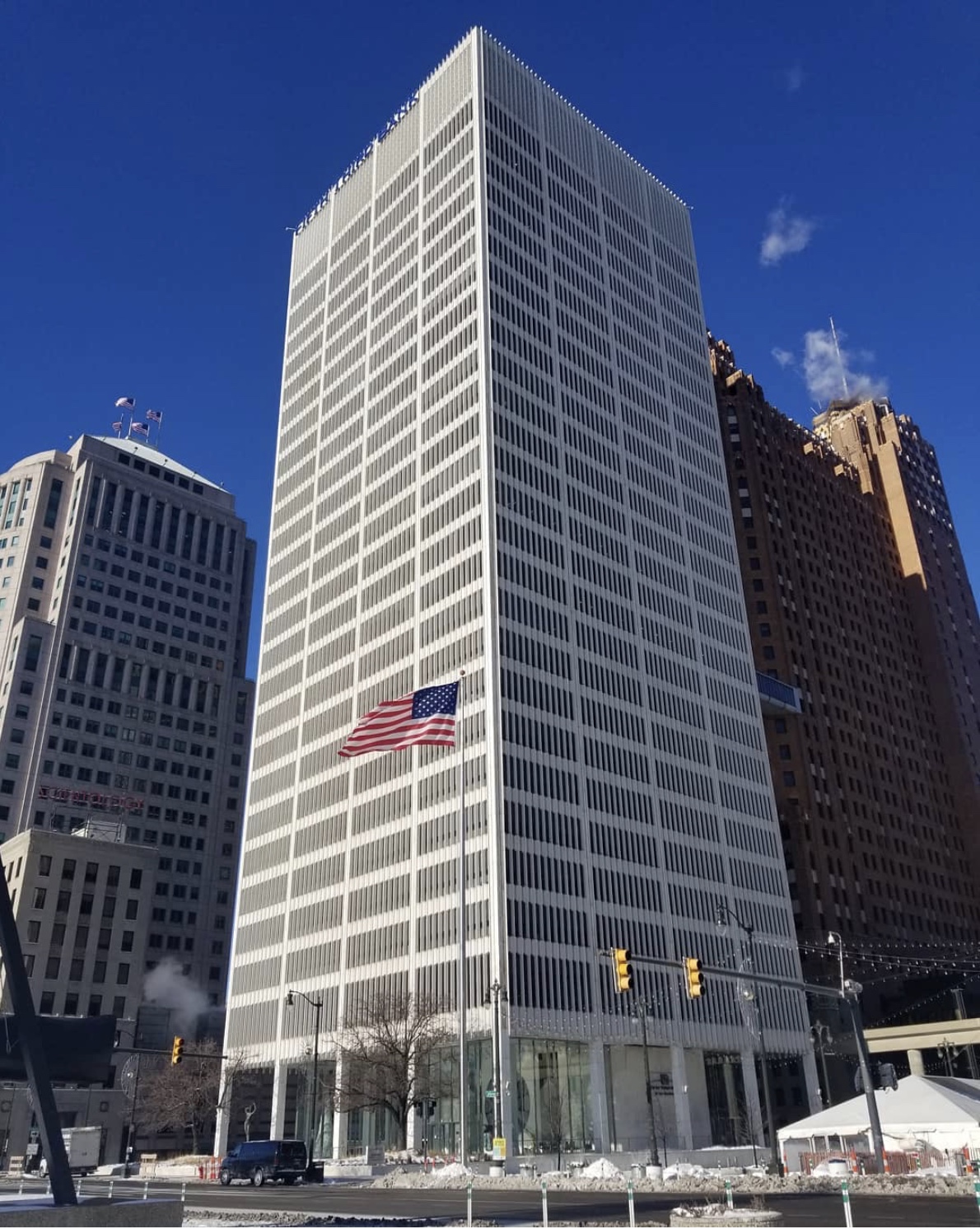
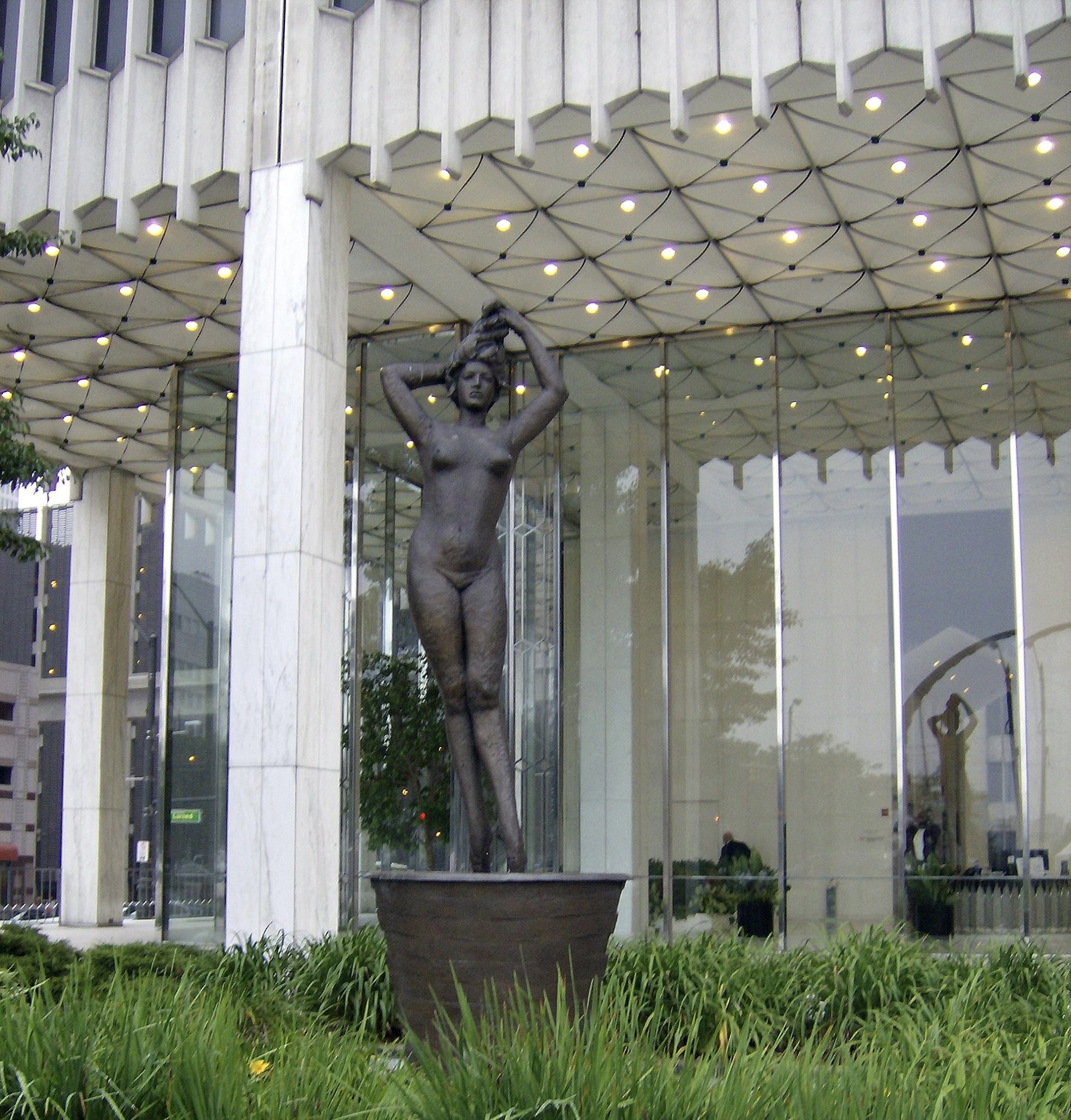
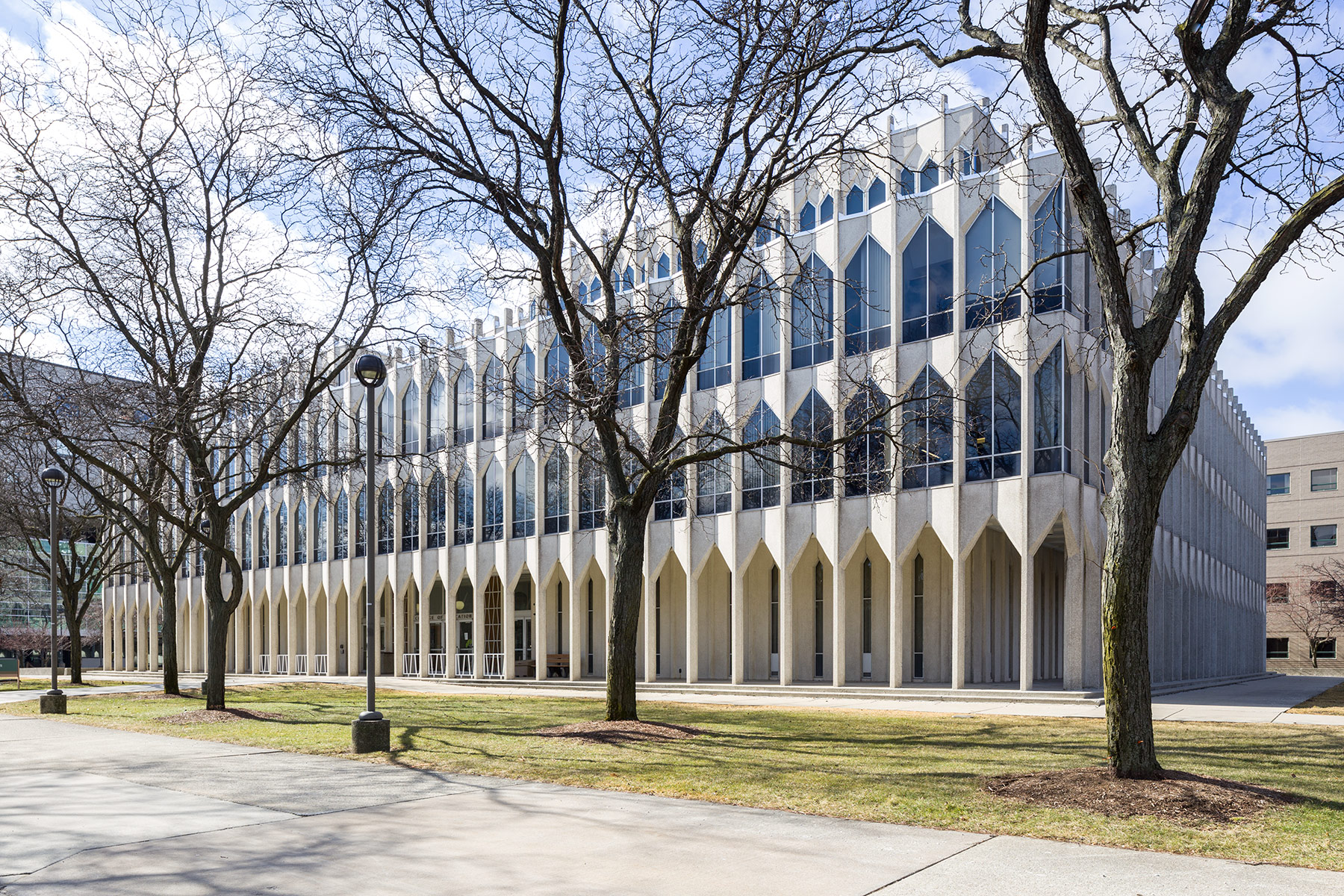
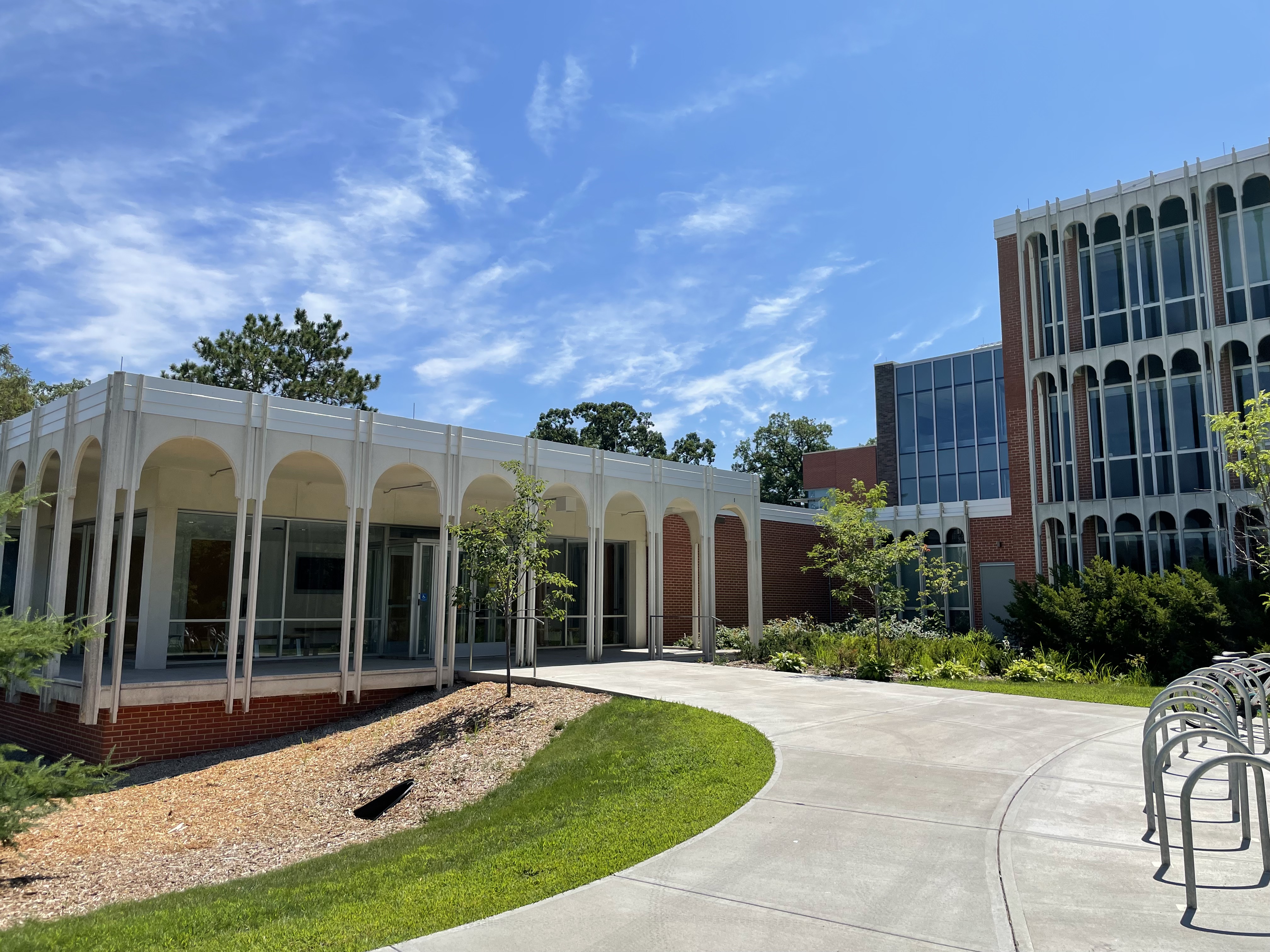
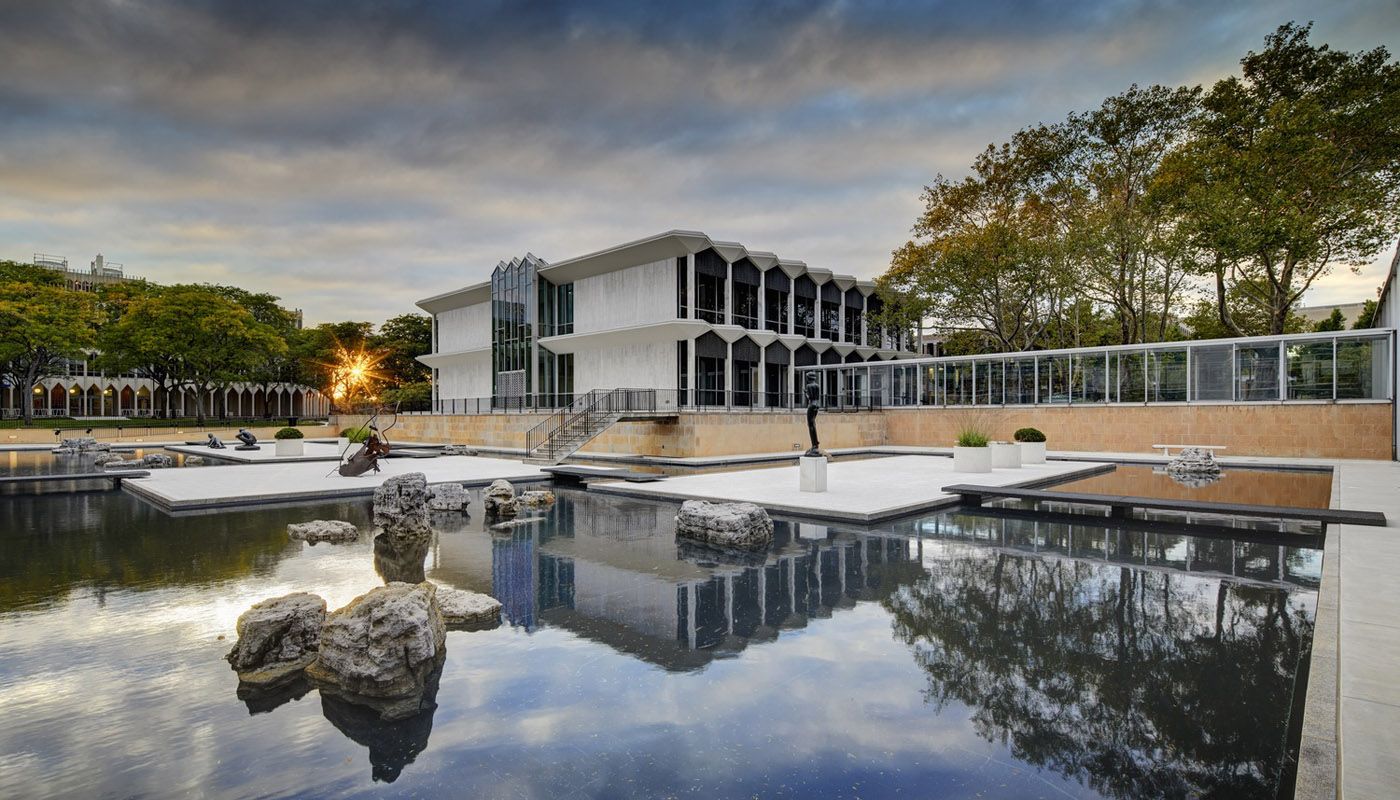
The 1962 Michigan Consolidated Gas Company building in Detroit (below) was Yamasaki’s first ‘skyscraper.’ The stonework tracery and narrow windows on the facade of this building, as well as the arcade of columns surrounding the glass-walled atrium on the entrance terrace level, are recurring motifs in his architectural designs. Some of these elements can also be found on Yamasaki’s 1960 College of Education building for Wayne State University (further below), as well as Olin Hall and other buildings he designed for Carleton College in Northfield, Minnesota.


The Michigan Consolidated Gas Company building, Detroit. Plaza Sculpture by Giacomo Manzu.

The College of Education building for Wayne State University (Detroit, 1960)

Above: Olin Hall (Science Building) and lecture theater for Carleton College (Northfield, MN, 1961)

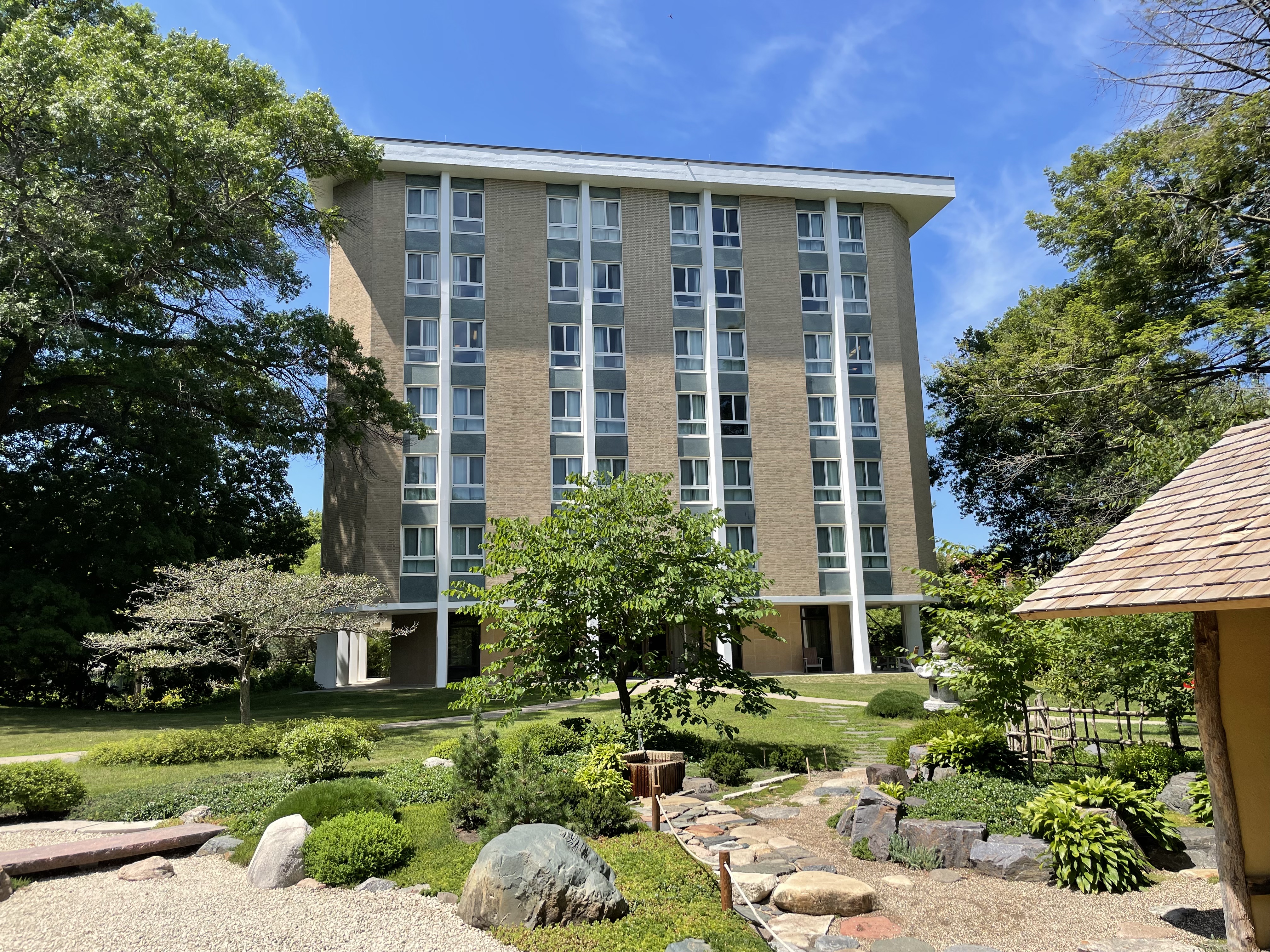
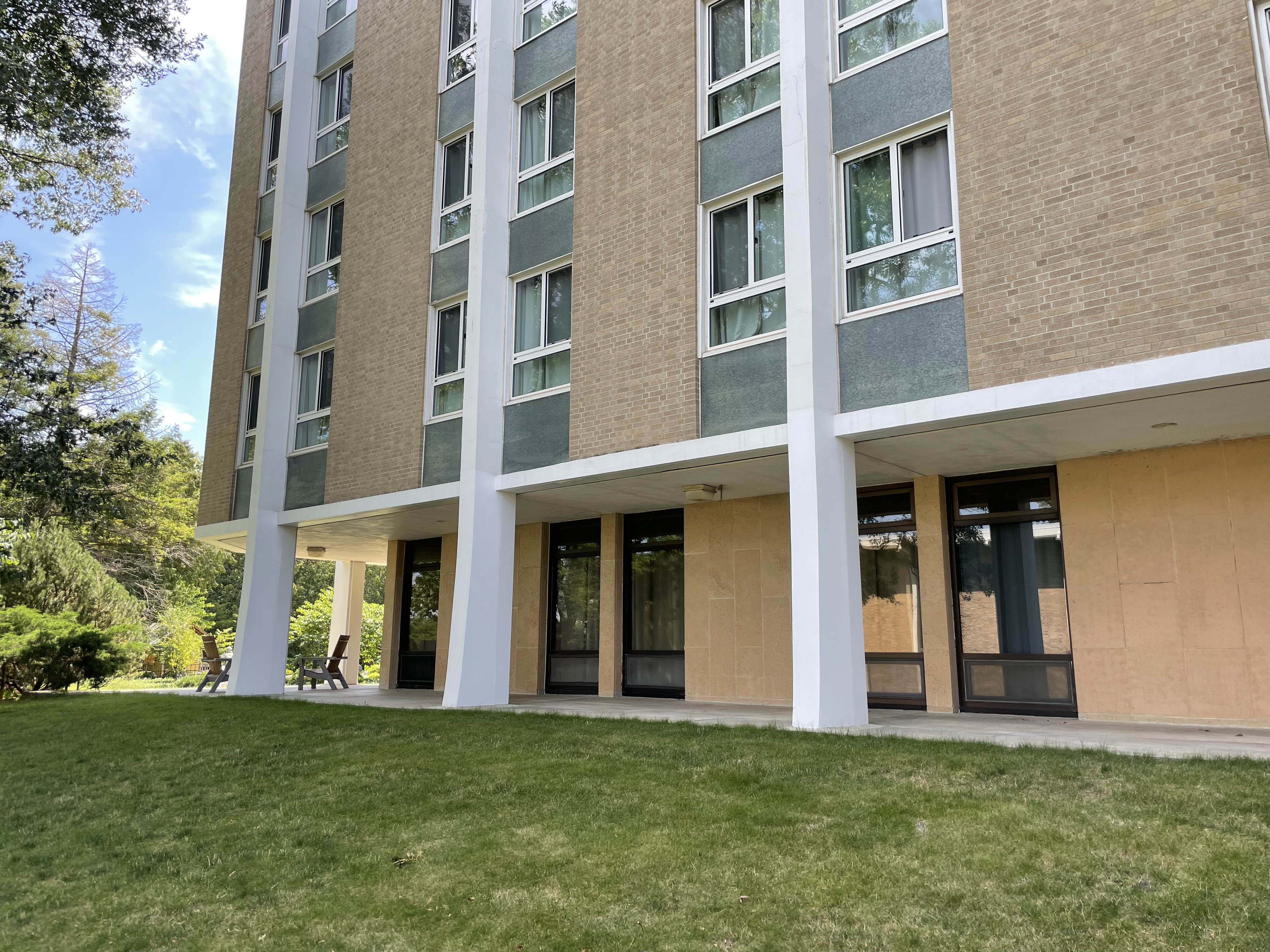
Watson Hall dormitory (1966) adjacent to a Japanese Garden at Carleton College (note how the exterior columns subtly curve outward at the base)

Above: McGregor Conference Center, Wayne State University (Detroit, 1957), exterior and interior

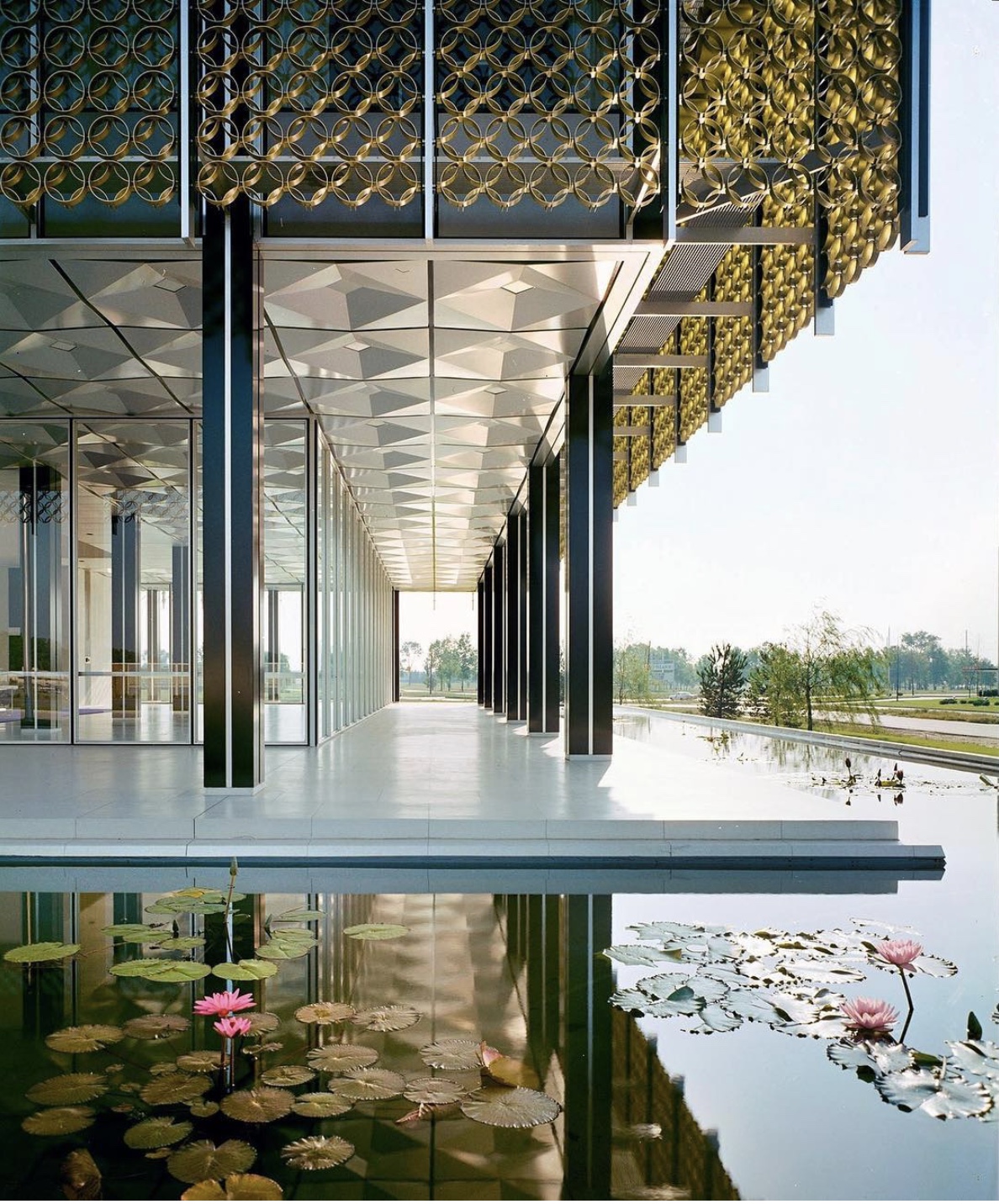
Yamasaki’s design for the Reynolds Metals Regional Sales Office (below, 1959) incorporates elements found in the buildings featured above while also architecturally acknowledging the business of the company that commissioned it. Evident is the architect’s use of ornament clad to the facade of the building, but here in the form of a metallic visual screen attached to the building’s exterior. These elements, as well as the open terrace, and the glass-walled atrium surrounded by columns, are design features that we find over a decade later in his plan for the World Trade Center.

Some aspects of Yamasaki’s architectural work such as the terrace and reflecting pool adjacent to his McGregor Conference Center, as well as to his Reynolds building, may appear to embody an aesthetic sensitivity characteristic of Japanese culture. Raised by a Japanese family in America, Yamasaki – while recovering from serious illness and surgery – traveled to Japan, Italy, and India, in 1953, on an extended sojourn that provided not only recuperation but also inspiration.

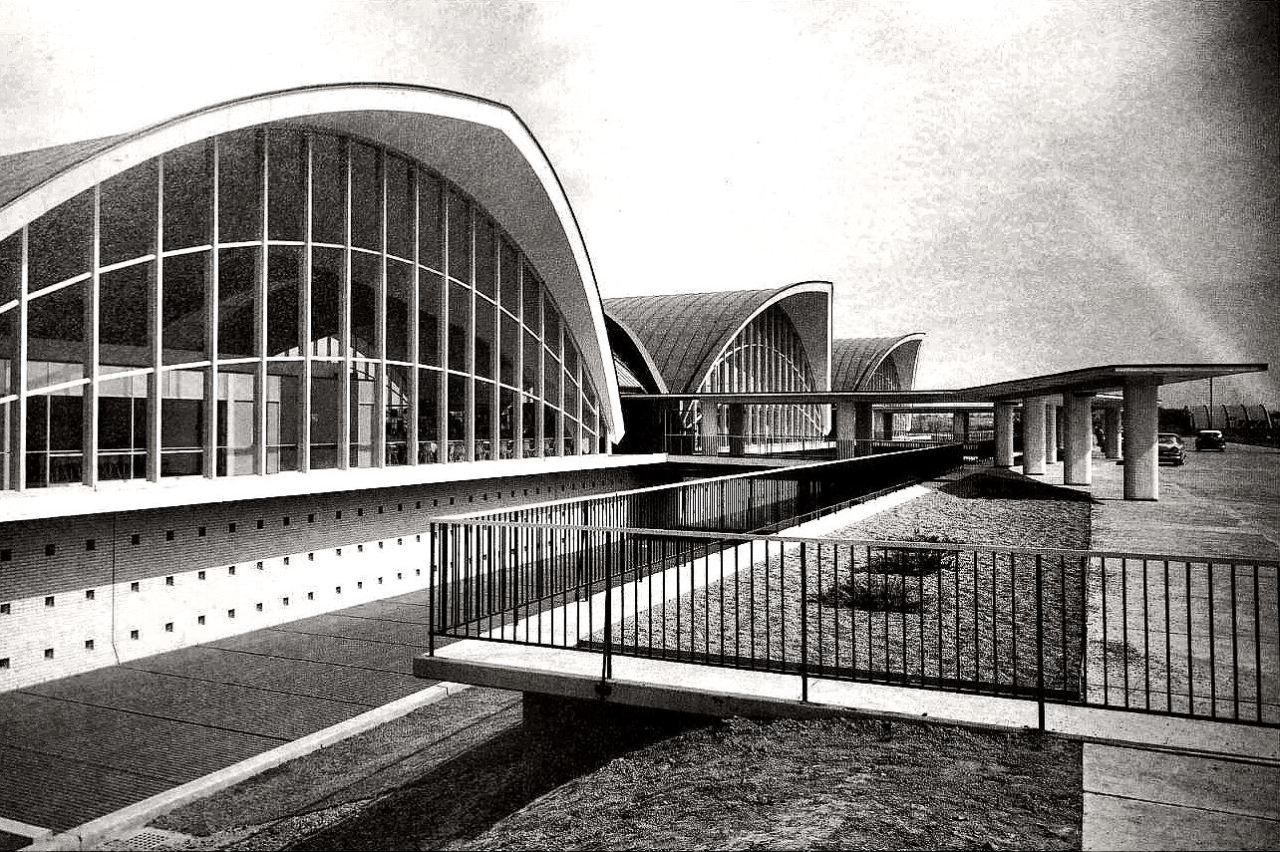
Not all of Yamasaki’s designs are characterized by strong vertical lines and distinct angles, as well as by detailed surface ornament. Two notable exceptions are his 1956 St. Louis Lambert Airport terminal building, and his 1964 West Gym for Carleton College (both below).

Despite the passage of years, Yamasaki’s architectural designs continue to have a fresh and winsome appearance. His buildings stand apart from many examples of urban modernism, where reflective glass-clad buildings often appear indistinguishable from one another and where attention to human scale seems overlooked, especially in the experience of those who approach such structures. By contrast, Yamasaki’s buildings remain attractive and inviting.

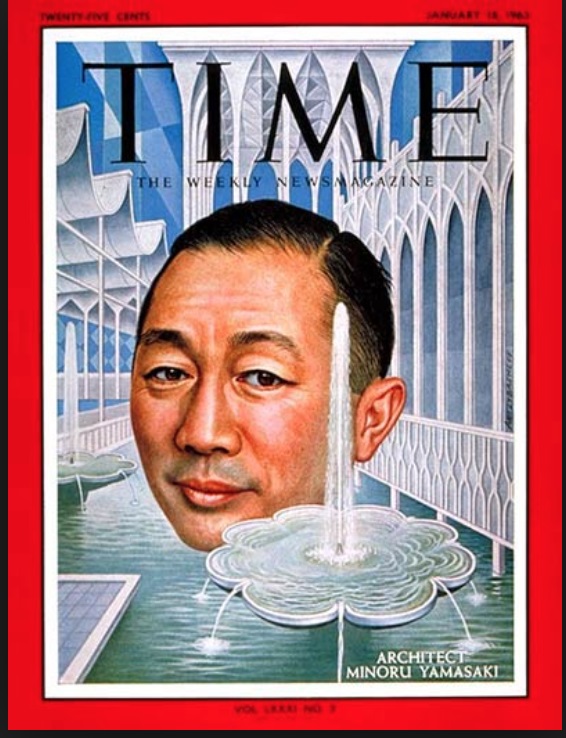
Yamasaki displaying a scale model of his Wayne State College of Education building (above), and as featured on the cover of TIME magazine (1963).

The completed twin towers of the World Trade Center prior to 9/11

The Beauty of the Seth Peterson Cottage

[If reading this by email, please tap the title at the top to open your browser for the best experience.]

Frank Lloyd Wright, Cottage for Seth Peterson, 1958

The last commission completed by Frank Lloyd Wright before his death was a small cottage for Seth Peterson. While diminutive in scale, this architectural gem incorporates many of the design features we associate with the Wright’s visionary work. A native of the region near Taliesin, Wright’s home and studio, Peterson had once sought to become one of the student-apprentices there. He later sought to commission Wright to design a personal cottage, sending a check in advance. After declining Peterson’s request more than once, Wright, having already spent the fee, was obliged to fulfill the request to provide the plans. Admirers of FLW’s architecture can be glad for Peterson’s persistence and that this small project was completed with impressive results.

Sadly, Peterson did not live to inhabit the cottage. Yet subsequent owners and devotees of Wright’s legacy helped preserve this small treasure. The fully restored cottage sits on land that is now part of a state park, and it became the first Wright home later available for guest rental (and remains so).

Attention to the relatively simple floor plan of the cottage helps orient those newly acquainted with it to identify some of the principal characteristics of Wright’s many home designs.

The entryway on the upper left side of the plan is in many ways typical of Wright’s preferences in that the structure is approached from the rear and then from the side. Slender double doors open into the compact interior which at the same time appears expansive due to the raised roof and ascending ceiling, which provide shelter over a wall of glass punctuated by warm cedar or redwood uprights. Complementing the beckoning view to the left, over a valley and lake, straight ahead the visitor sees more windows and double doors that open onto a side terrace. This prompts an initial sense that the primary orientation of this small home is toward the natural beauty of the landscape just beyond.

Passing beyond the dining table and chairs (Wright designed, of course) and into the main part of the living space, a second principal point of orientation for the cottage emerges. This is as it is with most FLW-designed homes, where one finds a massive fireplace featuring the same stone work evident throughout the structure and its surrounding terraces. While fireplaces of this kind and scale provide a central anchor point for so many of these domiciles, the plan helps us perceive something more. Wright typically grouped the kitchen (what he termed the workspace), utility room, and bathroom(s) together with the central fireplace in a practical way. Yet, visually and experientially, the fireplace always took pride of place and tended to obscure attention to those other spaces and their functions.

The relatively diminutive scale of the bedroom and bathroom in this cottage befit that of the cottage as a whole, and yet a study of many of Wright’s other house plans reveals a similar result. Just like his designs for kitchens, Wright’s apportionment of space for nighttime rest and personal hygiene was at best modest. It is as if he strongly believed that the greatest amount of waking time for a home’s residents should be in its common areas, where – beyond personal needs – one might pursue learning, social interaction and an experiential connection with the natural world.

In my view, the following photographs show the cottage at its best.

The terrace, which provides a lovely place to enjoy a summer evening.

The Seth Peterson cottage continues to receive guests through all seasons of the year.

The Beauty of Making Replicas

[If reading this by email, please tap the title at the top to open your browser for the best experience.]

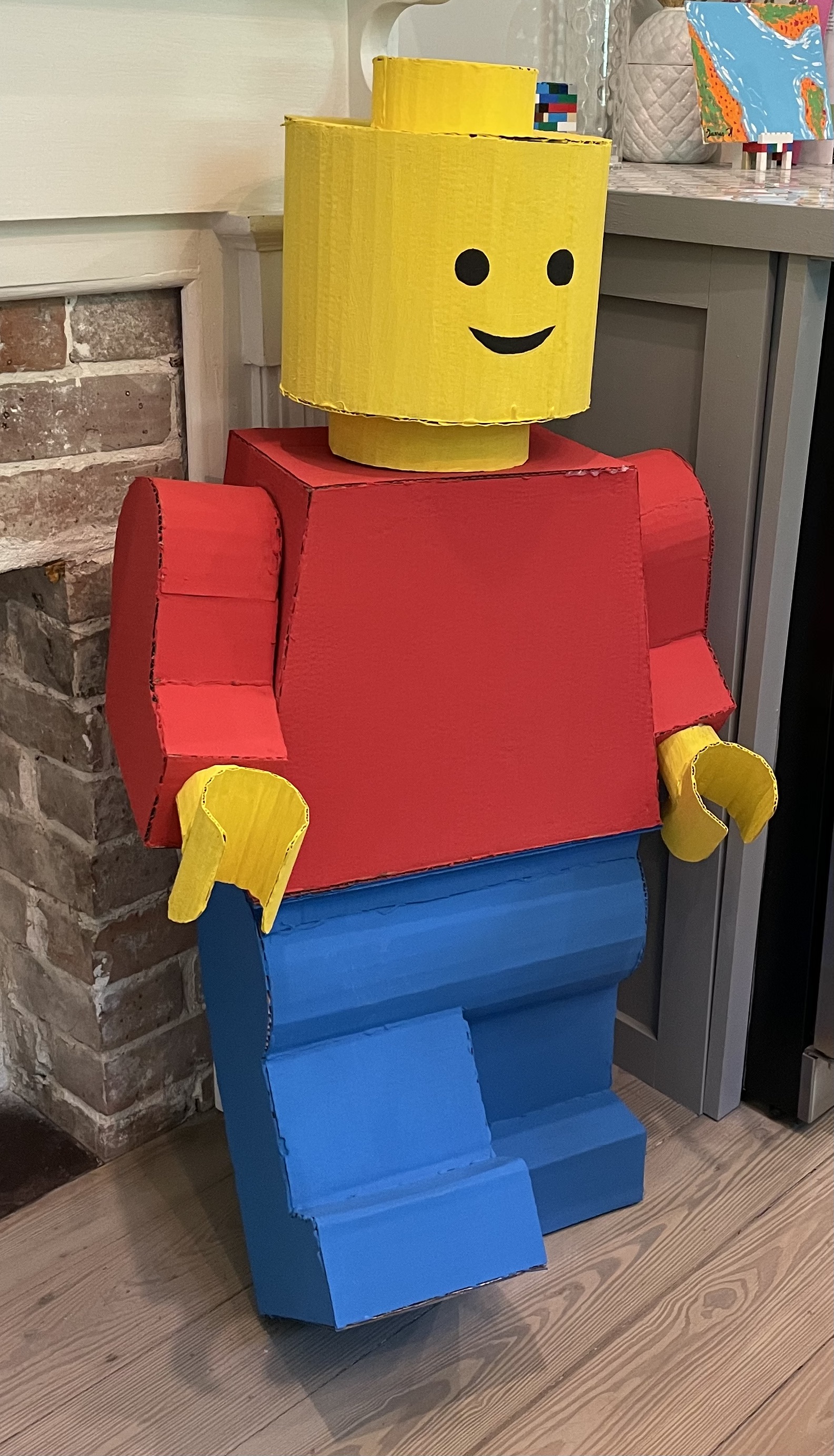
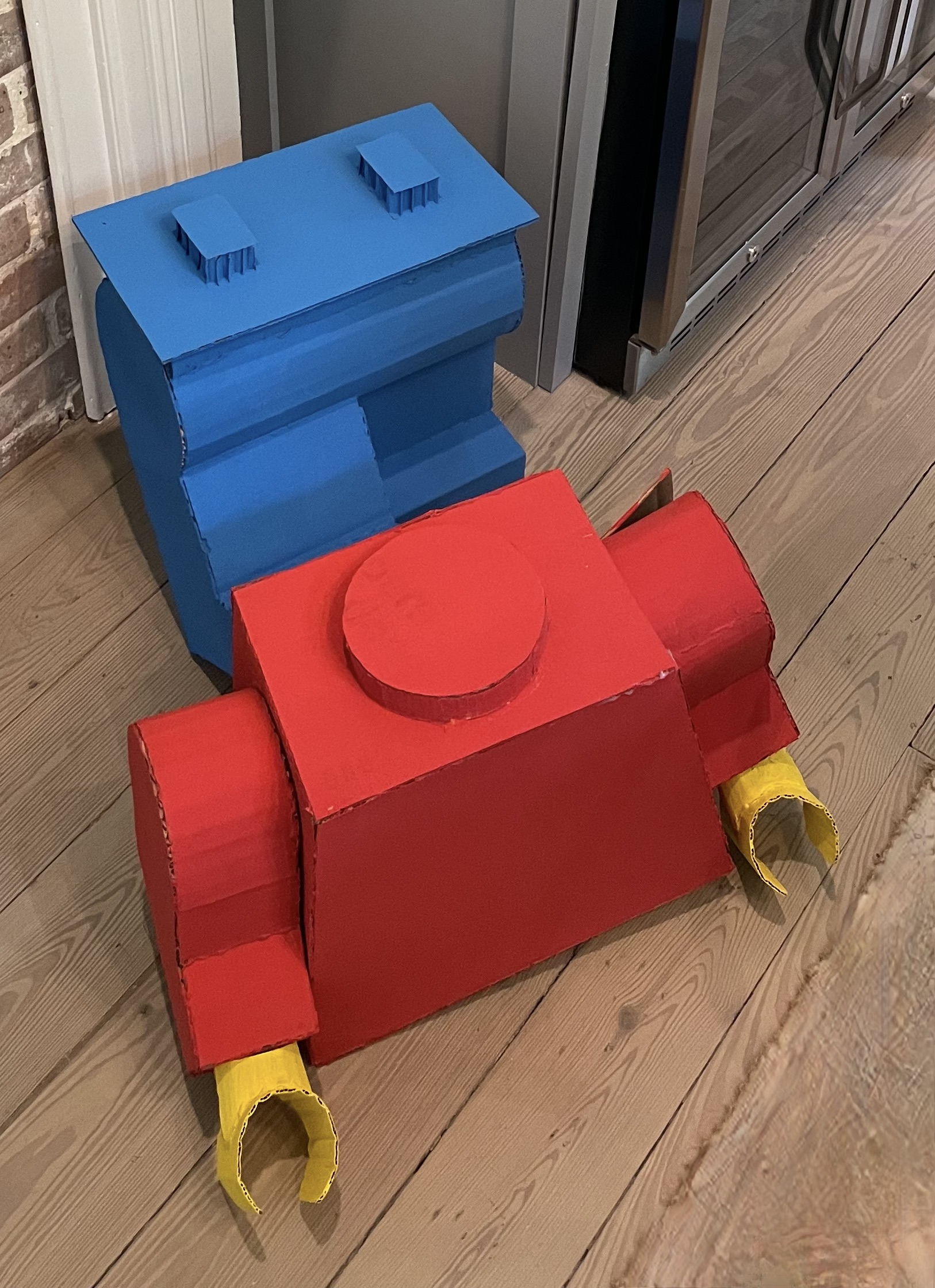
‘Lego Man’ by Anders

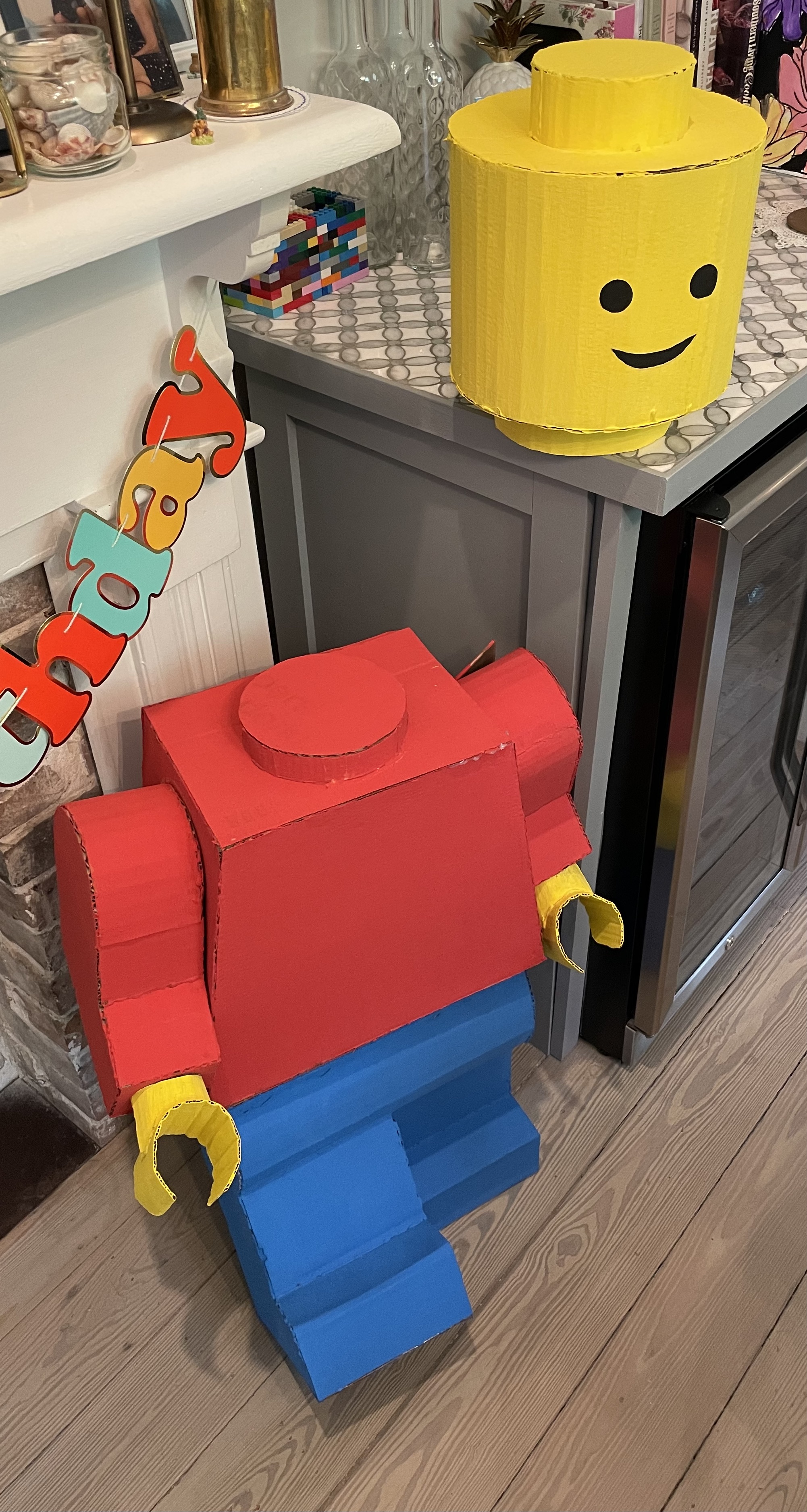
Lego Man comes apart…

… just like the original


We have long recognized our son, Anders’, abilities in arts and with woodworking. His gifts have blessed our family in years past. But since becoming a dad, he has offered the same gifts to his children. This year he and our grandson, James, chose the theme, Lego Party, for James’ upcoming birthday. Anders set to work with cardboard, paint, and glue. The result speaks for itself.

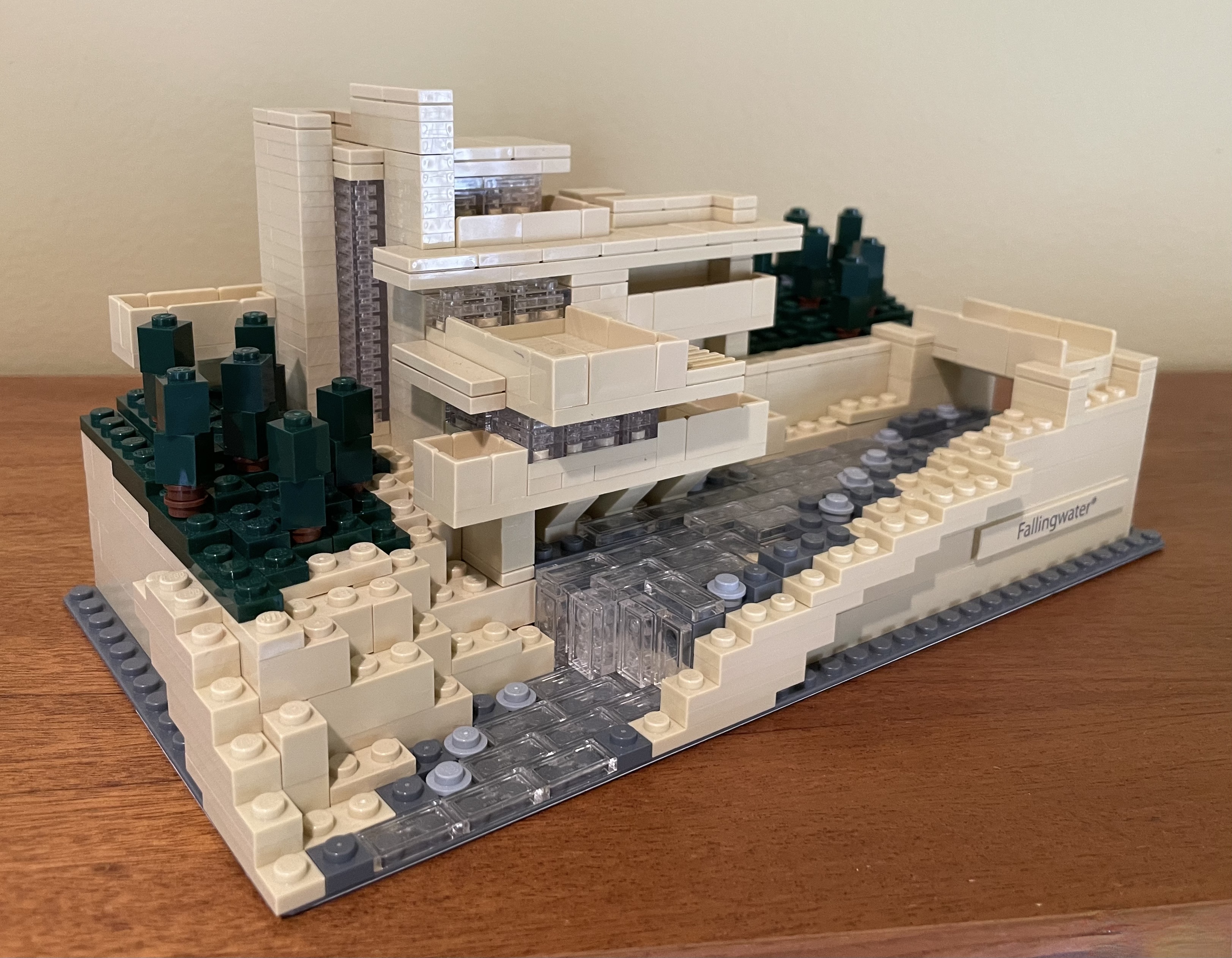
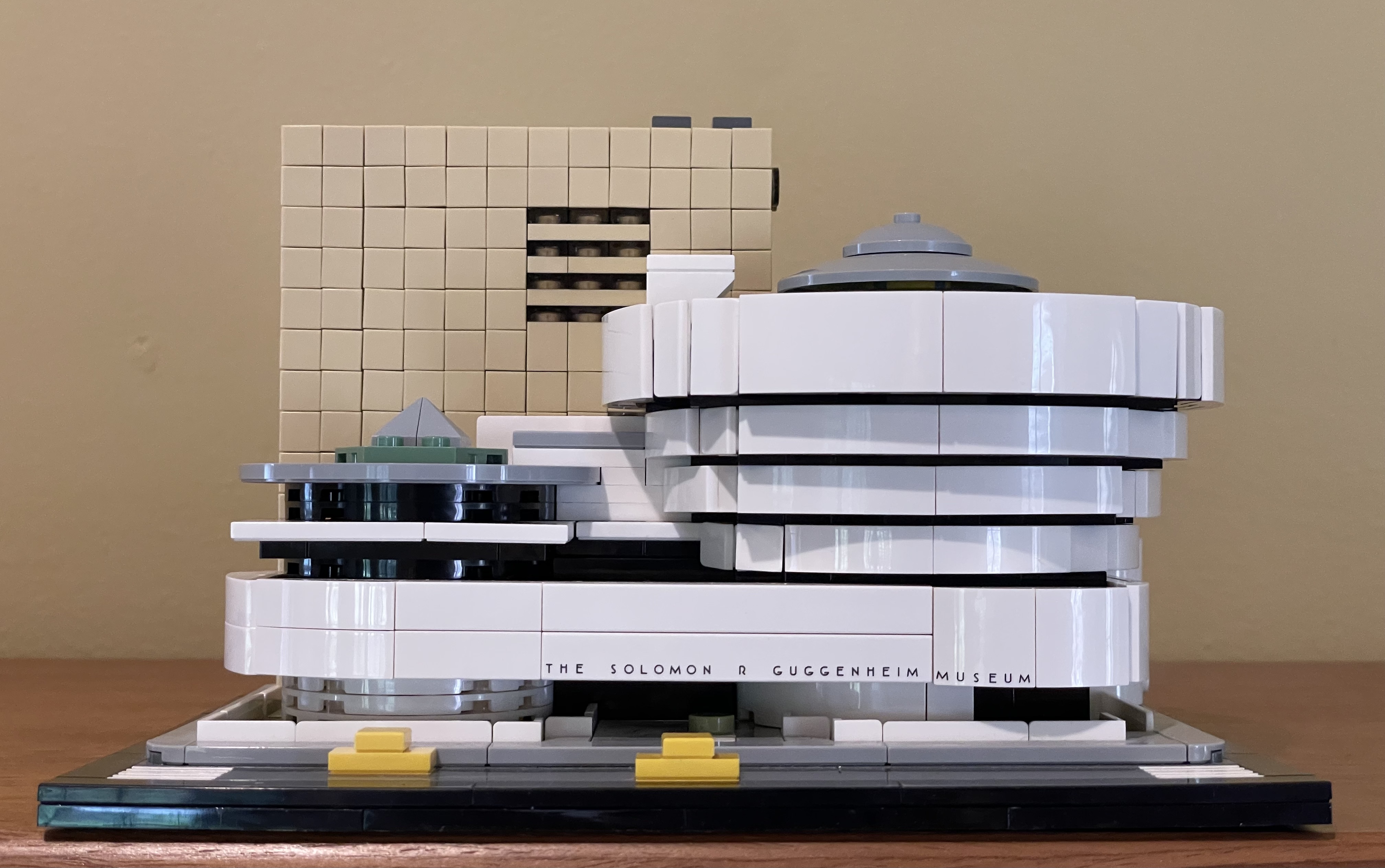
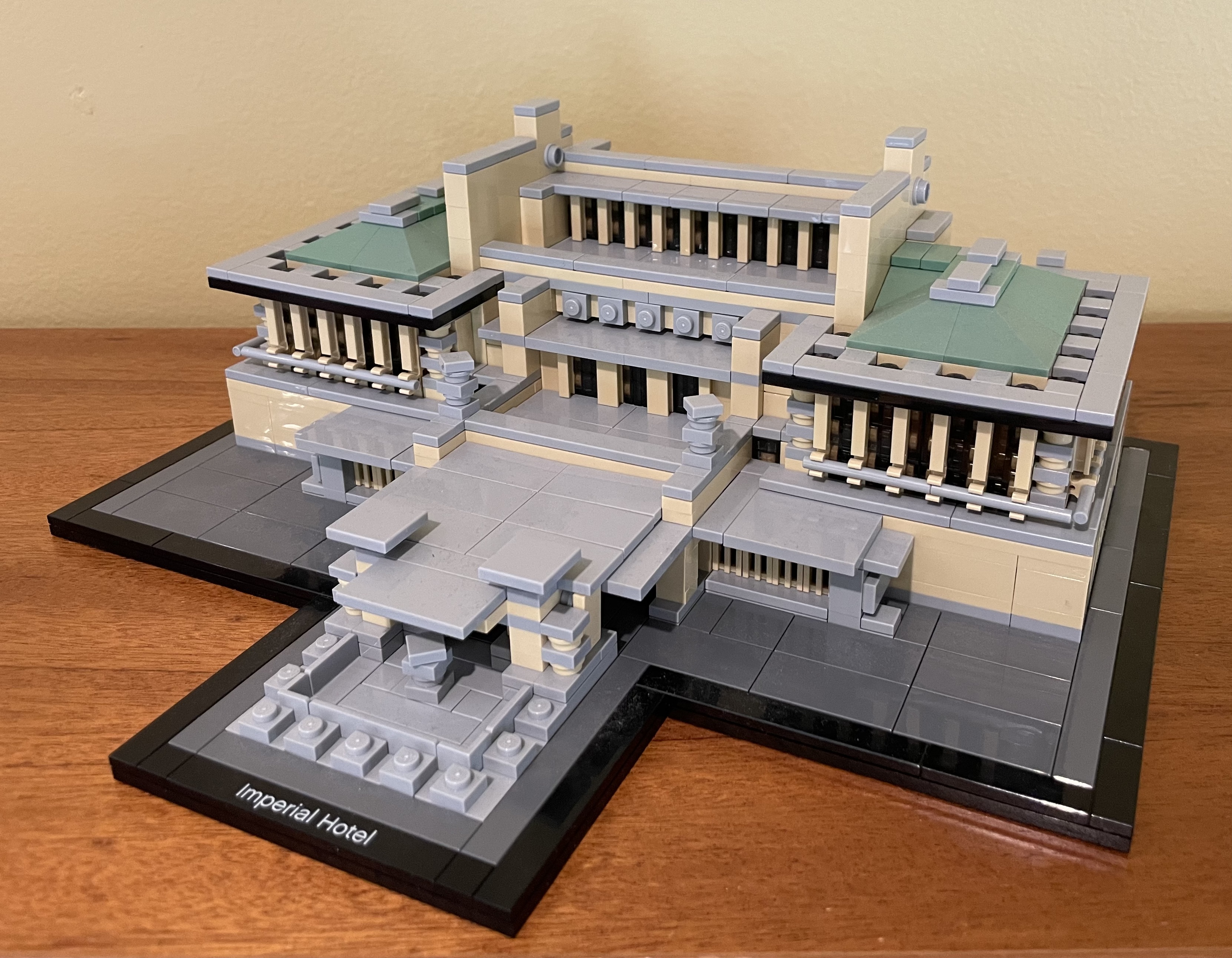
There is something about replicas that help us better see the things after which they are modeled. Lego kits provide an excellent example. Somewhat like the work of artists who draw caricatures, Lego models when completed have the capacity to alert us to distinctive visual features of the originals that have inspired them. I find this to be especially true with the Lego kits of several Frank Lloyd Wright buildings that James expertly helped me to assemble. In particular, carefully putting together these kits has helped me to appreciate the interior spacial organization of these buildings in a way that floor plans and elevation drawings can only begin to suggest.

Assembled Lego model of Frank Lloyd Wright’s Falling Water house

The Guggenheim Museum model

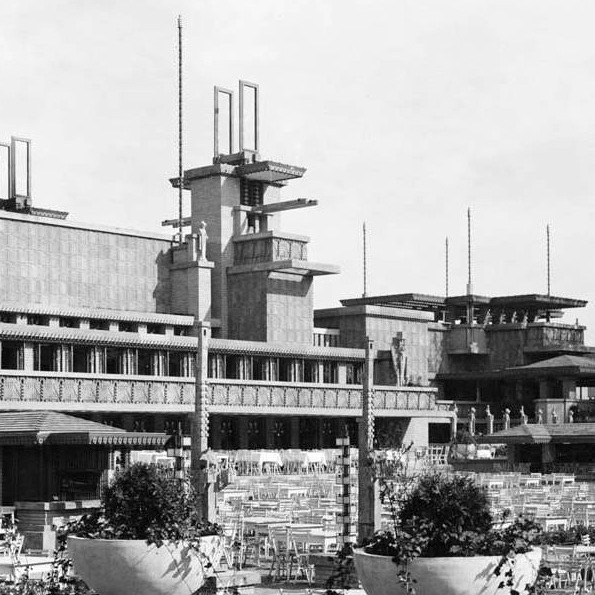
The Imperial Hotel model

Having recently encountered Anders’ Lego Man project, we came away impressed with his ability to scale up accurately a very small original into a centerpiece for a birthday celebration. We are looking forward to the party!


Beauty in Parallel Revisited

golden_gate_bridge_pillar-smaller-copy

Perhaps the only thing more memorable than driving over the Golden Gate Bridge may be to pass under it on an ocean-going ship. I was lucky enough to have that experience five times before I was a teenager.

Many of us assume the name for this bridge is related to its warm color. But the name comes from the ocean straight over which it stands, and not from the Gold Rush. Rather than mimicking gold, the bridge’s official color—“International Orange”—was chosen to contrast with fog. A story is told about when that color was first applied. Painters dabbed splotches of it on the heads of curious seagulls. Pretty soon, Bay Area birdwatchers reported a new bird species, which was called the California Red-Headed seagull!

Until 1964, the Golden Gate Bridge had the longest main span in the world. Yet, its basic design isn’t unique. We know this from other suspension bridges, which are found all over the world. Bridges of this kind have two main towers, steadied in place by their suspension cables, which are anchored in the ground. From their anchor points, these substantial cables ascend to the top of the towers, and then gently descend again to the center of the bridge. From that low point, they again soar up, to the top of the opposite tower. The slightly arched roadway across is literally suspended from these main cables, by small support cables that hang from them. Here, in the beauty of this simple design, we find a helpful spiritual and liturgical metaphor.

Reflect for a moment about two significant Sundays in the church year. One is the last Sunday after Epiphany, or Transfiguration Sunday, which we observed 10 days ago. The other is Easter Day, which lies ahead. Transfiguration Sunday is the last Sunday before this season of Lent, and Easter Day is the first Sunday after Lent. Both Sundays are as important with regard to our identity as they are to that of Jesus. For in his Transfiguration and in his Resurrection, Jesus does not simply reveal who he really is. He also reveals the fulfillment of our vocation to be fully human, in him.

Imagine these two Sundays on the Church calendar as being like the two towers of the Golden Gate Bridge. Transfiguration Sunday, coming just before Lent, is like the south tower of the Golden Gate bridge, on the busy urban, San Francisco, side of the straight. And, Easter Sunday is like the north tower of that bridge, on the less familiar and historically rural side of that navigational channel. The season of Lent stretches between these two Sundays like the main span of that bridge, taking us from what we think we know to that which may yet to be disclosed to us.

Here is the crucial part ~ every year we need to make this liturgical crossing, from our sharing in the vision of the Transfiguration, to our participation in the joy of Easter Resurrection. And like the great towers of a suspension bridge, Transfiguration Sunday and Easter Sunday uphold us all the way across our Lenten journey over what sometimes may seem like dark, cold, and turbulent waters around us.


This posting is a revised version of a post I first published in 2017, and is based on my recent homily for the Last Sunday after the Epiphany, which explores the parallel between the revelation of glory that we see in the Transfiguration, and the glory we see in the Resurrection (click here for a link to it).

The Beauty of FL Wright’s Influence

[If reading this by email, please tap the title at the top to open your browser for the best experience.]

The Solar Radicycle (1969 ~), second iteration, south facing, with a studio on the north side


As I have shared before, I once aspired to become an architect, a vocation toward which I may still be temperamentally disposed, though way too late to consider as a second career. Here, I want to take another risk. Having previously shared a drawing from my exploration of shell forms, from when in my youth I sought to develop as an artist, I would like to offer a glimpse of my very early architectural aspirations.

The drawings I feature above and below very obviously reflect the impact upon me by the work of Frank Lloyd Wright. The plan above, which I titled the Solar Radicycle, is one that I first conceived in late middle school or in early high school, but then later elaborated. With its reliance upon circular patterns, it is clearly influenced both in name and design by Wright’s second Herbert and Katherine Jacobs house (1944), the 1950 Wilber C. Pearce house, and related designs (the David Wright house, among them).

While in eighth and ninth grade I memorized FLW construction design and building facts in the way that some of my peers memorized baseball card details. Among such were significant aspects of Wright’s remarkable achievement with the columns of the Johnson Wax company building (Racine, WI), and the unexpected and astonishing test-endurance of those structural features.

I have searched in vain for my colored study drawings from the 1970’s of the exterior elevation for the Solar Radicycle plan, showing the proposed domed roof over the central living area. Yet, the isometric drawing of the building (below) may help give an idea of its intended eventual shape.

An isometric view of the Solar Radicycle plan (not showing roofs)

The word ‘solar’ explains itself; the suffix ‘cycle’ implies something circular; and the prefix ‘radi’ comes from the common words radical and radish, and implies ‘of the root.’ Naively, I had the hope to build this house somewhere in rural Vermont or New Hampshire upon my graduation from high school in Massachusetts. Obviously, I was a romantic dreamer. And, of course, it did not happen. But I had thought through a number of key details, neglecting those of financing. Here I was a true follower of Frank Lloyd Wright!

The first iteration of the above design was more simple, with a focus upon the central living, kitchen and dining areas. The first or inner ring of the design depicted above will reflect this. The second, outer ring of structure in the plan, reflects the later iteration, involving a re-conceived master bedroom location, along with the addition of a den, and also a large studio.

I envisioned the walls as being embedded in surrounding earth berms, and using either local stone and or limestone for the vertical structure. I thought that the roofs, both the T-shaped slabs over the bedroom wings and studio, as well as a large dome over the living area – and small domes (or possibly sky-lights) over the  kitchen and restrooms – might be cast in pre-stressed concrete. Here again, I may have been too slavishly an FLW follower in not fully considering the roof-leak potential for those roof slabs and the seams between them, especially in New England winters and springs. I might have had a beautiful house, if I could have pulled it off, while yet having to deal with raindrops seeping down and falling onto the side bedrooms.

I am proud of the overall design, but fully acknowledge how this was an adolescent flight of fantasy! Below are a couple of representative examples – among many – of very obviously FL Wright-influenced designs for houses and plans for other structures that I produced in the mid to latter 1970s, just out of high school, while contemplating a vocation in architecture.

To this day, the possibility of what my original plan might have been hovers at the edge of my mind. In God’s Providence, architecture was not to be my professional vocation, though I am so glad for all that my interest in it has brought to me.


Among a huge abundance of books about FLW, a very helpful guide is The Architecture of Frank Lloyd Wright: A Complete Guide (color photo illustrated), by William Allin Storrer, which includes locations maps for all the buildings included.

New Orleans as Viewed by Errol Barron


Through our nearby family we are able to stay some weekends in New Orleans, an opportunity which delights us given that we live up in ‘the country.’ Our son and his family reside in what is called the “Irish Channel,” an historic neighborhood close to the Mississippi River and on high ground that did not flood during Katrina. Like much of New Orleans, that neighborhood is filled with old houses, some in excellent condition and others looking blighted by years of hot and wet weather.

While visiting our family there, we became acquainted with a very unique New Orleans local bookstore, The Garden District Book Shop, located incongruously in what seems to have been a former roller skate facility. The building now houses this book seller, as well as a coffee house and other vendors. It was here that we discovered Errol Barron’s remarkable and yet relatively small book featured in the image above.

Having once aspired to be an architect, having a longterm interest in architectural history, and having dabbled in watercolor painting, Errol Barron’s work immediately captured my attention. For this is a beautiful book, filled with color illustrations, and very affordable. The images in the book are the fruit of a sabbatical that he took in 2009, while most often visiting the sites for his paintings by bike.

 The author at a book signing event

Barron, as a career-long faculty member of the Architecture department of Tulane University, knows well the field that provides the material for his watercolor paintings, and also the substance of the profession and vocation he has pursued. Underlying all his work is the evident hand of a highly skilled draftsman, in both the historic sense of someone who draws well, and in the more formal sense of someone who is well-prepared to render architectural plans. His attention to scale and proportion, especially with regard to building facades, is particularly evident.

Through his dedication to his life’s work, Barron has nurtured generations of students. His beautiful as well as informative illustrations help us appreciate why this has been so. He has a sharp eye for what to notice, as well as a developed skill with which to communicate what he sees.

My regret here is that, in commending his beautiful work, I need to rely upon photos I have taken of his printed book. So why isn’t this book available in digital download book format, especially for the sake of its many compelling images?

Below is one image that is available on the internet, which for me captures part of the mystery of the appeal of New Orleans. Barron’s book’s subtitle says a lot – “drawings and observations of America’s most foreign city.” An aspect of the curious beauty of much of New Orleans is the juxtaposition of well-cared-for historic homes with attractive landscaping, and properties where the wear and tear of time is unavoidably evident. The latter clearly sets apart the former, and the former so often has a visually compelling character.

Having acknowledged the limitations of some of these images, I offer here a few that I have photographed from the paperback version of the book. Note how the book cover (depicted above, with an evident visual seam down the middle) reflects a similar use of a split photographic image of two pages within the book.

Barron’s sketches and watercolor paintings help us appreciate how there are at least four significant cultural influences that have contributed to the historical life of Louisiana and what might be called the ‘gumbo’ of its architecture: Spanish, French, English, as well as African, the latter of which is more likely evident in landscape (and culinary) selections. For it is thought that some of those transported here in slavery from Africa may have brought seeds of certain plants with them. Predictably, some of the above-mentioned cultural influences are more visually evident than others.

Below is an image of Barron’s rendering of the St Charles streetcar, an iconic image.

For me, Errol Barron’s book, New Orleans Observed, is a beautiful discovery that provides ample inspiration.


My thanks to my son, Anders, and his family, for the lead on this posting. Through visits with them I have come to love New Orleans despite its problems and or challenges. I want to note that I have no personal relationship with Errol Barron nor any commercial relationship with the publication of his remarkable work.