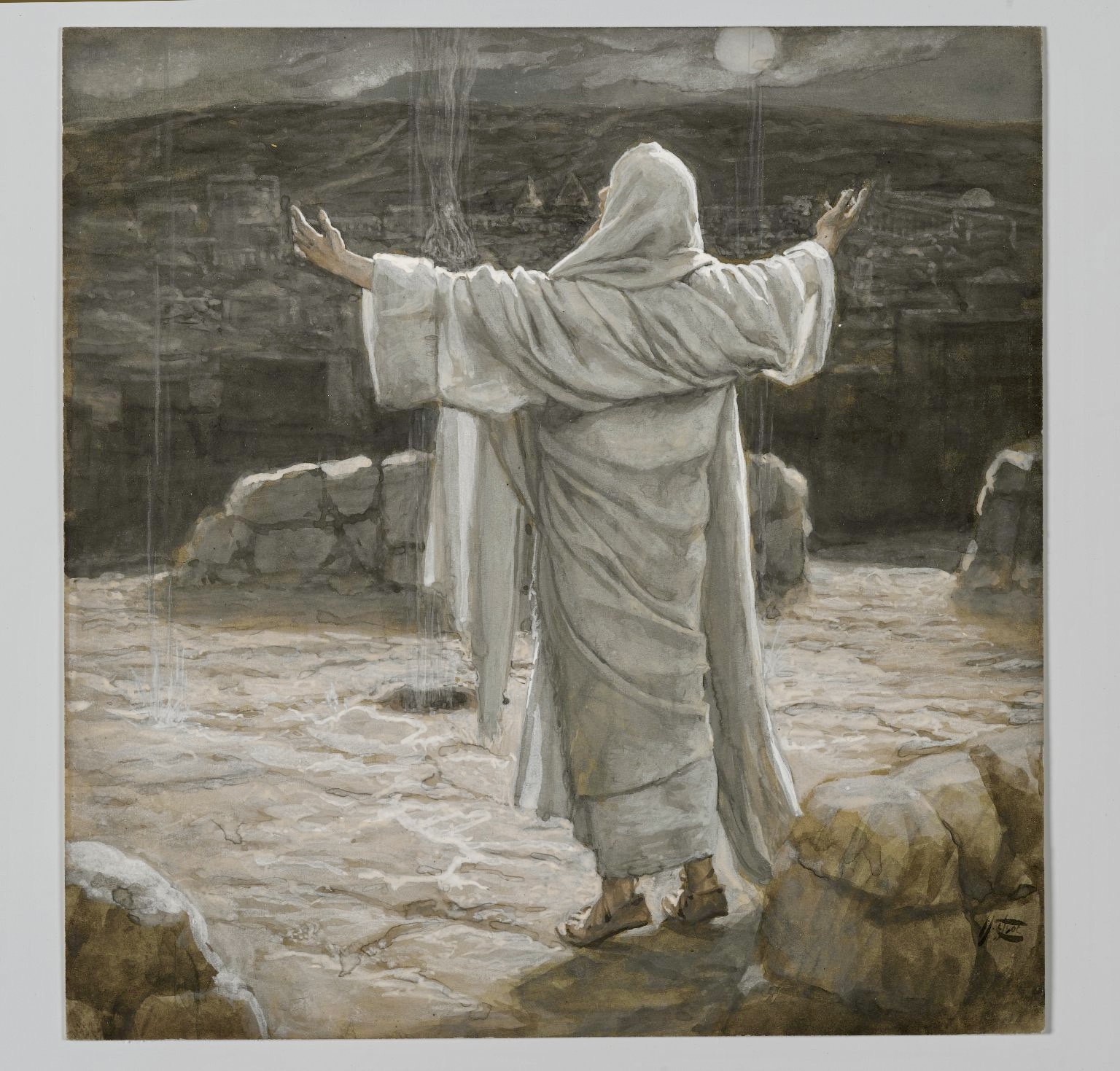
I have become fond of quoting a particular question and response found in the Catechism included in our Book of Common Prayer. The question is straightforward: “What is prayer?” The first part of the extended answer to this question is also put plainly, and it is instructive. “Prayer is responding to God.”
Consider the significance of those words. If we gained our concept of prayer during childhood, we probably still think about this activity in the same terms – terms which are rather different from the way that the Prayer Book Catechism sets forward its definition. For it seems almost universal that we associate our concept of prayer with ’petition.’ Petition is the formal name for prayers that ask, in which we make our personal requests to God. ‘Intercession’ is what we call the prayers that we offer for other persons and their needs. The frequency with which we might engage in these two forms of prayer may help explain why we are so accustomed to seeking what we call “answers to prayer.” If answers to prayers are sought, it suggests that prayers are posed to God by us unidirectionally, as questions and or as requests.
Yet, our Catechism begins its teaching about prayer by characterizing this activity as one in which we respond to God, rather than one in which we envision God responding to us and to our concerns!

Putting the matter very simply, the Prayer Book presents prayer as something that is God-centered, God-initiated, and as God-enabled. Such a notion of prayer is fully biblical and properly theological. Yet, we like to be ‘in the driver’s seat.’ Habitually, we think of prayer as something we initiate, and for which we supply the purpose and direction. But if prayer is to be centered upon communion with God, then it ought also to be the other way around, so as to follow the words of Jesus. For he taught us to address “our Father in heaven” by saying “thy will be done.” When we follow his teaching, instead of so often asking God to please do what we want, we are more willing to let God be quietly present and foremost in our consciousness.

In a similar way, I think we habitually also misperceive the nature of divine blessing. Two examples of blessing that admittedly are not everyday occurrences, but which sometimes receive mention in discussions about blessing, can help make the point. These examples are provided by occasions when our chaplains are asked to offer prayers for, and pronounce blessings at, the launching of military ships and submarines, or to offer similar words over the participants and their hounds at fox hunts. Such prayers should not be seen as providing sanction for or as necessarily implying divine approval of whatever we ask on such occasions. Blessings in such contexts can instead be understood as words that we offer so that what is prayed for might be in accord with God’s will, rather than as words offered in support of purposes that we prefer and will into effect. Therefore, prayers offered for persons seeking public office, or who serve in that capacity, would best be shaped according to this understanding.
In view of these observations, blessing as a spiritual activity can be defined in the following way. For those who desire a blessing in the context of the church, a bishop or priest might say words of this kind: “May God’s will be furthered in your life, to the end that our Lord’s revealed and known purposes may be brought to their fulfillment in you, and for you.”
Here, the parallel we can discern between engaging in prayer, and offering blessings, provides insight. If prayer begins with responding to God, rather than with inviting God to respond to us, then surely words of blessing pronounced by our clergy are equally contingent upon the revealed direction of God’s purposes rather than those of our own. Therefore, we should always seek to offer prayers and blessings that are in accord with God’s known will, with the aim that our wills and desires might be in harmony with those of our Lord. Prayers and blessings are most genuine when we are most open to letting God be God.

 Toward Beauty