If reading this by email, please tap the title at the top to open your browser for the best experience. Then, clicking individual pictures will reveal higher resolution images.
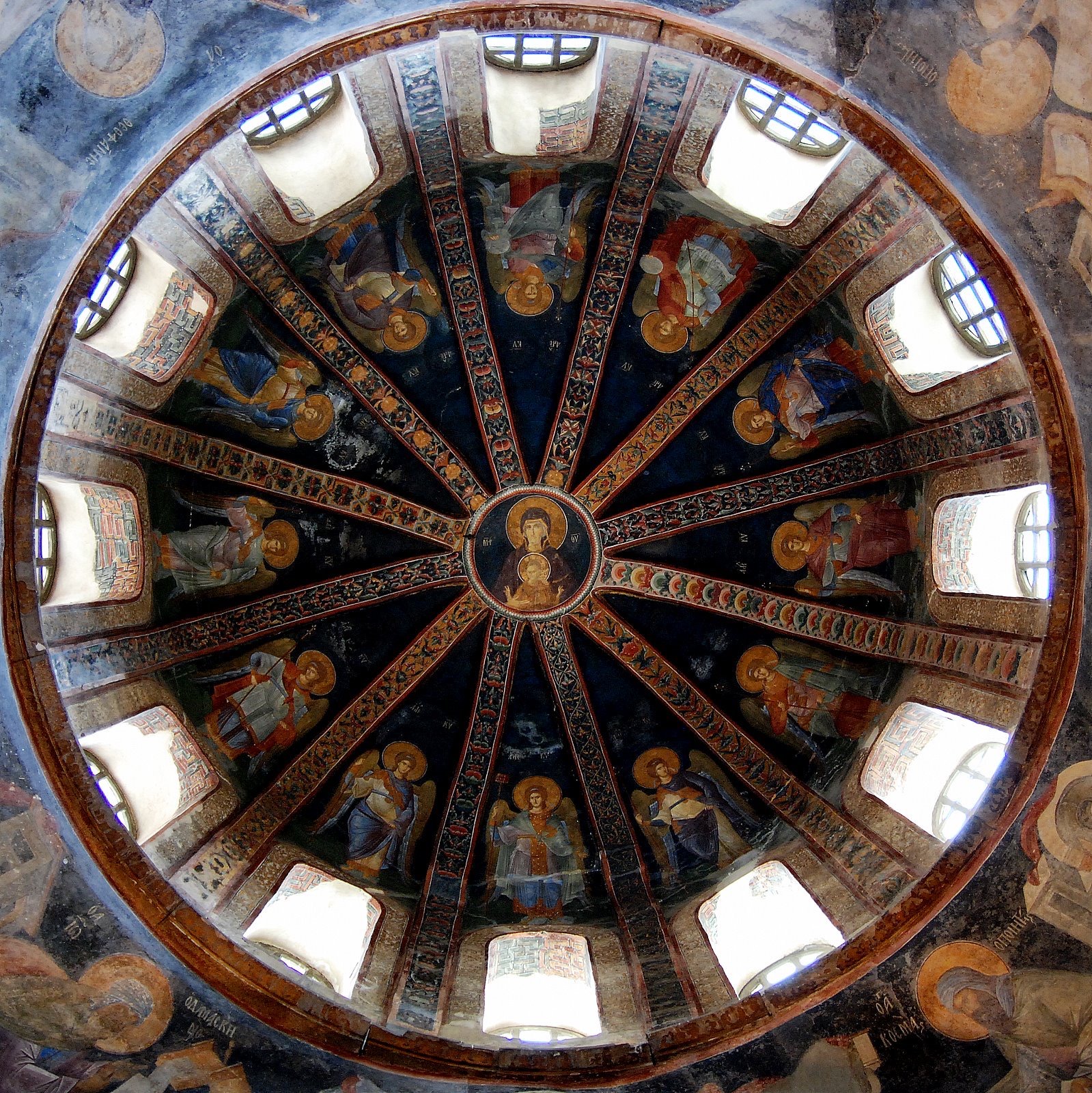
Dome over the Side Church (or parecclesion), Chora Church
We missed being able to visit this remarkable place by a day! Sadly, after staying in Istanbul for four nights, the historic Chora Church that had undergone four years of renovation would not reopen until the day after our departure.
Dating back to the time of Constantine in the early fourth-century, the Chora Church was built as part of a monastary outside the walls that were constructed when Constantinople became the new capitol of the Roman Empire in 330 A.D. Its rural location led to its formal title, Church of the Holy Savior in the Country (or Chorai, in Greek).
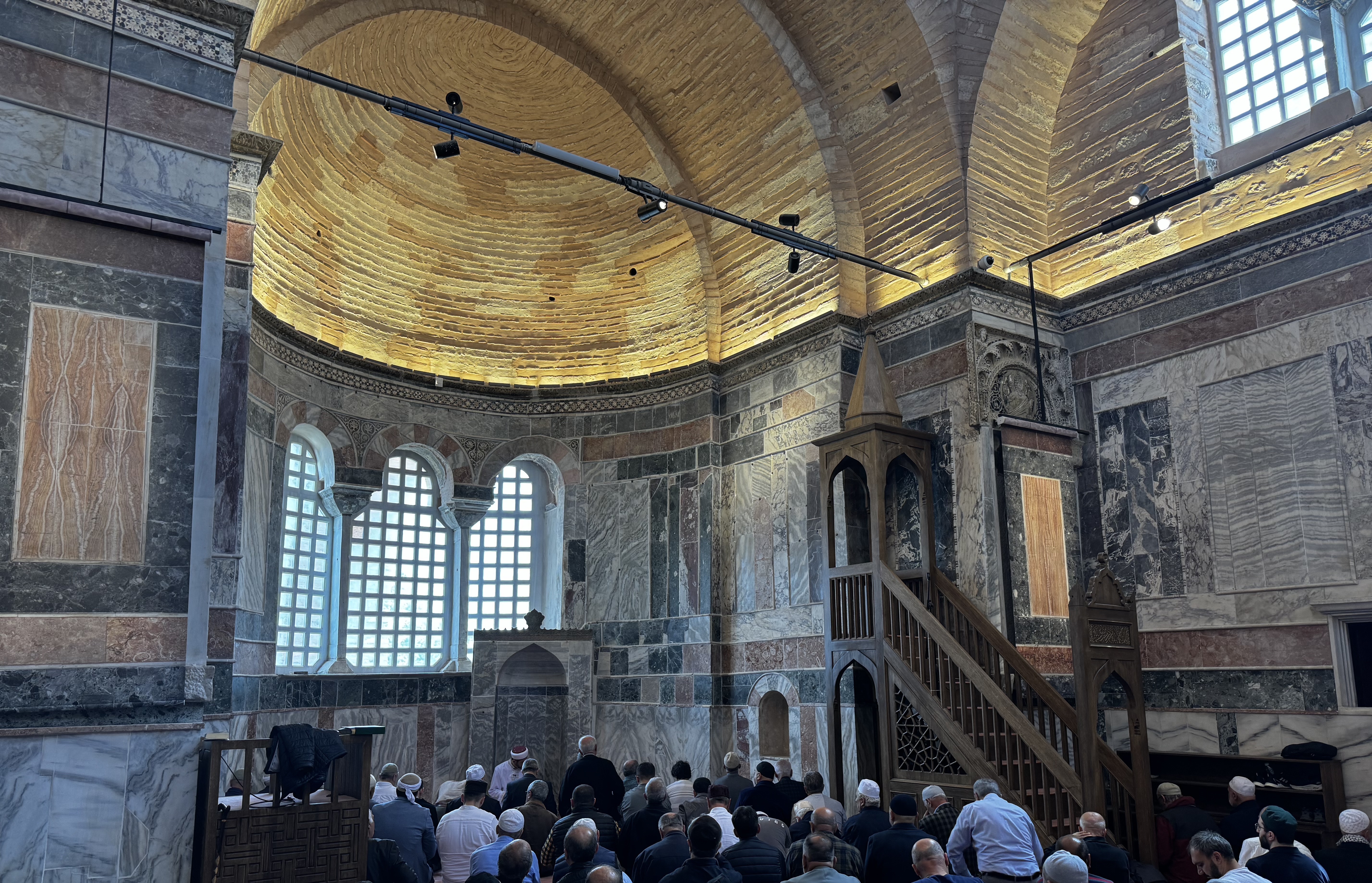
Interior of the original central nave (naos) in use as a mosque, with Christian mosaics and frescoes covered over
Chora, like the later Hagia Sophia, has over its history served as a church, a mosque, a museum, and now once again as a mosque. As I have noted in prior posts, the fact that buildings like Hagia Sophia and Chora have been able to transition from church to mosque without significant structural change helps us perceive how what became normative in mosque architecture had its origins in churches from the early Christian, pre-Islamic era. As a precursor to Hagia Sophia, the original walls of Chora may provide one of the earliest examples of what would develop into the cruciform plan for churches, a design pattern that became predominant in the Christian East. This approach to design for worship spaces is centered on a square, covered by a dome, a departure from the early rectangular basilica plan favored in the western Roman region.

Floor plan of the Chora Church
In the floor plan above, note the subtle Greek Cross pattern of the central nave (or naos) below the large dome. As this plan indicates, the original, late Classical period Chora was significantly expanded during the Byzantine period, between the 11th century and the 14th century.

Section drawings of Chora Church showing the location of some murals and frescoes
In addition to its cruciform plan, and the church’s great antiquity, another feature that distinguishes Chora is its impressive collection of well-preserved Byzantine mosaics and frescoes, largely from the early fourteenth-century.
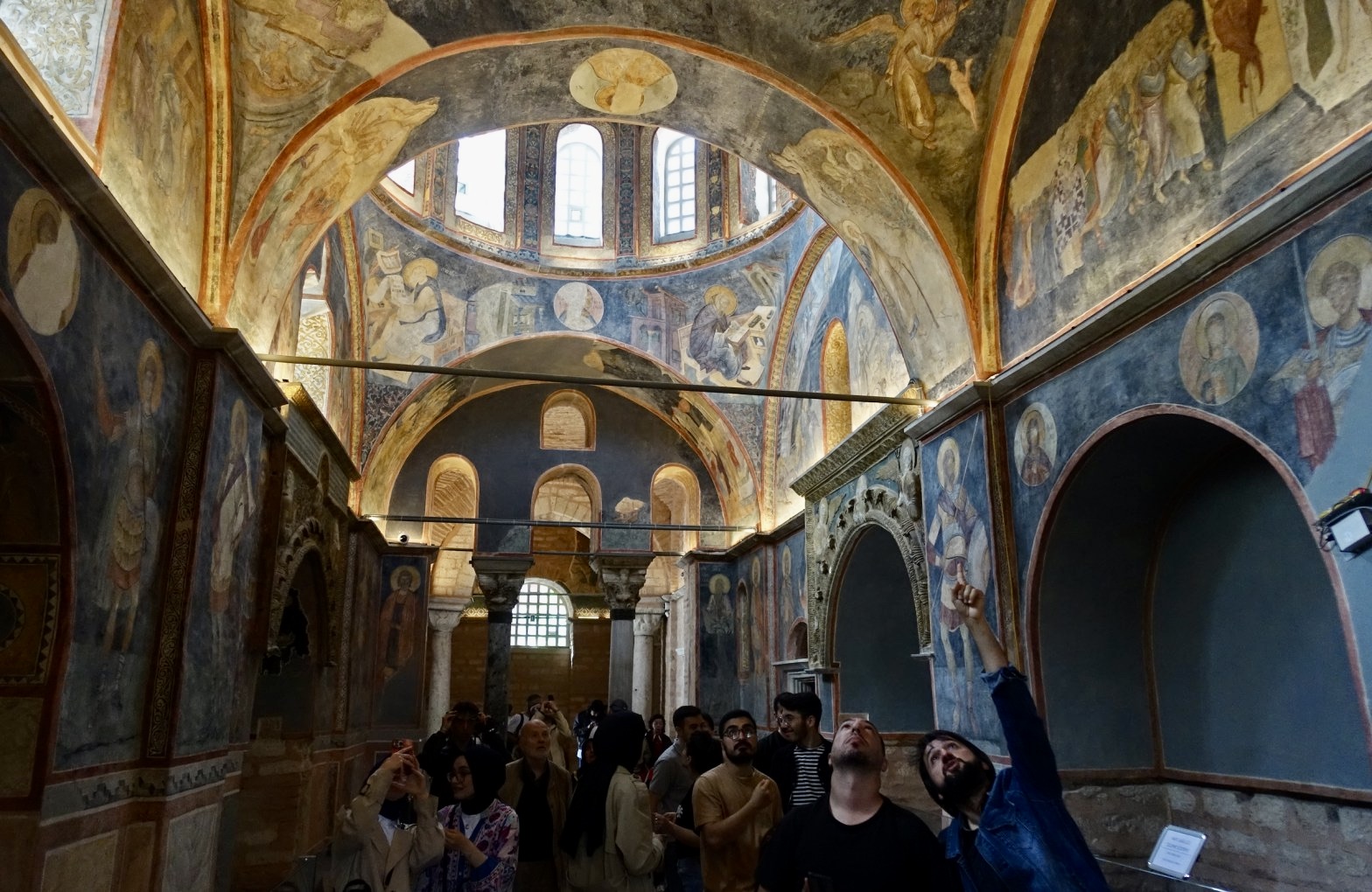
Visitors to Chora admiring the murals in the Byzantine-added “side church”
The bulk of the surviving mosaics and frescoes are located primarily in the side church (or parecclesion). This may be due to the central nave or naos having been used for Islamic worship during a significant portion of the building’s history. One of the many beautiful frescoes depicts a common theme found in works of art from the Christian East, that of the Harrowing of Hell. Images based on this theme depict the Christian belief concerning the first saving actions of the Risen Christ: pulling Adam and Eve out of their tombs and the clutches of the underworld (image below).

A fresco in the Side Church – Anastasis (or Resurrection): The Harrowing of Hell

A beautiful example of the Chora mosaics depicting Joseph and Mary’s enrollment for taxation in Bethlehem

Interior view of the side church
Like the later Hagia Sophia, Chora Church – for a time as a museum and now a mosque – still serves as an edifying spiritual place for Christians and people of other faiths to visit. For Orthodox Christians in the East, Chora’s numerous mosaics and frescoes provide multiple opportunities to (re)engage with biblical stories and with articles of faith in a way that the contemporaneous art in the much larger Arena (or Scrovegni) Chapel in Padua, Italy, provides enrichment for Western, Latin, Christians.

Exterior view of the southeast corner of Chora Church (note the later addition of a ‘flying buttress’)

A 1903 photograph of the west entrance to Chora in the late Ottoman period
 Toward Beauty