
There is an affliction that is common to owners of sailboats, known as ‘one-foot-itis.’ The name refers to our ever present desire to have just that much more room inside the boat, or within her sail plan, cabin height, or in the extent of her amenities. Speaking for myself, I admire the beautiful sailing yachts my brother has been photographing on the southern coast of France. Yet, aside from the unimaginable purchase cost of a 45 or 70 foot ocean cruiser, I don’t wish to have to contend with all the maintenance work and expenses associated with such a boat. As the old saying goes: the best definition of a boat is a hole in the water into which you pour money!
Yet, for the owner of a small boat, another foot or two of length could bring with it greater stability, hull width, and such things as an enclosed working ‘head’ (I.e. toilet) and full galley (small kitchen). Standing head room inside would be a real plus. Usually, with each additional foot of length comes a proportionately larger volume of workable space and hull displacement (weight). These variables bring with them additional maintenance issues, transportation challenges, and docking fees, resulting in an overall increase in operating costs.

My own experience with ‘one-foot-itis’ came from my enthusiastic enjoyment of our 15’ West Wight Potter, a boat whose ‘cabin’ is sometimes described as having the interior space of a pup tent, while resting on a boat with the buoyancy of a cork. I cruised solo on the boat for two weeks one summer, and was hooked on the pleasure associated with that kind of time away on the water. Then, naturally (sailors will understand this), I began looking at bigger boats, of a size that would enhance my cruising adventures.
I have always loved classic boats and ships, and the designs of a marine architect, Ted Brewer, came to my attention. I read about his Nimble 20 sailboat in Small Craft Advisor, and then discovered his Nimble 24. When one came up for sale on the north shore of Lake Pontchartrain, I had found our next boat. With bronze ports (windows), a teak and holly sole (floorboards), and tanbark sails, she is indeed a classic. Built in 1988, she is hull #3 of the N24 series. We named her DAYSTAR

Brewer designed the Nimble 24 with some significant criteria in mind. She would not be a ‘blue water’ or oceangoing boat, but one capable of voyaging around Puget Sound, or a crossing from Florida to the Bahamas. Some of the features Brewer designed into the Nimble include provision for safe passages in coastal waters while also being able to enter shallow inlets; cruising room for two adults with small children and or pets; space for an enclosed ‘head’ (toilet), with two distinct cabin areas as well as a cooking area. She is of a canoe-yawl design and therefore a ‘double-ender,’ with a small mizzen or second mast allowing a flexible sail plan for a variety of conditions. Her shallow draft or depth tolerance is attained by a short but heavy fin keel containing a retractable centerboard, along with a retractable rudder extension.
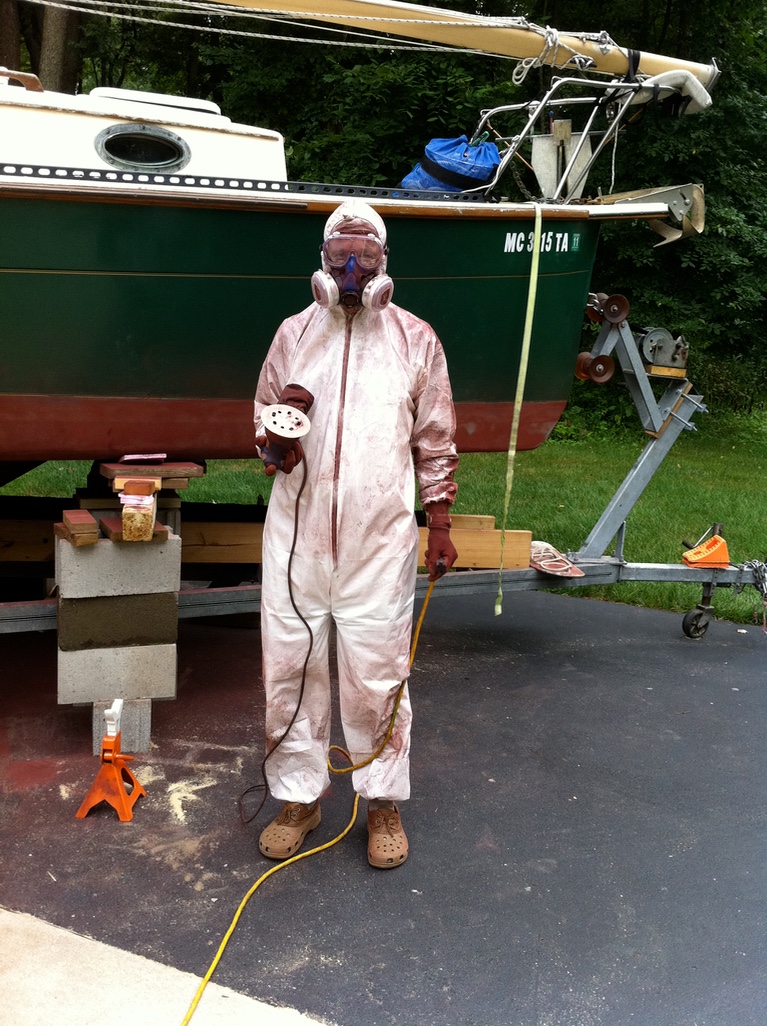
For practical reasons, her outboard sits in a motor well in the aft of the cockpit, providing easy access as well as a dependable drain point should the cockpit be swamped with water. The boat is built with positive floatation within the hull, meaning that should the boat be filled with water, she will not sink. She has relatively high sides with a ‘sharpie’ (somewhat flat) hull, and her good stability enables her to handle a fair bit of wind and adverse waves.
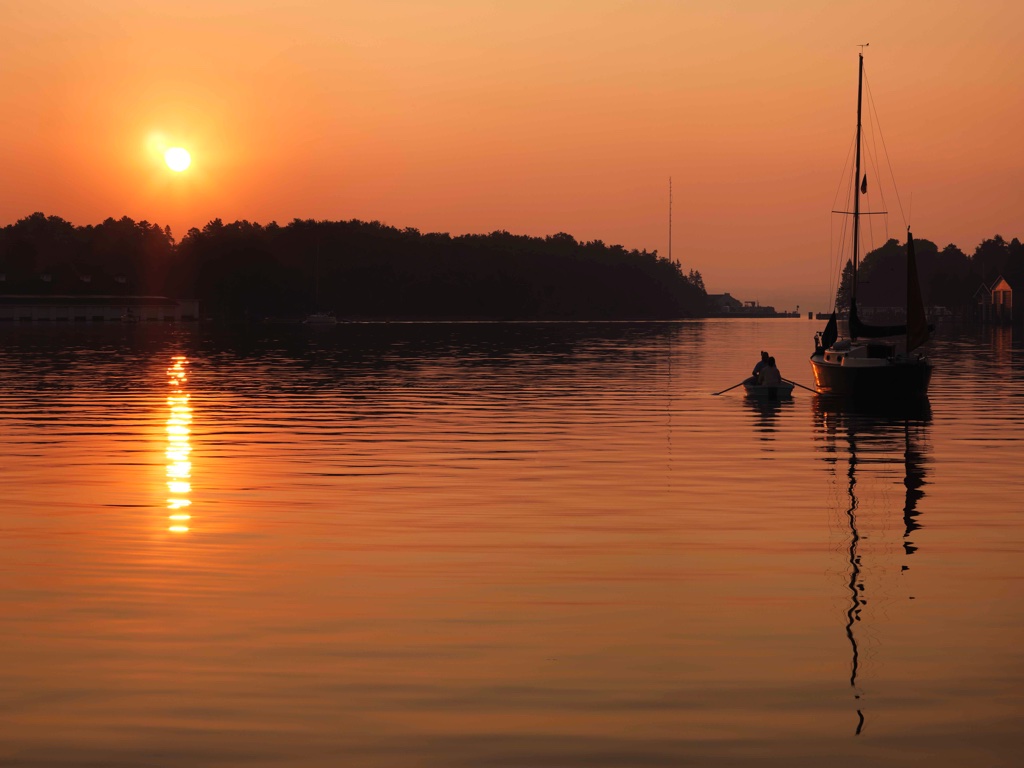
All of these features result in a boat well-suited for ‘gunkholing,’ or navigating into shallow coves and inlets. DAYSTAR can be brought right up to edge of a river or beach, though her skipper must take care to keep sand or mud from getting into the outboard engine’s impeller (water-cooling intake). On the open water, she sails well, and we can regularly reach a comfortable if not a sometimes thrilling 5 knots (or 5-6 mph) with decent wind. We have sailed her on Lake Michigan, and on the adjoining 18 mile long Lake Charlevoix, as well as on Lake Pontchartrain.
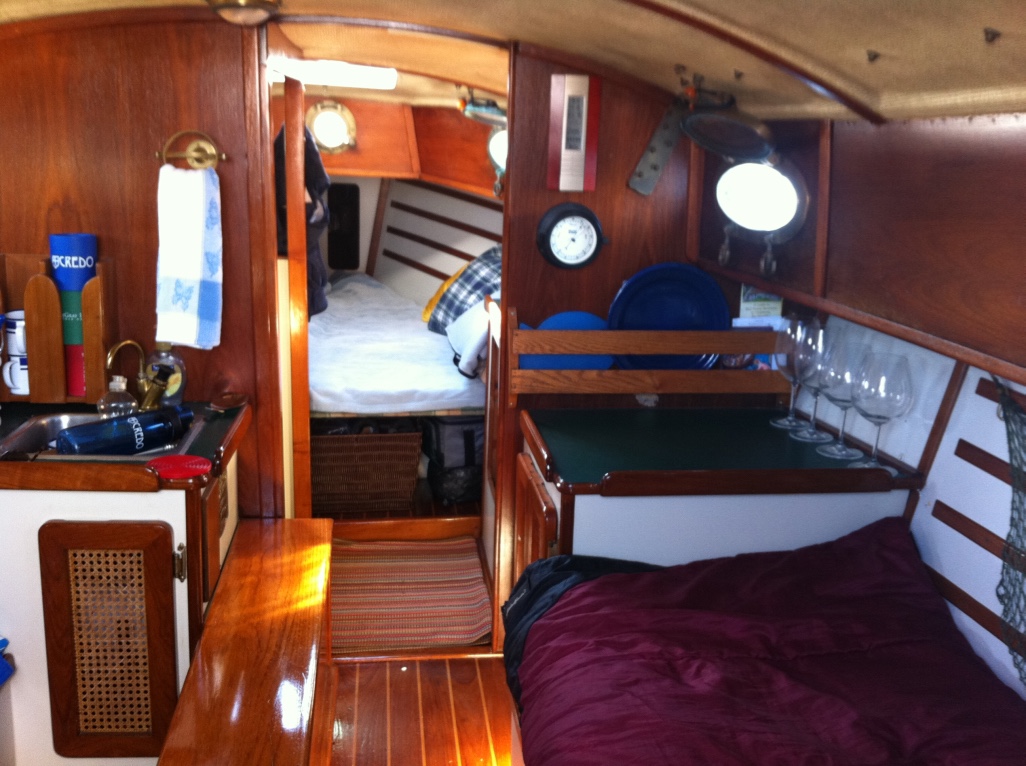
As the photos here may suggest, our stays on DAYSTAR involve camping on the boat, and she serves us as something like a little floating summer cottage. We rely on a large water jug, a good cooler with daily additions of ice, a small grill, and a portable-potty, for our basic needs. Many people love RV’s for camping holidays, something we can mimic with DAYSTAR when she is trailered. But we love sailing and the flexibility of having no roads to follow. Keeping an eye on the weather is always vital, and having good charts and GPS navigation help us discover and navigate safely unfamiliar waters. Given all these features that bring us pleasure, we are looking forward to some time away on DAYSTAR this summer.

In honor of my friend, Norm Laskay, who was DAYSTAR’s skipper and her knowledgeable and careful steward before she came to us.
 Toward Beauty