Uncategorized

The Unveiling of Glory


According to Exodus, Moses started putting a veil over his face when he would come down the mountain to speak to his fellow-Israelites. But he would not wear the veil when he talked with God, up above. So, in this part of Exodus, the veil provided protection. It would protect those who were unused to, or unprepared for, the power of God’s immediate presence. Paul, in 2 Corinthians, extends and also alters this idea of the veil. Instead of it being a means to protect God’s people from a direct encounter with divine glory, the veil has become in Paul’s letter a kind of impediment. When our hearts and minds are not open to God, nor sensitive to God’s power, we become hardened. We become hardened in such a way that our hearts and minds are veiled, preventing us from perceiving God’s glory.

But Christ has set aside this veil. As a result, “all of us, with unveiled faces, {see} the glory of the Lord as though reflected in a mirror.” And we “are being transformed into the same image from one degree of glory to another, for this comes from the Lord, the Spirit.”

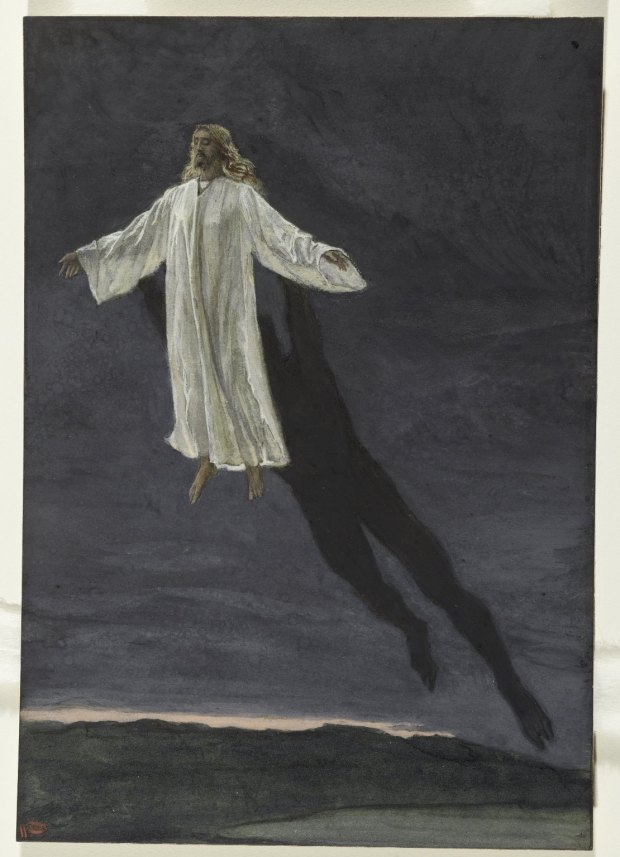
The Transfiguration of Jesus is all about the unveiling of God’s glory. Jesus takes Peter, John and James up with him on a mountain to pray. While he is praying, the appearance of his face changes, as does his clothing. In contrast with the Exodus and Pauline images of light reflecting off a surface, Luke presents God’s glory as coming from within Jesus. In other words, his is a radiating glory rather than a reflected one. Luke tells us that Moses and Elijah, who appear with him, appear in his glory. This may mean that Jesus has shared his glory with them in a way that prefigures what he will share with all of his followers.

This should lead us to ask a good question: If we feel like there is a veil between us and the divine presence, where does this veil lie? Does God ‘hide’ behind a veil, either to protect us, or challenge us? Or is the veil within ourselves? Is it formed by our spiritual blindness and lack of openness to the glory imparted by the Spirit? Paul suggests that our experience may be like that of the earlier Israelites, for whom hard-heartedness caused them to be blind to the bright light of God’s glorious presence, whether in Moses’ face or when reading and hearing the Law. Hard-heartedness can be equally blinding for us, veiling the glory that is all around us.

And where, according to Paul, do we find this glory? We find it in the faces of everyone who has been open to God’s transforming Holy Spirit. In other words, we find it in each other, as well as in ourselves. For this reason it can be like looking in a mirror, as the glory that we will perceive in others is the same glory that they can perceive within us.


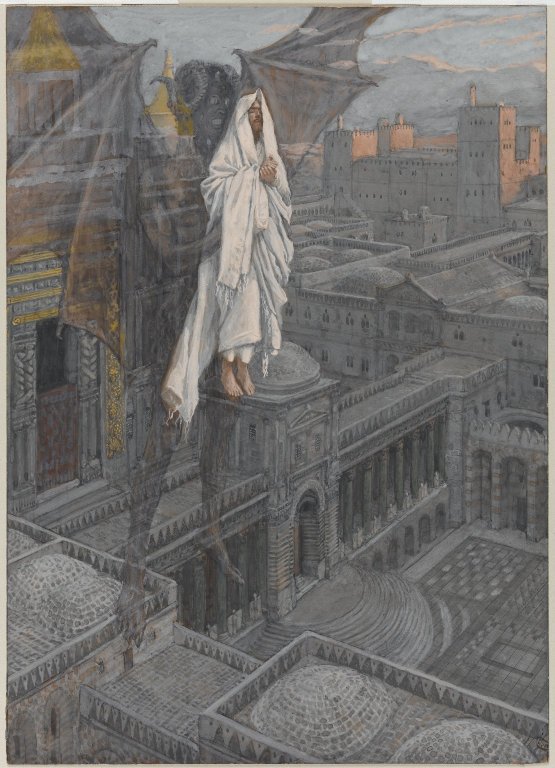
The paintings above are James Tissot’s, Moses and the Ten Commandments, and The Transfiguration. This post is based on my homily for Sunday, March 3, 2019, which can be accessed by clicking here.  Other homilies of mine may be accessed by clicking here. The Revised Common Lectionary, which specifies the readings for Sundays and other Holy Days, can be accessed by clicking here.

More On the Beauty of Nothing


As we all know, ashes are the end result of the process of burning. When all the energy has been released from something by burning it, all that remains are ashes, ready to be thrown out. Ashes are like dust, lifeless, inert, and of no value. Yet ashes remind us of the dust which God embraced and used in Creation. Taking up the dust of the ground and fashioning it into human form, God breathed the Holy Spirit into it, making us into God’s own image and likeness. In other words, God took nothing and made something out of it. The starting point for God’s handiwork was, and always is, nothing. Only God makes something out of nothing. Which is why the first day of Lent, Ash Wednesday, is about nothing. For without God, every thing is as nothing.

Especially because of our focus on ashes in the liturgy of the day, as well as upon our sin and unworthiness, Ash Wednesday can feel gloomy. And our worship can seem a sad but necessary duty before we can move on to happier observances. But actually, Ash Wednesday ought to be the happiest day of the year if only we would approach it rightly. If only we could admit the nothingness of so much of our lives! We would then have all the more to turn over to God. For God is a master at taking nothing and making something out of it. And, by receiving a cross-shaped smudge of ashes, we are reminded that God finds and embraces our nothingness.

What do I mean by this? Well, consider all the things that get us down when we think of them… things like the bad choices we have made; relationships we have made difficult; tasks at which we have failed; and responsibilities we have shirked. These are all things that can just seem like nothing. Yet, they are the very things we can lift up and turn over to God, — especially because we can’t make anything of them.

All these “nothings” are like ashes or dust. Dust and ashes are the building blocks of God’s Creation. And so, they are also the building blocks of God’s Redemptive work. The next time we are tempted to say about something we have done, or are doing, “O, it’s really nothing,” let’s remember what God can do with ‘nothing.’ The journey we begin on Ash Wednesday is a ‘reverse-logic’ journey. In the church’s calendar, we go from our starting point with ashes, toward the endpoint of pentecostal fire. When we turn it over to God, the Holy Spirit takes the ashen nothingness of our lives and transforms it into the light of the world. Think about how much nothingness we can give to God, to create and work with!


The painting above is James Tissot’s, God Creating the World. This post is based on my homily for Ash Wednesday, March 6, 2019, which can be accessed by clicking here.  Other homilies of mine may be accessed by clicking here. The Revised Common Lectionary, which specifies the readings for Sundays and other Holy Days, can be accessed by clicking here.

Holding History in Two Hands


As Joseph speaks to his surprised and dismayed brothers, he tries to overcome their fear and embarrassment. They are focused on the past, on what happened before, and their own role in causing great misfortune to fall upon Joseph’s head. While Joseph is focused on the future, and the purpose and end toward which God is surprisingly pulling things along.

As we notice this difference between what Joseph and his brothers are looking at, we receive an insight. It comes to us from Aristotle, among others, and it concerns how we use the word ’cause.’ Sometimes —maybe even often— we focus only on the starting cause which got some bad things going. When we do, we overlook the greater importance of the result cause, the good end toward which God may be leading us. This is what Joseph wants his brothers to see.

And just as there is no single way to read a biblical story, there is no single way to ‘read’ a painting. This truism applies not only to the Joseph cycle of stories from Genesis. It applies equally to James Tissot’s painting of the moment when Joseph Makes Himself Known to His Brothers. Joseph appears in the finery of an Egyptian prince, just as Moses may later have appeared. At first, his brothers don’t recognize him. Not only because of the context, but also since it has been years since they have seen him.

At the center of the Genesis Joseph-in-Egypt stories, and of Tissot’s painting, is a paradox that lies at the heart of all human life: consciously or not, human beings bring evil upon one another. And so, the question arises ~ where is God in all this? Does God cause, and therefore bring about the trouble that then follows? Or, without necessarily making it happen, didn’t God know all along where things would head, and that they would surely head toward something good? Either way, isn’t God directly involved in the moment by moment way we wrestle with these and other variables? Isn’t God always an overseeing and yet intimate companion, especially as we face serious and highly consequential decisions?

Let’s remember the earlier Genesis story about Joseph’s father, Jacob. And how Jacob was distressed in the wilderness concerning his brother Esau. Jacob wondered whether Esau was potentially once again a friend, or indeed, whether he was still his adversary. Jacob’s wrestling match with God’s angel was all about this question. Likewise, as I wrestle in prayer with big and troubling decisions, I can ask God a similar question: Are you my friend? Or are you also my ‘adversary?’ Either way, if we are looking to blame and assign responsibility, how much are we willing to ascribe to the divine ‘hand’? For God seems to be in control of all that happens. Or, at least, God lets whatever happens, happen. When considering bad events, it is human nature to wonder who caused them, especially with an eye to blame. And, in the process, it is also fallen human nature to overlook the good end toward which bad events might be leading us. For there may also be a good end toward which God is pulling us forward.


The painting above is James Tissot’s, Joseph Reveals Himself to His Brothers. This post is based on my homily for Sunday, February 3, 2019, which can be accessed by clicking here.  Other homilies of mine may be accessed by clicking here. The Revised Common Lectionary, which specifies the readings for Sundays and other Holy Days, can be accessed by clicking here.
The Beauty Toward Which We Live


As Luke presents the first and great example of Jesus’ teaching, the Lord addresses his listeners after praying all night ~ the same night of prayer preceding his choice of the Twelve. Luke therefore puts Jesus’ Beatitudes in a significant context. In contrast to Matthew’s sermon on the mount, Luke portrays Jesus as speaking on a plain, with a further notable difference. In Luke, Jesus directs his words to his twelve newly designated apostles as well as to the wider community of disciples that he is gathering. In other words, in Luke, Jesus is forming and encouraging a community of disciples, who will follow him in how they live, as well as preserve his teaching.

This question can help us hear Luke’s Beatitudes: Toward what do we live? For we all live toward something! To one degree or another, we all start by living toward ourselves. All too easily, we arrive at a false conclusion ~ that the best way of living is to be rich, always having plenty to eat, with a life that is unburdened by cares and full of pleasurable entertainment. Having all these things, we also expect to have the positive regard of our neighbors and acquaintances. Whether consciously or not, these are the features of the life toward which most of us live. And that toward which we live, therefore, also shapes how we live.

Jesus’ beatitudes are the inverse of the woes he describes. Blessed are the poor, and those who are hungry. Blessed are those who weep, and those who are hated and excluded ~ all on account of the one who reveals what it means to be truly human. These indications of blessedness are about what it means to be human in the way that God intends for us to be. And they exemplify what it means to be made in the beauty of God’s image. This is because people who are poor, hungry and who weep tend to live toward God, and toward the beauty of God’s power, rather than toward themselves. They become like trees planted by streams of water.

This helps us appreciate something that Luke observes in the same context ~ that all in the crowd were trying to touch Jesus, “for power came out from him and healed all of them.” Aware of their needs, people had come out to hear him and be physically healed, and cured of their unclean spirits. The key was not simply their need, but more importantly their awareness of their need. In Jesus’ view, we are blessed when are aware of our need for transformation toward the beauty of wholeness and flourishing.


The painting above is James Tissot’s, Jesus Teaches By the Sea. This post is based on my homily for Sunday, February 17, 2019, which can be accessed by clicking here.  The Revised Common Lectionary, which specifies the readings for Sundays and other Holy Days, can be accessed by clicking here.

Caught By the Beauty of the Word


James Tissot’s painting of the great draught of fish portrays an early miracle in Luke’s Gospel. Unlike Jesus’ prior acts of exorcism and physical healing, we may feel more able to relate to this story. Perhaps it’s less difficult to imagine, and more explainable in terms of timing and old-fashioned luck. But this is just the point. Luke’s story is not about fishing. Nor is it about how good fortune can change our attitude. Instead, Luke tells this story because of its powerful metaphorical significance, which we need to ‘unfold.’

Jesus encounters a crowd at the edge of the sea. Luke describes the people as eager to hear the word of God. Jesus begins teaching them and a group of fishermen by the shore. But though they listen, nothing seems to sink in until some of them actively participate in what he is teaching. The spiritual writer, John Shea, helps us appreciate the heart of this story ~ that listening to the Word is not enough in itself. And the power of the Word is not unleashed until we are caught by it. The Word that Jesus shares is not just a bunch of rules, or doctrine to be memorized. He teaches so as to bring light to darkness, and life to what has died. And he does this precisely to illumine darkened hearts and minds, and motivate faltering willfulness. All this, so that people might actually change how they live. John Shea’s special insight is this: that “when fish are caught, they move from the darkness beneath the sea, into” the light above. Shea’s observation becomes all the more meaningful when we recall that the ancient secret symbol for Christians and churches was a fish.

This is symbolism that we should want to recover. Particularly if we remember Israel’s historic ambivalence about the sea, and its depths. The story of Jonah comes to mind, and the beautiful poetry of the second chapter. There, Jonah gives voice to the experience of being trapped in the depths of the ocean among the kelp and the weeds. For a land-based people, who spent long periods as nomadic shepherds, the sea was the worst place where Israelites might end up. Remember the Exodus, and how God’s people marveled at the way the “fathomless deep” overwhelmed their enemies, who “sank into the depths like a stone.” This is also why the Gospel ‘calming of the storm’ episodes are so memorable. For Jesus exhibits the power of God to tame the most fearful aspects of nature, and bring order out of watery chaos.

Sensitive to the ‘depths’ of this symbolism, we are more likely to be ‘caught by the Word.’


I would like to acknowledge my dependence upon John Shea’s commentary for many of the insights I offer here (see his book, The Spiritual Wisdom of the Gospels for Christian Preachers and Teachers: Luke, Year C).

This post is based on my homily for Sunday, February 3, 2019, which can be accessed by clicking here.  Other homilies of mine may be accessed by clicking here. The Revised Common Lectionary, which specifies the readings for Sundays and other Holy Days, can be accessed by clicking here.
The Paradoxical Beauty in Being Called

We might assume that, ‘in a perfect world,’ God’s call only leads to good things, like harmony, peace and goodwill. But Scripture and Christian history suggest otherwise! In our world, at least initially, God’s call sometimes leads to other things like confusion or anxiety, through which the Spirit’s true peace may emerge. God’s call can disrupt life as we know it now, allowing patterns of grace to replace what is familiar. And God’s call can also leave us feeling challenged rather than affirmed. Here is the point: in situations like these, God’s purpose is not to bring confusion or disruption, even if it brings challenge. God’s purpose is to further our growth and fulfillment. This is why we pay attention to how the community hears a call just as much as we attend to how individuals hear it. Since hearing a call can be challenging, we seek to do this kind of ‘Spirit-listening’ in community ~ and for the sake of community.

Early in Luke’s Gospel Jesus speaks in his hometown synagogue. As he does, he reveals something profound about his own call, which points to the way that God is calling his Nazareth community. At first, Jesus’ former neighbors praise him, expressing marvel at his words and deeds. But when they discern how his prophetic ministry has expansive implications, rather than being narrowly focused on benefits for them, everything changes. After praising him, they lead him to the brow of a hill so they can kill him! Just as the leaders of Jerusalem wanted to do to God’s prophet, Jeremiah, some 500 years earlier.

Paradox abounds in this story at the beginning of Jesus’ public ministry. His teaching and works of healing reveal that he is filled with the power of God’s Spirit. God’s Spirit can do anything. Except that God gives us the curious freedom to refuse the Spirit’s power. Sometimes we refuse this power overtly, especially when we feel like God is asking us to do something difficult or uncomfortable. And sometimes we refuse this power through subtle denial, by closing our hearts and minds to new possibilities toward which God is leading us. The folks in Nazareth want their hometown wonderworker to stay ‘local,’ and bring focused blessings upon them. They refuse to see how Jesus’ vocation exceeds the limited parameters they allow for him, as well as for themselves.

We may not share Jeremiah’s particular vocation to be a prophet. But that doesn’t mean we haven’t received a vocation, a calling. For we are all called! We are called to participate together in God’s Word, as the Spirit-led community. We are called to flourish together within our Lord’s Body. And, we are called to share his holy life with those who have not yet experienced it. These things can be hard to do. But God always give us the grace and strength to respond to the Spirit’s call. For, as a community, we have been called!


This post is based on my homily for Sunday, February 3, 2019, which can be accessed by clicking here.  Other homilies of mine may be accessed by clicking here. The Revised Common Lectionary, which specifies the readings for Sundays and other Holy Days, can be accessed by clicking here.

Beauty in the Fullness of Light

The Orthodox theologian, John Zizioulas, teaches us that we all have a natural biological aspect to our identity. And that each of us also has a supernatural, baptismal or church aspect to our identity. So, do we privilege one or the other of these two aspects of who we are?

On one hand, though we have the same biophysical human-nature, there are absolutely differentiating characteristics between us. We have unique fingerprints; our DNA profile marks us as different from every other person; and new facial recognition technology depends upon slight but importantly distinguishable features that set us apart from all others. These things characterize the natural biological aspect of our identity.

At the same time, though we all have unique and different gifts and ministries (as Paul teaches us in 1 Corinthians), we have the same baptismal church identity. We are reminded of this every time we celebrate the rite of Baptism. Quoting Paul in Ephesians, we begin the liturgy by saying, “There is one Body and one Spirit; There is one hope in God’s call to us; One Lord, one Faith, one Baptism; One God and Father of all.”

These phrases tell us that the defining characteristic of the Church is our oneness in Christ, through the Holy Spirit. We can treasure all the unique ways we differ from one another, and the blessings these differences may bring. But with respect to our baptismal church identity, what we share in common has primacy. Individually, we have been given one or more of what Paul describes as lesser gifts, such as prophecy, teaching, healing, leadership and tongues. But he urges us to strive for what he calls the greater gifts, which turn out to be Faith, Hope and Charitable Love, each of which is given by the Holy Spirit for the common good.

And so, with respect to natural created goods, differences and diversity provide appreciable delight, and enrichment. But with respect to supernatural gifts opened to us by Baptism, unity and commonality best express our oneness in Christ.

Light is a frequent biblical metaphor for the gift of God’s presence, especially in John’s Gospel. And the science of light has something to teach us about the Church. Painters know that with pigments in paint, white represents the absence of color, or the absence of difference. But with light, a true white light represents the spectrum of all colors. This is not due to the quality of any single color, but precisely because of the unity of all colors. When it comes to light, if we see individual colors we are only seeing partial aspects of the whole! This gives us insight about the Church. In order to see the whole, we must respect the presence of the parts. And in attending to the parts, we must also respect the unity and oneness that God seeks to form and nurture between us. The ark had the whole spectrum of animals within it. And our ark, the Church, holds and carries all of us!


This post is based on my homily for Sunday, January 27, 2019, which can be accessed by clicking here.  Other homilies of mine may be accessed by clicking here. The Revised Common Lectionary, which specifies the readings for Sundays and other Holy Days, can be accessed by clicking here.
The Beauty of Cana’s Living Water


In so many paintings depicting the Wedding at Cana story, the astonishing lavishness of what Jesus provides is diminished ~ especially when set side-by-side with the portrayal of what the wedding hosts provide. We miss seeing the heart of this story ~ that through Jesus, the abundance of divine glory comes into a world colored by human scarcity. For he is the true ‘host’ even if, at first, his abundant gifts seem hidden. Peter Koenig’s larger painting, of which this is only a portion, captures all this beautifully. Here, we see another section of it, which obviously depicts the Cana theme.

As we have previously noticed, Koenig’s painting is profoundly biblical while not being literal. For he is faithful to John’s highly symbolic and mystical, rather than literal, approach. And so, though we see the stone water jars mentioned by John, we find Jesus and his mother portrayed in a more contemporary setting, complete with a modern-looking table and wine glasses. Once again, we need to ‘read’ the symbolic imagery to grasp the fuller significance of what both John’s Gospel and Peter Koenig’s painting offer to us.

The center of Koenig’s larger painting portrays a vision of the New Jerusalem, the city of God, coming down from heaven (for a more complete view, see the prior post, below). This image follows what we find described in the Book of Revelation. This New Jerusalem becomes God’s dwelling place among God’s people. And at its center is the enthroned Lamb, with his ‘bride’ the Church at his side. From the Lamb’s side comes the water of life, pouring into the fallen but being redeemed world. The cleansing and purifying water of life fills the jars, as well as provides the context for Baptism. And as Peter Koenig mystically portrays, this water then becomes the very good wine which is served at the wedding feast.

Revelation also speaks of the marriage supper of the Lamb, where saints and martyrs join him in the heavenly realm. Koenig portrays the company of these holy ones standing before and around the throne, apparently bearing gifts. If you look closely, you will see that they are carrying the instruments of their martyrdom, while one of them leads what surely represents a colosseum lion. In several places in the painting, we see what Revelation refers to as the tree of life standing near them and near the gushing living water. For those who have died to the powers of this world are alive to the power of the next.

Among so many paintings representing the Cana story, this may be among the most faithful to what John wants us to see, and to believe. And John’s Cana story, like the whole of his Gospel, is about the wedding of the human and the divine, in Jesus.


This detail of Peter Koenig’s larger painting is reproduced here with the artist’s kind permission. This and other examples of his religious artwork can be seen by visiting the website of his parish church, where much of it is displayed (click here).  This post is based on my homily for Sunday, January 20, 2019, which can be accessed by clicking here.  Other homilies of mine may be accessed by clicking here. The Revised Common Lectionary, which specifies the readings for Sundays and other Holy Days, can be accessed by clicking here.
The Further Beauty of the Epiphany

Everyday, people are tortured and killed because of their religious and political beliefs. Many of them are Christians, who are willing to die rather than renounce their faith.

This has been true throughout history, and it is a poignant aspect of the Christmas and Epiphany Gospels. Peter Koenig’s wonderful tryptic painting, Christmas—Epiphany, helps make this clear. The death of Jesus is intimately connected with the death and anticipated resurrection of others. The Lamb that was slain becomes the Temple at the center of the New Jerusalem, from which the rivers of the water of life flow. The wine at the wedding at Cana prefigures the same supernatural refreshment for which St. Stephen was willing to die. And the Twelve Days of Christmas also include Holy Innocents’ Day, the feast commemorating those killed by Herod in his search to eliminate the baby Jesus as a potential rival. Jesus’ Baptism declares his vocation, a vocation which involves each of these things and more.

An equally real but more subtle threat is increasingly evident in our society ~ radical secularism. When the culture around us no longer supports our religious faith, it becomes intolerant. People then begin to act with hostility against us. As a result, at least two things happen. We soften our religious commitments so we fit-in better with others. And, we lose confidence that the Gospel has world-wide significance, for all human beings. As a result, we draw back from practicing our faith, a faith that has public implications. We then retreat to private beliefs that now only have personal and spiritual meaning.

Think for a moment about John 3:16: “For God so loved the world…” The Greek behind these words has sweeping implications. For God so loved the cosmos (the whole creation), that he gave his only Son… in order that the cosmos might be saved through him. In other words, for John, the Gospel has universal implications, not just personal, spiritual significance. This is a gospel for which we might be willing to die, precisely because it is first of all a gospel for which we are willing to live.

It is imprecise and misleading therefore to say that ‘faith changes the world.’ Instead, we should say that God changes the world, in part through people of faith. We have faith in the God who created, and then inhabited, the whole cosmos. And, God has acted for the sake of the whole cosmos.


Peter Koenig’s painting is reproduced here with the artist’s kind permission. This and other examples of his religious artwork can be seen by visiting the website of his parish church, where much of it is displayed (click here).  This post is based on my homily for The Baptism of Christ, January 13, 2019, which can be accessed by clicking here.  Other homilies of mine may be accessed by clicking here. The Revised Common Lectionary, which specifies the readings for Sundays and other Holy Days, can be accessed by clicking here.

The Beauty of the Epiphany


Here we see Peter Koenig’s evocative depiction of The Magi offering gifts to the holy child. The artist is a contemporary Roman Catholic painter, many of whose religious paintings are displayed within a church located in Northamptonshire, England. It’s not far from the parish where Henry Moore’s Madonna and Child is situated, the sculpture we viewed in the prior post. Though Koenig often depicts biblical figures in contemporary settings, this painting of the Magi worshipping the Christ Child is both traditional and also Byzantine in style. As in much of his work, recognizable elements of the Gospel story are intertwined with highly symbolic biblical imagery. By ‘reading’ some of the imagery Peter Koenig shares with us, his painting enriches our celebration of the Epiphany, and our appreciation for its greater meaning in our lives.

Along with obvious features in the Gospel narratives, Peter Koenig’s painting employs other biblical imagery symbolizing the broader significance of the event that is portrayed. Right away we notice the large and rough wooden cross, draped with an abundantly grape-bearing vine. The cross as an instrument of death became the fruitful tree of life, and a source of what we receive in the cup of the New Covenant. As a result, the Holy One who is worshipped is the Vine, to whom we become connected as branches.

Employing this kind of symbolism, Nativity scenes often include passion flowers and lilies, associated with our Lord’s death and resurrection. Peter Koenig’s painting has other evident suggestions of Jesus’ destined saving work. The large and open stone square represents the door of our Lord’s tomb, along with its round stone cover, rolled aside by his resurrection. In fulfillment of the Genesis promise to Eve, her counterpoint, Mary, is shown treading upon the serpent whom we associate with the cause of our suffering and death. Mary’s tunic is turquoise, that lovely mix of blue and green. Here in the clothing of the mother of new life, ‘Marian blue’ is blended with the color we associate with life in the natural world, the greenery of trees and shrubs.

Another symbol regarding the vocation of the holy child is the way in which he is clothed. Notice that he is covered by strips of cloth, wrapped around his body, just as his body is later prepared for burial. And in each of his hands, we see him grasp a nail spike. The band of cloth wrapped around his shoulders suggests the mantle or yoke of which he later speaks, and which we find represented in the stoles that deacons and priests wear in the liturgy.

The three differing cupolas of the very Russian-looking church surely represent the Trinitarian being of God, and its significance for our redemption. Another recognizable image, the wine jar in the lower right corner, stems from how this picture is part of a much larger triptych. The complete work depicts several Christmas and Epiphany themes ~ not only the Magi’s visit, but also the wedding at Cana and the Baptism of Jesus, along with the martyrdom of St. Stephen.

In addition, the shells on the foreground suggest the seaside, and may symbolize the liminal shoreline between this realm and the greater life beyond. The scallop shell is associated with St. James, who along with his fisherman brother, John, was one of our Lord’s first disciples. The shell has an ancient pre-Christian association with death and rebirth, as well as our journey into the next life for which we hope. We often use a scallop shell to scoop the water at Baptism. And in the background of this painting, we find suggestions of the harsh and inhospitable aspects of the fallen world, represented both by inanimate stone as well as glacial mountains of ice and snow. The tree of life stands out all the more against this backdrop.


Peter Koenig’s painting is reproduced here with the artist’s kind permission. This and other examples of his religious artwork can be seen by visiting the website of his parish church, where much of it is displayed (click here).  This post is based on my homily for The Epiphany, January 6, 2019, which can be accessed by clicking here.  Other homilies of mine may be accessed by clicking here. The Revised Common Lectionary, which specifies the readings for Sundays and other Holy Days, can be accessed by clicking here.