Uncategorized

Personal and Family Devotions for Easter 5, Sunday May 10

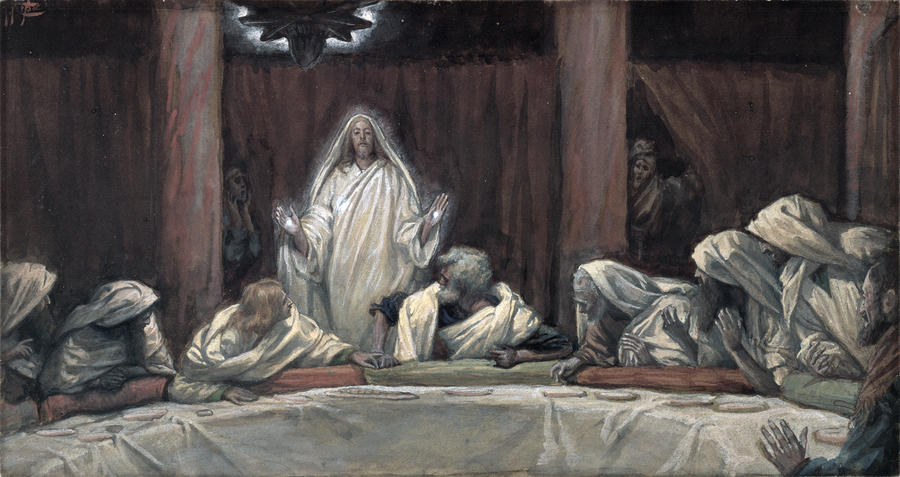
James Tissot, The Last Supper

For this Fifth Sunday (during the Great 50 Days) of Easter, I am happy once again to share with you a format for personal and family devotions.

I invite you to read these readings, and pray these prayers tomorrow. The format is especially suitable for sharing with others. I am sure that many of you are already staying in touch with family, friends and loved ones, with the help of an app like Zoom for web-based internet group meetings. Feel free to share the link to the devotions with others

The painting above and in the Devotions document is by James Tissot. The image corresponds to the context of the reading from John’s Gospel for this day.

You can access the Personal and Family Devotions document that I have prepared for tomorrow, Sunday, May 10, 2020, by clicking here.

Personal and Family Devotions for Easter 4, Sunday May 3


Sadao Watanabe, The Good Shepherd


For this Fourth Sunday (during the Great 50 Days) of Easter, I am happy once again to share with you a format for personal and family devotions.

I invite you to read these readings, and pray these prayers tomorrow. The format is especially suitable for sharing with others. I am sure that many of you are already staying in touch with family, friends and loved ones, with the help of an app like Zoom for web-based internet group meetings. Feel free to share the link to the devotions with others

The wood block print above and in the Devotions document is by Sadao Watanabe, a Japanese Christ artist.

You can access the Personal and Family Devotions document that I have prepared for tomorrow, Sunday, May 3, 2020, by clicking here.

The Beauty of a Holy Place


I recently received a touching photo of one of my granddaughters, sent to me by her mother. My granddaughter Anna lost her twin sister a day after their birth. In a lower part of the photo above (which I have cropped), my granddaughter appears to have a look of sadness on her face as she walks through the cemetery. Still, photos can capture momentary facial expressions that do not necessarily reflect our inward disposition.

Anna’s sister’s remains lie under a nearby stone in the cemetery depicted above. The photo shows the very old but still used burial ground of Grace Church, St. Francisville, Louisiana, where I served until 2007. When called away from there, the blessed folks of that parish provided a burial plot for Martha and me in the rector’s portion of the cemetery. It is one of the most touching gifts we have ever received.

In viewing the cemetery scene above, some may have a hard time imagining how a place like this that is associated with death could be replete with signs of life. And yet, it is. These evident signs of life transcend the presence of the church building and its related Christian symbols, like the crosses and inscriptions found on the monuments. Look closely at the live oaks with their long draping limbs, and how they stay green year-long, often supporting gangly strands of gray-green Spanish moss. More subtle are the plant-like growths on the upper surfaces of those limbs, which appear to be a blend of moss and ivy. Their name is resurrection fern, which in dry spells has an ochre color, but which then miraculously transforms into a deep green after an overnight rain.

My former rector’s office looked out upon the ground in which are buried the remains of dear Lucy, a deacon I helped sponsor for ordination. Every time I walk through the paths between alternating old and newer stones, I go to visit her resting place, and also see reminders of other friends and acquaintances. And now, I also go there to visit ‘one of my own,’ in that most personal sense of the phrase. Some day, under one of these magnificent oaks, my remains, as well as Martha’s, will lie next to those of our granddaughter, Avery.

To write these things and muse upon them in this way during the coronavirus pandemic may strike some as morbid. Yet, I share my thoughts here in the spirit of the life-giving texts we encounter liturgically every year in our Eastertide lectionary readings. For, in one way or another, we are all called to visit that rocky ‘garden’ tomb and find it empty, and ponder its significance. There is undeniable beauty in this story about what then becomes a holy place.

The beauty of the good news concerning that empty tomb is so much more than a wonder-story about a lucky man whose experience might inspire us. A man who, despite the worst that this world can do to ‘good’ people, somehow managed to escape into something better. The Gospel story is also the ground for our hope, our hope for ourselves and our loved ones. Can that empty tomb then help us recognize how, in similar places reminiscent of death, we can find signs of new life? Yes. For our cemeteries are places where we seek to remember and honor our loved ones, with whom we are still connected. Here, in these places of burial, we are reminded that through God’s love we are destined for more than we can now see or imagine.


The photo above depicts the cemetery of Grace Episcopal Church in St. Francisville, Louisiana. The church was founded in 1827, and the present building was completed by 1860. Three years later it was damaged by canon fire from Union gunboats on the nearby Mississippi River who were targeting the Courthouse across the street.

Personal and Family Devotions for Easter 3, Sunday April 25

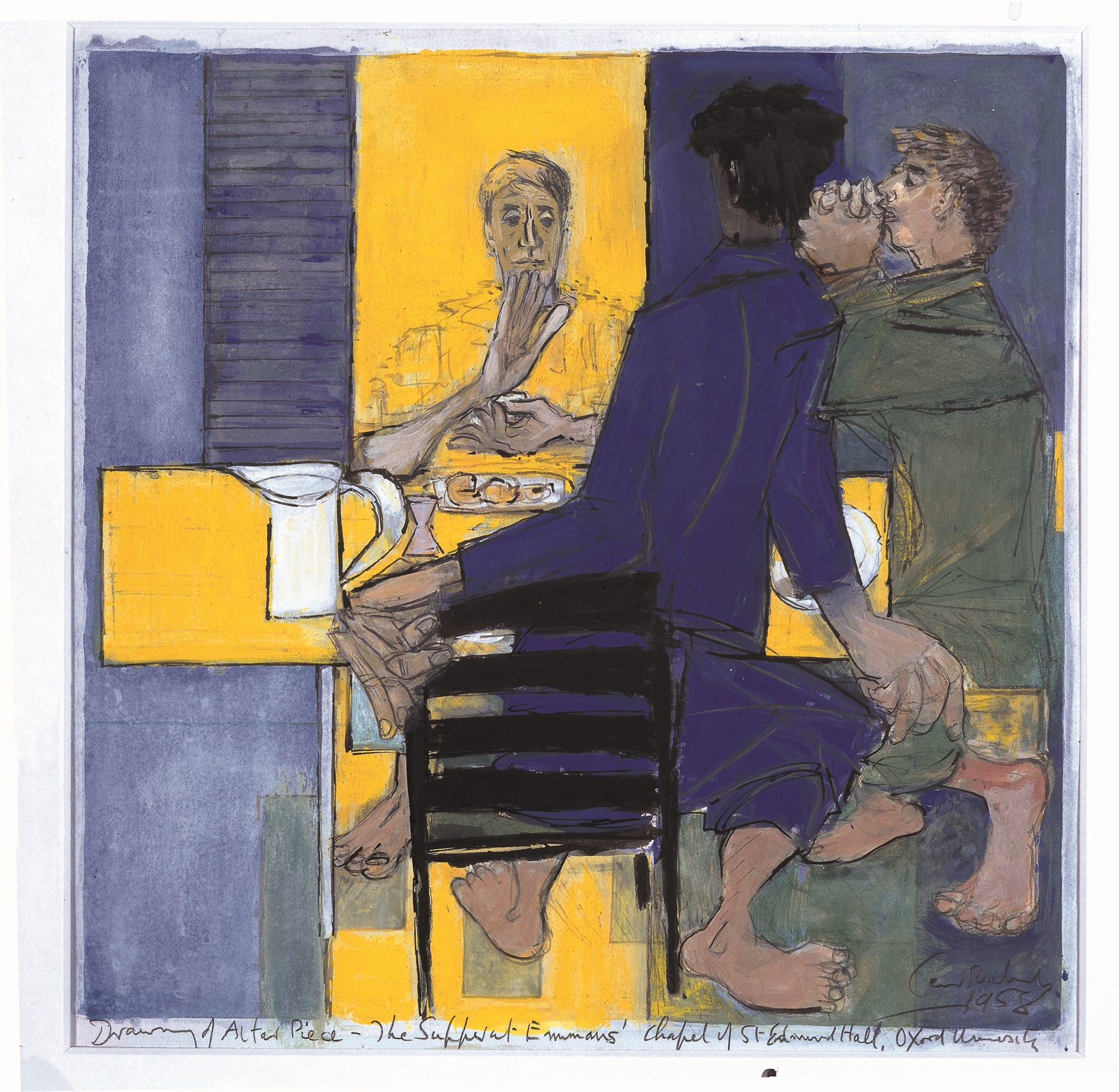
Ceri Richards, The Supper at Emmaus 


For this Third Sunday (during the Great 50 Days) of Easter, I am happy once again to share with you a format for personal and family devotions.

I invite you to read these readings, and pray these prayers tomorrow. The format is especially suitable for sharing with others. I am sure that many of you are already staying in touch with family, friends and loved ones, with the help of an app like Zoom for web-based internet group meetings. Feel free to share the link to the devotions with others

The painting above and in the devotions is by Ceri Richards, a Methodist painter from England.

You can access the Family Devotions document that I have prepared for tomorrow, Sunday, April 26, 2020, by clicking here.

The Beauty of a New Discovery


It happened when I was learning sea kayaking in and around the Gulf Coast. My experience on the water aroused memories of prior saltwater boating experiences from long before, back when I was 11 or 12. These experiences involved being out in a dinghy in Yokohama harbor, as well as sailing in open boats with the sailing club of the Japanese high school where my father was among the faculty. Accompanying those members, I went by train down to Enoshima to sail in Sagami Bay, southwest of Yokohama.

Then, one day as I was driving to a clergy conference in south Louisiana, I stopped at a bookstore for some extra reading material. There, I found a sailing magazine with the snappy title of Small Craft Advisor. What caught my attention on the cover was the mention of an article, “Lake Powell Potters.” After buying the issue, I was intrigued by reading about Anne Westlund’s journey from northern Michigan to Utah, towing her 15′ West Wight Potter boat, “Peapod.” She took that trip with a friend who had a similar Potter, and they sailed and camped on those quite small boats. After reading her account of the journey and voyage, and seeing photos of the boat, I was hooked.

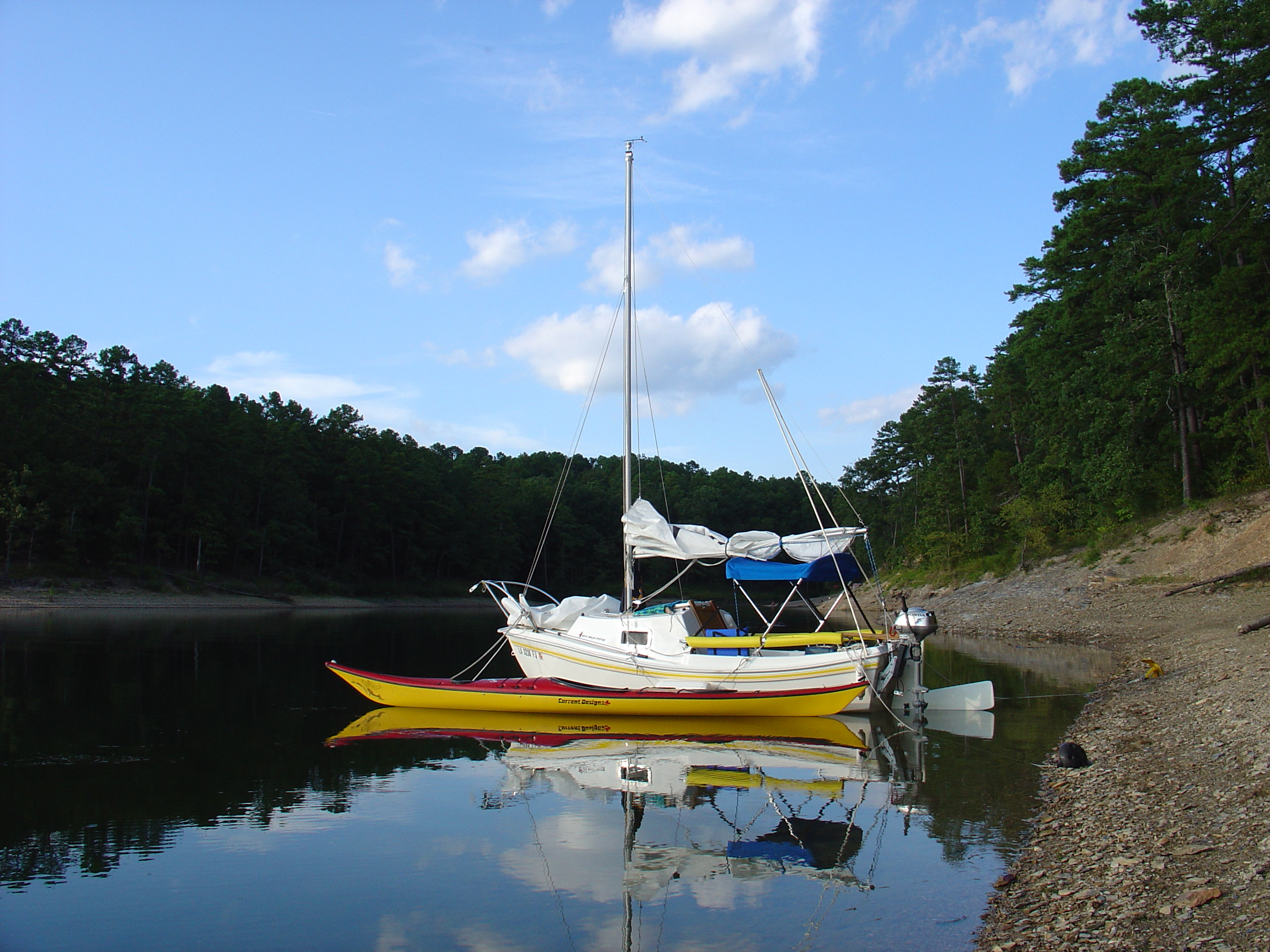
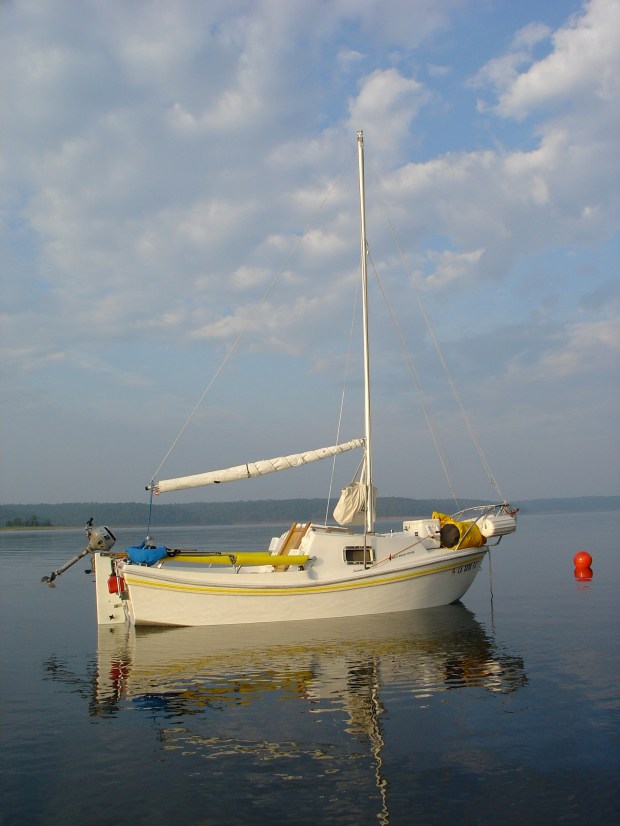
Not too long after that, I was able to get a West Wight Potter P-15 of my own, “Zoe,” hull #2634. The photo above shows her afloat on DeGray Lake in west central Arkansas in September of 2006.

Describing this boat as having a length of 15′ is perhaps generous given that Stanley Smith, the designer and builder of the original hull, listed her at 14.’ Smith built the first boats on the Isle of Wight, and sailed an early model from there to Sweden in a voyage recorded in his book, October Potter. A later model is credited with a voyage from Mexico to Hawaii. Usually, the contemplation of such voyages with a small craft like the Potter would be regarded as ridiculous and foolhardy. Yet, West Wight Potter sailors love their boats precisely because they defy common expectations, and bring such joy.

When I read about the P-15, and then saw and inspected the first nearby example I could find, I was captivated by this boat’s design and sailing capabilities. I have since acquired a larger boat, a choice which was very much influenced by the design qualities of my P-15. Yet, I still have “Zoe.” And, as I get older, and eventually will be less able to grapple with a bigger boat on my own, I will continue to love this little boat that has brought me so much pleasure and so many memories. Not least of them was a two-week long cruise on Lake Charlevoix in northern Michigan years ago, before we moved from Louisiana.

Towing a dinghy, with water-proof gear bags filled with food supplies and extra clothing on the forward deck along with a cooler, and a camping porta-potty stowed discretely aft, made such a journey and voyage possible. It also helped to have an easily rigged awning over the cockpit for an approximation of a covered ‘back-porch,’ especially under a hot sun or cool rain. Despite the physical limitations involved, I learned much and had a great time.

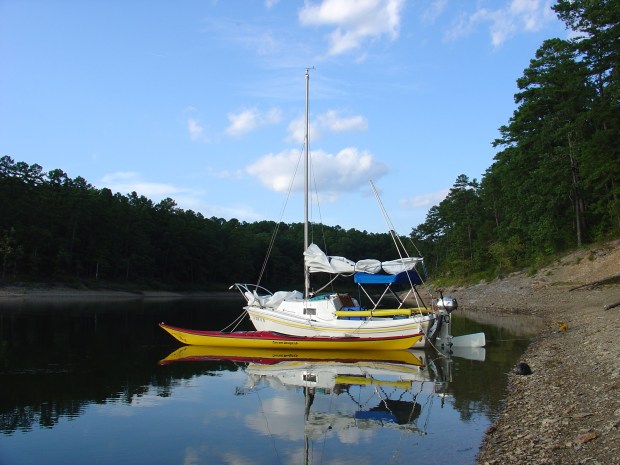
I have made similar but shorter such trips on both DeGray Lake and Lake Ouachita (also in Arkansas) towing my sea kayak. (below)
In this present time of the coronavirus stay-at-home orders, I try to remind myself that great adventures are still possible within the circumstances of relative confinement. I take boats seriously, and am at the same time aware that owning one can be seen as a folly, and as extravagant. I respect that view. Yet, having experienced five two-week-long voyages across the Pacific Ocean in ships, and a month-long 1969 voyage in the South China Sea, my life has been immeasurably enriched by boating and seagoing opportunities, both while alone and also with significant others. The many times I have chosen to interact with unpredictable air and sea conditions have helped me to be better prepared to deal with equally unpredictable circumstances in our current public health crisis.

Most of all, it is a time when I remind myself of one of my favorite quotes from within the tradition of Christian spiritual writing, a quote attributed to blessed Julian of Norwich: “All shall be well, and all shall be well, and all manner of things shall be well.”


Notes: If you are not yet a sailor, start ‘small.’ When it comes to boats, we all dream big at first. And my favorite first resource to recommend is Small Craft Advisor magazine. I have been consistently pleased with their fine and informative work. Sadly, I have just learned that the West Wight Potter 15 is no longer being manufactured in the US, which may limit its future availability here. For more on the West Wight Potter P-15, see Dave Bacon’s book, The Gentle Art of Pottering, which provides a great introduction to all aspects of the boat..

Family Devotions for Easter 2 (Sunday April 19)

James Tissot, St. Thomas 


For this Second Sunday of Easter (during the Great 50 Days) I am happy to share with you the format for family devotions I will be using with my children and grandchildren, who live in Louisiana. Tomorrow, we will take various parts and read these readings, and pray these prayers, together with the help of the Zoom app for web-based internet group meetings.

The painting above and in the devotions is by James Tissot.

You can access the Family Devotions document that I have prepared for tomorrow, Sunday, April 19, 2020, by clicking here.


The Beauty of Rediscovering What We know

Lookout Studio, Grand Canyon Village


I camped in a small (trailered) sailboat on the south rim of the Grand Canyon for about ten days in the summer of 2005. Ever since, I have been thoughtful about buildings there in which I spent many hours. Many of those structures are routinely attributed to the design work of Mary Jane Colter. Among them, I remain most fond of Lookout Studio (featured above), as well as Hermits Rest.

In the course of my 2005 encounter with those buildings, I obtained two informative books about Mary Colter and her assumed architectural legacy, which I was pleased to have and read. These books are representative of a wide body of published material regarded as authoritative, which is laudatory of Mary Colter. Imagine my surprise and subsequent fascination when discovering a recent publication that appears to offer a diametrically opposite assessment, one which definitively debunks what are widely considered to be facts concerning Mary Colter’s achievements.

Given the harsh-looking cover of the book, and its tabloid-style title, I was initially cautious about reading Fred Shaw’s book, False Architect. But, as the old folk wisdom advises, “don’t judge a book by…” Once I engaged the content of this finely researched and well-argued book, I was both disappointed and persuaded. Disappointed in that my impression of Mary Colter and the work attributed to her talents was based on what I now consider to be a substantial amount of mythology. Persuaded because of Shaw’s powers of analysis and discernment, as well as his evident fortitude when it comes to research. Yet, I am also curiously heartened… which is perhaps a strange thing to feel after reading such a book.

This is because I am happy that we can now more properly focus our attention on the architects and designers who were actually responsible for many significant contributions to our experience of beauty in public architecture. With Shaw’s book, I am rediscovering my regard for a number of buildings throughout the former Santa Fe Railroad system, along with their associated Fred Harvey hotels and restaurants. In the process, I am learning more about these structures by being willing to set aside previously held opinions and conclusions as I encounter new facts and insights.

During the recent season of Lent, I had a similar experience of a spiritual kind. It happened as I ‘rediscovered’ and renewed my appreciation for subtle but profound aspects of John’s Gospel. The experience reminded me of the beauty of encountering once again things we know and love within each of the Gospels. This beauty lies in how we are able to gain further learning and deeper insight from already-familiar sacred texts.

The natural setting of Lookout Studio, which sits near the historic El Tovar Hotel on the south rim of the Grand Canyon, seems appropriate for us to consider in Eastertide. For the American Southwest is widely recognized as being a ‘thin place,’ or as what others refer to as an ’emergent place.’ In such places, divine grace seems more immediately present within our experience of the natural world. In a less dramatic, but equally rocky terrain, Jesus was buried in a cave-like rough-hewn tomb. Light is still found amidst darkness; spirit is found within matter – even that which is humanly shaped.


Notes: Books and guide materials consistently attribute these and other buildings to the design work of Mary Colter. Lookout Studio and Hermit’s Rest are more properly to be attributed to the architect, Louis S. Curtiss, while the El Tovar was designed by Charles F. Whittlesey. For documentation of these attributions, please see Fred Shaw’s 2018 book, False Architect: The Mary Colter HoaxThe lectionary readings for Eastertide (and beyond) can be found by clicking here.

Easter Family Devotions

James Tissot, Jesus Appears to the Eleven


The current coronavirus stay-at-home orders are dramatically changing preparation for Easter for many of us. Instead of attending public worship as many of us might usually do tomorrow, we are compelled by circumstances to find an appropriate alternative.

Given our geographical distance from one another, my own wider family is planning to have worship together tomorrow using a web conferencing app. Rather than simultaneously viewing a worship service online that is streaming from another location, we can worship with each other albeit remotely. Anticipating this worship time tomorrow with our children and grandchildren, I have prepared a service of Easter Sunday Family Devotions, and I am happy to share it with you.

The Easter Sunday Family Devotions document can be accessed by clicking here.

The readings and prayers are drawn from those appointed by The Book of Common Prayer.

The first page of the attached document features James Tissot’s painting, The Resurrection, which I presented in my blog this past Thursday. It provides a very suitable reference point for the reading from Matthew’s Gospel. On the last page you will find some Notes concerning the service, as well as a participant list in case you choose to use these devotions with several others.


The image above is James Tissot’s Painting, Jesus Appears to the Eleven, which corresponds to John 20:19ff.

Finding Beauty During Holy Week

James Tissot, The Resurrection


I had the privilege of seeing the original of this image by James Tissot at a recent exhibit of his work in San Francisco. I have known about this painting for some time, but was struck by how relatively small it is (image size approximately 8″ x 12″). Given the size, Tissot’s attention to detail is astonishing, especially when seen alongside his large oil paintings.

Like the one above, Tissot’s biblical paintings were largely done with opaque water color paint (now commonly termed “gouache” paint) and graphite on textured gray paper. This sets the water color paintings apart from his oil paintings in terms of their technical quality and pictorial finish. Nevertheless, they are in some ways more remarkable because Tissot was using the less forgiving medium of water colors instead of oil paints, which provide greater flexibility for painting over unsatisfactory or undesired results.

Choosing a single image for consideration in the context of Holy Week presents a certain challenge. For which of the events that we commemorate this week provides the most suitable reference point for our reflection? Considering this question, and possible answers to it, can help us gain insight about how we understand Holy Week in relation to Easter and more specifically whether we view the Passion (the arrest, trial, torture, and crucifixion) of Jesus as an essential part of the Easter story.

We know that it is not just among Christians, but also among Jews and Muslims, that notable differences concerning belief and practice exist among pious adherents of a shared religious tradition. A significant variable for Christians concerns how -in our prayers, worship and practices this week- we approach the relative significance of the key liturgical ‘moments’ that we commemorate during the ‘Holy Three Days’ (or Paschal Triduum). According to the biblical concept of time, these three days commence at sundown on what we now call Maundy Thursday. And so, the first ‘day’ includes remembrance of the Last Supper, Jesus’ arrest and trial, as well as his Good Friday crucifixion. The second ‘day’ then begins on Good Friday evening, just after when Jesus would have been buried. And the third begins after sundown on Holy Saturday evening, and includes the twenty four hours during which Jesus’ resurrection occurred and his empty tomb was then discovered.

When considering the significance of the events we commemorate at this time of the year, some Christians think primarily in terms of Easter Sunday and what Jesus’ resurrection will mean for them. Many others include in their reflection a spiritual consideration of the events we associate with Maundy Thursday and Good Friday. The broader ‘catholic’ liturgical tradition reflects this wider perspective in the liturgies appointed for Palm Sunday at the beginning of Holy Week. For example, The Book of Common Prayer liturgy for Palm Sunday commemorates Jesus’ journey on a donkey down from the Mount of Olives and his entrance into the Holy City, which leads to his ‘cleansing of the Temple’ and the subsequent conflict this provoked. A central feature of the Palm Sunday liturgy is a reading of the full Passion narrative from one of the first three Gospels. John’s Passion narrative is always read every year on Good Friday. And, on both Palm Sunday and Good Friday, the Passion story often incorporates readers who give voice to individual parts within the narrative.

In light of these observations, and as we prepare to enter the ‘Holy Three Days,’ I invite you to consider Tissot’s painting titled, The Resurrection. As you view and reflect on it, here are some details you may want to take into account:

  • Tissot portrays the moment of Jesus’ resurrection at night (rather than ‘Sunday morning,’ with lanterns partially illuminating the scene
  • Matthew’s Gospel mentions Joseph of Arimathea placing Jesus’ body “in his own new tomb, which he had hewn in the rock;” Tissot adds a dressed stone frame around the tomb entrance
  • though the crucifixion was enacted by Roman soldiers, Matthew suggests that the guard of soldiers sent to the tomb belong to the chief priests and the Pharisees and are primarily local citizens
  • the risen Lord still bears the marks of his torture and execution, though his wounds are transformed into points of light
  • diaphanous angels appear on the righthand side of the tomb opening

These and other observations about this resurrection painting make it relevant to our observance of Holy Week, as well as to Easter. I offer this image and these comments as a way into the mystery of this week.


The image above is James Tissot’s painting, The Resurrection, which with many of his other biblical paintings is part of the collection of the Brooklyn Museum.

A Thoughtful Place by the Sea

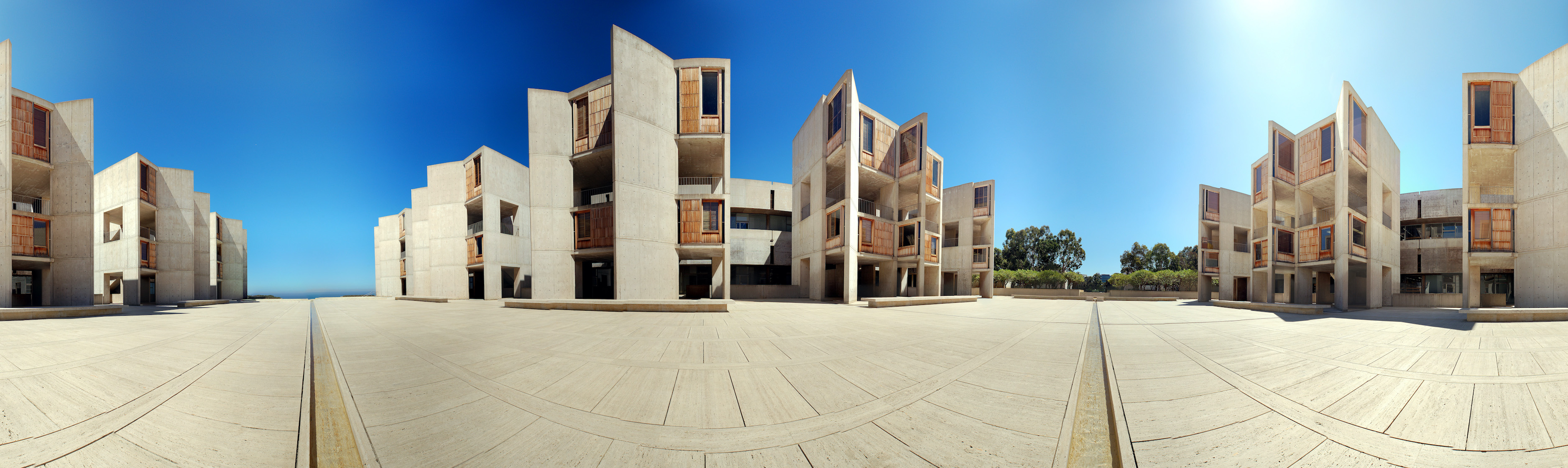
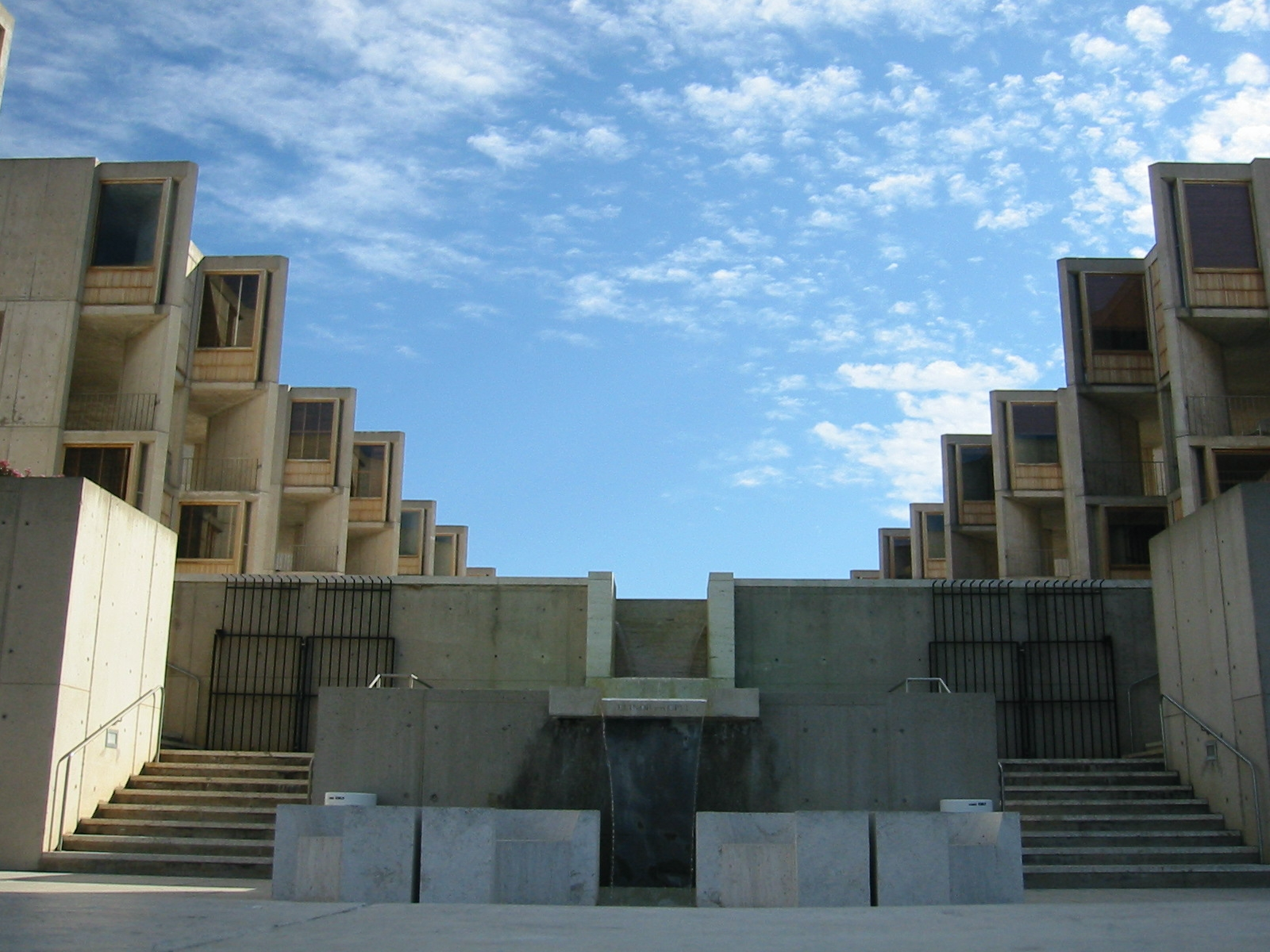
Three views of Louis Kahn’s Salk Institute


With two large and significant projects, Louis Kahn had more than one opportunity to craft a plan for a complex network of laboratories. The first was his commission to design the Richards Medical Research Laboratories at the University of Pennsylvania (1957-1965). A striking set of buildings involving multiple towering uprights interspersed with stacks of windowed cubes, this project was much praised. The noted architectural historian, Vincent Scully, described it as “one of the greatest buildings of modern times.” Despite the accolades the building received, those who pursue research in these laboratories often find the spaces within them less than conducive to their work. Budget cuts affecting materials and fixtures played a role, as did Kahn’s less than satisfactory engagement with the department heads and scientists who would eventually populate the building.

The second project was much more successful and remains an iconic example of Louis Kahn’s genius for handling materials in relation to a setting. It is the Salk Institute for Biological Studies in La Jolla, California (1959-1965). Built to house a research institute for his client Jonas Salk (who is credited with the polio vaccine), Kahn collaborated with Salk to produce one of the most beautiful contexts for the advancement of scientific studies. When I learned that both men were the offspring of Russian Jewish emigres, and that Kahn had something of a mystical temperament, I felt affirmed in my regard for the spiritual and humanistic qualities of Kahn’s final design influenced by Salk.

Because God fully inhabits time and space {especially in the Incarnation}, we should not be surprised to see evidence in our own human creative work of how nature is infused with grace. In this respect, Kahn’s attention to the importance of aesthetic beauty, in a work environment created for biological researchers, stands out. I.M. Pei, a master architect and admirer of Kahn, spoke of the spirituality evident to him within the masterpiece represented by the Salk Institute buildings.

A lay understanding of biomedical research often includes an assumption that people engaged in such pursuits are narrowly focused on lab projects involving minute detail at the expense of attention to the world around them. It is therefore presumed that such projects involve elaborate technical equipment, controlled artificial lighting and other highly regulated laboratory conditions. If there is merit to these assumptions about what may be common conditions for laboratory research, how uplifting it is to see the buildings Kahn provided for those who work at the Salk Institute. His design envisioned that every lead scientist at Salk would have a private study with a generously sized window facing the Pacific Ocean. The predominant use of poured concrete as a building material is carefully balanced with the use of wood. In addition, the concrete was mixed with volcanic ash, giving it a warm appearance, while the attractive weather-resistant wood chosen for the cladding of the ‘window wall assemblies’ is teak. Throughout, access to natural light from the outside graces this set of buildings, just as it does most of Kahn’s work.

The central plaza between the buildings is surely the ‘heart’ of the project, as it was finally structurally realized. The Salk Institute’s inviting central plaza reminds me of the grand piazza in front of the basilica of San Marco in Venice. Each one of these places is so much more than ‘a negative space’ formed by a wide gap between buildings, which provides a movement corridor from one place to another as well as a sight line to the water beyond. Each plaza is ‘a positive space’ formed for gathering and lingering, for meeting with others, and thus for interaction and creativity. These plazas prompt us to be here, rather than simply let us go there. As Louis Kahn put it, “Architecture is the thoughtful making of space.”

And a thoughtful place it is, where Kahn has provided an evocative space for rest and reflection. Generously sized marble benches allow opportunities for people to pause for contemplation and creative imagining.The private spaces formed by the individual study rooms are counterpointed by the public space of the central plaza over which those study rooms look. Through the plaza, a stream-like linear fountain runs the length of this gathering space toward the horizon and the sea. It suggests at least an unconscious association with the biblical idea of the river of the water of life – an apt symbol for an institute dedicated to biological research.

A memorable video exists of the architect’s son, who was 11 at the time of his father’s death. He can be seen on his ‘pilgrimage’ visit to Salk, in-line skating back and forth over the linear fountain and plaza stones, perhaps as a living metaphor for his gradual reconnection -heart to heart- with his father through Louis Kahn’s beautiful buildings.


Notes: A moving introduction to the life and work of Louis Kahn is provided by the documentary made by his son, Nathaniel Kahn, My Architect: A Son’s Journey (nominated for an Academy Award, and available on DVD). The personal testimonies to Kahn offered by fellow architects (e.g., I.M. Pei) within this video are compelling. I found the Louis Kahn quote about the “thoughtful making of space” in Matthew Frederick’s informative book, 101 Things I Learned in Architecture School. The biblical theme of the river of life can be found in Revelation 22, based on imagery present in the book of Ezekiel (in chapter 47) and Zechariah (14:8). An excellent Getty Center video exists providing insight concerning conservation issues related to the Salk Institute wooden window wall assemblies  as well as other preservation challenges (click here for a link).