Sculpture

A Lost Treasure: Midway Gardens

If reading this by email, please tap the title at the top to open your browser for the best experience. Then, clicking individual pictures will reveal higher resolution images.
 

Someone as long-lived and hugely prolific as Frank Lloyd Wright might have been vulnerable to self-imitation in his work if he had run out of ideas before he ran out of clients. But like Picasso with regard to painting, Wright frequently surprised and impressed the wider public as well as many critics by his astonishing creativity, evident through several phases of self-reinvention in his work. Absorbing much from his teachers, Louis Sullivan among others, he then fundamentally transformed what he learned by creating new paradigms for architecture. FLW advanced our concept of what is beautiful and worth achieving through the design of buildings, and in helping us perceive the aesthetic potential of inspiring spaces in which to live and work, and simply be.

I have previously featured Wright’s 1923 Tokyo Imperial Hotel, located just down the avenue from the Japanese palace of the same name. Sadly, it was demolished in a 1960’s rebuilding program. An earlier structure for Chicago by Wright, with which the Imperial had considerable affinity, was his Midway Gardens, a large and elaborate project built in 1914. It was also subsequently razed despite its auspicious location on the Midway in the city’s Hyde Park neighborhood. Located across from Washington Park, and astride 60th Street, the Midway Gardens facility sat adjacent to the former location of the great Chicago Columbian Exposition of 1893, in an area graced by the landscaping of Frederick Law Olmsted.

Now less well-known than its later Tokyo counterpart, Midway Gardens succumbed to its early demolition in 1929 due, at least in part, to Prohibition and the Great Depression. It is said that the complex was built with such structural integrity that the firm contracted to apply the wrecking ball went out of business as a result of its financial loss on the project.

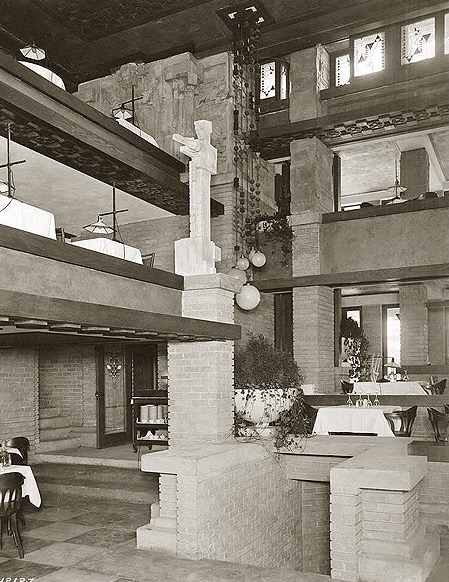
Midway Gardens interior (above), Imperial Hotel interior (below)

Midway Gardens was created to provide Chicago with a year-round, indoor/outdoor, concert and entertainment venue where one could enjoy dining and socializing while being able to listen to live music. Like the Imperial Hotel and a number of Wright’s California houses, it was built in what is called the Mayan Revival style, and featured Wright’s characteristic horizontal bands of yellow brick intermixed with pattern-imprinted concrete block, soaring cantilevered terraces and overhangs, and Wright-designed ornamental features such as sculpture, light fixtures, and garden urns. As with so many of his projects, FLW prepared and oversaw the implementation of plans for every detail from roof and window design to that of the dining tables and restaurant china.

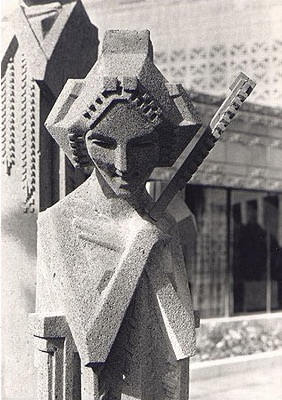
Of particular interest at Midway Gardens were Wright’s designs for the sculptures and sculptural elements executed by Alfonso Iannelli, many of whose stoneworks were lost in the subsequent demolition. Wright’s timeless designs for the Sprite sculptures later reappeared in stone at Taliesin West, and reproductions of them continue to be commercially available today.


A “Sprite” executed by Alfonso Iannelli based on Wright’s plans

Courtyard architectural detail


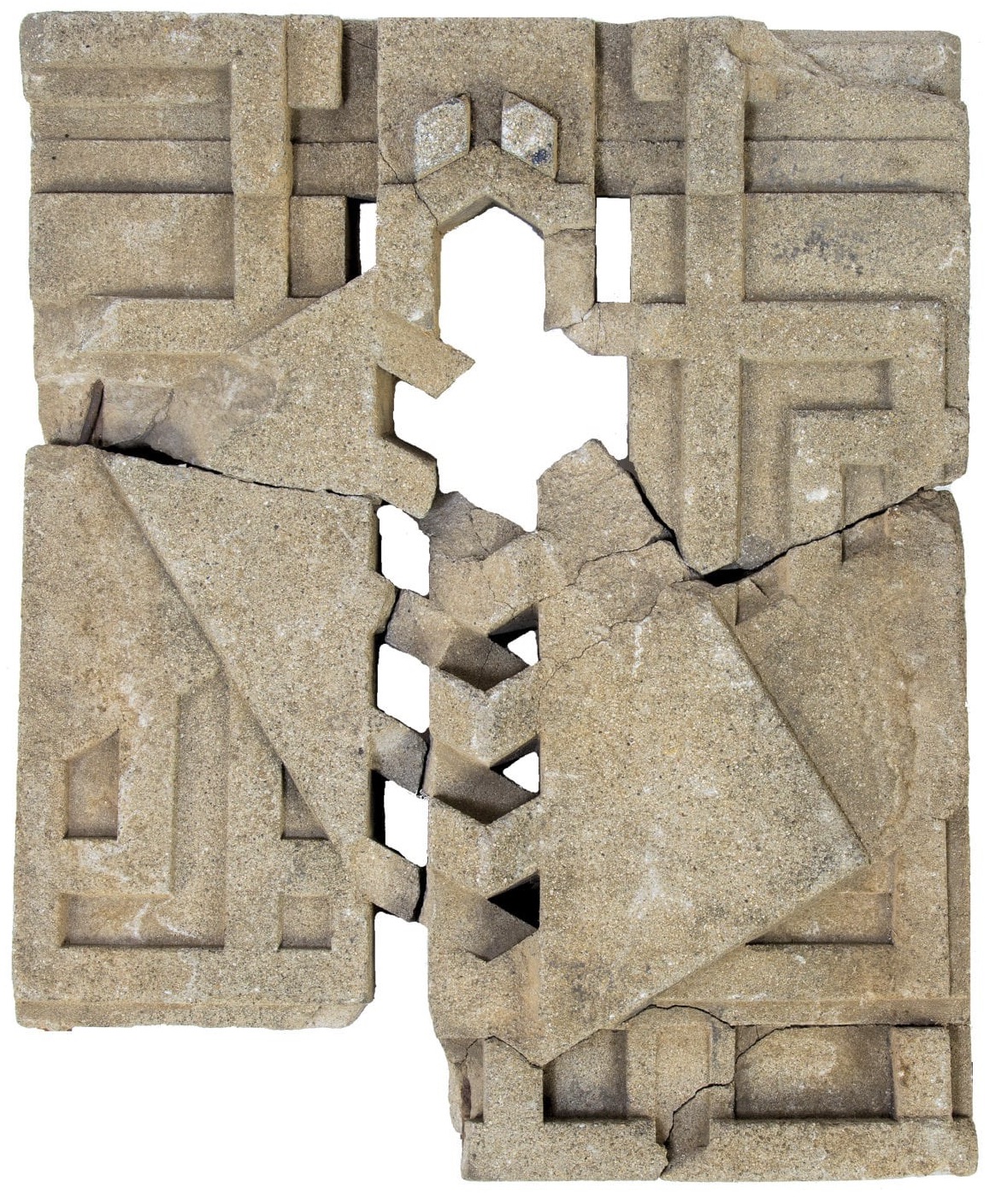
Surviving cast concrete forms designed by Wright

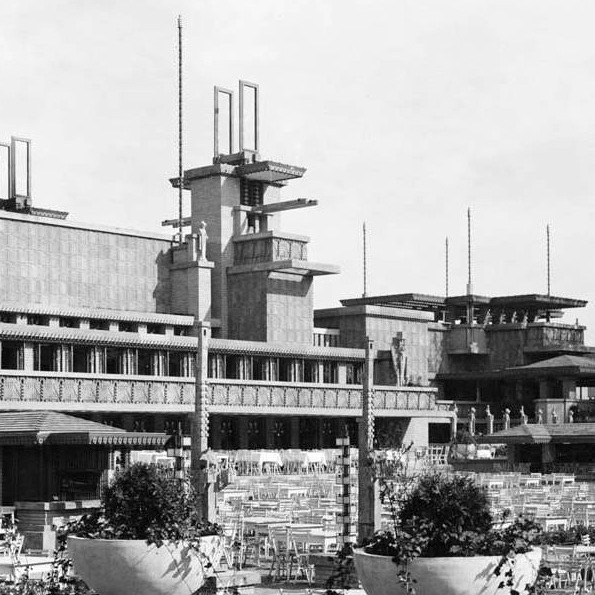
Midway Gardens interior terrace

Unfortunately, no color photos of Midway Gardens appear to have survived. However, photos of the Imperial Hotel help give us a sense of the design qualities of the Gardens structures and of what it would have been like to visit there. The foreign language labeled illustration below helps us appreciate the overall scale and character of the complex, and what a loss it is to American architecture that the facility was demolished, especially when it would be so congenial to contemporary design sensibility.

The Cottage Grove Avenue entrance area

Midway Gardens in its heyday


A link to my prior post on Wright’s Imperial Hotel can be found here. I am indebted to the website, WikiArquitectura, for some of the photos included here.

Note: blog settings have been changed to provide more opportunity to offer comments, using the link below.

Chihuly Garden & Glass ~ Seattle

[If reading this by email, please tap the title at the top to open your browser for the best experience. Then, clicking individual pictures will reveal higher resolution images.]


On a recent trip to Seattle I visited the Chihuly Garden & Glass exhibit at Seattle Center. This collection of Dale Chihuly’s glass work, which includes both large and small objects and installations, provides a splendid way to become familiar with what the artist has accomplished so far over the course of his career. The extensive exhibit gives the visitor an excellent introduction to the methods that Chihuly has employed when embarking upon various projects and insight about how he has revolutionized many aspects of contemporary glass making.

An initial large room contains a display of smaller Chihuly creations set within the context of a selection of his baskets and related objects from First Nations peoples, as well as an assemblage of his large framed photographic prints of Native American individuals by Edward Curtis.

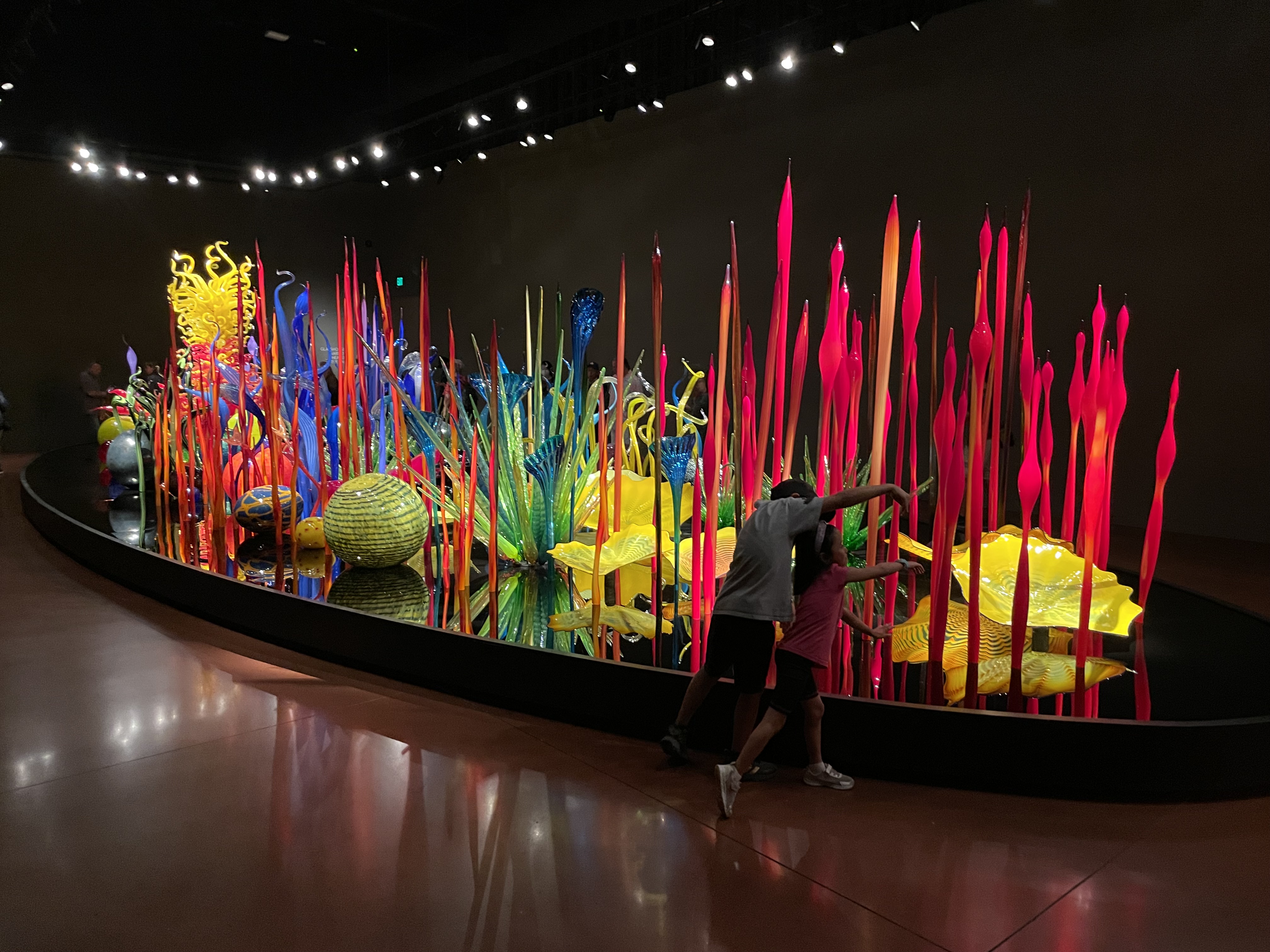
A large gallery within the exhibit features Chihuly’s Mille Fiori (a thousand flowers in Italian), inspired by memories of his mother’s garden. An information panel indicates that the pieces in this installation, gathered from several series of his prior work, “rely less on tools and more on the use of fire, gravity and centrifugal force.”

Two youngsters enjoying engagement with Mille Fiori while helping to provide us with an indication of the assemblage’s scale.

A display titled Ikebana and Float Boats is featured in a subsequent room. Having pursued glass making in Seattle and in Venice, both near significant bodies of water, Chihuly experimented with glass objects thrown into a river in Finland, where youth from the area in wooden boats helped retrieve them. Intrigued by the interaction between the objects, the light above, and the water below, the artist continued to develop these interests after traveling to the Japanese island of Niijima. There he became reacquainted with the glass globes traditionally employed by Japanese fishermen as floats for their nets, which he had first seen as a youth beach combing on Puget Sound. At the same time, Chihuly was inspired by the Japanese art of flower arranging, called Ikebana. He combined his interest in the glass globes with the inspiration provided by Ikebana and imaginatively adapted these forms within boat-shaped structures that have been displayed in galleries and upon ponds.

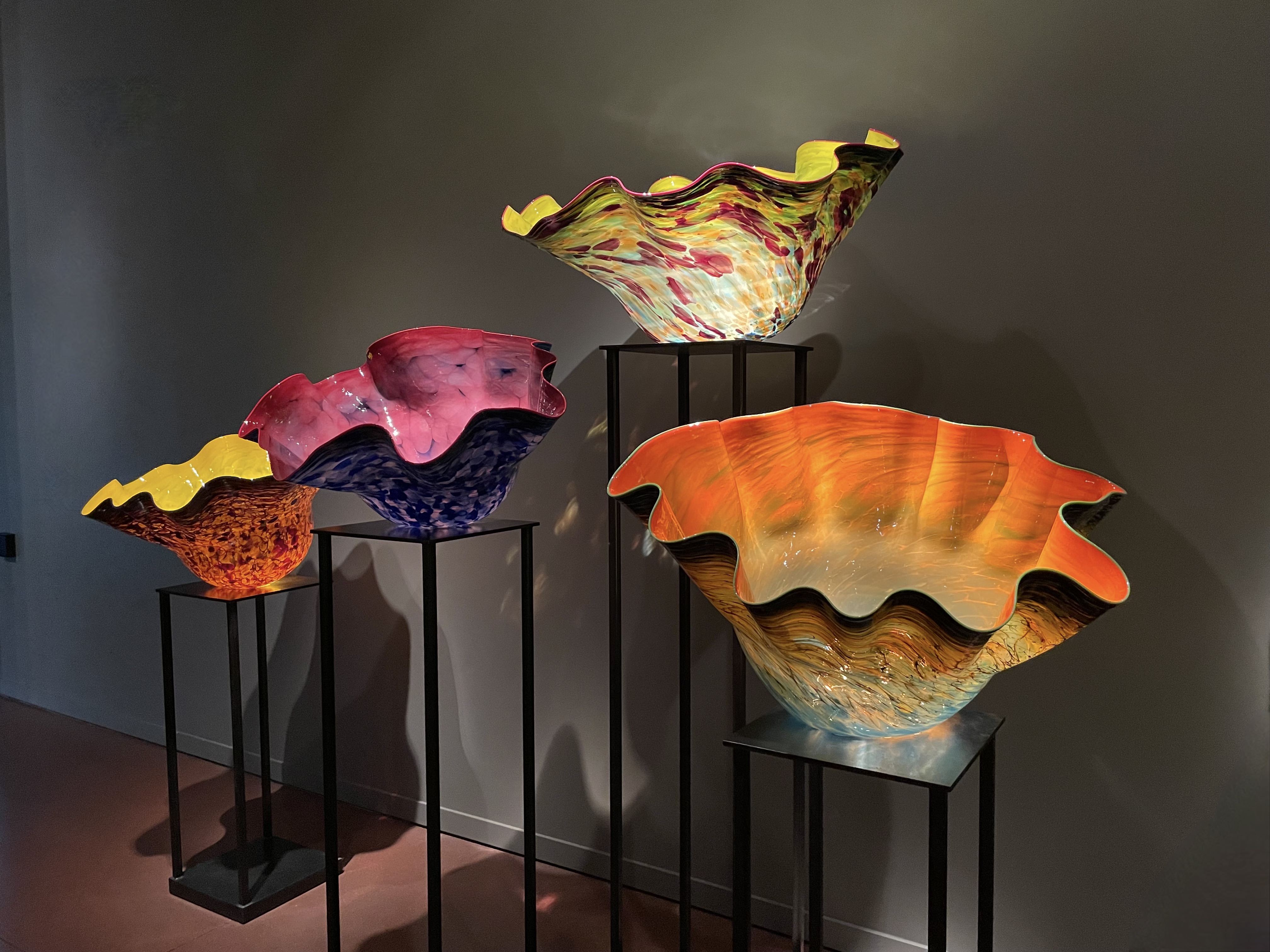
Another gallery space features large bowl-like objects from Chihuly’s Macchia series. As a guide at the Chihuly exhibit makes clear, no one has yet been able to produce a truly black form of glass. Yet, Chihuly has come close with his occasional use of very dark blue and purple. Through his Macchia series, he sought to incorporate every one of the other 300 colors that are available for glass making. Noticing that colors within stained glass windows often appear more alive when illuminated from behind by the diffused light of a bright cloudy sky, Chihuly began to experiment with including a white layer within objects between the inner and outer colored layers of glass. The presence of speckles and striations of additional colors results from when molten glass is rolled on a flat metal surface that has been sprinkled with multiple-colored bits of glass.

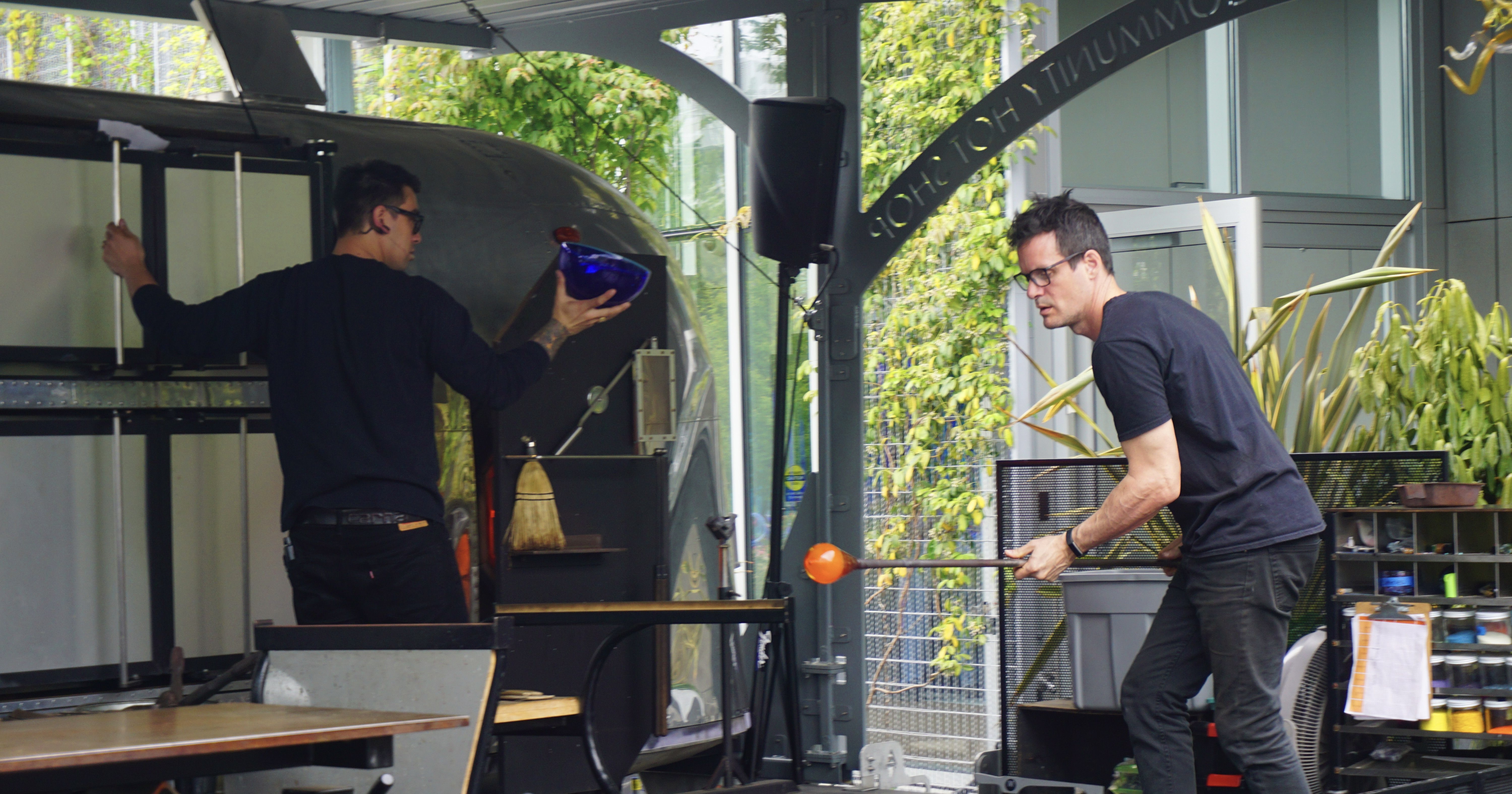
Near the end of a tour through the exhibit one finds a courtyard where an informative glassblowing demonstration is offered, which brings alive some of the challenges inherent in working with this medium.

Chihuly Garden & Glass provides a lively sense of the remarkable extent of the artist’s output, and the breadth of his highly imaginative vision for what can be done with glass as an art form. The exhibit is well worth a visit for those able to travel to the Seattle area.

Chihuly’s Glass Installations

[If reading this by email, please tap the title at the top to open your browser for the best experience. Then, clicking individual pictures will reveal higher resolution images.]

Marine Blue and Citron Tower, by Dale Chihuly, installed in 2021 at Taliesin West, Arizona


The making of art glass, especially when glassblowing, begins with glass melted in a furnace heated to over 2,000 degrees f. by gas-powered flames. As the artist works with the material, additional quantities of glass shards are typically added to the furnace. The added glass may be clear or colored, especially when recycled glass is employed, and other ingredients can be added to achieve a desired hue or tint.

Once, when my glassblowing instructor was scooping shards of recycled material into the flames, he accidentally lost grip of the metal scoop, which fell into the molten glass. To his delight, this produced a most beautiful and unexpected yellow color in the subsequently formed glass objects. Of particular note in Chihuly’s work is the conjunction of multiple colors, and the agate-like striations involving both colored and clear portions of glass.


At the most basic level, glassblowing involves attaching a glob of molten glass to the end of a tube-like metal pipe, which is then spun while air is introduced into it. At first this creates a globe-shaped object. Spinning the material fixed to the pipe can have an effect like that of a spinning pottery wheel upon wet clay. In both cases, the material can be formed into a symmetrical mass. But it can also be spun out of shape into a mess.

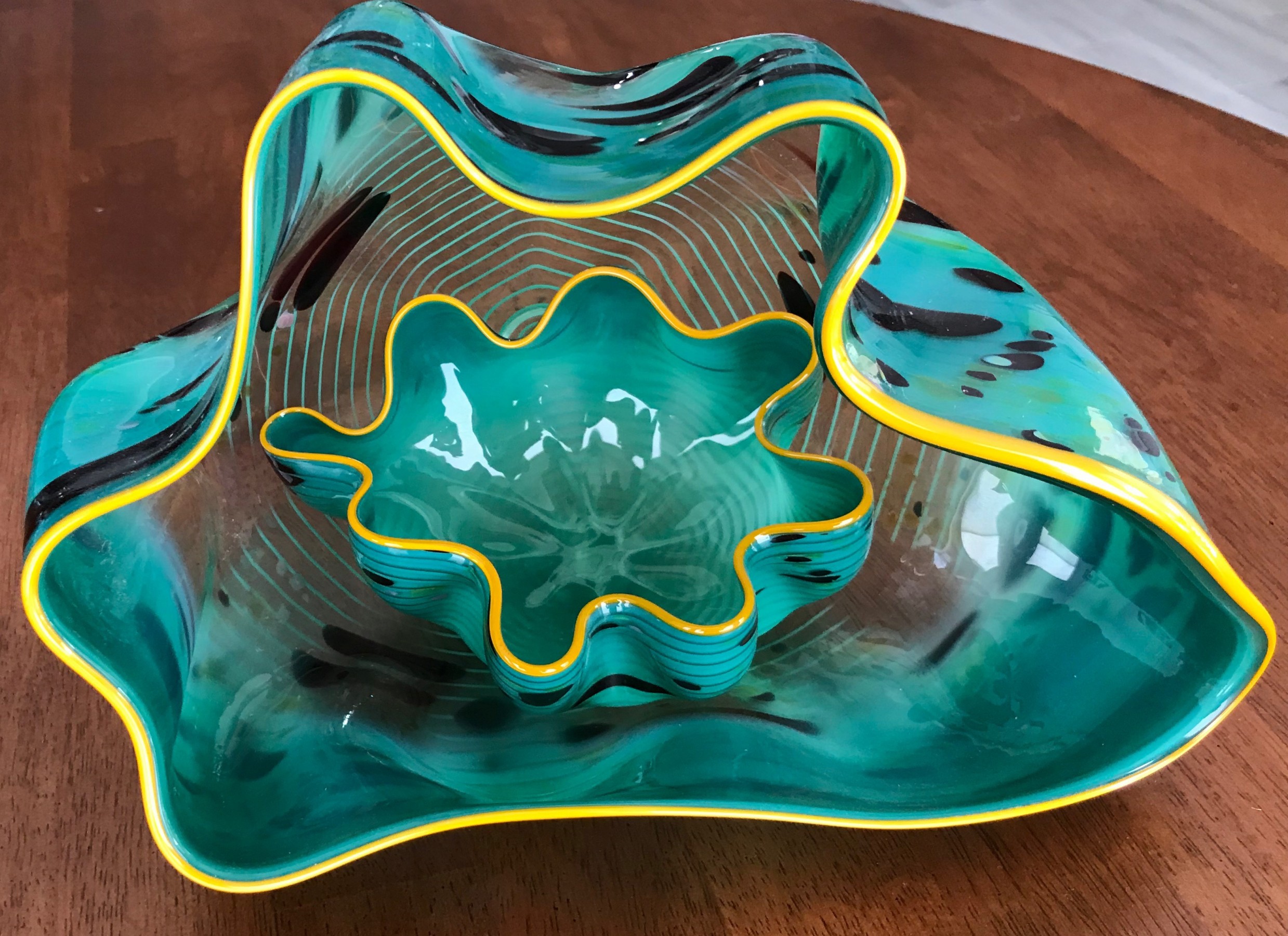
Whereas hands are used in ceramics to do the primary shaping, with molten glass a number of tools are employed to achieve various effects. These include assorted molds which Chihuly and his assistants may use to produce the rippled edges in some of his finished pieces like those depicted below. Wooden paddles, tweezers, cutting shears, and a variety of other tools are used in the process of shaping the very hot glassware while it is being formed, sometimes pulling and stretching it, at other times changing its orientation by causing parts of a piece to turn in on themselves. All the while the glassware artist must periodically reintroduce the work in progress into the open end of the furnace, or apply a torch to its surface, so as to keep the material hot and malleable.

Lower image: A portion of Chihuly’s Persian Ceiling, lit from above

In recent years, Chihuly has become known for his sometimes massive installations of glass. These often involve a seemingly uncountable number of objects linked together by an upright frame, suspended from a rack, or cradled from below. Viewers might encounter these installations indoors where they are displayed as a chandelier might be hung, or placed in an outdoor setting.


With his artistic exploration of the possibilities inherent in the manipulation of molten glass, and by pushing the parameters of what conceivably may be accomplished through working with this medium, Chihuly has created a huge portfolio of truly remarkable work. Of note is the way that so many of his pieces simultaneously have a sophistication that appeals to specialists and collectors, while at the same time being works of art that bring delight and wonder to children as well as to those who may not credit themselves with being aesthetically aware or sensitive. Dale Chihuly has effectively devoted his career to helping others encounter and perceive beauty in new and unexpected ways.

Another Chihuly installation, Fire Amber Herons, at Frank Lloyd Wrights’ Taliesin West

Dale Chihuly and the Art of Glass

[If reading this by email, please tap the title at the top to open your browser for the best experience. Then, clicking individual pictures will reveal higher resolution images.]

Paprika Persian, by Dale Chihuly


Many of us associate glass as a material for art with beautiful stained glass windows, or with fine cut-glass objects. Yet, until the widespread impact of modern art, stained glass has most often been characterized by the two dimensional pictorial representation of biblical or historical figures and events. And decorative glass objects, especially when fashioned from clear leaded glass, have until recent times come largely in the form of functional vessels like vases and decanters.

The career of Dale Chihuly has coincided with a renewed interest in the artistic potential of glass when applied as a medium beyond the parameters associated with everyday objects. It was not until the second half of the twentieth century that many college and university art departments offered courses in and provided studios for work with glass beyond the design and making of windows, as well as for other materials such as fibers (e.g., weaving). This may have been due to a historic assumption that glassblowing and textiles, along with pottery, are best understood as being within the category of ‘crafts’ rather than as fine arts.

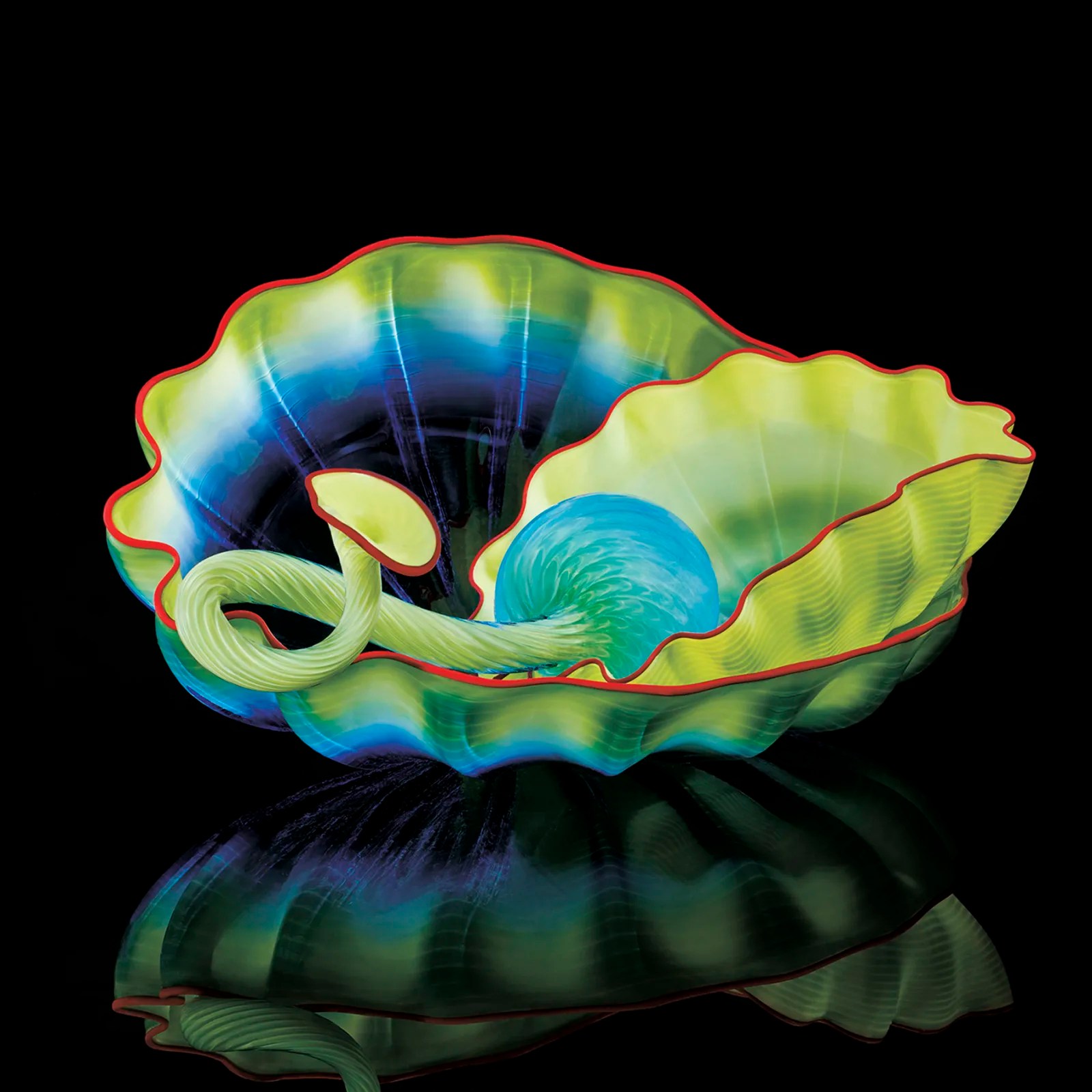
For these and other reasons, encountering the fruit of Chihuly’s longterm exploration of glass and its aesthetic possibilities can lead to an experience of stunning discovery. As we have seen regarding the evolution of David Shaner’s ceramics, Chihuly has moved far beyond producing beautiful but also utility-oriented objects, toward what may be more properly termed glass sculpture. Throughout the range of Chihuly’s work with glass we find a number of features that deserve to be noted. These include his appreciation for the capacity of color, form, texture, arrangement of parts, and scale to evoke interest and delight.

Capri Blue Seaform

Seagrass Seaform

Chihuly’s use of color immediately captures our attention as we view his work. Unlike the challenge faced by those who draw or paint, where choosing and mixing color is a more direct process, color selection and its manipulation within molten glass is more complicated. In glass making, as it is for ceramicists who work with glazes, the artist must attend, at least at a basic level, to some chemistry, the physical plasticity of the material, and be open to chance regarding both.

Another noteworthy feature of Chihuly’s glassware is his intentional inclusion of areas of opacity, translucence, and transparency. With all three of these variables, his manipulation of surface reflectivity – a property often associated with high quality glass – deepens our appreciation for his work. He achieves beautiful effects when he allows these differing aspects of his materials to appear adjacent to one another in the same finished pieces. I find this to be especially apparent in the two pieces depicted immediately below.

Two sculptural glass works by Dale Chihuly (name and date uncertain)

An additional feature of Chihuly’s mature glass work is the variability of the form and of the shape of the objects he has created. As the artist’s portfolio has expanded with the development of his career, he has moved well beyond the pursuit of symmetry, practical utility, and manageable size, with regard to the items he has fashioned. This is especially true of the large scale installations to be featured in a subsequent post.

Given all this, the name Chihuly has become synonymous with paradigm-shifting glasswork that is vibrant and joyfully attractive.

Dale Chihuly with one of his large glass installations in the background

David Shaner’s Beautiful Ceramics

[If reading this by email, please tap the title at the top to open your browser for the best experience. Then, clicking individual pictures will reveal higher resolution images.]

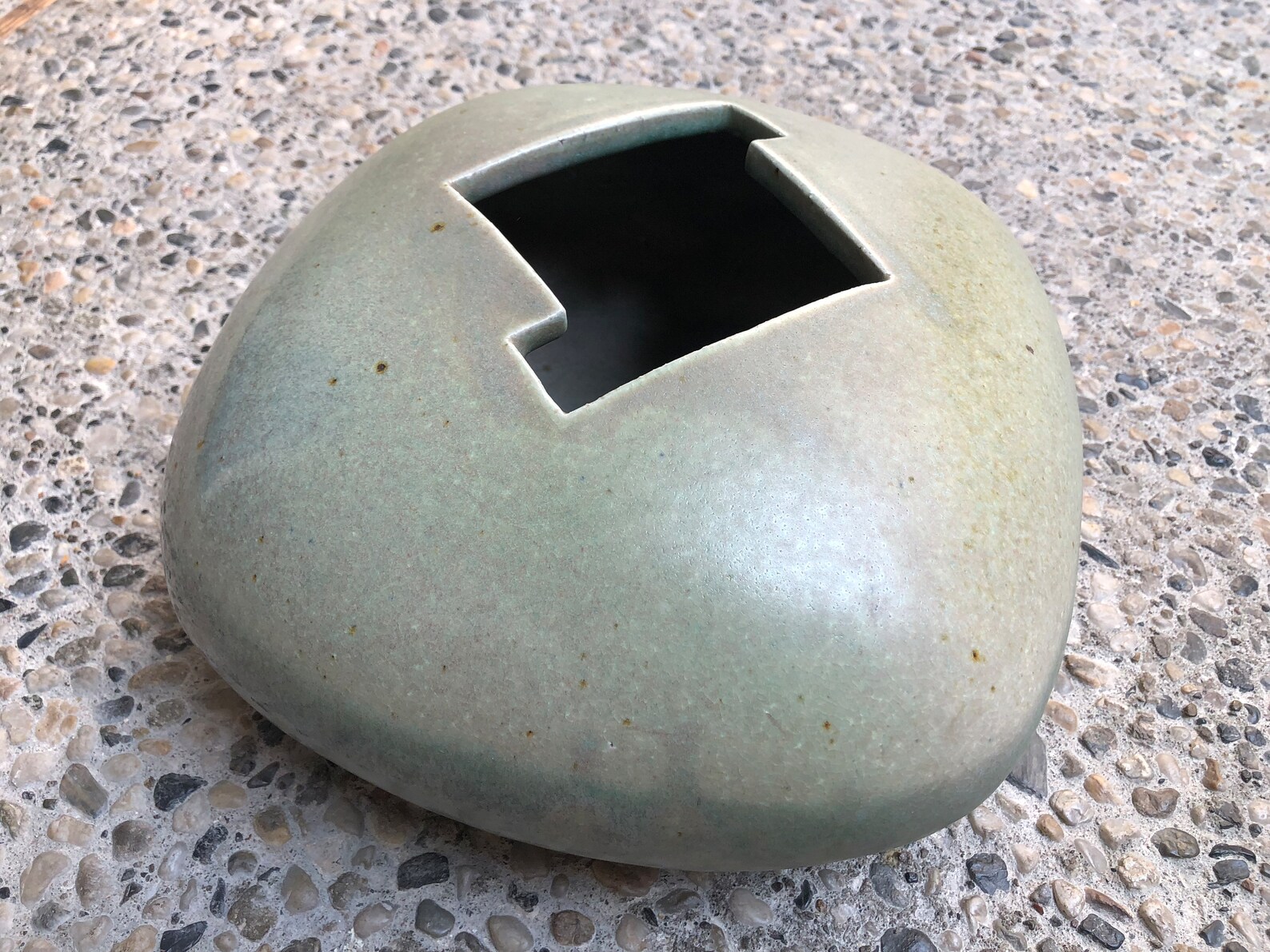
An intriguing sculptural pot by David Shaner, with an unglazed exterior


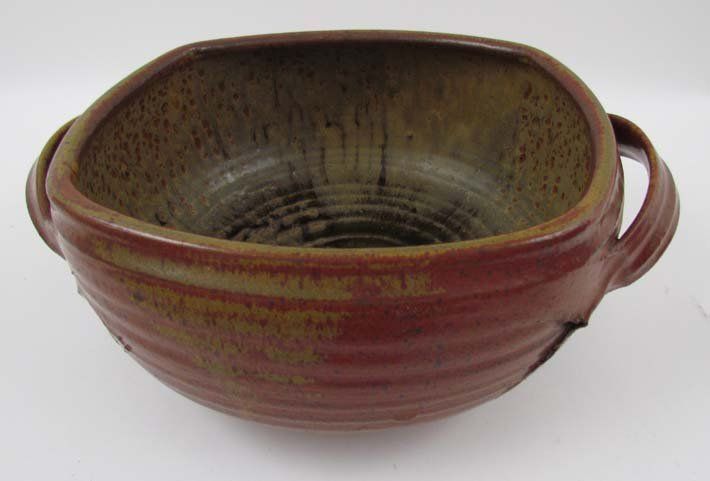
Through his love for ceramics, David Shaner became an accomplished artist whose work was and is widely known for his mastery of traditional pottery techniques as well as for the red glaze that bears his name. The influence of Japanese potters as well as those who studied their work is evident in Shaner’s own earlier pottery. Over the years his interest in non-traditional pot-making grew into a developed pursuit of what we might call ceramic sculpture. Here (below) are three Shaner pots that show his willingness to explore forms that move beyond the circular shape we usually associate with clay that has been molded on a rotating wheel and bat (or platter on which a pot is shaped). Notice the manipulation of the rims of the second and third pots, as well as the presence of the Shaner’s Red glaze on all three.


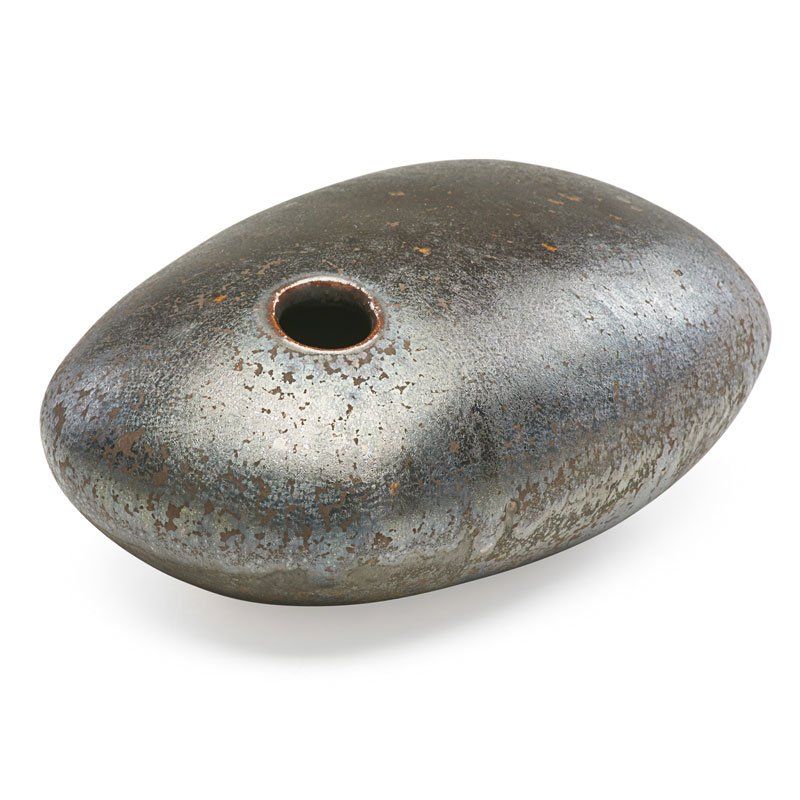
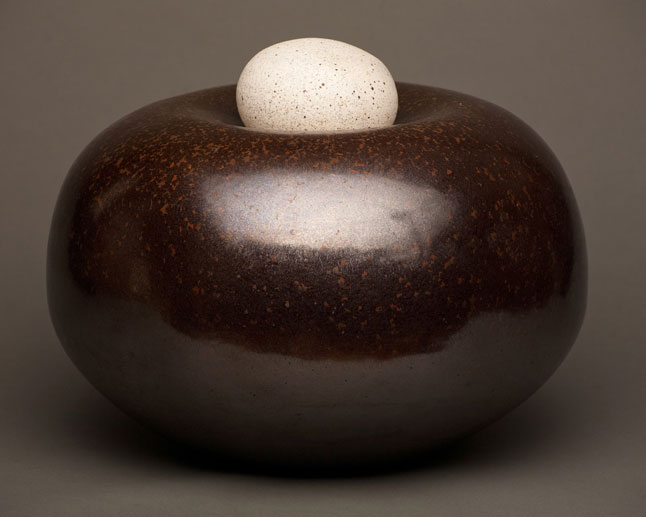
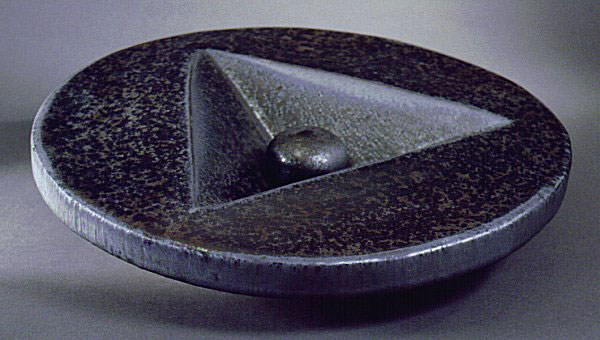
In Shaner’s work, these explorations of the plasticity associated with raw clay then progress to more dramatic departures from traditional pot making. Such pot making is largely focused on forms where the subsequent utility of the result is at least suggested if not also intended (as with Shaner’s teapot displayed in a prior post). In addition to the pot depicted at the top of this post, I share below a number of my favorite examples of what I have referred to as his ceramic sculptures.

A number of these examples of Shaner’s explorative work with fired and glazed clay are termed his series of ‘pillow’ pots, suggested by their rounded ‘puffed-looking’ forms. In addition to his regard for the work of fellow potters, Shaner admired the sculpture of the modern Japanese artist Isamu Noguchi, as well as that of the British sculptor Henry Moore, with whose work he felt an affinity. Below are some more examples of Shaner’s ceramic art.

David Shaner’s traditional-looking pots represent well his skills and lifelong dedication to mastering the medium for his chosen work. His sculptural art is more immediately identifiable as representing a vision expressed in ceramics that was uniquely his own, and which continues to be widely admired.


David Shaner taking a break, and another example of his work as a ceramic artist.

The Beauty of Shaner’s Red

[If reading this by email, please tap the title at the top to open your browser for the best experience. Then, clicking individual pictures will reveal higher resolution images.]

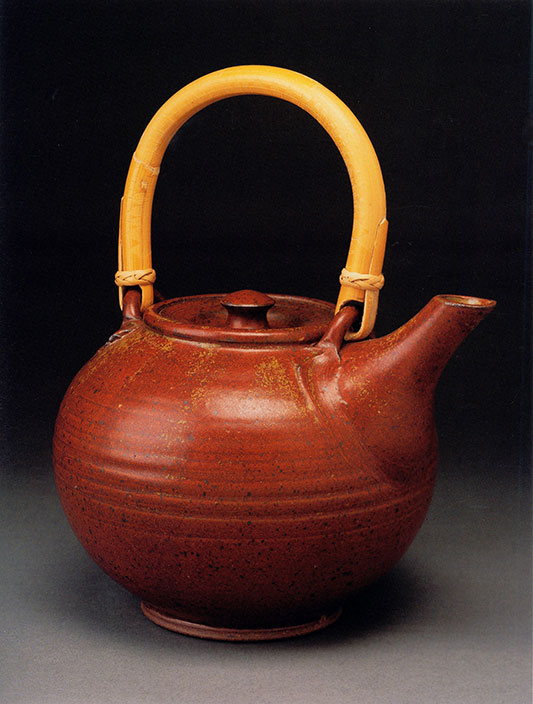
David Shaner, Tea Pot {Japanese style, 1977), with Shaner’s Red Glaze


Shaner’s Red is a polychromatic glaze named after the potter who first applied it to many of his pots. I became familiar with Shaner’s Red on extended visits to family friends who had a pottery studio and a kiln for firing clay at their ranch in Montana. My parents had met them on a ship returning from Japan, where our friends had pursued their interest in traditional ceramics. In addition to throwing pots, they collected a range of examples of ceramic artwork including Asian and Native American, as well as contemporary work by David Shaner and others associated with the Archie Bray Foundation, in Helena, MT. As a youth, I found the color of Shaner’s red and sometimes green and gold glaze alluring, in part because of its variability during firing. In addition to buying assorted mineral and other glaze components, Shaner also gathered found ingredients for his glazes much like weavers often gather natural materials for dying wool.

One brief biographical statement offers this tribute to David Shaner: “His exquisitely formed vessels with their understated glazes are a reflection of the man himself, a man in harmony with his environment and at peace in himself. Shaner was also noted as a teacher, a collector, and a generous contributor to the world of ceramic art and the field of environmental protection; his gardens which he called his ‘spiritual work’ included notable specialized collections.”

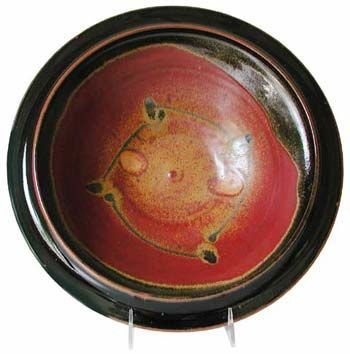
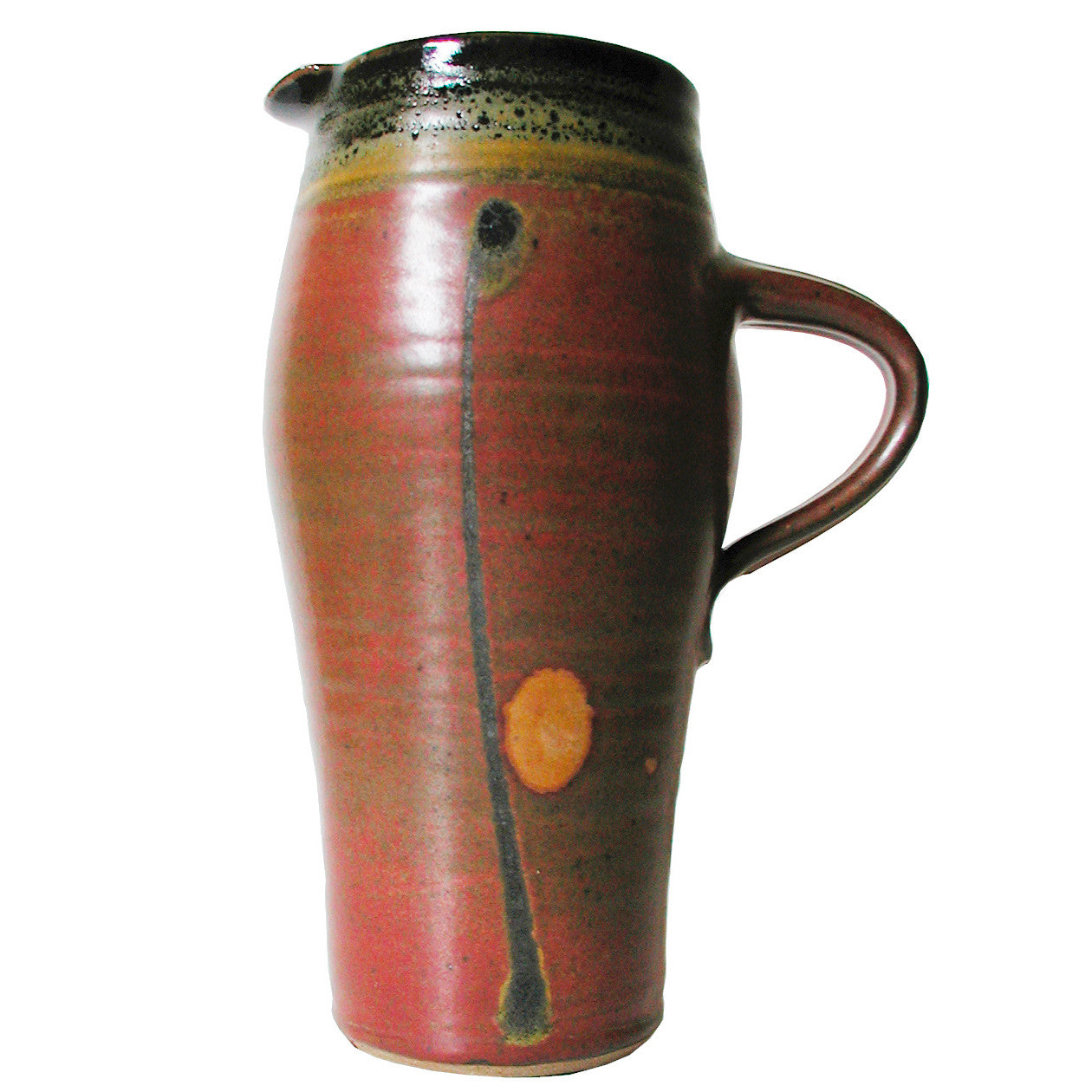
Among those who pursue the art of pottery, the color known as Shaner’s Red is a familiar reference point for glazes applied after a first firing of shaped raw clay. Though the red coloring is largely due to iron oxide being in the mix, this glaze by David Shaner is well known for the way it often morphs into other colors during the firing process, with beautiful results. A canister style pot by Shaner (below, 1988) displays this color variability, which is to some extent within a ceramicist’s ability to manipulate while yet retaining an unpredictability that is often a feature of this art form.

Some examples, below, of pots by other artists displaying something of the range of colors yielded by the application of Shaner’s Red.


Here is one ‘recipe’ for Shaner’s Red: 527 Potash Feldspar; 40 Talc; 250 Kaolin; 40 Bone Ash; 213 Whiting; 60 Red Iron Oxide; 2% Bentonite. The significance of the numbers and the nature of these elements are foreign to me. But they are doubtless meaningful to ceramicists who mix their own glazes. The point in sharing these details is to illustrate how, regardless of the precision involved in finding, measuring, and mixing these elements, the exact outcome of their combination and application cannot be foretold in advance.

Shaner was once asked about this at a workshop he had given. A participant later reported that “his reply was something to the effect that to make it look right, you had to be in the right phase of the moon, hold your tongue just right, call on the correct kiln gods, etc. He was obviously kidding but what he was saying is that this is a tough glaze to work with.” Another potter who has applied the same glaze offers this observation: “… the cooling schedule most affects Shaner’s (and other) iron reds. Shaner’s needs a long slow cool, or firing down, for the red color to resurface…”

Having introduced what is perhaps Shaner’s most widely-known contribution to contemporary American ceramics, his eponymous glaze, I plan in a subsequent post to share further about him and provide additional examples of his pottery, especially in light of his later transition from traditional pot making to what is more properly termed ceramic sculpture.

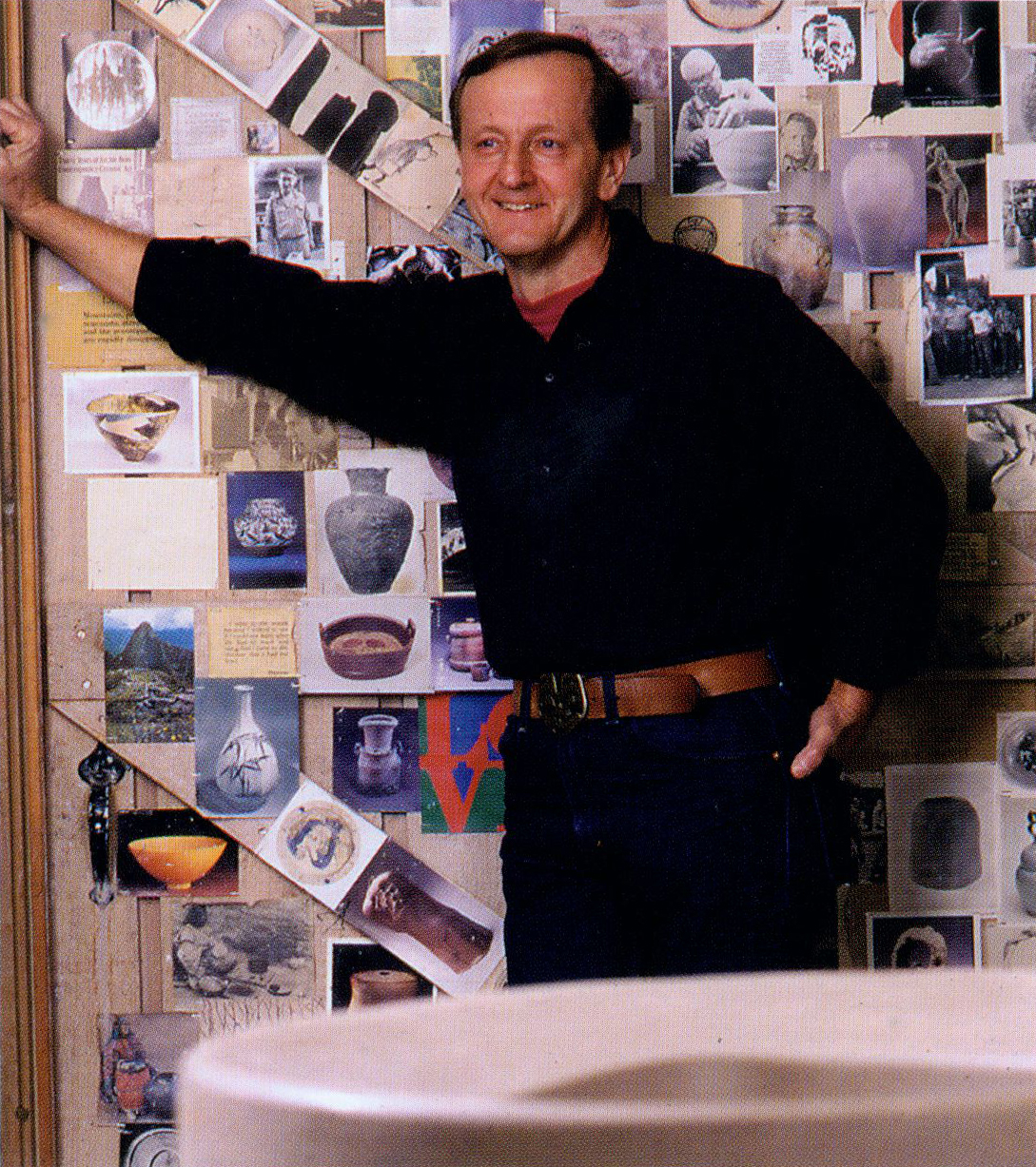
David Shaner in his studio (1989)

The photos behind him appear to include one of the esteemed Japanese potter, Shoji Hamada, at work on a pot (upper right). Another photo (top right) features an example of Shaner’s own work that is clearly influenced by the Japanese folk art tradition (the tea pot illustrated above).

The Beauty of a Henry Moore Sculpture

Working model for Henry Moore’s, Three Piece No. 3: Vertebrae (1968)


I have long admired Henry Moore’s sculptures. Through his willingness to explore various ways of representing the human form, as well as his less representational considerations of abstract shapes, Moore has left a huge legacy. His exploration of aspects of the human body is compelling. I especially like an example that can perhaps be described as a hybrid between those works and his interest in more abstract contours. I am referring to his Three Piece No. 3: Vertebrae, shown above. I first came to see and interact with this sculpture while in college, when visiting a scaled up larger version of it on the Safeco Plaza in Seattle (depicted below).

Moore’s Three Piece No. 3 involves a sculptural adaptation of a basic element of both human and animal anatomy, spinal vertebrae. It clearly suggests its biological source while also providing a dynamic interplay between three objects inspired by the same bones.

The top photo above is of the bronze casting of the preliminary plaster model for the sculpture, with roughly the dimensions of 3′ x 8′ x 4′. It is evocative in that scale, where we find it sitting on a plinth for viewers in a gallery. Moore, in the following year, then created a significantly larger version of the same, measuring roughly 9′ x 24′ x 10.5′, of which the Seattle plaza installation is an example. About ten years later, in 1978, the sculptor was commissioned to scale up the work for an even larger placement in the City Center Park Plaza outside the Dallas City Hall. The photos below depict the artist’s own copy of the the Seattle version of the work, as seen in the rather different setting of the Henry Moore Foundation Studio and Gardens, in Hertfordshire, England.


There is something compelling about Moore’s discernment regarding shape, form, and the dynamic interplay that we can see among otherwise static masses of beautifully aged bronze. These are not arbitrary shapes, and I think something within us recognizes the intrinsic connection between these abstract-looking forms and our own physical embodiment. Why do we find such sculptural elements attractive and compelling? Possible answers to this question might lead to a book length response. But I think we can say this: with sculptures like his Vertebrae, as well as with his representational exploration of the overall human form, Moore has shared with us recognizable instantiations of physical beauty with which we have a real connection, and one that is spiritual as well as aesthetic.

For when we recognize beauty in art, and or in nature, we recognize our disposition toward finding beauty. In finding beauty, we are able to discern something profound about ourselves as well as about the imprint within us of the love of our Creator, who is found within all beauty.


The Beauty of a Horse


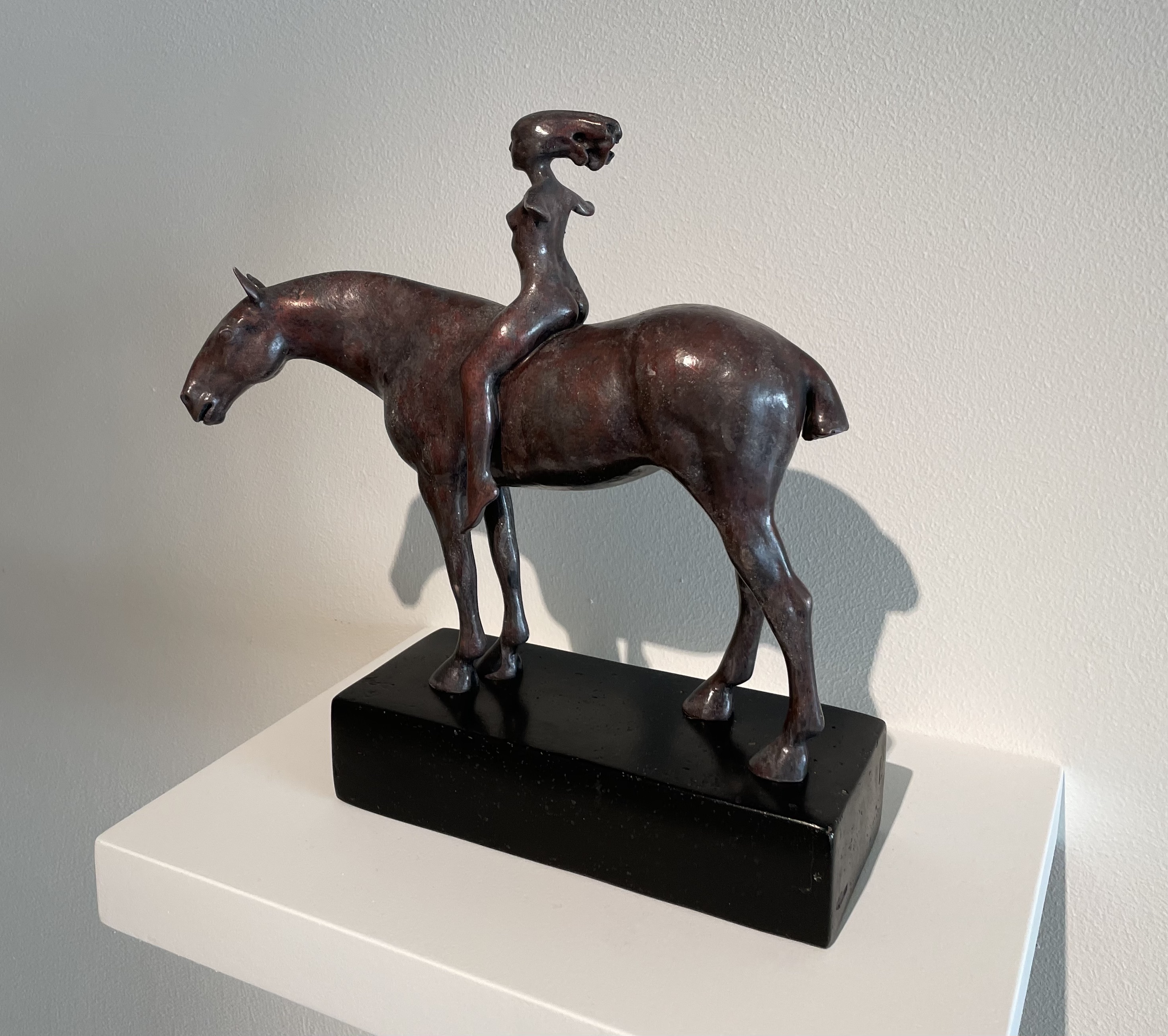
Arthur Kern, Silent Myth (2006)

Those who know Grand Rapids, Michigan, and who appreciate sculpture, will be familiar with Meijer Gardens. A principal monument among their collection of sculptures is the impressively large rendering of Leonardo DaVinci’s horse, by the artist Nina Akamu. As remarkable in size as that sculpture is, it is a fine example of how so many artists have been fascinated by the equine form. Consider among others, the ancient Etruscan horses; the ceramic figurines from the Chinese Ming dynasty; as well as Degas’ rendering of lithe race horses, or the roughly contemporary western bronzes of Frederick Remington and Charles Russell. In all these, this historically important animal companion to both our human community and our many activities has so often received sculptural tribute through artistic imagination.

Recently, I had the wholly unexpected opportunity to discover the powerful work of a 90 year old Louisiana sculptor, whose output until 2016 had largely been out of the public eye for over 30+ years. The Callan Contemporary Gallery in New Orleans has until late April an impressive show of 18 cast resin sculptures almost all featuring horses with riders, or with some representation of a human form. Two of the works are at a stunning life size, while the rest are roughly around twelve inches in height and width. I was not previously familiar with the artist’s work, and was bowled over by its beauty. Here is an example of a smaller work:

Here is another:

And another:

Wherein does that beauty lie? I think it is found in Kern’s studied sensitivity to the anatomic beauty of horses, while he also takes obvious liberty in moving beyond literalistic portrayal of particular equine breeds. Though some observers use the term ‘surrealist’ to describe his approach, I prefer the admittedly cumbersome phrase, ‘representationally explorative.’ Further, Kern’s employment of a lost wax process for producing the molds has given him an opportunity to play with the plasticity of the resin in those molds, as well as to manipulate the coloring of the results. And because of his employment of this casting process, originally used for bronze sculptures, each of the pieces in this show is one of a kind, and not an example of a numbered series.

Just as compelling is the knowledge that after a successful career as a painter and professor of art, Kern then burned his remaining paintings, and moved to a largely hermit life as a sculptor, working privately without any assistants while casting in several cases significantly large works at his home or in his garage. The series of horse sculptures, among other works, is the fruit of several decades of dedicated work, outside the notice of the commercial art world.

It is not evident whether Kern’s loving regard for the human and animal form reflects a religious or spiritual appreciation for the source of the beauty they represent. Yet, his sensitivity to these forms evidences a spirit of positive regard for the world around us that parallels voices of praise that we hear in the Psalms and in many other passages of Scripture. Men and women, throughout history, have loved and admired the form and structure of so many examples of ‘flora and fauna,’ and that of the horse in particular. To me that is surely due to the way that our appreciation for what enriches our lives reflects the transcending and loving regard of our Creator, Redeemer, and Sanctifier, for both us and all of Creation.


Photographs are by the author (all rights reserved) with permission from the gallery. Arthur Kern, Horses, at the Callan Contemporary Gallery in New Orleans until April 23. I encourage you to seek images of and reflections upon his work on the internet. Here is a link to the exhibit: https://www.callancontemporary.com/artists/arthur-kern

The Beauty of Balance


Recently, the Museum of Fine Arts Houston (MFAH) featured a show of the work of Alexander Calder and Pablo Picasso. The two were exact contemporaries and were acquainted with one another.

Like Picasso, Calder became famous for the wide range of his artistic expression. Most memorable are his ‘mobiles,’ beloved by many. These floating sculptures are the beautifully balanced hanging assemblies of wire and pieces of sheet metal. Unlike the example above, they are usually covered in bright colors or flat black paint.

His ‘stabiles‘ are floor-based sculptures that incorporate flat surfaces arranged in three-dimensional relationships, both vertical and horizontal. Some are wonderfully fluid given the curved shape of their panels, while others are geometric, more linear, and ‘edgy.’

The above photo features what I think was the final study model for La Grande Vitesse, his huge lyrical stabile which now sits on a principal downtown plaza in Grand Rapids, Michigan (which I have featured before.)

Obviously, Calder’s mobiles -especially the most successful ones- depend upon an engineer’s sensitivity for balance, while featuring his not-easily-imitable sense of proportion, shape, and color. He also blessed his mobiles with a capacity to drift quietly with the slightest breezes.

Less obvious is how the element of balance features in his stabiles. This involves the balance between vertical and horizontal elements; it also includes the balance between curved edges and flat surfaces. And finally, his stabiles incorporate the most subtle balance of all. This is the balance achieved by the artist when providing a cohesive experience of visual excitement for the viewer who sees each aspect of a stabile sculpture while walking around it.

Calder has been quoted as saying this: “The admission of approximation is necessary, for one cannot hope to be absolute in his precision. He cannot see, or even conceive of a thing from all possible points of view, simultaneously. While he perfects the front, the side, or rear may be weak; then while he strengthens the other facade he may be weakening that [one which was] originally the best. There is no end to this. To finish the work he must approximate.”

Surely, this is equally true of the spiritual life. Many of us are tempted toward the ideal of some kind of ‘perfection,’ surely never attainable by fallen humans such as ourselves. Yet, that pursuit of a kind of absoluteness and or precision, however attractive, is not true to our lives as pilgrims on an unfolding journey. Such a journey is an ancient and compelling metaphor for our lives, in Scripture and in our tradition.

So, yes, in the abstract, there are some things that are absolutely true in principle. But we so often seek and pursue them while ‘walking in circles,’ admiring the beauty, goodness and truth of what is before us. And yet, our grasp of, and appreciation for, the whole is often based on a single, or a limited number of perspectives. We then are kept from seeing the fullness of the many marvelous gifts given to us by and through our Creator’s grace-filled pursuit of us. Seeking and then finding a balance between sometimes competing perspectives and concerns can be an important step toward perceiving beauty when otherwise it may be hard to see.

I can think of no finer balanced-juxtaposition of these several elements within Calder’s extensive portfolio than the one depicted above, temporarily exhibited in the Museum of Fine Arts, Houston. A mobile gently moves above you, while you stand. You gently move around a stabile while it stands.


{my photograph; copyright reserved} / Regarding the above quote from Calder, remember that while his choice of pronouns may not be what we prefer, they were characteristic of what was considered ‘proper English’ and assumed to be fully inclusive at that time.

To See Spiritual Light


I first learned about the monumental sculptures and the suspended mobiles of Alexander Calder during high school in the early 1970’s. My school was in western Massachusetts, and I remember some weekend trips when I saw a couple of his large outdoor sculptures being built at a metal foundry in Connecticut. To me, Calder’s work continues to suggest a delight with the world and a generous appreciation for the beauty within it.

Calder approached the creation of public sculpture in a unique way. His largest pieces are often set in the center of cities, placed on plazas between modern office buildings. We have a beautiful example here in Grand Rapids, with another large one in the same bright red color nearby in Chicago. Many of Calder’s large outdoor “stabile” sculptures provide a lyrical counterpoint to the linear and grid-like facades of the surrounding office buildings.

We know that monumental sculptures from earlier times often portray honored heroes, sometimes on horseback. Perhaps the most dramatic and newsworthy examples in our own day are some Civil War legacy moments in the deep South. I think of the one in Lee Square, New Orleans, and the Nathan Bedford Forrest monument in Memphis, both recently removed. In these cases, major post-Civil War statuary has been an object of contention because of negative historical associations.

By contrast, Calder’s large works are not tethered to historical occasions. Instead, they are abstract, and point to transcendental ideas rather than to memorialized national events. They don’t simply draw attention to themselves as objects of regard. Calder’s plaza sculptures do more. They lead the observer’s eyes to notice the interplay between his work and the spaces around them, as well as their contrast with nearby buildings. One doesn’t just view these sculptures; one interacts with them, and with the larger context of their placement.

Here, we must note a paradoxical aspect of all public sculpture, which indicates something more about us than it does about the art. Many people work everyday in buildings adjacent to where sculptural works are situated. But these workers are just as capable of being inattentive to these pieces of art as they are to their parking spaces, or to the doors of their offices. With the soaring heights and reaching curves of his public monuments, Calder’s sculptures are expressively shaped and tremendously uplifting. But our focus on our work and our worries, and on the practical things we need to do, blinds us! And it diverts our attention from something truly beautiful, right there in front of us.

I note all this because the same thing can happen when we encounter the first verses of John’s Gospel. In what is often called the ‘prologue’ to his Gospel, John has written a passage shaped by poetic beauty and filled with lofty theology. Yet, we have a tendency to focus on what is immediate and practical, and on what seems narrowly relevant to our everyday concerns. And so, we can ‘pass by’ this Gospel ‘work of art’ just as people hurry past the great Calder downtown, absorbed with getting to our ‘work.’ In both cases, something sublime lies before us, ready for us to engage with. But sometimes we don’t see the sublime because we aren’t really looking for it!


The image above is of Alexander Calder’s stabile, Le Grande Vitesse. This post is based on my homily for the first Sunday after Christmas Day, December 29, 2019, which can be accessed by clicking hereOther homilies of mine may be accessed by clicking here. The Revised Common Lectionary, which provides the readings for Sundays and other Holy Days, can be accessed by clicking here.