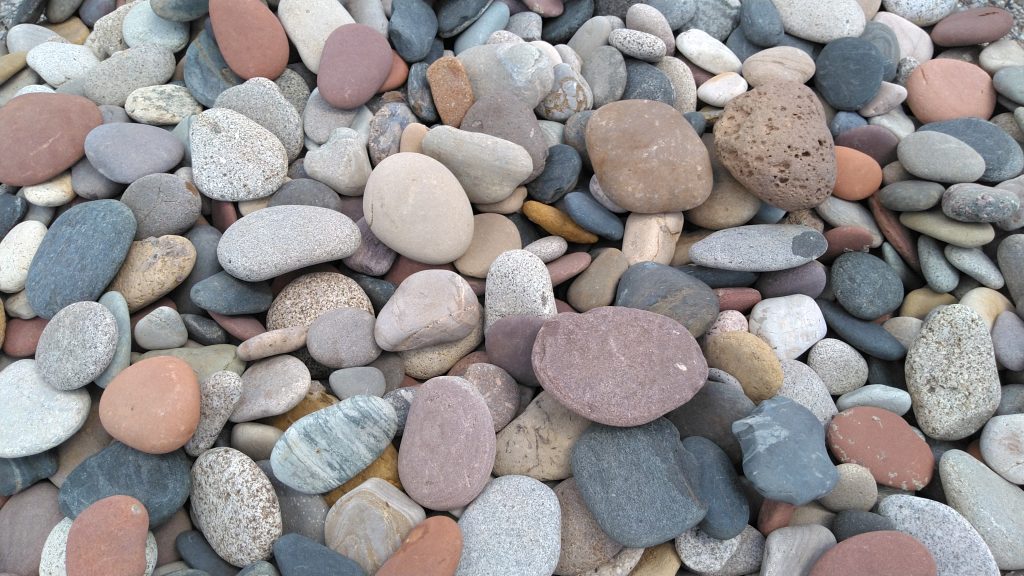
Beautiful stones imported to south Louisiana
Here in southeastern Louisiana there is virtually no natural local stone. Geologists may differ about when and how it occurred, but generally agree that the original Gulf coast lay somewhere north of where I now live, between Baton Rouge and Memphis. What we do have here, as a setting for verdant plant and tree growth, is a lot of red clay and or sand, as well as the significant contribution of alluvial (river borne) soil. On this, our eastern and only slightly elevated side of the Mississippi River, they tell us we also have ‘loess’ soil, wind-blown from the west. In other words, where I live rests upon a legacy of materials brought here over the course of millennia – by mud-flow from the north, and dust storms from west.
Stone, as my earlier posts about our patio project suggested, therefore comes here from elsewhere, mostly I suspect by river barge. When visiting a local landscape stone vendor recently I was reminded of something I used to take for granted when living in the midwest or traveling in the far west. It is the beauty of natural stone, whether found on a Great Lakes seashore or on the banks of a Colorado river. What on childhood visits I appreciated seeing in abundance upon the north shore of Lake Superior, I now find to be an almost exotic discovery at a commercial location in Baton Rouge.
And, among the wonders of the handiwork of our Creator is the splendor of variously colored and multi-shaped stones
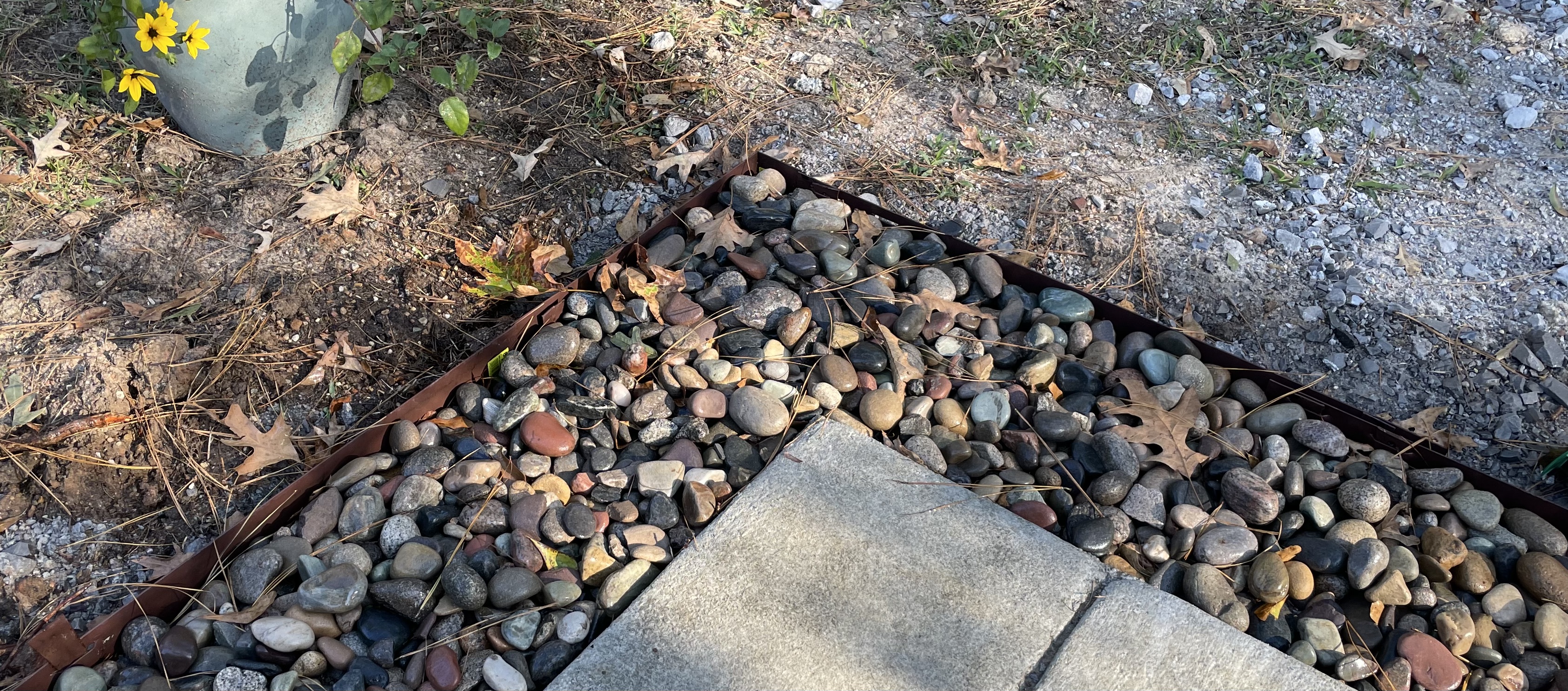
An unfinished stone border featuring ‘river rock’ from Colorado
Some years ago a teaching colleague shared a story from his work assignment in Saudi Arabia. On a free day, a local guide drove him for several hours through the desert toward the sea. Upon viewing the welcome sight of the water, he noted a large cargo ship discharging material into barges. He asked his guide what they were unloading, to which the response was, sand! “You’re kidding me,” he said. And then my friend learned to his surprise that the sand that has been blowing back and forth forever across the Saudi desert is apparently reckoned by many as worthless for construction, having rounded particles. Sand essential for concrete foundations and buildings needs to have edges, and come from Europe and elsewhere, to provide a proper binding material while the cement cures.
I am mindful of this story when I view the beautifully rounded and smooth rock that comes to us from far away rivers and lakeshores, after perhaps long eons of geological friction. I also rejoice in the variety of color in a material that might otherwise be as uniform as the sand in an Arabian desert, or on the banks of the great river just a few miles from our home.
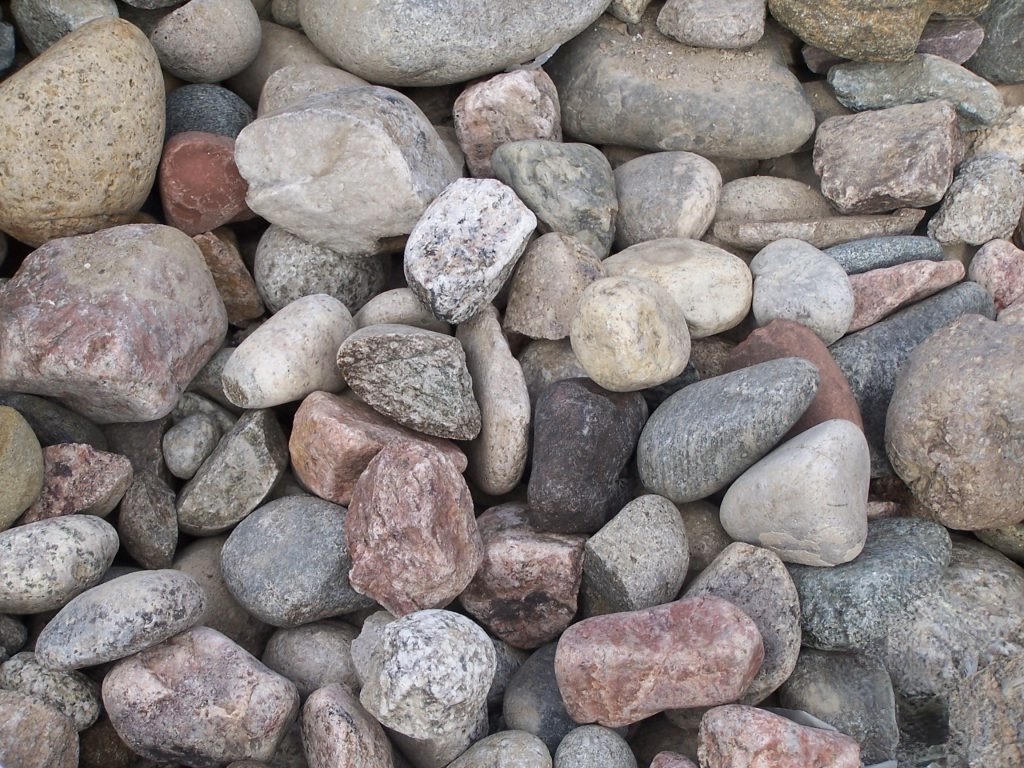
Random Colorado river stone pieces
I am therefore thankful for the shaping and molding effect of God’s Providence upon me – even after what may seem like an unimaginably long time. Our experience through the rough and tumble of life can sometimes leave us feeling awkward and with uncomfortable or raw ‘edges.’ At other times, we may feel we have been smoothed and shaped in ways more attractive to others and to ourselves. The beauty here may lie in the wisdom latent in one of my favorite, but still-not-fully understood, verses from the Psalms: “You have showed me great troubles and adversities, but you will restore my life… (Ps 71:20)” For why would God show me adversity other than as an act of positive love? And, why would God not to seek to bring us together into a beautiful fellowship within God’s own being? Especially when it may be ambiguous as to whether we have jagged and or smooth edges!
One big ‘stone’ in my life has been Robert (Bob) Hansel, my former CREDO Institute colleague, to whom I owe much. When I first encountered him, he played a decisive role in helping me to discern that I was being called away from a tenured seminary teaching position back to parish ministry. His prior CREDO faculty role as a team leader changed many of our lives – not by persuasion, but by encouraging our personal discernment. Here, I want to acknowledge his wonderful story about his experience in Saudi Arabia (that he tells so much better than I can).







 Toward Beauty