
Summer visitors to Charlevoix encounter at least two things about the area: first, that this part of Michigan is a haven for boat lovers and especially cruisers on the Great Lakes; and, second, that the city of Charlevoix is the home of Earl Young’s so-called ‘mushroom houses.’ The first observation regarding boats and the appealingly clear lake water is easily recognized. The second association with the area takes a bit of discernment, usually gained from seeing brochures or the small electric carts evident in town bearing the label, “Mushroom Houses Tours.”
A pleasant walk around Charlevoix while viewing the many houses that Earl Young designed and built in the community reveals that his approach to home design was not uniform, and that his work avoided that to which the wider community has also not succumbed – becoming a caricature of itself. For he could have approached his design work in such a way as simply to repeat and imitate prior successes, pressing forward as so many architects have done to inaugurate a particular and distinctive style in home design. Instead, Young consistently displayed his overriding commitment to his chosen materials – stone and stone-related products. Therefore, when at the age of 35 in 1924, and in buying a tract of land adjacent to the Lake Michigan shoreline, he built ten houses with enough variation among them that later homes constructed by others are frequently confused with those of his own design. Young gave the tract along with its homes the fitting label of Boulder Park.

This variability in the architectural character of the Boulder Park homes helps us to begin to recognize how the common ascription to Earl Young, of being the mushroom house architect, is in some ways a misnomer for him. A few of his houses nicely justify the label, given their firm rootedness to their sites, their often low or extending rooflines with irregular surfaces, and his heavy use of large stones and boulders in a number of them. Yet, Young was equally comfortable specifying limestone cut in horizontal block slabs and even commercially available brick or block products with which to construct walls with traditional uniformly-spaced layers of mortar. We may not be enamored with the some of the results of his work, but I think most of us can identify with Young’s lifelong intention to remain true to his materials and to the sites in which he set them.
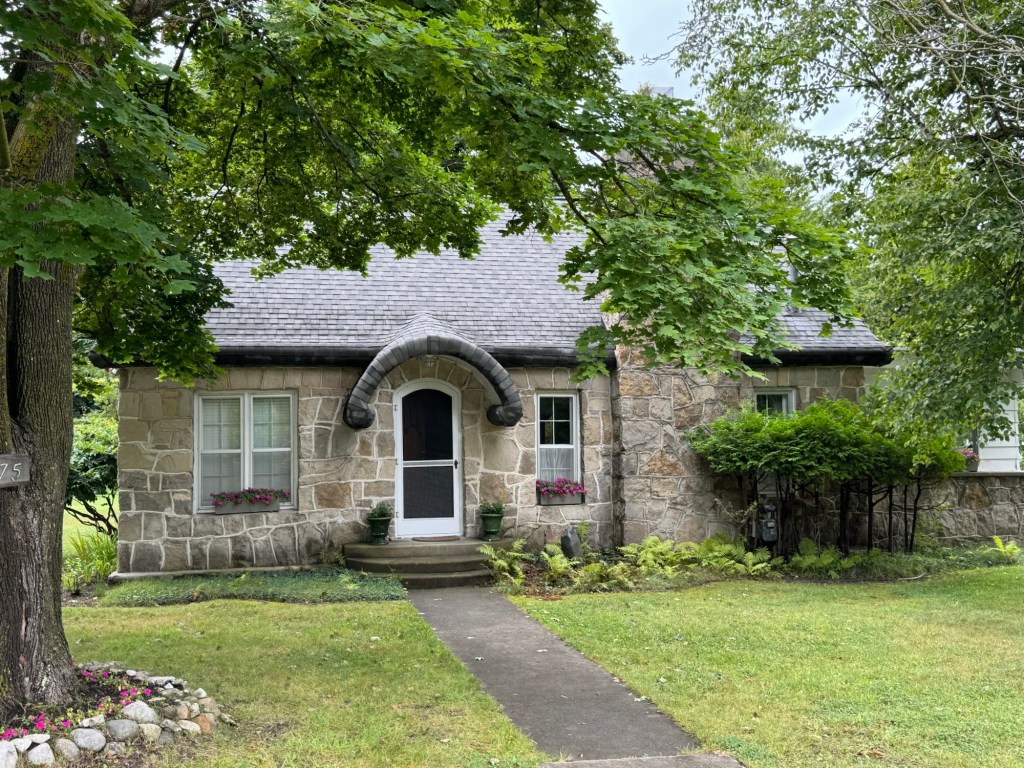
Two neighboring homes in Boulder Park illustrate Young’s consistency of intent, and flexibility with regard to ‘style.’ Boulder Manor, built in 1928 (displayed at the top of this post), sits in close proximity to the Pagoda House, built in 1934, seen below.
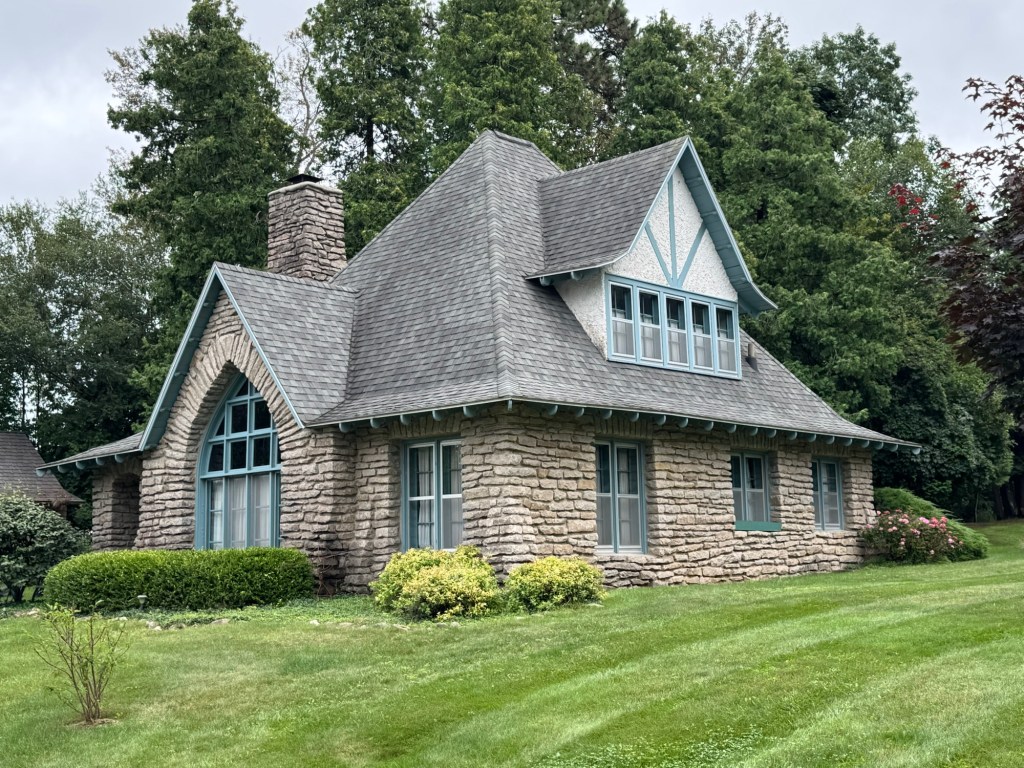
My favorite among the Boulder Park houses is the home that Young built for himself, called Boulder Manor (top photo). It is constructed with massive pieces of stone and boulders from the area, and features a matching smaller playhouse for his daughters that has a working fireplace.

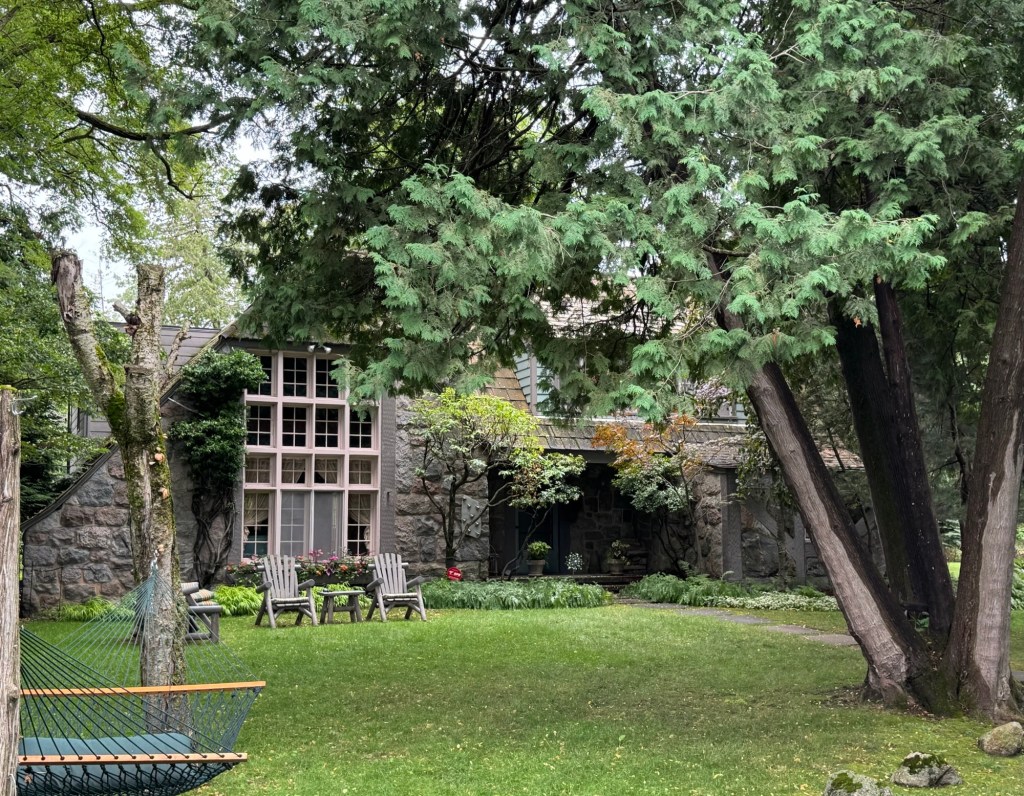
In some ways Earl Young was a bundle of contradictions, an idiosyncratic visionary who was known to tell some clients what they needed in terms of a home, and yet also one who could reside with an out of town family for a considerable period of time so as to get to know how they lived before designing a home for them. He had a consistent love of rough, ‘undressed’ stone to be used as found, and at the same time a willingness to use stone in a very conventional way. Young was famous for wanting to do virtually everything ‘his way,’ often to the consternation of others, including town leaders. And yet, one house of his in Boulder Park was the result of a client convincing him to build a home based on a design plan found in a women’s magazine, the 1933 Enchanted Cottage with its very English-looking windows (seen below).
The best introduction to Earl Young’s Charlevoix houses is a widely available book by the photographer, Mike Barton, titled, Mushroom Houses of Charlevoix. Filled with color photographs, and documenting every one of Young’s structures built in his home town, the book provides superb photographs, and better ones than I am able to provide.
 Toward Beauty