[If reading this by email, please tap the title at the top to open your browser for the best experience. Then, clicking individual pictures will reveal higher resolution images.]

Minoru Yamasaki behind models of the proposed World Trade Center towers
Minoru Yamasaki was one of the most significant American architects of the mid-twentieth century while also one of the least known. Since 9/11, almost everyone has seen images of his now lost World Trade Center towers that formerly crowned the southern tip of Manhattan. Yet many are unfamiliar with the man who designed and gave them their attractive and delicate facades. I first encountered Yamasaki’s distinctly modern yet historically informed approach to architecture as a child while my parents were on furlough from mission work in Japan. It was likely because of Yamasaki’s Japanese heritage that they became interested in his Northwestern National Life building in Minneapolis, opened in 1965, which he had designed for that company’s new headquarters (images below).


The Northwestern National Life building has design elements recognizable in a number of other structures designed by Yamasaki. His career-long approach to architecture consistently incorporated a classically inspired modernism that features a verticality and gracefulness of design, an approach which appears to owe as much to the great European gothic cathedrals as it does to Greco-Roman antecedents. This quality of his work is particularly evident in the decorative plaza towers and buildings he designed for the 1962 World’s Fair U.S. Science Exhibit in Seattle (now the Pacific Science Center, below).

U.S. Science Exhibit towers and buildings, 1962 World’s Fair, in a vintage photo
The 1962 Michigan Consolidated Gas Company building in Detroit (below) was Yamasaki’s first ‘skyscraper.’ The stonework tracery and narrow windows on the facade of this building, as well as the arcade of columns surrounding the glass-walled atrium on the entrance terrace level, are recurring motifs in his architectural designs. Some of these elements can also be found on Yamasaki’s 1960 College of Education building for Wayne State University (further below), as well as Olin Hall and other buildings he designed for Carleton College in Northfield, Minnesota.
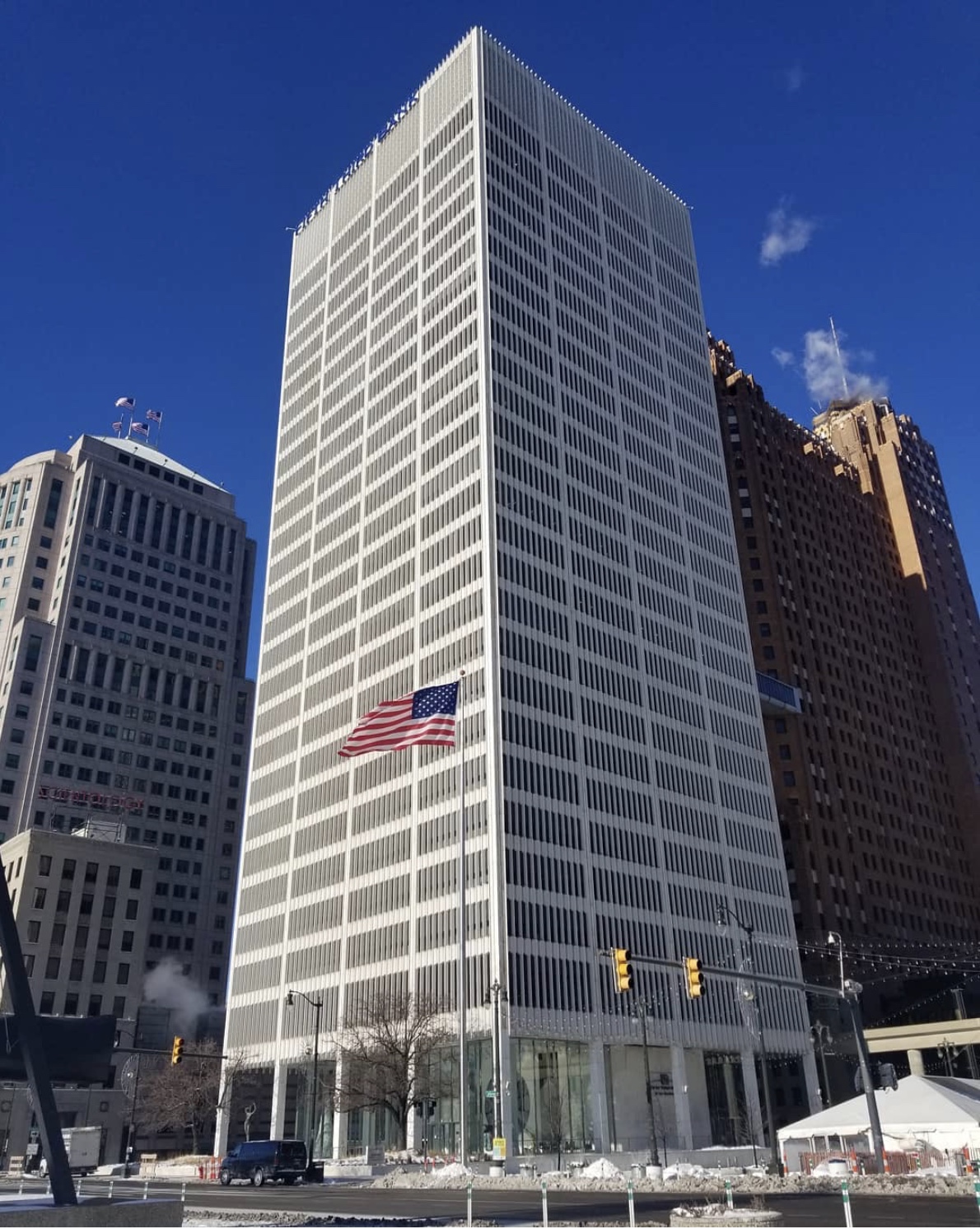
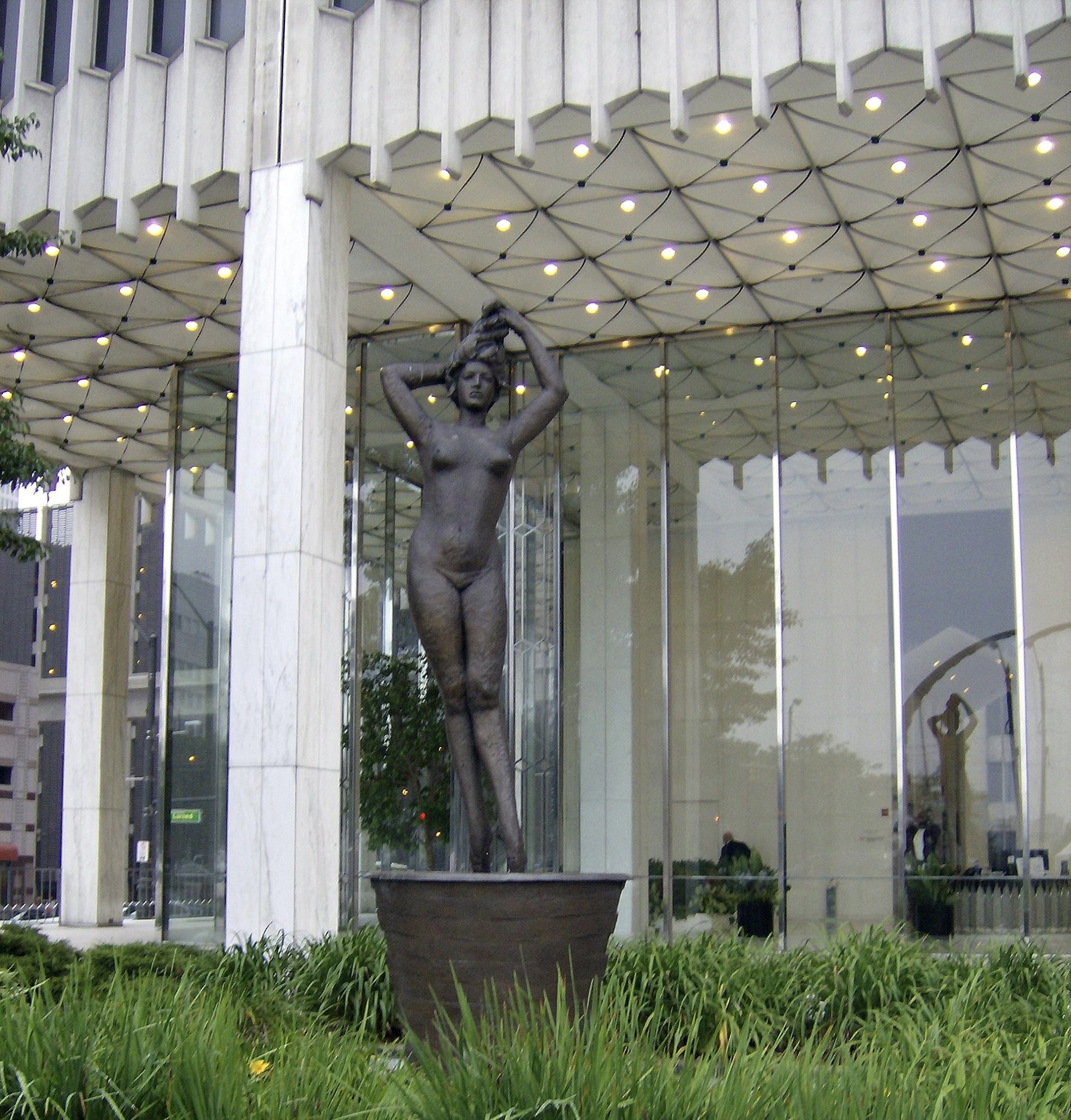
The Michigan Consolidated Gas Company building, Detroit. Plaza Sculpture by Giacomo Manzu.
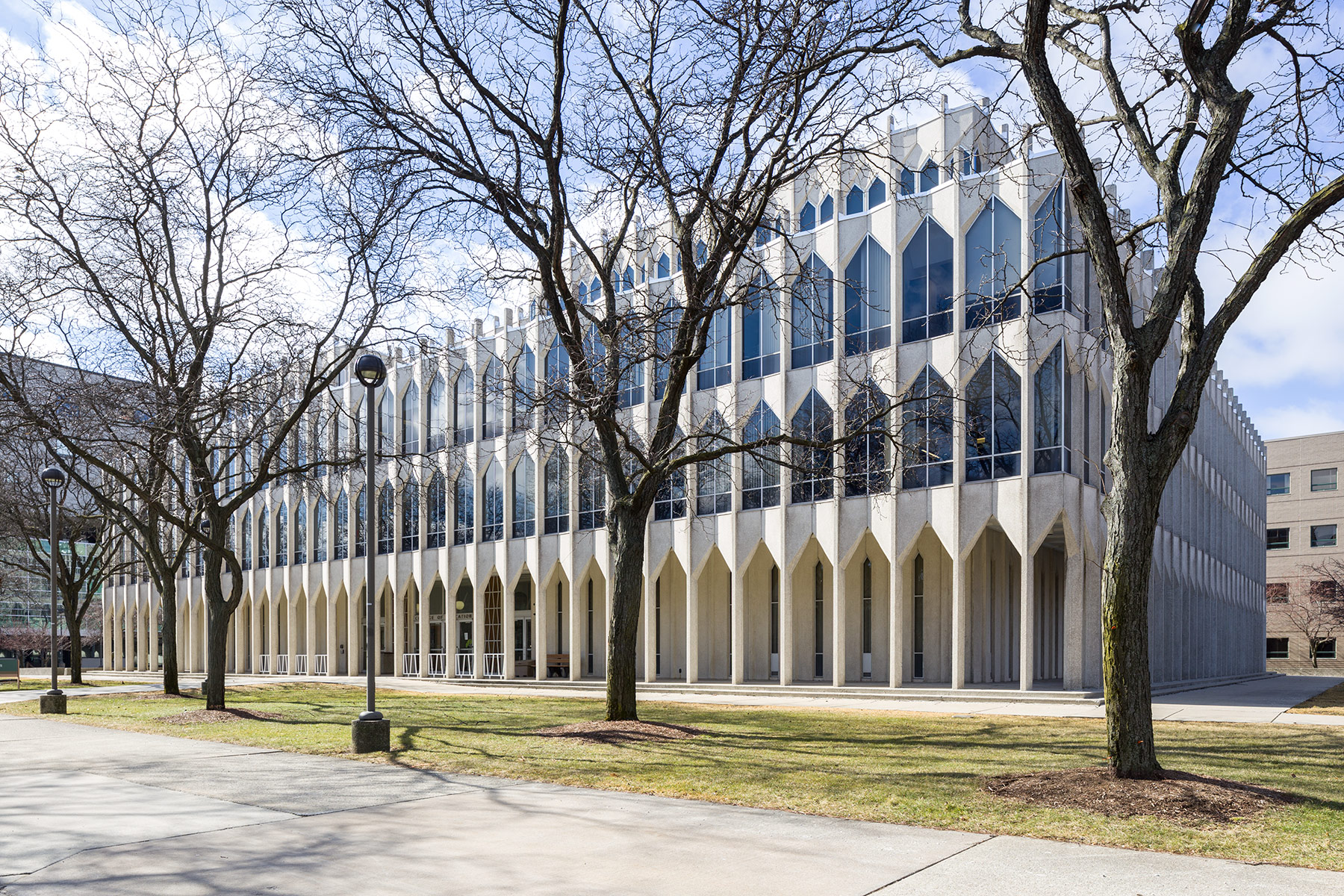
The College of Education building for Wayne State University (Detroit, 1960)
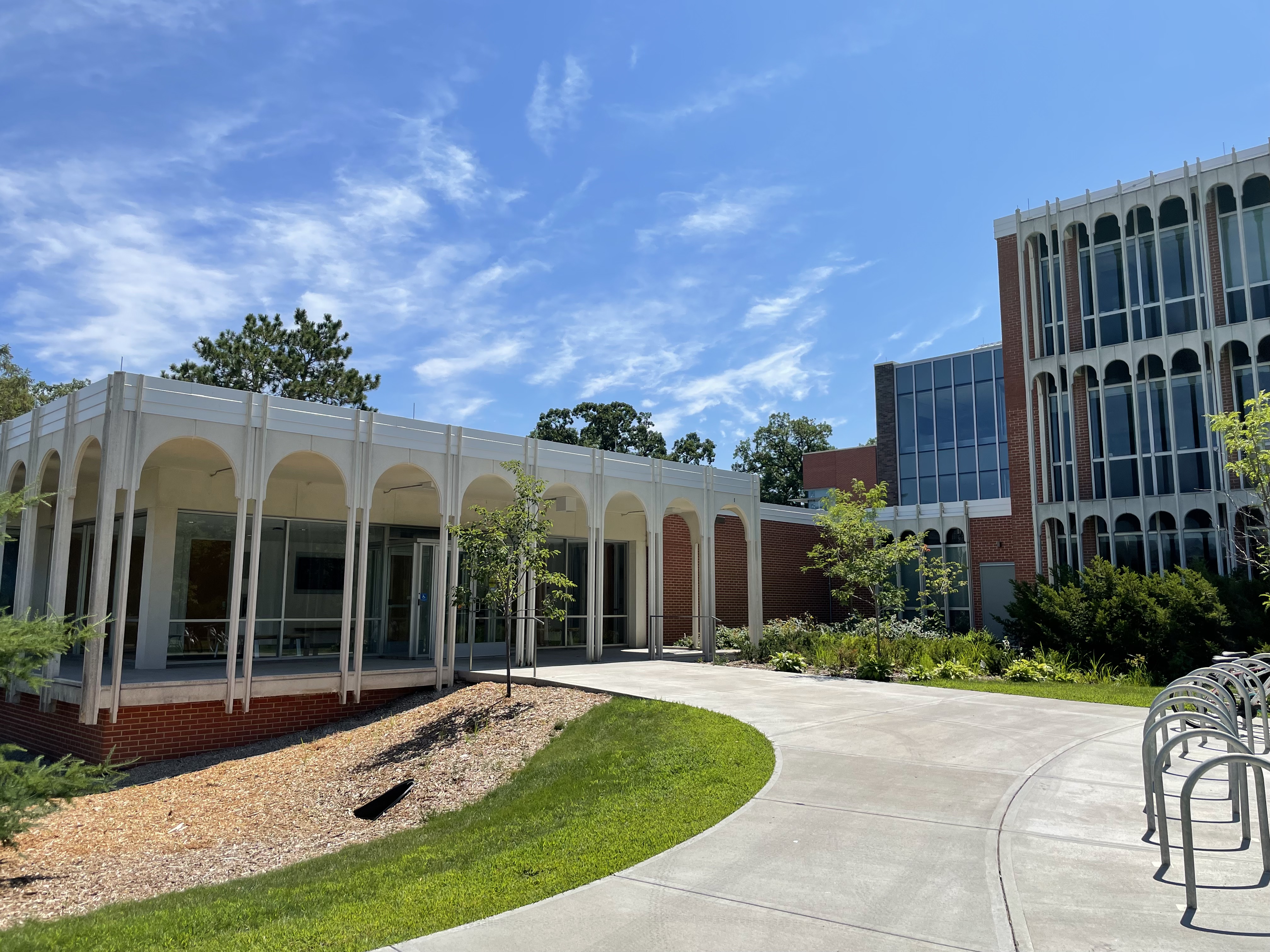
Above: Olin Hall (Science Building) and lecture theater for Carleton College (Northfield, MN, 1961)
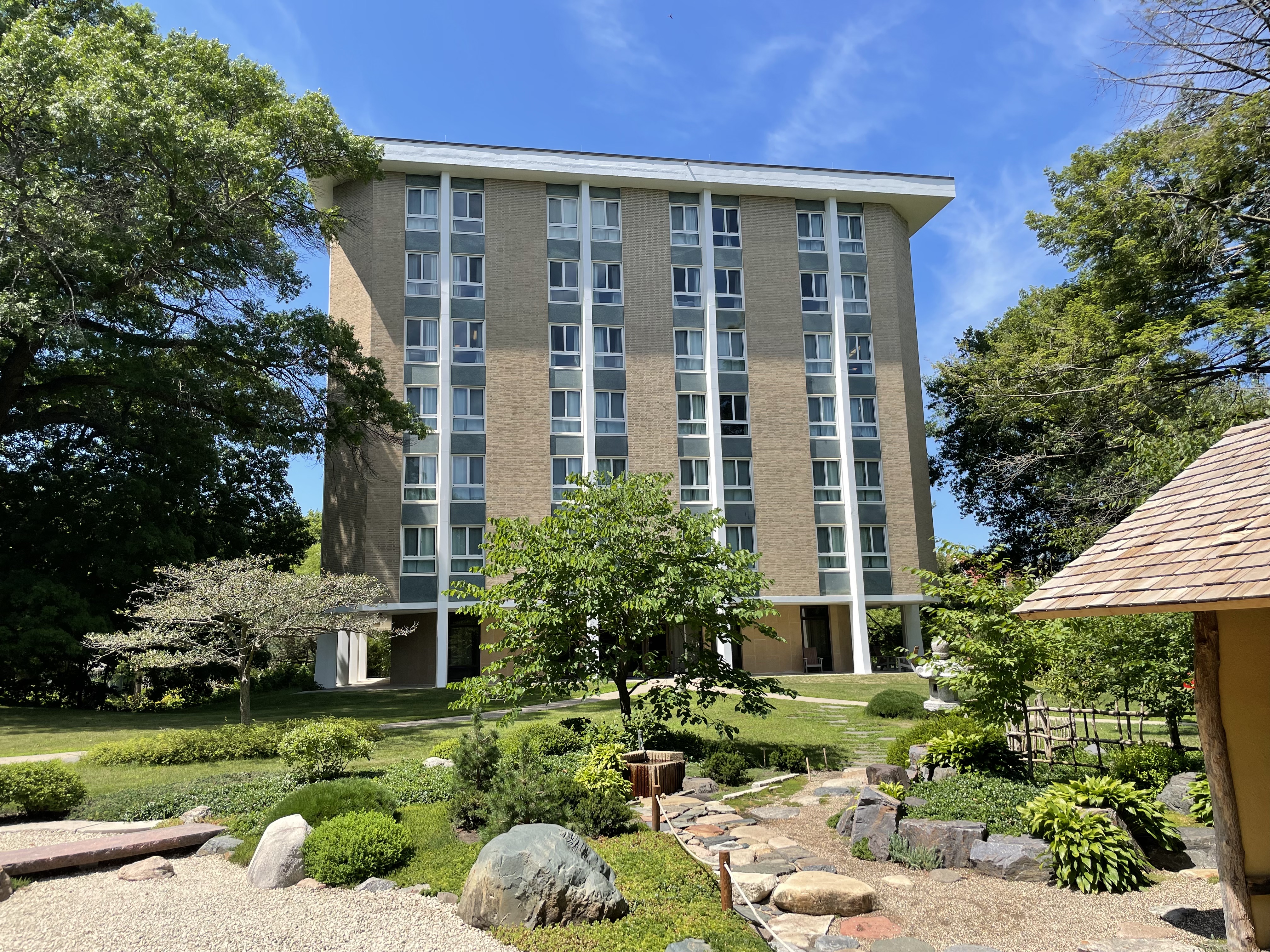
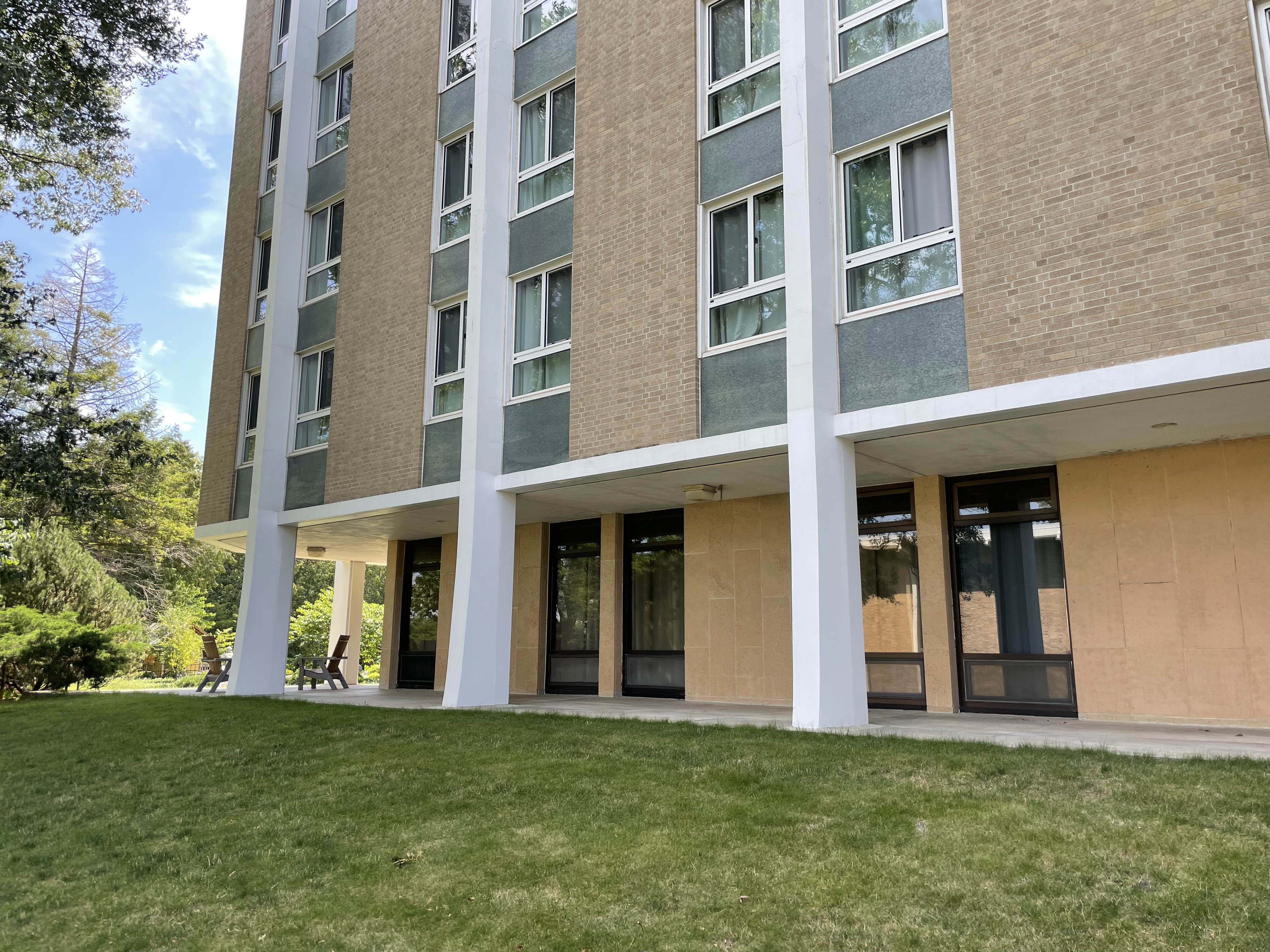
Watson Hall dormitory (1966) adjacent to a Japanese Garden at Carleton College (note how the exterior columns subtly curve outward at the base)
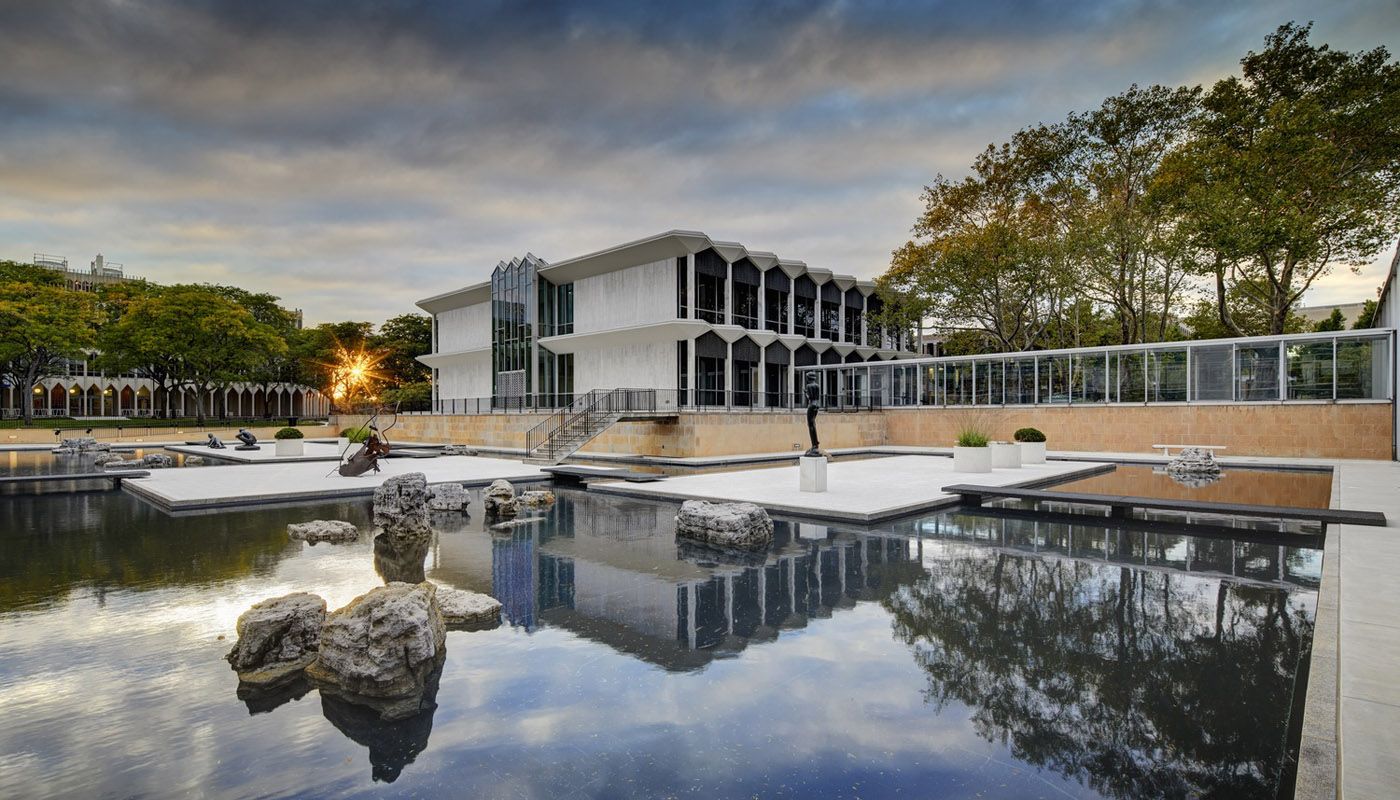

Above: McGregor Conference Center, Wayne State University (Detroit, 1957), exterior and interior
Yamasaki’s design for the Reynolds Metals Regional Sales Office (below, 1959) incorporates elements found in the buildings featured above while also architecturally acknowledging the business of the company that commissioned it. Evident is the architect’s use of ornament clad to the facade of the building, but here in the form of a metallic visual screen attached to the building’s exterior. These elements, as well as the open terrace, and the glass-walled atrium surrounded by columns, are design features that we find over a decade later in his plan for the World Trade Center.
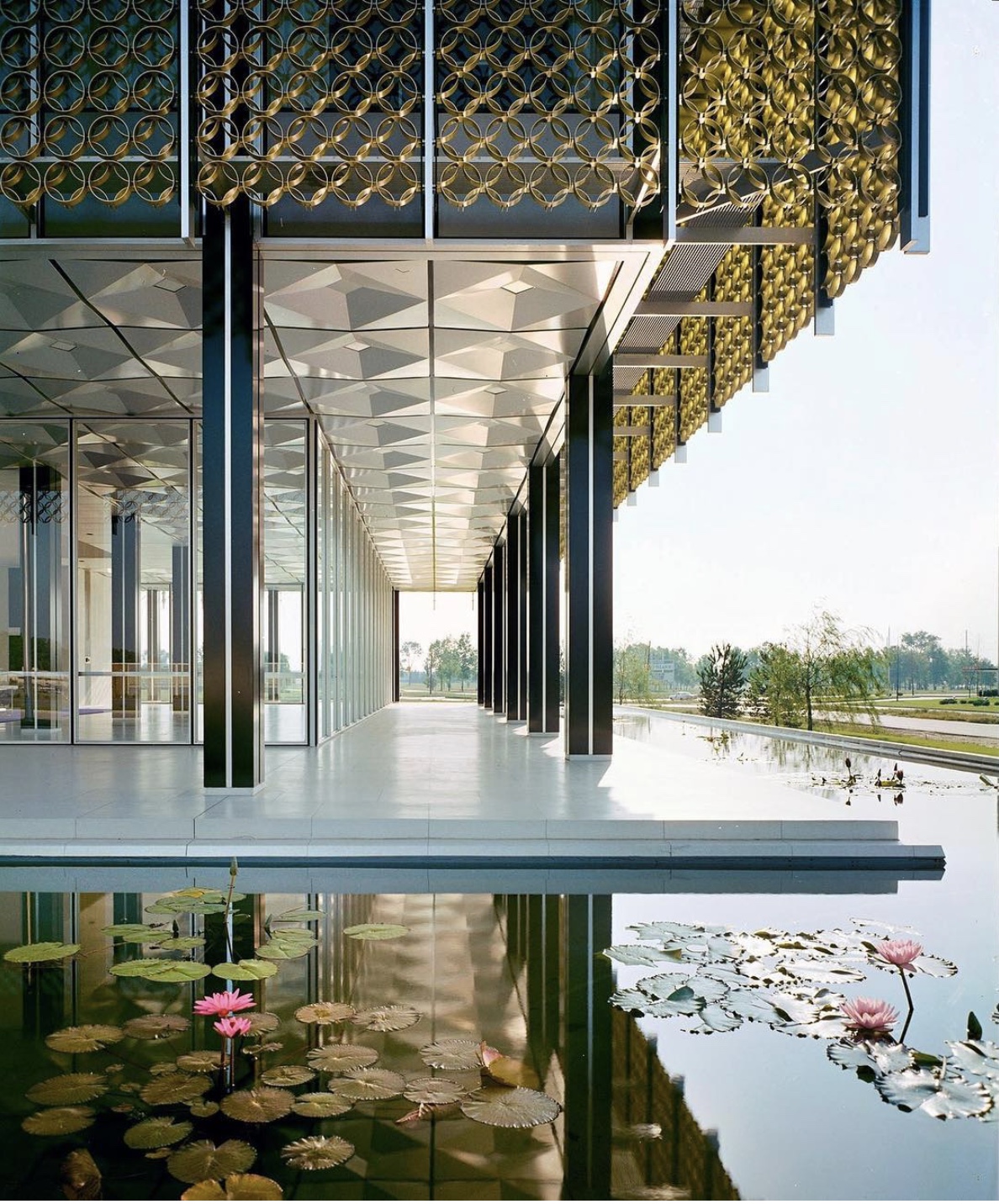
Some aspects of Yamasaki’s architectural work such as the terrace and reflecting pool adjacent to his McGregor Conference Center, as well as to his Reynolds building, may appear to embody an aesthetic sensitivity characteristic of Japanese culture. Raised by a Japanese family in America, Yamasaki – while recovering from serious illness and surgery – traveled to Japan, Italy, and India, in 1953, on an extended sojourn that provided not only recuperation but also inspiration.
Not all of Yamasaki’s designs are characterized by strong vertical lines and distinct angles, as well as by detailed surface ornament. Two notable exceptions are his 1956 St. Louis Lambert Airport terminal building, and his 1964 West Gym for Carleton College (both below).
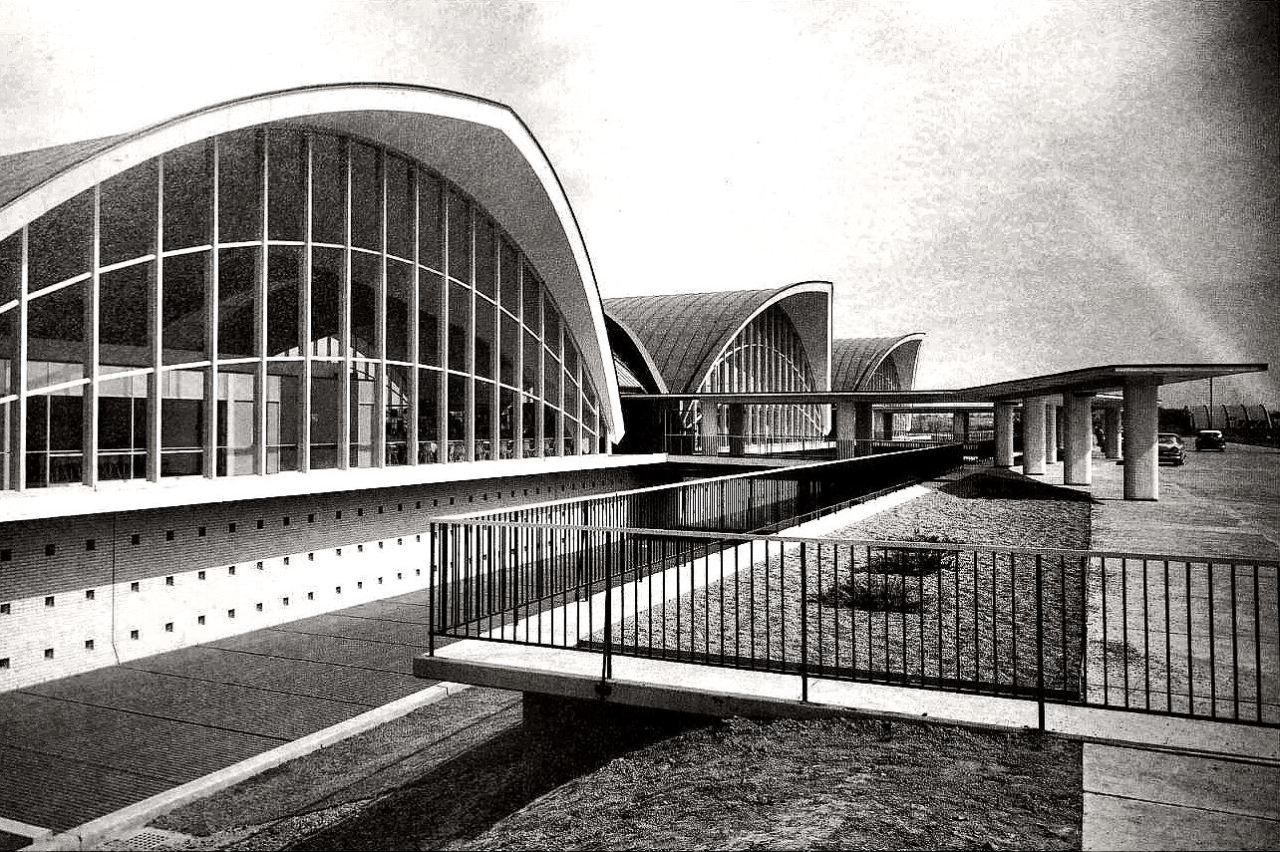

Despite the passage of years, Yamasaki’s architectural designs continue to have a fresh and winsome appearance. His buildings stand apart from many examples of urban modernism, where reflective glass-clad buildings often appear indistinguishable from one another and where attention to human scale seems overlooked, especially in the experience of those who approach such structures. By contrast, Yamasaki’s buildings remain attractive and inviting.
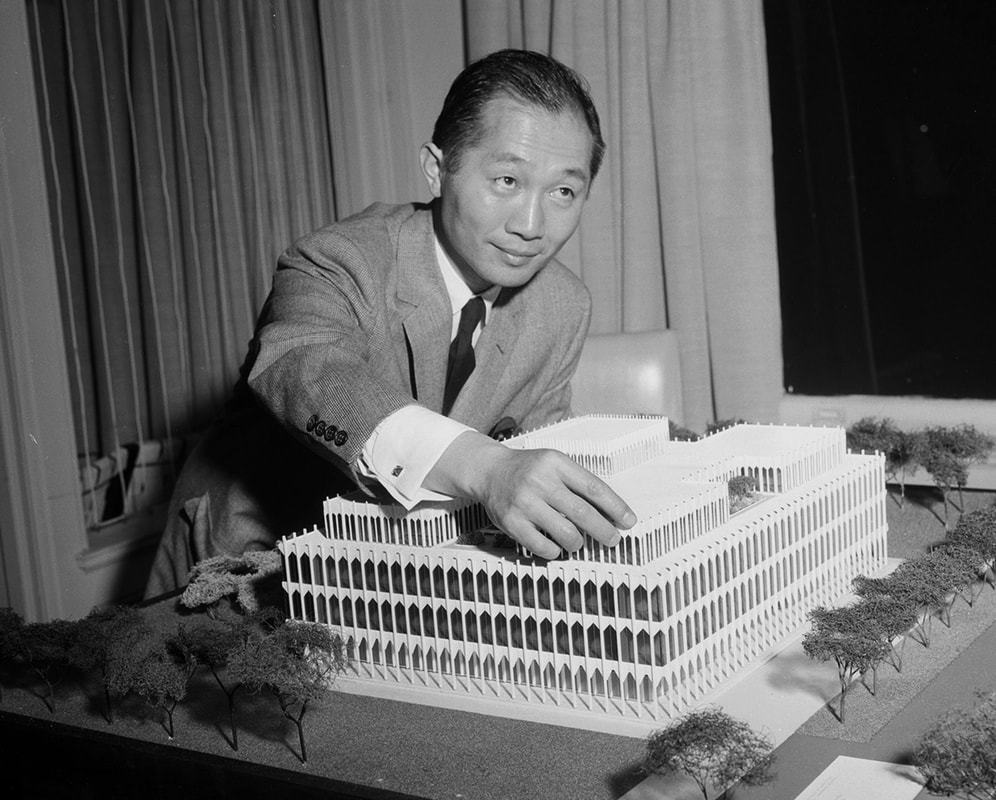
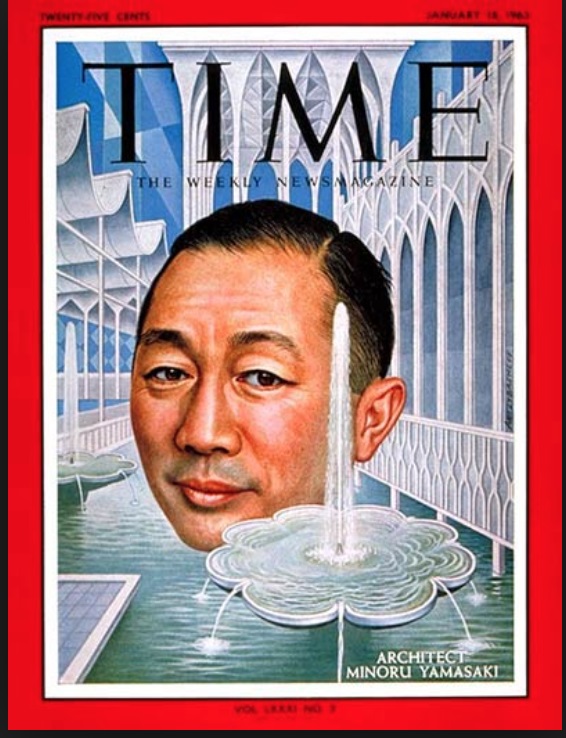
Yamasaki displaying a scale model of his Wayne State College of Education building (above), and as featured on the cover of TIME magazine (1963).
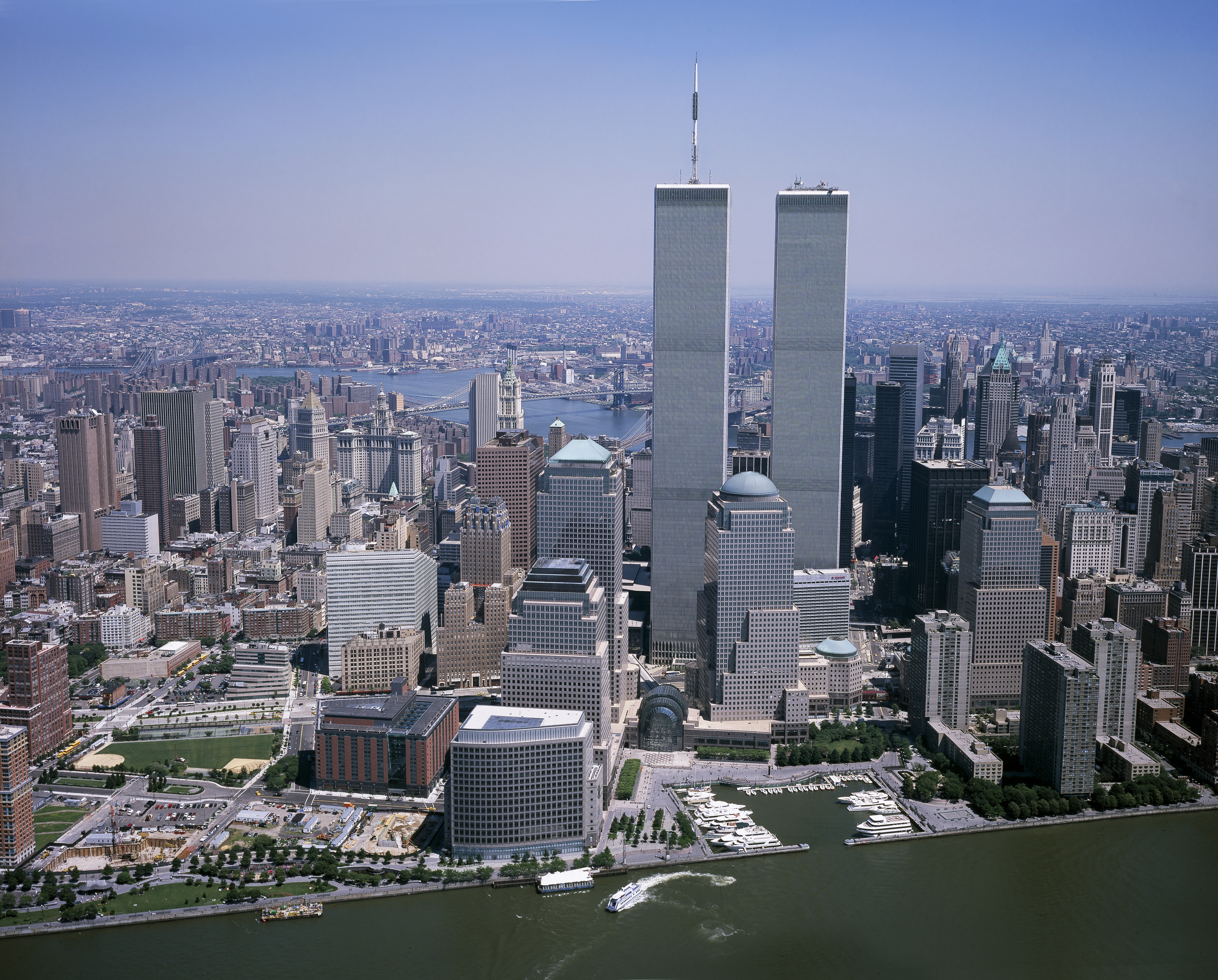
The completed twin towers of the World Trade Center prior to 9/11
 Toward Beauty