Nick Fleck

A Beautiful Place Where I Went to School

A view from the campus farm across the Connecticut River valley


In the fall of 1971, I was truly fortunate to be able to head off to Northfield Mt. Hermon School for my sophomore year of high school. After growing up mostly in Japan, and returning to the States for a couple of years, I was ready for a new challenge. I was yearning for an educational opportunity that would build upon my earlier experience at the Yokohama International School. When I arrived at Northfield Mt. Hermon (NMH) as a scholarship student, this inviting place opened the world for me, and changed my life.

Rooflines of a dorm, faculty house, and the student center in early evening light

Recently, I attended the 50th reunion of my NMH high school graduation class, which numbered about 365 in May of 1974. After graduating from this wonderful place for learning and formation, many of us at our reunion had not seen one another in fifty years! Anticipating being with school friends after such a length of time was a bit unsettling for me, given my awareness that – like others, as I came to see – I was not the same person I was when we last saw each other. I soon felt more at ease when greeted graciously by fellow members of my class and by our school hosts.

Two of the remodeled “Cottages” that serve as dorms

A theme periodically voiced during our weekend together was how troubling were the years in which we were students at NMH. The Vietnam War was still a concern; our President was in political if not legal trouble; the society around us was deeply divided and appeared to be coming apart; and large numbers of our fellow citizens seemed either unaware of or uncaring about the precarious state of the air, water, and food supply in the world around us. [In some ways, the world has not changed!]

Being the largest class in NMH’s history, at such a time, provided another challenge. Could we – from our multiple and differing backgrounds – find or make a community built of more than passing relationships upon arriving at a place that was – for some of us – far from home? To my astonishment, my first roommate was a former Yokohama classmate with whom I had last attended 7th grade, halfway around the world. And yet, I also remember my surprise at how I felt when observing the sudden absence of everyone from campus on graduation afternoon, many of whom I would not see again until our recent weekend together.

A wonderfully large green space at the center of campus

Here are a few things that distinguished my (and our) experience at NMH during those years, which are strong features of our school. The legacy of our founder, the 19th century evangelist, D.L. Moody, continues to be manifest in a strong emphasis upon spiritual and ethical values that have the power to transform both individuals and the world in which we live. Moody’s own commitment, to address not only the spiritual needs but also the social and educational needs of marginalized youth, remains central to our school’s mission. For we as alumni are rightly proud that among the first NMH students after our 1879 founding were 16 Indigenous Americans and a freed African-American from a formerly enslaved family.

The new science building

These themes are evident in our school’s mission statement, in words regarding an education that seeks to form the head, the heart, and the hands, of all those who share life together in the beautiful surroundings of the Connecticut River Valley. Fundamental to this commitment is the requirement for every student to have a work job, 3 – 5 hours per week, participating in dish crew, cleaning dorms or classrooms, or working on the school farm. These work jobs save the school a considerable amount of money that is directed toward the substantial scholarship funds that enable many students from a modest financial background to be at NMH.

Again and again during our reunion weekend I found myself saying to Martha, “I was so lucky to go here!”

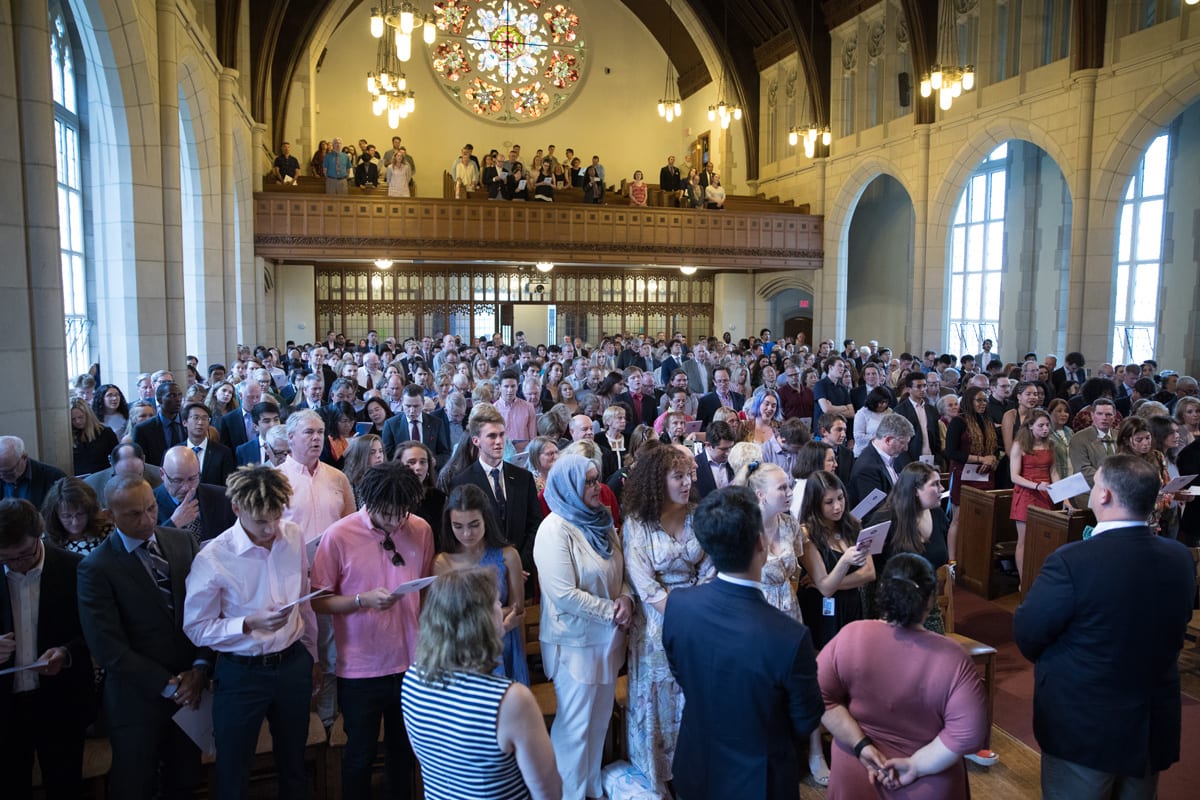
Our Head of School, Brian Hargrove, speaking to us at the Alumni Convocation, in the chapel also featured in the recent film, The Holdovers

A welcome sign in the nearby historic town of Northfield, Massachusetts


Note: NMH provided a fitting setting for the movie, The Holdovers, and for many of its memorable scenes. The film was set in the time period when my fellow classmates and I were in attendance at NMH. One fellow alumnus at the Reunion was celebrating the 75th anniversary of his graduation!
The Beauty of Asking “Why?”

If reading this by email, please tap the title at the top to open your browser for the best experience. Then, clicking individual pictures will reveal higher resolution images.

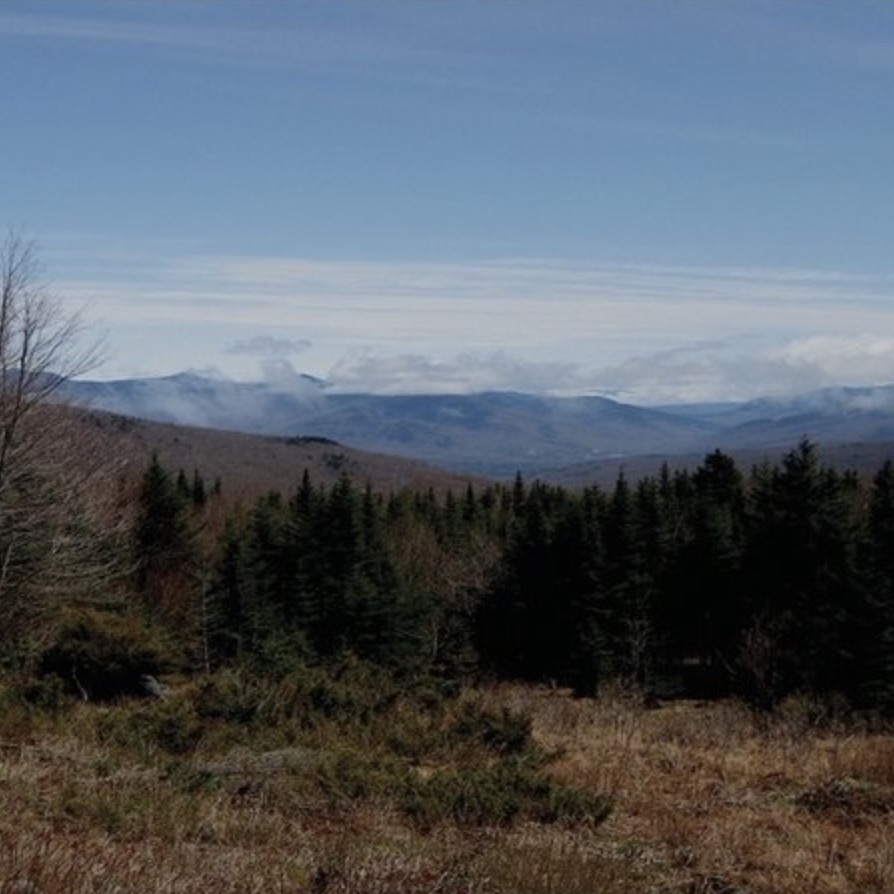
Back cover photo from Natural Sustenance: Selected Poems, by Nick Fleck


“Why?” It all started in a seemingly innocuous way. “What do you want from this course,” he asked. A brave one among us ventured the answer that some of us were thinking, but were not honest enough to say: “an ‘A’.” Our English teacher, Nick Fleck, responded to my classmate in a neutral way, with a further question, “Why?” Our fellow aspirant to higher grades began to offer pretty typical answers, unoriginal and unsurprising. “I want a high GPA. (Why?)… I want to get into a good college. (Why?)… I want to get into a ranked law school. (Why?)… I want a good job at a high powered law firm. (Why?)…”

Gradually the pauses before our classmate’s answers became longer. And while his responses still sounded plausible, they seemed less and less assured. That first class session set the tone for the rest of term, as over time Nick prodded all of us to articulate answers to questions like these. And nudged us toward answers that were more and more our own, and less dependent on our peers, our parents’ expectations, and our perceptions of the uncertain world outside our rural New England prep school.

Why? The question at first provides an invitation to share acquired knowledge, display settled opinions, and voice aspirations. But the question can also be unsettling, especially when we begin to run out of platitudes and ‘safe’ answers that don’t require self examination or being open to adopt a different perspective.

I can’t fully explain why, out of a class of some 350 or so fellow graduates, I was one of only 3 or 4 who did not go directly on to college. But Nick Fleck’s persistence in challenging us to think for ourselves played a big part in it. Temperamentally, I was and am a self-learner, which disposed me toward pursuing that risky path (“…in a blind career…,” as in a line from a poem Nick had us read). Naive self-confidence also bolstered my willingness to undertake a journey on what appeared to be a largely untested road. I wanted to be an architect and to make art, and those whom I most admired had embarked upon their careers in earlier times by this same route through apprenticeship and self-study.

Having been so consistently asked why, I made the question my own and began asking it in a self-referential way. Why did I want so strongly to embrace and try to create what was beautiful? Why was this important to me… and to others apparently walking the same path? Why was I then beginning to wonder whether this was good and, if so, to what end? And why then was I going on to ponder what was good for its own sake as compared to things of passing significance?

Within a year, after living in New York City seeking non-existent apprentice drafting positions during the ‘oil crisis,’ I returned hesitantly to formal schooling. My college art studies were interrupted by another sideline, driving a forklift in a warehouse freezer for six months as a Teamster. Then, surely to my parents’ relief, asking why led me on a more traditional path, from art history to classics and medieval studies, during which I experienced an unanticipated spiritual conversion. All the while I was living with the same question: why?

Nick Fleck was not a religious man in any sense that I could discern, though he was clearly attuned to the ethical principles exemplified in Thoreau’s writing, and latent in poems he would have us read. I think it greatly surprised him when, returning for our 25th reunion, I gave him credit for setting me on the path that led to my conversion, ordination, theological studies, seminary teaching, and parochial work – experiences not readily familiar to him. But he was the one who persistently asked why, and who invited us to own the question for ourselves.

This week I realize that Nick’s great question was at the heart of the Disciples’ questions when Jesus predicted his forthcoming suffering and death. Nick’s question is simple, and perfect for Lenten reflection.


I was happy to see an article in the Greenfield Recorder noting how Nick Fleck had founded the Northfield (Mass.) Bird Club and was still active in leading bird walks. I trust that he continues to write and share his poetry, and help open new worlds to young persons. He helped us to discover the power latent in the word, “why,” especially when posed as a question.

The recent movie, The Holdovers, was partly filmed at my school, Northfield Mt. Hermon, and is set in exactly the time period I was there. During those years, I was in the chapel depicted within the movie a couple of times each week for required assembly gatherings. Seeing my school again during my 50th graduation anniversary year has obviously brought back memories.

A recent gathering in Northfield Mt. Hermon’s Memorial Chapel.


Note: blog settings have been changed to provide more opportunity to offer comments, using the link below.