Frank Lloyd Wright related

The Beauty of Making Replicas

[If reading this by email, please tap the title at the top to open your browser for the best experience.]

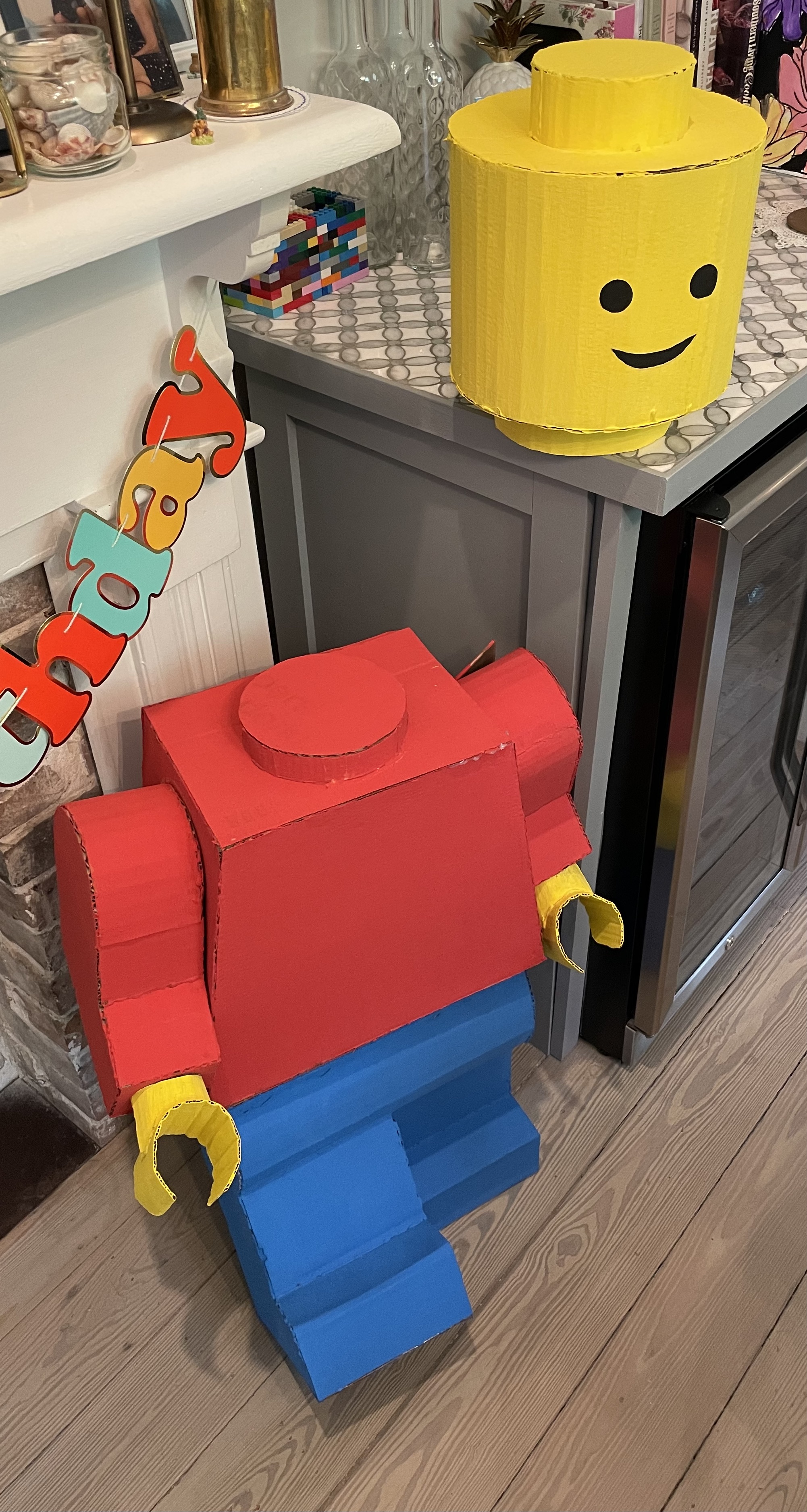
‘Lego Man’ by Anders

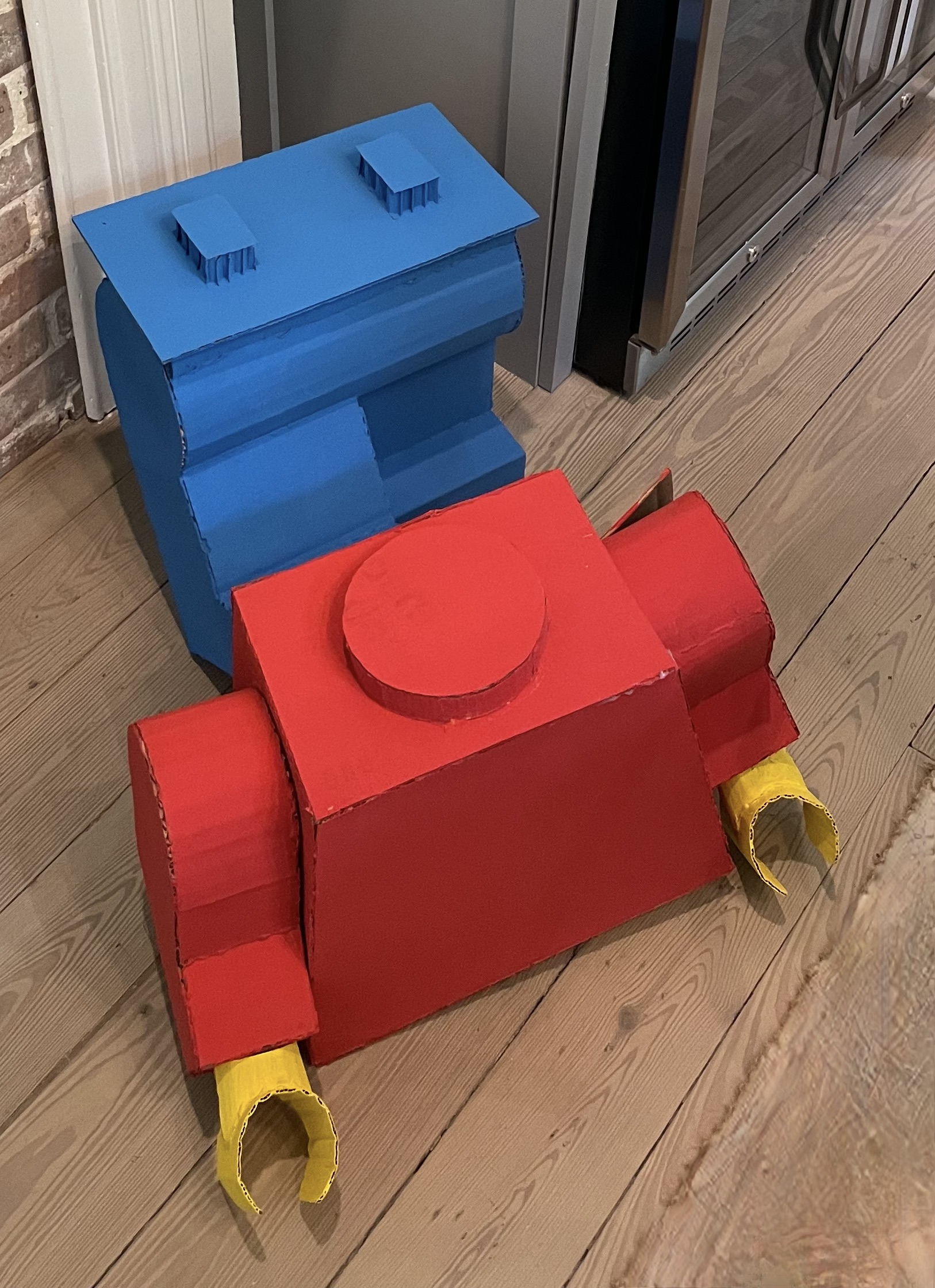
Lego Man comes apart…

… just like the original


We have long recognized our son, Anders’, abilities in arts and with woodworking. His gifts have blessed our family in years past. But since becoming a dad, he has offered the same gifts to his children. This year he and our grandson, James, chose the theme, Lego Party, for James’ upcoming birthday. Anders set to work with cardboard, paint, and glue. The result speaks for itself.

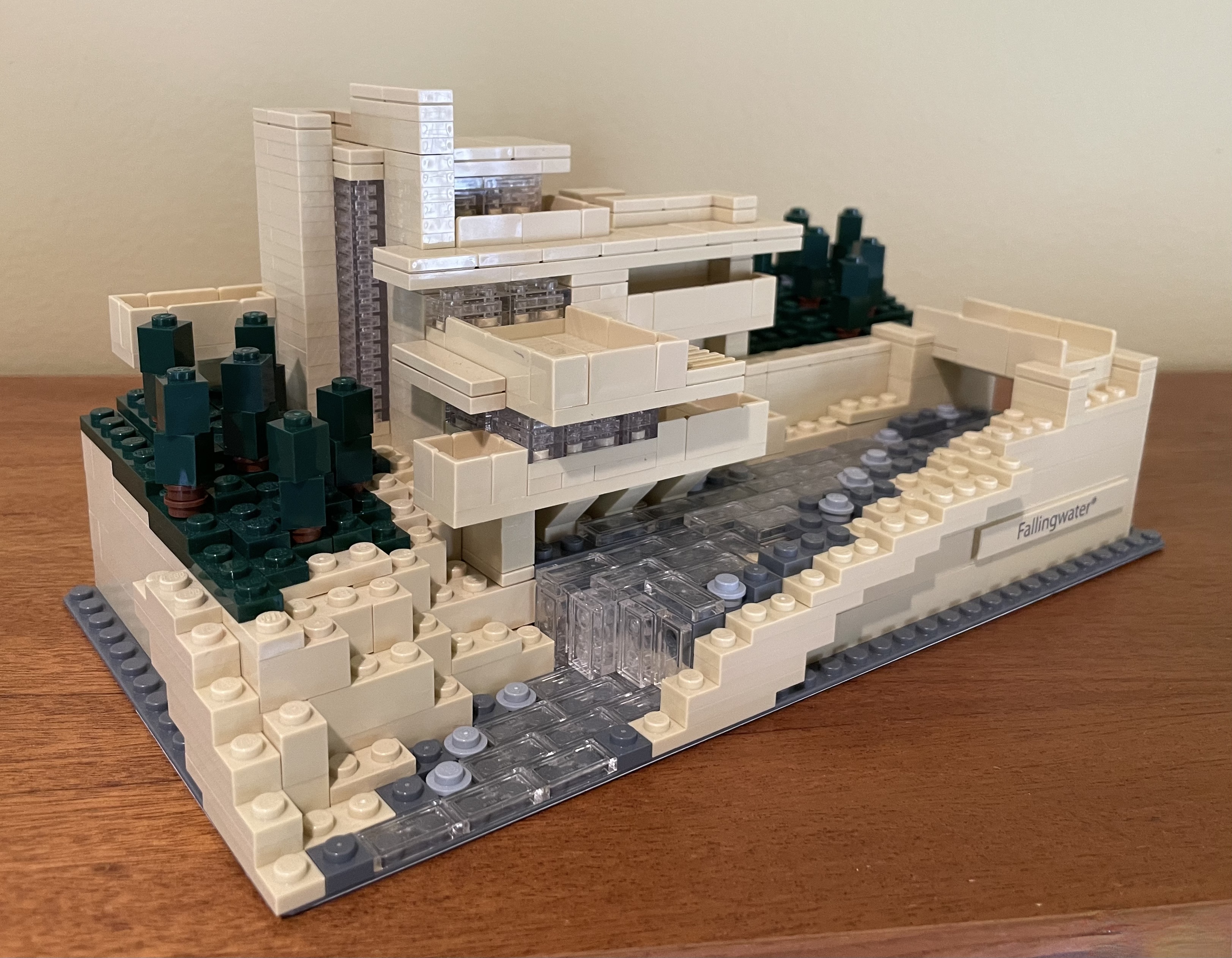
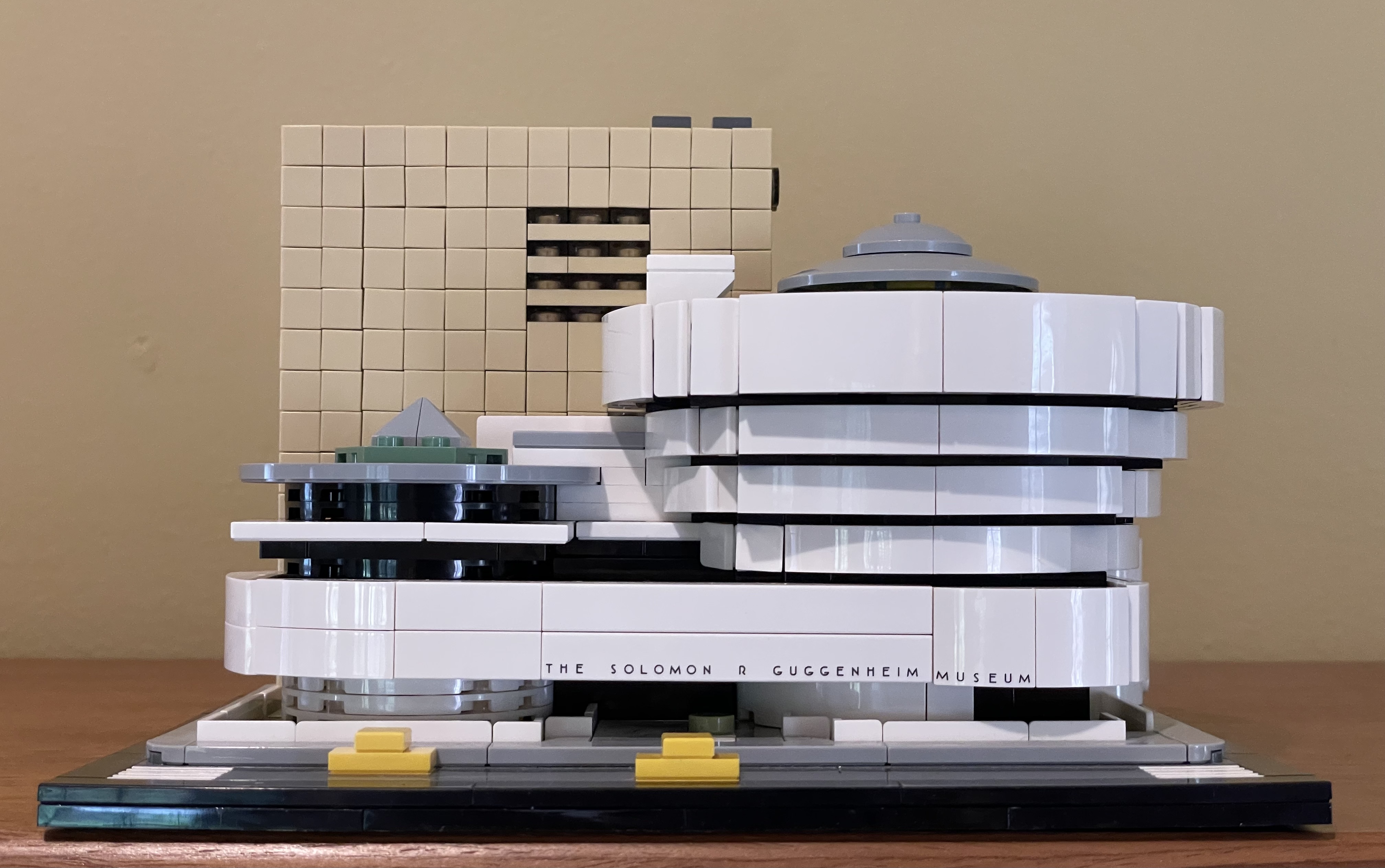
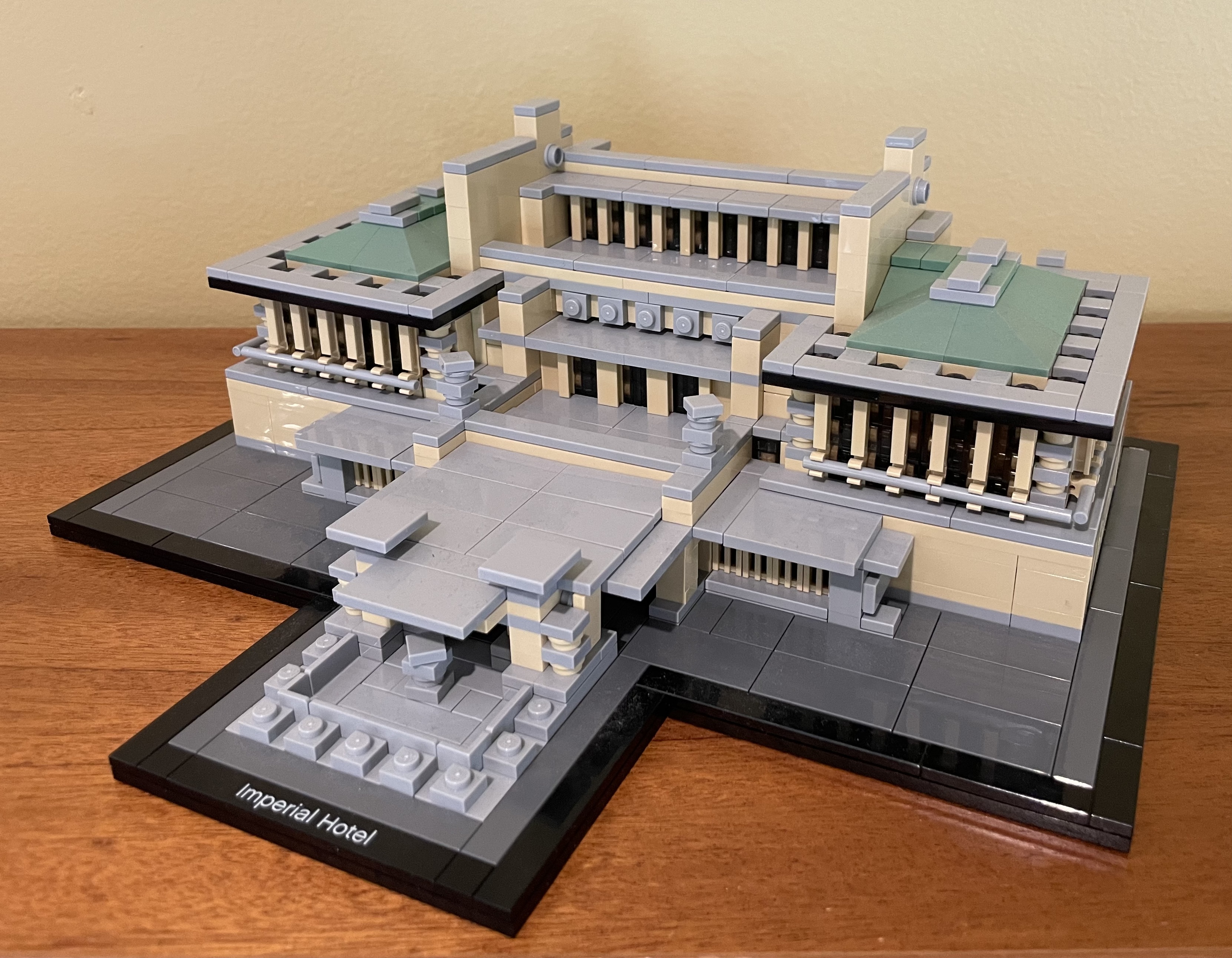
There is something about replicas that help us better see the things after which they are modeled. Lego kits provide an excellent example. Somewhat like the work of artists who draw caricatures, Lego models when completed have the capacity to alert us to distinctive visual features of the originals that have inspired them. I find this to be especially true with the Lego kits of several Frank Lloyd Wright buildings that James expertly helped me to assemble. In particular, carefully putting together these kits has helped me to appreciate the interior spacial organization of these buildings in a way that floor plans and elevation drawings can only begin to suggest.

Assembled Lego model of Frank Lloyd Wright’s Falling Water house

The Guggenheim Museum model

The Imperial Hotel model

Having recently encountered Anders’ Lego Man project, we came away impressed with his ability to scale up accurately a very small original into a centerpiece for a birthday celebration. We are looking forward to the party!


The Beauty of the Song of Solomon, or the Song of Songs


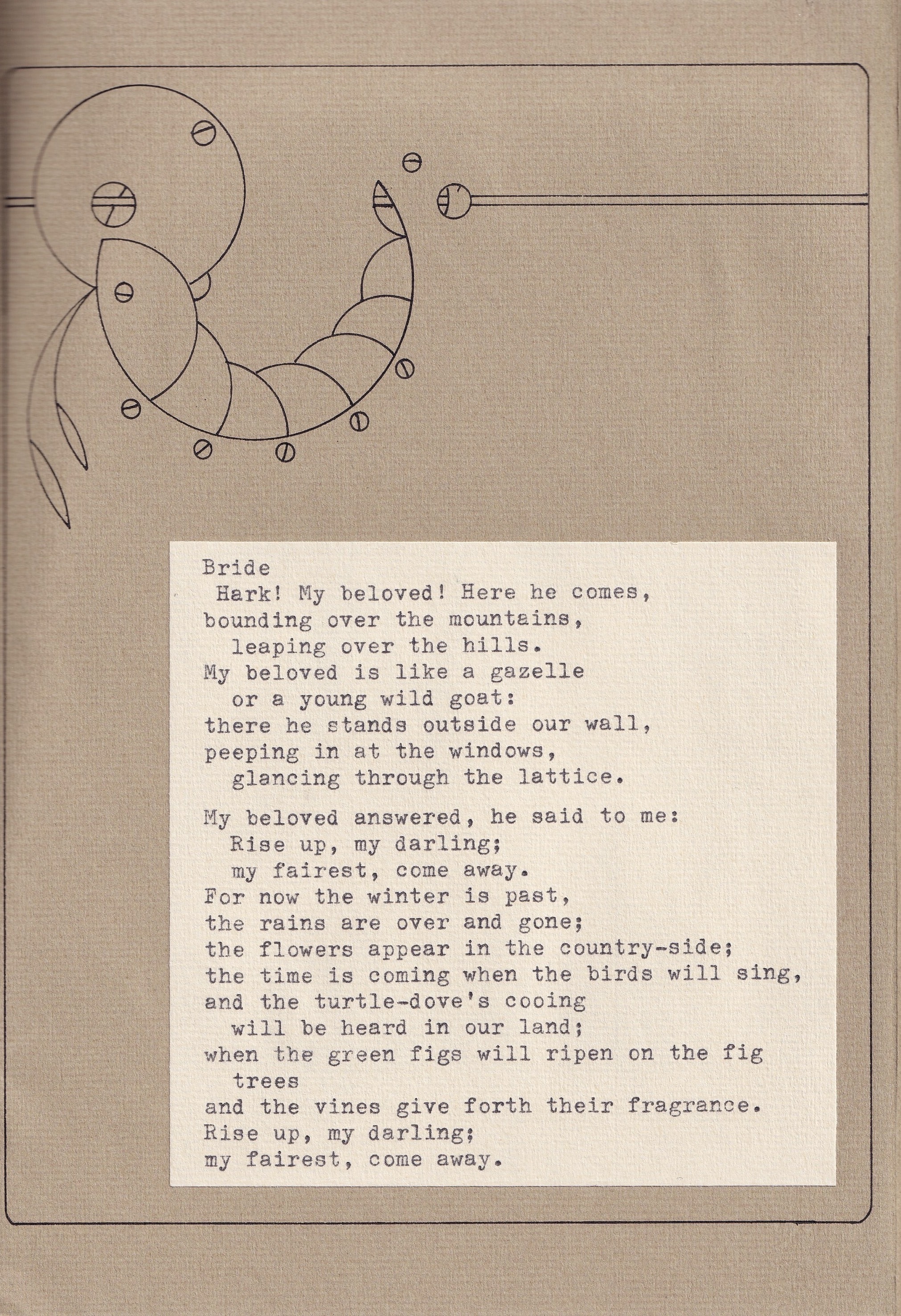
Here, I offer something most personal. Below are some pages from a project I prepared for and then sent to my beloved, in the autumn of 1977 (© Stephen Holmgren 2023), about 45 years ago. She was someone who I very much hoped might in the future be my betrothed. She was and is, Martha, to whom I sent this booklet in the autumn of 1977. Designed and composed in a pension in Florence, Italy, assisted by access to a manual typewriter at St James, the local Episcopal / Anglican parish in Florence, I prepared this multipage document, and sent it to Martha who was pursuing a study year in Taipei. Amazingly, it got there through international mail, and equally amazing is the fact that we still have the physical original of the little  booklet today. (God is good / all the time)

Of course, like all proponents of eternal love and affection, I have fallen short of living into the ideal. But, I still believe in it! Those of us who have entered into this particular covenant can admit this. Why? Because in the covenantal reality of Judaism, and then within Christianity, what we do, and perhaps more importantly what we have failed to do, is not the real issue. The real thing is the the One who grasps us, holds us, and saves us, always. And, the One who holds us together.

More Early Graphic Design

[If reading this by email, please tap the title at the top to open your browser for the best experience.]

An ink and water color design for the cover of a small pamphlet


Above, an additional cover design for a small pamphlet

Below, I share the top third of a number of designs for tri-folded office or home stationary, suitable for insertion in a business size envelope. When the whole page is unfolded, a blank area occupies the lower two thirds of the page, allowing space for either typing or hand writing.

Obviously, Frank Lloyd Wright has loomed large in my aesthetic formation as an aspirant to architectural and graphic design. The designs I share here are just short of fifty years old.

I have learned much from FL Wright and his work, and while enduringly appreciative of his vision I am not blind to the problems and challenges that his self-confidence sometimes led him to encounter. My favorite (perhaps anecdotal) FLW quote: “I am, by my own admission, the world’s greatest architect!”

And my favorite FLW story involves Johnson Company scion, ‘Hib’ Johnson. He commissioned Wright to design the now world-famous SC Johnson Company headquarters and research facility in Racine, Wisconsin, in the latter 1930’s. At the same time, Hib also commissioned Wright to design a grand residence for himself, later known as Wingspread. Apparently, one evening, with Mr. Johnson hosting a formal dinner party, the roof began to leak (a not-unknown aspect of some challenging Wright designs). Johnson took to the phone and called Wright, complaining that water was dripping on his head at the dining table. FLW cooly replied by saying, “Well, Hib, move your chair!”

Yet, I have an abiding sense that FL Wright’s now somewhat dated, but totally relevant, sensitivity to what he called organic design principles still has much to teach us. As much as I admire the modernist work of Le Corbusier, Mies van der Rohe, and so many others, I am so grateful for what I have learned from and through engagement with the life, work, writings, and designs of Frank Lloyd Wright.


The designs presented here are copyrighted (© Stephen Holmgren 2023).


The Beauty of Le Corbusier’s Ronchamp Chapel


When I was in high school, while aspiring to be an architect as well as an artist, I and my closest friend admired the architectural work of Le Corbusier. Among the attributes of his work that we held high were these: attention to human proportion and scale; a sensitivity to architectural ideals while mindful of the needs for human community, both domestic and commercial; and an equal sensitivity to providing ‘beauty’ for those in financially marginalized and especially in urban contexts.

With my long-term love for the architecture of the American ‘Prairie School,’ and especially that of Frank Lloyd Wright, appreciating Le Corbusier’s very European modernist style, rather linear and grid-like, was something of a stretch. Perhaps a parallel might be how an admirer of Monet’s water lily paintings or of Whistler’s nocturnes might be surprised by a new delight in seeing some geometric abstract paintings by Piet Mondrian.

But then, after admiring Le Corbusier’s famous Villa Savoy, and his Marseilles Block (a combined apartment and business building), I discovered his Ronchamp Chapel (completed 1954). Though I have yet to see and walk through it, I have long sensed that this is a masterpiece, precisely because it is so counter-intuitive to the main body of Le Corbusier’s work. Whereas much of his architecture is analytic, geometric, and mathematically precise in his approach to it, Ronchamp provides an example of a lyrical and semi-mystical appreciation for form and space, as well as for light and color. And whereas much of Le Corbusier’s work can be seen as the fruit of a meditation upon classical antecedents, both Greek and Roman, Ronchamp Chapel seems to bear the spiritual imprint of the culture that we associate with the medieval centuries.

For me, the best examples of that latter point are the immensely thick side walls in certain parts of the chapel, where the light intrudes through very dense materials. This, of course, is a beautiful metaphor for my life and yours.

‘Glimpses of a deeper soul’ ~ this is a phrase that has come to me, time and again, when reflecting upon the lives of persons we become acquainted with in Scripture and Christian history, in secular fiction, as well as in daily church and public life. Especially in North America, we tend to chart our lives forward, in planned linear paths of progression, each step building upon the prior one toward a calculated and hoped-for end. And yet, despite all our planning, we may be open to, or unexpectedly experience, dreams and visions of something other, more amorphous. In such moments, we perceive to our surprise unanticipated images of what may be an attainable beauty, a beauty that none of us would have imagined in the ordinary run of things. For human creativity reflects divine creativity.

To Le Corbusier, perhaps his vision and design for the Ronchamp Chapel came as just such an unexpected surprise. For me, the wonder is that he allowed himself to let his imagination bear fruit in this remarkable plan and building. Despite his avowed atheistic concept of reality, his chapel centers on the transcendent and mystical, while also touching upon and embracing the local and material aspects of our lives.