If reading this by email, please tap the title at the top to open your browser for the best experience. Then, clicking individual pictures will reveal higher resolution images.

A lost painting: Rembrandt’s The Storm on the Sea of Galilee
In 1990, in one of the most notable art thefts in modern history, two men disguised as police officers entered the Isabella Stewart Gardner Museum and stole Rembrandt’s famous painting, The Storm on the Sea of Galilee, and 12 other significant works of art. When one considers the loss of this painting (for it has never been recovered), as well as the many significant works of art that have disappeared through history, two related questions may arise: Can beauty be lost? Is beauty ephemeral?
In the process of reckoning with the recent Los Angeles wildfires, people who are art-minded are beginning to wonder about a particular aspect of all that has been lost, which understandably has received less attention, works of art.
After fires and earthquakes, beautiful buildings can be rebuilt, sometimes even better than before given the learning that may have come with their destruction. But what about lost paintings, drawings, and sculptures?
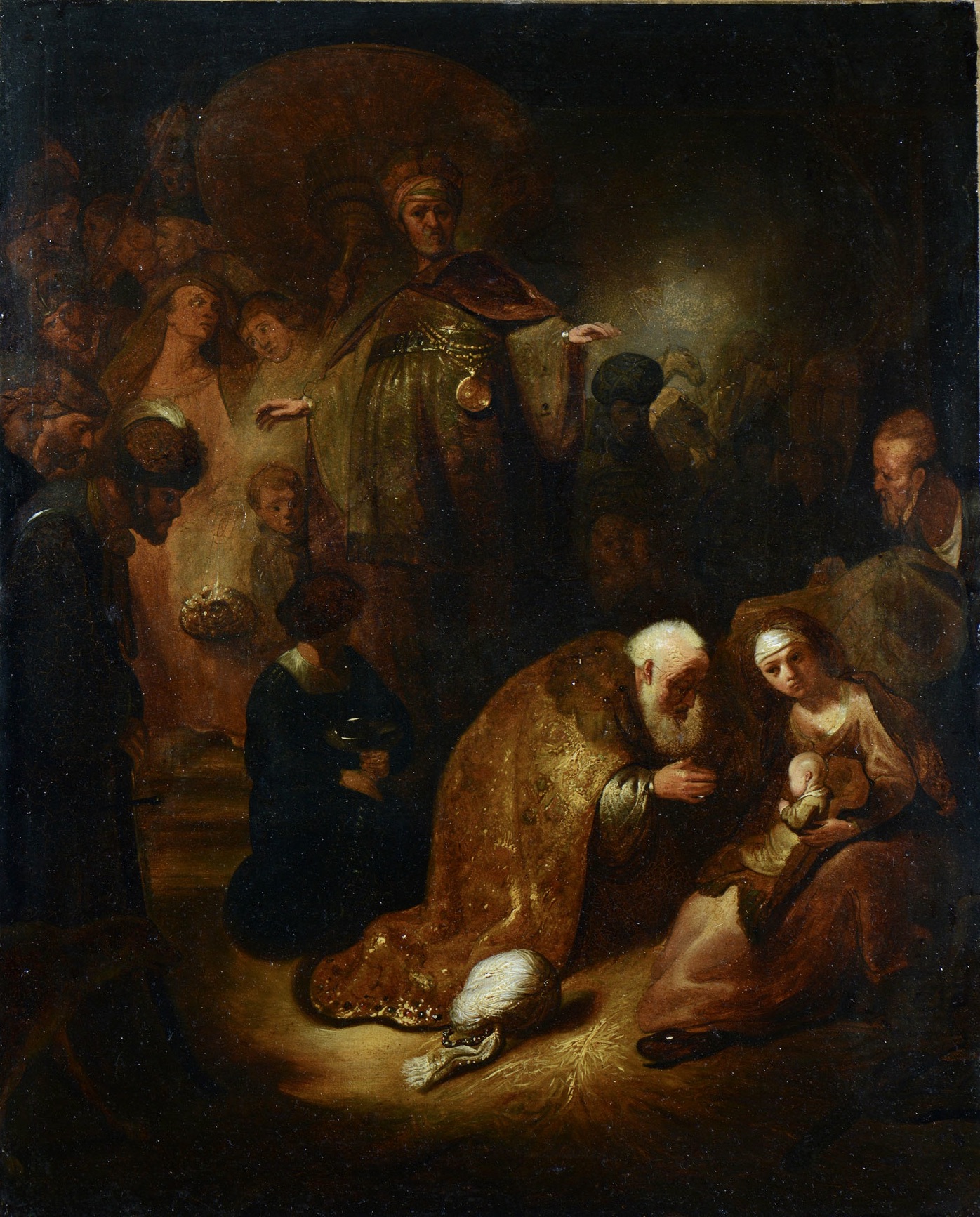
The Adoration of the Magi, attributed to Rembrandt and long thought to be lost but recently re-discovered, known otherwise through copies made by others.
Clearly, and as many of the examples featured in this space attest, works of art may now sometimes be best (or even only) appreciated through photographic reproductions obtained through the internet. It has not always been so. In earlier times collectors relied upon expert advisors and buyers through which they obtained artworks for their collections, for which they may at times only have had descriptions or comparatively poor reproductions – as did Gardner with the assistance of the famed historian, Bernard Berenson. And yet, especially when the originals had yet to be seen “in person,” or are no longer available for personal viewing, works like Rembrandts Storm painting have a beauty that is not transitory, and these artworks continue to exist as they inhabit the memory and imaginations of many others, as has been true in my own experience.
Yet, whether or not examples of Beauty in art or in nature are available for personal perusal, Beauty itself abides.

Another lost painting attributed to Rembrandt, The Unconscious Patient, also recently rediscovered.
To be consistent with their faith claims, those who are Christian believers should be among the first to agree that Beauty is not ephemeral, not here in one moment and gone in the next, nor of passing significance. Beauty, like Goodness and Truth, has since ancient times been recognized as one of the three Transcendentals. In terms of Christian faith claims, we might consider the witness of an example like the prayer for the Feast of the Transfiguration of our Lord (August 6), found in The Book of Common Prayer:
O God, who on the holy mount revealed to chosen witnesses your well-beloved Son, wonderfully transfigured, in raiment white and glistening: Mercifully grant that we, being delivered from the disquietude of this world, may by faith behold the King in his beauty; who with you, O Father, and you, O Holy Spirit, lives and reigns, one God, for ever and ever. Amen.
The Beauty of the King that is spoken of in this prayer, as with his divinity and his full participation in the Shekinah glory of the Father, is eternal rather than temporal. And so, in reference to God, to the divine nature as well as to the three persons of the Trinity who share it, we should properly speak of the source of Beauty, rather than as an example of Beauty.
Yet, as the recent Los Angeles wildfires remind us, while examples of Beauty can – at least in some respects – be ephemeral, the idea and reality of Beauty abides, continuing to inspire us even when examples of Beauty are no longer there before us to admire.
Plato, Aristotle’s teacher, continues to teach us!
 Toward Beauty
Very interesting inquiries. I am looking at many images online these days, including those in your posts, that I probably would not see in person. I always enjoy looking at paintings and drawings in person because I can see the detail and somehow appreciate the skill of artistry. I feel privileged to have been able to travel and see great works of art, but if I didn’t have the resources or availability to see those works, I think I could still access the sense of appreciation and beauty that they bring. So it is with the many things that we appreciate and love in our world of experiences, those things that we can not see in the flesh but are as real and true to us as if we stood next to them and observed them in the flesh.
I appreciate what you have shared here. Just returned from seeing the Gauguin show at the Museum of Fine Arts in Houston, where we saw a number of paintings that have been very familiar to me from prior acquaintance through prints and online. It is so much more effective to see them ‘face to face,’ where the actual colors can better be seen, as well as brush strokes and the artist’s layering of paint. Prints and postcards never give us an accurate sense of the size of the originals. But if reproductions are all we have, I am all for them!