If reading this by email, please tap the title at the top to open your browser for the best experience. Then, clicking individual pictures will reveal higher resolution images.

I have clear memories of a particular time of day in a town where I lived for two short periods of time, Northfield, Minnesota. In middle school, and then during college, I would frequently walk over the Water Street bridge spanning the Cannon River, by the old dam and historic Malt-O-Meal mill. On summer evenings and nights, I remember almost always hearing the distinctive nasal or buzzing be-zeet, be-zeet sound of birds calling to one another in the sky above. When I first observed them, I wondered what kind of birds these were, and about their surprising nocturnal behavior as compared with other birds more familiar to me. Based on the white patches on the underside of their wings, visible from the reflected glow of the lights in the town center below, I was able to identify them as Common Nighthawks, based on Roger Tory Peterson’s well-known book, Field Guide to the Birds.

Seeming to fly far above me, I was curious about their size, imagining them to be rather large. I then learned that their size and weight puts them somewhere between a common robin and a crow, suggesting that they do not fly as high as I had first imagined. Nighthawks are insect-eaters, which accounts for why they are so evident on summer nights, amidst the target rich environment of flying bugs swarming over city lights.
With their long wings, these birds engage in bat-like flapping as well as in gliding, and I remember them flying closely together as they went about their nocturnal feeding. The American Bird Conservancy website describes them in this way: “the Common Nighthawk’s erratic, acrobatic flight style gives the bird its folk name, ‘bullbat’.” Memorable in this regard is the way that they make occasional dives toward the ground. Some observers report that these dives cause the wind under their wings to make a booming or a whooshing sound, though I don’t remember hearing it.
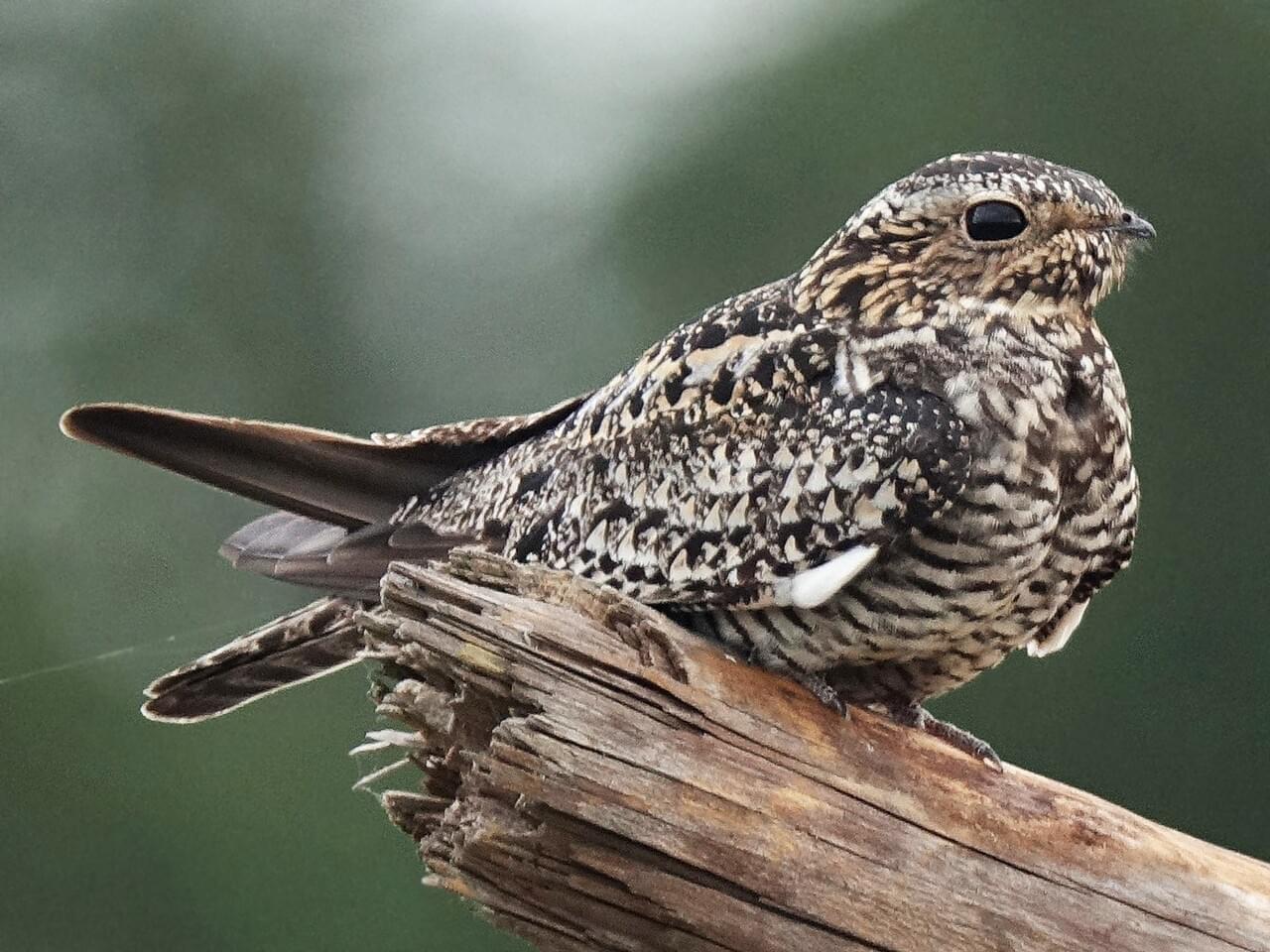
I was intrigued to learn that, given their relative size, these birds will roost and nest on such apparently vulnerable locations as the ground, elevated tree limbs, ledges, and even gravel rooftops. Among things I appreciate about Nighthawks is how their mottled coloring, with blends of light and dark feathers, has adapted them well to survive in a variety of environments, and helps to protect them from predators like hawks and falcons. Of course, there are those incongruous white wing patches, which may be an evolutionary bow to some needs parallel to survival, both the attraction of a mate and the procreation of offspring.
The shape and size of Nighthawks’ comparatively long wings aid not only their feeding activity while flying, but also the extraordinarily long annual migration they make between their breeding grounds in North America to their winter habitats in South America. In fact, they are believed to have one of the longest migration patterns of all North American birds.

To me, Nighthawks are an unexpected kind of bird to find in a town center or in a city, given their dimensions and surprising willingness to live and reproduce in proximity to the commercial activity we associate with such areas. I am always delighted when I recognize their sounds above me on a summer evening, as I look up to see them wheeling about in the darkness, with their white wing patches flashing here and there.
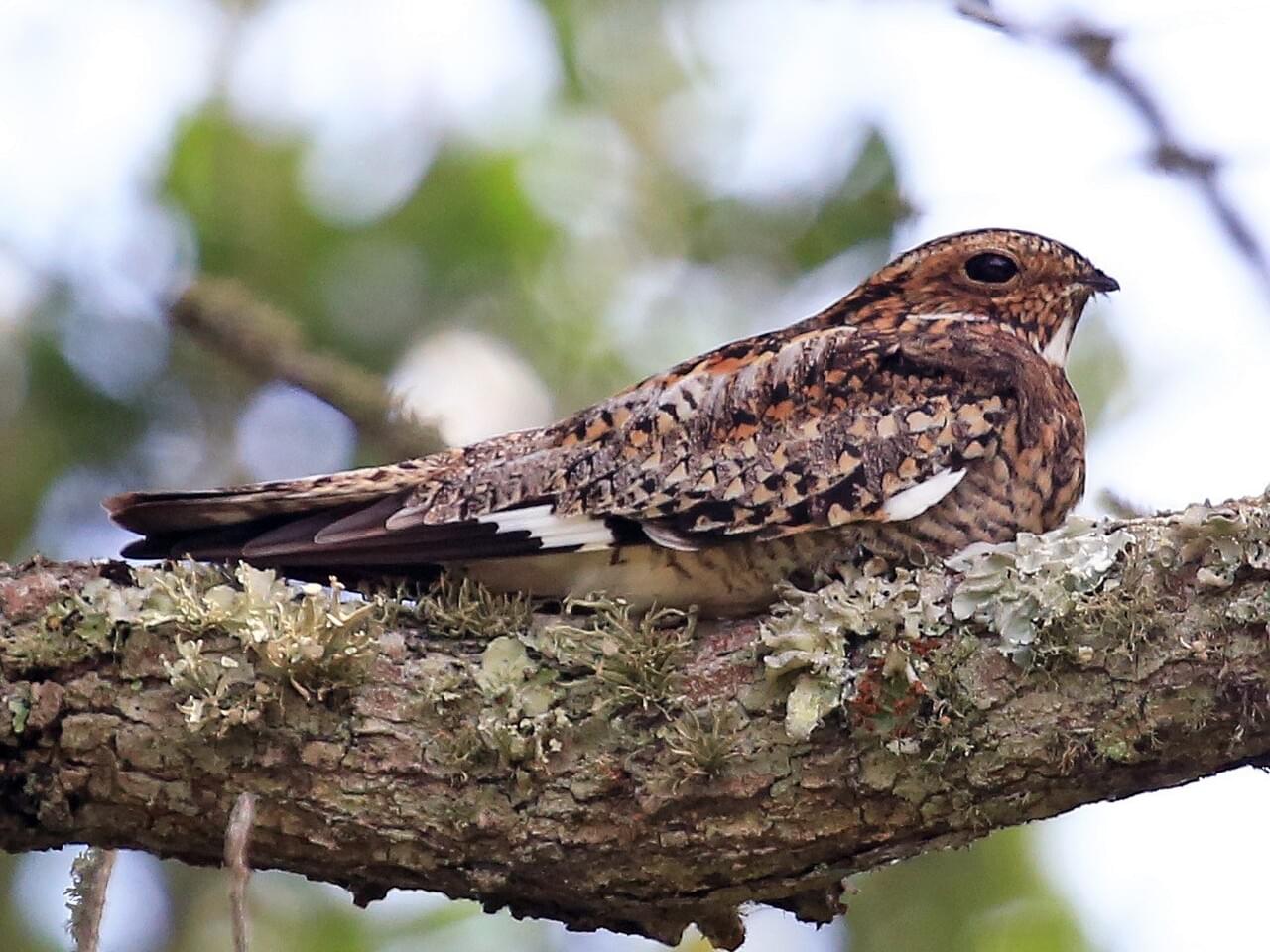
In the natural world around us, with all its dynamic interrelationships, these amazing birds are our fellow creatures. In relation to them, as well as to other examples of what traditionally have been termed flora and fauna, we are called to engage in God-like stewardship. We all seem to have our favorite species in nature that we want to protect and care for. Needless to say, Nighthawks are high on my list.

The Nighthawk page from my grandfather’s copy of Peterson’s Field Guide to the Birds
 Toward Beauty
At sea, I love to watch pelicans, cormorants and occasionally ospreys in flight. We are amazed by their beauty and grace, I wonder what they think about us.
I share your love for the birds at sea, especially the pelicans. I also love seeing them glide by in flight while sitting on the porch of a condo up on a high floor when we are at the beach.
Thanks, Stephen, for this explanation about Nighthawks; and for the photos. The beauty of God’s creation!
Yes ~ and it is a wonder that there always seems to be more to see!