[If reading this by email, please tap the title at the top to open your browser for the best experience. Then, clicking individual pictures will reveal higher resolution images.]
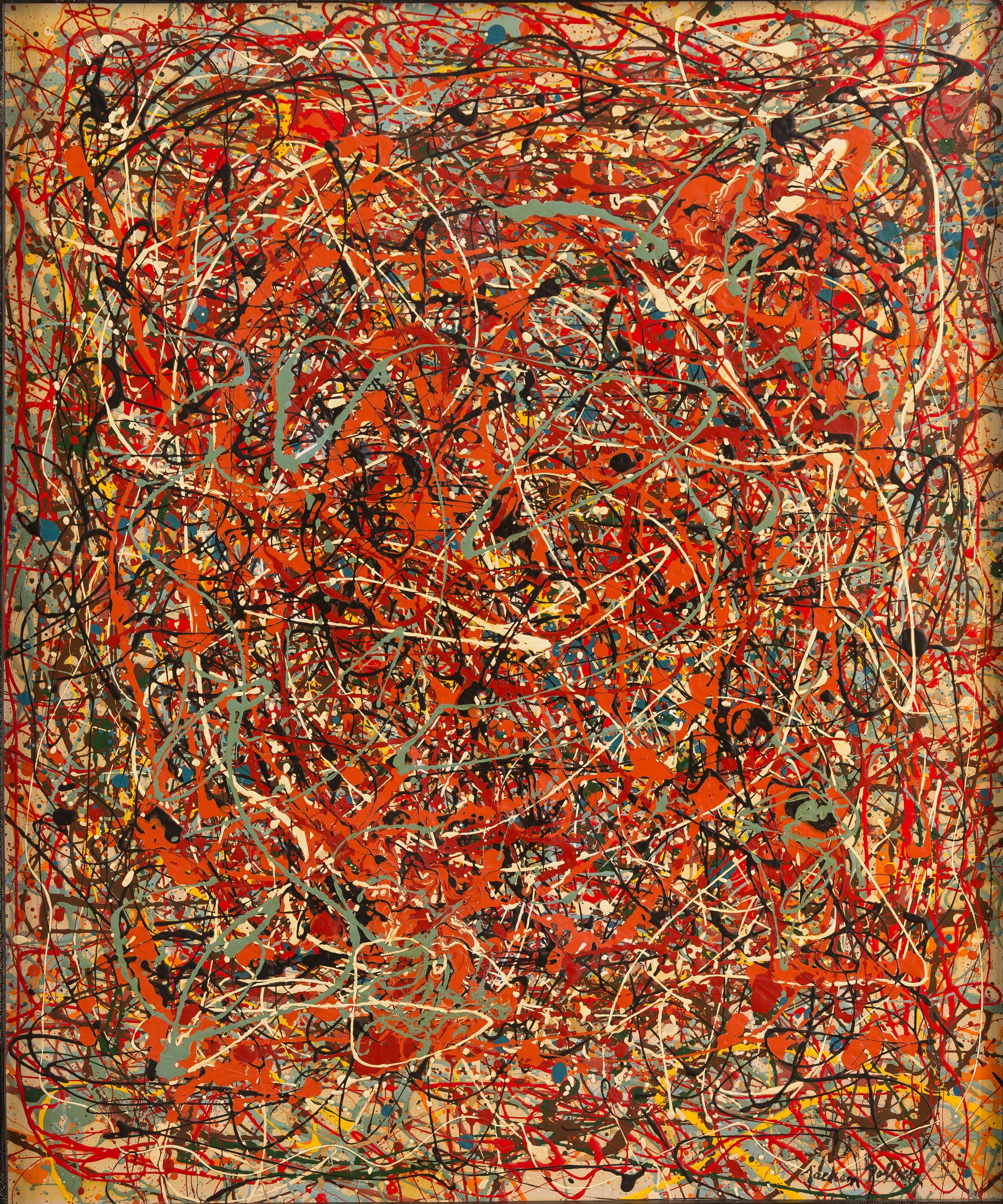
The Fury, 1943
The name “Jackson Pollock” and the word “beauty” may seem to make for an unlikely pairing. For some, Pollock’s famous ‘drip’ paintings are not only an acquired taste but continue to be the butt of bad jokes about what happens when you give a chimp a pot of paint.
These observations may bring to mind the story about when the art critic, John Ruskin, accused the artist, James M. Whistler, of “flinging a pot of paint in the public’s face,” and the nerve of asking two hundred guineas for the result. Whistler – painting in ways ahead of his time – wanted viewers of the work in question not to consider it as a traditional representational painting but rather as an ‘artistic arrangement.’ When asked how long it had taken him to paint the canvas, Whistler frankly admitted that it was just a few hours. But then, he added, it had taken a lifetime of learning to create the work. Jackson Pollock likely felt the same about his drip paintings, which made him famous.
Some viewers of “modern art,” particularly the genre of art commonly labeled as abstract expressionism, may wonder if the abandonment of representation in painting (and in other art forms) simply provided license for less than skilled artists to create and financially benefit from work that ‘broke all the rules.’ Yet, and paradoxically, many of those whose work we associate with this kind of art received rigorous training in traditional methods of drawing and painting at the Art Students League in New York. In effect, they had learned the rules so that they could break them with integrity. Pollock was among those learners, when he had studied under the tutelage of Thomas Hart Benton. Pollock’s earliest remunerated work was in the form of murals featuring traditional imagery, commissioned by the Depression era WPA (the Works Progress Administration) for public buildings such as libraries and post offices.
I am comfortable employing the word beauty with which to characterize and describe some of Jackson Pollock’s drip paintings. Unlike the proverbial results of turning monkeys loose with pots of paint, or giving kindergarteners free rein with the same, Pollock’s mature work evidences an aesthetic intuition formed over years of persistent engagement with paint on flat surfaces. Over time it yielded striking results. I find many of these paintings both intellectually stimulating and emotionally stirring.
What I am calling a formed intuition within the artist’s temperament bore fruit in the form of several perceivable variables among his drip paintings. First, we can appreciate the sophistication of his color choices. Despite an initial sense that these paintings contain a cacophony of clashing streaks of full spectrum color, closer inspection reveals that Pollock often employed a limited color palette in these works, sometimes with an almost Zen-like restraint. Second, he had an undeniable eye for composition. This is discernible within the apparent chaos on the surface of his drip paintings where pattern, unexpected order, and rhythm, can convey a sense of balance. Third, the well-documented energy the artist applied to the creation of these canvases is effectively communicated by the visual results he attained, which in my experience draw the viewer in to a deepened engagement with his vision.
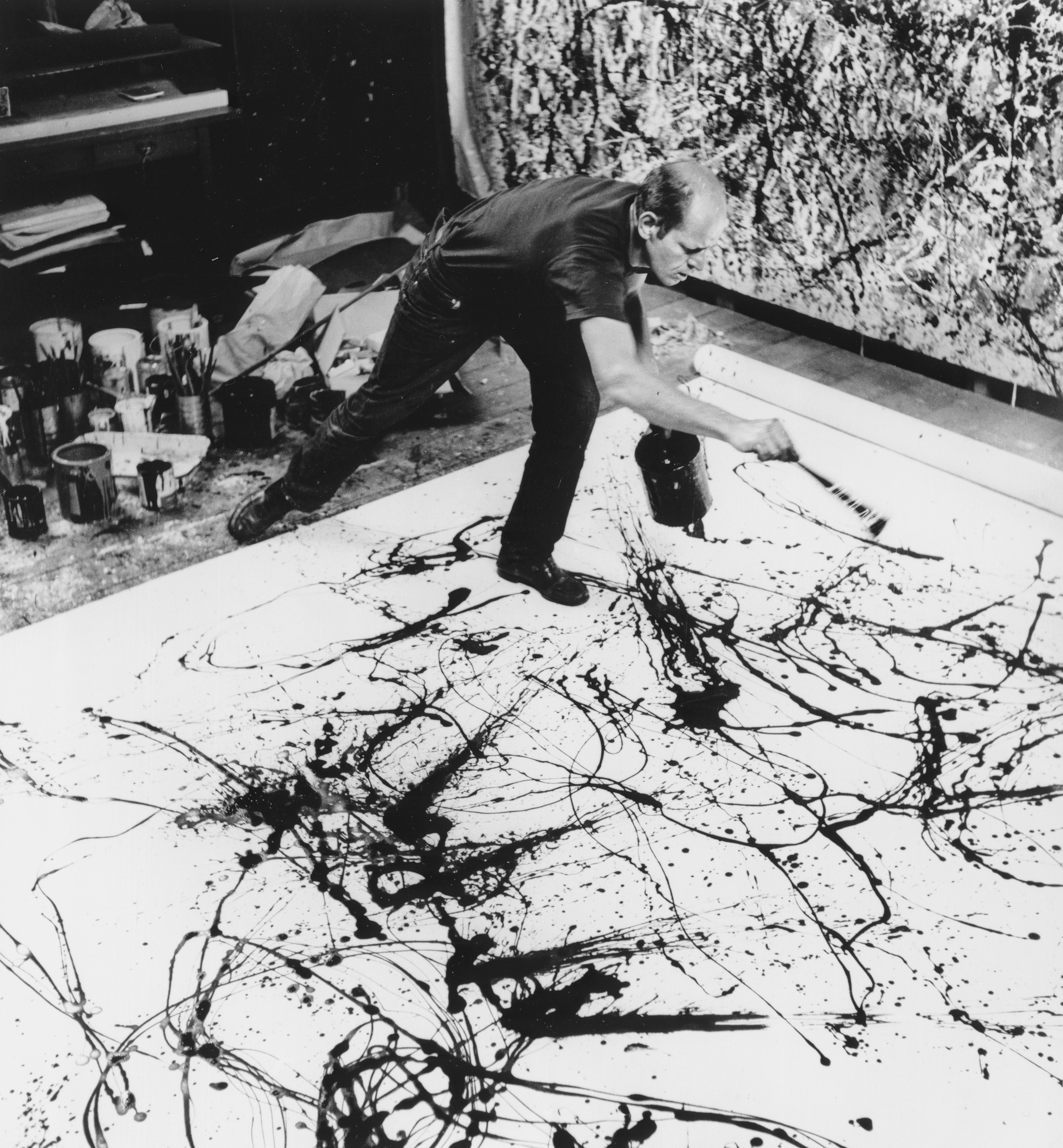
Pollock at work.
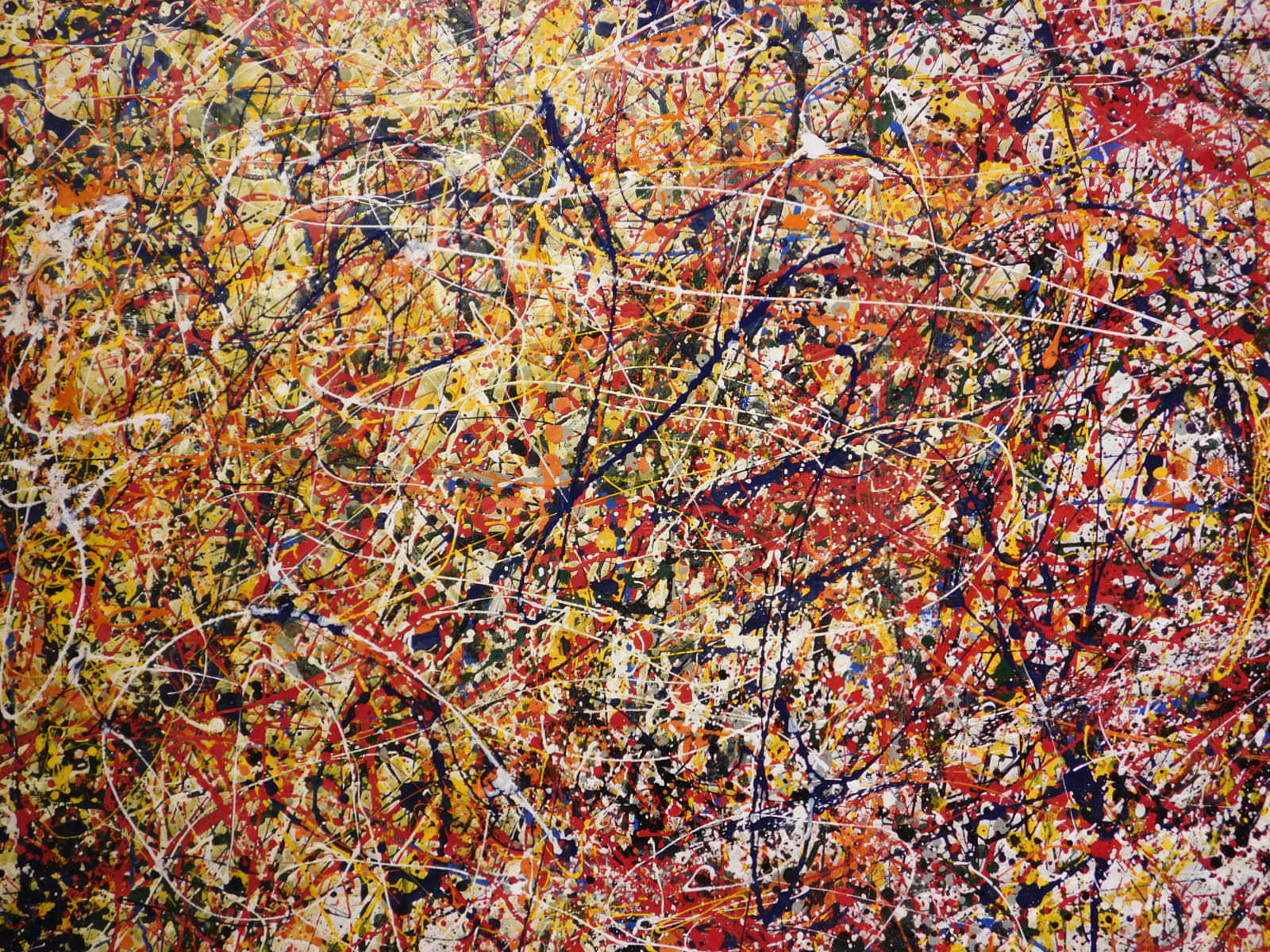
Drip Painting (title?), 1951
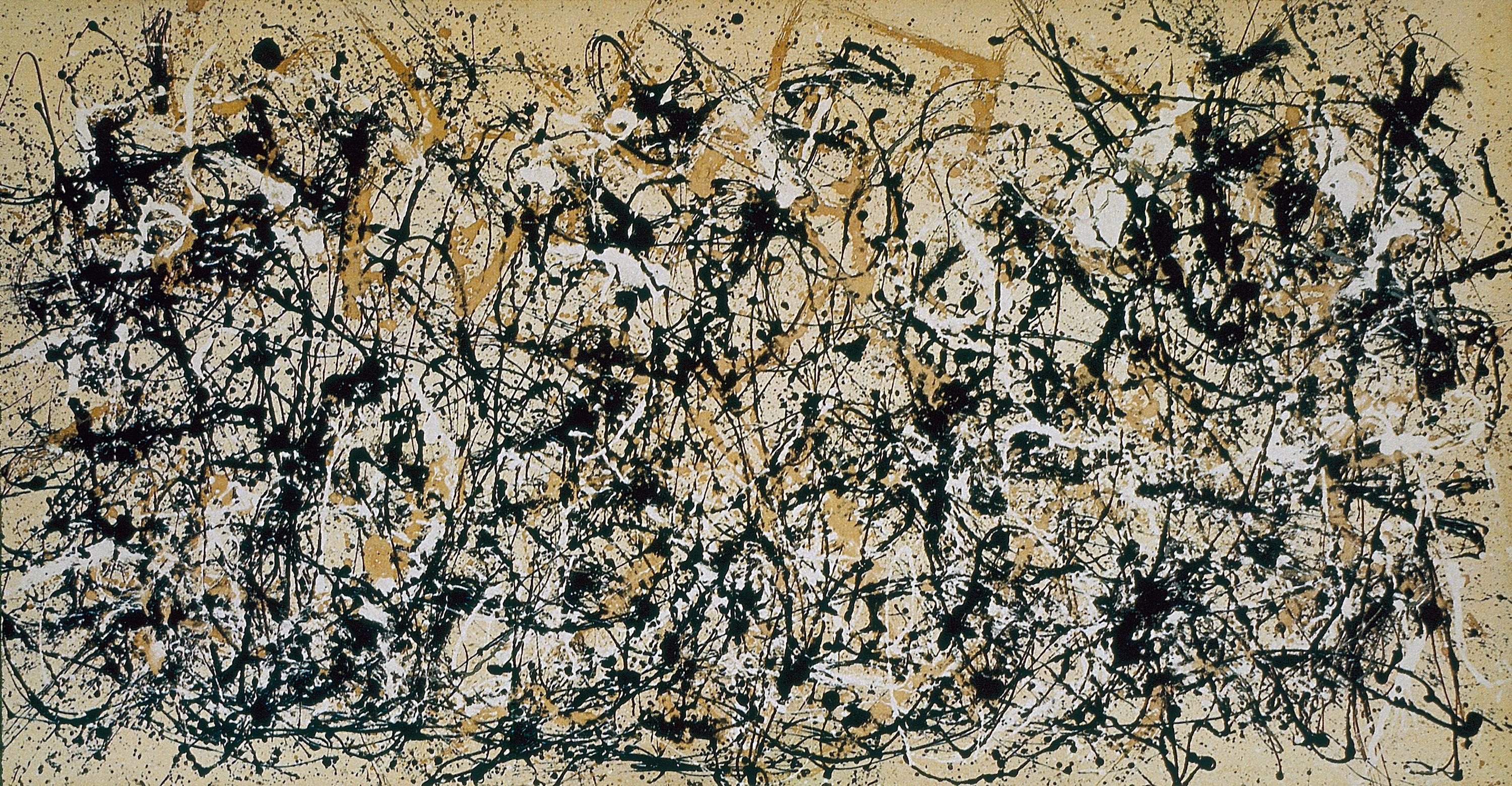
Autumn Rhythm (Number 30), 1950. This composition, despite its energetic patterning, has a subtle tone due to the very limited and neutral color palette.
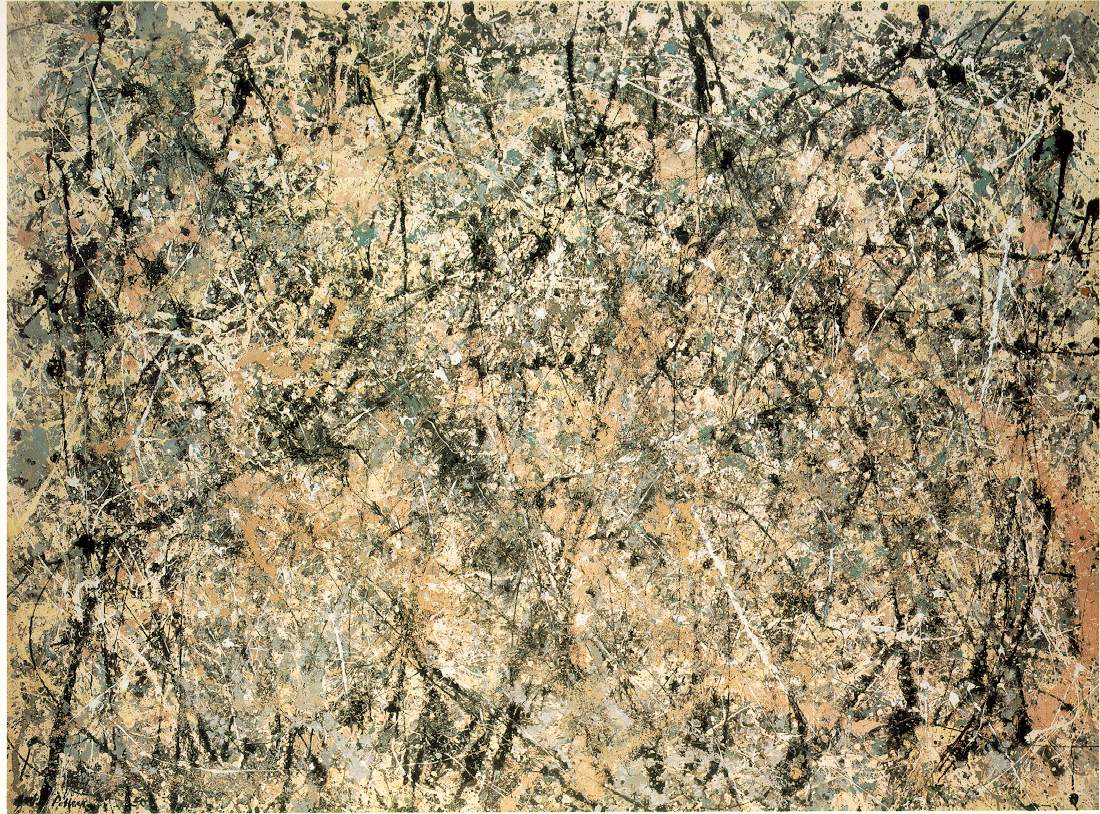
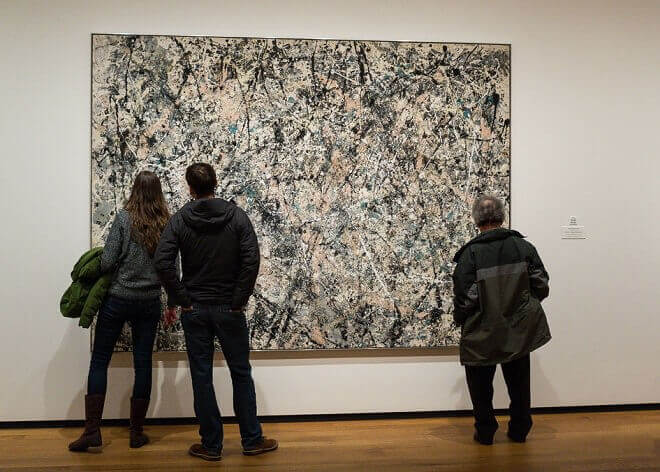
Number One, 1950 (Lavender Mist). Another subtle composition, in marked contrast to The Fury, depicted above. Viewers appreciating Lavender Mist, in a photo (below) showing the scale of many of Pollock’s drip paintings.

Number 14 (Gray), 1948. Paradoxically both lyrical and restrained, where movement displaces a perceived need for the addition of color.

This one (title and date uncertain) is also lyrically full of joyous movement but with color.

Pollock’s famous Number 11, (TheBlue Poles, 1952) on display.

Pollock in motion, creating an indelible image of vitality that continues to speak to and move people today.
 Toward Beauty