[If reading this by email, please tap the title at the top to open your browser for the best experience.]
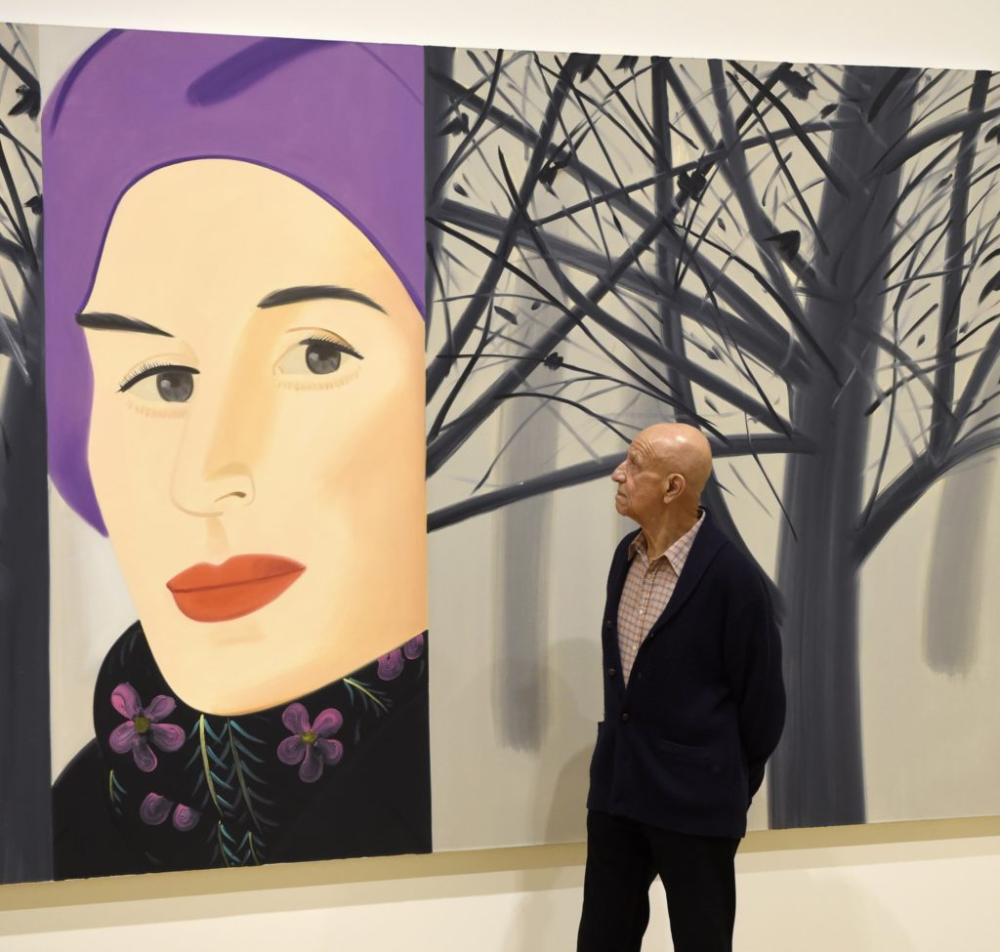
Alex Katz and his portraits of Ada, January 3, above, and of Vivien, in Black Hat, below.
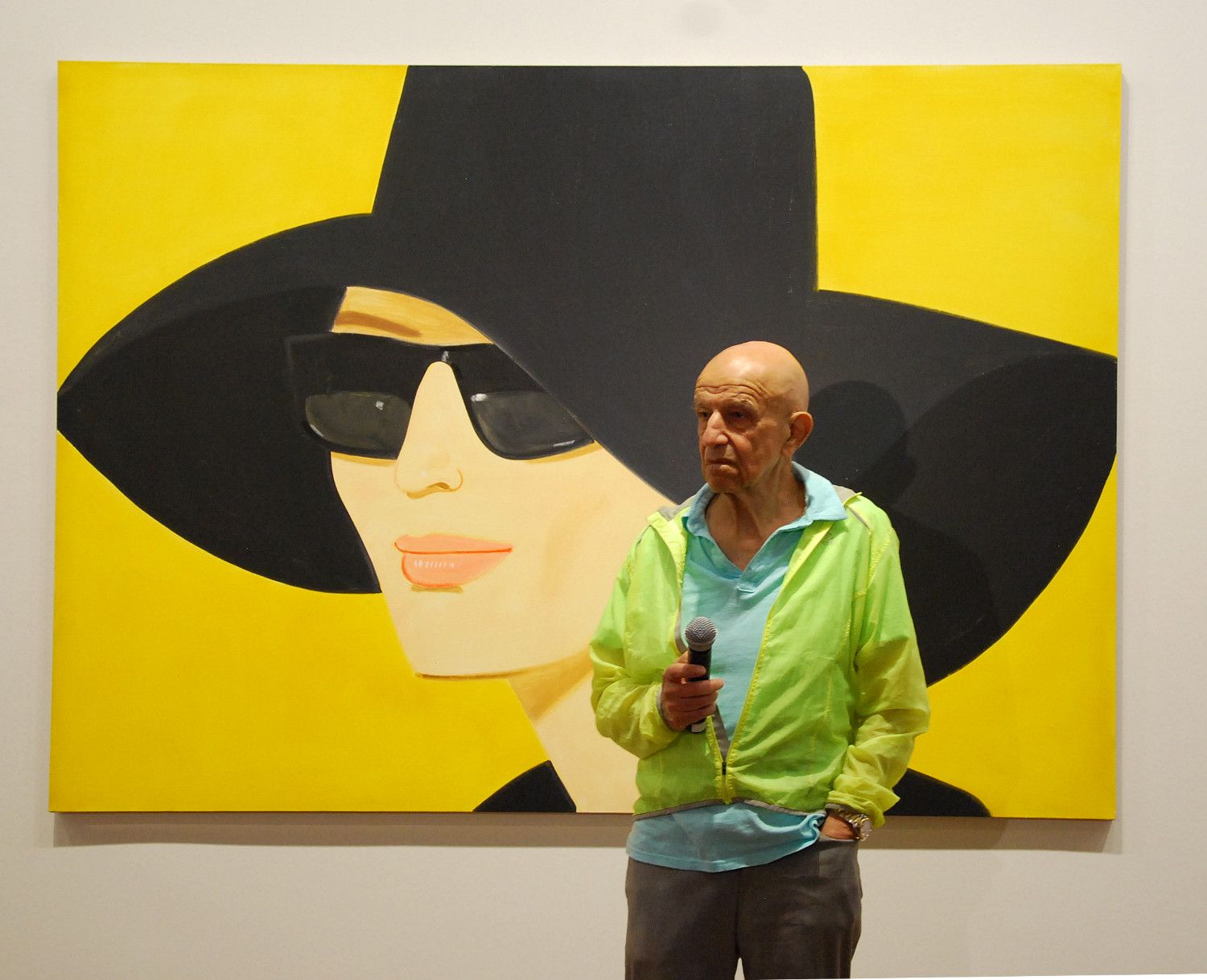
At the age of 95, Alex Katz is still painting! Having created a huge portfolio over decades of work he continues to explore the visual possibilities inherent in capturing a three dimensional world in the two dimensions on large surfaces. He has consistently demonstrated his gifts as a painter by his focus on representational art, and succeeded at this when many of his contemporaries succumbed to the widespread public appeal of abstract art, while others then began to mimic public and commercial print media in what we now commonly refer to as ‘Pop Art.’
Underlying the power of much of Katz’s work is his undeniable ability as a draftsman, the technical term for one who can draw and, in his case, draw well. Yet Katz has said that drawing is not a natural gift, but that it is a skill acquired through practice. “You learn how to draw, you are not born with it, the techniques you have to learn. So it’s a repetitive thing to keep doing it but you finally get good at it, and better.”
These observations are worth bearing in mind when Katz’ work is considered alongside that of his contemporaries, some of whom employed photography and graphic printing techniques with which to reproduce images that may remind viewers of commercial art such as we find in glossy magazines. Katz’ attainment of proficiency in drawing is demonstrated in his many portraits, not only of his wife, Ada, but also of his relatives and friends.

Blue Umbrella 2, with another portrait of Ada

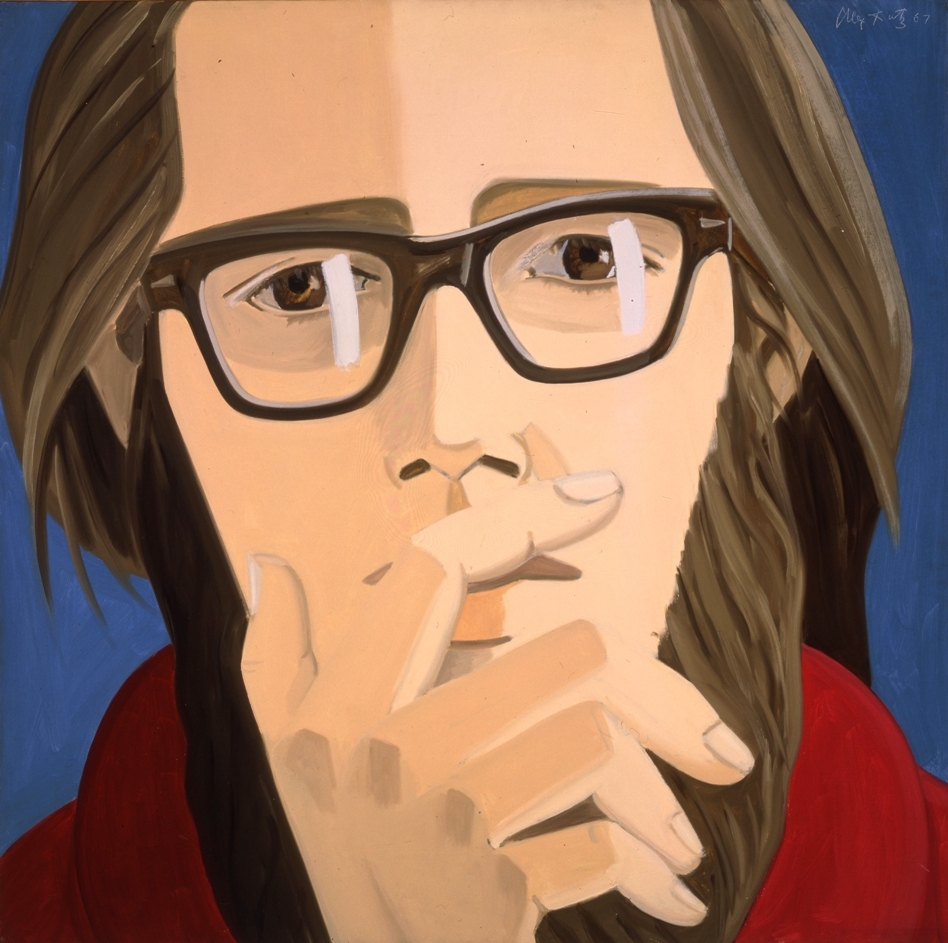
Alex Katz, Portraits of the artist Philip Pearlstein (above), and the poet, Ted Berrigan
The visual composition of his paintings and prints, as well as the compelling quality of his representation of people and places within them, is evident. Critics commend Katz’ work for his use of color and the relatively ‘flat’ appearance of the way he tends to depict his subject matter. This may account for the apparent affinity between this artist’s paintings and his work as a print maker.
Yet, Katz’ attention to the play of light and shadow upon what he chooses to represent adds a surprising element of three dimensionality to his images. Further, though at a distance many of his paintings seem to employ strong linear demarkation to define the edges between fields of color, the artist is also adept at suggesting texture and depth in a painterly way by using subtle brush strokes that have a shading effect. The following two images help illustrate these points.

Good Afternoon, depicting a favorite summer place to visit

Blue Umbrella 2, detail
In addition to the many solo portraits of Ada and others, Katz enjoyed portraying groups of others in various situations.
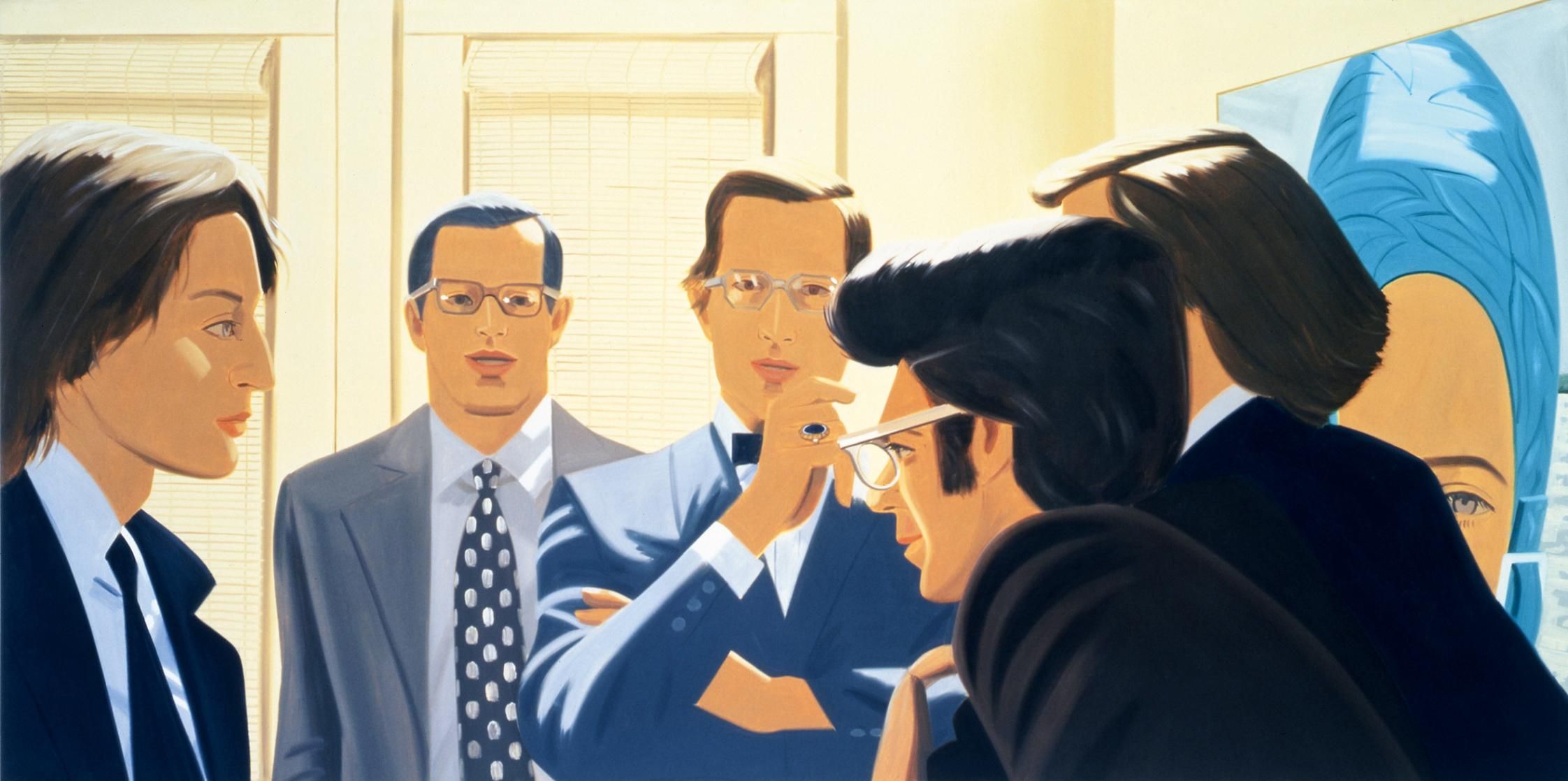
Thursday Night 2

Summer Triptych
Alex Katz’s many works of art, and particularly his paintings, have grown on me. At first I tended to undervalue his representational approach to portraying people and places, not taking sufficient account of his attained gifts for drawing in his compositions as well as his sometimes arresting attention to contrasts between light and dark areas. His astonishing longevity coupled with his abiding creativity lead me to return to his work with growing appreciation. His book, Looking at Art with Alex Katz, featuring reflections on many of his favorite artists, poets and architects, reflects the wide range of his artistic awareness and sensitivity. Yet, I also admire his almost single-minded willingness to pursue his own vision for his art despite the challenging influence and popularity of many of his contemporaries’ artwork, which often headed in very different directions.

Alex Katz at work on what may be another portrait of Ada
 Toward Beauty
Fascinating. I had never heard of Alex Katz before. Thanks, Stephen.
Until recently this has been true for me, as well!