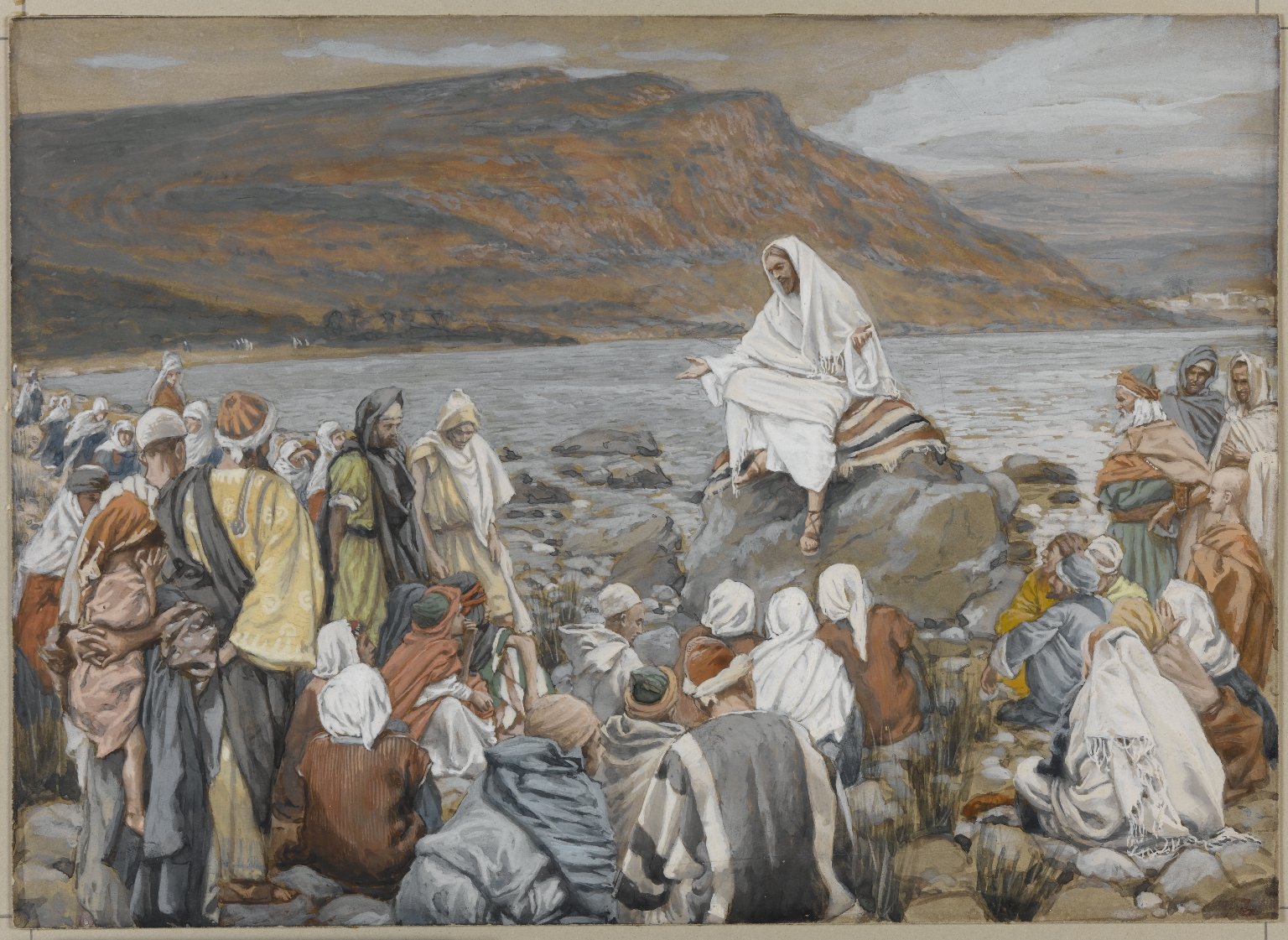
Art_Tissot_Jesus Teaches by the Sea_Luke following Mark-Sermon on the Plain?
2 comments
“Such was the group which, on the borders of the lake of Tiberias, gathered around Jesus. The aristocracy was represented there by a customs officer and by the wife of one of Herod’s stewards. The rest were fishermen and common people. Their ignorance was extreme; their intelligence was feeble; they believed in apparitions and spirits. Not one element of Greek culture had penetrated this first assembly of the saints. They had very little Jewish instruction; but heart and goodwill overflowed. The beautiful climate of Galilee made the life of these honest fishermen a perpetual delight. They truly preluded the kingdom of God — simple, good, and happy — rocked gently on their delightful little sea, or at night sleeping on its shores. We do not realize to ourselves the intoxication of a life which thus glides away in the face of heaven — the sweet yet strong love which this perpetual contact with nature gives, and the dreams of these nights passed in the brightness of the stars, under in azure dome of infinite expanse. It was daring such a night that Jacob, with his head resting upon a stone, saw in the stars the promise of an innumerable posterity, and the mysterious ladder by which the angels of God came and went from heaven to earth. At the time of Jesus the heavens were not closed, nor the earth grown cold. The cloud still opened above the Son of man; the angels ascended and descended upon his head; the visions of the kingdom of God were everywhere, for man carried them in his heart. The clear and mild eyes of these simple souls contemplated the universe in its ideal source. The world unveiled perhaps its secret to the divinely enlightened conscience of these happy children, whose purity of heart deserved one day to behold God.
Jesus lived with his disciples almost always in the open air. Sometimes he got into a boat, and instructed his hearers, who were crowded upon the shore. Sometimes he sat upon the mountains which bordered the lake, where the air is so pure and the horizon so luminous. The faithful band led thus a joyous and wandering life, gathering the inspirations of the Master in their first bloom. An innocent doubt was sometimes raised, a question slightly skeptical; but Jesus, with a smile or a look, silenced the objection. At each step — in the passing cloud, the germinating seed, the ripening corn — they saw the sign of the Kingdom drawing nigh, they believed themselves on the eve of seeing God, of being masters of the world; tears were turned into joy; it was the advant upon earth of universal consolation.
“Blessed,” said the Master, “are the poor in spirit: for theirs is the kingdom of heaven.
“Blessed are they that mourn: for they shall be Comforted.
“Blessed are the meek: for they shall inherit the earth.
“Blessed are they which do hunger and thirst after righteousness: for they shall be filled.
“Blessed are the merciful: for they shall obtain mercy.
“Blessed are the pure in heart: for they shall see God.
“Blessed are the peacemakers: for they shall be called the children of God.
“Blessed are they which are persecuted for righteousness’ sake: for theirs is the kingdom of heaven.”
His preaching was gentle and pleasing, breathing nature and the perfume of the fields. He loved the flowers, and took from them his most charming lessons. The birds of heaven, the sea, the mountains, and the games of children furnished in turn the subject of his instructions. His style had nothing of the Grecian in it, but approached much more to that of the Hebrew parabolists, and especially of sentences from the Jewish doctors, his contemporaries, such as we read them in the “Pirke Aboth.” His teachings were not very, extended, and formed a species of sorites in the style of the Koran, which, joined together, afterwards composed those long discourses which were written by Matthew. No transition united these diverse pieces; generally, however, the same inspiration penetrated them and made them one. It was, above all, in parable that the Master excelled. Nothing in Judaism had given him the model of this delightful style. He created it. It is true that we find in the Buddhist books parables of exactly the same tone and the same character as the Gospel parables; but it is difficult to admit that a Buddhist influence has been exercised in these. The spirit of gentleness and the depth of feeling which equally animate infant Christianity and Buddhism suffice perhaps to explain these analogies…”
Thanks for contributing this. As what you offer here suggests, Tissot in the second phase of his life discovered the Gospel as being so much more than a source of imagery.
 Toward Beauty
“Such was the group which, on the borders of the lake of Tiberias, gathered around Jesus. The aristocracy was represented there by a customs officer and by the wife of one of Herod’s stewards. The rest were fishermen and common people. Their ignorance was extreme; their intelligence was feeble; they believed in apparitions and spirits. Not one element of Greek culture had penetrated this first assembly of the saints. They had very little Jewish instruction; but heart and goodwill overflowed. The beautiful climate of Galilee made the life of these honest fishermen a perpetual delight. They truly preluded the kingdom of God — simple, good, and happy — rocked gently on their delightful little sea, or at night sleeping on its shores. We do not realize to ourselves the intoxication of a life which thus glides away in the face of heaven — the sweet yet strong love which this perpetual contact with nature gives, and the dreams of these nights passed in the brightness of the stars, under in azure dome of infinite expanse. It was daring such a night that Jacob, with his head resting upon a stone, saw in the stars the promise of an innumerable posterity, and the mysterious ladder by which the angels of God came and went from heaven to earth. At the time of Jesus the heavens were not closed, nor the earth grown cold. The cloud still opened above the Son of man; the angels ascended and descended upon his head; the visions of the kingdom of God were everywhere, for man carried them in his heart. The clear and mild eyes of these simple souls contemplated the universe in its ideal source. The world unveiled perhaps its secret to the divinely enlightened conscience of these happy children, whose purity of heart deserved one day to behold God.
Jesus lived with his disciples almost always in the open air. Sometimes he got into a boat, and instructed his hearers, who were crowded upon the shore. Sometimes he sat upon the mountains which bordered the lake, where the air is so pure and the horizon so luminous. The faithful band led thus a joyous and wandering life, gathering the inspirations of the Master in their first bloom. An innocent doubt was sometimes raised, a question slightly skeptical; but Jesus, with a smile or a look, silenced the objection. At each step — in the passing cloud, the germinating seed, the ripening corn — they saw the sign of the Kingdom drawing nigh, they believed themselves on the eve of seeing God, of being masters of the world; tears were turned into joy; it was the advant upon earth of universal consolation.
“Blessed,” said the Master, “are the poor in spirit: for theirs is the kingdom of heaven.
“Blessed are they that mourn: for they shall be Comforted.
“Blessed are the meek: for they shall inherit the earth.
“Blessed are they which do hunger and thirst after righteousness: for they shall be filled.
“Blessed are the merciful: for they shall obtain mercy.
“Blessed are the pure in heart: for they shall see God.
“Blessed are the peacemakers: for they shall be called the children of God.
“Blessed are they which are persecuted for righteousness’ sake: for theirs is the kingdom of heaven.”
His preaching was gentle and pleasing, breathing nature and the perfume of the fields. He loved the flowers, and took from them his most charming lessons. The birds of heaven, the sea, the mountains, and the games of children furnished in turn the subject of his instructions. His style had nothing of the Grecian in it, but approached much more to that of the Hebrew parabolists, and especially of sentences from the Jewish doctors, his contemporaries, such as we read them in the “Pirke Aboth.” His teachings were not very, extended, and formed a species of sorites in the style of the Koran, which, joined together, afterwards composed those long discourses which were written by Matthew. No transition united these diverse pieces; generally, however, the same inspiration penetrated them and made them one. It was, above all, in parable that the Master excelled. Nothing in Judaism had given him the model of this delightful style. He created it. It is true that we find in the Buddhist books parables of exactly the same tone and the same character as the Gospel parables; but it is difficult to admit that a Buddhist influence has been exercised in these. The spirit of gentleness and the depth of feeling which equally animate infant Christianity and Buddhism suffice perhaps to explain these analogies…”
James Tissot: Life of Jesus.
Thanks for contributing this. As what you offer here suggests, Tissot in the second phase of his life discovered the Gospel as being so much more than a source of imagery.