I was once asked a rhetorical question that has stayed with me: have you ever tried to push a rope? If this thought-question is new to you, I invite you to consider what we can learn from it. Obviously, it has to do with attempting something futile, which most of us have done more than once. Even when such efforts yield frustrating results, we often try again. Our impulse to repeat the act can be instructive, especially if we reflect on the process. A fellow teaching-team member once offered a counter-intuitive claim, that nobody ever learns from experience! He then quickly added that we only learn when we reflect on experience.
Thinking about actions that we choose to undertake actually benefits from consciously exploring why we might do them in the supposedly wrong way. For such thinking may yield valuable insight. Solving puzzles and brain-teasers is often helped by taking just such an obverse approach.
Learning to use a few Japanese tools while growing up in that country helped me begin to appreciate how undertaking a task or project in an apparently contrary way can be beneficial. When I was in 5th grade, our Yokohama International School added a ‘shop class’ to help us learn to use some basic carpentry tools. Each of us was given a canvas bag containing two particular tools (along with some chisels): one looked like a saw, and the second, a block of wood that had a metal blade inserted in it.
I had seen a hand saw before, at my grandfather’s house, and he had shown me how to use it. “Pull the saw back gently on the line,” he said, “in order to start the cut, and then push the handle forward in a deliberate manner.” It worked, and with mixed results, I began to fashion a V-shaped bow for a simple boat out of an ordinary 2 x 4.

Here, in my new carpentry bag was a saw, but it had sharp teeth on both edges of the blade. Yet, it looked wrong! For there was no hand grip – just a long handle resembling a broomstick. I then discovered the magic of my new tool. It was a Japanese hand saw, and I soon discerned the merits of its design. Pulled – not pushed – for its cutting stroke, it yielded a straight cut more often than my grandfather’s American model.

Why? Because when pulling the saw while cutting, the saw’s thin blade is much less likely to warp, keeping true to the desired cutting line on the wood. (Something we can learn from pulling a rope!) It takes a little practice to make the switch when sawing, but it can make a big difference.
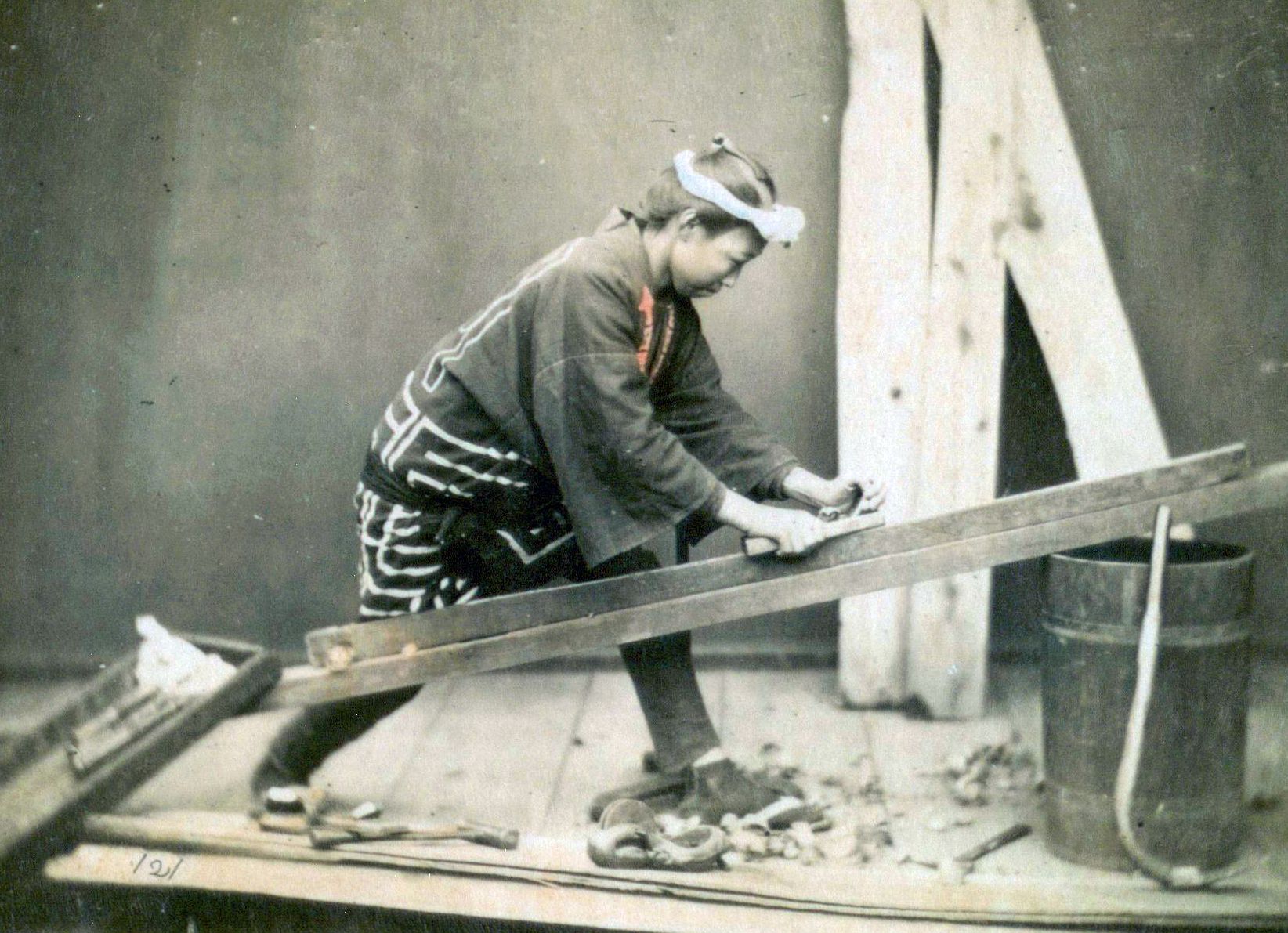
Working with a smoothing plane was entirely new to me. A plane is a traditional tool employed by carpenters and boat builders to take thin shavings off the surface of a piece of wood, both to remove unwanted material as well as to smooth an otherwise rough or uneven surface.
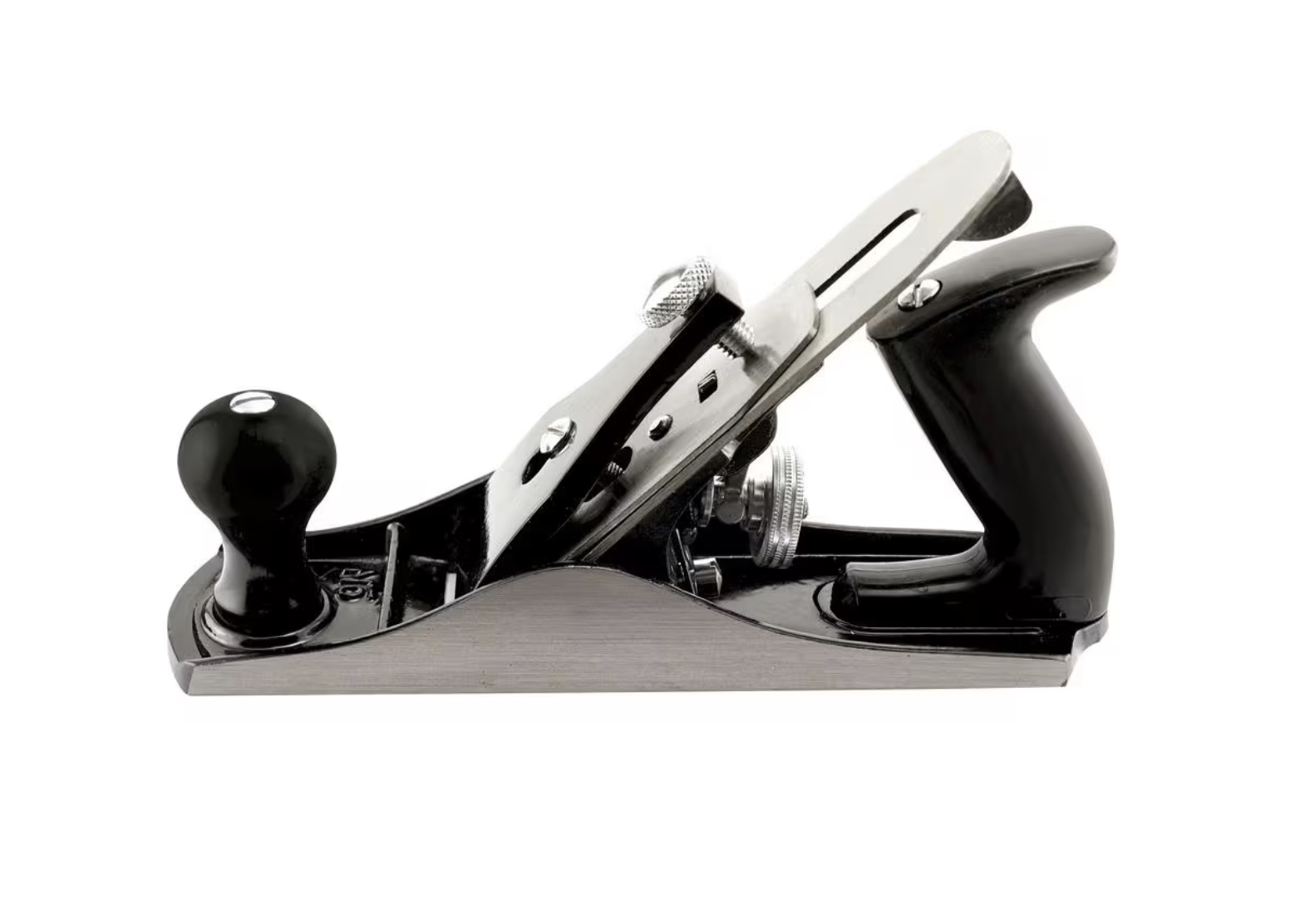
My first use of a plane came with my new set of Japanese tools. The way this plane worked was consistent with how one uses a Japanese handsaw. While planing the surface of a piece of wood, you pull the plane rather than push it (as one does with the American model). Like the Japanese saw, the Japanese smoothing plane yields good results by giving the user a greater sense of control over the process, especially given how pressure, when applied to a plane (as with a saw), can affect its performance.
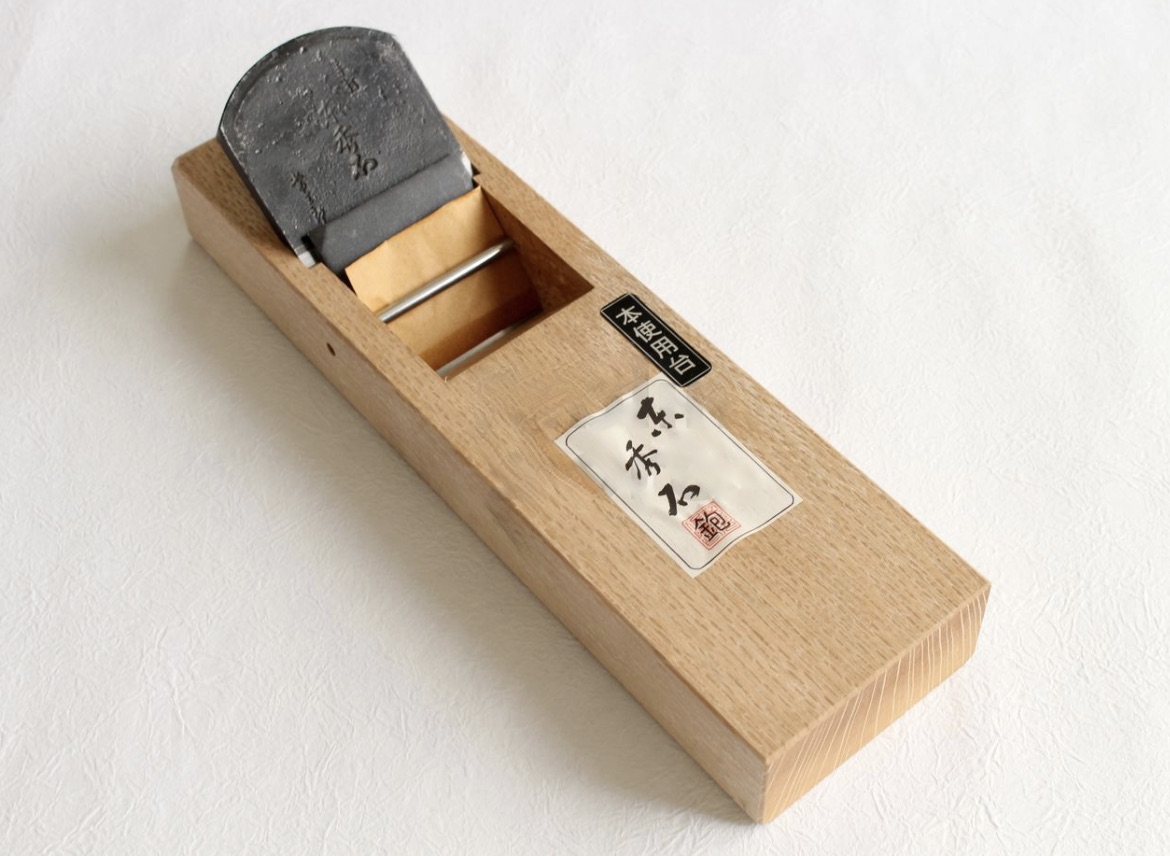
Just as the Japanese, the British, and many others, appear to drive ‘on the wrong side of the road,’ Japanese carpenters use familiar tools in the opposite direction from what we expect. I can’t comment on the benefits to the Japanese from driving on the left. But having come to appreciate the beauty within the function of Japanese pull saws and smoothing planes, it is hard for me to appreciate using their American counterparts. Traditional Japanese woodworking tools are also beautiful to behold and to handle.
I am happy to have discovered that traditional Japanese-style tools are now increasingly common in America. I recently bought a pull saw, albeit with a plastic rather than a bamboo handle, at a local store, at an affordable price.
I wish I still had my first set of Japanese tools! For I now realize that they helped me begin to learn a basic insight later articulated by my doctoral supervisor about my professional field of ethics: ethics is ‘how to think about how to act,’ an insight so applicable to much in life.
(Note: I have no commercial connection with any of the products featured in this post, nor do I receive any compensation from them.)
 Toward Beauty