Ceramics

The Beauty of Clay at The Bray

If reading this by email, please tap the title at the top to open your browser for the best experience. Then, clicking individual pictures will reveal higher resolution images.
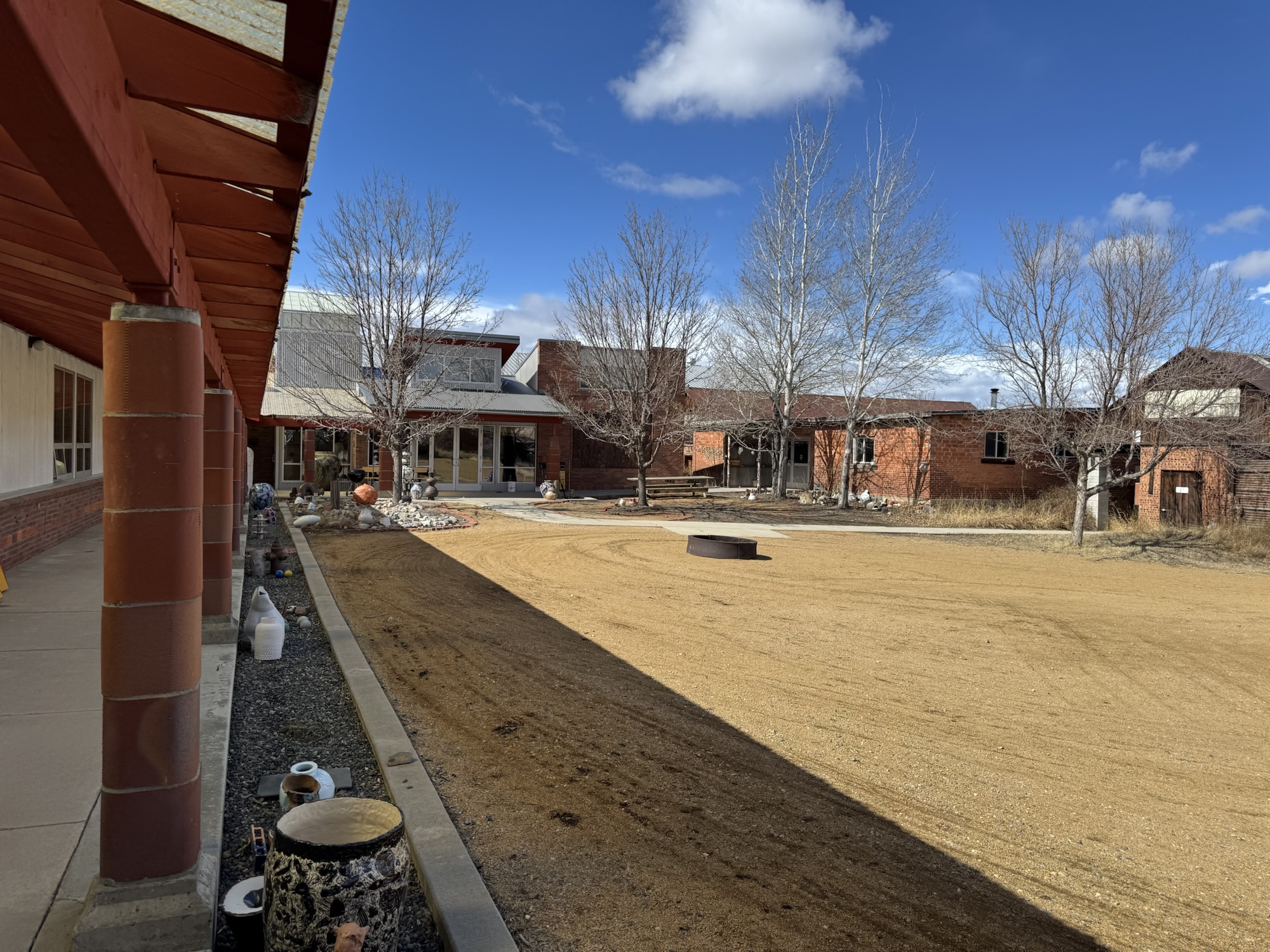
A studio courtyard at the Archie Bray Foundation in Helena, MT

Pottery and the wider field of ceramics represent an historical art form focused on the production of useful objects even when they are prized and collected for their beauty. This wide area of engagement with clay, and with products made from clay, is now fully a part of the Fine Arts curriculum of most college art departments. An evolution in the practice of ceramics from a primary focus upon utility to an unhindered exploration of the possibilities inherent in the medium was surely a logical result of two things. First, there has been a significant increase in the number of practitioners who work with clay out of a sheer love for what can be done with it, and who have pushed beyond traditional parameters of the art. A second factor has been the general influence of the ‘modernist’ trend in the fine arts, encouraging painting, sculpture, and printmaking to transcend representation. This has yielded such recognizable examples as abstract expressionism in painting, and more broadly what has been called ’conceptual art.’ I have touched upon an example of this broad transition in my prior posts featuring the work of David Shaner.

Given my appreciation for Shaner’s work, we visited the Archie Bray Foundation in Helena on a recent trip to western Montana, where he had been a resident artist as well as the Foundation Director. The Bray, as it is now known, will celebrate 75 years of service in 2026 as a non-profit center for the support and promotion of the ceramic arts. It provides studios and technical facilities, as well as residential fellowships, enabling aspiring ceramicists from across our country and beyond to pursue and develop their artwork. Visitors are welcome to come and see the well-equipped studios while engaging with the resident artists, view and purchase examples of work created at the facility, and explore the grounds of the historic brickyard.

Structures from the former Western Clay Company brickyard at The Bray

In its early days, the Archie Bray Foundation was associated with the pursuit of ceramics as an artform influenced by both western and eastern folk art traditions. Particularly influential in this regard was a visit to The Bray by the English potter, Bernard Leach, and Japan’s Shoji Hamada, later designated as a Living National Treasure by the Japanese government. Leach and Hamada’s presence at The Bray in 1952, along with that of the Japanese philosopher and art critic, Soetsu Yanagi, encouraged attention to the aesthetics of the Mingei tradition of Japanese folk art. David Shaner numbered among those receiving significant creative inspiration from this influence.

Soetsu Yanagi, Bernard Leach, and Shoji Hamada, with two early resident potters at The Bray in 1952

The Bray is situated in the foothills of the Rocky Mountains on the western edge of Helena, in a setting incorporating an attractive blend of historic and modern buildings. While visiting this center of creativity, Martha and I met and were able to visit with a young woman named Lexus Giles, from Jackson, Mississippi, whose home is just a few hours north of our own. Her work epitomizes that of many of her fellow artists in residence in her exploration of ideas and forms unique to her own imaginative vision. This reflects The Bray’s laudable encouragement and support for resident artists, for periods up to two years, freely to pursue artistic work reflecting their different backgrounds and particular interests.

Lexus Giles in her studio at The Bray

For Lexus, this means the opportunity to explore aspects of African American culture through experimentation with the tradition of making face jugs or face vessels. Lexus explained this relatively unfamiliar art form as having origins in the Carolinas among enslaved people, who may have had access to clay and a simple means of firing it, and who used the results to mark graves when headstones and the like were impossible for them to acquire.

Face Jugs by Lexus Giles

Face Jug with a ‘church lady’ motif, as noted by the artist

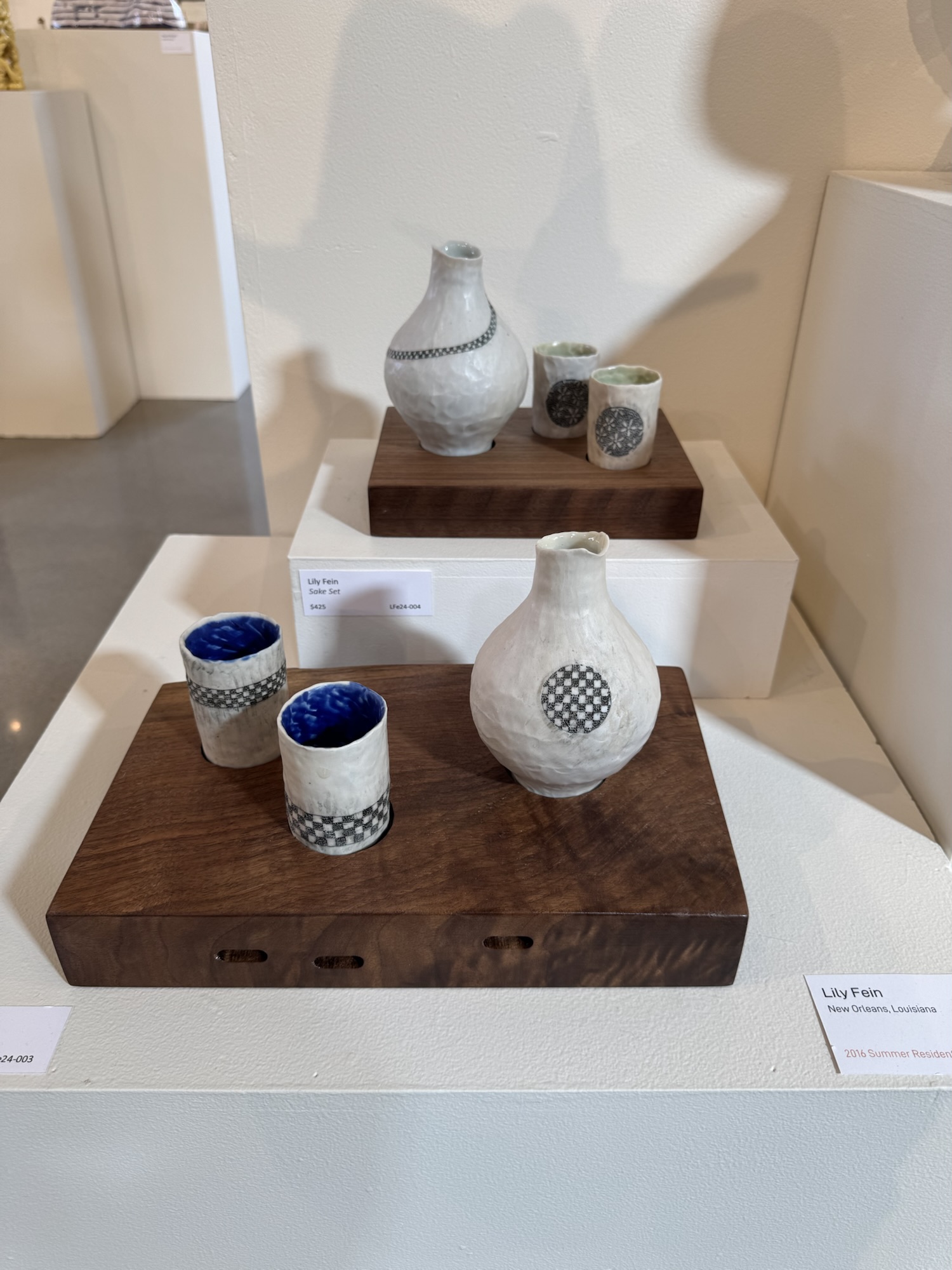
While we met and were able to learn from Lexus Giles about her work, we also appreciated the opportunity to view ceramic creations by other resident artists at The Bray, displayed in a gallery in the administrative building. Some examples are featured in the photos below.

We came away from our visit at The Bray impressed with the quality of the work by the resident artists, and by the positive atmosphere of creativity evident in the studio spaces. Visitors are welcome to the facility and to tour the studios without an appointment, and to walk among the remaining structures within the former brickyard. Back when I was an art student, The Bray is just the sort of place where I would like to have had the opportunity to pursue my interests and develop my skills.


Additional note: Those interested in learning more about Lexus Chiles may wish to see the following brief biography that is posted outside her studio at The Bray.

Once again, in anticipation of this coming Lenten Sunday, I offer a homily I prepared in a prior year, which may be accessed by clicking here.

David Shaner’s Beautiful Ceramics

[If reading this by email, please tap the title at the top to open your browser for the best experience. Then, clicking individual pictures will reveal higher resolution images.]

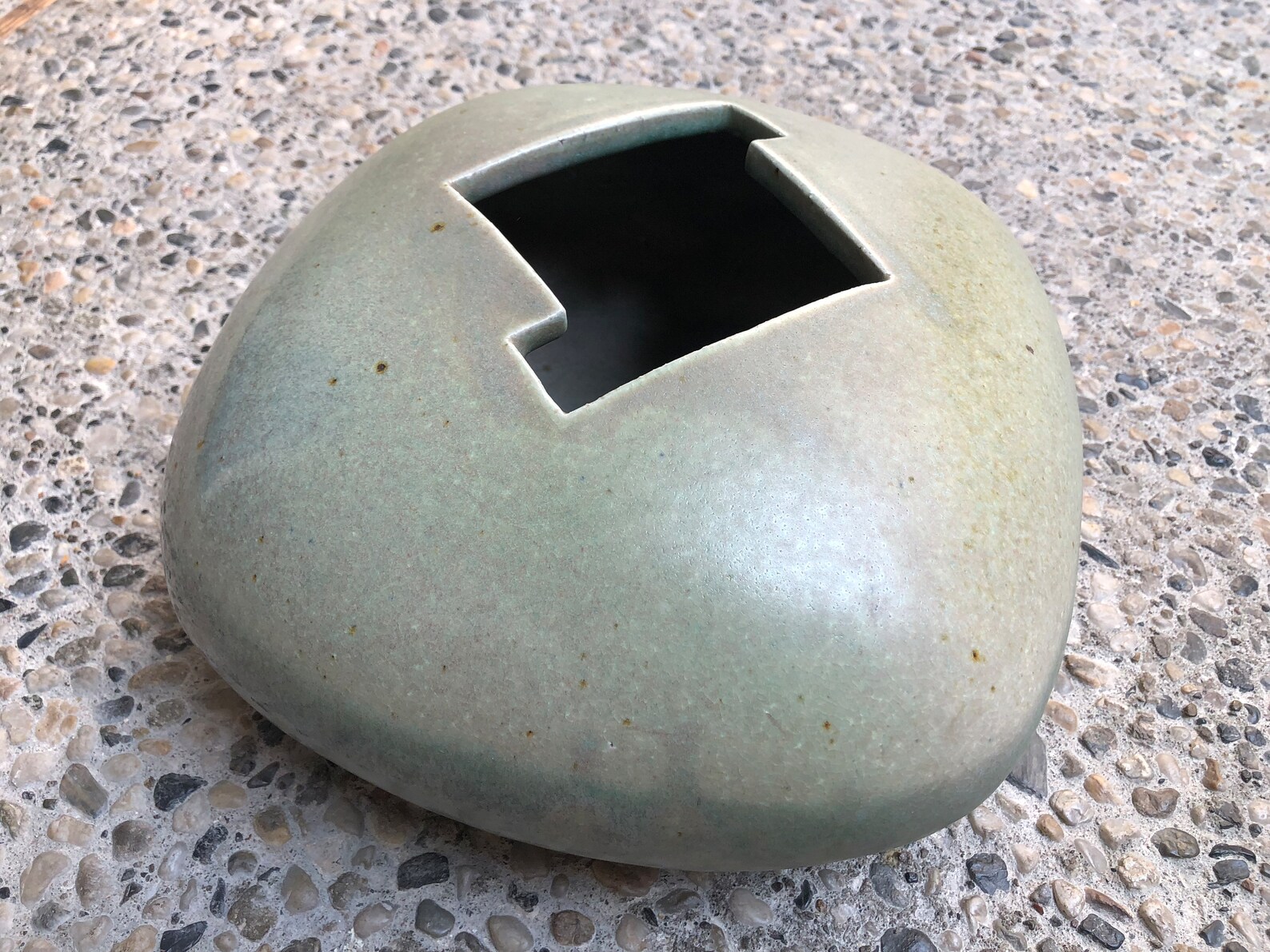
An intriguing sculptural pot by David Shaner, with an unglazed exterior


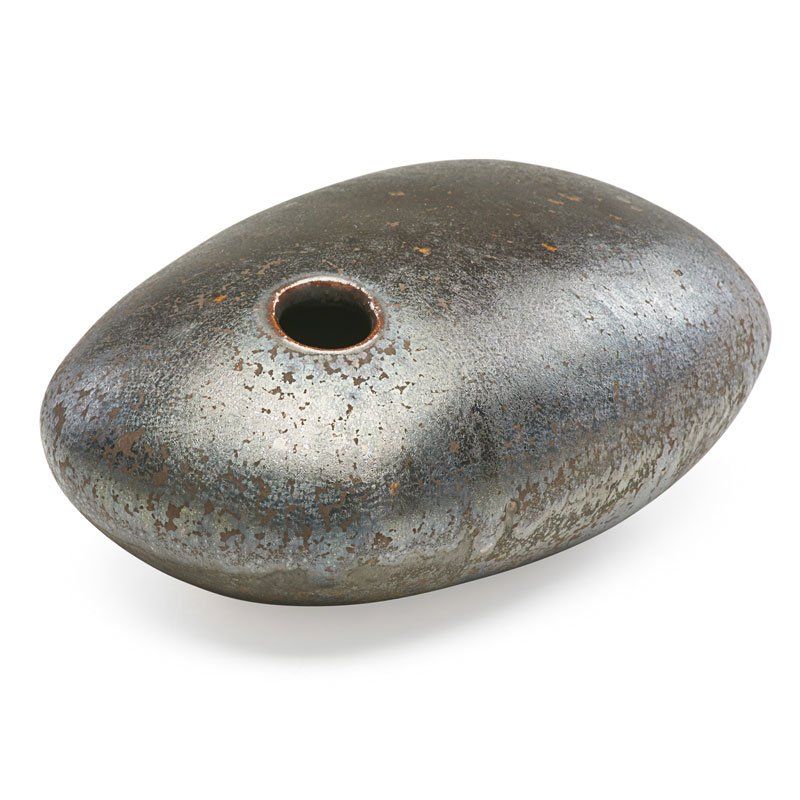
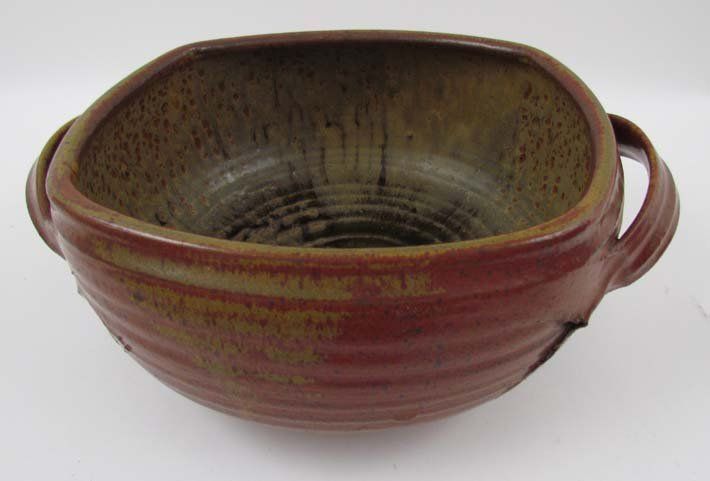
Through his love for ceramics, David Shaner became an accomplished artist whose work was and is widely known for his mastery of traditional pottery techniques as well as for the red glaze that bears his name. The influence of Japanese potters as well as those who studied their work is evident in Shaner’s own earlier pottery. Over the years his interest in non-traditional pot-making grew into a developed pursuit of what we might call ceramic sculpture. Here (below) are three Shaner pots that show his willingness to explore forms that move beyond the circular shape we usually associate with clay that has been molded on a rotating wheel and bat (or platter on which a pot is shaped). Notice the manipulation of the rims of the second and third pots, as well as the presence of the Shaner’s Red glaze on all three.


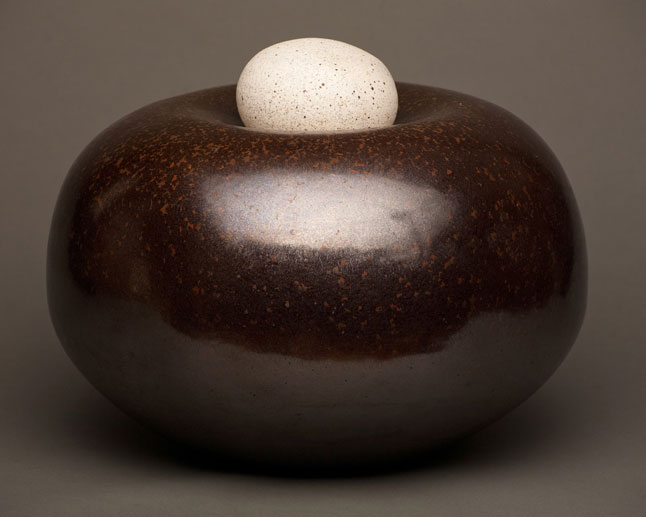
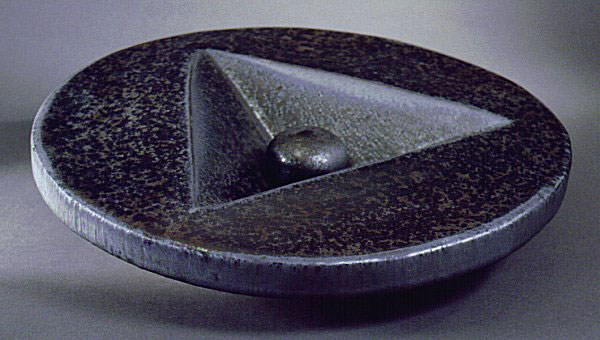
In Shaner’s work, these explorations of the plasticity associated with raw clay then progress to more dramatic departures from traditional pot making. Such pot making is largely focused on forms where the subsequent utility of the result is at least suggested if not also intended (as with Shaner’s teapot displayed in a prior post). In addition to the pot depicted at the top of this post, I share below a number of my favorite examples of what I have referred to as his ceramic sculptures.

A number of these examples of Shaner’s explorative work with fired and glazed clay are termed his series of ‘pillow’ pots, suggested by their rounded ‘puffed-looking’ forms. In addition to his regard for the work of fellow potters, Shaner admired the sculpture of the modern Japanese artist Isamu Noguchi, as well as that of the British sculptor Henry Moore, with whose work he felt an affinity. Below are some more examples of Shaner’s ceramic art.

David Shaner’s traditional-looking pots represent well his skills and lifelong dedication to mastering the medium for his chosen work. His sculptural art is more immediately identifiable as representing a vision expressed in ceramics that was uniquely his own, and which continues to be widely admired.


David Shaner taking a break, and another example of his work as a ceramic artist.

The Beauty of Shaner’s Red

[If reading this by email, please tap the title at the top to open your browser for the best experience. Then, clicking individual pictures will reveal higher resolution images.]

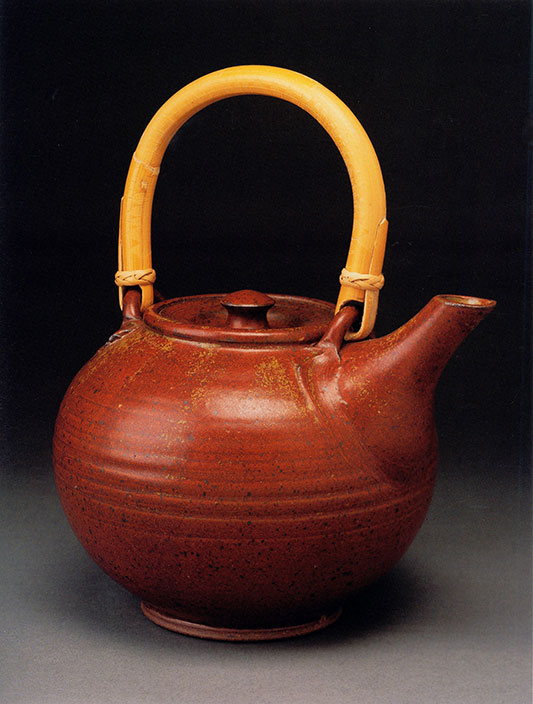
David Shaner, Tea Pot {Japanese style, 1977), with Shaner’s Red Glaze


Shaner’s Red is a polychromatic glaze named after the potter who first applied it to many of his pots. I became familiar with Shaner’s Red on extended visits to family friends who had a pottery studio and a kiln for firing clay at their ranch in Montana. My parents had met them on a ship returning from Japan, where our friends had pursued their interest in traditional ceramics. In addition to throwing pots, they collected a range of examples of ceramic artwork including Asian and Native American, as well as contemporary work by David Shaner and others associated with the Archie Bray Foundation, in Helena, MT. As a youth, I found the color of Shaner’s red and sometimes green and gold glaze alluring, in part because of its variability during firing. In addition to buying assorted mineral and other glaze components, Shaner also gathered found ingredients for his glazes much like weavers often gather natural materials for dying wool.

One brief biographical statement offers this tribute to David Shaner: “His exquisitely formed vessels with their understated glazes are a reflection of the man himself, a man in harmony with his environment and at peace in himself. Shaner was also noted as a teacher, a collector, and a generous contributor to the world of ceramic art and the field of environmental protection; his gardens which he called his ‘spiritual work’ included notable specialized collections.”

Among those who pursue the art of pottery, the color known as Shaner’s Red is a familiar reference point for glazes applied after a first firing of shaped raw clay. Though the red coloring is largely due to iron oxide being in the mix, this glaze by David Shaner is well known for the way it often morphs into other colors during the firing process, with beautiful results. A canister style pot by Shaner (below, 1988) displays this color variability, which is to some extent within a ceramicist’s ability to manipulate while yet retaining an unpredictability that is often a feature of this art form.

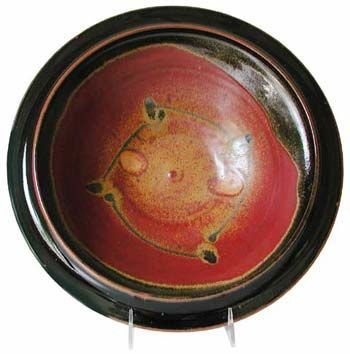
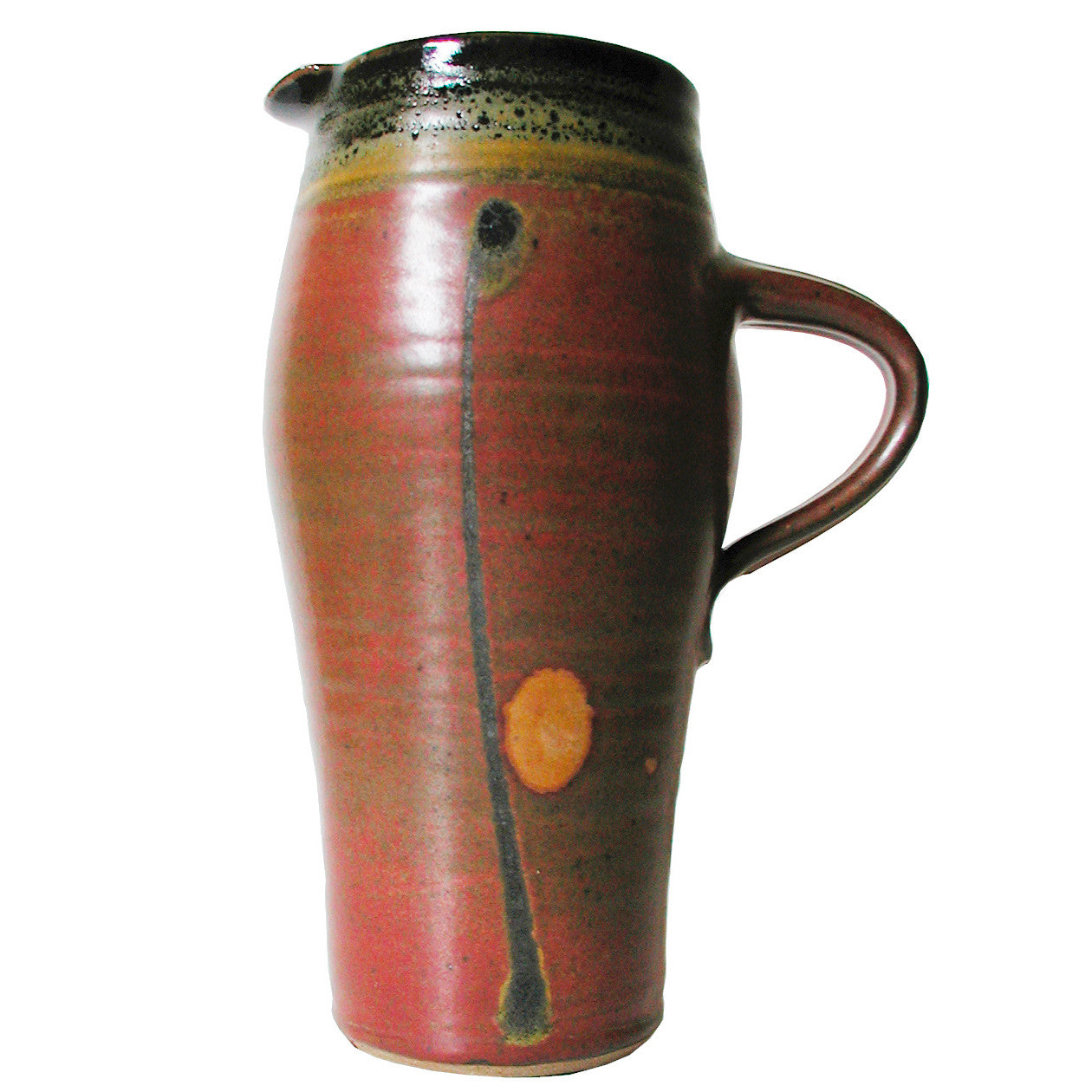
Some examples, below, of pots by other artists displaying something of the range of colors yielded by the application of Shaner’s Red.


Here is one ‘recipe’ for Shaner’s Red: 527 Potash Feldspar; 40 Talc; 250 Kaolin; 40 Bone Ash; 213 Whiting; 60 Red Iron Oxide; 2% Bentonite. The significance of the numbers and the nature of these elements are foreign to me. But they are doubtless meaningful to ceramicists who mix their own glazes. The point in sharing these details is to illustrate how, regardless of the precision involved in finding, measuring, and mixing these elements, the exact outcome of their combination and application cannot be foretold in advance.

Shaner was once asked about this at a workshop he had given. A participant later reported that “his reply was something to the effect that to make it look right, you had to be in the right phase of the moon, hold your tongue just right, call on the correct kiln gods, etc. He was obviously kidding but what he was saying is that this is a tough glaze to work with.” Another potter who has applied the same glaze offers this observation: “… the cooling schedule most affects Shaner’s (and other) iron reds. Shaner’s needs a long slow cool, or firing down, for the red color to resurface…”

Having introduced what is perhaps Shaner’s most widely-known contribution to contemporary American ceramics, his eponymous glaze, I plan in a subsequent post to share further about him and provide additional examples of his pottery, especially in light of his later transition from traditional pot making to what is more properly termed ceramic sculpture.

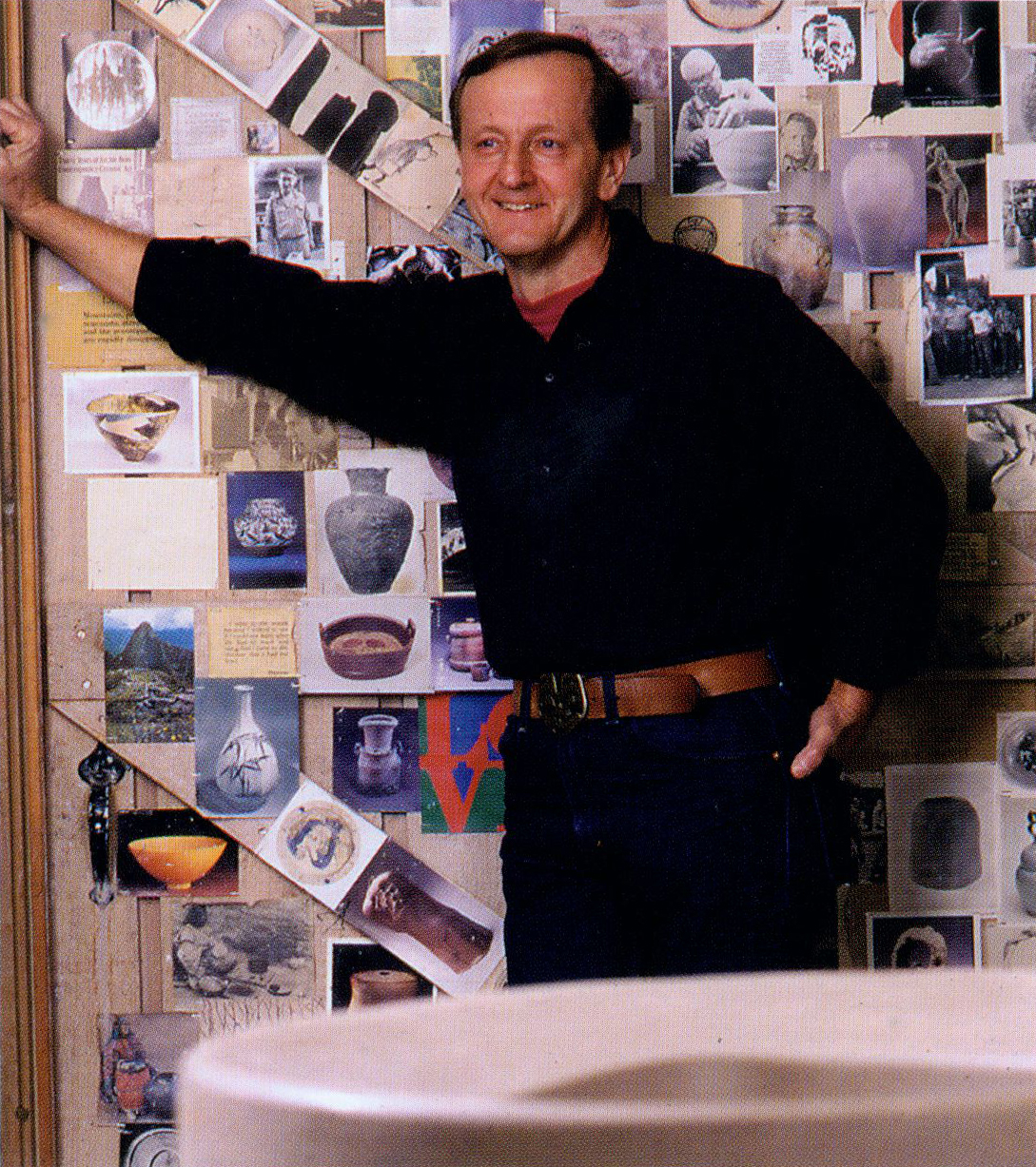
David Shaner in his studio (1989)

The photos behind him appear to include one of the esteemed Japanese potter, Shoji Hamada, at work on a pot (upper right). Another photo (top right) features an example of Shaner’s own work that is clearly influenced by the Japanese folk art tradition (the tea pot illustrated above).

The Beauty of a Horse


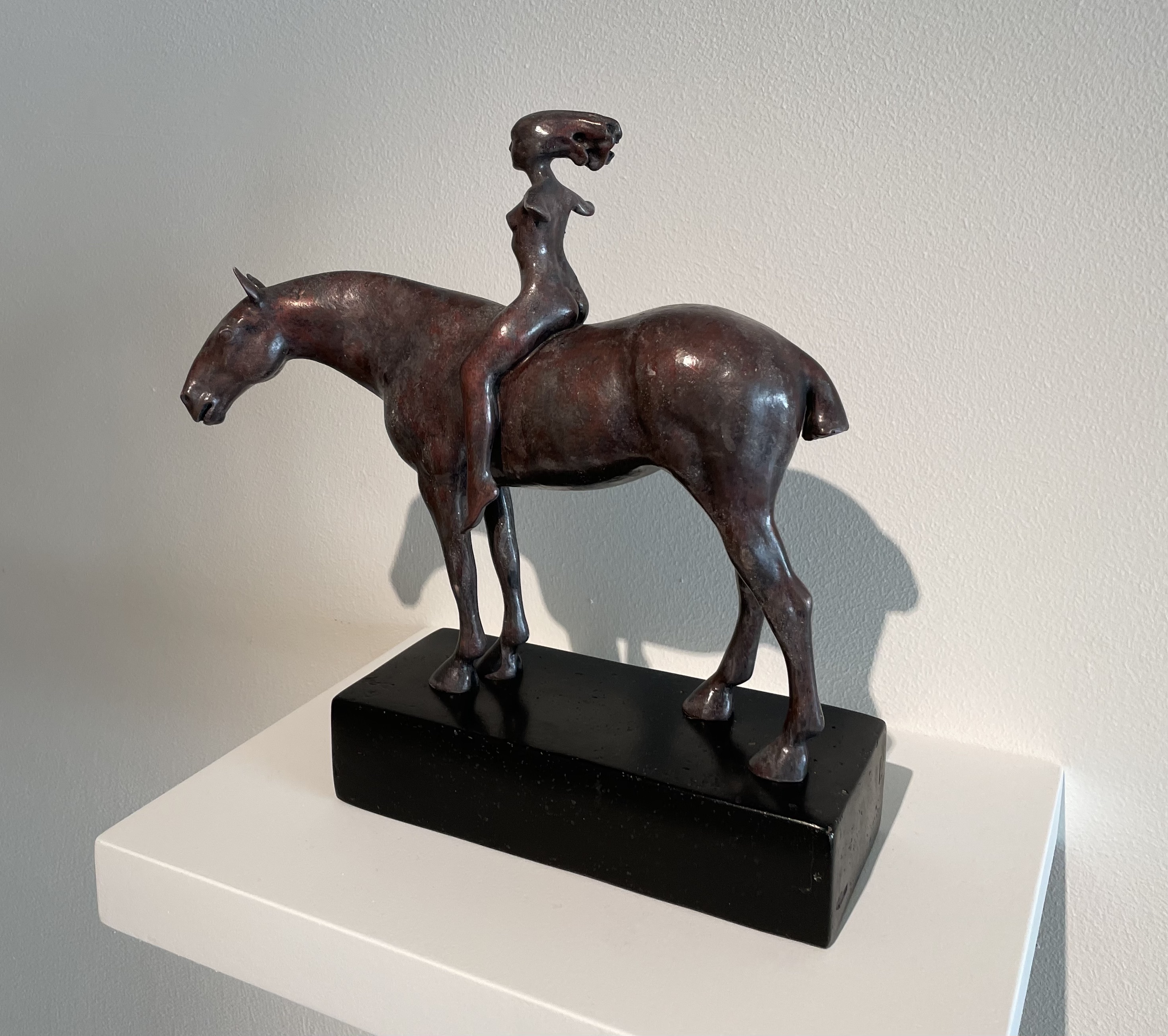
Arthur Kern, Silent Myth (2006)

Those who know Grand Rapids, Michigan, and who appreciate sculpture, will be familiar with Meijer Gardens. A principal monument among their collection of sculptures is the impressively large rendering of Leonardo DaVinci’s horse, by the artist Nina Akamu. As remarkable in size as that sculpture is, it is a fine example of how so many artists have been fascinated by the equine form. Consider among others, the ancient Etruscan horses; the ceramic figurines from the Chinese Ming dynasty; as well as Degas’ rendering of lithe race horses, or the roughly contemporary western bronzes of Frederick Remington and Charles Russell. In all these, this historically important animal companion to both our human community and our many activities has so often received sculptural tribute through artistic imagination.

Recently, I had the wholly unexpected opportunity to discover the powerful work of a 90 year old Louisiana sculptor, whose output until 2016 had largely been out of the public eye for over 30+ years. The Callan Contemporary Gallery in New Orleans has until late April an impressive show of 18 cast resin sculptures almost all featuring horses with riders, or with some representation of a human form. Two of the works are at a stunning life size, while the rest are roughly around twelve inches in height and width. I was not previously familiar with the artist’s work, and was bowled over by its beauty. Here is an example of a smaller work:

Here is another:

And another:

Wherein does that beauty lie? I think it is found in Kern’s studied sensitivity to the anatomic beauty of horses, while he also takes obvious liberty in moving beyond literalistic portrayal of particular equine breeds. Though some observers use the term ‘surrealist’ to describe his approach, I prefer the admittedly cumbersome phrase, ‘representationally explorative.’ Further, Kern’s employment of a lost wax process for producing the molds has given him an opportunity to play with the plasticity of the resin in those molds, as well as to manipulate the coloring of the results. And because of his employment of this casting process, originally used for bronze sculptures, each of the pieces in this show is one of a kind, and not an example of a numbered series.

Just as compelling is the knowledge that after a successful career as a painter and professor of art, Kern then burned his remaining paintings, and moved to a largely hermit life as a sculptor, working privately without any assistants while casting in several cases significantly large works at his home or in his garage. The series of horse sculptures, among other works, is the fruit of several decades of dedicated work, outside the notice of the commercial art world.

It is not evident whether Kern’s loving regard for the human and animal form reflects a religious or spiritual appreciation for the source of the beauty they represent. Yet, his sensitivity to these forms evidences a spirit of positive regard for the world around us that parallels voices of praise that we hear in the Psalms and in many other passages of Scripture. Men and women, throughout history, have loved and admired the form and structure of so many examples of ‘flora and fauna,’ and that of the horse in particular. To me that is surely due to the way that our appreciation for what enriches our lives reflects the transcending and loving regard of our Creator, Redeemer, and Sanctifier, for both us and all of Creation.


Photographs are by the author (all rights reserved) with permission from the gallery. Arthur Kern, Horses, at the Callan Contemporary Gallery in New Orleans until April 23. I encourage you to seek images of and reflections upon his work on the internet. Here is a link to the exhibit: https://www.callancontemporary.com/artists/arthur-kern